
Historic Quaker Houses of Bucks County, PA
Quaker Meetinghouse Design
Influenced by Quaker Farmhouse Design:
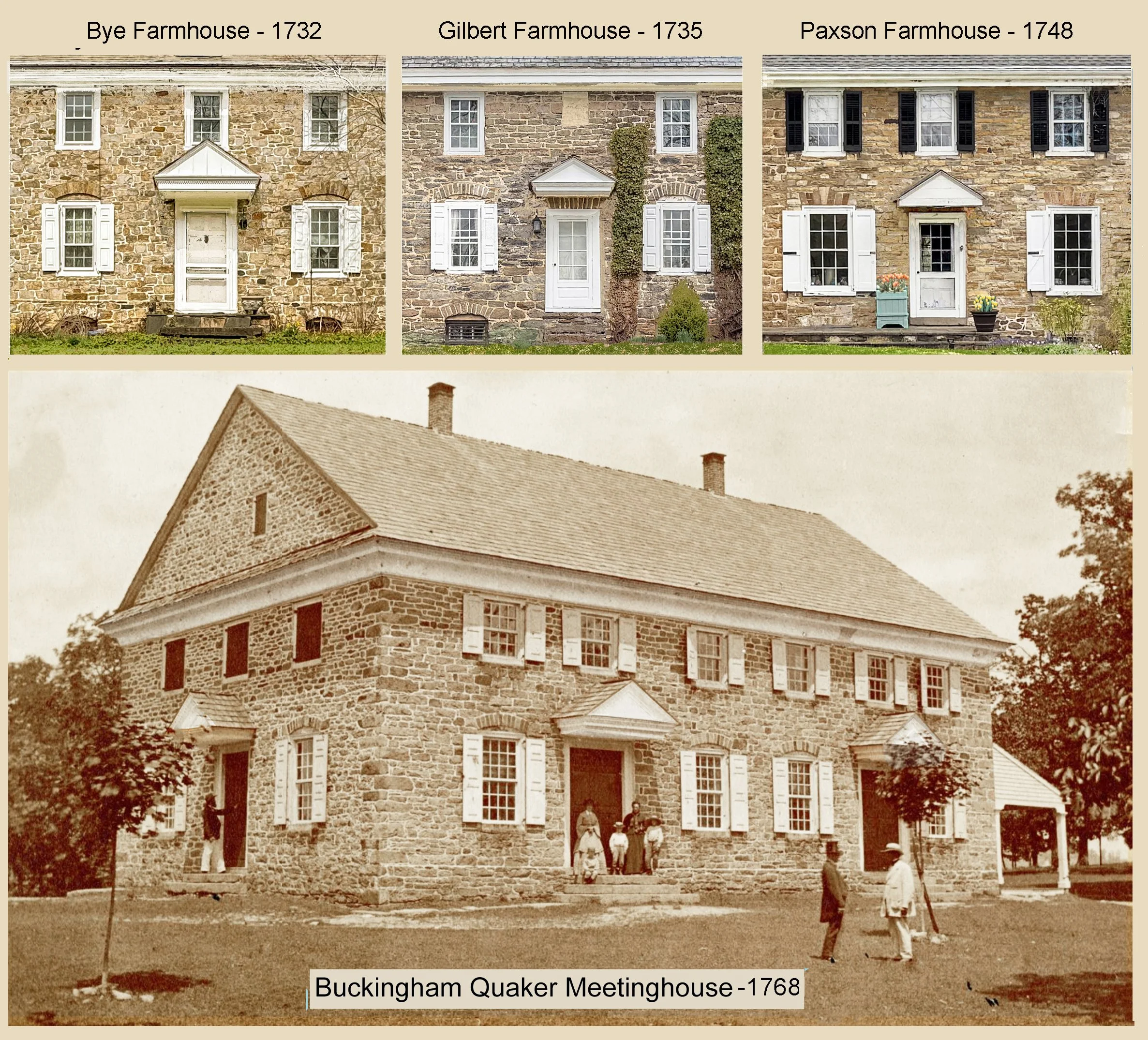
Above: Fieldstone walls and entry hoods. Image source: Door hoods: Lee J. Stoltzfus, Meetinghouse: TriCollege Libraries
Quakers often looked no farther than their surrounding countryside when designing their meetinghouses. Rather than drawing on the ornate architectural traditions of established churches, they borrowed freely from the familiar forms of local farmhouse construction, using the same sturdy stonework and unadorned facades that defined the agricultural landscapes they inhabited.
This deliberate vernacular approach reflected the Quaker belief that worship required no grandeur or embellishment. As a result, early meetinghouses often blended seamlessly into their surroundings as quiet architectural expressions of the faith's egalitarian spirit.
Buckingham Friends: Houses for Farming
And a House for Meeting:
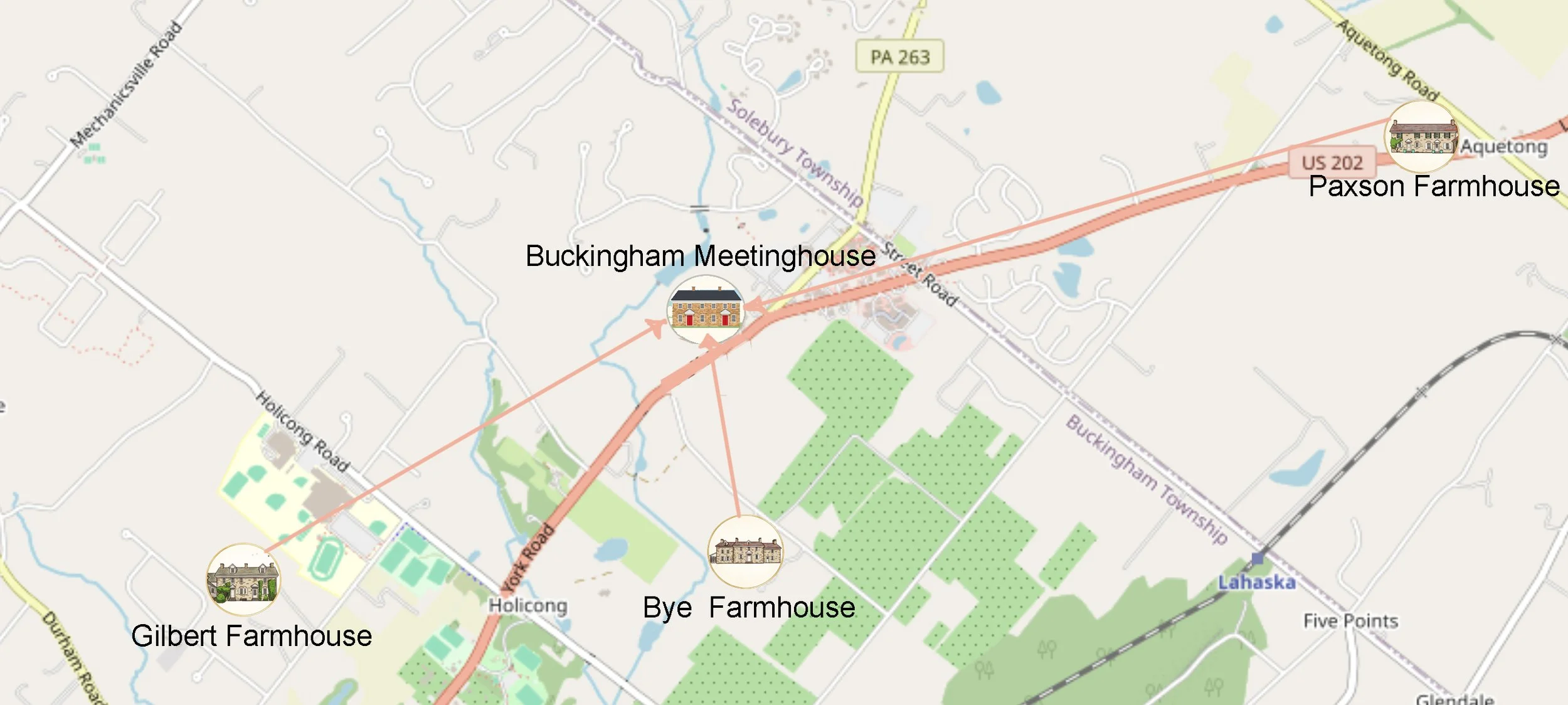
Buckingham Friends built this meetinghouse in 1768. The building borrows its minimalist motifs from the nearby Quaker farmhouses. This allows the structure to blend seamlessly with the rural environment rather than standing apart as a monument. Image source: Lee J. Stoltzfus, OpenStreetMap
Bucks County Motifs
Fieldstone Houses, White Trim, Door Hoods:
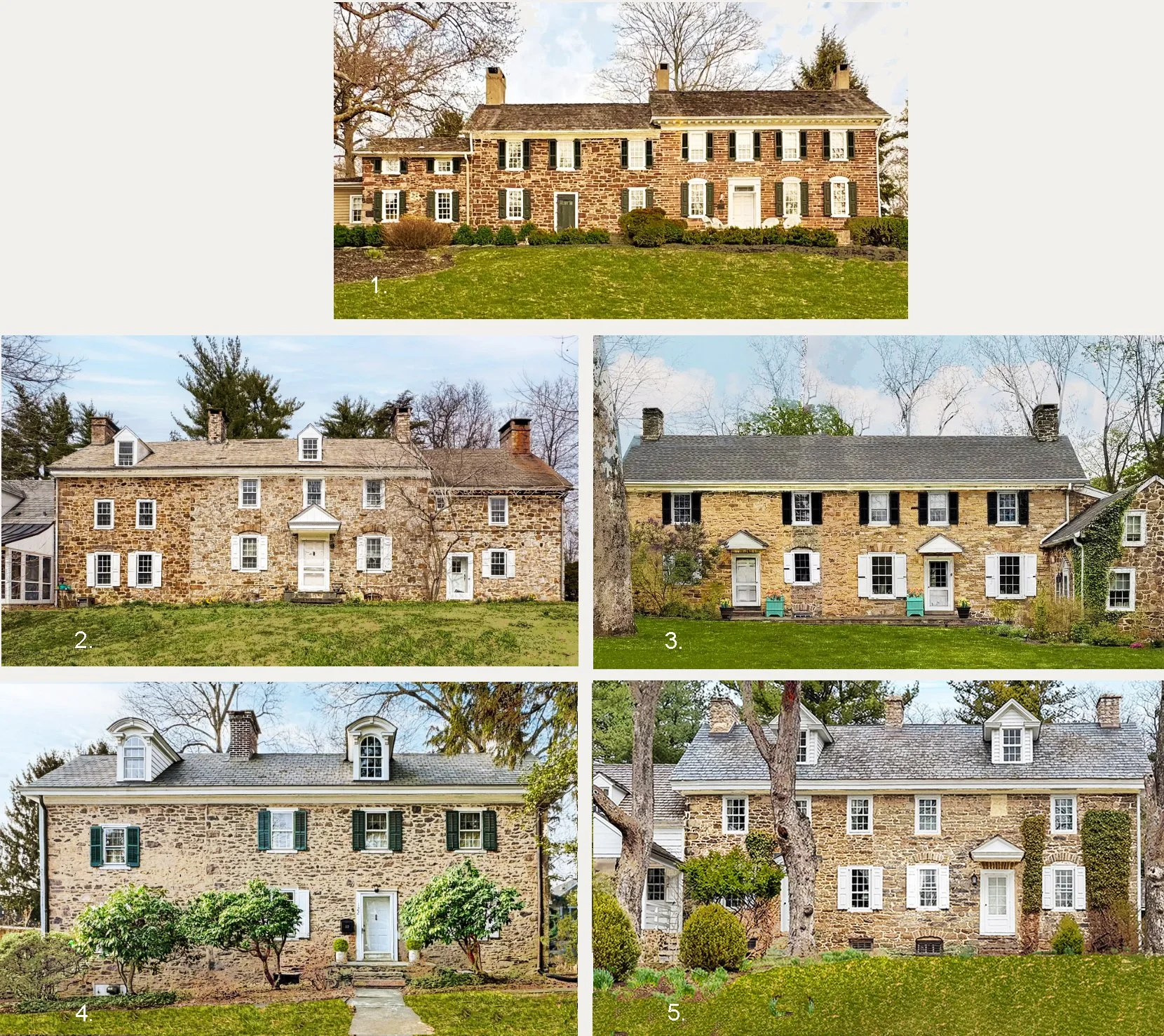
Above: 1.Burroughs House, 2. Byecroft House, 3. Paxson House, 4. Hicks House, 5. Gilbert House. Images source: Lee J. Stoltzfus
Repeated themes of Bucks County farmhouses include fieldstone walls, white-painted trim, and gable hoods sheltering the doors. The use of local fieldstone anchors the houses firmly into the landscape. Plain-and-practical stone farmhouses appear in various forms throughout Southeast Pennsylvania. Bucks County often feels like the artistic epicenter of these photogenic historic homes.
Solebury Friends Meetinghouse
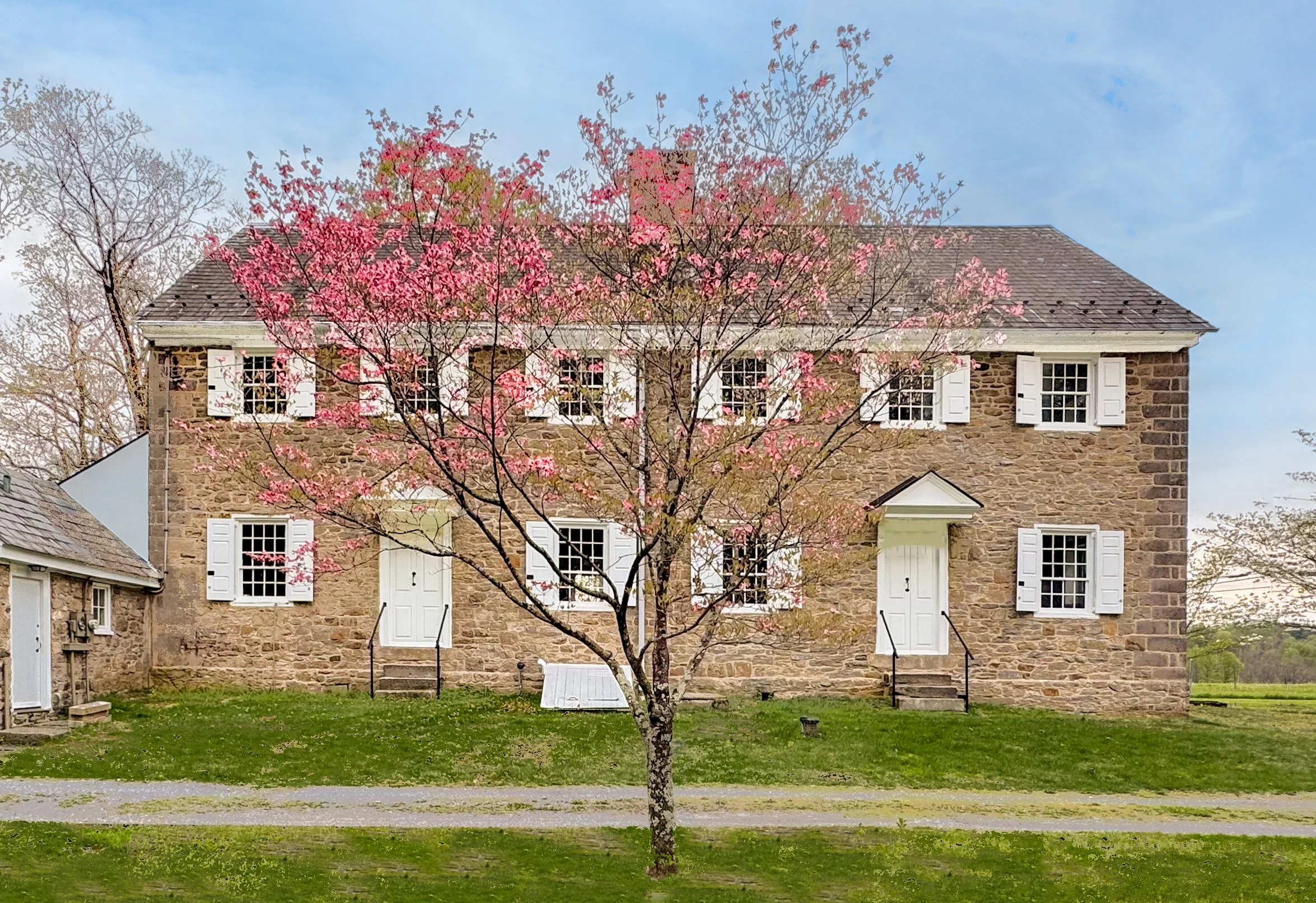
Above: Members of Buckingham Meeting built this Solebury meetinghouse in 1806 in order to meet closer to their rural homes. This view is the rear elevation. The two hoods on the front facade are supported by columns. Image source: Lee J. Stoltzfus.
The burial ground contains memorials of three of the most important artists of the New Hope Art Colony in the early 20th century.
William Langson Lathrop (d. 1938) Founder and early central figure of the colony.
Edward Willis Redfield (Quaker, d. 1965) Early leader and one of its most influential painters.
Daniel Garber (d. 1958) Leading later figure and major Pennsylvania Impressionist.
Also buried here are Mary Elizabeth Price, (d. 1965), a noted painter and member of the Philadelphia Ten, along with her sister Alice Rachel Price Bredin, (d. 1960). Both sisters were members of this meeting.
Door Hoods: Solebury Quaker Meetinghouse:
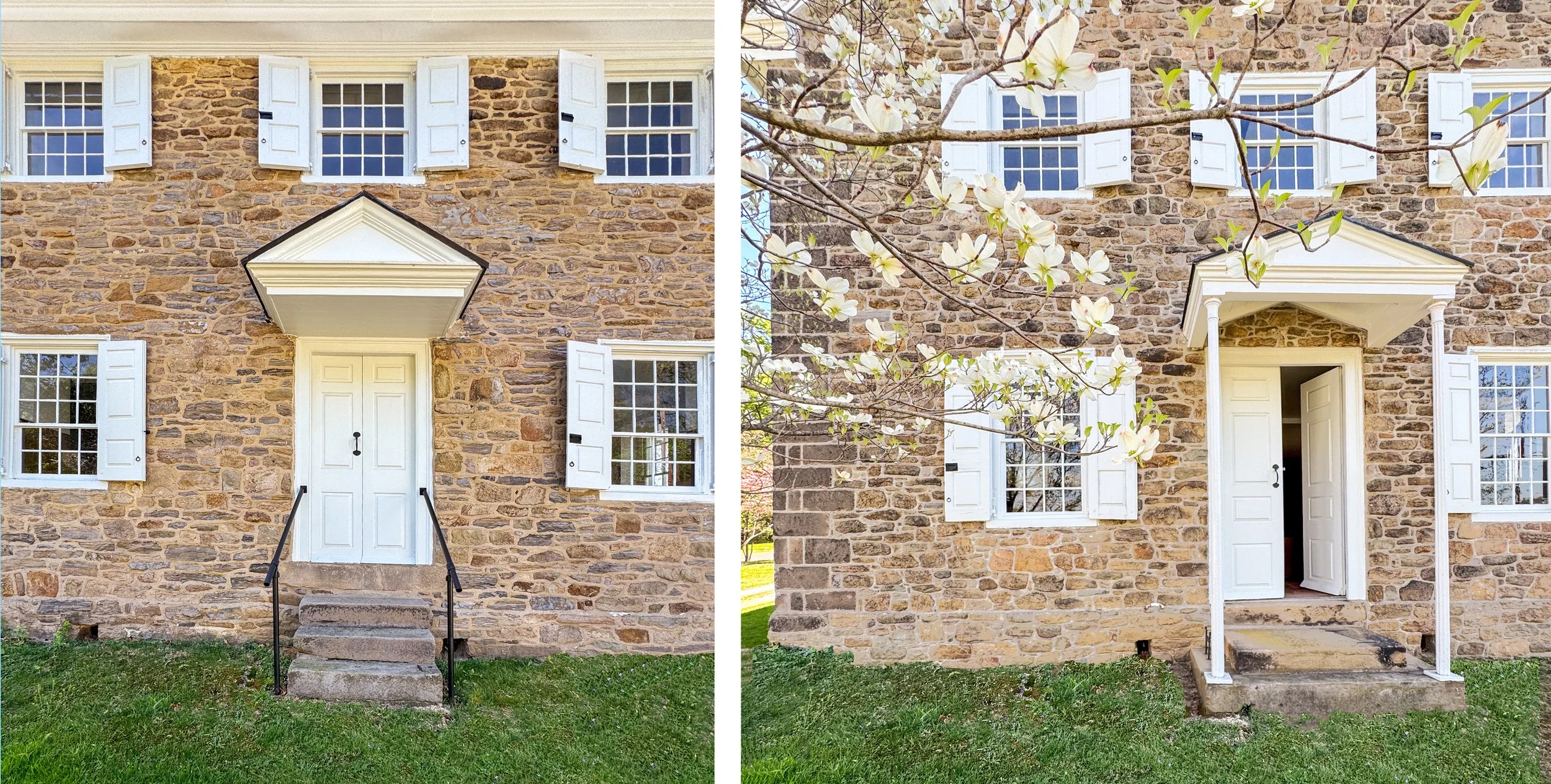
This Solebury Meetinghouse is patterned after the nearby Buckingham Meetinghouse. Solebury’s fieldstone exterior, however, includes a water table at the foundation and corner quoins. The building stone of the rear elevation (above left) and side elevation (above right) is more randomly coursed than on the building’s front facade. Images source: Lee J. Stoltzfus
Repetition of this Theme
The Thompson-Neely House
A Quaker and Presbyterian Farmhouse:
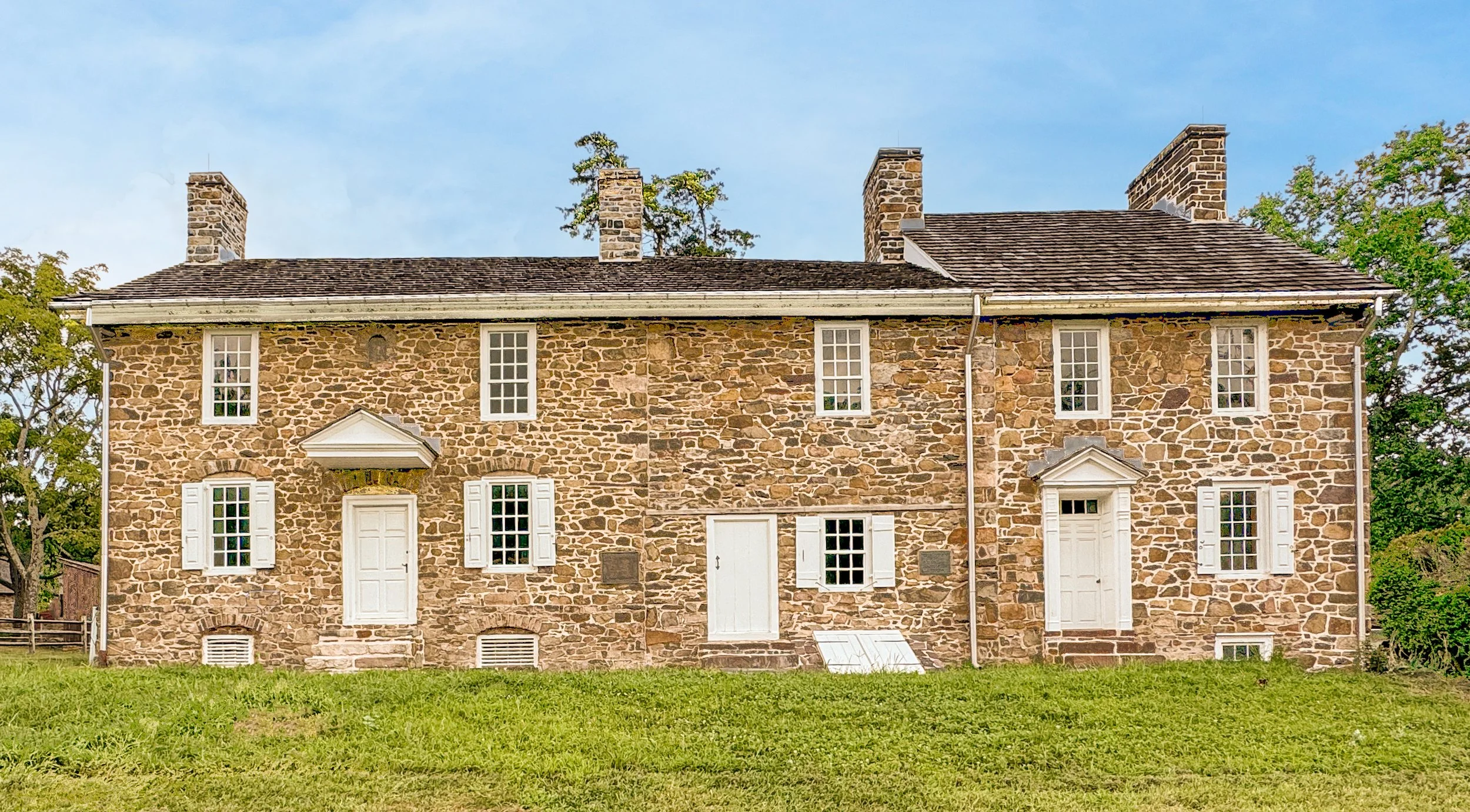
The Thompson-Neely House has deep connections to both Quaker and Presbyterian families. Image source: Lee J. Stoltzfus.
Around 1740, Quaker mill owner John Simpson and wife Hannah (Delaplaine) Simpson built the central section of the house. After Simpson’s death, his widow married Robert Thompson, a Scots-Irish Presbyterian miller, who enlarged the house. Thompson added the west section in 1757 (on left above) and added a second story to the central portion. The east section of the house (on right above) was added ca. 1788 for the Thompsons’ daughter and her husband, William Neely.
Although Hannah Simpson married outside the Quaker faith, she was not read out of meeting. She remained active among Friends and was even appointed to a clearness-for-marriage committee in 1764. Hannah was living here at this house when it served as a temporary military hospital for Washington’s troops. Two of Hannah and John Simpson’s sons became prominent Quaker ministers: John Simpson and James Simpson.
Buckingham Friends School
Repeating this Bucks County Aesthetic:
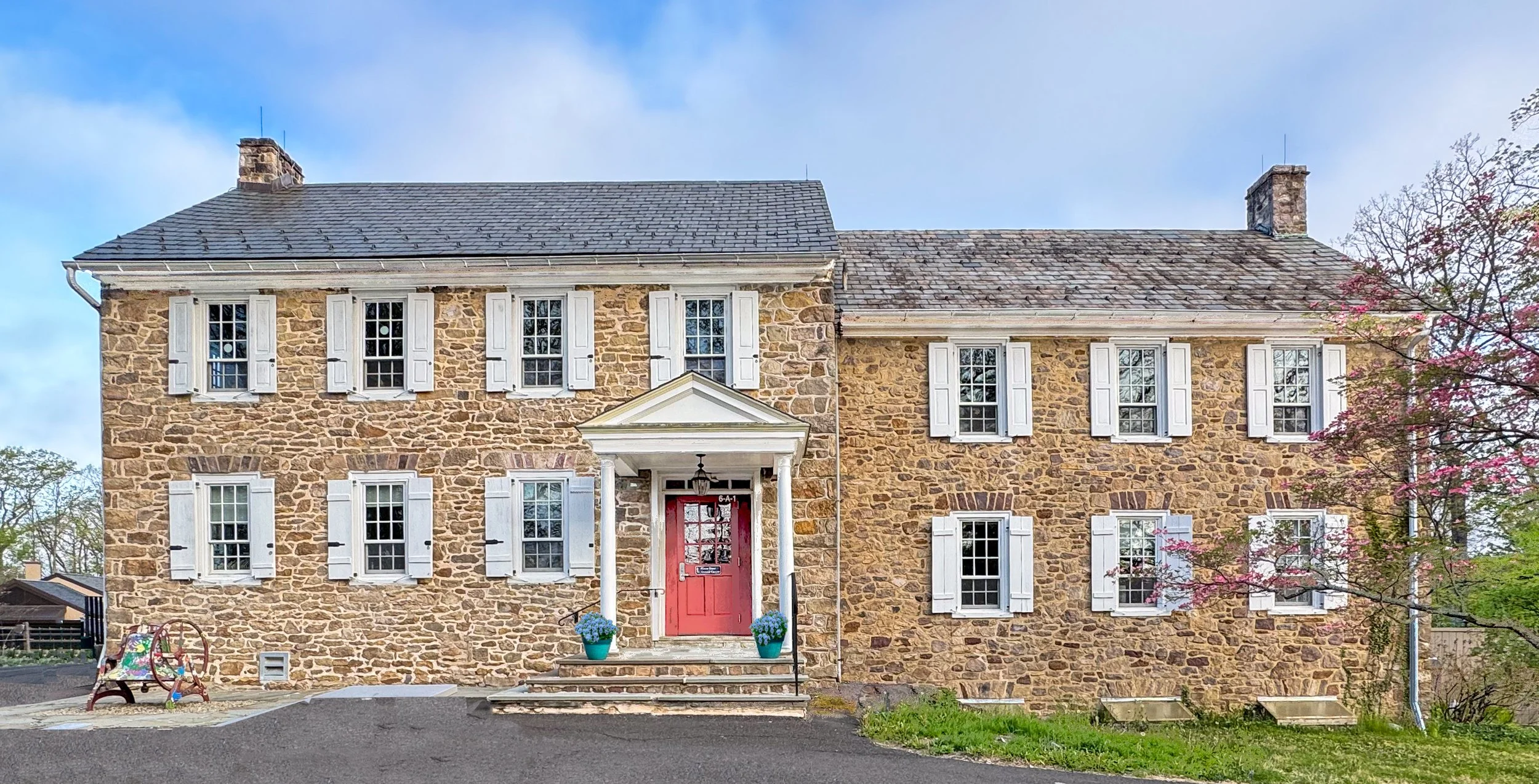
The Buckingham Monthly Meeting founded this school in 1794. The building repeats design motif of the meetinghouse located next door. Image source: Lee J. Stoltzfus