
Historic Quaker Houses of Bucks County, PA
Byecroft: Home of the Bye Family
Since 1702
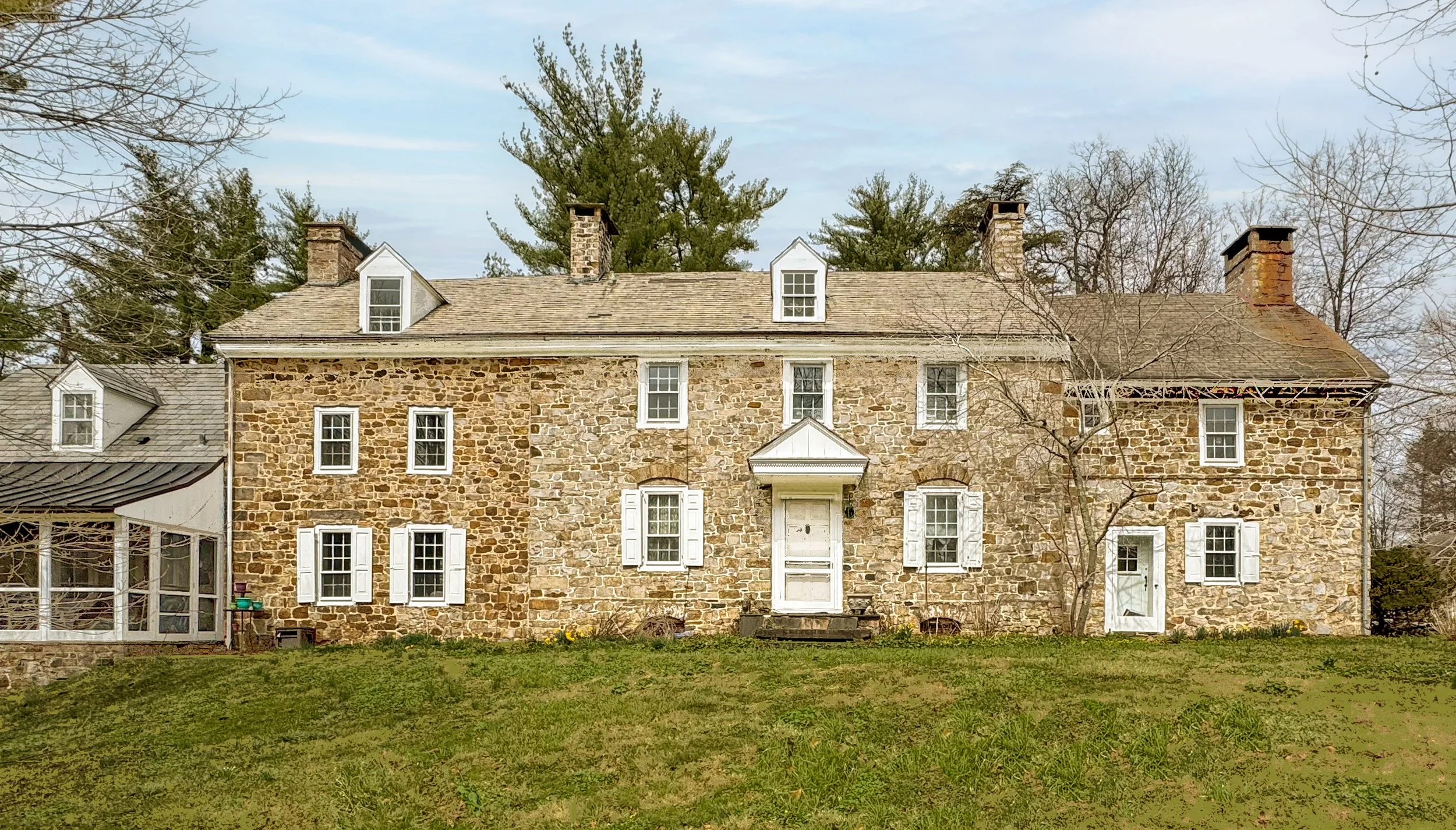
Above: The farmhouse at Byecroft is a stone-and-mortar monument to the Bye family and the Quaker history of Bucks County. Image source: Lee J. Stoltzfus.
Multiple Farmhouse Additions for
Multiple Bye Family Generations:
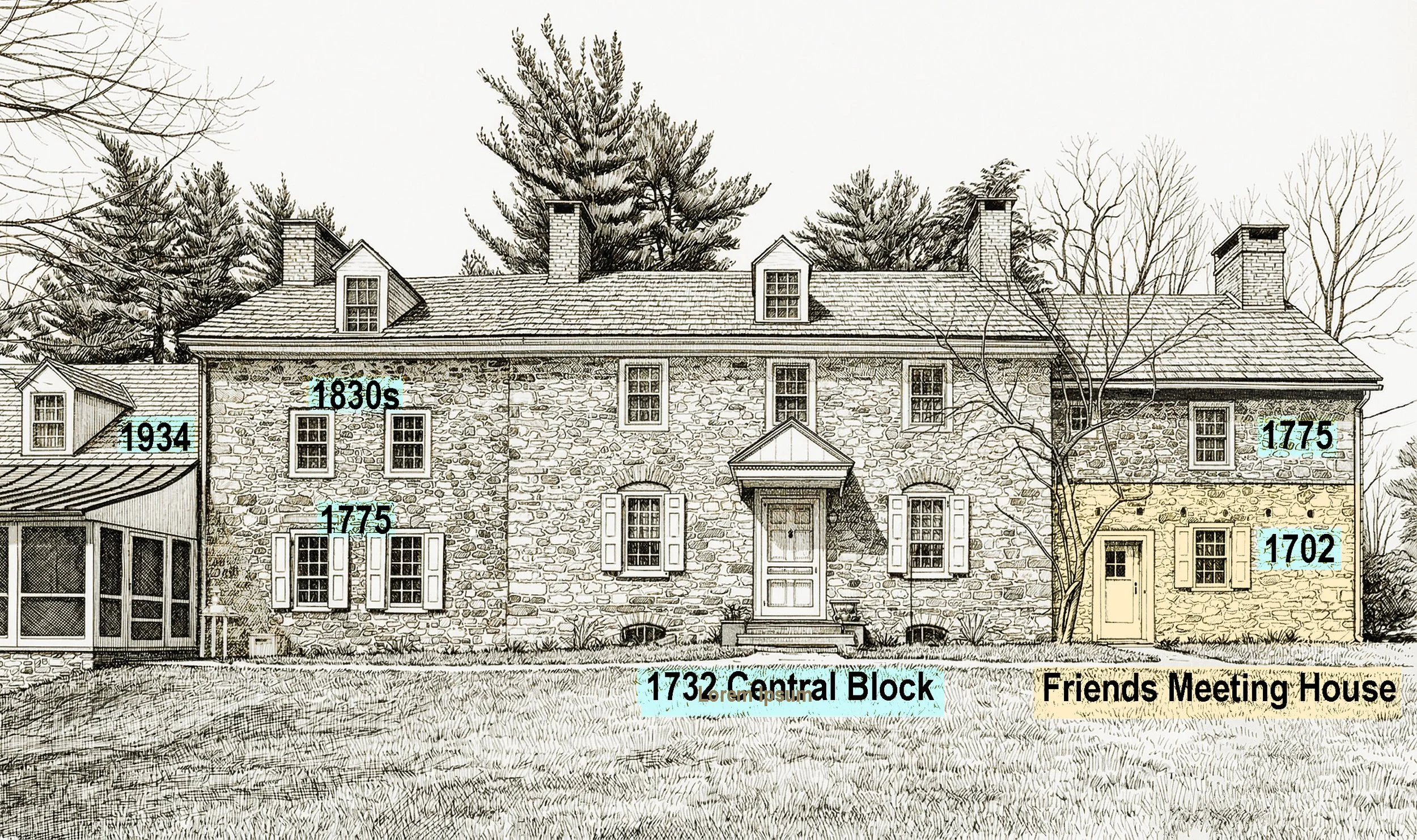
Above: The additive design of the Byecroft farmhouse is typical of many historic houses in Southeast Pennsylvania. Members of the Bye family have lived on this farm for more than 300 years. The family ownershp continues today. Successive generations of Byes adapted the buildings to their own use. Much of the farmhouse’s original interior details survive.
Local Friends met at this farmhouse until 1710, when they build a meetinghouse. The farm’s name “Old Congress” means Old Meeting Place. Thomas and John Bye were instrumental in founding Buckingham Meeting, which became one of the largest in Pennsylvania.
The Farmhouse’s Central Block
Built in 1732:
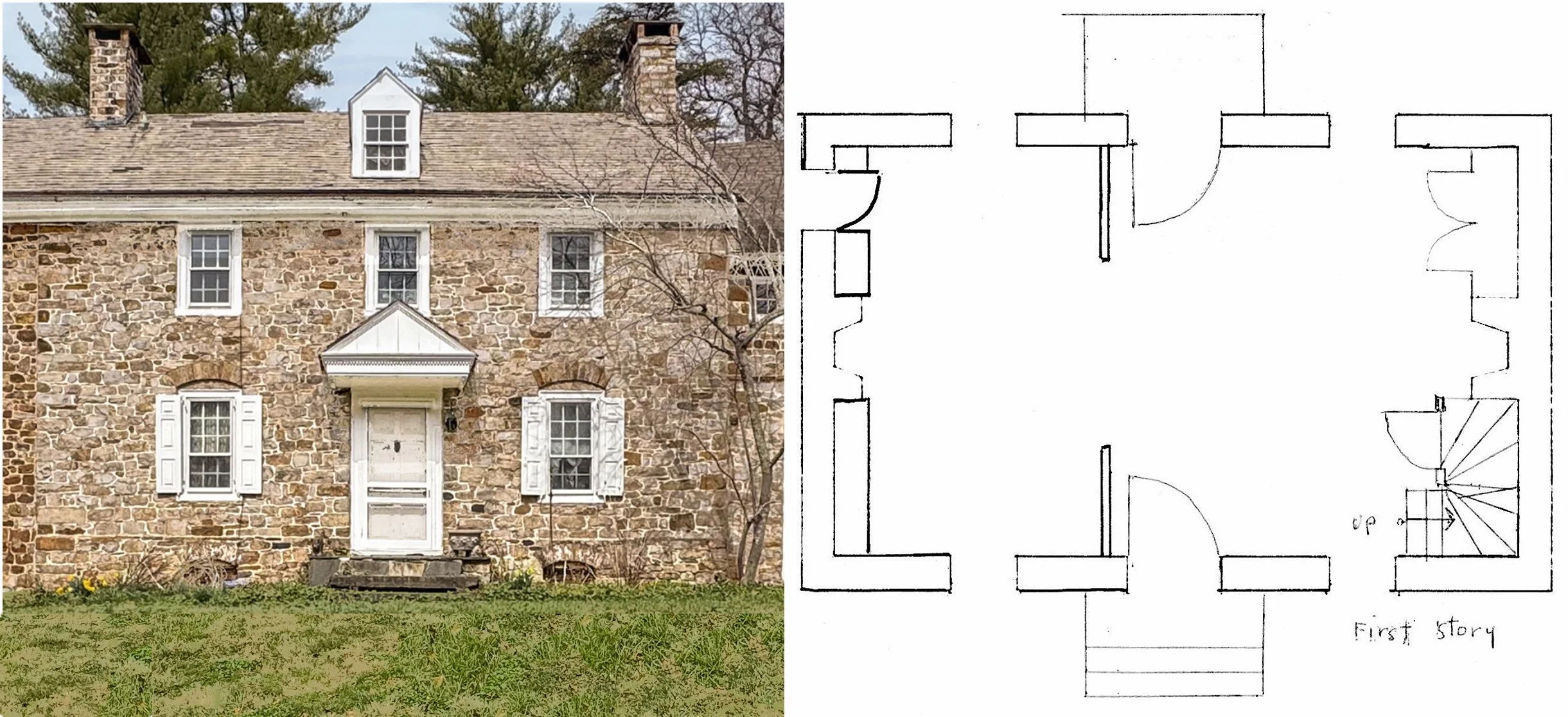
Above: The floor plan of the central block is a traditional hall-and-parlor plan typical of many early Anglo Quaker houses in Pennsylvania. Image source: House: Lee J. Stoltzfus. Floor plan: National Register of Historic Places, Margaret Bye Richie.
Byecroft in the Book Stone Houses
With Text by Historian Margaret Bye Richie
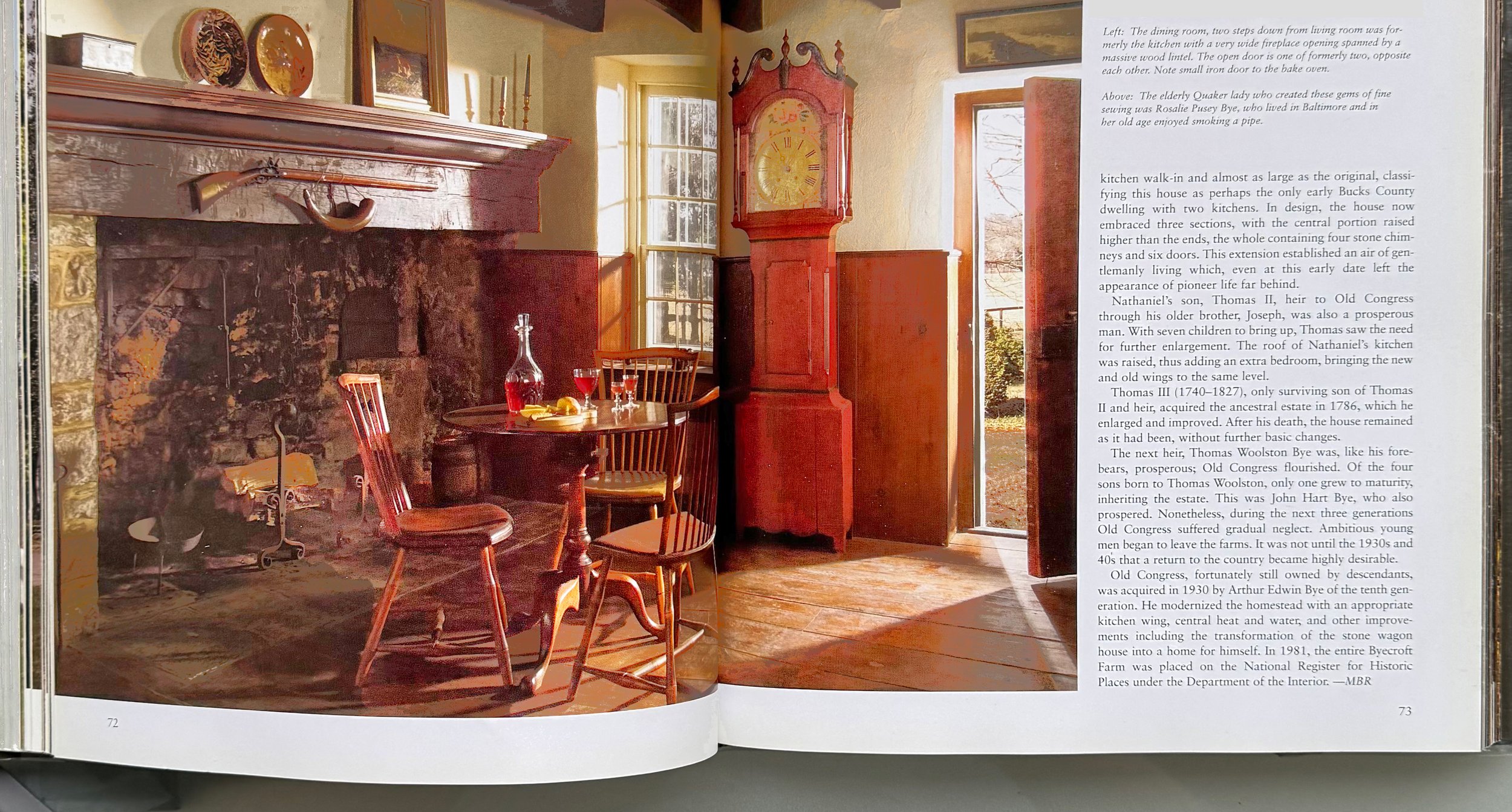
Above: This beautiful book about Bucks County’s stone house includes text by Margaret Bye Richie, John D. Milner, and Gregory D. Huber. Margaret Richie lived for decades here at Byecroft, her family’s ancestral homestead, along with her husband Thomas Richie.
She received a Ph.D. at age 73 from the University of Pennsylvania. Margaret Richie wrote and lectured about Bucks County’s historic architecture. She also wrote Byecroft’s nomination to the National Register of Historic Places.
Byecroft was Restored by Historian Arthur Edwin Bye
An Artist, Art Dealer, and Art Restorer
(Margaret Bye’s Father)
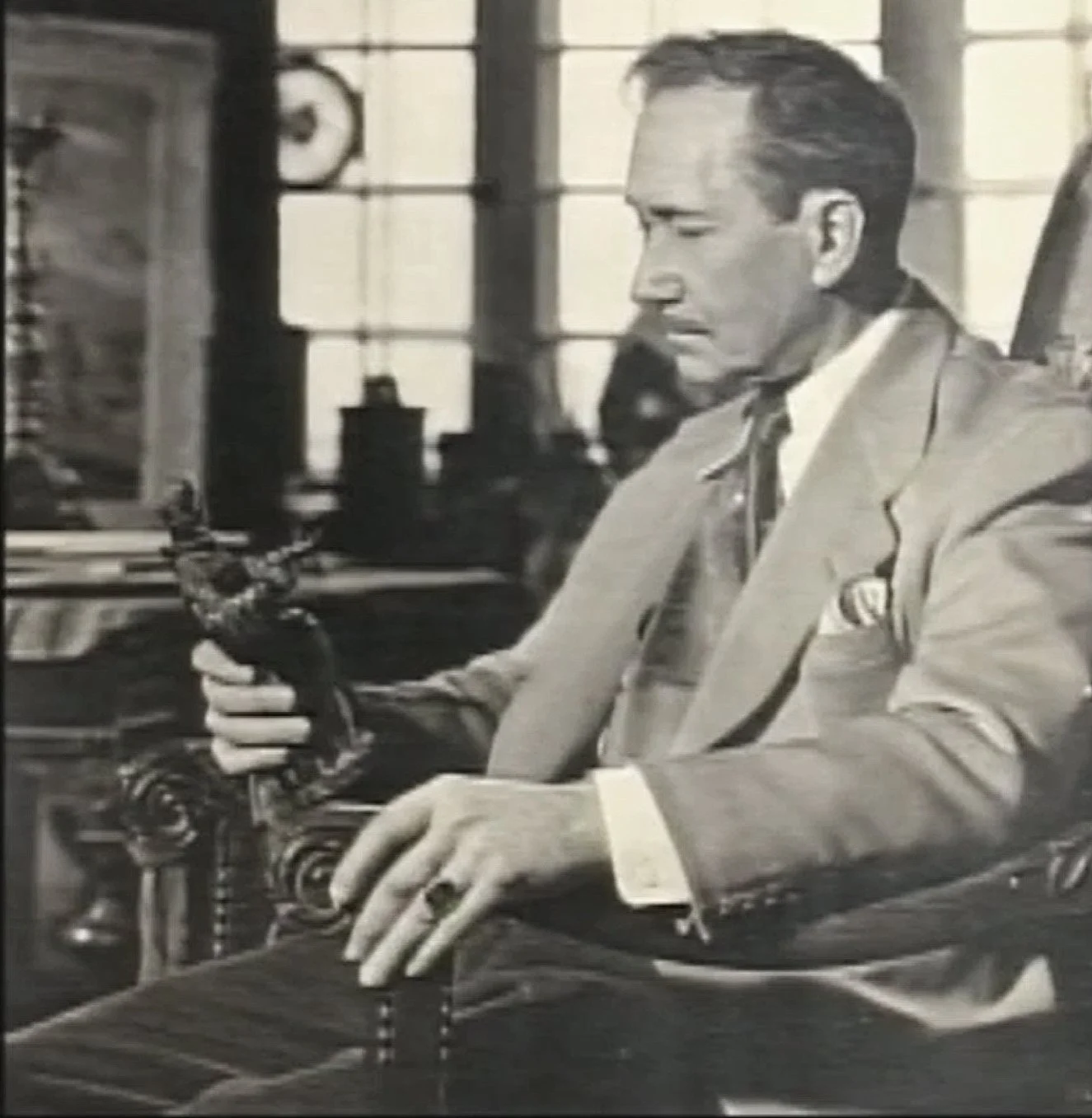
Above: Arthur Edwin Bye purchased the 110-acre Byecroft property in 1931. He lived here from 1932 to his death in 1969. Image source: Doylestown Historical Society, YouTube
The Cultural Contributions of Arthur Bye
Artist, Educator, and Historian:
Contributions to the Arts:
Served as curator of paintings at the Philadelphia Museum of Art during the 1920s.
Lectured in art history at institutions including Vassar College and Lafayette College.
Acted for many years as a technical adviser to the art department at Princeton University.
Painted landscapes inspired by the rural scenery of Bucks County.
Conducted art conservation and restoration work from his Philadelphia studio.
Contributions as a Historian:
Researched and published a history of his Quaker family heritage (1956).
Restored the historic 18th-century family homestead, Byecroft.
Wrote books and articles about regional history of the Delaware Valley.
Drawings of Byecroft by Arthur Bye
Evolution of the House:
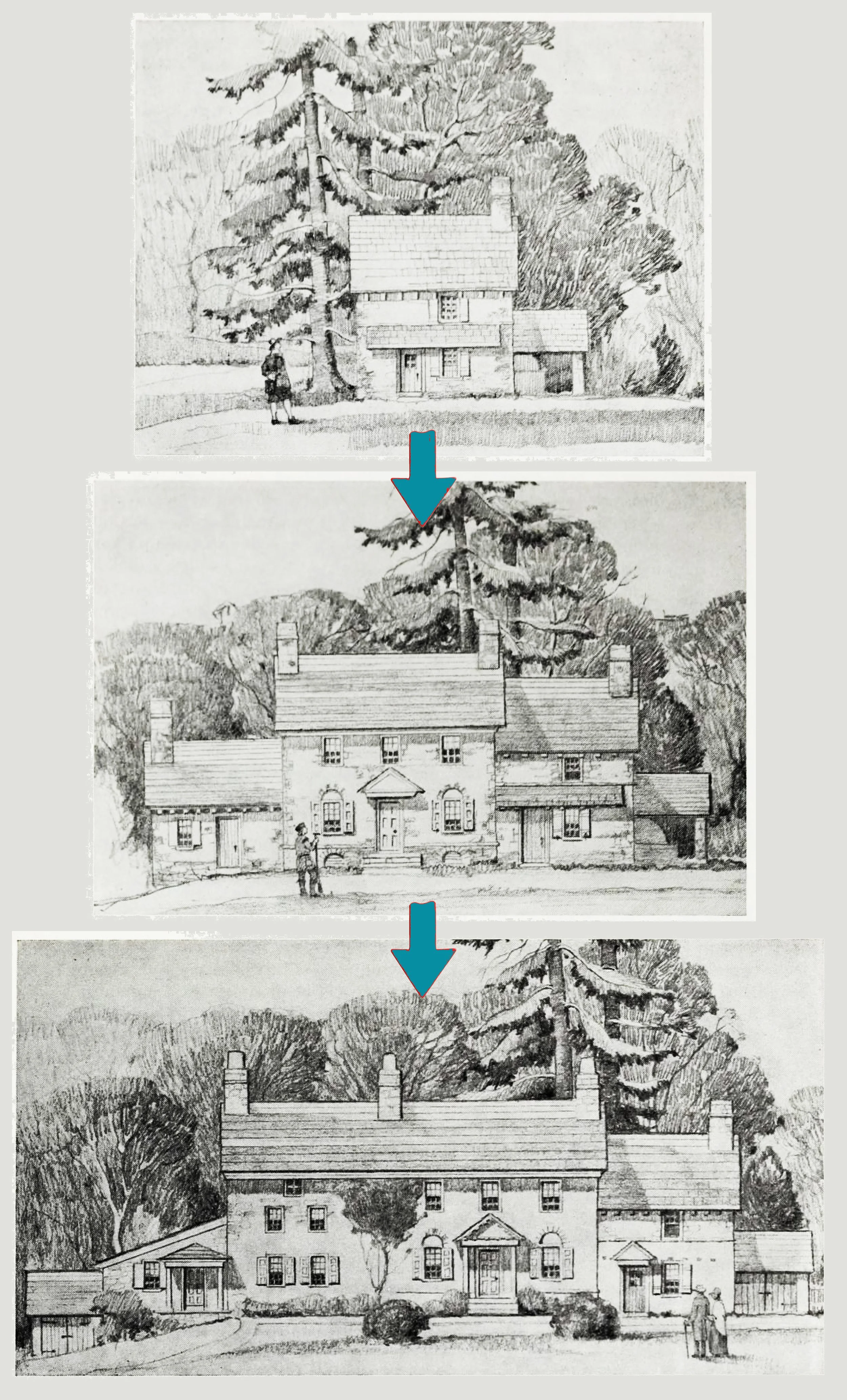
Above: Arthur Bye’s drawings of the farmhouse at Byecroft show the enlargement of the house over time. Drawings source: History of the Bye Family…, Arthur Edwin Bye, 1956, Internet Archive.
Arthur Bye’s Influential Writings about Edward Hicks
Bye’s 1936 Article in Antiques Magazine:
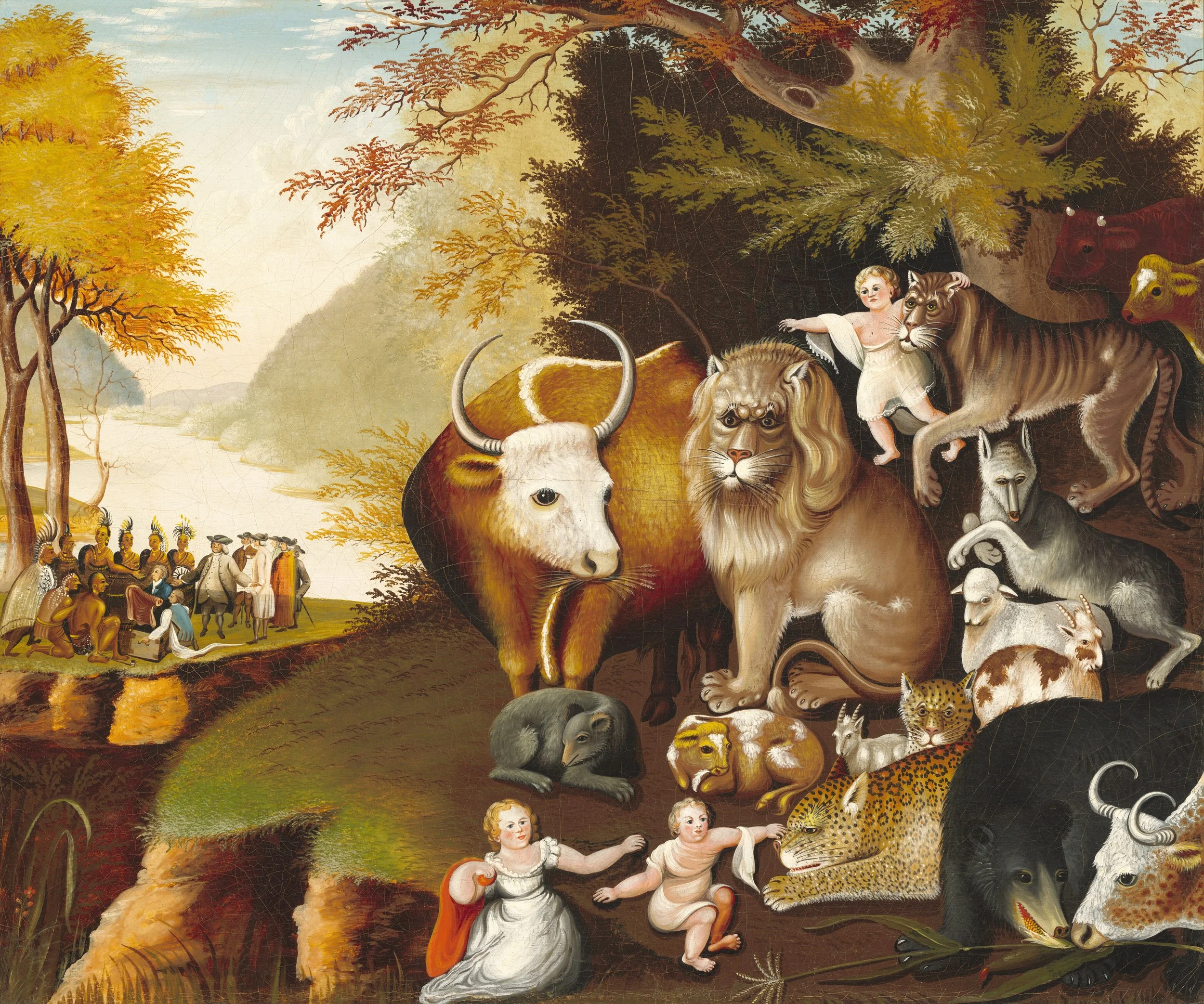
Above: Peaceable Kingdom by Quaker artist Edward Hicks of Bucks County, ca. 1834. Image source: National Gallery of Art.
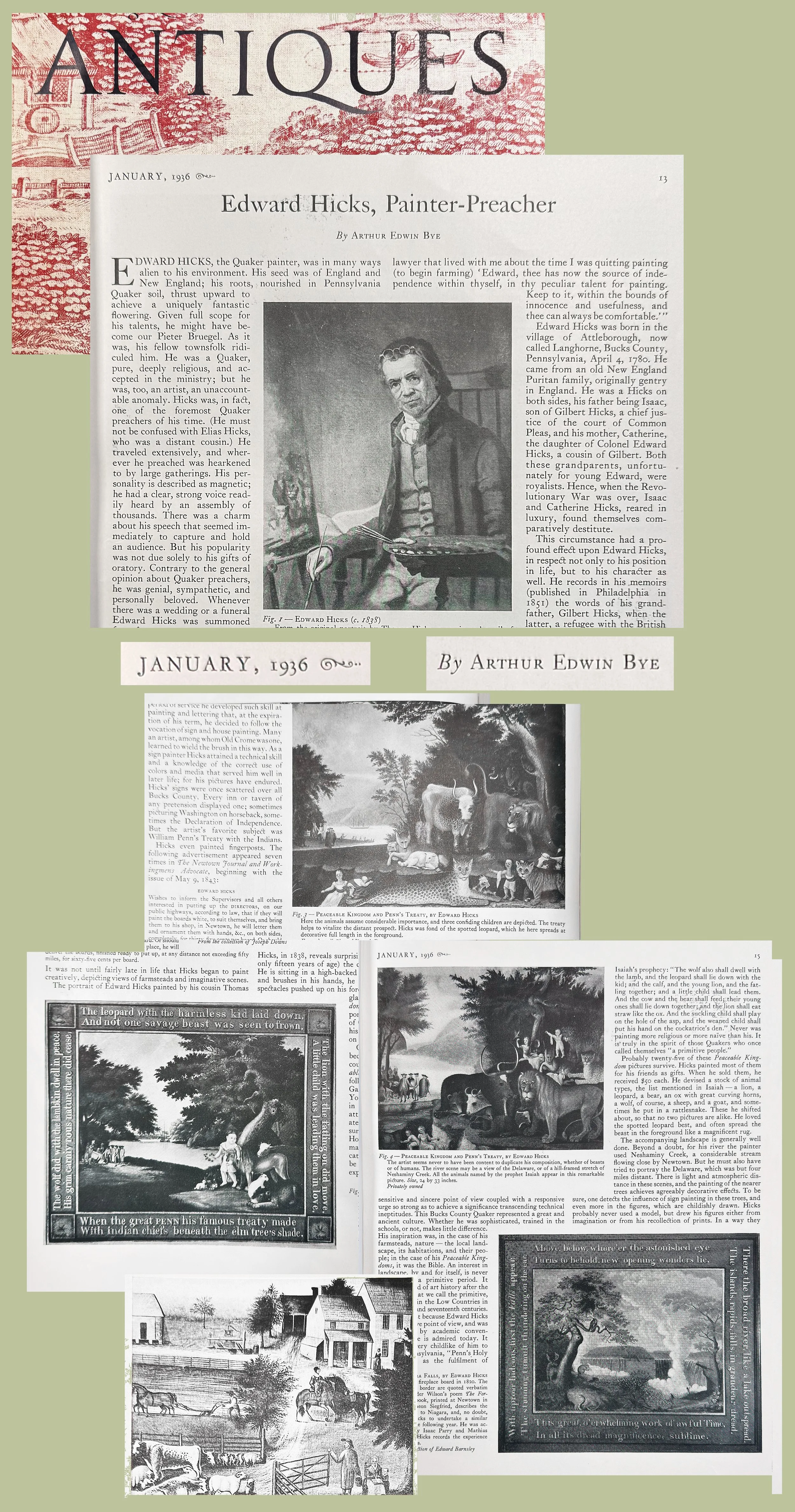
Image source: Antiques, January 1936. Photographed at Winterthur Library.
Above: This influential 1936 article in Antiques magazine was an important moment in the national “rediscovery” of Quaker artist Edward Hicks.
Arthur Edwin Bye was an early and influential writer on Edward Hicks. Bye’s writing helped publicize Hicks as an important figure in American folk art.
Arthur Bye’s Writings about Edward Hicks
While He Lived at Byecroft:
Writings by Arthur Bye about Quaker artist Edward Hicks include:
1936: “Edward Hicks, Painter-Preacher” in Antiques (January 1936)
Early influential article on Edward Hicks that situates him as a Quaker artist and key figure in American folk art.
1941: “Some Early Painters of Bucks County” in The Towpath (March 1941)
Includes discussion of Hicks alongside other early Bucks County artists, emphasizing his importance.
1943: “Edward Hicks, 1780 -1849” in Bulletin of Friends’ Historical Association (Autumn 1943)
Scholarly biographical overview of Hicks’s life and Quaker context.
1951: “Edward Hicks” in Art in America (February 1951)
Reassessment of Hicks’s art and his place in the American folk art canon.
1959: A Friendly Heritage along the Delaware
A history of prominent Quakers of Bucks County, including Edward Hicks
A 1934 Bucks County Landscape Painting
By Arthur Edwin Bye:
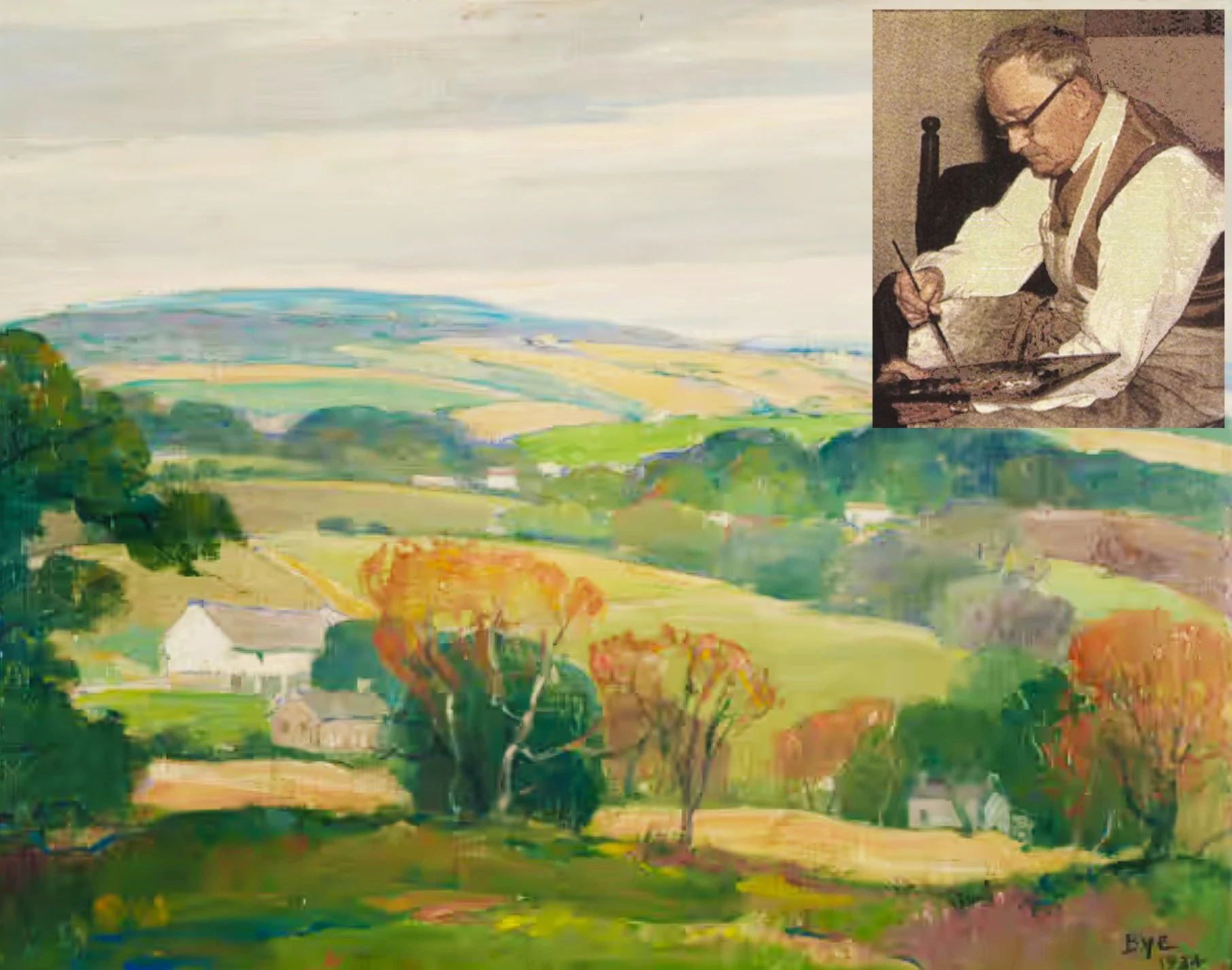
Above: A 1934 oil painting by Arthur Edwin Bye, and a photograph of him ca. 1966 at age 80. Painting source: Woodmere Art Museum. Portrait source: Michener Art Museum.
Byecroft: Boyhood Home of Artist Ranulph Bye
Son of Arthur Edwin Bye:
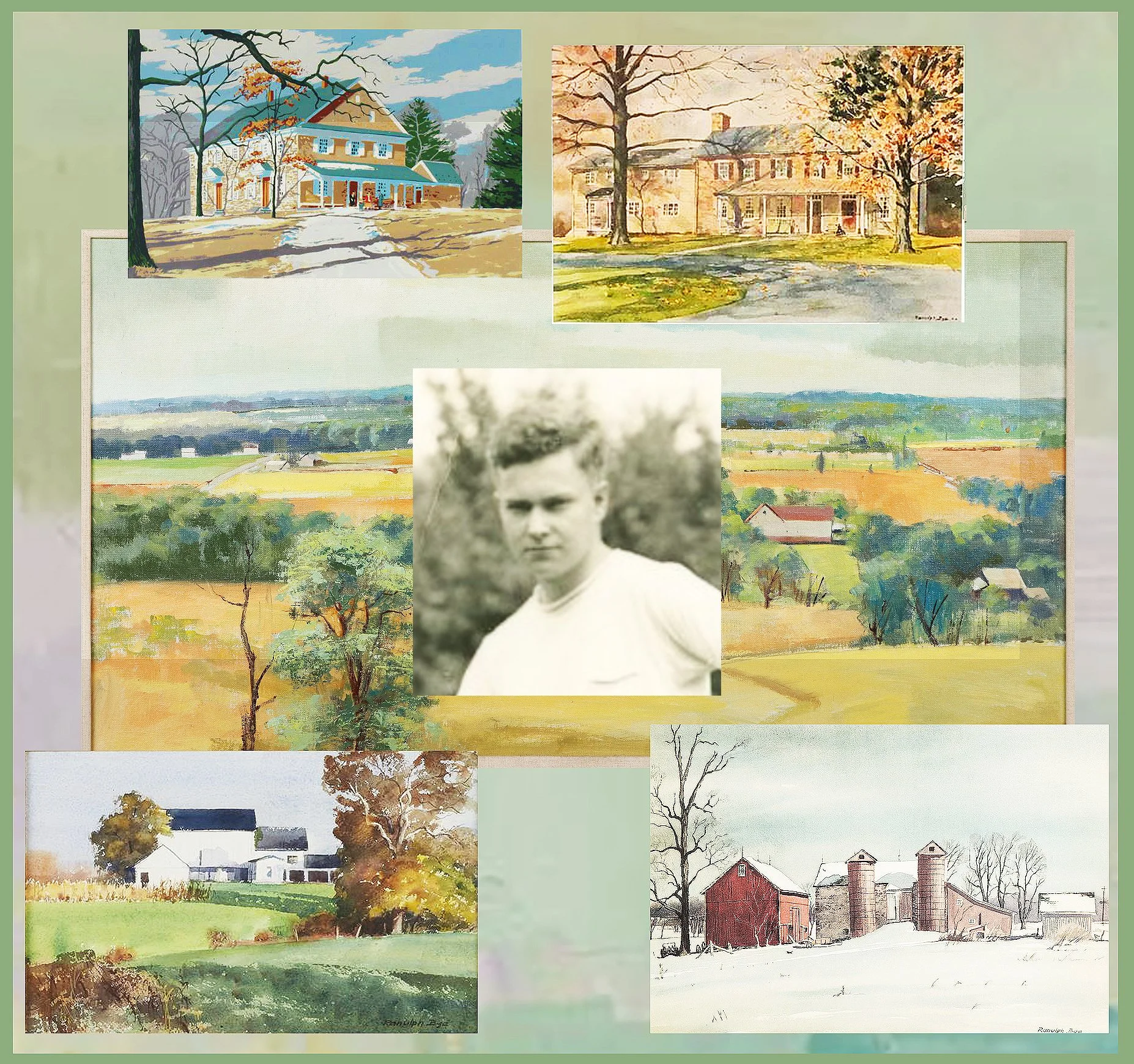
Above: Paintings by Ranulph Bye, who grew up at Byecroft, and a portrait of him. Images sources: Paintings: Invaluable, Portrait: Solebury Township Historical Society.
Ranulph Bye (1916–2003) was a distinguished American watercolorist whose artistic identity was deeply shaped at Byecroft. His father, Arthur Edwin Bye, purchased and restored this ancestral homestead beginning in 1931. Growing up amid the 18th-century stone architecture and rural landscape of Bucks County, Ranulph Bye developed a lifelong fascination with the region’s farmsteads and vernacular buildings.
Ranulph Bye taught for many years at Moore College of Art and Design while publishing illustrated books on Bucks County. His paintings are held in major collections, including the Smithsonian Institution and the Michener Art Museum.
The1768 Buckingham Quaker Meetinghouse
Painting by Ranulph Bye:
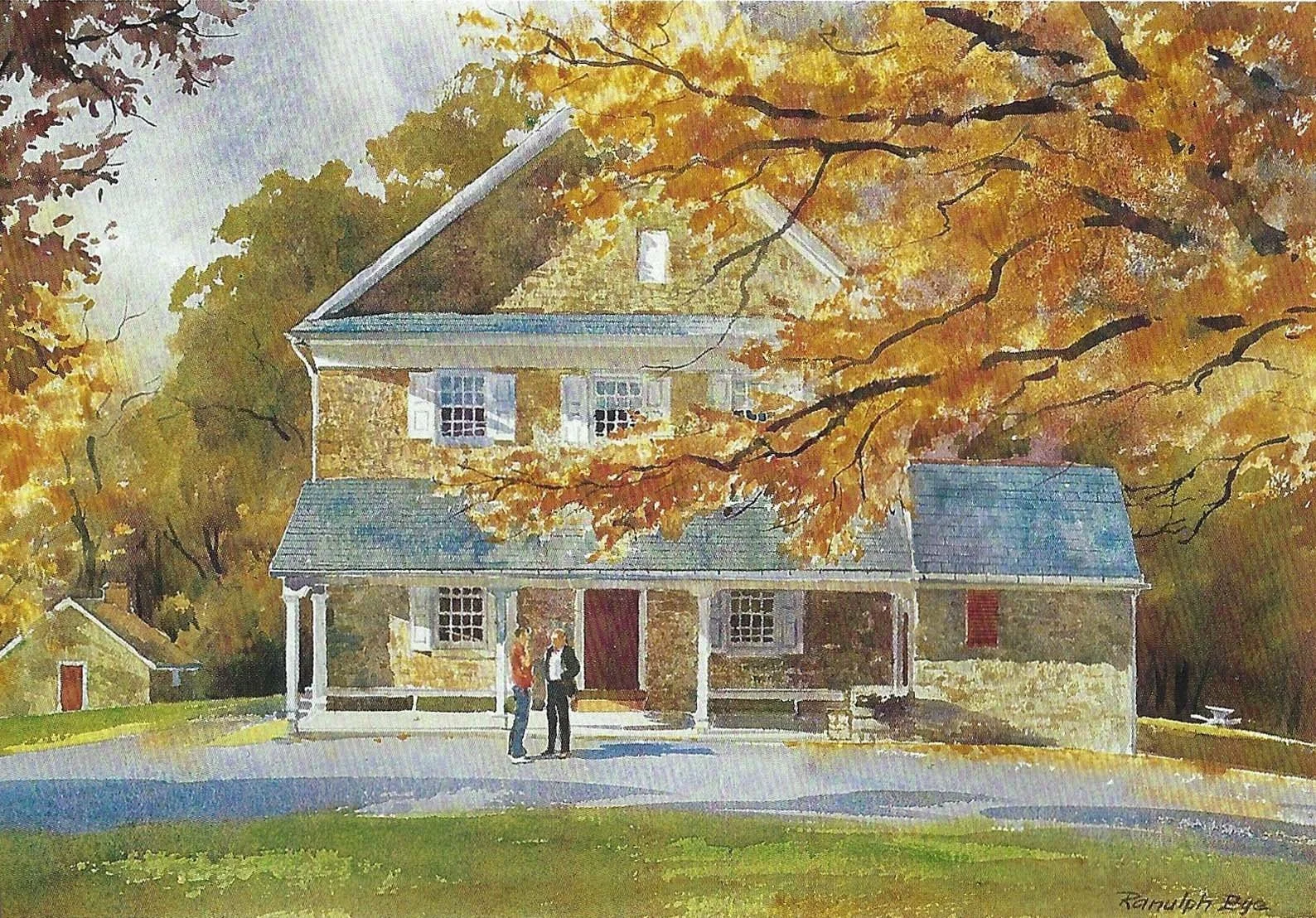
Above: Multiple generations of the Bye family have been active members of the Buckingham Friends Meeting. Nearby, the Byecroft farmhouse reflects the same architectural simplicity of design.
Buckingham Friends School is adjacent to this meetinghouse. In 1935, while Arthur Edwin Bye was restoring the Byecroft farmhouse, he also designed a three-room addition for the Friends school building. Image source: Bucks County History Group, Facebook.
Plain Farmhouse & Plain Meetinghouse
For Prosperous, Peaceable Quakers:
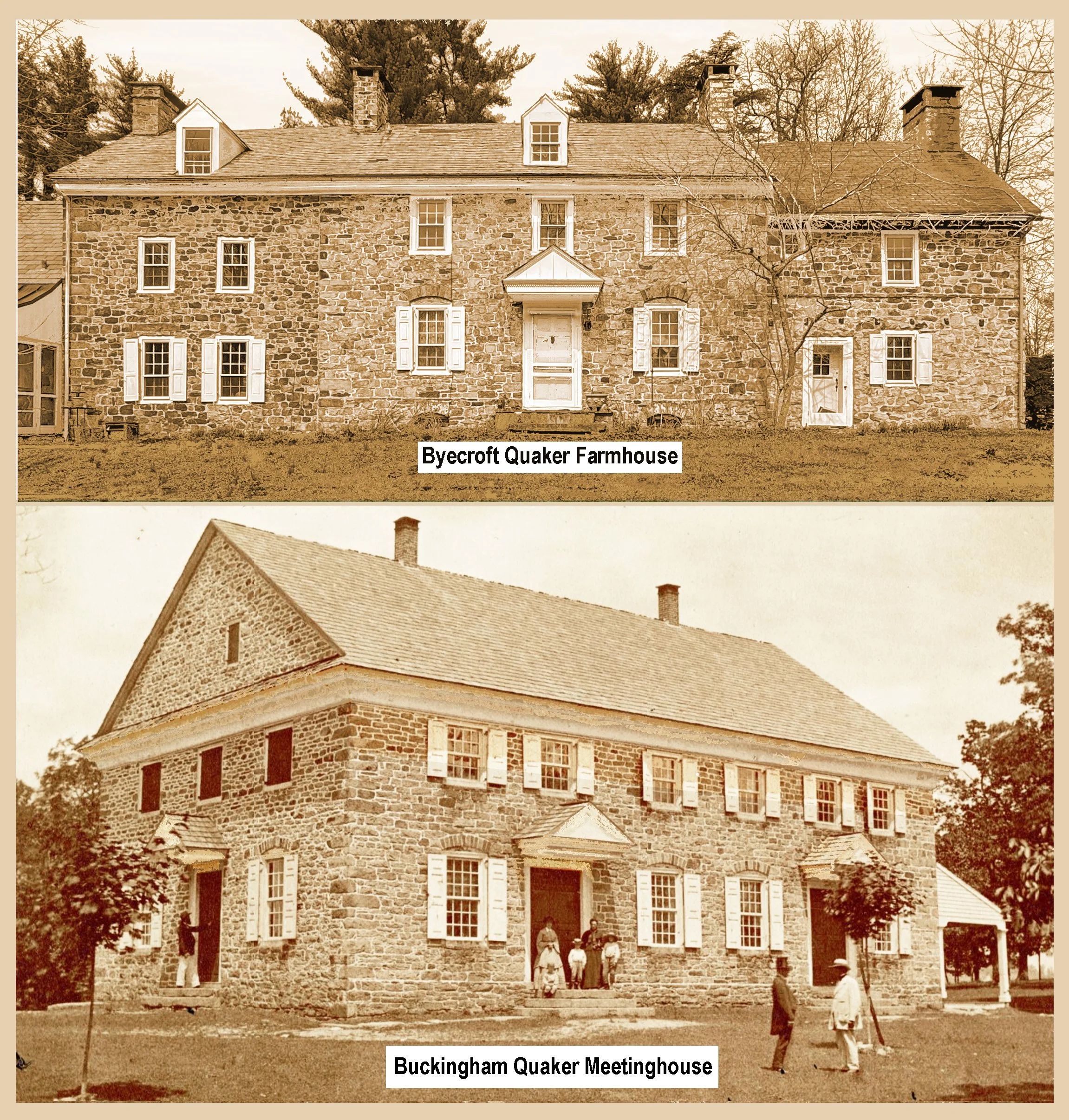
Image source: Meetinghouse: TriCollege Libraries.
The plain Quaker aesthetic of the Buckingham Friends Meetinghouse repeats the minimalism of the nearby Bye farmhouse. Master mason Mathias Hutchinson constructed the sandstone meetinghouse in 1768, which was 36 years after the Bye family built the central block of their nearby Byecroft farmhouse. The Byes were active members of this meeting.
These beautiful stone buildings are icons of Quaker architecture, showcasing a radical simplicity of design. The minimalism of this vernacular architecture feels much like Modernism.
Architectural Photographer Randl Bye
Grandson of Arthur Edwin Bye
At Byecroft:
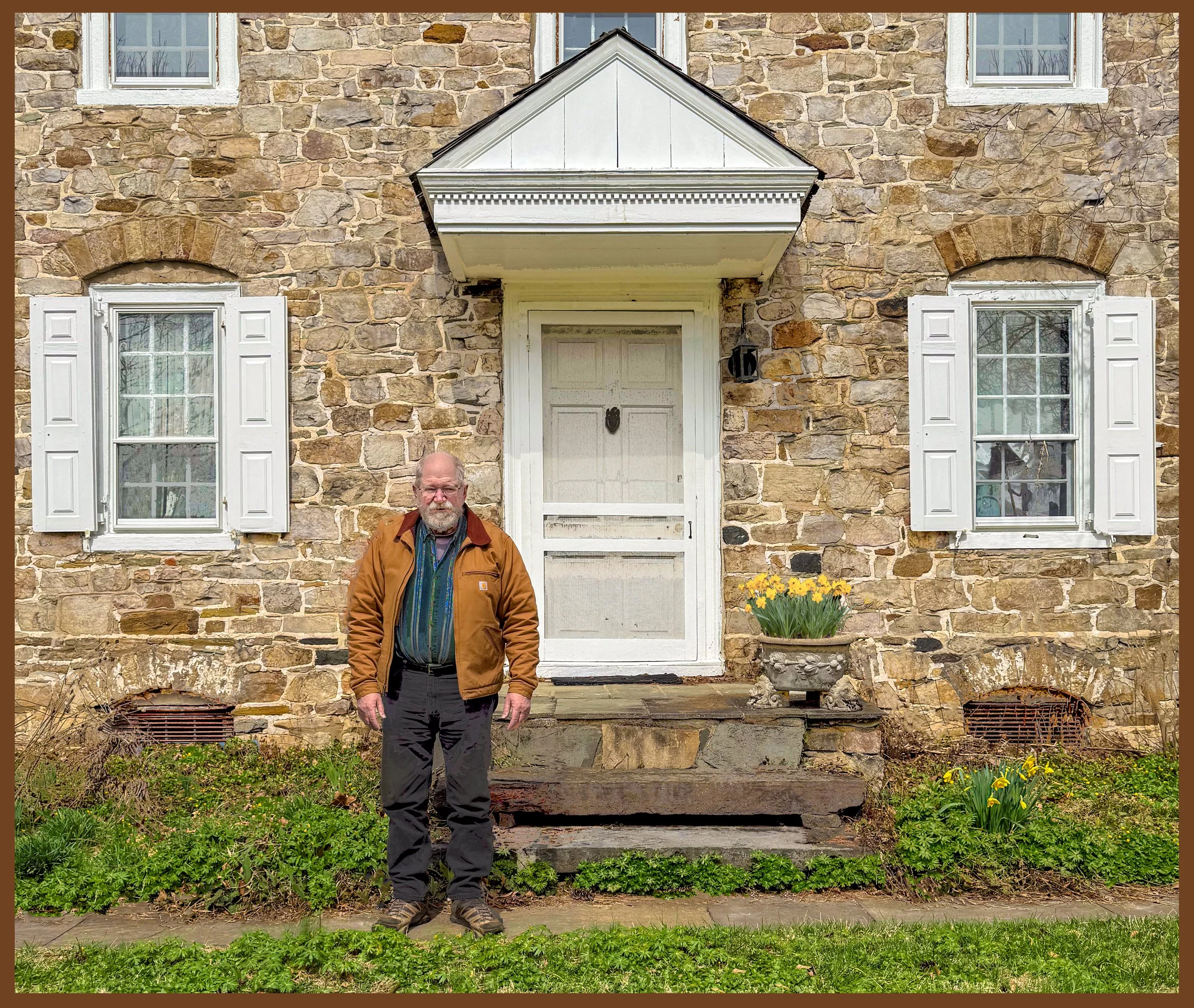
Above: Randl Bye inherited Byecroft from his grandfather Arthur Edwin Bye. He lives here on the property and is an architectural photographer. The Bye family continues their family’s longstanding commitment to the arts and historic architecture of Bucks County. Image source: Lee J. Stoltzfus.
Links: