
Historic Quaker Houses of Bucks County, PA
Paxson Family: Rolling Green Farm
Built 1748 and ca. 1780s
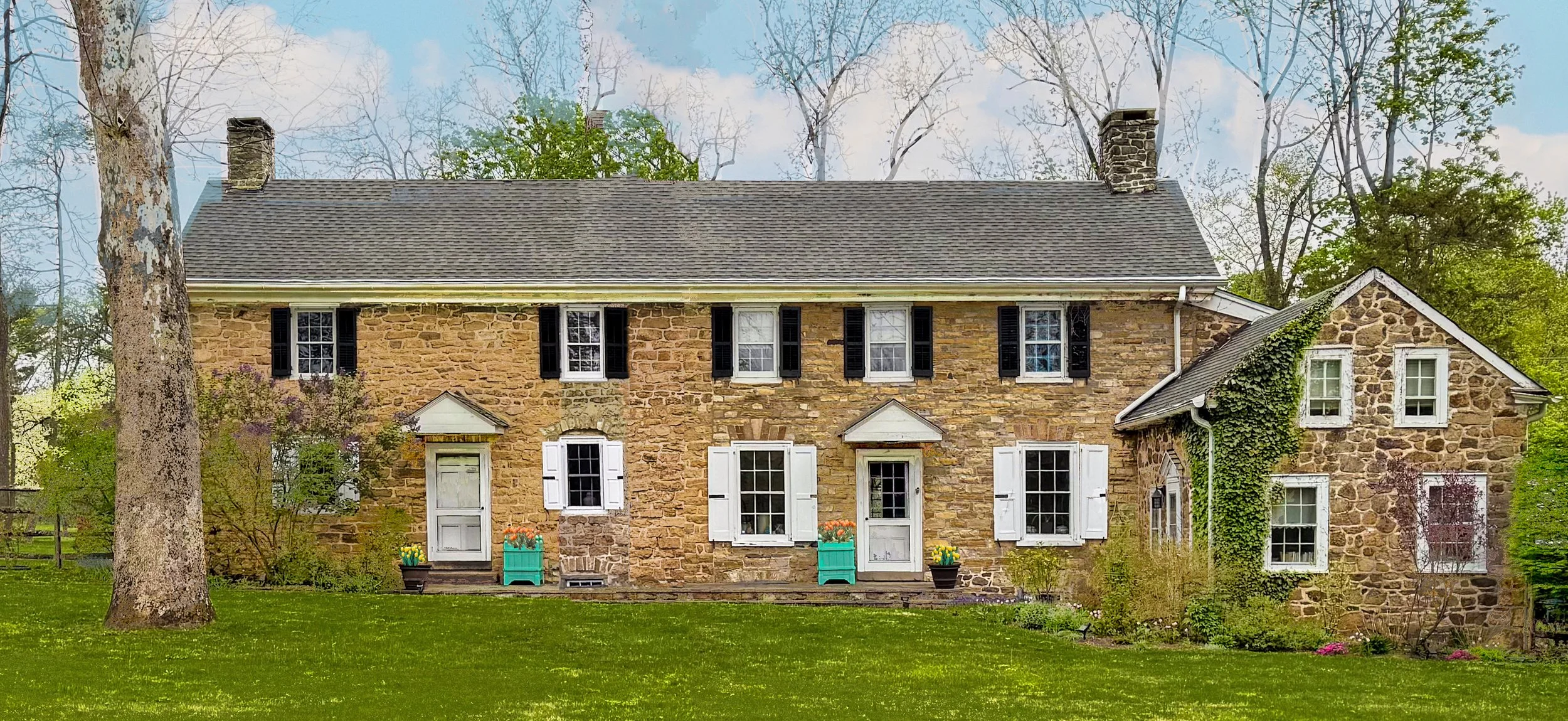
Above: This sandstone farmhouse showcases the region’s signature door hoods, with two hoods on the front elevation and two hoods on the rear. Nearby Quaker meetinghouses also have paired door hoods on front and rear elevations. Image source: Lee J. Stoltzfus.
This farm is also known as the Benjamin Paxson farm, named for Quaker farmer Benjamin Paxson (1739 - 1814) who lived here with wife Deborah (Taylor) Paxson (1742 - 1792).
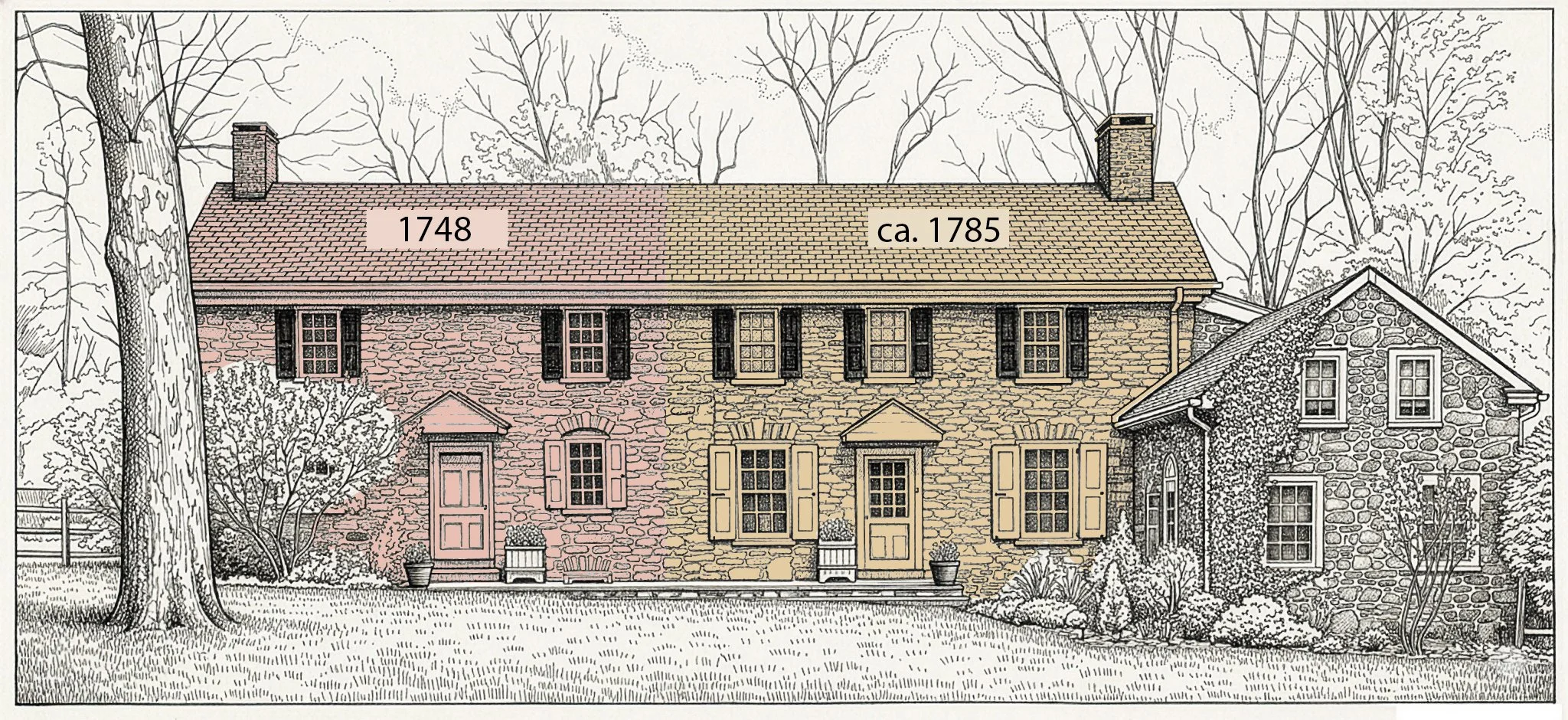
The Quaker farmhouse at Rolling Green Farm represents the typical additive style of regional construction, where families frequently built additions when they wanted more space. Image source: Lee J. Stoltzfus.
The 1748 section was built by Enoch Pearson after he purchased the 60-acre property in 1746. The house’s south elevation includes segmental arches over the first-floor windows.
The 1780s - 1790s addition has keystone arches above its first-floor windows rather than the earlier segmental arches. The Paxson family owned the homestead during this era and lived here at the farm for generations.
Segmental Arches vs. Flat Arches
(Colonial-Era Arches vs. Later Arches)
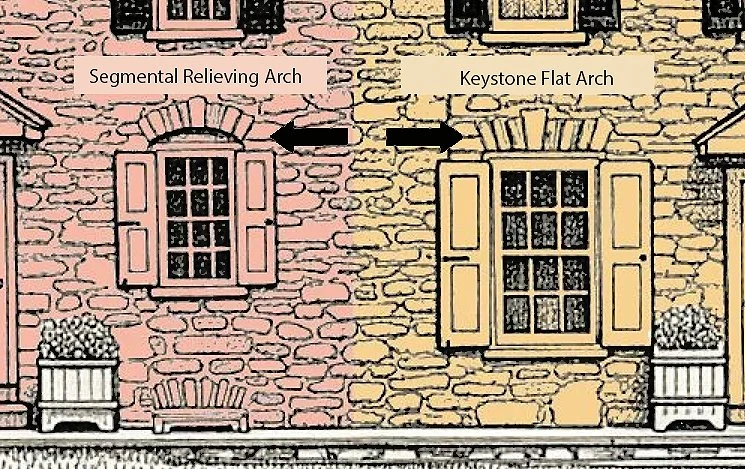
Above: Early vernacular houses in Bucks County frequently used segmental arches over windows and doors from ca. the 1740s through the 1770s. Houses constructed between 1780 and 1840 increasingly favored flat arches, also known as jack arches, rather than the earlier curved arches. See: Bucks County Farmhouses, Jeffrey L. Marshall, 2009. Image source: Lee J. Stoltzfus.
An 1850 Map Showing Rolling Green Farm:
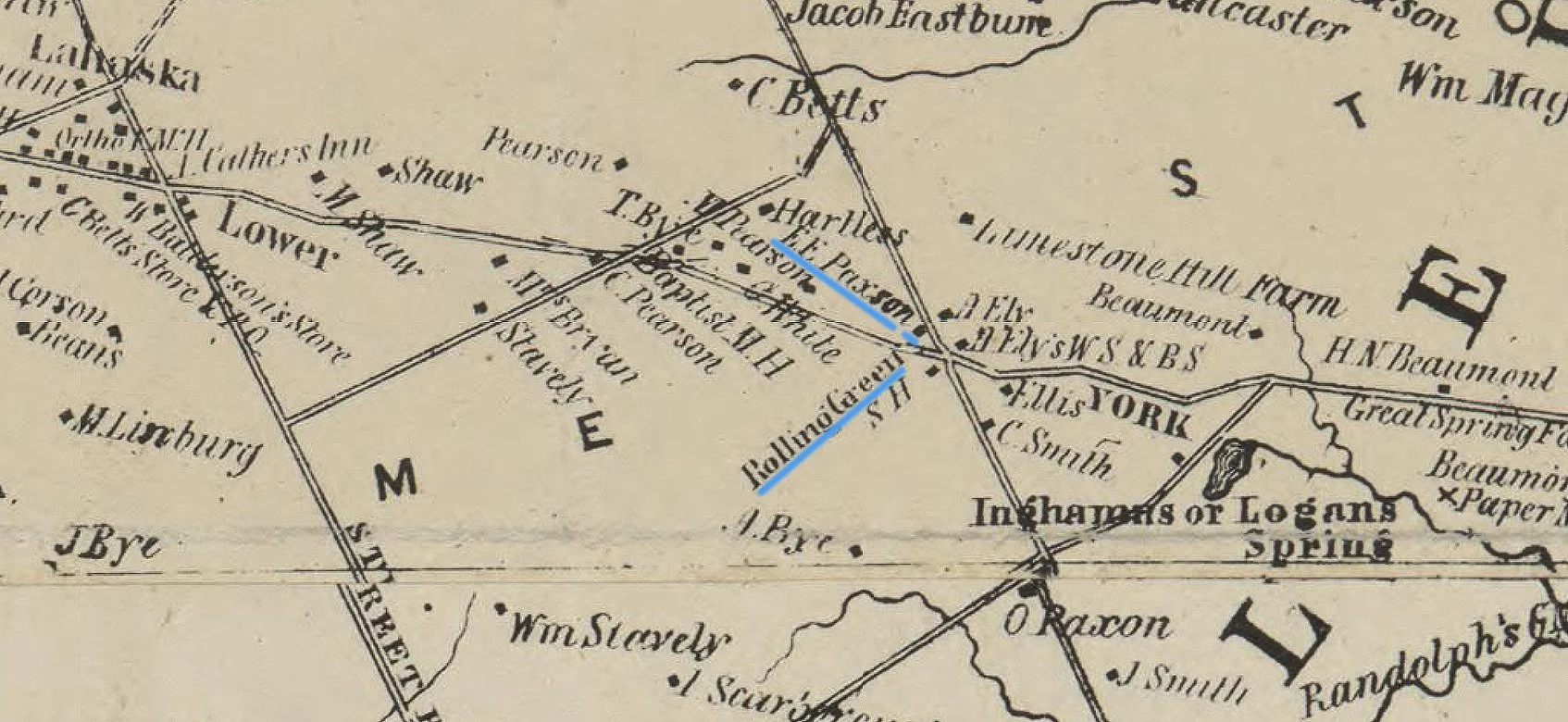
Above: This 1850 map identifies E. E. Paxson (Elias Ely Paxson) at Rolling Green Farm. A schoolhouse, marked “S.H.,” is located across the road on the map. Image source: Map of Bucks County, Pennsylvania, 1850, Library of Congress, (underscores added).
Elias Ely Paxson and Family
Identified on the 1850 Map:

This farm is also known as the Benjamin Paxson farm, named for Benjamin Paxson (1739 - 1814). He and his wife Deborah (Taylor) Paxson (1742 - 1792) were the grandparents of Elias Ely Paxson, through their son Thomas Paxson and his wife Hannameel (Canby) Paxson. Text image source: Martha Paxson Grundy, Rootsweb.
The Barn at Rolling Green
Built in the 1740s:
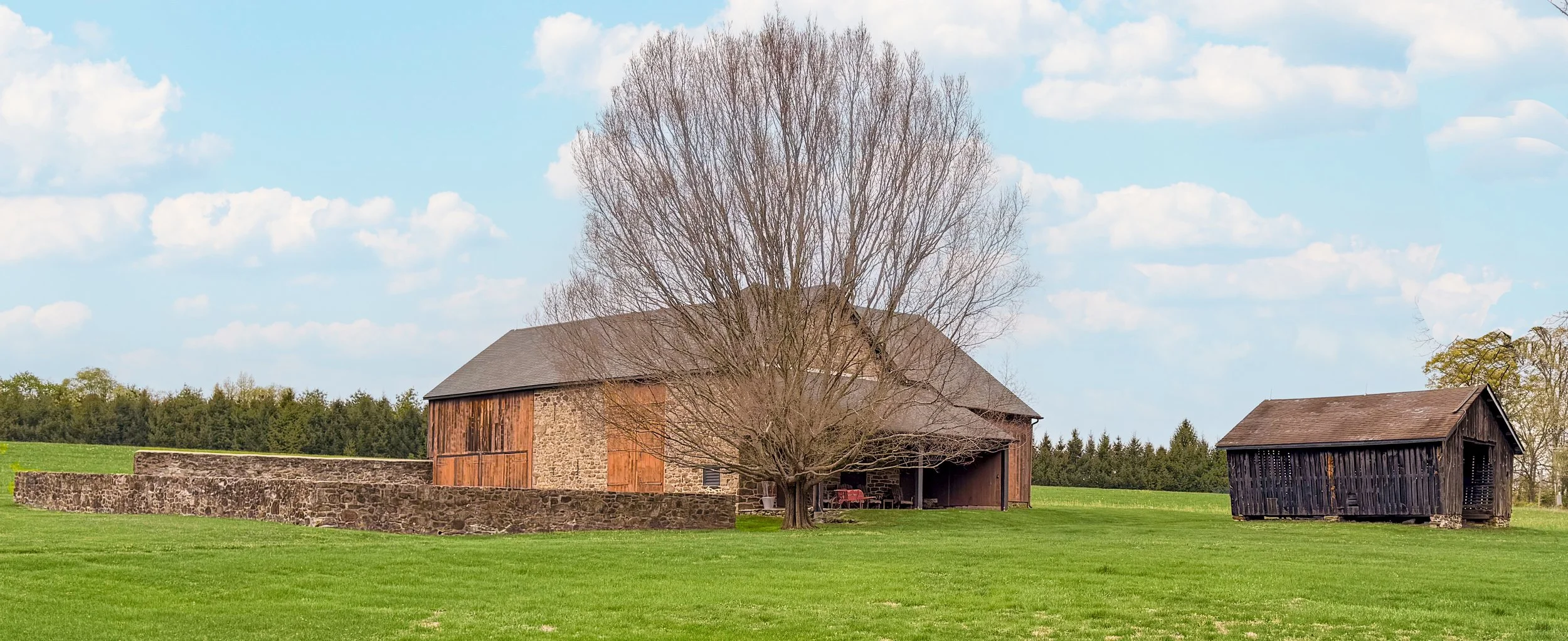
Above: The original section of this English-style barn apparently dates to the 1740s, when Enoch Pearson built the first section of the farmhouse. A double corncrib stands near the barn, although corn storage is only a memory for this corncrib. Image source: Lee J. Stoltzfus.
The Burgess Lea Farm
Built by Benjamin Paxson’s Brother Isaiah
House Constructed in 1785:
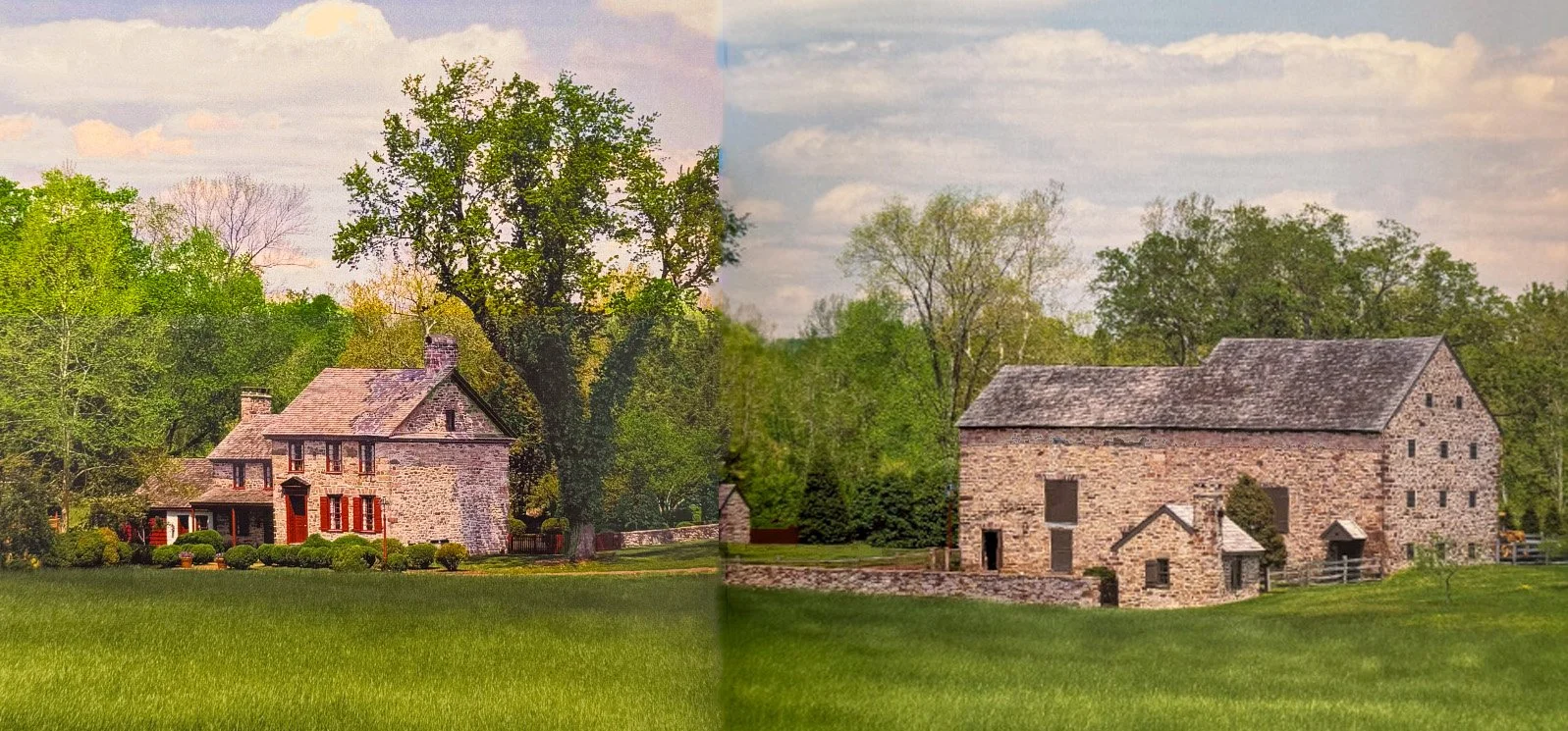
Above: Image source: Bucks County: An Illustrated History, photography by Jerome Lukowicz, Bucks County Historical Society, 2001.
Located near New Hope, the Paxson farm is a quintessential example of a Bucks County Quaker farmstead. Its early history includes ownership by Richard Burgess, who was Henry Paxson’s son-in-law. Isaiah Paxson acquired the property in 1782. He lived here with his wife Mary Paxson. The house has a 1785 datestone.
Isaiah Paxson became one of the wealthiest farmers and businessmen in this region. A remarkable number of outbuildings survive on this farm, including a springhouse and a smokehouse. The farm’s name “Burgess Lea” means Burgess’ Meadow.
The Paxsons During the Revolutionary War:
Isaiah Paxson was a young Quaker man in his mid-twenties during the Revolutionary War. He adhered to the Friends’ Peace Testimony, which prohibited participation in armed conflict or the swearing of oaths to revolutionary "Committees of Safety."
Isaiah’s experience of the war was one of "compelled support" rather than voluntary service. Many Quaker farmers lost their livestock, grain, and other property to Continental troops billeted in the area. Despite these hardships during the Revolution, Isaiah Paxson remained in good standing with the Buckingham Monthly Meeting. He focused on religious Quietism, rather than focusing on political or military action.
Likewise, Benjamin Paxson’s family did not take up arms during the war. As Quakers, they remained neutral, even as they suffered property losses and the forced occupation of their home, experiences shared by many Friends in Southeast Pennsylvania.
Links: