
The Colonial Pennsylvania Pent Roof
English and Germanic Origins
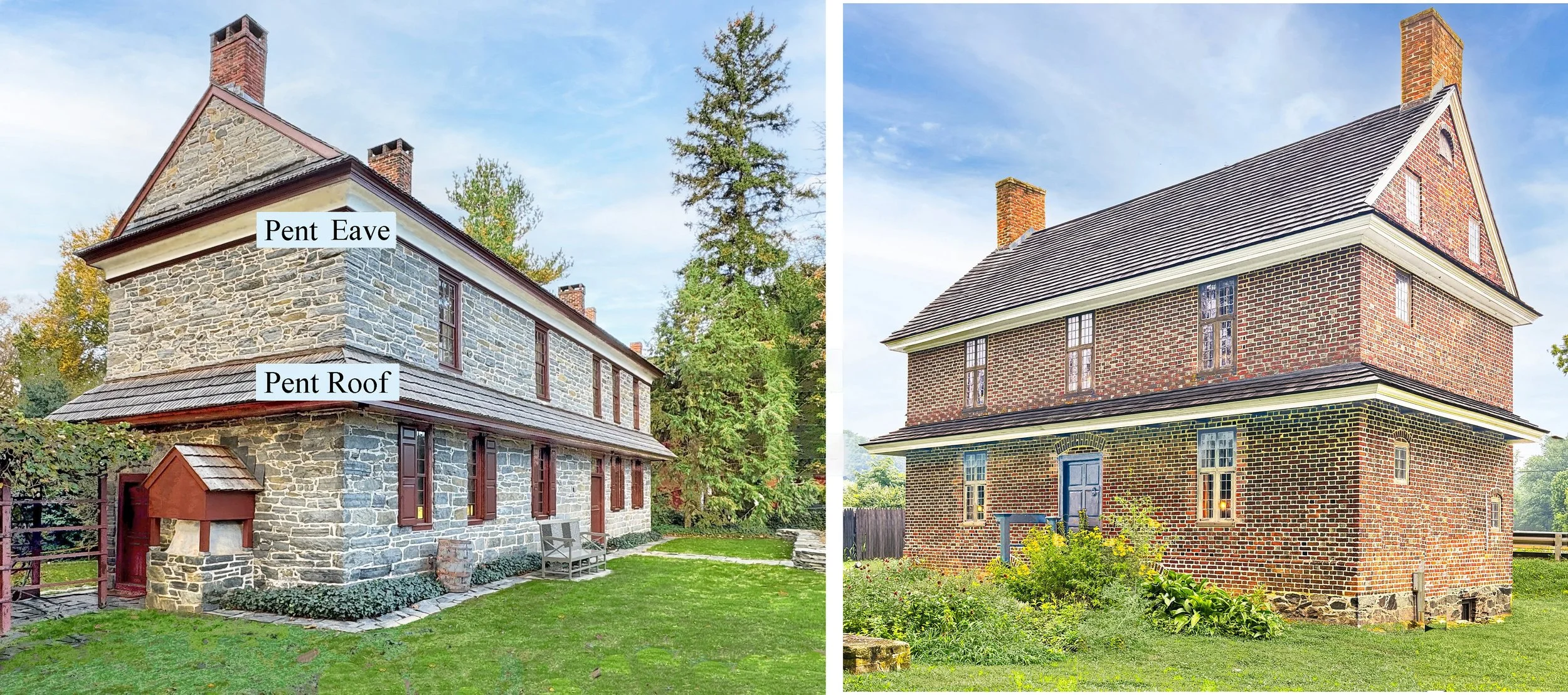
Above: Left: The Susanna Wright House in Lancaster County. Right: The Barns-Brinton House in Chester County. Image sources: Lee J. Stoltzfus.
As I see it, the colonial Pennsylvania farmhouse is an iconic monument to the success of William Penn’s Holy Experiment. Penn’s Quaker dream was to create a new homeland of peace and prosperity. The colonial Pennsylvania home and hearth are a beautiful manifestation of those ideals.
My favorite architectural avatar of that Quaker idealism is the Pennsylvania farmhouse, with its multi-cultural origins in England, Germany, and beyond. And those farmhouses’ pent roofs are a defining element of this distinctive architecture. The Pennsylvania pent roof reminds me that William Penn’s New World invited German farmers to emigrate here to an inclusive new home. Those German-speaking immigrants included my Amish and Mennonite ancestors. Thank you, William Penn.
A Sampler of Pennsylvania Pents
on Colonial Quaker Farmhouses:
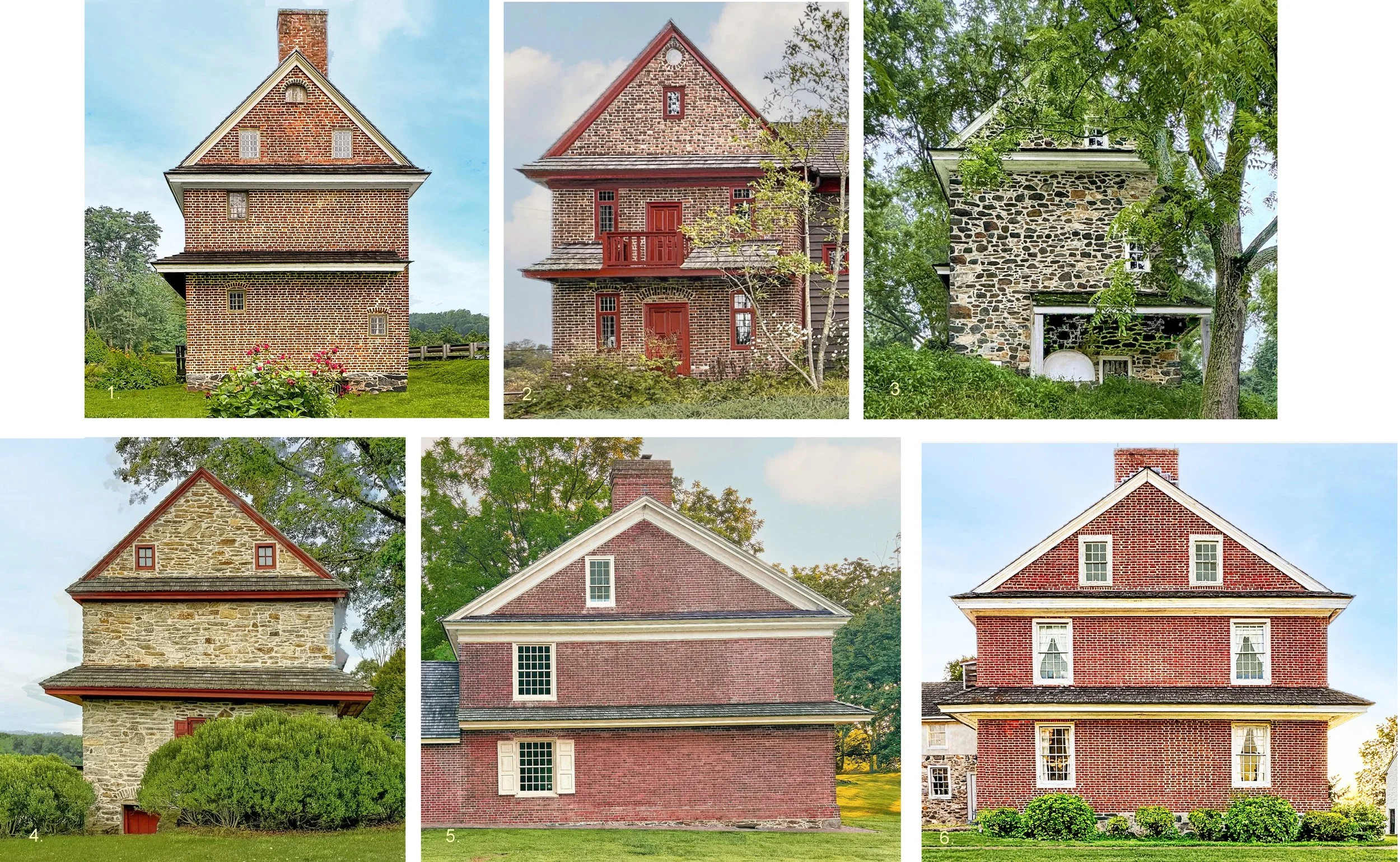
Above: Clockwise from upper left: #1. Barns-Brinton House built ca. 1714. #2. Taylor House built in 1724. #3. Chads House built ca. 1725. #4. Webb House built ca. 1734. #5. Primitive Hall built in 1738. #6. Dilworth House built in 1758. Image source: Lee J. Stoltzfus
Pent Roof Prototypes in England
Farmhouses of the West Midlands:
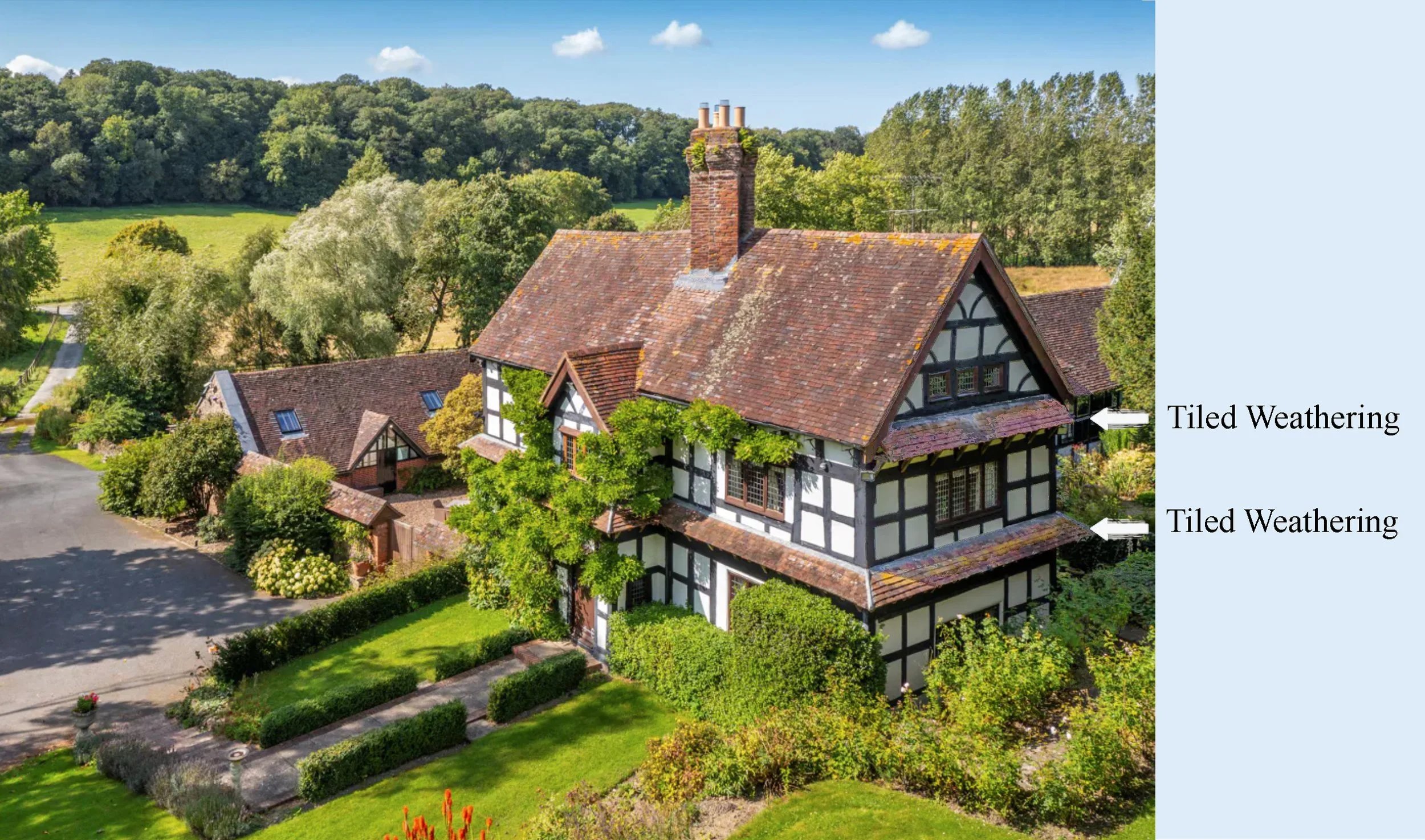
Above: Baston Hall built ca. 1620, Crews Hill, Suckley Parish, Worcestershire. Image source: PriceyPads.com
Tiled Weatherings (Pents)
On the 1663 Moat Farmhouse
In Worcestershire, England:
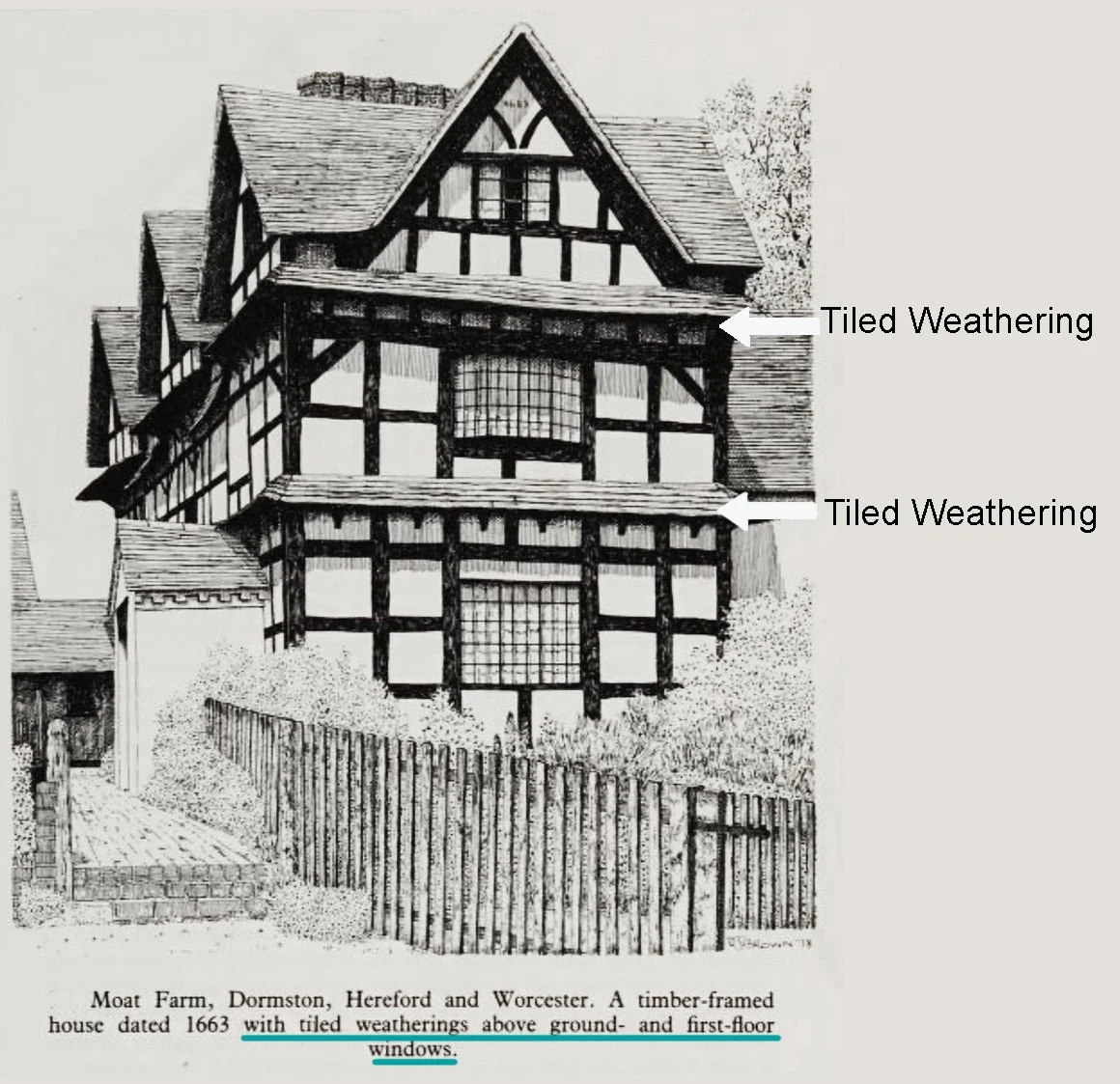
Above: The 1663 Moat Farmhouse, Dormston Parish, Worcestershire. Image source: English Farmhouses, R. J. Brown, 1982, Internet Archive
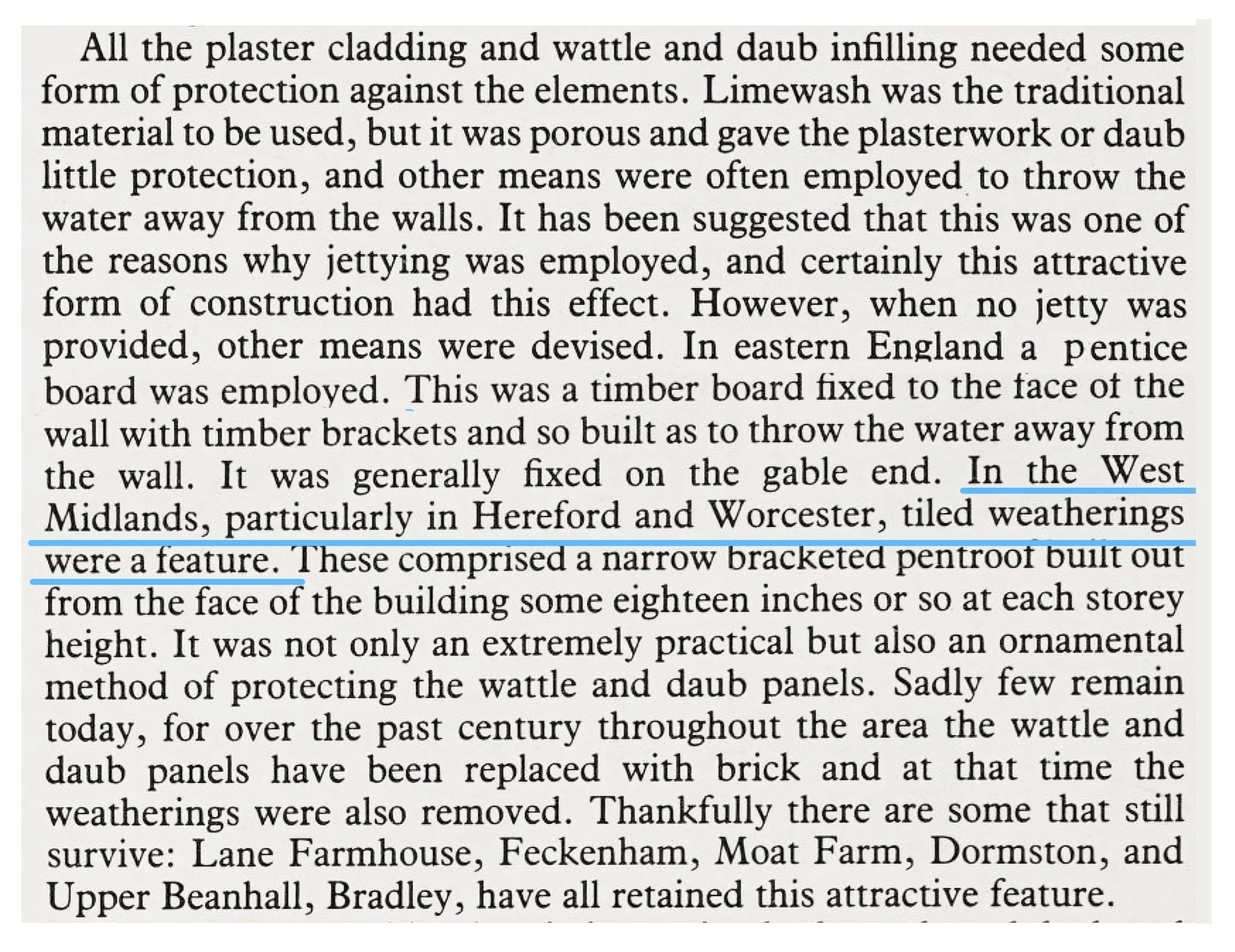
Above: Text source: English Farmhouses, R. J. Brown, 1982, Internet Archive
Tiled Weathering on English Farmhouses
in the West Midlands:
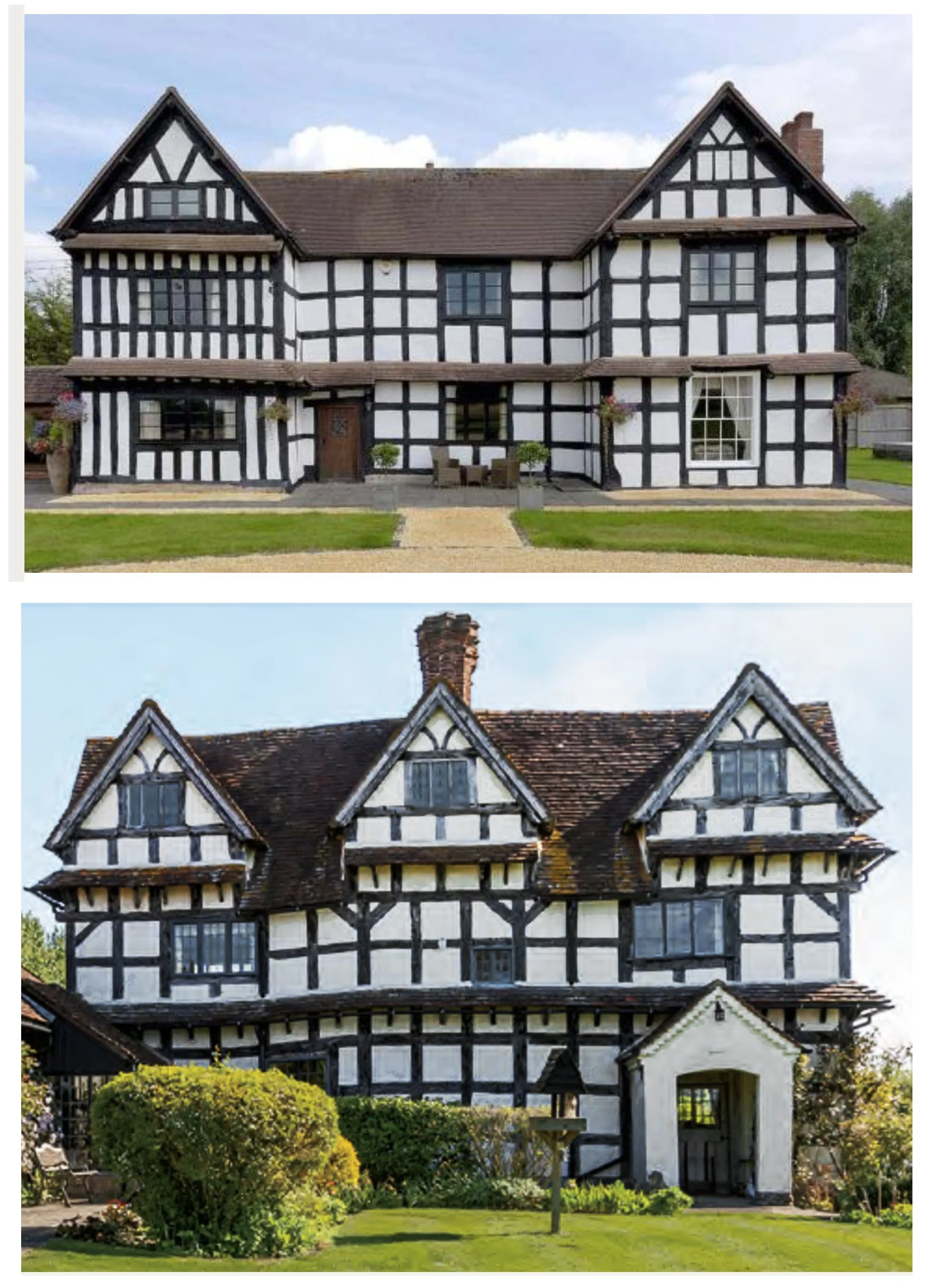
Above: Two English houses in the West Midlands with tiled weatherings (pent roofs and pent eaves).
First house: Upper Beanhall Farmhouse, Feckenham Parish, Worcestershire, built in the late 16th century. Image source: RedditchAdvertiser
Second house: Moat Farmhouse, Dormston Parish, Worcestershire, dated 1663. Image source: Fine Country
English Tiled Weatherings
Characteristic of the West Midlands:
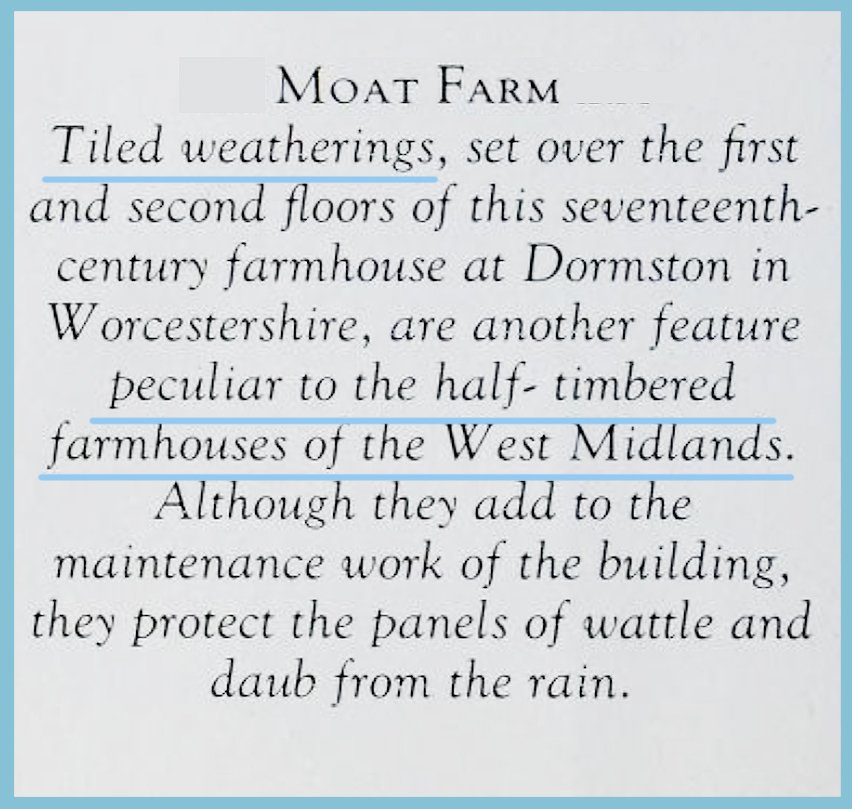
Above: Text source: Old English Farmhouses, Bill Laws, 1992, Internet Archive
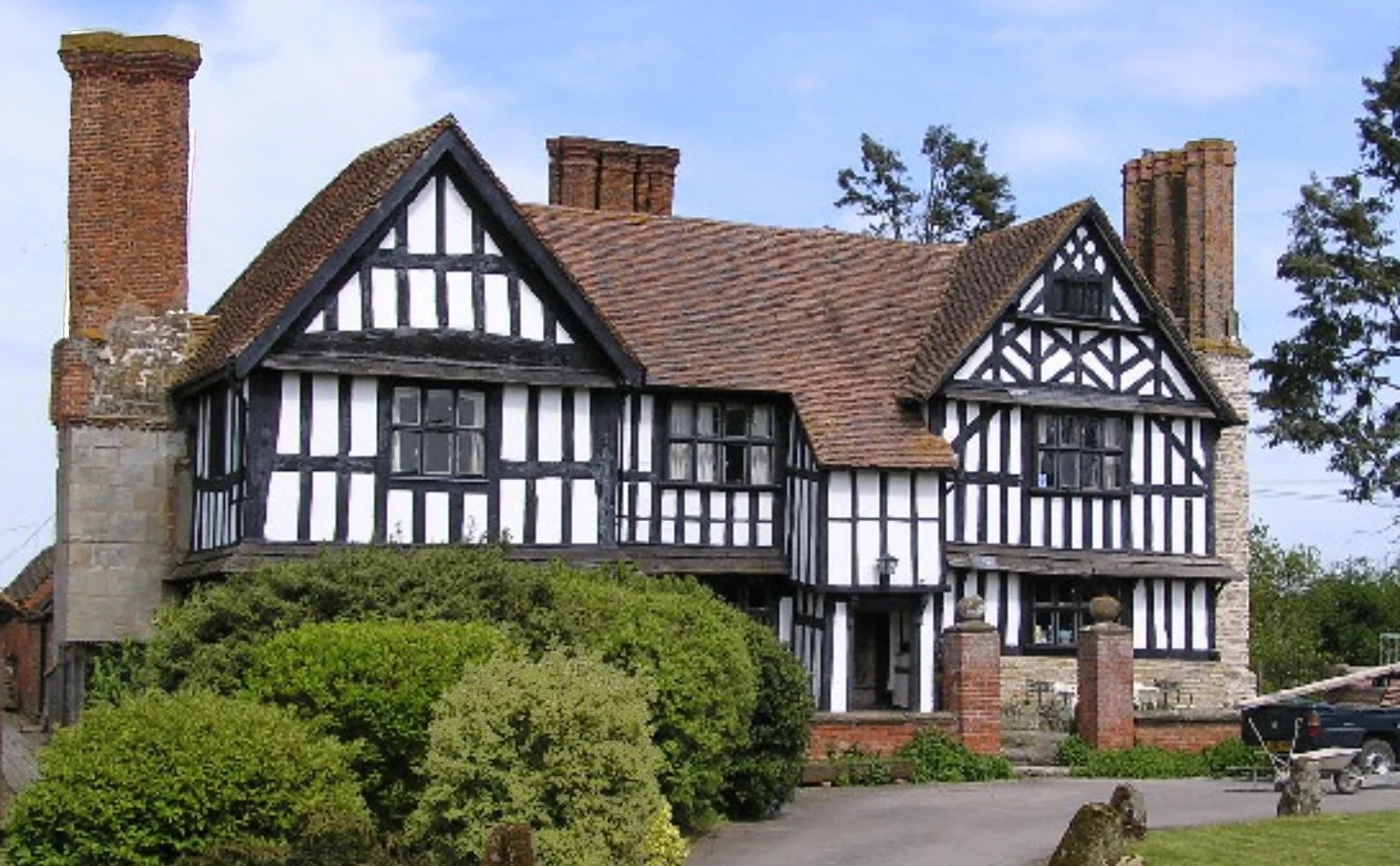
Above: Shell Manor Farmhouse, Himbleton Parish, Worcestershire. Rebuilt ca. 1600. Image source: Richard Dunn, Wikipedia.
Other English farmhouses with tiled weatherings include Lower Beanhall in Feckenham Parish, Worcestershire, and Church Farmhouse, at Rushbury, Shropshire.
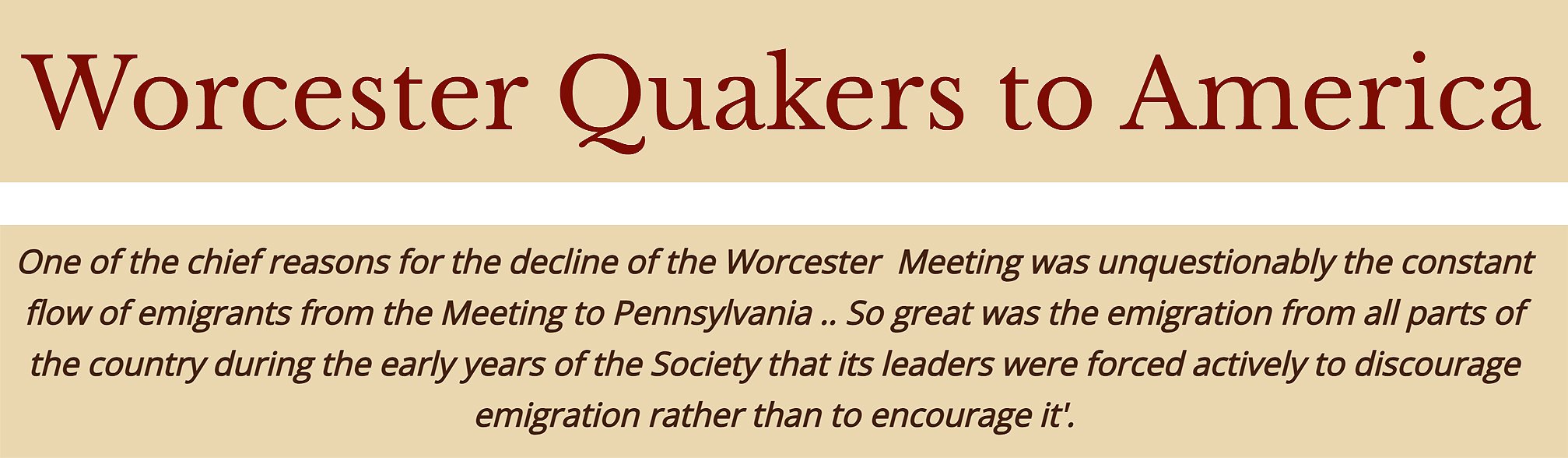
Above: Text image source: WorcesterPeopleAndPlaces.org
And a Tiled Weathering in Gloucestershire:
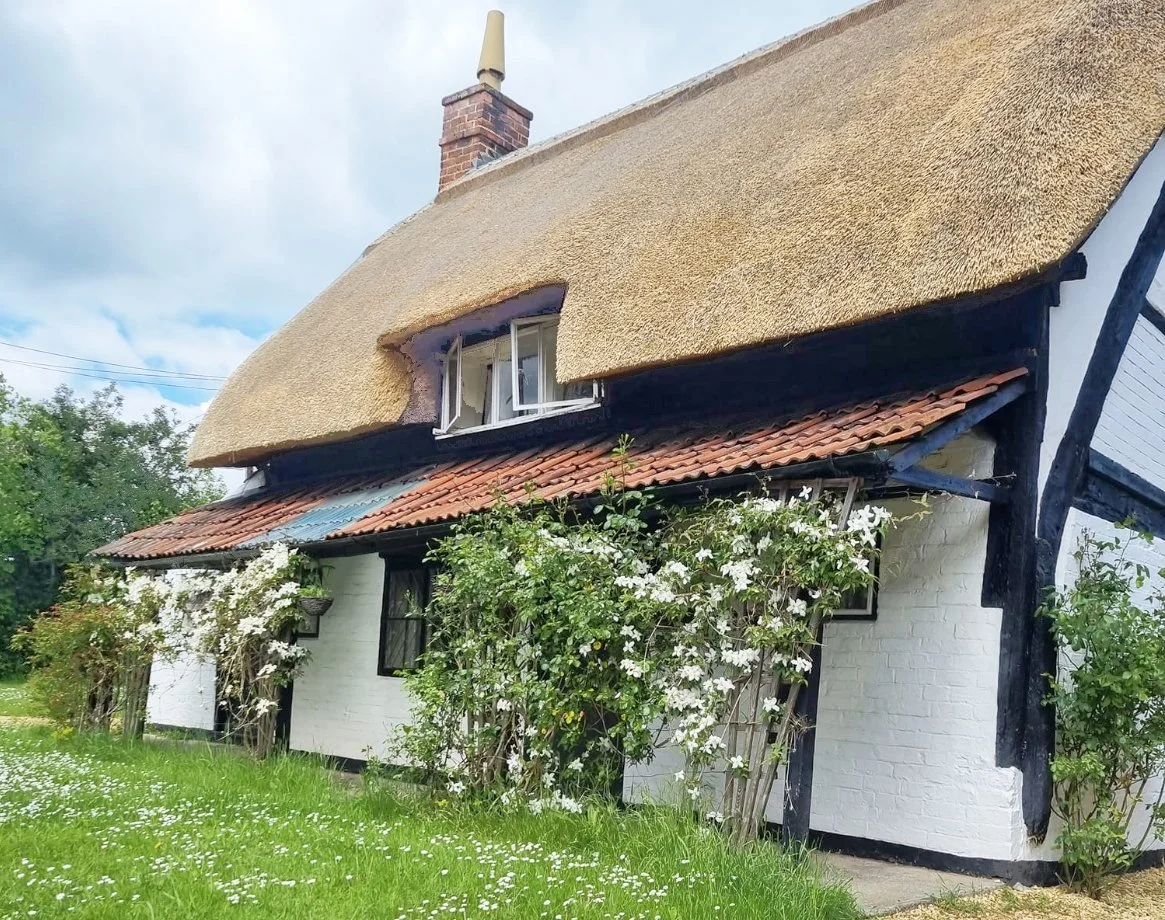
Above: A tiled weathering on a half-timbered house in Gloucestershire, near the Welsh border. Image source: Victoria Clarke, Facebook
1938: Historian Thomas Jefferson Wertenbaker
Explains English Origins of Pent Roofs:
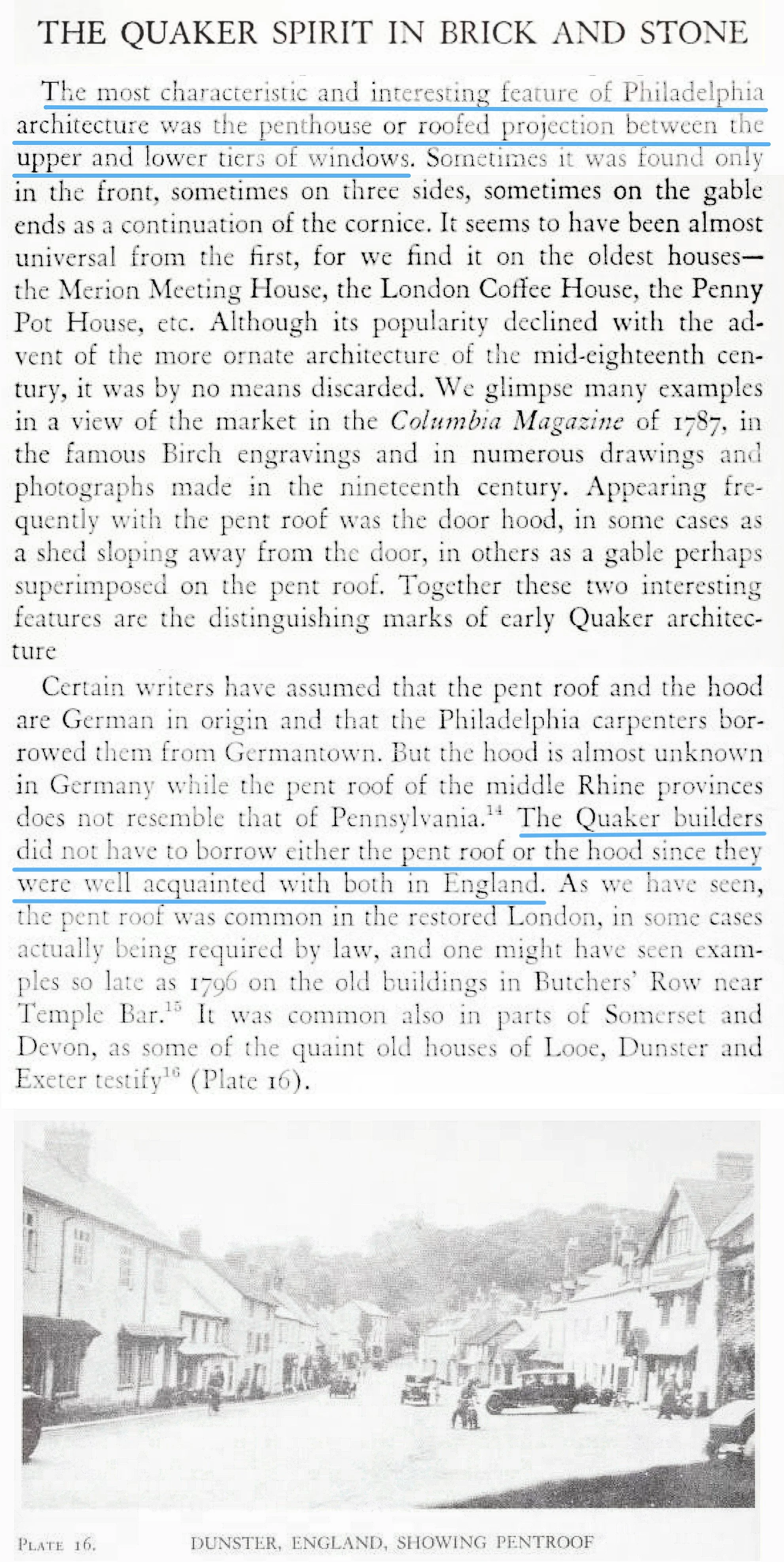
Above: Text and image source: The Founding of American Civilization - The Middle Colonies, Thomas Jefferson Wertenbaker, 1938. Internet Archive.
Thomas J. Wertenbaker was a professor of American history at Princeton University. In his 1938 book, above, he explained his theory of the English origin of Pennsylvania pent roofs.
Germanic Tiled Weatherings
in Elsaß / Alsace and the Rhineland:
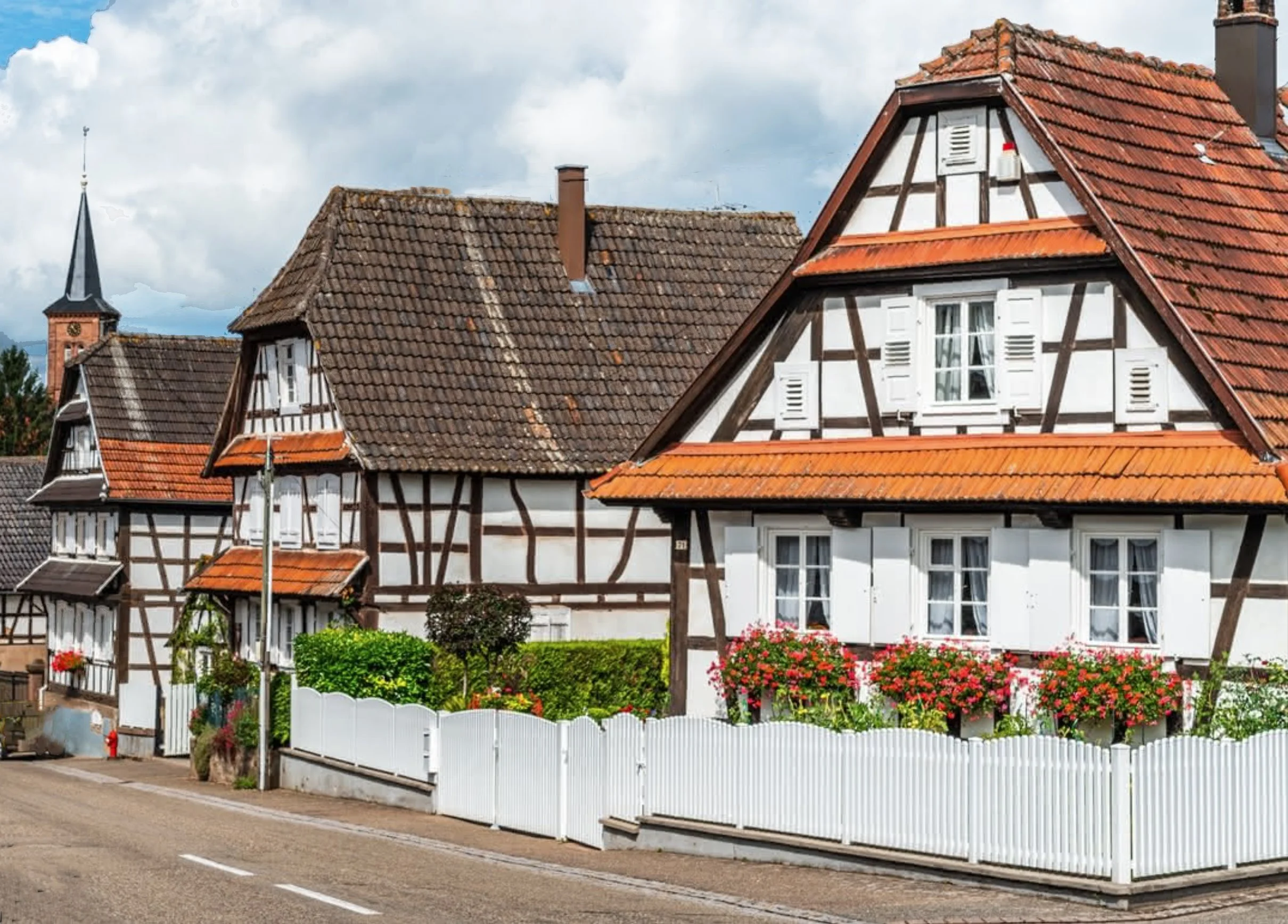
Above: A Germanic tiled weathering in Europe is known as a vordach. Tiled weatherings on gables (Giebelverdachungen) protect the facades of half-timbered houses in Hunspach in Northern Alsace. Image source: Hunspach
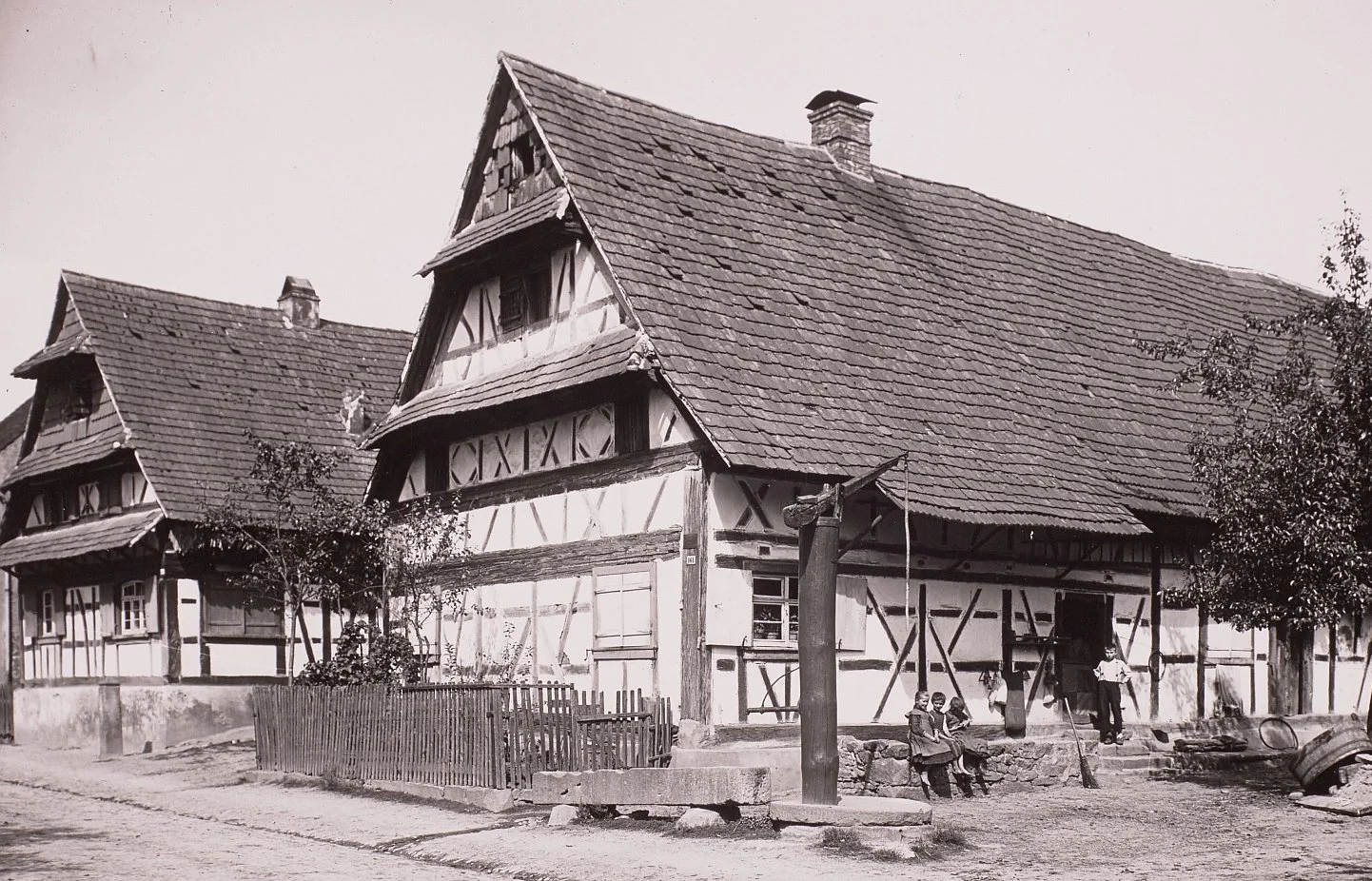
Above: A 1911 photograph of farmhouses with gable tiled weatherings (Giebelverdachungen) in Appenweier, Baden-Württemberg, Germany. Image source: Deutsche Fotothek
Distribution of Pent Roofs (das Vordach)
In die Rheinpfalz / Palatinate, Germany:
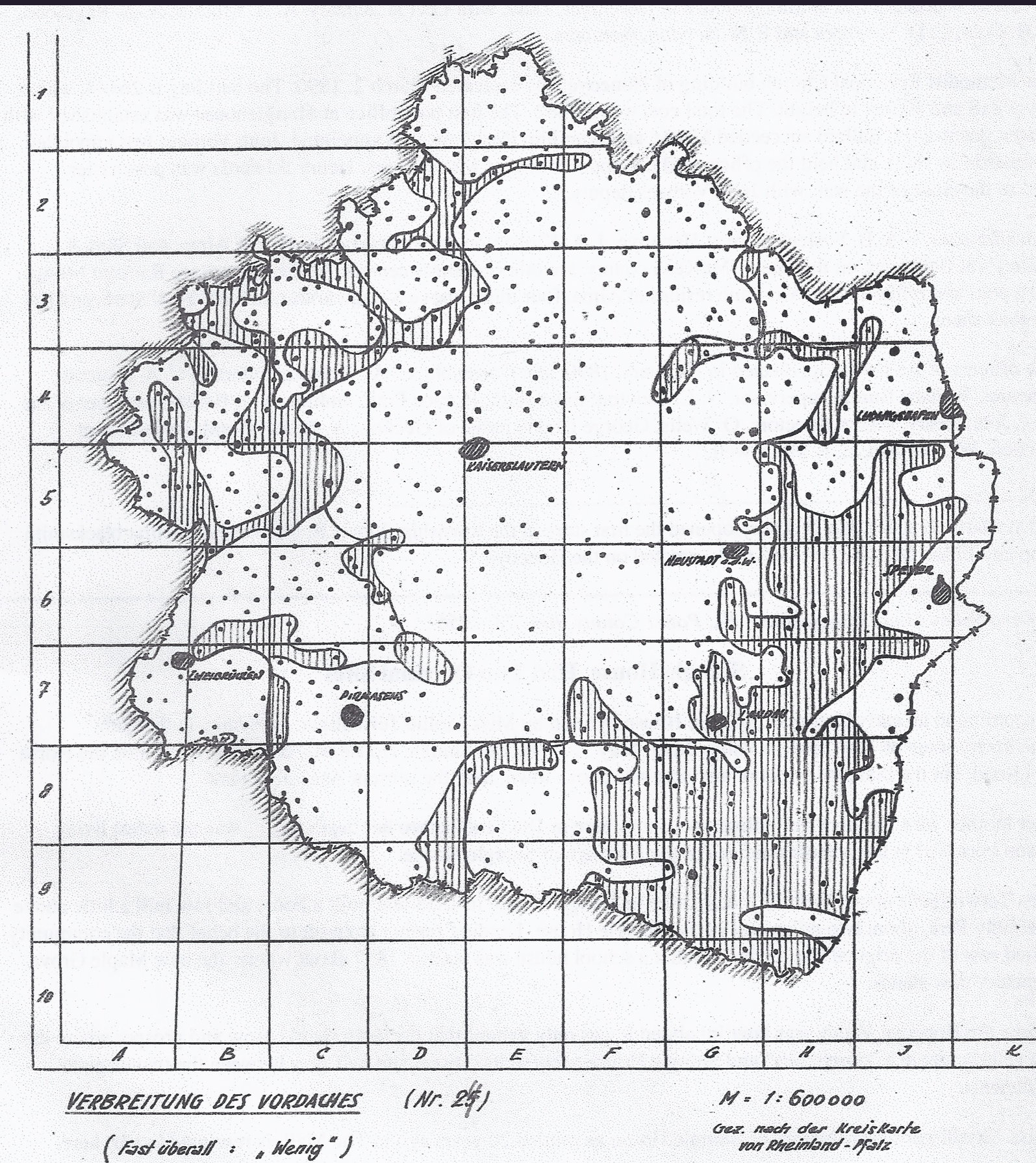
Above: Map source: Anfänge einer kartographischen Sachgeographie... Karlheinz Leist, 1956. Also in: Siedlung, Haus und Hof in der Pfalz, Band 1, Helmut Seebach, 2019.
This map by house researcher Karlheinz Leist shows the distribution of the Vordach (pent roof) in the Pfalz. The map reveals the influence of Alemannic and Swiss building traditions into southwest Germany.
From a historical perspective, the South Palatinate shares in the Alemannic-Alsatian cultural area regarding house construction. In 1857, Wilhelm Heinrich Riehl classified double or triple pent overhangs (Vordächer) on house gables as characteristic of earlier “Old World” construction techniques. The distribution area of the gable overhang (Giebelverdachung) is predominantly in the Palatinate and Alsatian Rhine plains.
Definition of a Pent Roof / Vordach:
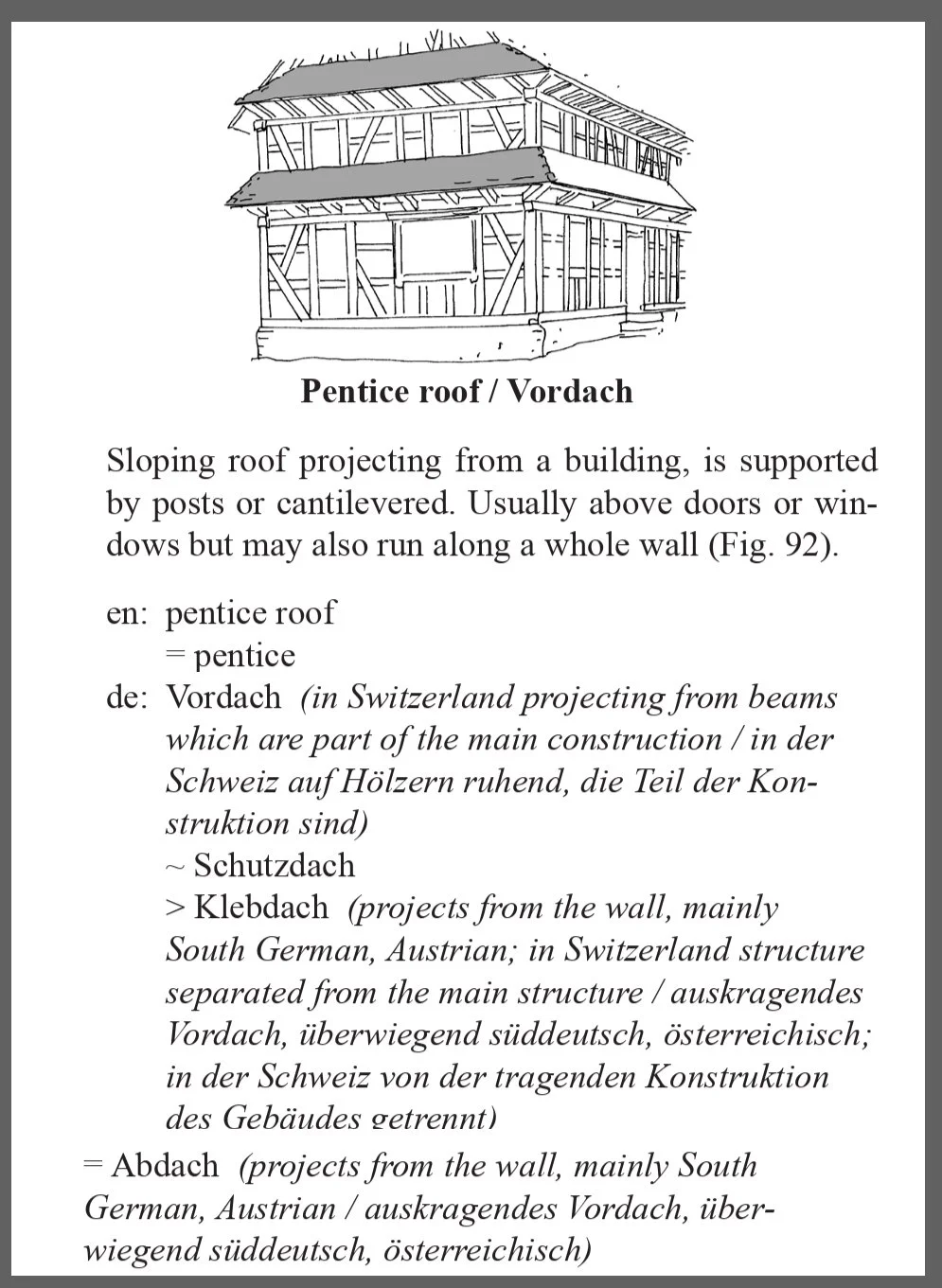
Above: Image source: Glossary of Historic and Prehistoric Timber Buildings, Editors: Volmer and Zimmermann, Göteborgs universitet
Pent Roofs & Pent Eaves in Eggenstein:
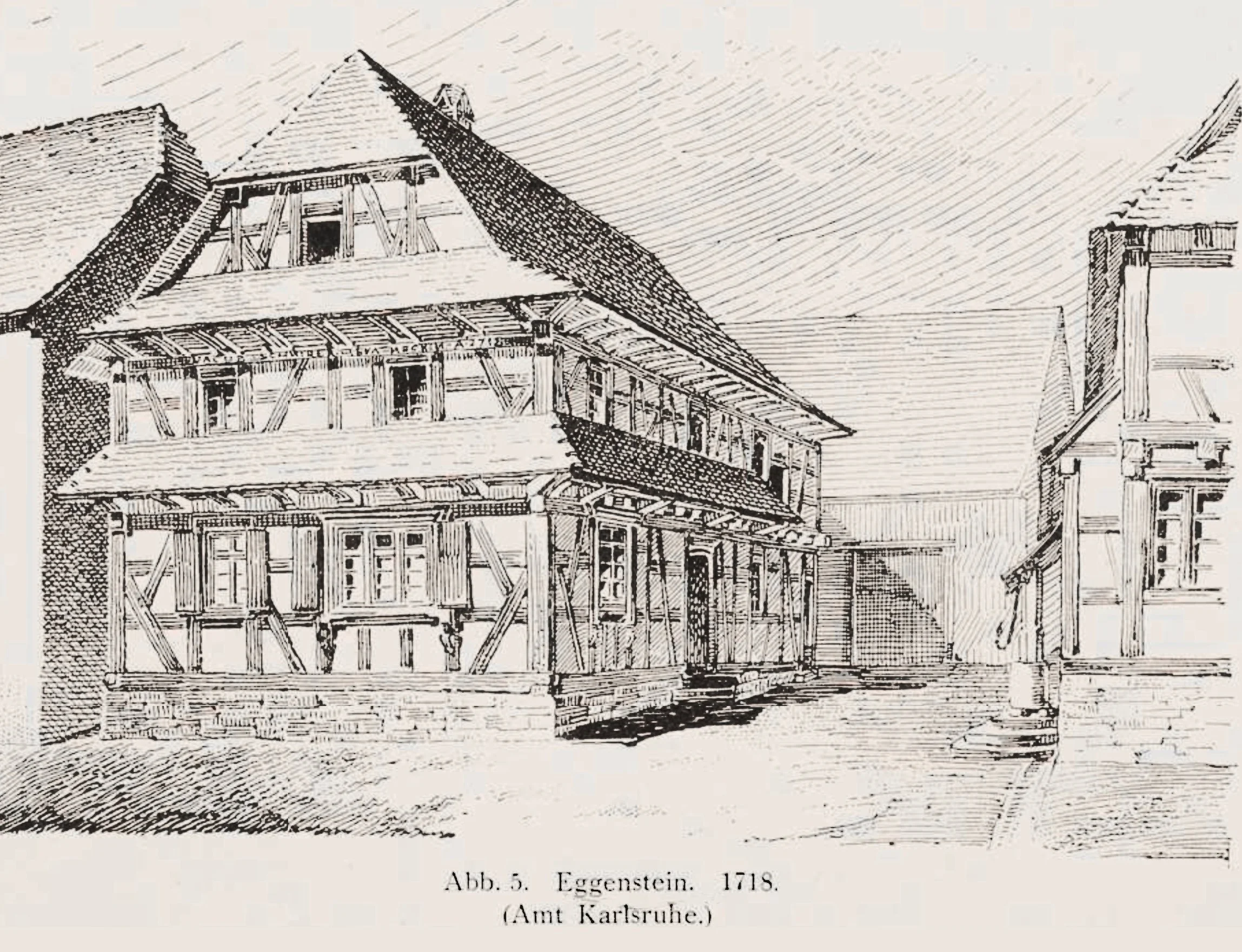
Above: Image source: Das Bauernhaus im Deutschen Reiche, 1906, Deutsche-Digitale-Bibliothek
“You will find it [gable pent eave] everywhere where the reformed Swiss immigrants built their half-timberwork houses, like in the Alps, Alsace, Black Forest, Kraichgau, Palatinate, Odenwald, Franconia etc. etc. In literature it is often called ‘Vordach’. I call it ‘Giebelverdachung’, because the horizontal wooden logs needed protection against water and erosion.” Quote: German historian Helmut Seebach, 2026 interview.
Pent Roofs & Pent Eaves in Switzerland:
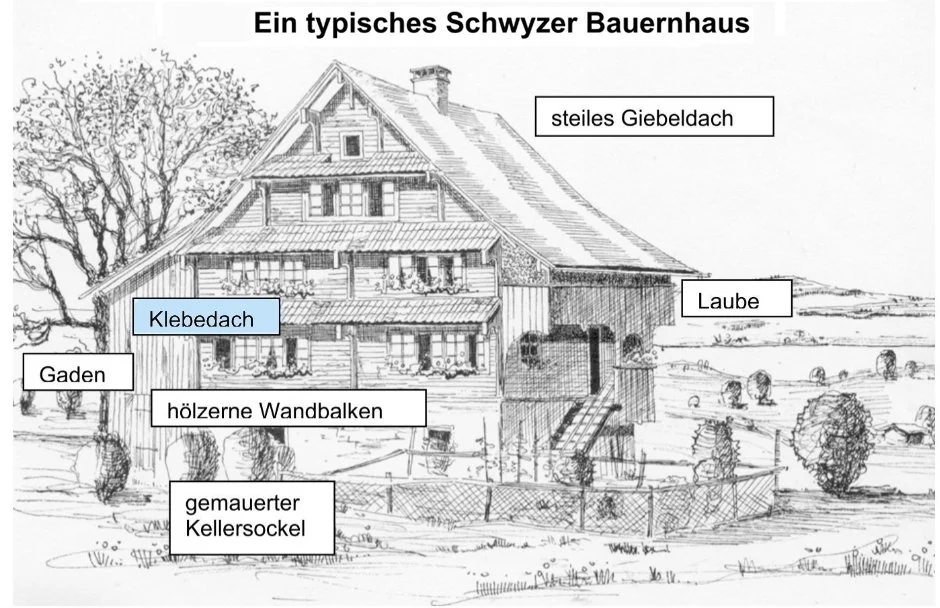
Above: A ca. 1760 Swiss farmhouse of the Höfner family located in Schindellegi, drawn by Max Müller. Here a Swiss gable pent eave is identified as a Klebedach. Image source: Yumpu
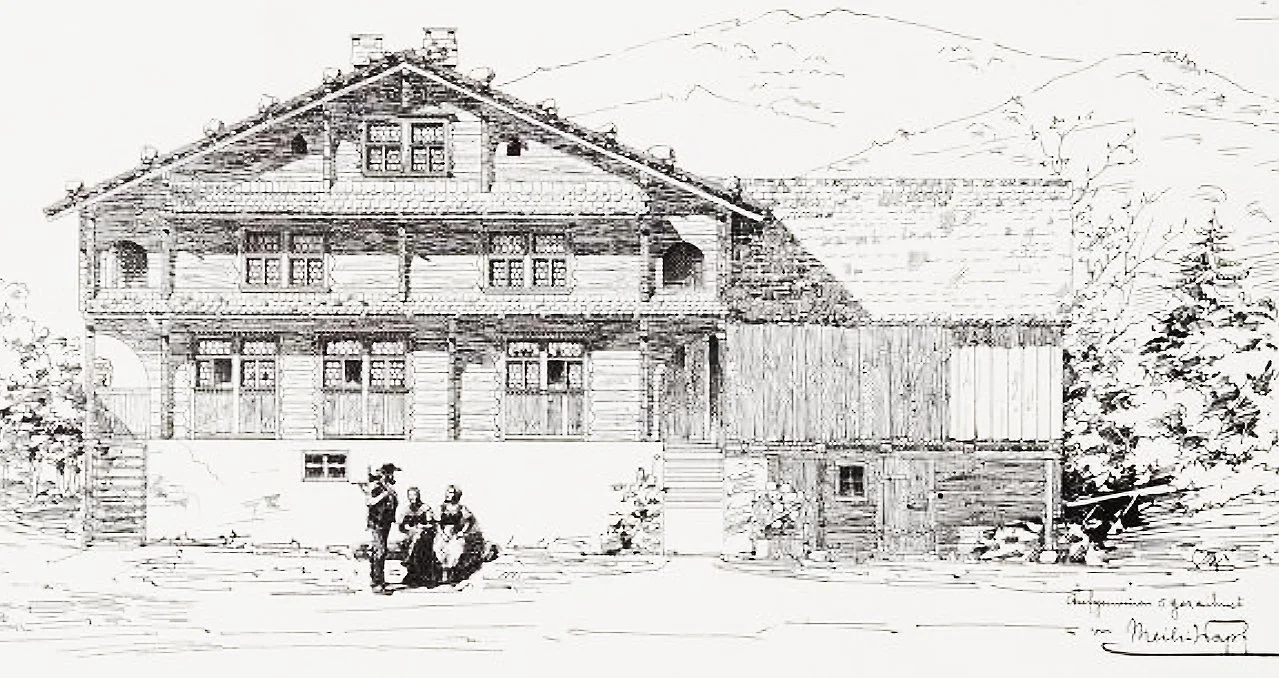
Above: A 16th-century Swiss farmhouse in Rothenthurm. The roof and the gable weatherings are covered with wood shingles. Image source: Schweizer Bauernhaus, David Meili, Internet Archive.
The Swiss Weatherings: Klebdach and Vordach
A Comparison:
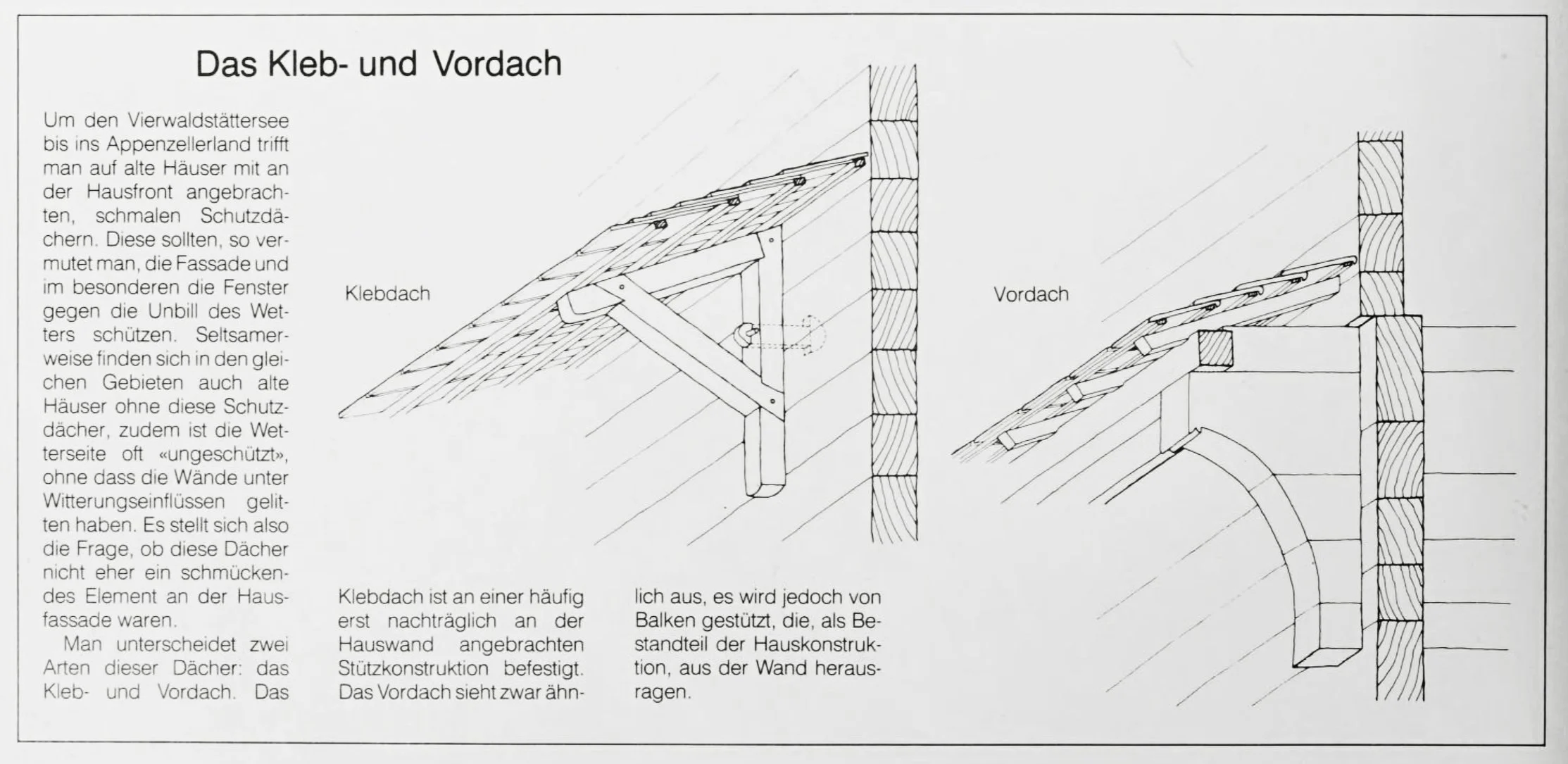
Above: Image source: Schweizer Dörfer und Städtchen, 1983, Verlag das Beste Zürich, Stuttgart, Wien, 1983, Internet Archive.
In Switzerland, from Lake Lucerne to the Appenzell region, some historic houses have narrow protective roofs attached to the front facades. The variations and names of these gable weatherings are:
Klebdach: The Klebdach is attached to a support structure that is added to the wall of the house.
Vordach: The Vordach looks similar, but it is supported by beams that are an integral part of the house construction and protrude directly out of the wall.
1933: Pent Roofs and Pent Eaves
on Early Pennsylvania German Houses
Defined by Architect G. Edwin Brumbaugh:
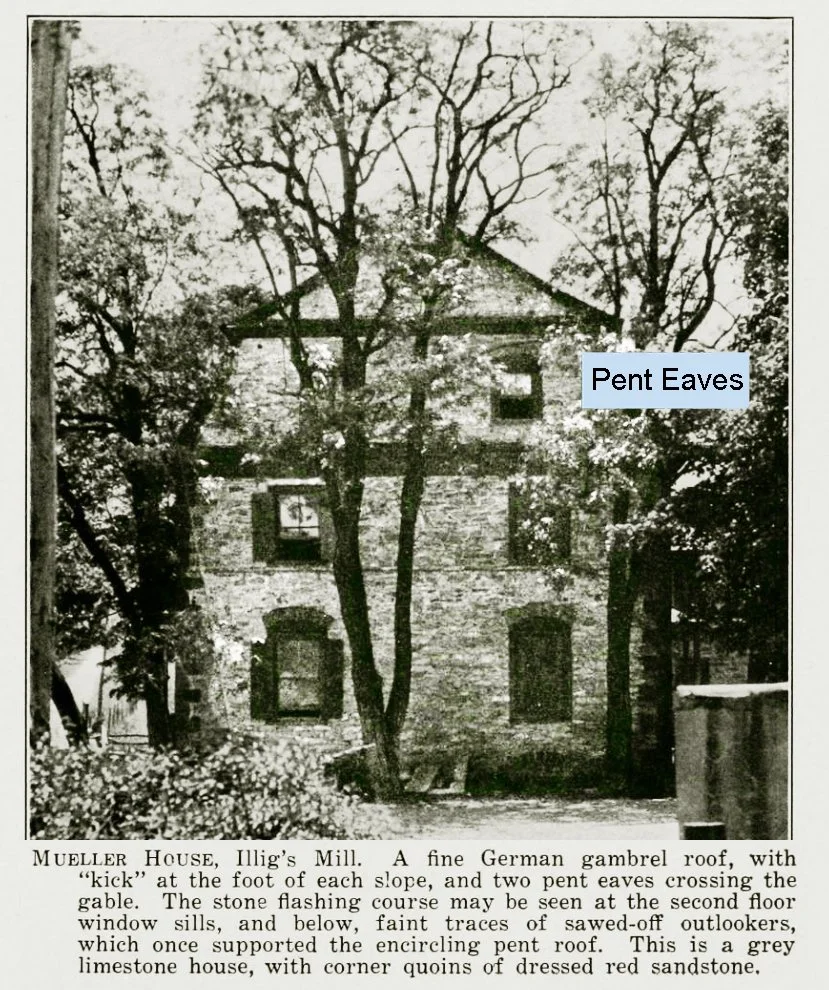
Above: “Colonial Architecture of the Pennsylvania Germans”, G. Edwin Brumbaugh, 1933, Internet Archive.
Above: “Colonial Architecture of the Pennsylvania Germans”, G. Edwin Brumbaugh, 1933, Internet Archive.
Above: “Colonial Architecture of the Pennsylvania Germans”, G. Edwin Brumbaugh, 1933, Internet Archive.
Above: “Colonial Architecture of the Pennsylvania Germans”, G. Edwin Brumbaugh, 1933, Internet Archive.
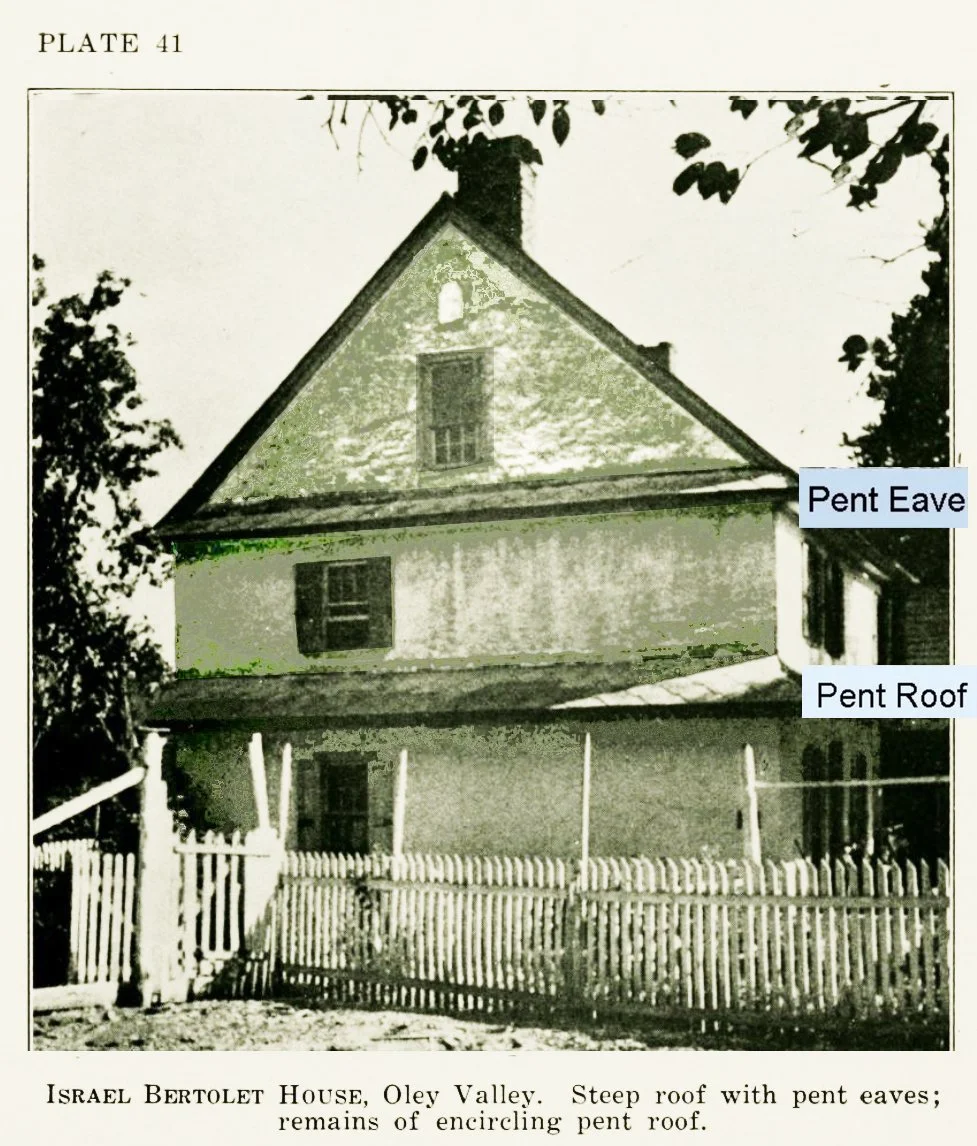
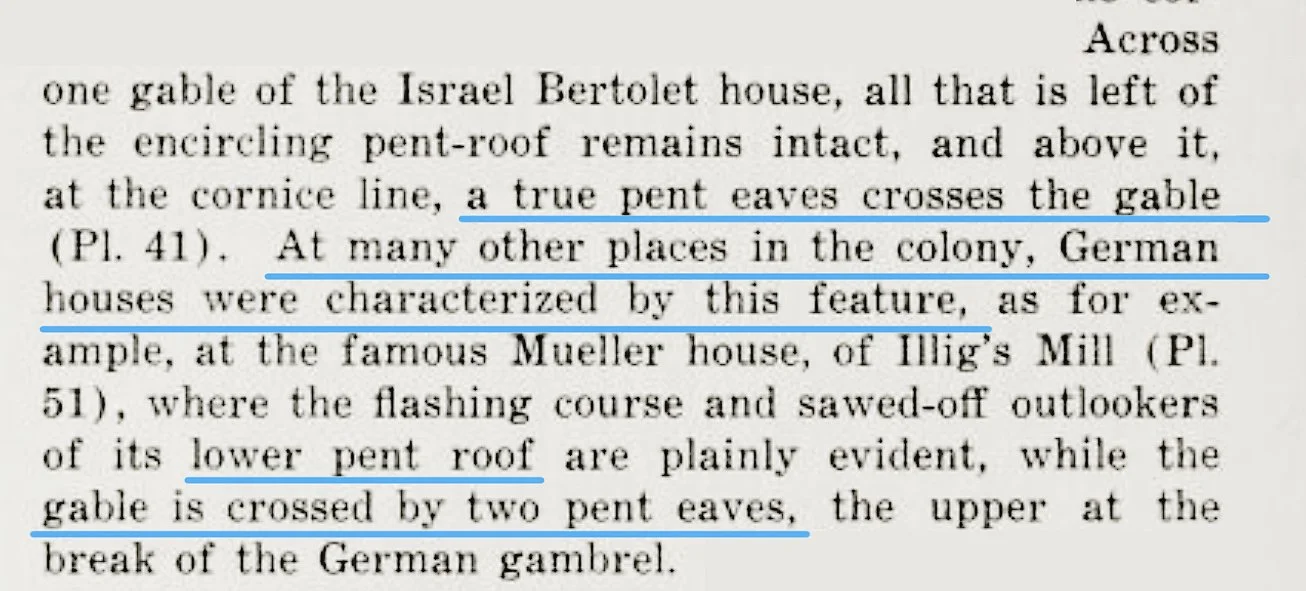
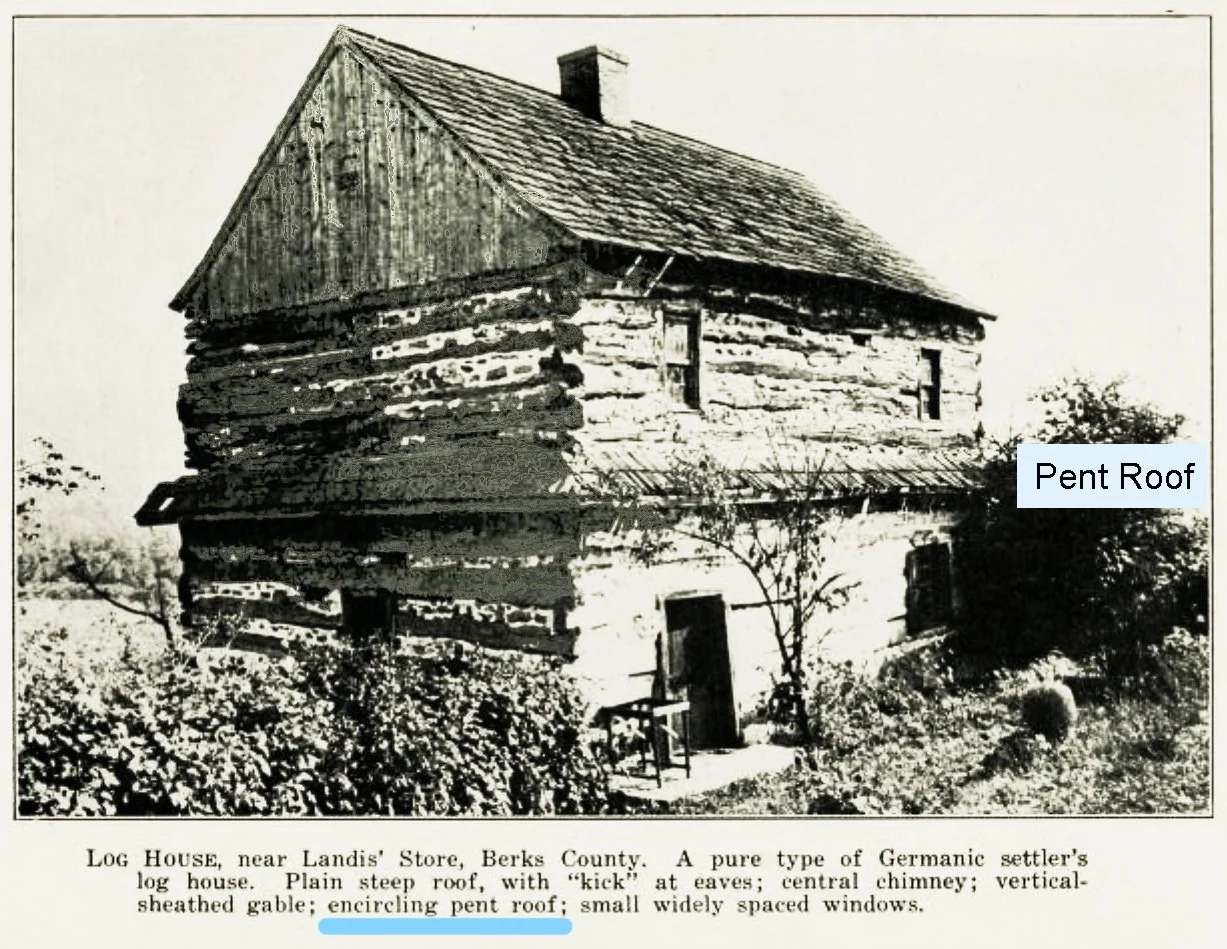
Historians have used the phrases “pent roof” and “pent eave” interchangeably. To add to the mix, some writers name these projecting roofs “pents” or “pentices.” Architect G. Edwin Brumbaugh provided definitions for these pent phrases in his 1933 article “Colonial Architecture of the Pennsylvania Germans”, above. Some historians also describe pent eaves as full-return cornices.
1950: Historian Thomas Tileston Waterman
Explains Germanic Origins of Pent Roofs:
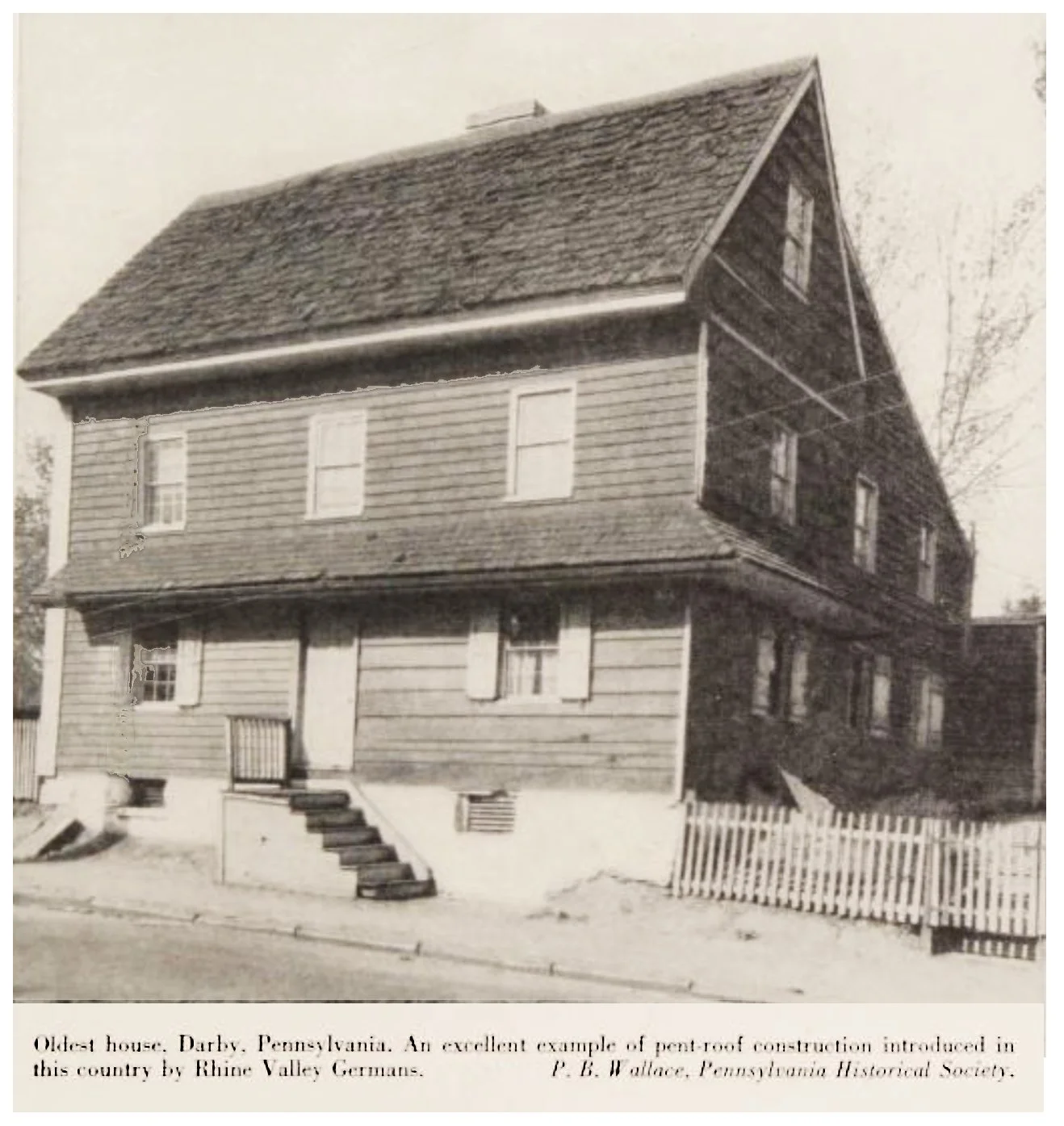
Above: A ca. 1699 House in Darby, PA. Image source: The Dwellings of Colonial America, by Thomas Tileston Waterman, 1950, Internet Archive.
Quaker immigrants to Darby named this area after the name of their former home in Derbyshire, England. John Blunston was a Quaker founder of Darby and served as speaker of the Colonial Assembly. By 1700 the vast majority of the residents of Darby were Quakers. This ca. 1699 brick house was known as the Blunston Bakehouse. Fire destroyed this building in the 1950s.
In the photo’s caption, Thomas Waterman states that pent-roof construction was introduced to America by Rhine Valley Germans.
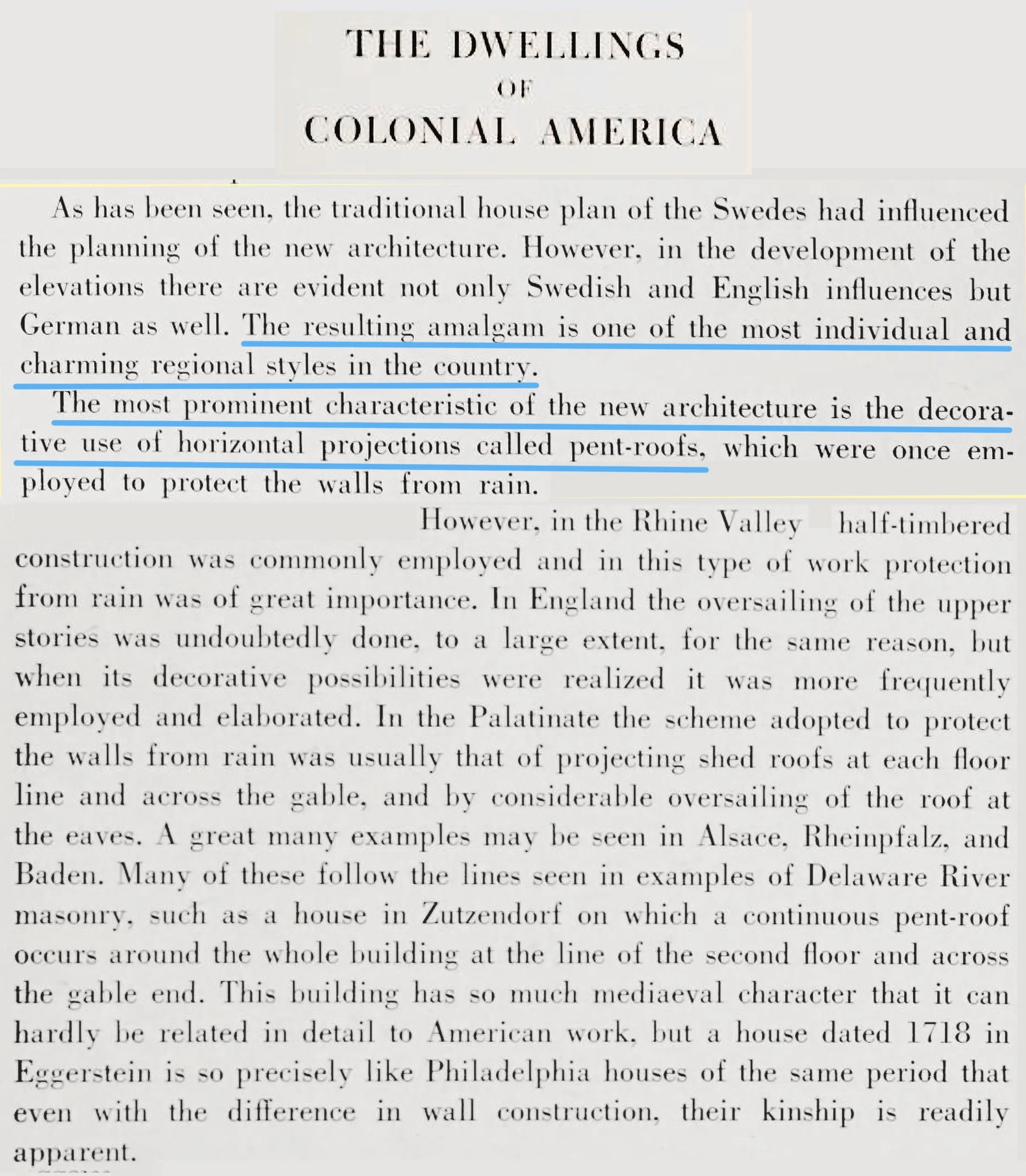
Above: Text source: The Dwellings of Colonial America, by Thomas Tileston Waterman, 1950, Internet Archive.
1920s Colonial Revival Pent Roofs
Identified as “Germantown Hoods”
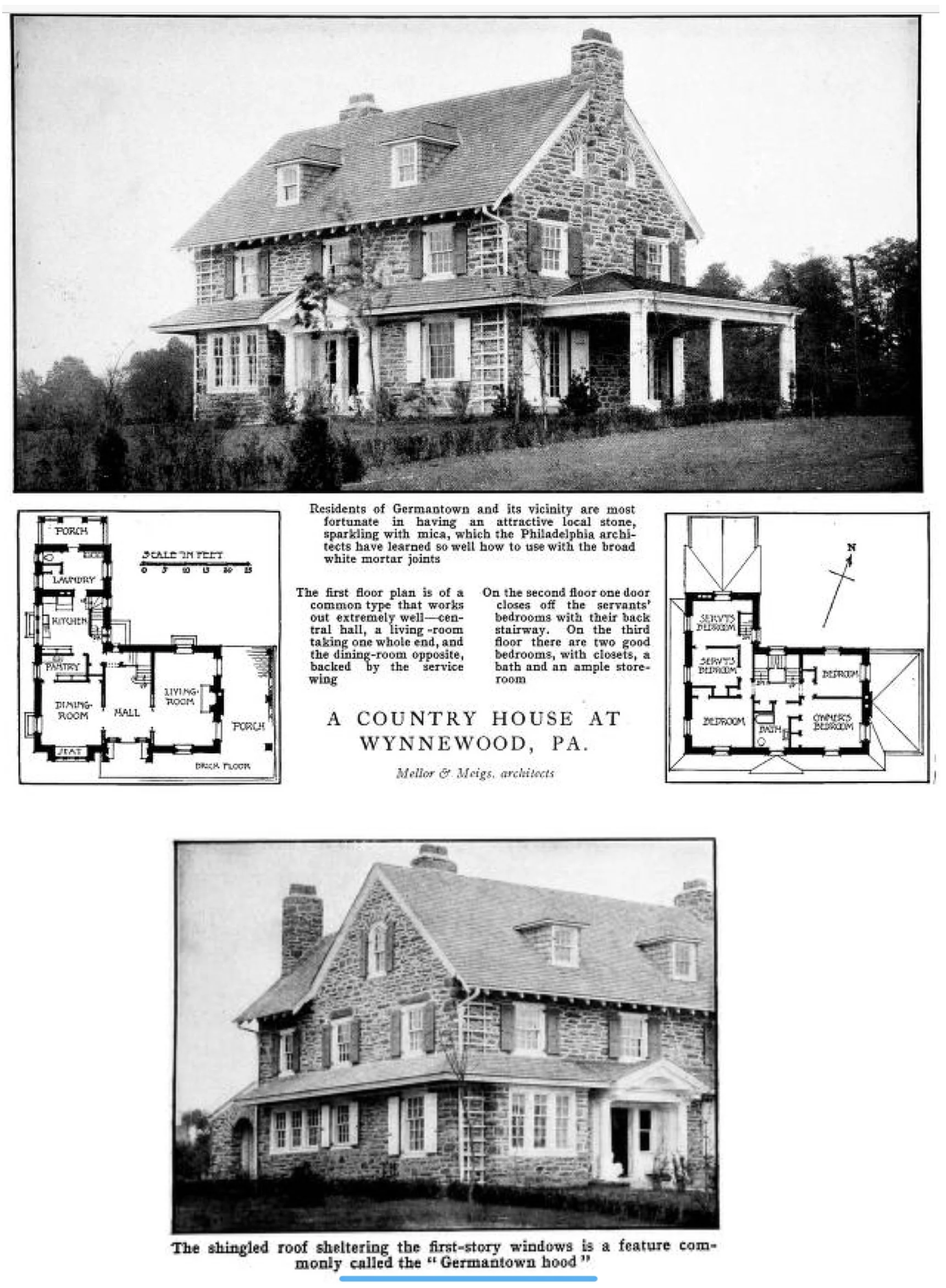
Above: Image source: Distinctive Homes of Moderate Cost, 1921, Henry H. Saylor, Internet Archive.
Throughout the Colonial Revival era, architects described pent eaves as “Germantown hoods.” As early as the 1890s, writers and builders credited Germantown, near Philadelphia, with this vernacular architectural form. While all counties of Southeast Pennsylvania showcase pent roofs on many historic houses, Germantown received the most credit for those pents at that time.
To this day, the Rhineland often receives the most credit as the place of origin of the pent roof, rather than England primarily being credited with prototypes for pents. But pent roofs are cross-cultural, with origins in both England and the Rhineland.
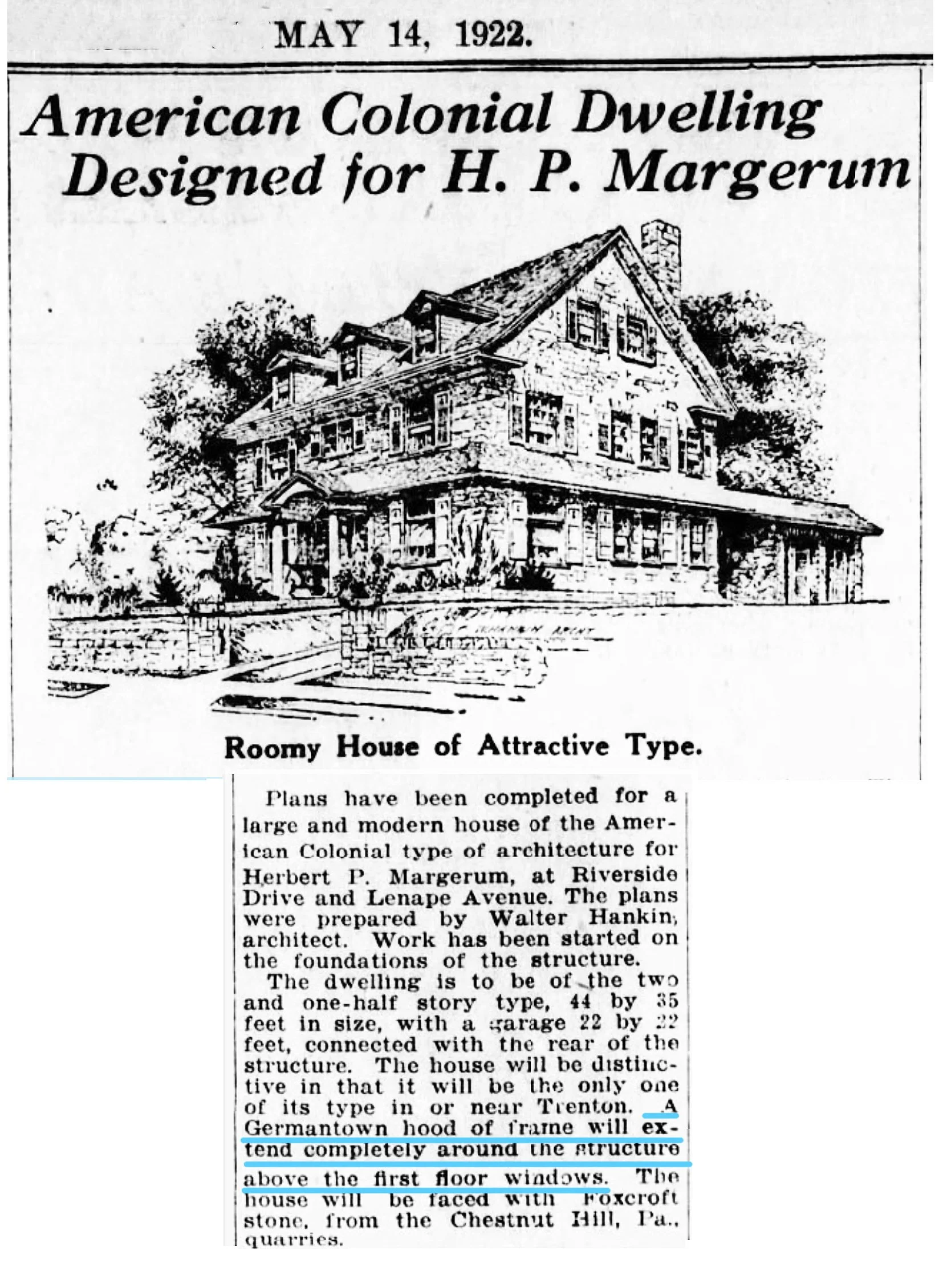
Above: Image source: Trenton Sunday Times Advertiser, May 14, 1922. Newspapers.com.
The Original “Germantown Hoods”
Colonial-Era Pent Roofs in Germantown, PA:
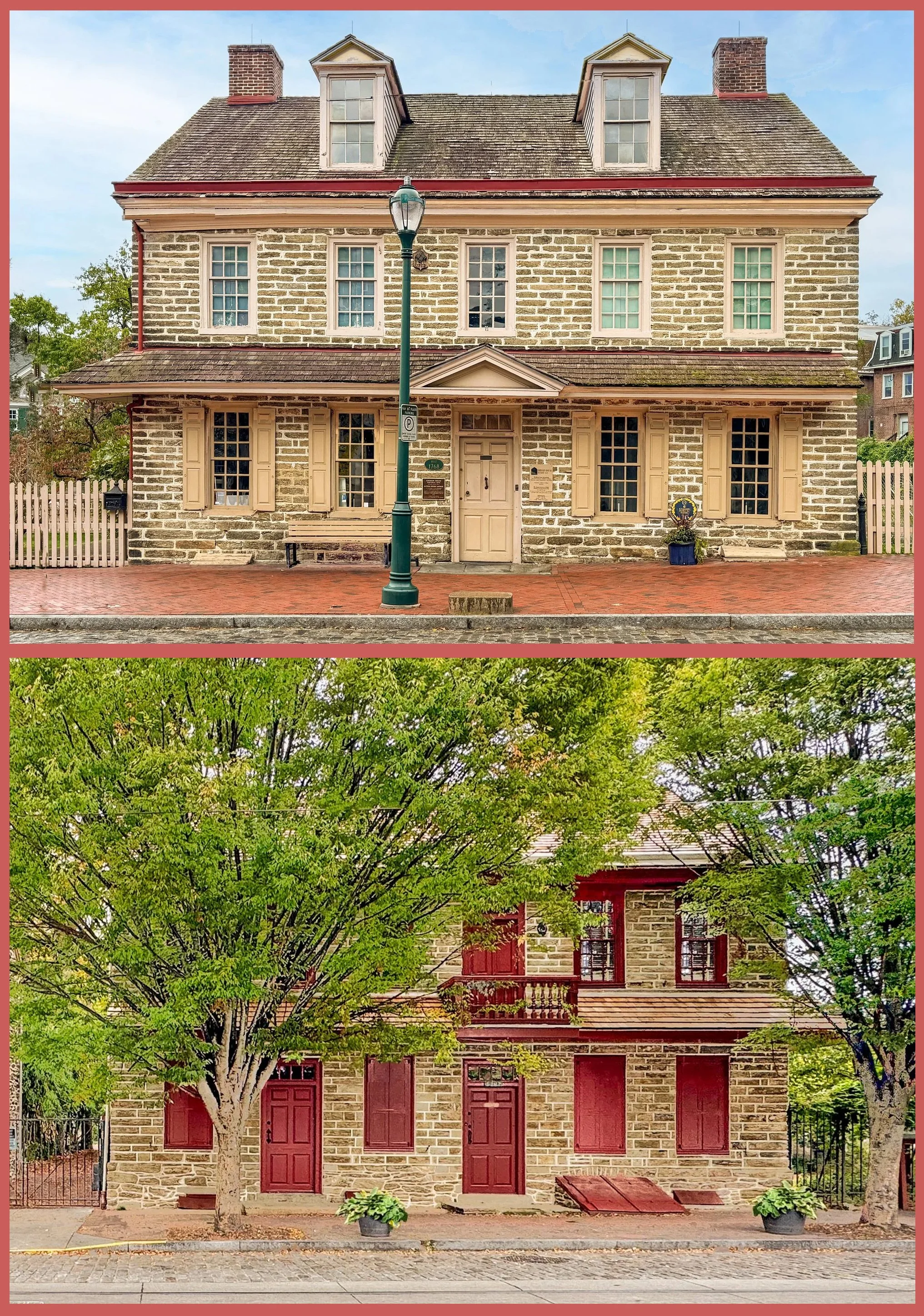
Above: Two Colonial Quaker houses in Germantown with pent roofs: Top: The Johnson House, built in 1768. Bottom: Grumblethorpe, built in 1744. Image source: Lee J. Stoltzfus
A Pennsylvania German Pent Roof
1740s Mennonite Hess Homestead
Lititz, Lancaster County:
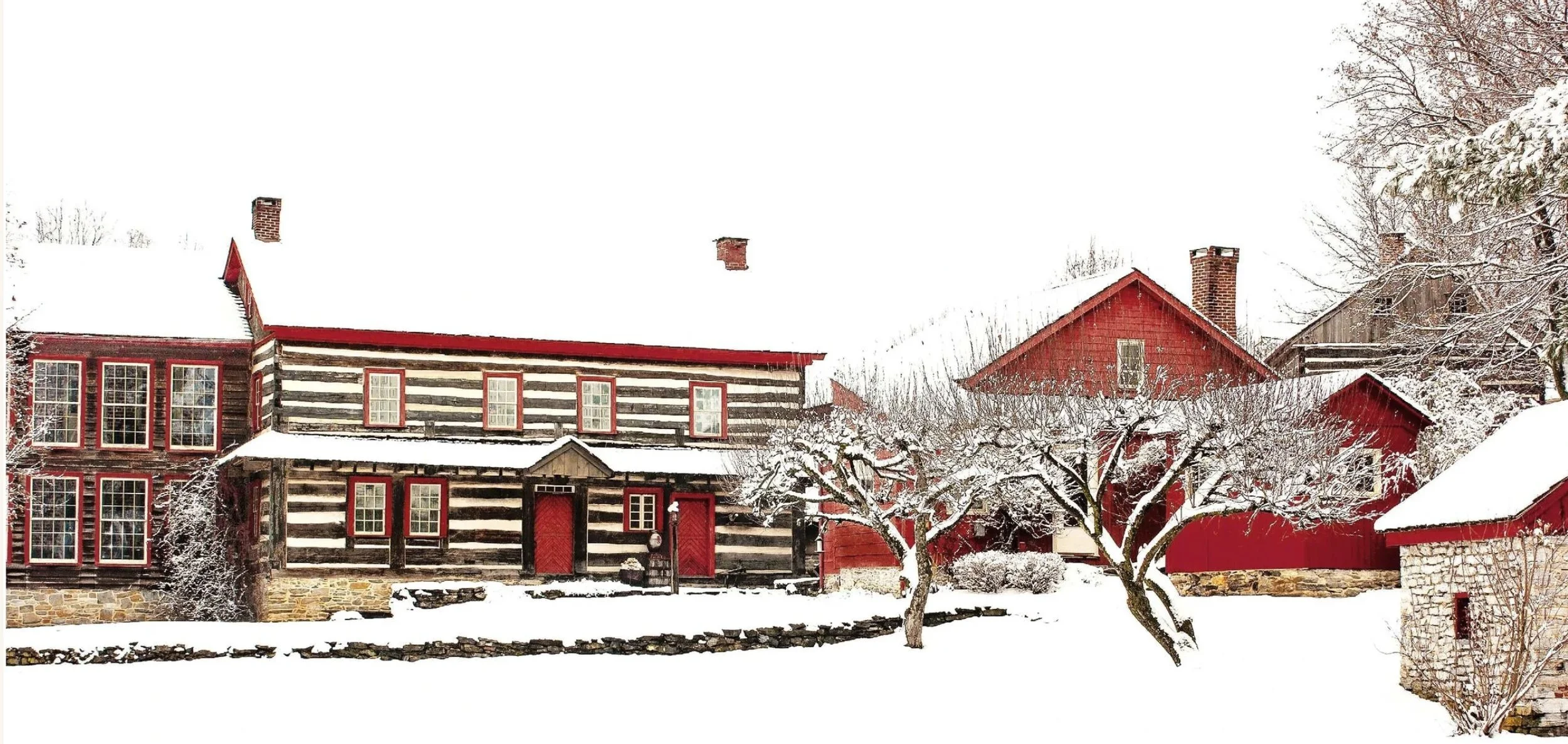
Above: A pent roof shields the front facade of the 1740s Hess Homestead near Lititz, Lancaster County. This log farmhouse is the earliest house in Pennsylvania associated with the Hess family. Image source: Lee J. Stoltzfus
Clarke Hess (my spouse) and I restored this homestead in the 1980s. We lived here for 35 years. Clarke’s Mennonite immigrant ancestors had purchased this land from William Penn’s sons in 1735. This homestead, built by those German-speaking immigrants, will always remind me of the welcoming spirit of the Quaker Holy Experiment. Thanks, William Penn, for creating a multicultural Pennsylvania.