
Historic Quaker Houses of Lancaster County, PA
The Susanna Wright House
Wright’s Ferry Mansion
Columbia, PA
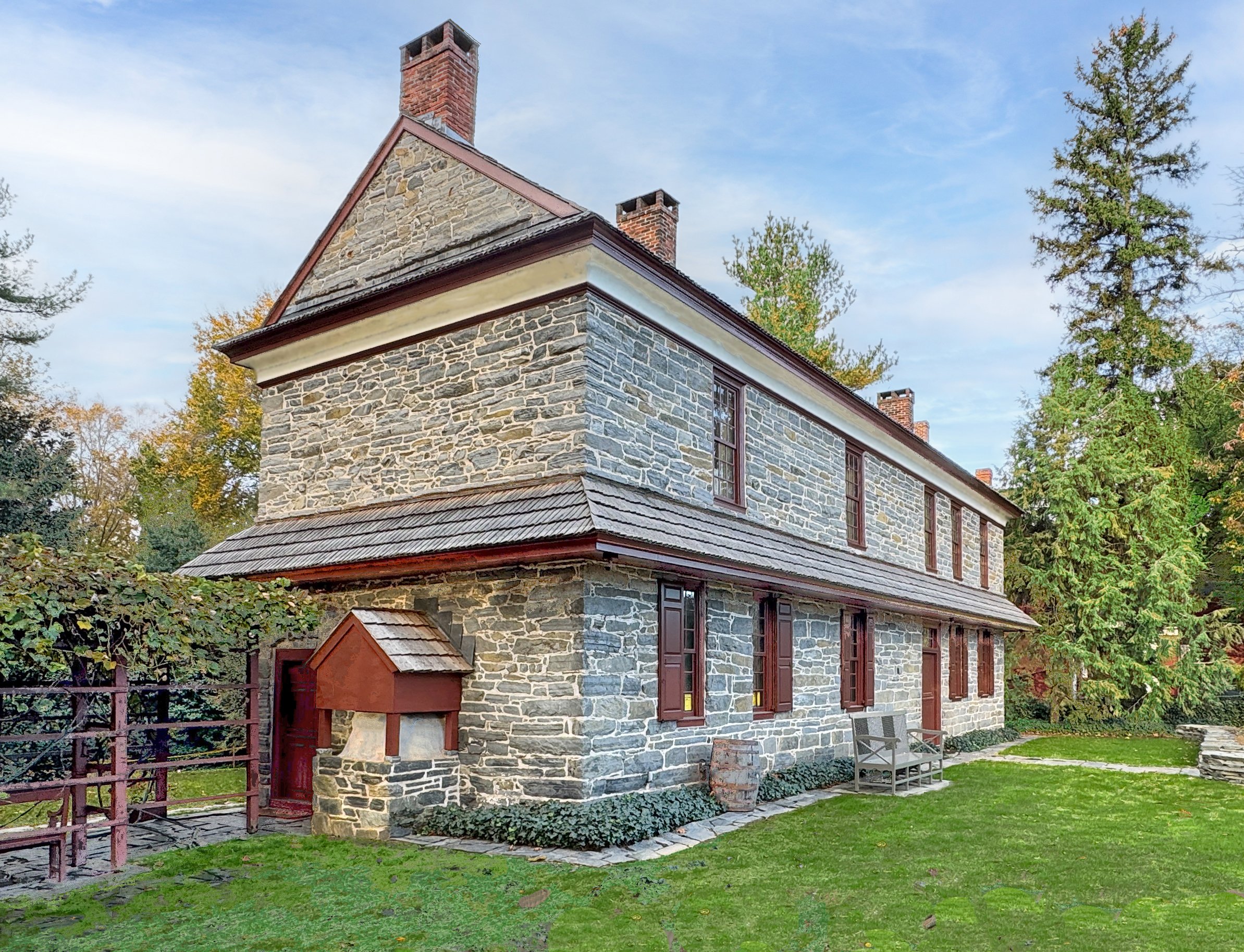
Above: A landmark Lancaster County house built in 1738 for Quaker “Renaissance Woman” Susanna Wright. Image source: Lee J. Stoltzfus
The Wright’s Ferry Mansion was built in 1738 for Quaker businesswoman Susanna Wright. She was a remarkably influential woman of the colonial frontier. Susanna never married. She owned a 100-acre tract here that she purchased when the area was still a remote wilderness.
Along with her father, John Wright, and fellow Quaker families like the Barbers and Blunstons, Susanna Wright helped establish the settlement of "Wright’s Ferry," which served as a vital crossing point for pioneers heading west. The house is the oldest remaining structure in Columbia and serves as a physical link to the town’s origins as the gateway to the west.
A Showcase of Pre-1750s Furnishings
William and Mary with Queen Anne Artifacts:
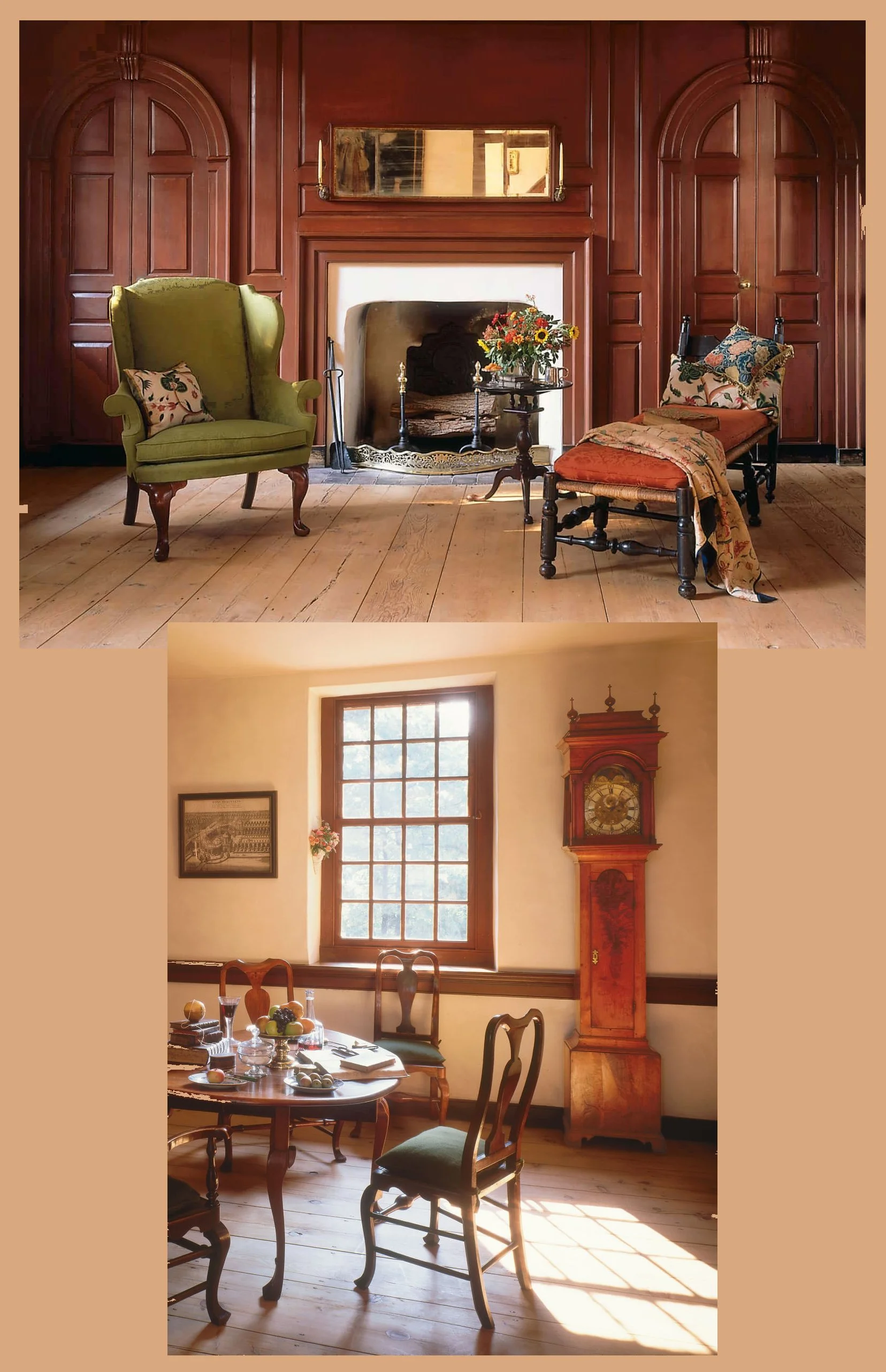
Above: The house is home to a carefully curated collection of pre-1750 furnishings. Images source: Wright’s Ferry Mansion
Susanna Wright was the defining figure of this house. She transformed it into a center of intellectual and industrial activity. She was a true Renaissance woman. She was a poet, botanist, and scholar who maintained a lifelong correspondence with luminaries such as Benjamin Franklin and James Logan.
Within the walls of this home she practiced medicine, provided legal counsel to her neighbors, and managed a diverse agricultural operation. Most notably, she established one of the first successful silk industries in the American colonies, raising silkworms and producing high-quality silk that was even sent to England to be woven for the British royal family.
A Monument to Susanna Wright:
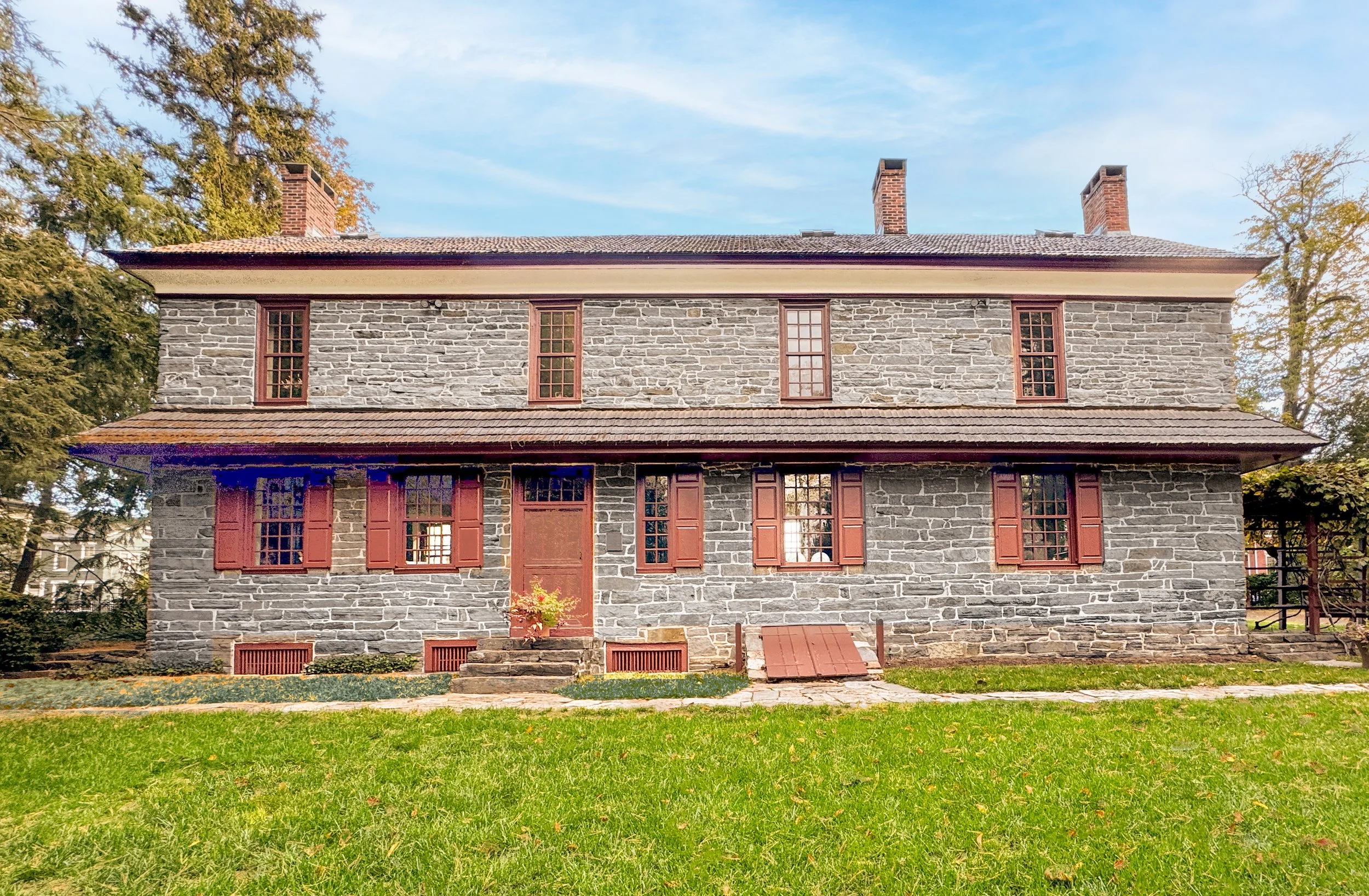
This historic farmhouse is a meticulously preserved example of the Pennsylvania English Quaker style. The two-story stone house reflects the sophisticated yet simple tastes of Susanna Wright. Many of the building’s details are original, including the exterior doors, window frames, and interior pine flooring.
Today, Wright’s Ferry Mansion operates as a historic house museum, thanks to an extensive restoration in the 1970s by the Louise Steinman von Hess Foundation. Under the guidance of renowned preservationist G. Edwin Brumbaugh, the house was restored to its early appearance. The rooms are furnished with a superlative collection of items made before 1750.
The Floorplan:

Above: The house maintains its original floorplan, which has a linear four-room layout. The original front of the house faced the Susquehanna River. Today the front entry faces the street. Image source: Wright’s Ferry Mansion
An Early Map of Quaker Settlements
here in Columbia, Lancaster County:

Above: Image source: History of Lancaster County…Ellis and Evans, 1883, Internet Archive (Color added)
Susanna Wright purchased this 100-acre tract in 1726. Her father John Wright operated a river ferry here. Other Quaker landowners here in this enclave of Friends included First Purchasers such as James Logan of Stenton. Susanna Wright left most of her estate to her nephew Samuel Wright. She had never married.
Pent Eaves, Pent Roof
And a Squirrel-Tail Bake Oven
A Germanic-English Vernacular House:
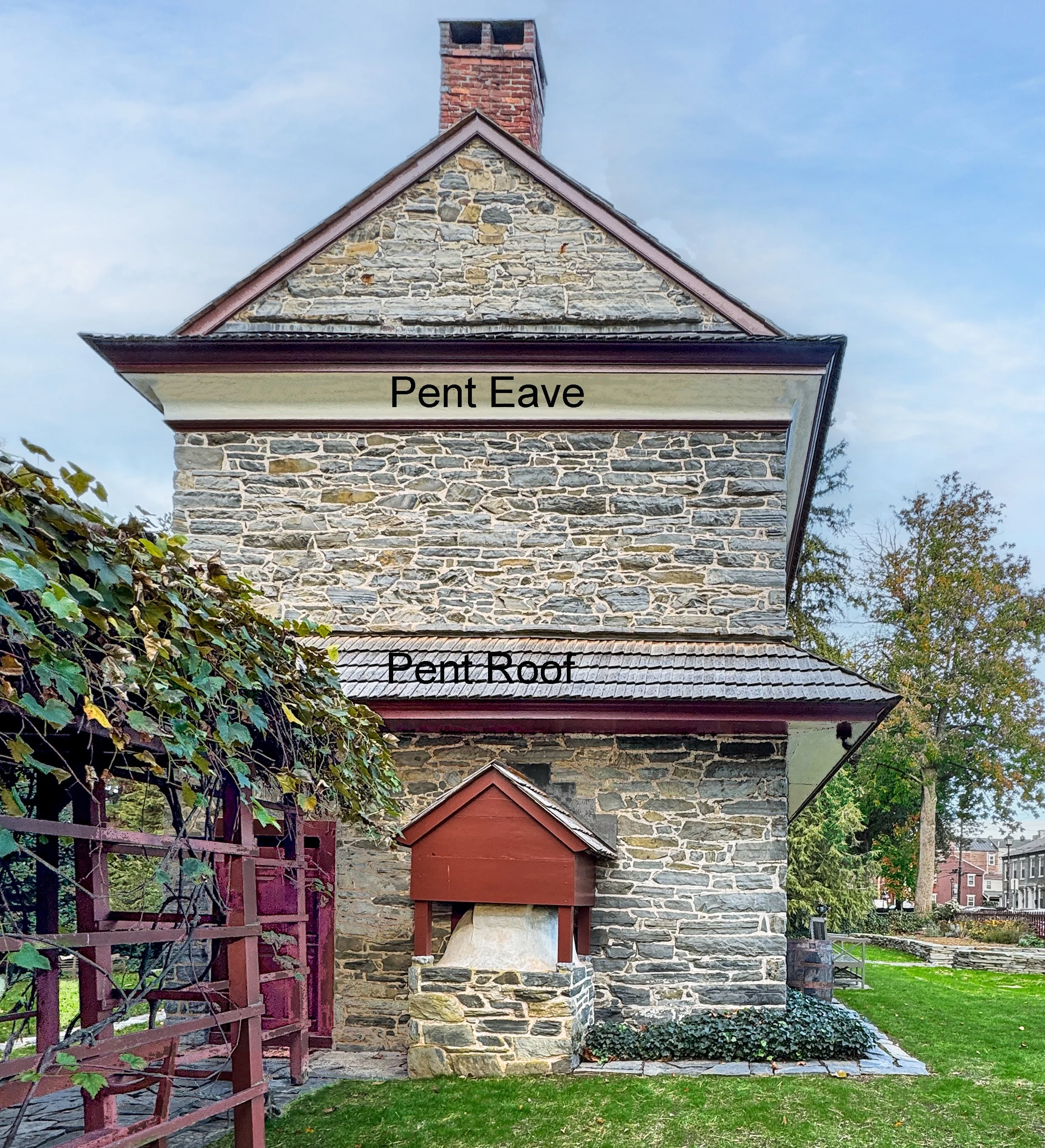
Above: Gable view of the Susanna Wright House. Image source: Lee J. Stoltzfus
The Susanna Wright House is a beautiful example of the cross-cultural influences of both Germanic and English influences on Pennsylvania’s early Quaker houses. This building’s pent eaves and pent roof are Germanic details on an Anglo-Quaker structure. The squirrel-tail bake oven is a Germanic oven; similarly, the side-lapped roof shingles are Continental in origin, not Anglo. This New World vernacular architecture personifies the ideals of William Penn’s welcoming Holy Experiment.
Likewise, this hybrid house’s furnishings are cross-cultural. The kitchen displays Pennsylvania German furniture, while many of the other furnishings are high-style Philadelphia-area objects of Anglo design. The house speaks of both English and German immigration and represents the ideals of the Pennsylvania melting pot.
Historians use the phrases pent eaves and pent roofs interchangeable. Architect G. Edwin Brumbaugh defined pents as illustrated in the photo above.
An 1876 Engraving of the Susanna Wright House
Before Restoration:

Above: An Illustrated History of the Commonwealth of Pennsylvania, William H. Egle, 1876, Internet Archive.
A 2016 Book about Susanna Wright:

Above: The Extraordinary Suzy Wright - A Colonial Woman on the Frontier, by Teri Kanefield, 2016. Image source: Amazon.com
Susanna Wright emigrated from England to Pennsylvania with her family to escape discrimination for their Quaker beliefs. She became one of the most intellectually accomplished and influential women in Pennsylvania.
Another Grande Dame of the Susquehanna
Louise Steinman von Hess
She Restored the Susanna Wright House.

Above: Louise Steinman von Hess. Images source: Left: FindaGrave.com Right: Conestoga House and Gardens
Louise Steinman von Hess was a dedicated Lancaster County philanthropist and preservationist. One of her most significant projects was the restoration of Wright’s Ferry Mansion where she collaborated with the renowned restoration architect G. Edwin Brumbaugh, and with her husband Richard Hess.
Her foundation also funded a world-class collection of pre-1750 decorative arts for the Wright House. Plus her foundation restored Lancaster’s Sehner-Ellicott-von Hess House.
Architect G. Edwin Brumbaugh
And Louise Steinman von Hess:
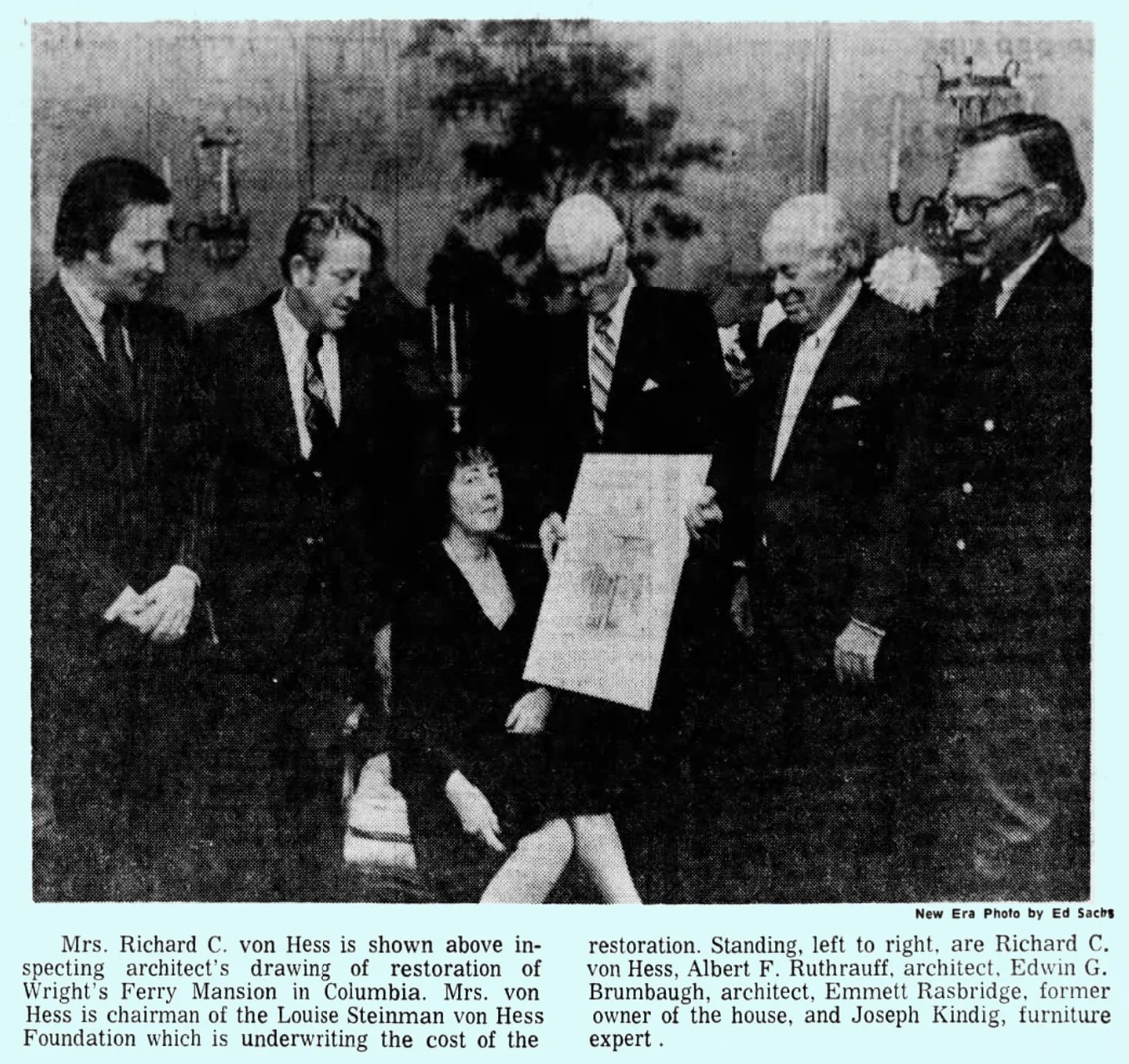
Above: Louise Steinman von Hess hired leading restoration architects and antiquarians to restore and furnish the Susanna Wright House. Image source: LancasterOnline.com
Measured Drawings
During Restoration in the 1970s:
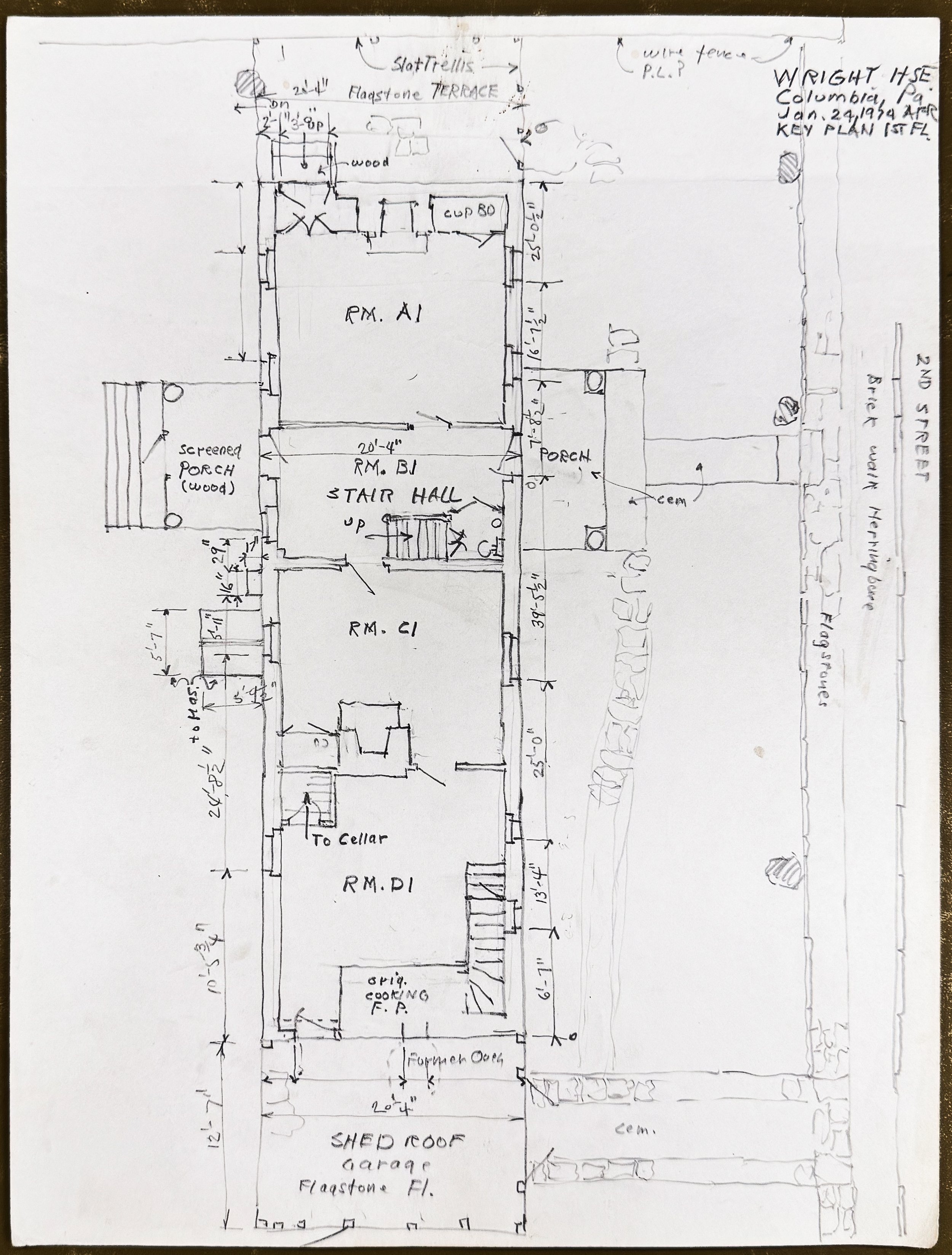
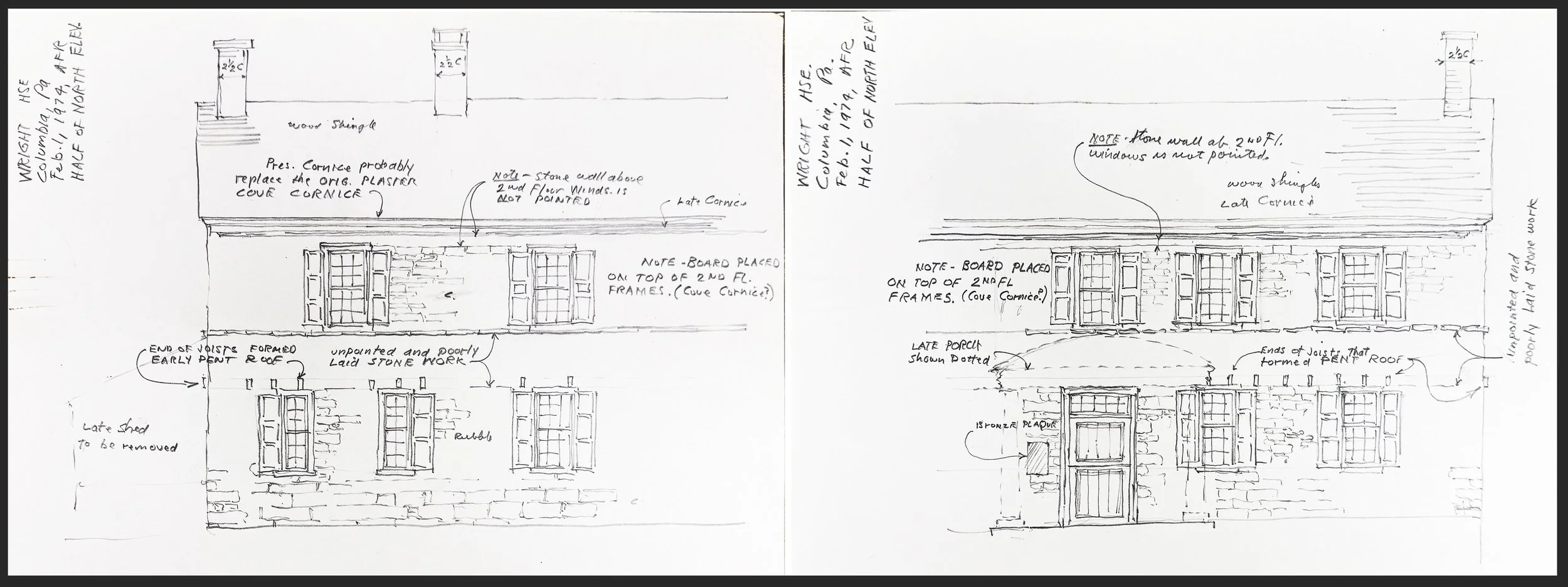
Above: Measured drawings of the Susanna Wright House in 1974 by Architect Albert F. Ruthrauff. Image source: Photographed at Winterthur Library.
Architect G. Edwin Brumbaugh led the Wright House restoraton in the 1970s. Winterthur Library preserves his lifetime of achievement as an architect, historian, and preservationist by archiving his papers.
This measured drawing in the Brumbaugh archive is initialed “AFR”, by Albert F. Ruthrauff, who became Brumbaugh’s business partner. Ruthrauff produced many measured drawings for the firm’s restoration projects.
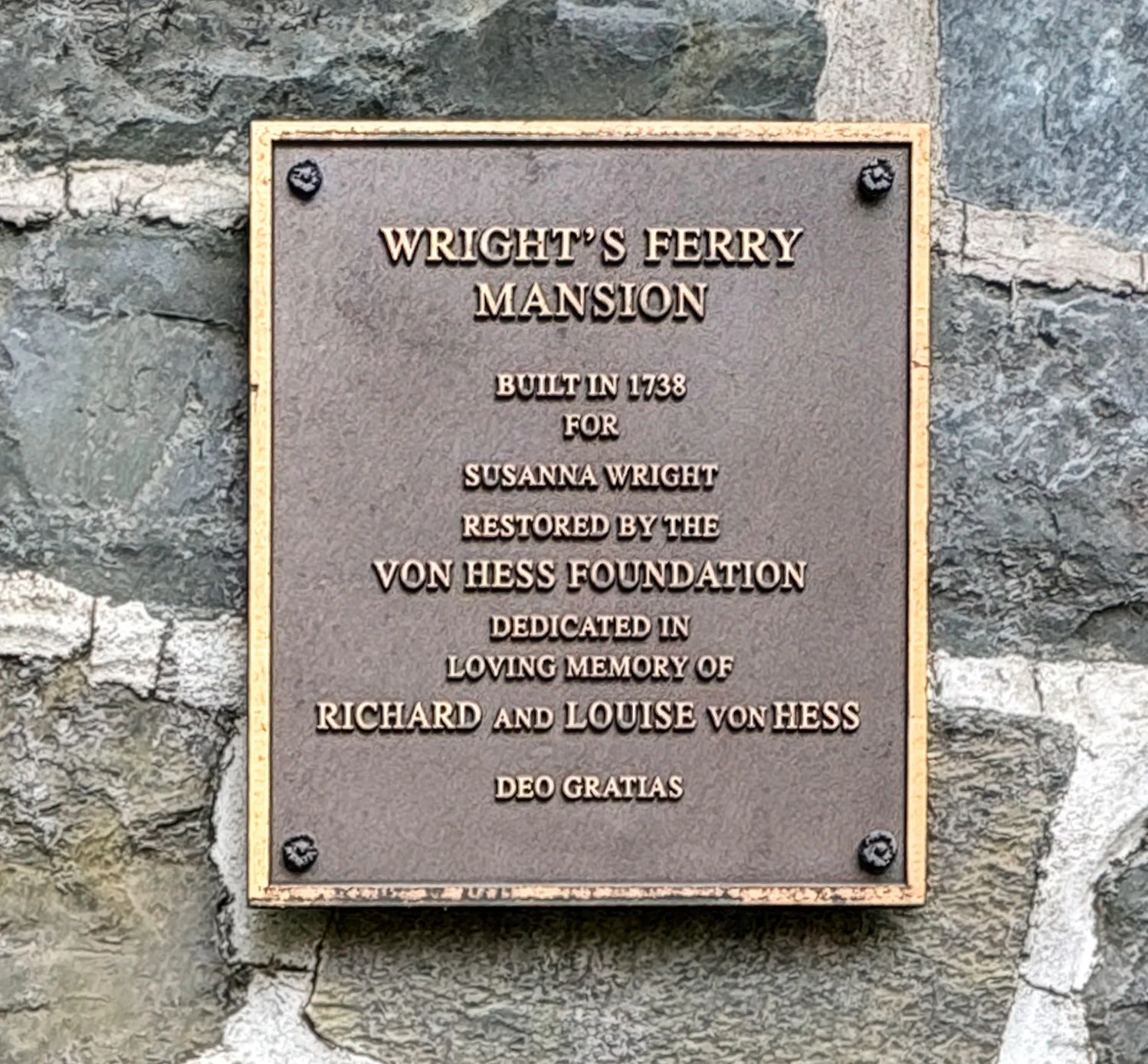
Above: A historical marker beside the entry. This building stone and the local bedrock is limestone of the Conestoga Formation.
Links: