
Historic Quaker Houses of Delaware County, PA
The Worrall House
Built ca. 1685 and 1703
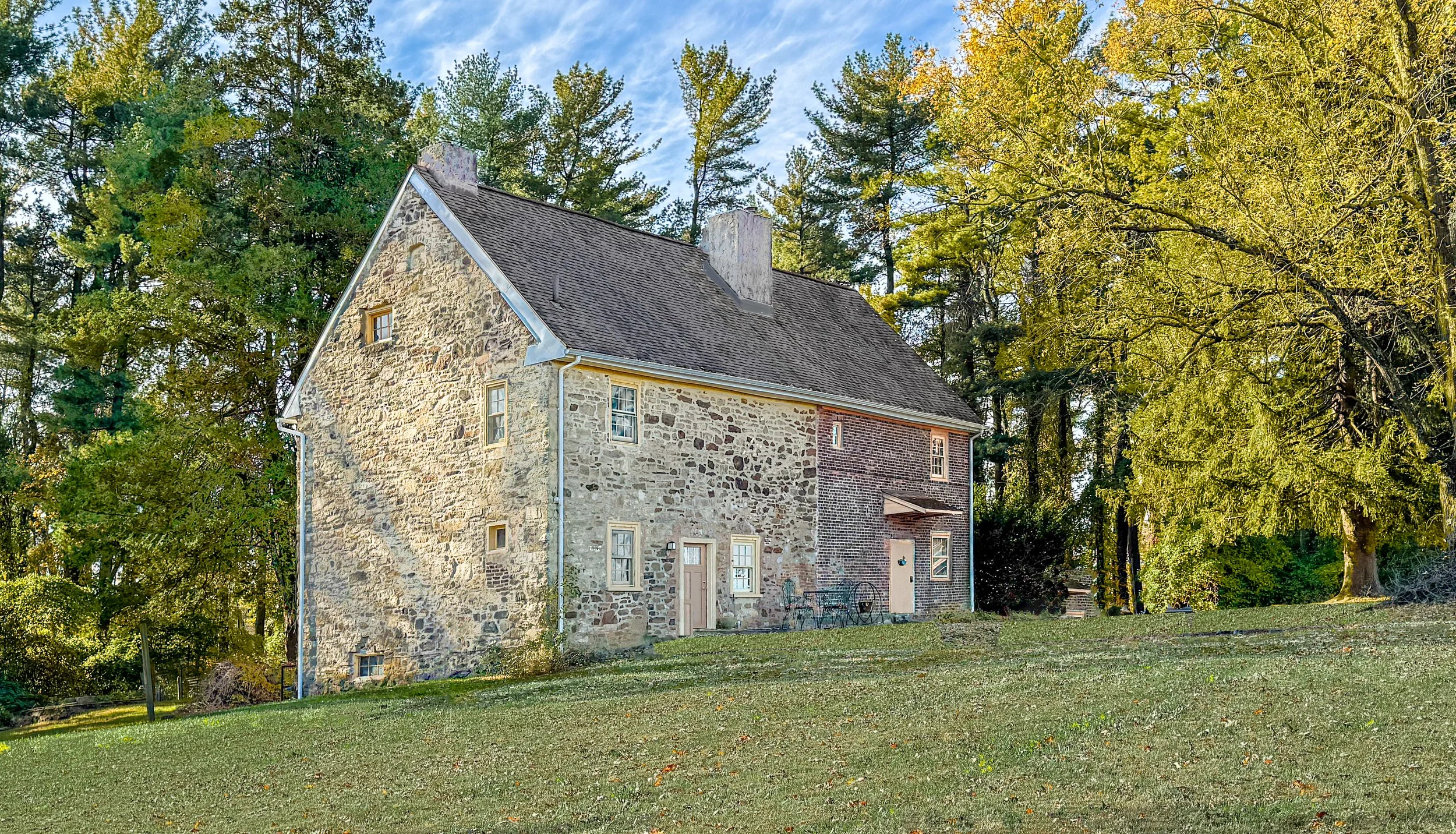
This house is the earliest structure in Ridley Creek State Park, and is among the earliest in Delaware County. English immigrant Henry Maddock apparently built the brick section between 1682 and 1690. Quaker immigrants John and Frances (Yardley) Worrall built the stone section in 1703. Image source: Lee J. Stoltzfus.
John Worrall was the wealthiest landowner in Edgmont Township. He was a member of the Governor's Council and served in the Provincial Assembly. He also was a county assessor.
John Worrall married his first wife, Frances Yardley, in 1683. She lived on the Edgmont property from the time they settled there in 1685 until her death in 1712. In 1714, John married his second wife, Sarah Goodwin, the daughter of Welsh Quaker immigrants. Sarah resided in the house for the remainder of John's life, raising nine children there and remaining at the estate until her death around 1755.
The ca. 1685 Brick House:
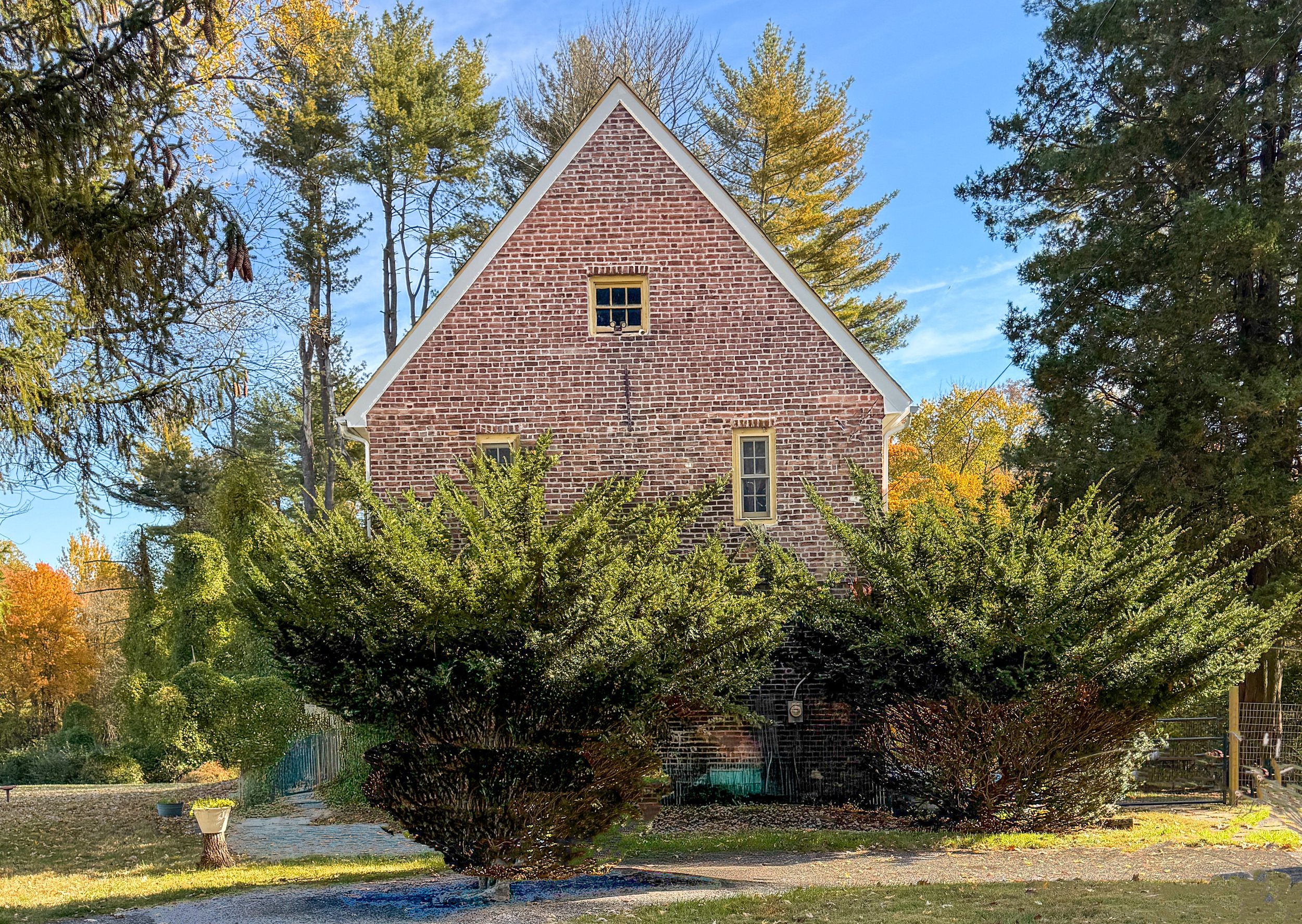
Above: The original brick section, built ca. 1685. Image source: Lee J. Stoltzfus.
Delaware County has only a few brick houses that survive from the 1600s, including the Massey House and the Levis House. These houses apparently all had leaded glass casement windows. The bricks would have been manufactured locally. The brick section of the Worrall House lacks its original pent roof.
The 1835 Bank Barn:
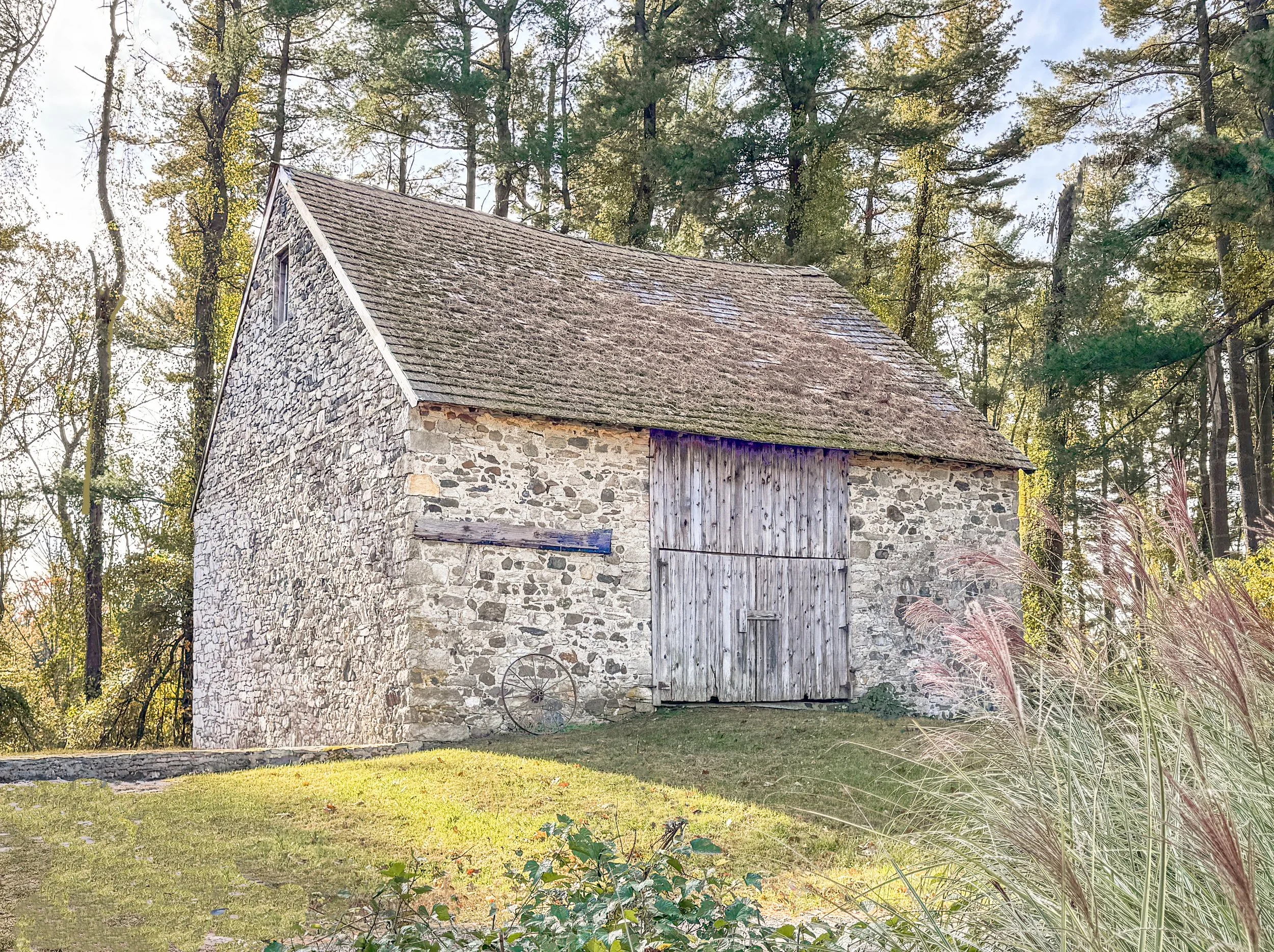
The 1835 barn is an important example of an rubble-stone Pennsylvania bank barn. Image source: Lee J. Stoltzfus.
Floor Plans of the Worrall House
by Jeffrey Robert Barr:
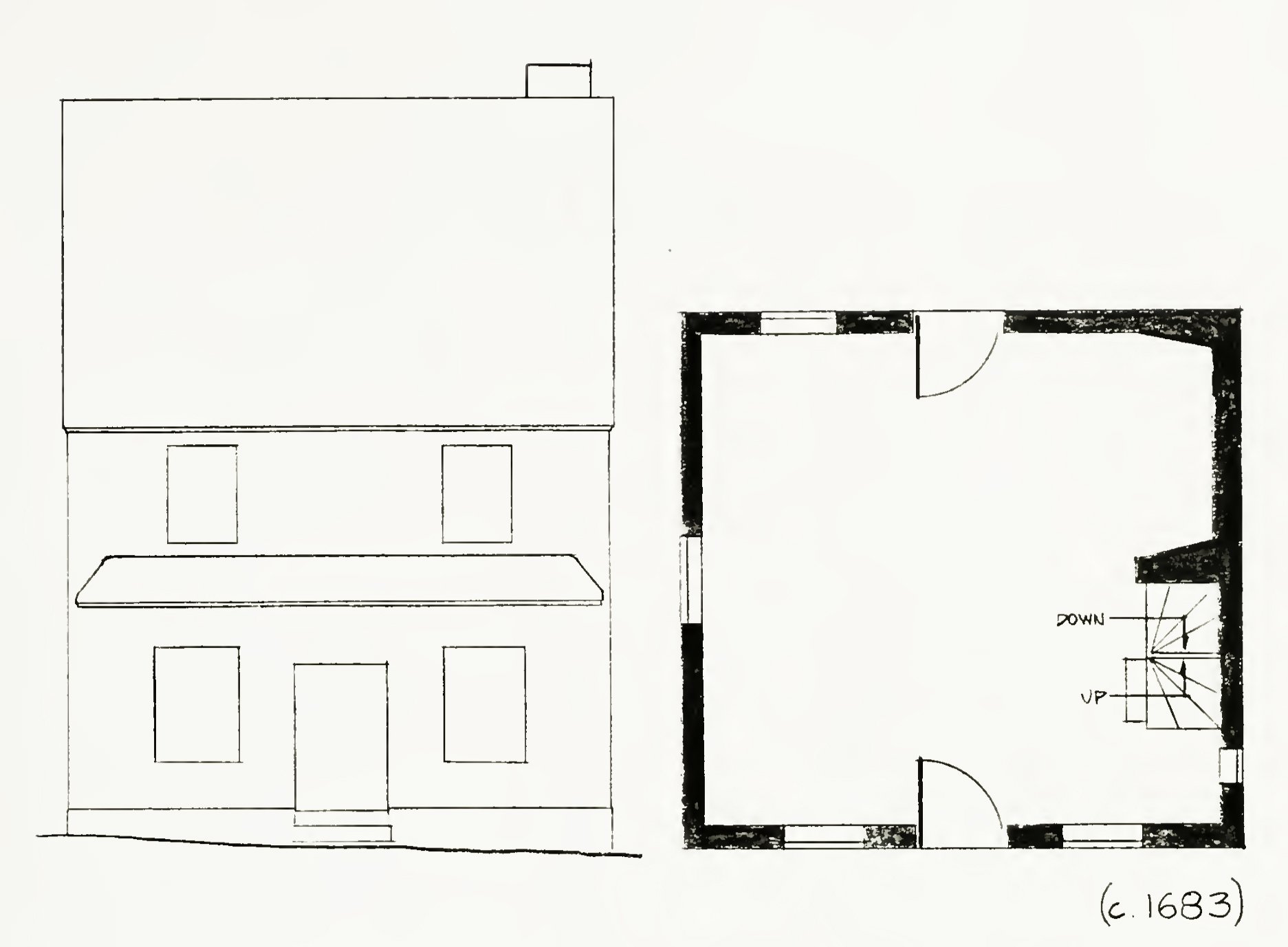
Above: The ca. 1685 brick house. Image source: Preservation in Ridley Creek State Park, Jeffrey Robert Barr, 1993, Internet Archive:
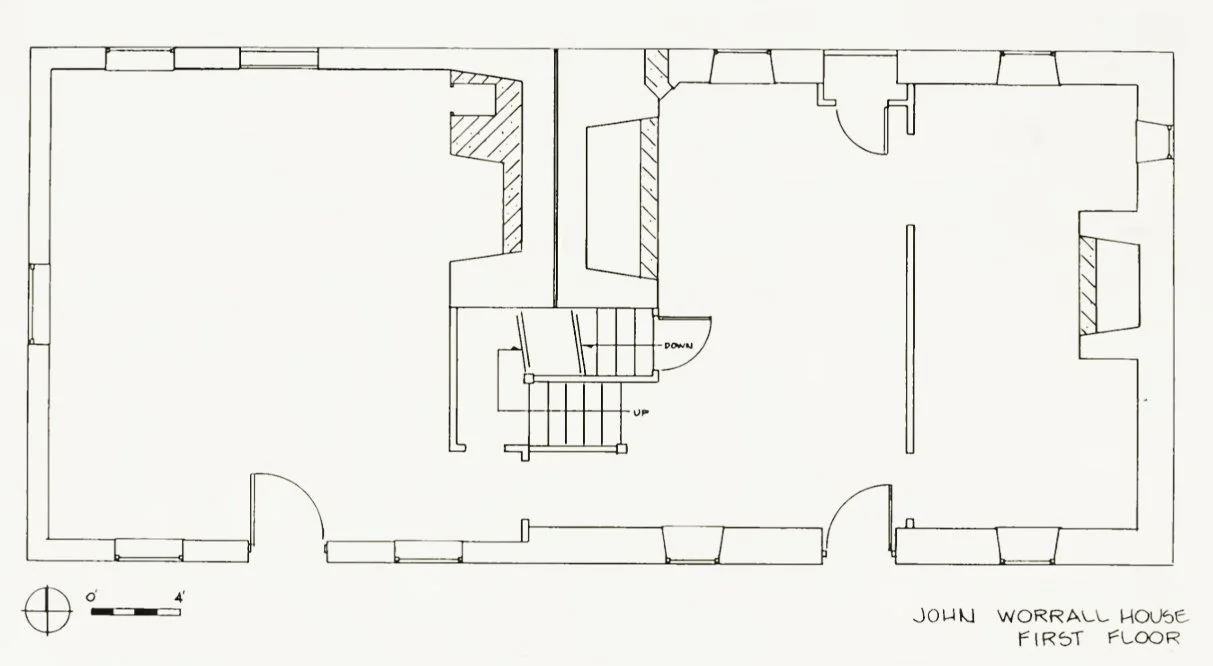
Above: Floor plan of the Worrall House. Image source: Preservation in Ridley Creek State Park, Jeffrey Robert Barr, 1993, Internet Archive:
Description of the Site in
Jeffrey Robert Barr’s Thesis:
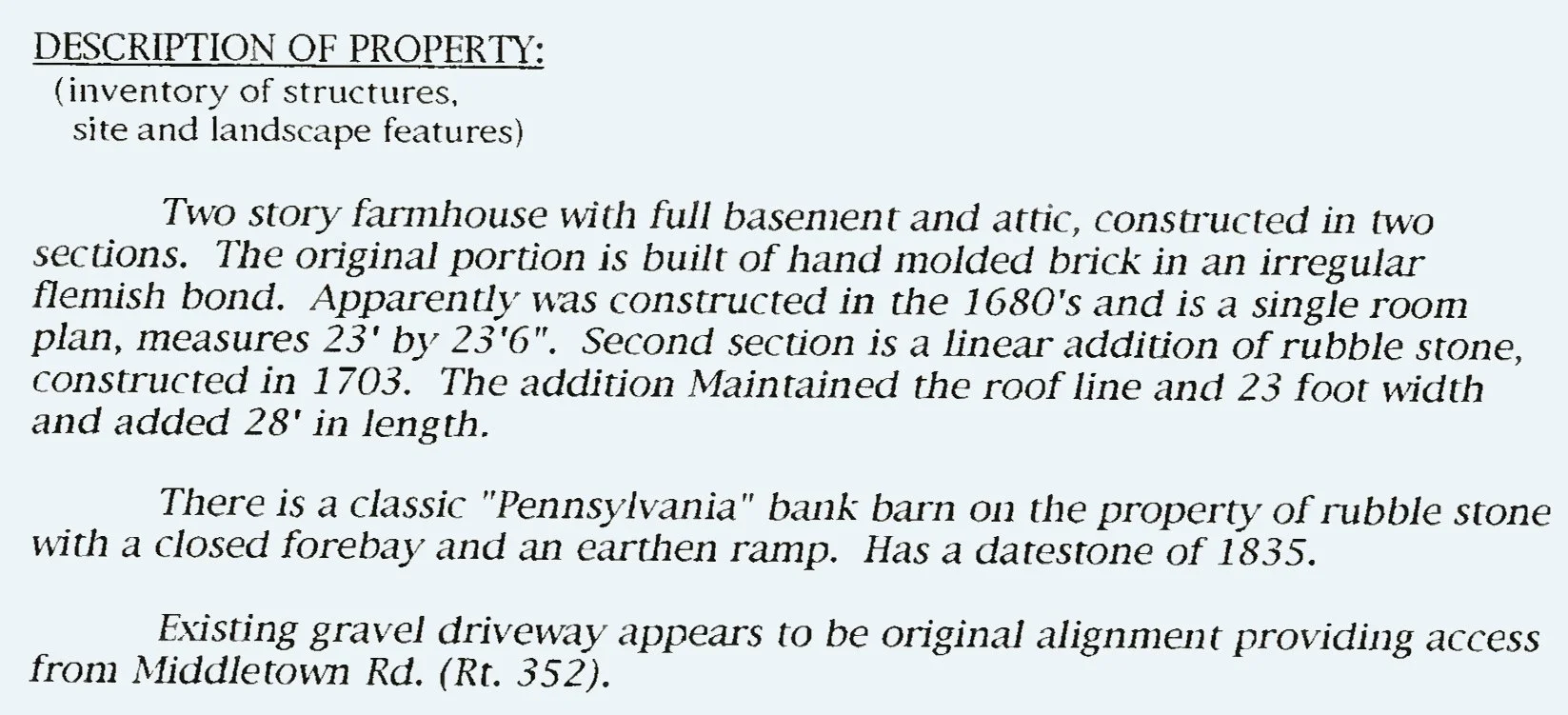
Above: Image source: Preservation in Ridley Creek State Park, Jeffrey Robert Barr, 1993, Internet Archive:
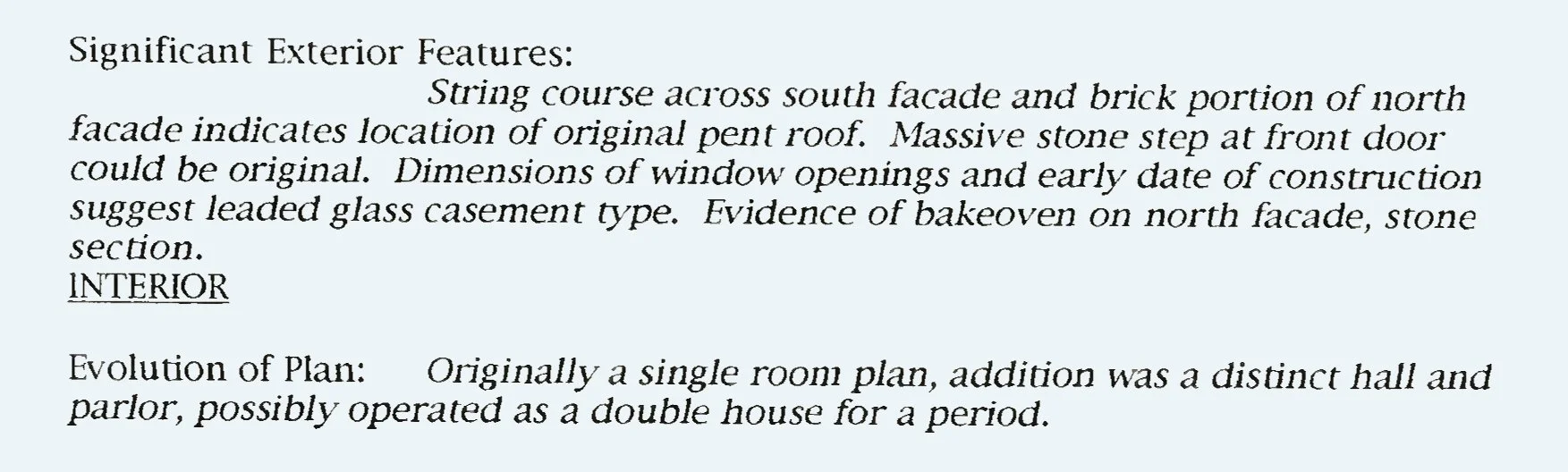
Above: Image source: Preservation in Ridley Creek State Park, Jeffrey Robert Barr, 1993, Internet Archive:
The Local Building Stone:
Felsic and Intermediate Gneiss:
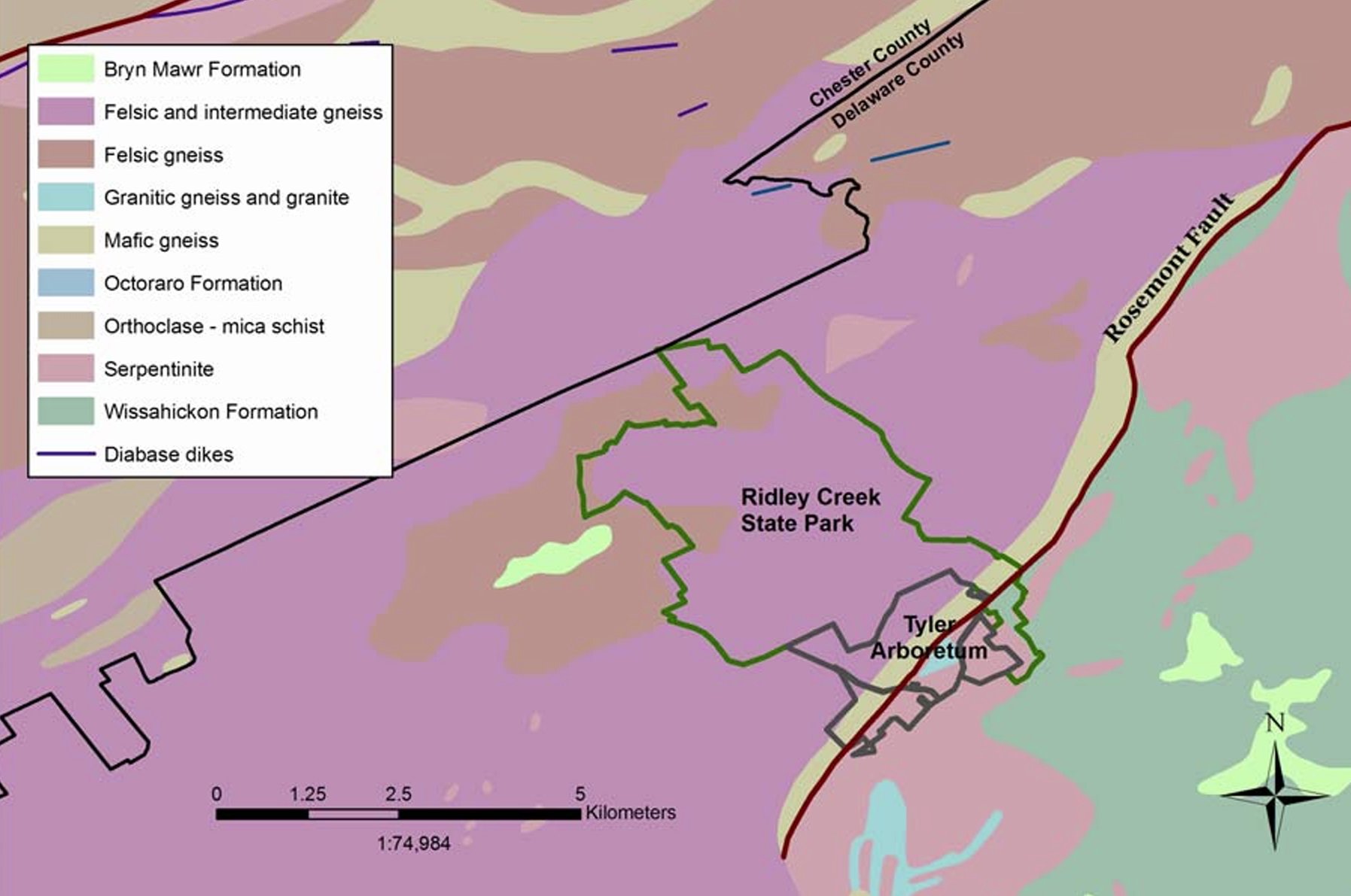
Image source: Friends of Ridley Creek State Park.
The stone section of the Worrall House is constructed of local rubble stone. Most of the farmstead is underlain by Grenville-age gneisses. The rocks are Precambrian in age, one billion years old.
The Nearby Pratt House
Colonial Pennsylvania Farm
Also Built with Gneiss Building Stone:
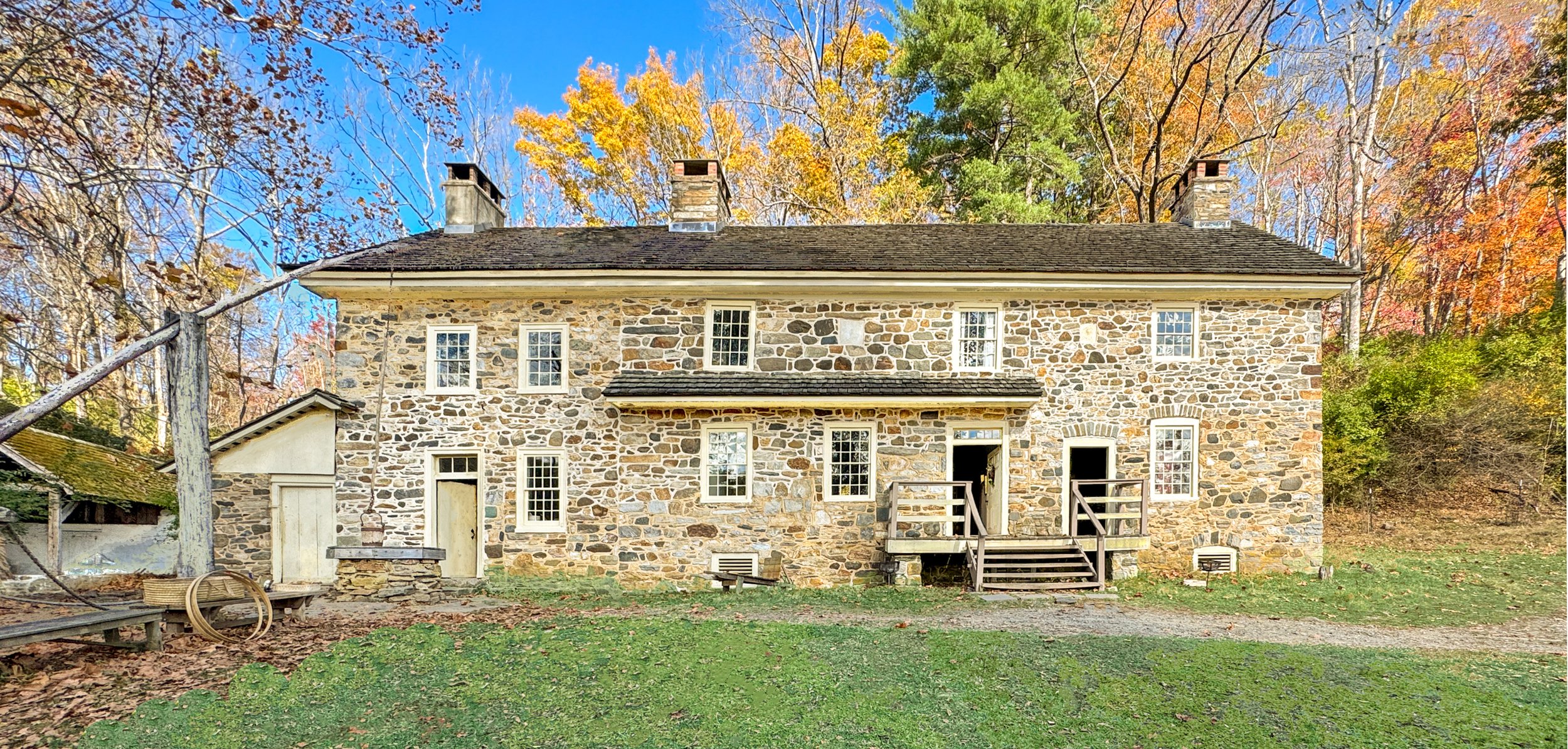
Above: The nearby Pratt House is open to the public as a museum, the Colonial Pennsylvania Farmstead. The farmhouse’s building stone is similar to the gneiss building stone of the Worrall House.
The Worrall House During the Revolutionary War
According to local tradition, the Worrall House played a local role during the Revolutionary War, earning the nickname "The Hospital House." Following the Battle of Brandywine in 1777, British forces reportedly used the farmstead as a field hospital to treat wounded soldiers. In 1777, John Worrall submitted a claim for good worth 35 pounds lost to the British soldiers.
Despite the Quaker principle of pacifism, many families in the area found their properties caught in the crossfire or commandeered for military use. The Worrall family’s endurance through this period highlights the resilience of the Quaker community in the face of the conflict that surrounded their peaceful settlements.
Links: