
Historic Quaker Houses of Chester County, PA
The Taylor-Parke House
Built in 1768 by Abiah and Ann Taylor

Above: The Taylor-Parke farmhouse on Strasburg Road was built by Abiah and Ann Taylor in 1768. The kitchen predates the main block of the house. Image source: Lee J. Stoltzfus.
Quaker farmers Abiah Taylor and Ann (Trimble) Taylor built this farmhouse in 1768. He was a grandson of the Quaker immigrants Abiah and Deborah (Gearing) Taylor who built the nearby 1724 Taylor House.
Abiah Taylor was a member of the Pennsylvania Assembly from 1795 to 1801. He was the first person buried at the Bradford Quaker Meeting burial grounds, located across the road from the Humphrey Marshall House. Eventually this farm became a model dairy farm owned by Samuel H. Parke.
Detail of Front Elevation:

The front entry and pent eave. Image source: Lee J. Stoltzfus.
The house consists of a two-and-a-half-story central block and a kitchen wing. The house features a four-bay design rather than the typical five-bay center-hall layout. The main entrance is located off-center and has a four-paned transomed door with eight fielded panels.
The Floor Plan:
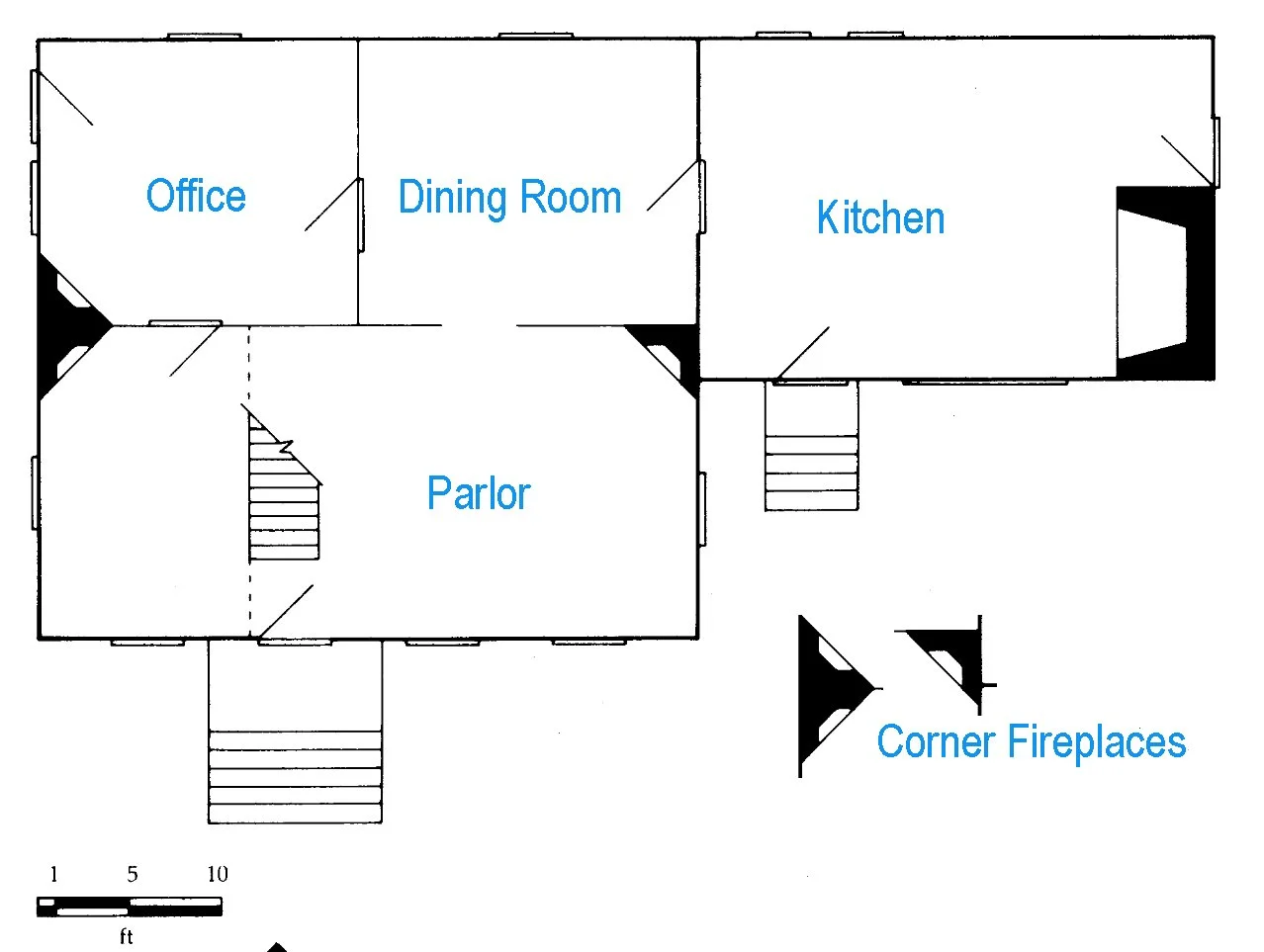
Above: Image source: “Vernacular Expression in Quaker Chester County…”, Arlene Horvath, 1986, JSTOR. (Text added)
The kitchen wing predates the primary section of the house. The interior preserves three corner fireplaces, reflecting a traditional heating solution frequently found in historic Quaker homes of this region. Historians often credit Swedish settlers for first introducing corner fireplaces to Pennsylvania dwelling design. Floor plans with corner fireplaces are often identified as “Quaker Plan” or “Penn Plan” houses.
Two of the Corner Fireplaces:
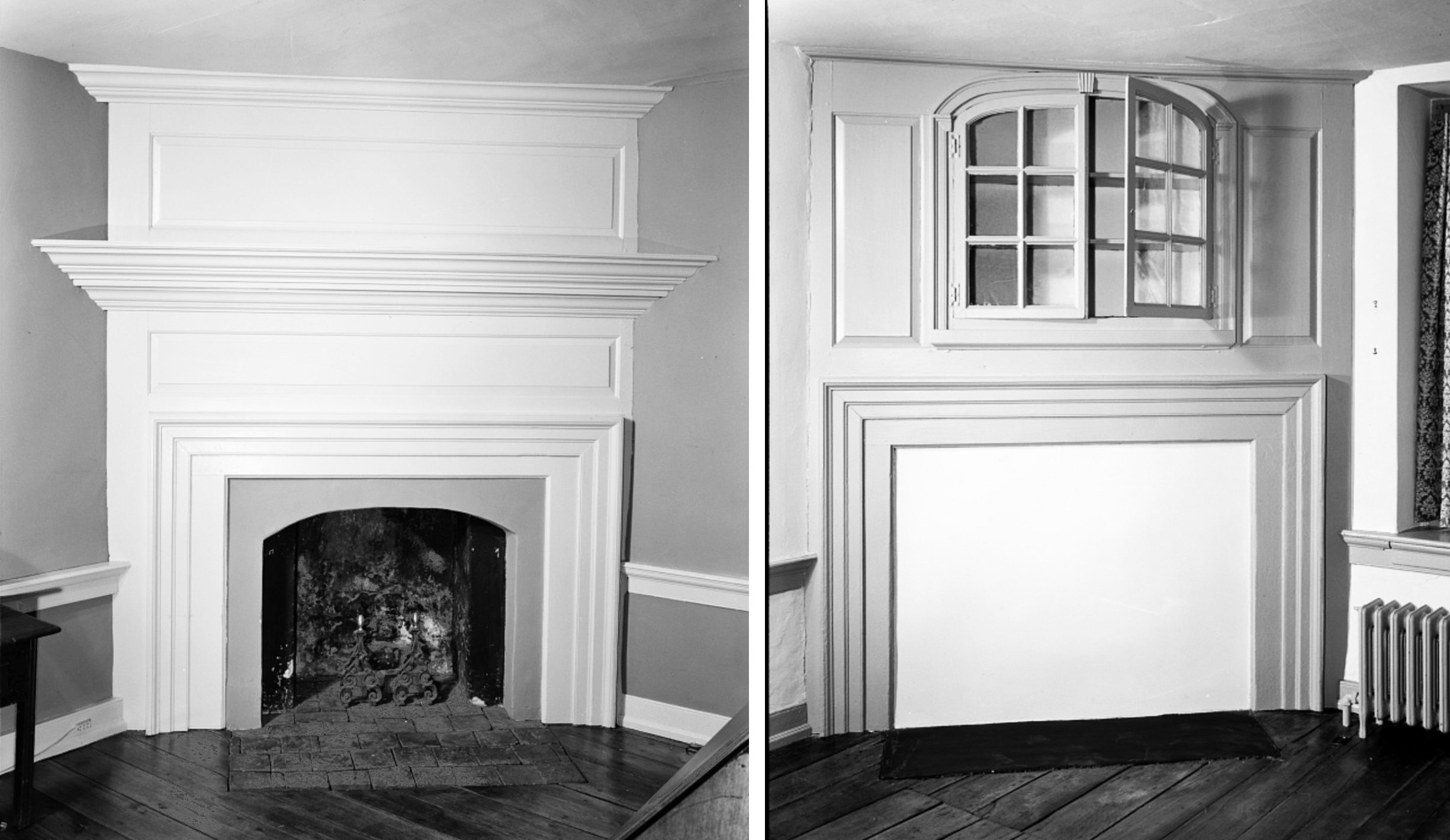
Above: Two corner fireplaces on the first floor. Left: southwest room. Right: northwest room. Images source: Historic American Buildings Survey, Ned Goode, 1960.
Exterior View in 1960:
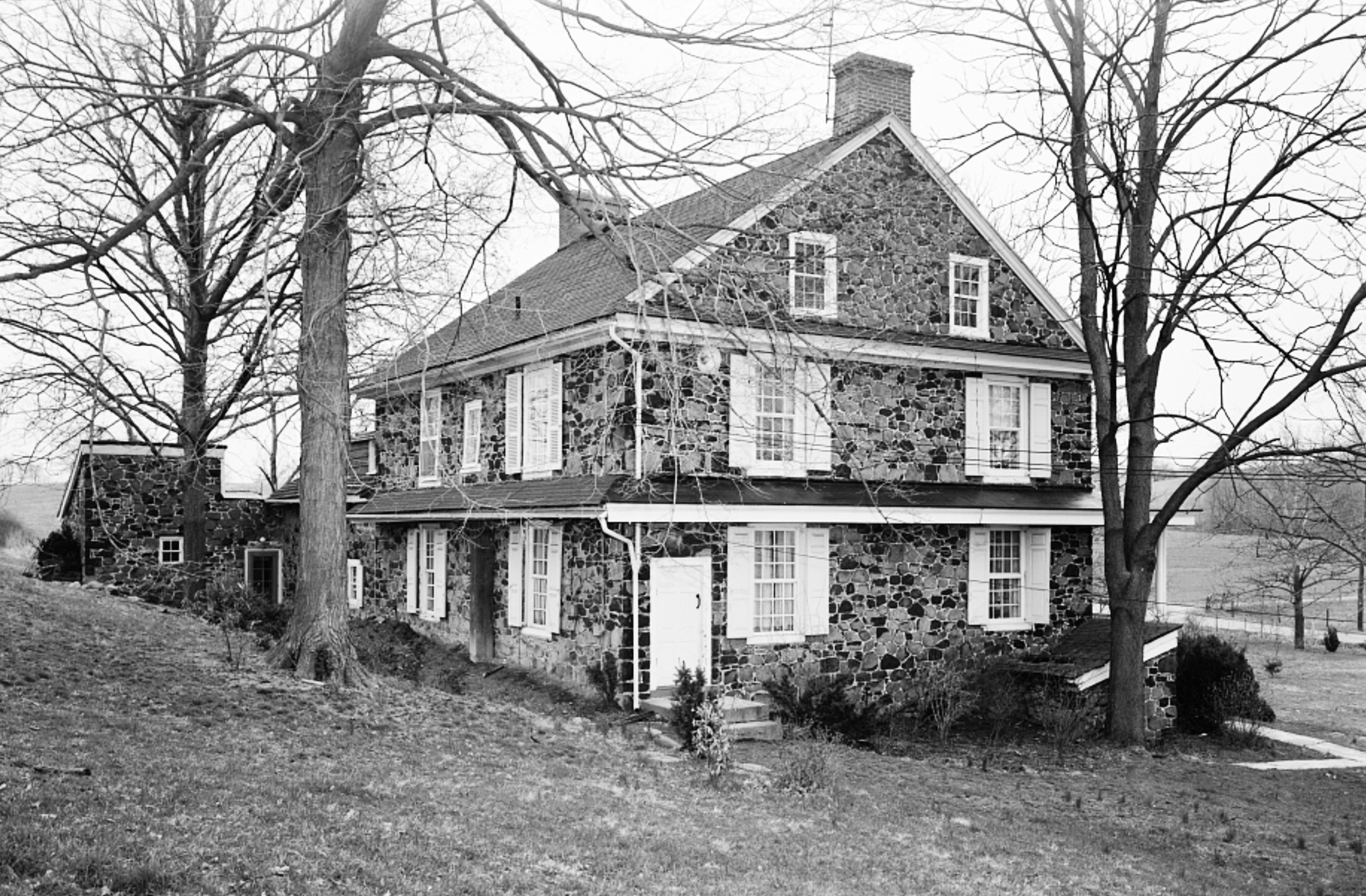
Image source: Historic American Buildings Survey, Ned Goode, 1960.
The text description in this 1960 HABS listing describes the gable’s projecting pents as a pent eave (above second-floor windows) and pent roof (above first-floor windows). Generally today, the terms pent eave, pent roof, and simply pent are often used interchangeably. Pent eaves are frequently cited by historians as a hallmark of Germanic influence within these Quaker homes. Pennsylvania’s colonial style emerged from a convergence of English, Welsh, Irish, and Scots-Irish traditions alongside those of Rhenish and Scandinavian settlers.
The Nearby 1724 Taylor House
Built by Abiah Taylor’s Grandparents:

Above: The Abiah and Deborah Taylor House. Restored and enlarged by Architect John Milner and Wynne Milner for their home. Image source: Lee J. Stoltzfus.
Abiah Taylor, Jr. was a Quaker immigrant from Didcot, Berkshire, England. He emigrated to Pennsylvania with his wife Deborah Gearing in 1702. Abiah Taylor, Jr. was a farmer, miller, state legislator, and land speculator. He was an active member of Bradford Meeting.
Three Generations of Taylors:

Above: Family tree of the Taylor family, showing three generations of Taylors and two of their historic houses.
A Sampling of the Historic Taylor Buildings
In the Taylor-Cope Historic District:

Above: Image source: East Bradford Township, modified.
The Taylor–Cope Historic District was added to the National Register of Historic Places in 1987. The district includes 15 contributing buildings which are mostly rural residences and barns.
Datestones for the Two Taylor Houses
The Grandparents’ and the Grandson’s Houses:
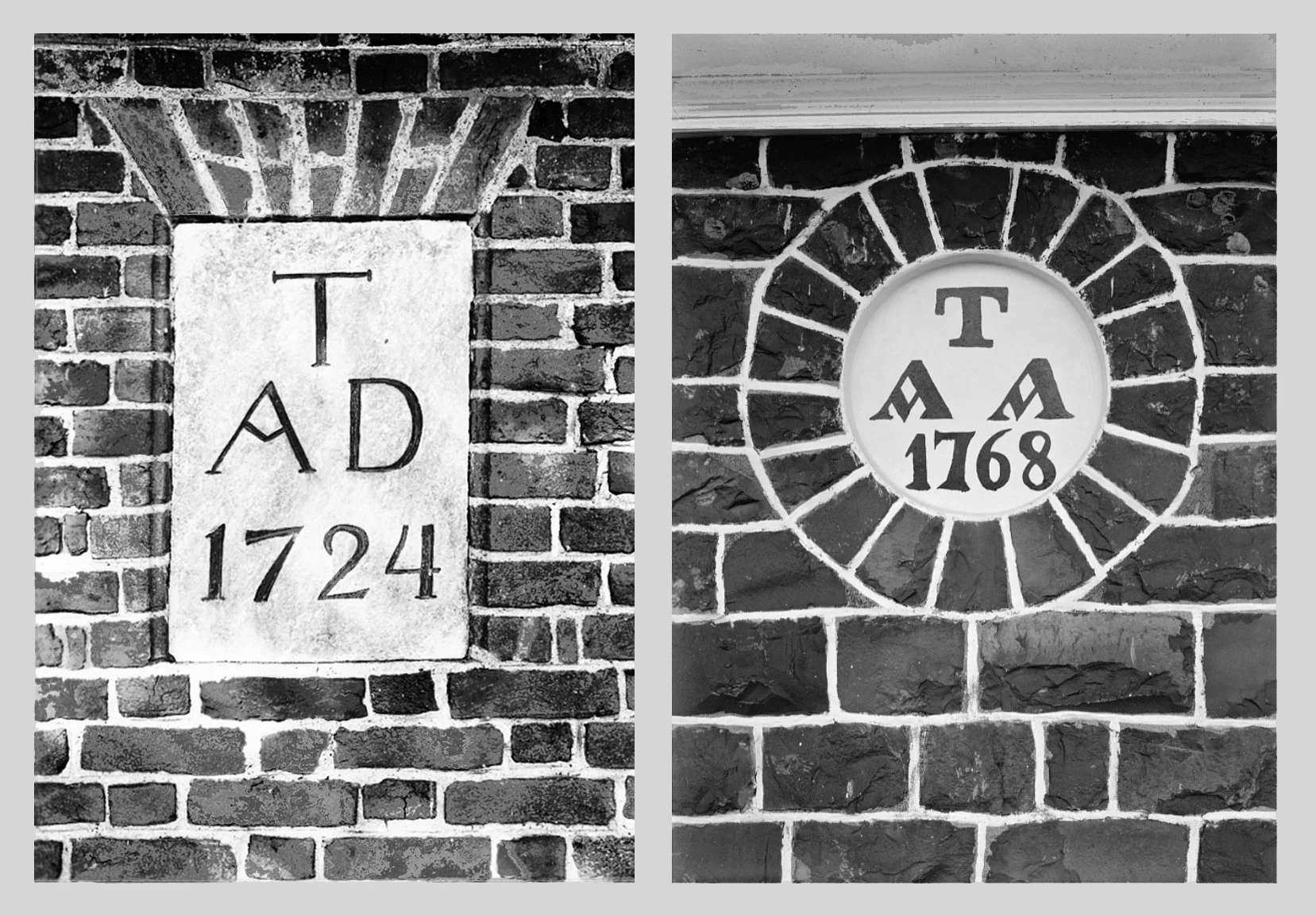
Datestone on left: The 1724 datestone on the grandparents’ farmhouse: Abiah Taylor, Jr. and Deborah (Gearing) Taylor.
Datestone on right: The 1768 datestone on the Taylor-Parke House built by the grandson and his wife: Abiah Taylor and Ann (Trimble) Taylor.
Datestones on historic Quaker houses are an exception rather than a rule. These Taylor datestones are uniquely memorable. The Taylor wives’ initials on these datestone are an architectural reminder of Quakers’ progressive views regarding the relationship between men and women. Quakers demonstrated some of the most equitable roles for women in colonial Pennsylvania.
Links: