
Historic Quaker Houses of Chester County, PA
The Marshall House
Home & Garden of Humphry Marshall
Author of the First American Book on Botany

Above: Quaker botanist and farmer Humphry Marshall built this house in Marshallton, Chester County. Image source: Lee J. Stoltzfus
The stone house included a hothouse, a botanical laboratory, and an astronomy observatory. Marshall placed a 1773 datestone into the finely cut ashlar of his home’s front facade. Marshall was a stone mason when he was a young man, so he had the skills to build this stone house himself. He married Sarah (Pennock) Marshall. His second wife was Margaret (Minshall) Marshall. There were no children by either marriage.
The Marshall House in 1849:

Above: Image source: Memorials of John Bartram and Humphry Marshall, 1849, William Darlington, Internet Archive.
The caption reads, “Built with his own Hands, A. D. 1773.”
Humphry Marshall
Author of the First American Book on Botany:
Above: Image source: Internet Archive
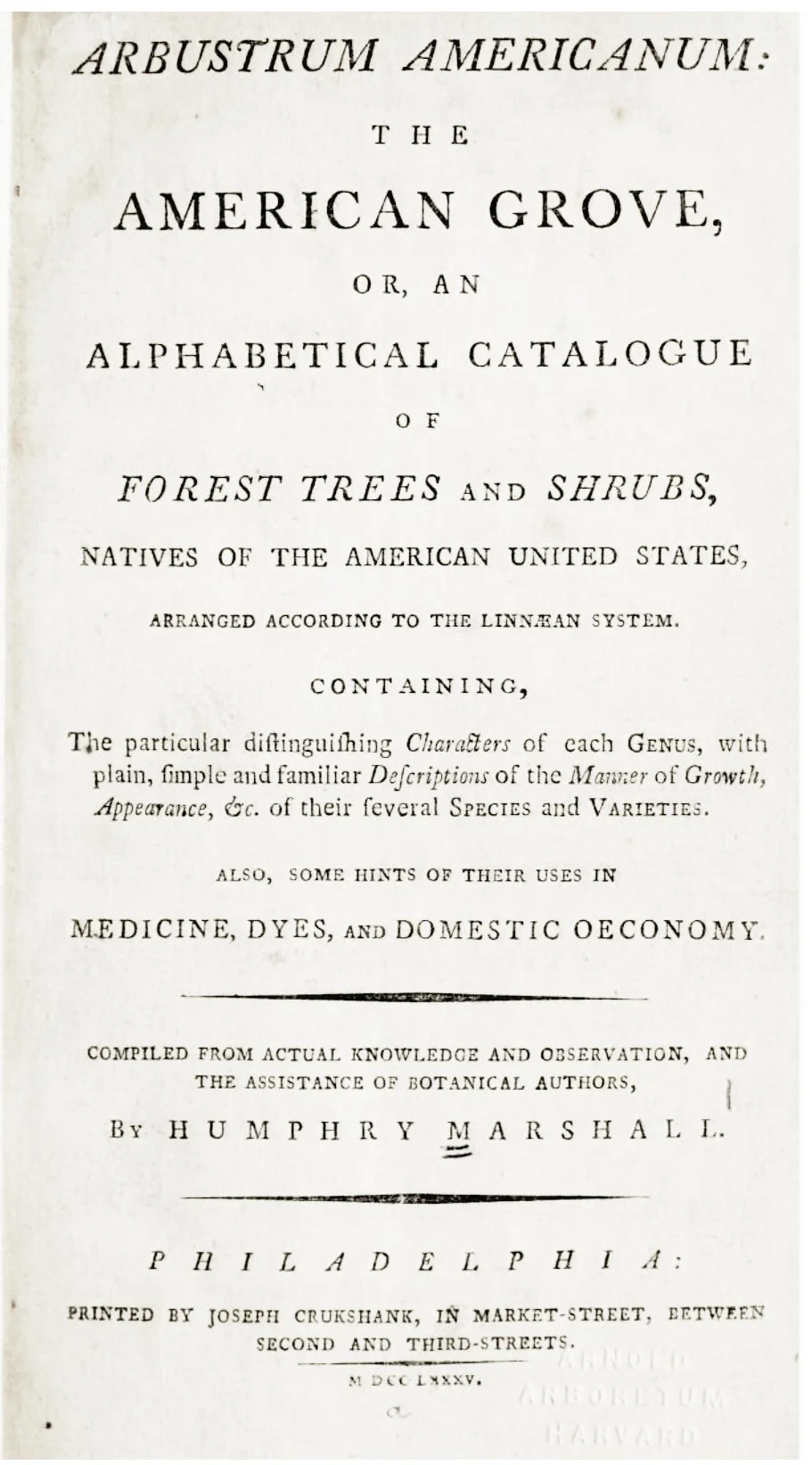
Humphry Marshall’s Arbustrum Americanum (1785) is the first botanical book written and published in America. The text describes more than 200 native trees and shrubs of the U.S.
In this landmark publication, Marshall formally published more than 100 new names to science. The International Plant Names Index (IPNI) records these plant names first validly published by Marshall in his Arbustrum Americanum.
The Second Botanic Garden
in Colonial Pennsylvania
His Cousin, John Bartram, had the First Botanic Garden:
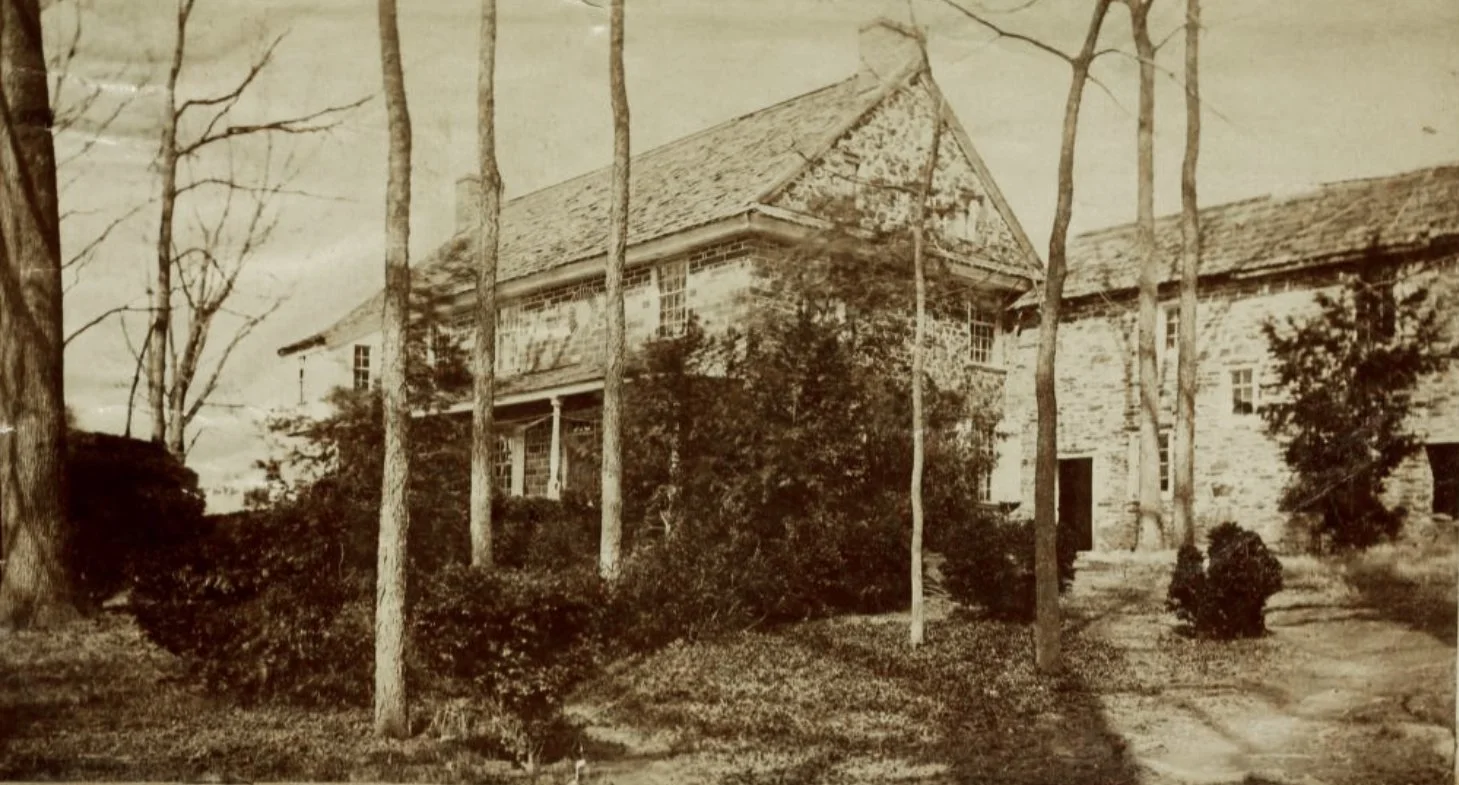
Above: A historic photograph is tipped onto a front endpaper of a 1785 Arbustrum Americanum in the collection of Harvard University Botany Libraries. Image source: Biodiversity Heritage Library.
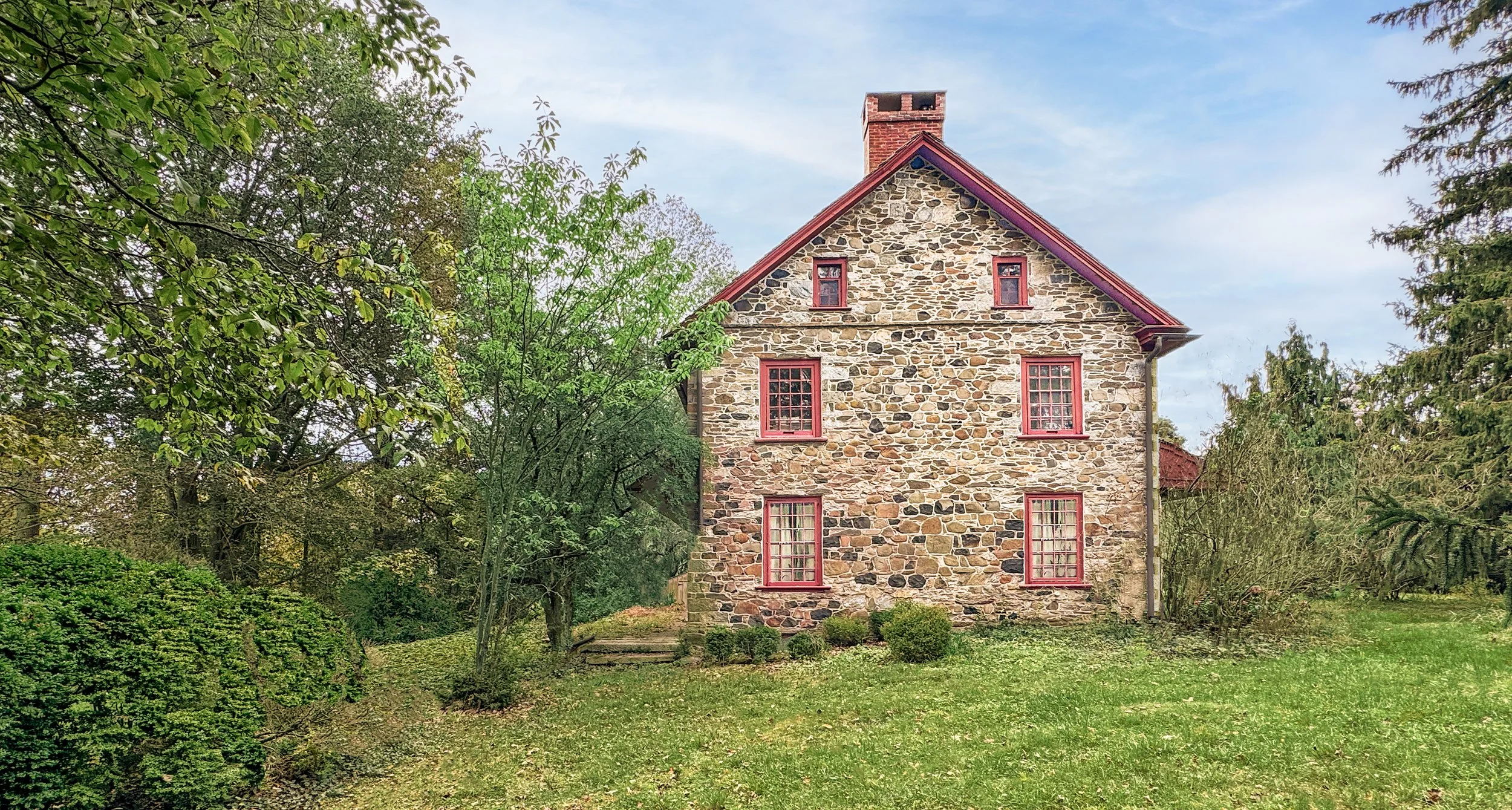
Above: Some of the era’s leading botanists visited this home and arboretum during the Marshall era, including William Baldwin, Zaccheus Collins, William Darlington, Frederick Traugott Pursh, and Constantine Samuel Rafinesque. Image source: Lee J. Stoltzfus.
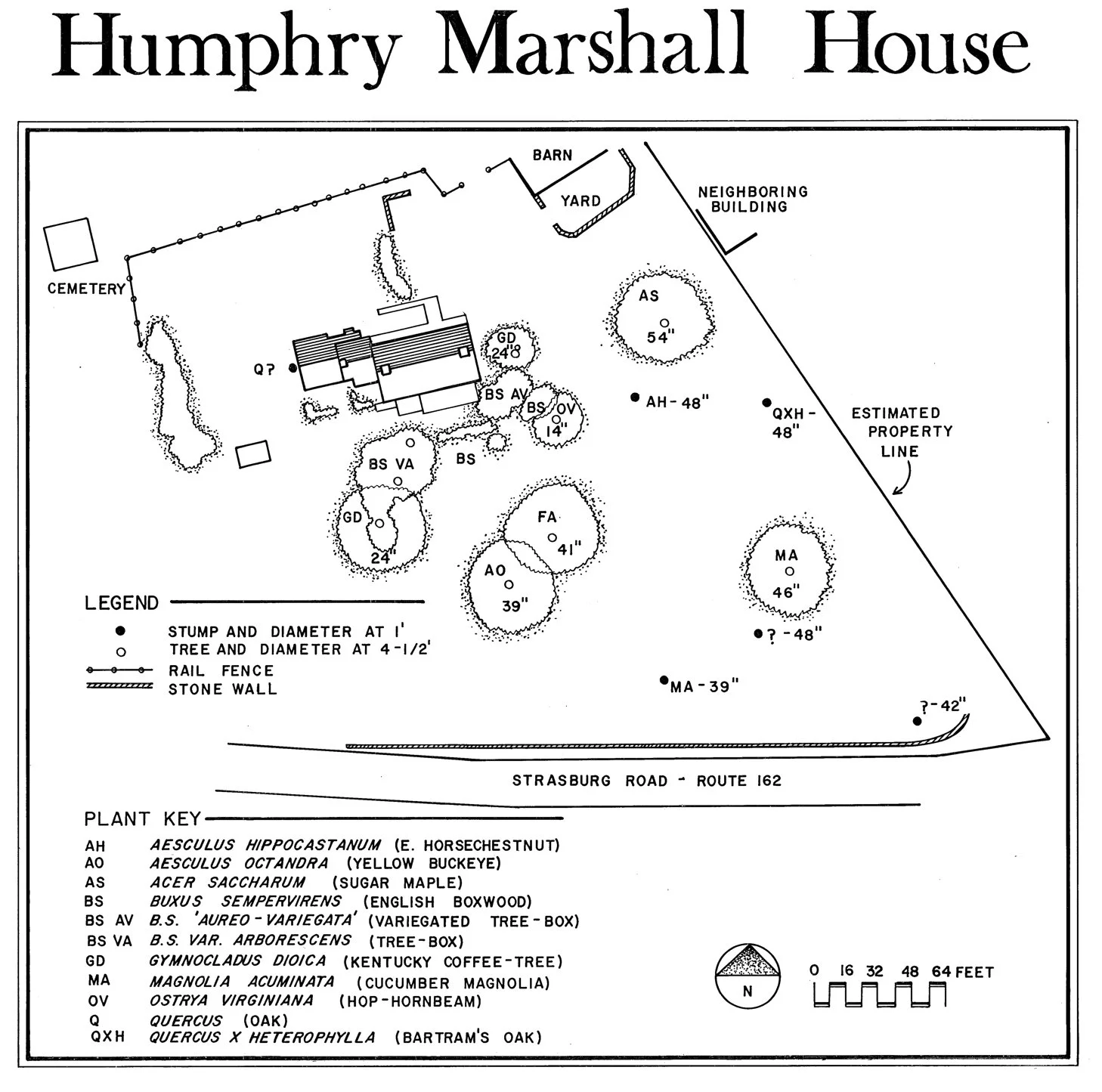
Above: Image source: Historic American Buildings Survey, Drawn by Gabrielle Lanier
For more than 200 years Marshall’s Botanic Garden at Marshallton was a pilgrimage site for countless botanists, garden lovers, and historians. Today the gardens and grounds are only a pale shadow of their former botanical importance. Few plants survive on the property from the Marshall era. But the site remains a landmark of American science and horticulture.
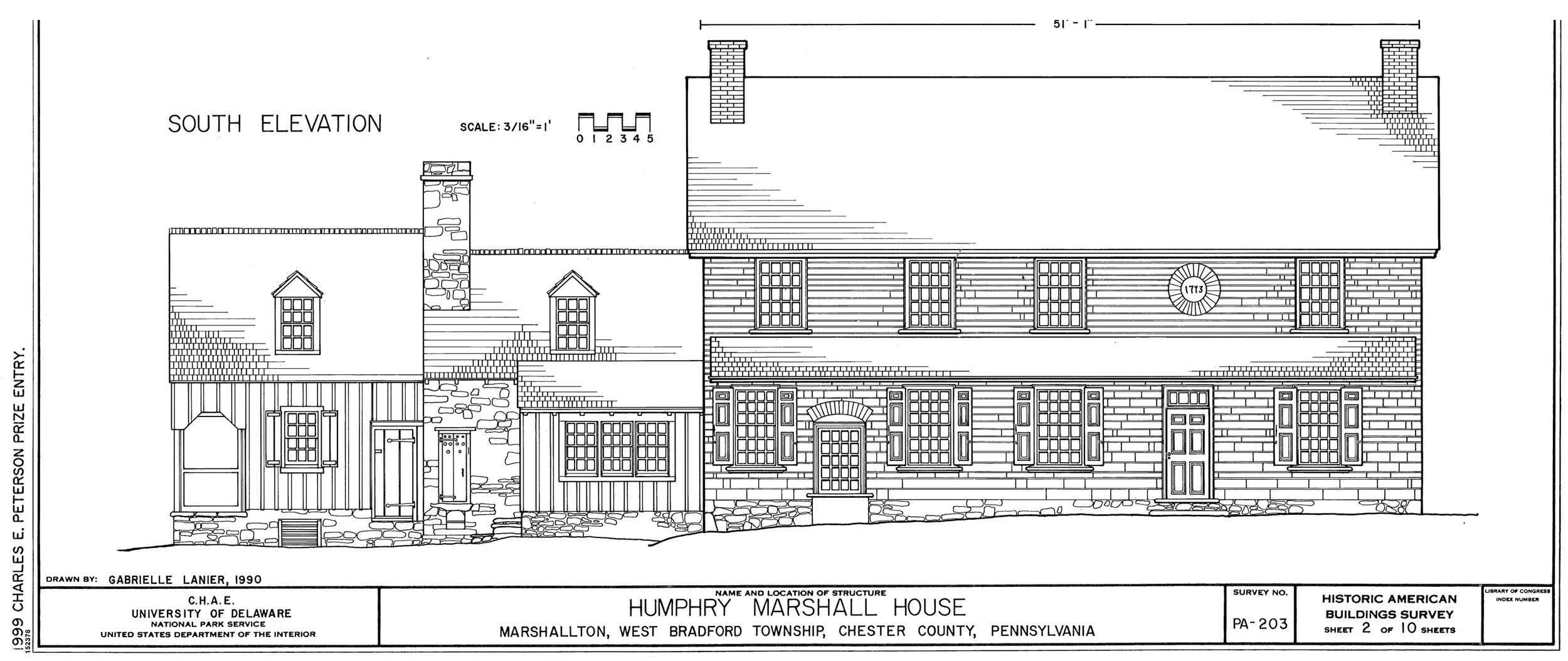
Above: Image source: Historic American Buildings Survey, Drawn by Gabrielle Lanier
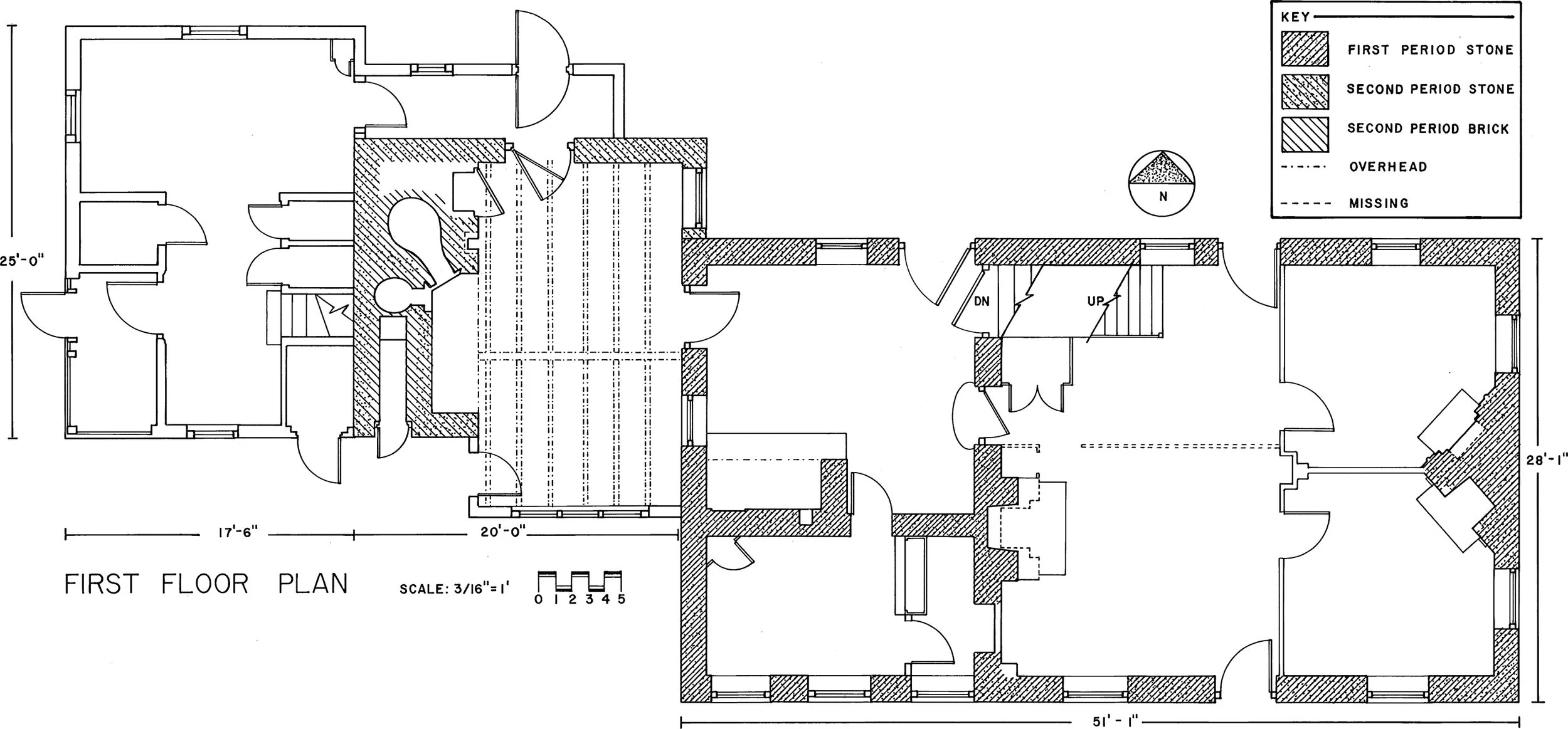
Above: Image source: Historic American Buildings Survey, Drawn by Gabrielle Lanier
Marshall’s 1785 Arbustrum Americanum
The First Published Scientific Description
of the Bartrams’ Franklinia Tree:
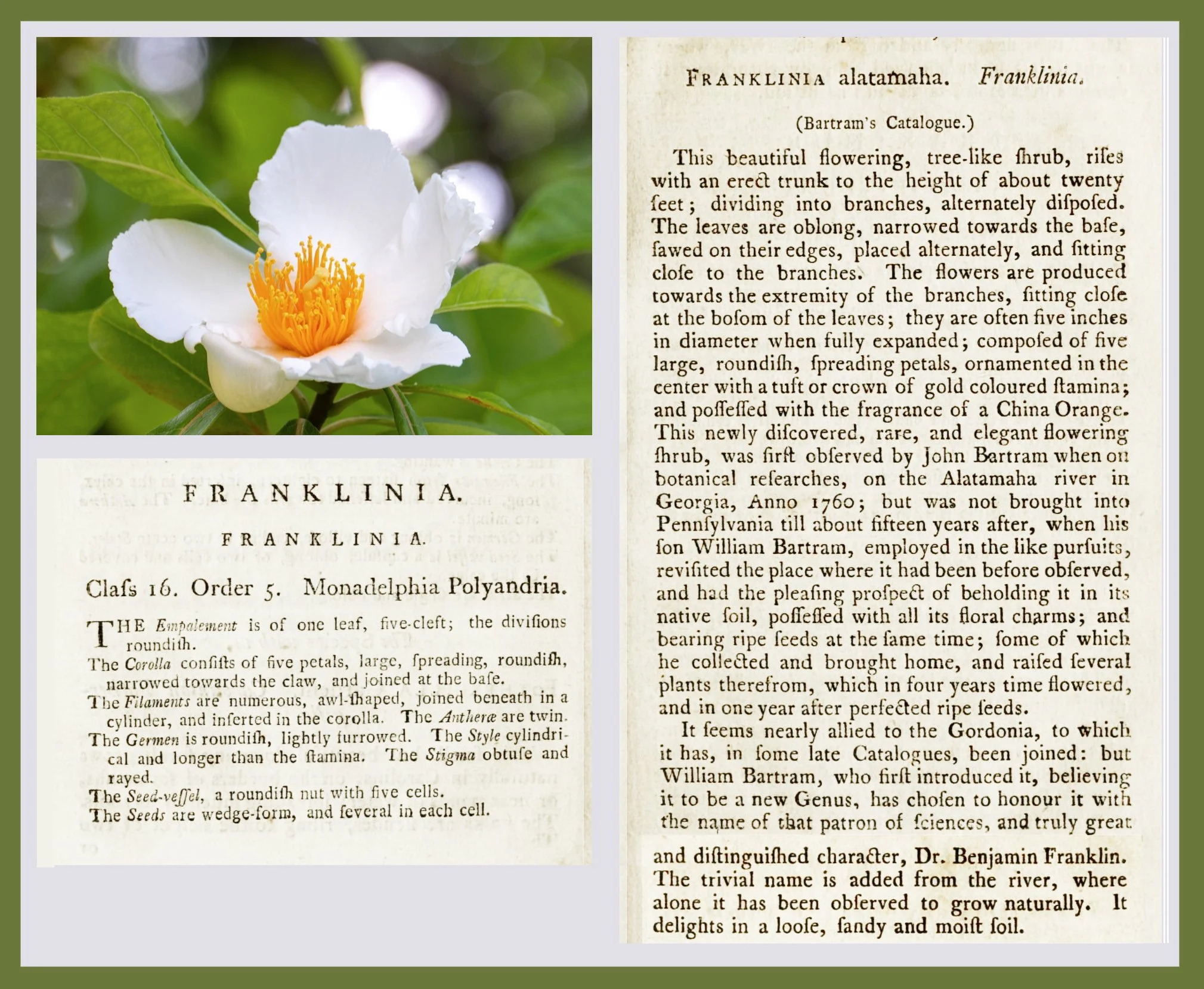
Above: Image source: Blossom: Longwood Gardens / Carol DeGuiseppi. Text: Arbustum Americanum, Internet Archive
Trees and Shrubs Named by Marshall
Whose Scientific Names are Accepted Today:
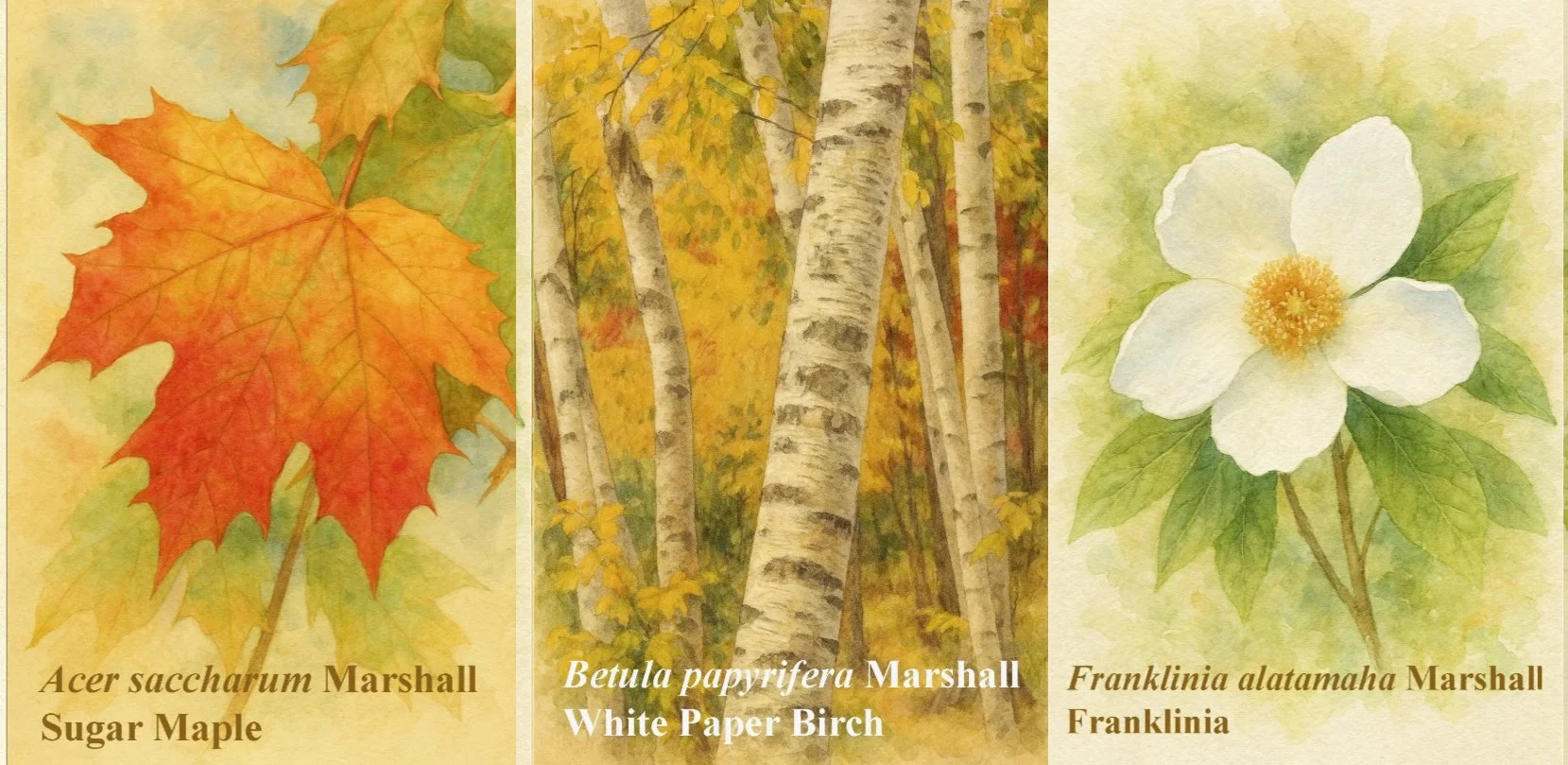
Above: Three of the 24 species with the author name Marshall, whose scientific names are accepted today. Digital image source: Lee J. Stoltzfus.
- Acer saccharum Marshall – Sugar Maple
- Betula papyrifera Marshall – Paper Birch
- Betula populifolia Marshall – Gray Birch
- Corylus cornuta Marshall – Beaked Hazel
- Franklinia alatamaha Marshall – Franklin Tree
- Fraxinus nigra Marshall – Black Ash
- Fraxinus pennsylvanica Marshall – Green Ash
- Gleditsia aquatica Marshall – Water Locust
- Lonicera canadensis J. Bartram & W. Bartram ex Marshall – American Fly Honeysuckle
- Nyssa ogeche W. Bartram ex Marshall – Ogeechee Tupelo
- Nyssa sylvatica Marshall – Black Gum or Tupelo
- Populus deltoides W. Bartram ex Marshall – Eastern Cottonwood
- Prunus americana Marshall – American Plum
- Prunus angustifolia Marshall – Chickasaw Plum
- Prunus maritima Marshall – Beach Plum
- Rosa palustris Marshall – Swamp Rose
- Salix humilis Marshall – Prairie Willow
- Salix nigra Marshall – Black Willow
- Salix sericea Marshall – Silky Willow
- Sorbus americana Marshall – American Mountain-ash
- Taxus canadensis Marshall – Canada Yew or Ground Hemlock
- Vaccinium arboreum Marshall – Sparkleberry or Farkleberry
- Viburnum trilobum Marshall – American Cranberrybush
- Xanthorhiza simplicissima Marshall – Yellowroot
The plant list, above, includes species bearing the author name “Marshall,” signifying that they were first validly published by Humphry Marshall in his 1785 work Arbustrum Americanum. While Marshall described and named many additional plants in that volume, taxonomic revisions over time have reclassified some of his names as synonyms under later or more widely accepted designations.
The species presented above, however, remain botanically accepted today as valid taxa according to current international nomenclatural standards. They stand as the enduring contributions of Humphry Marshall to systematic botany and reflect his pioneering role in documenting and naming the native trees and shrubs of North America.
A Historical Marker
in Front of the Marshall House:
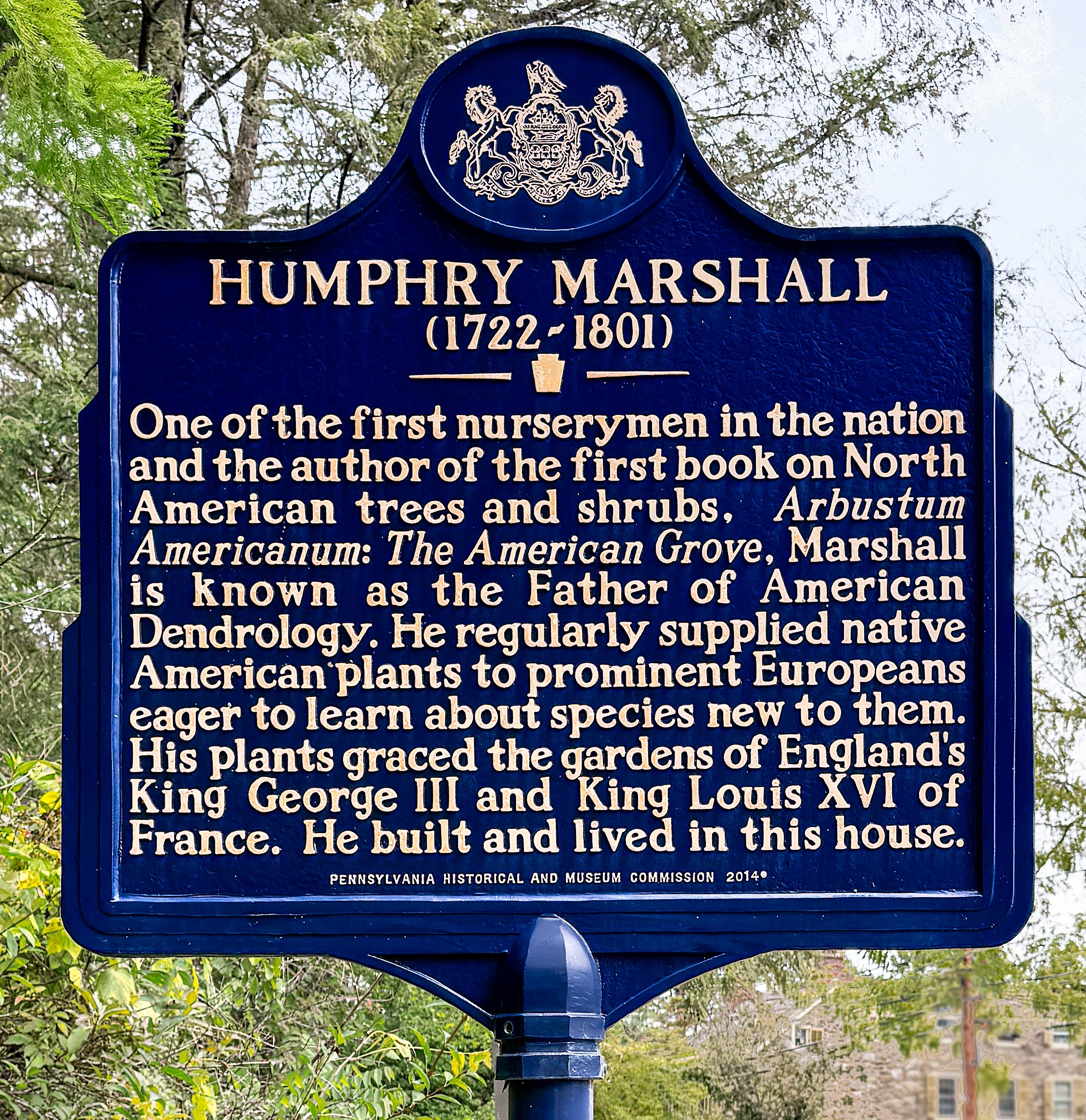
Above: The PHMC / Pennsylvania Historical and Museum Commission installed this historical marker in 2014. Image source: Lee J. Stoltzfus.
Peirce Brothers of Longwood Gardens
Were Inspired by Visiting Humphry Marshall:
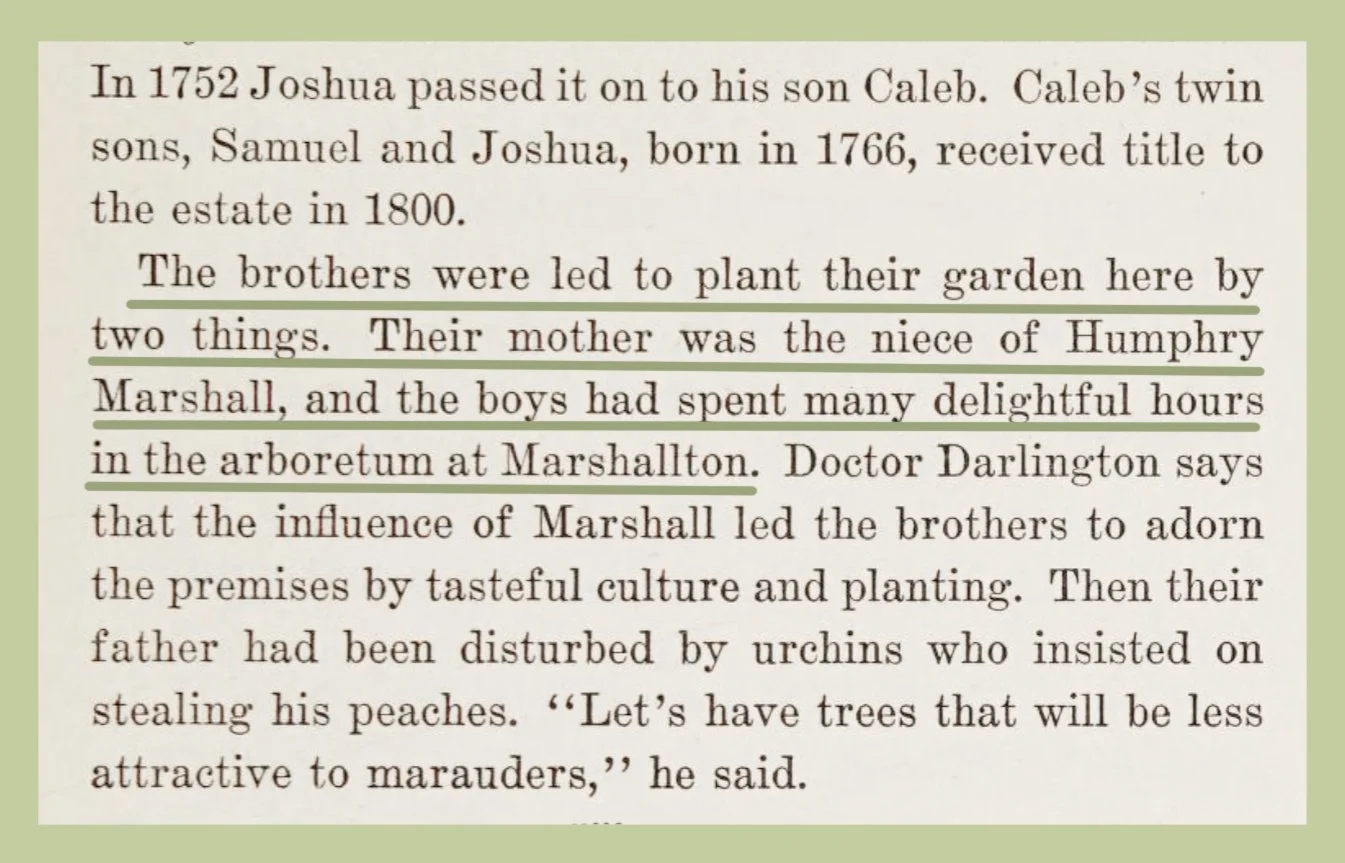
Above: Text image source: Old Gardens In and About Philadelphia, John Faris, Internet Archive
Twin brothers, Samuel and Joshua Peirce, were Quaker farmers who created Peirce’s Park, which evolved to become Longwood Gardens. These twin brothers received title to the Peirce estate in 1800. Their mother was a niece of botanist Humphry Marshall. The Peirce boys spent many hours here in the Marshall arboretum.
By 1850 the Peirce family had developed Peirce’s Woods into one of the finest arboretums in the region. In 1906 Pierre du Pont purchased the Peirce property to preserve the trees. So today the countless visitors to Longwood Gardens from around the world can thank Humphry Marshall for helping to inspire Longwood.
Herbarium Specimens from Marshall’s Garden
Collected by William Darlington
From 1819 to the 1830s
A Sample:
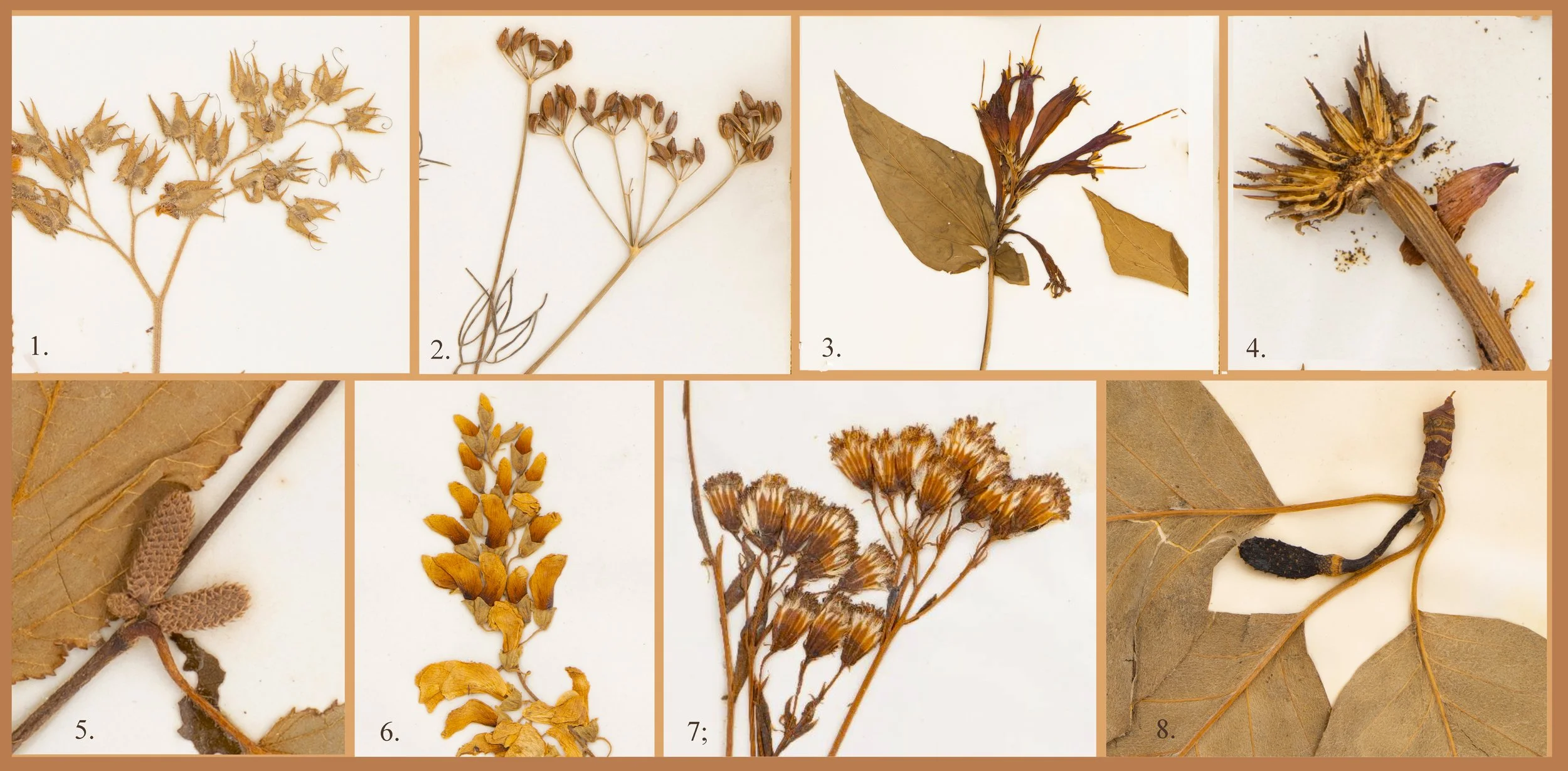
Above: #1. Hydrophyllum appendiculatum Michx. (Great Waterleaf) Collected in 1829. #2. Foeniculum dulce Mill. (Fennel) Collected in 1835.
#3. Spigelia marilandica (L.) L. (Woodland Pinkroot) Collected in 1828. #4. Rudbeckia purpurea L. (Purple Coneflower) Collected in 1828.
#5. Corylus cornuta Marshall (Beaked Hazelnut) Collected in 1835. #6. Cytisus laburnum L. (Golden Chain Tree) Collected in 1819. #7. Cacalia suaveolens L. (False Indian Plantain) Collected in 1819. #8. Magnolia acuminata (L.) L. (Cucumber Tree) Collected in 1829. Image sources: Mid-Atlantic Herbaria Consortium
The William Darlington Herbarium at West Chester University is home to 15,000 plant specimens dating primarily from the 1810s to the 1850s. More than 50 plant specimens in the herbarium are from the Marshall Arboretum, mostly collected in the 1820s and 30s. This collection provides an important snapshot of plants grown in that landmark botanic garden in the early 1800s.
Plant Genus Marshallia
Named for Humphry Marshall
And His Nephew Moses Marshall:
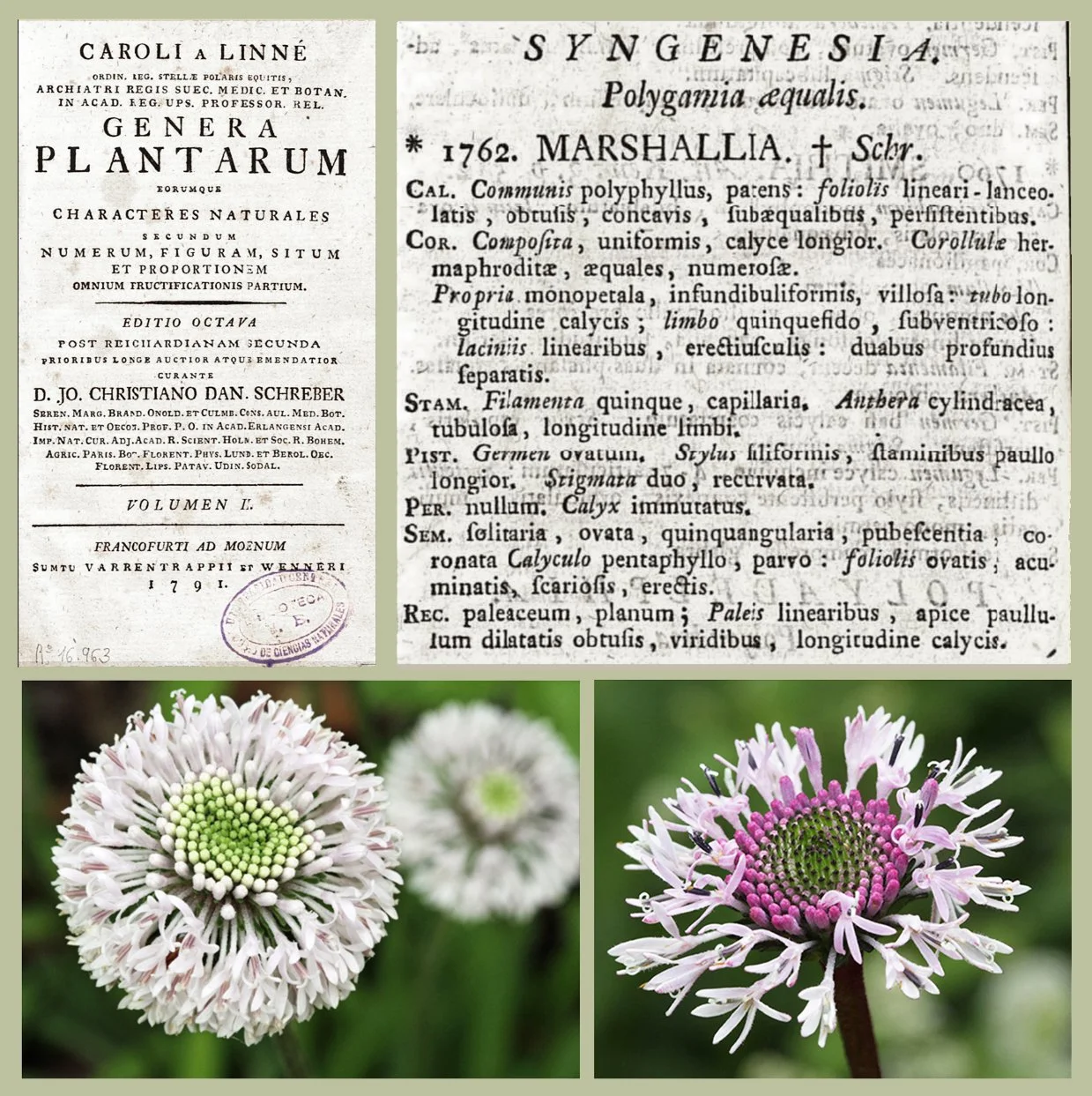
Above: Genera Plantarum, 1791, Schreber. Image source: Biodiversity Heritage Library.
Two species of Marshallia / Barbara’s Buttons. Left: Marshallia obovata var. scaposa, Right: Marshallia legrandii. Image source: Wildflower.org, Photographer: Stuart Will
In 1791, German botanist J. C. D. von Schreber named a genus of American plants Marshallia to honor Humphry Marshall and his botanist nephew Moses Marshall. The Marshallia name was first published in Schreber’s Genera Plantarum, 1791. Rev. Henry Muhlenberg, a botanist from Lancaster, PA, had encouraged Schreber to honor the Marshalls with that name. Links: Marshallia in World Flora Online, Marshallia in Plants of the World Online
Marshallton Quaker Meetinghouse
Built with the Assistance of Humphry Marshall:

Above: The Marshallton Friends Meetinghouse (Bradford Friends Meetinghouse) is located within walking distance of the Marshall house and garden. Image source: Lee J. Stoltzfus
In the early 1700s Abraham Marshall (Humphry Marshall’s father) settled in Chester County, near today’s Marshallton. From 1722 to 1727 the Bradford Friends met in the Marshall home. Abraham Marshall was the founder of this meeting that later moved to Marshallton.
Marshallton Friends built this meetinghouse in the 1760s. HABS research on the building notes that Humphry Marshall was a “weighty” Friend at Bradford who also was a stonemason. He likely played a major role in the design and construction of this building. The meeting minutes name him in connection with settling the meetinghouse’s construction accounts.
Beautiful Stonework of the Meetinghouse:
Galletted Mica Schist:
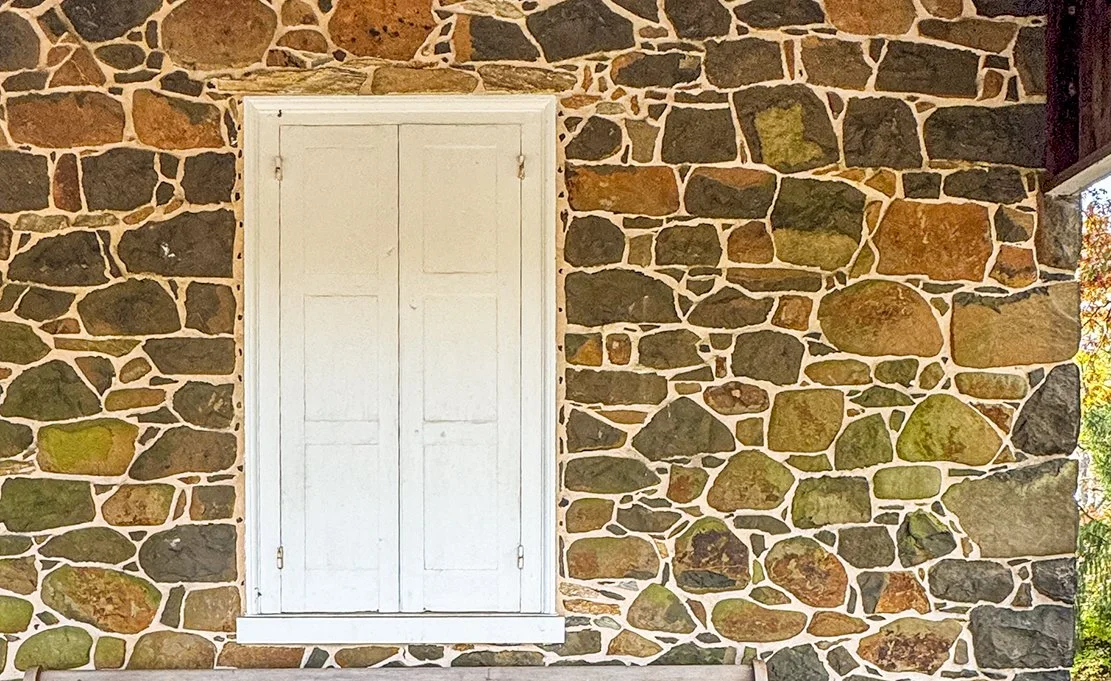
Above: The Marshallton Quaker Meetinghouse. Image source: Lee J. Stoltzfus
This finely crafted stonework showcases a galleted masonry technique, where small stones (gallets) are pressed into wet mortar joints during construction. This technique was mostly used in southeast England. The craftsmanship is the hallmark of a master mason, likely the stonemason and botanist Humphry Marshall.
Humphry Marshall also used galletted masonry on the nearby farmhouse, illustrated on this page. He built his house in 1773, a few years after he helped build this meetinghouse. This distinctive masonry technique also appears in the 1760 greenhouse of his botanist cousin John Bartram.
The bedrock here at Marshallton is mica schist of the Glenarm Wissahickon Formation, according to PaGEODE.
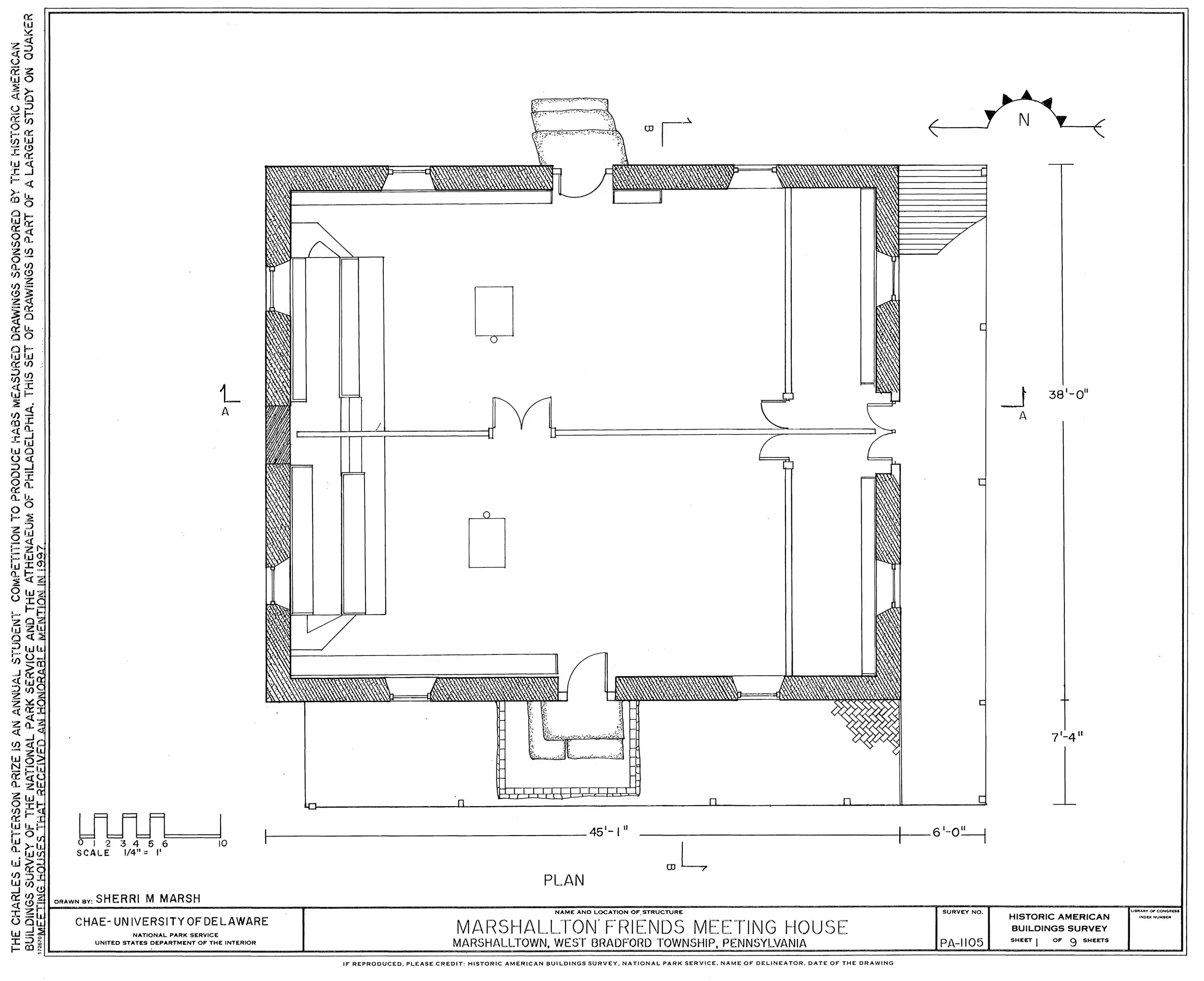
Above: Floor plan of the Marshallton Quaker Meetinghouse. Image source: HABS / Library of Congress.
Humphry Marshall and the Revolutionary War:

Above: Image source: American Philosophical Society
Humphry Marshall Resigned from the Loan Office
Because of the Revolutionary War:
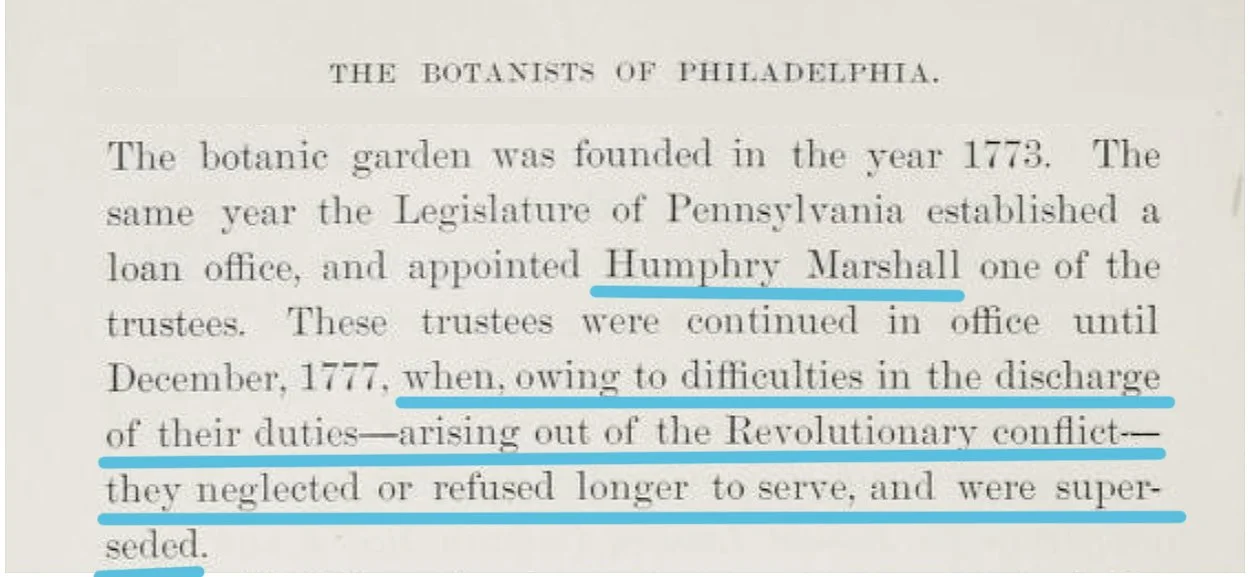
Above: Image source: The Botanists of Philadelphia, John Harshbarger, 1899, Internet Archive
The Pennsylvania Assembly created a loan office in 1773 to issue paper money. It was not a war office at its start, but once the Revolution began its funds flowed into the finances of the new state, which was now directing money toward the war effort.
Quaker trustees such as Humphry Marshall, Moses Brinton, and Samuel Preston Moore resigned in 1777 because the new Revolutionary laws and the wartime political climate conflicted with their religious principles. They objected to serving a government engaged in war, and refused new loyalty requirements. As a result they discontinued their service, and the Assembly replaced them.
Links: