
Historic Quaker Houses of Montgomery County, PA
Pottsgrove Manor
Built in 1753
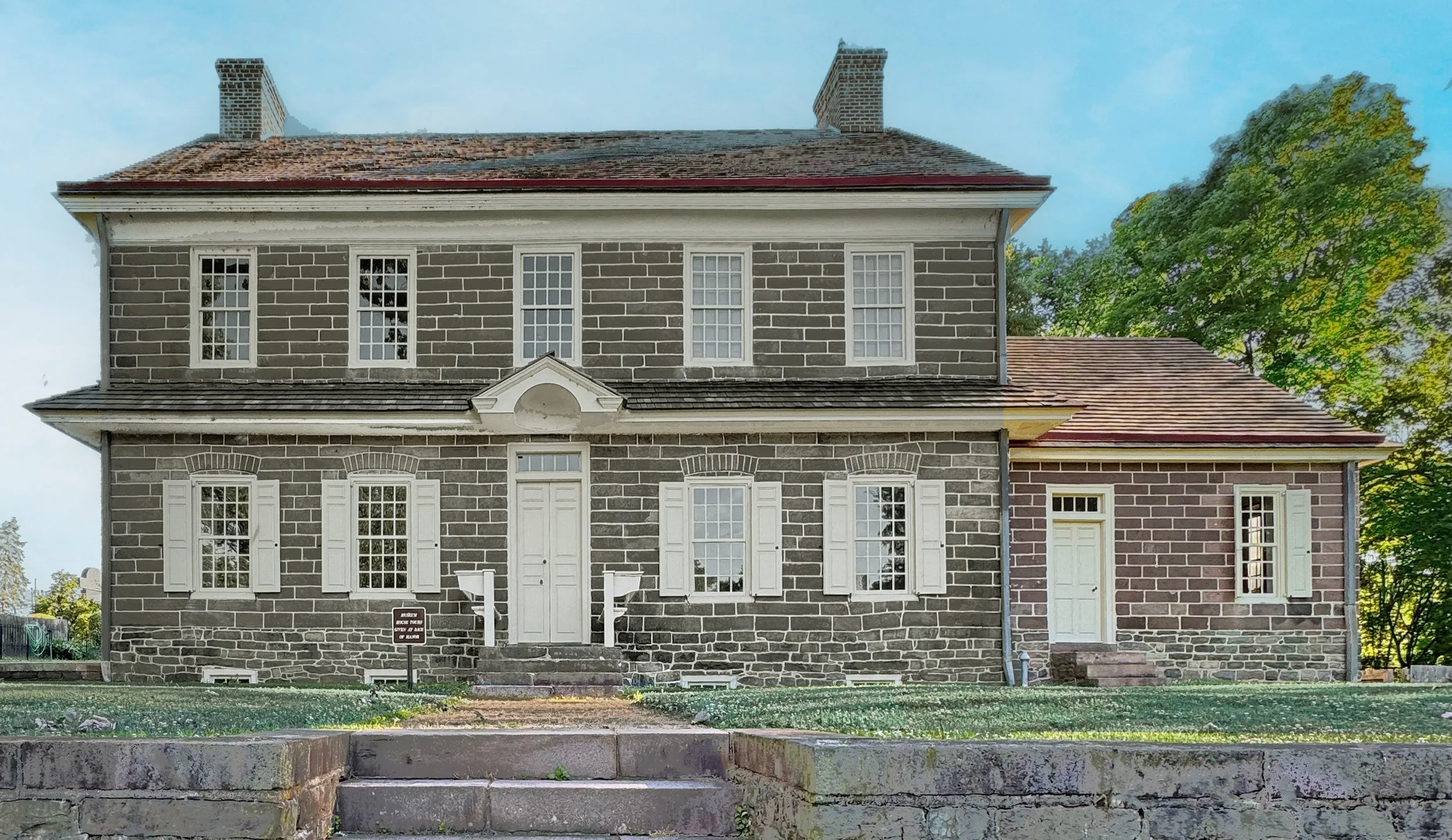
Above: Pottsgrove Manor, a historic house museum in Pottstown. Image source: Lee J. Stoltzfus
John Potts and Ruth (Savage) Potts built Pottsgrove Manor in 1753 as the family seat of their large ironmaking estate. John Potts was one of colonial Pennsylvania’s leading ironmasters. He built a village here that later became Pottstown.
. The Potts family had a complex relationship with their Quaker cultural heritage. During the Revolutionary War, members of the Quaker-connected Potts and Rutter ironmaking families helped supply the American war effort by producing cannon, cannonballs, and other military supplies.
Most of the Potts family moved away from Quaker membership. But two of John and Ruth Potts’ sons remained Quaker, Isaac Potts of Valley Forge, and Joseph Potts.
Pent Roof and Cove Cornice:
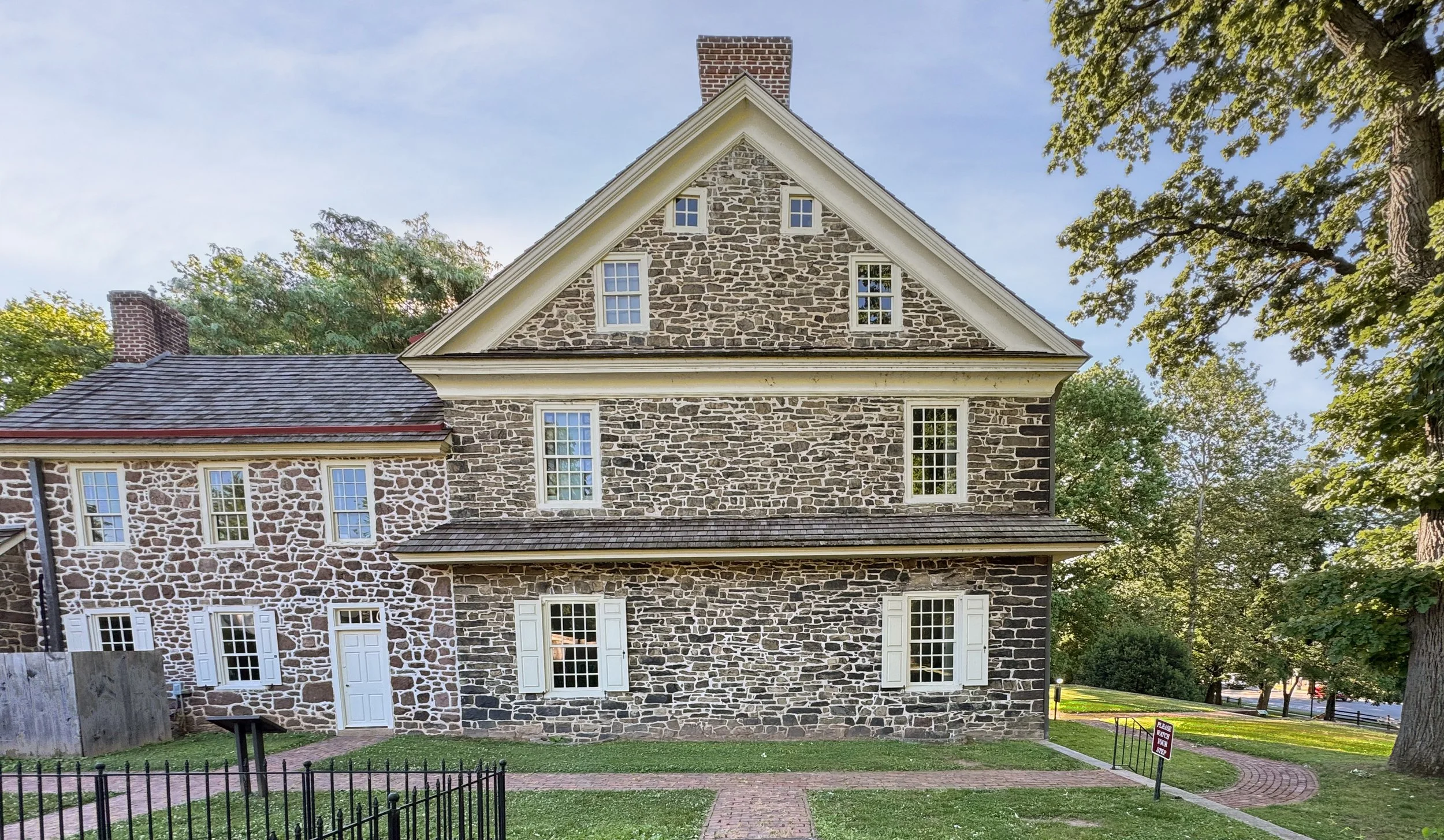
Above: A pent roof and a coved wooden cornice wrap around the house. The present coved cornice was reconstructed from a surviving section of the original cornice, while the pent eave roof was rebuilt based on structural evidence. Image source: Lee J. Stoltzfus.
The Center Hall:
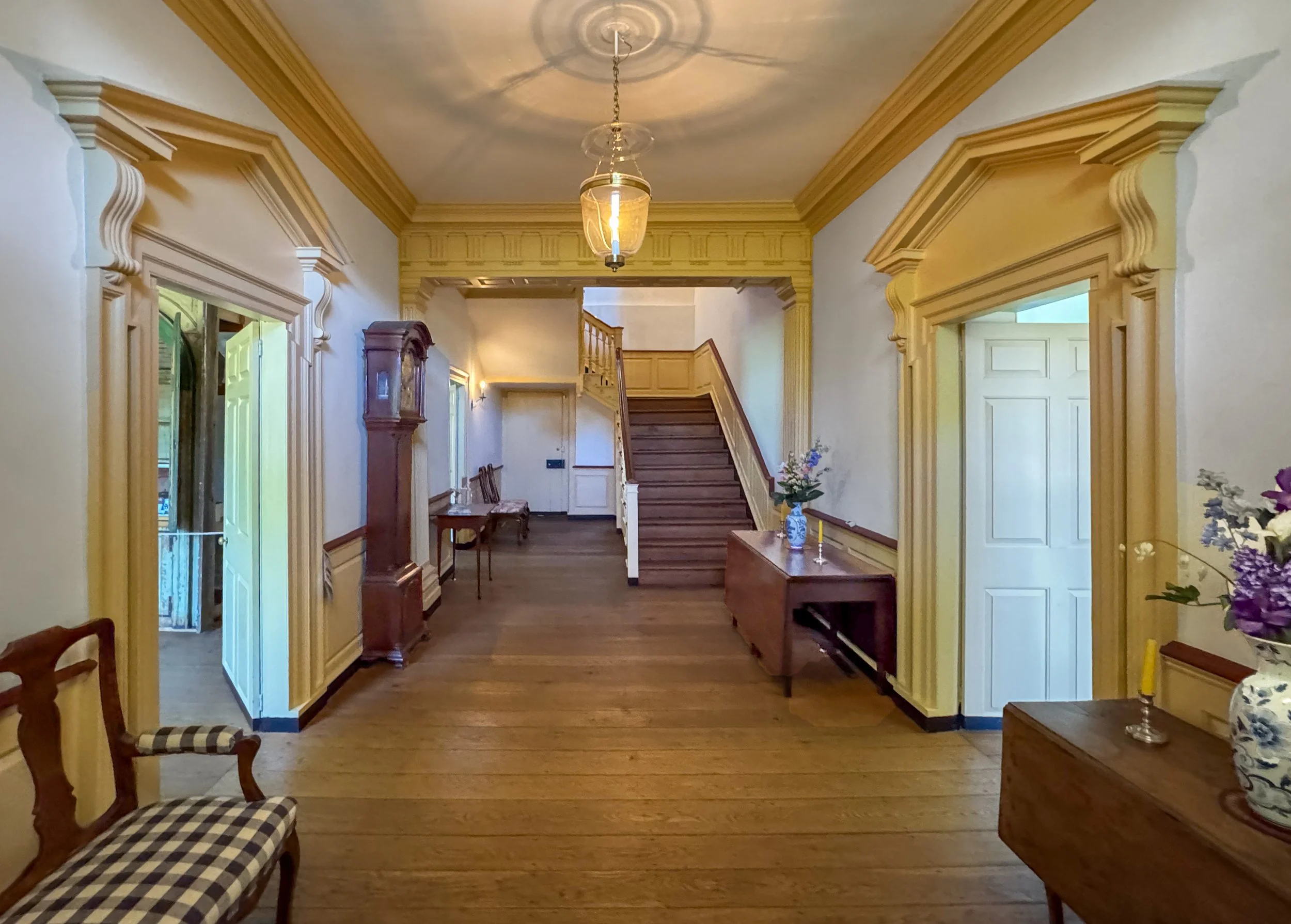
A center hall runs through the house, dividing the four principal rooms into two pairs. A pilastered flat arch separates the hall into two sections, with the main staircase located in the northern half. Two of the hall doorways have pedimented surrounds.
Six of the house’s eight main rooms contain corner fireplaces, while the two remaining rooms were heated by stoves. The fireplace walls are fully paneled. Image source: Lee J. Stoltzfus.
The Quaker-Style Marriage Certificate:
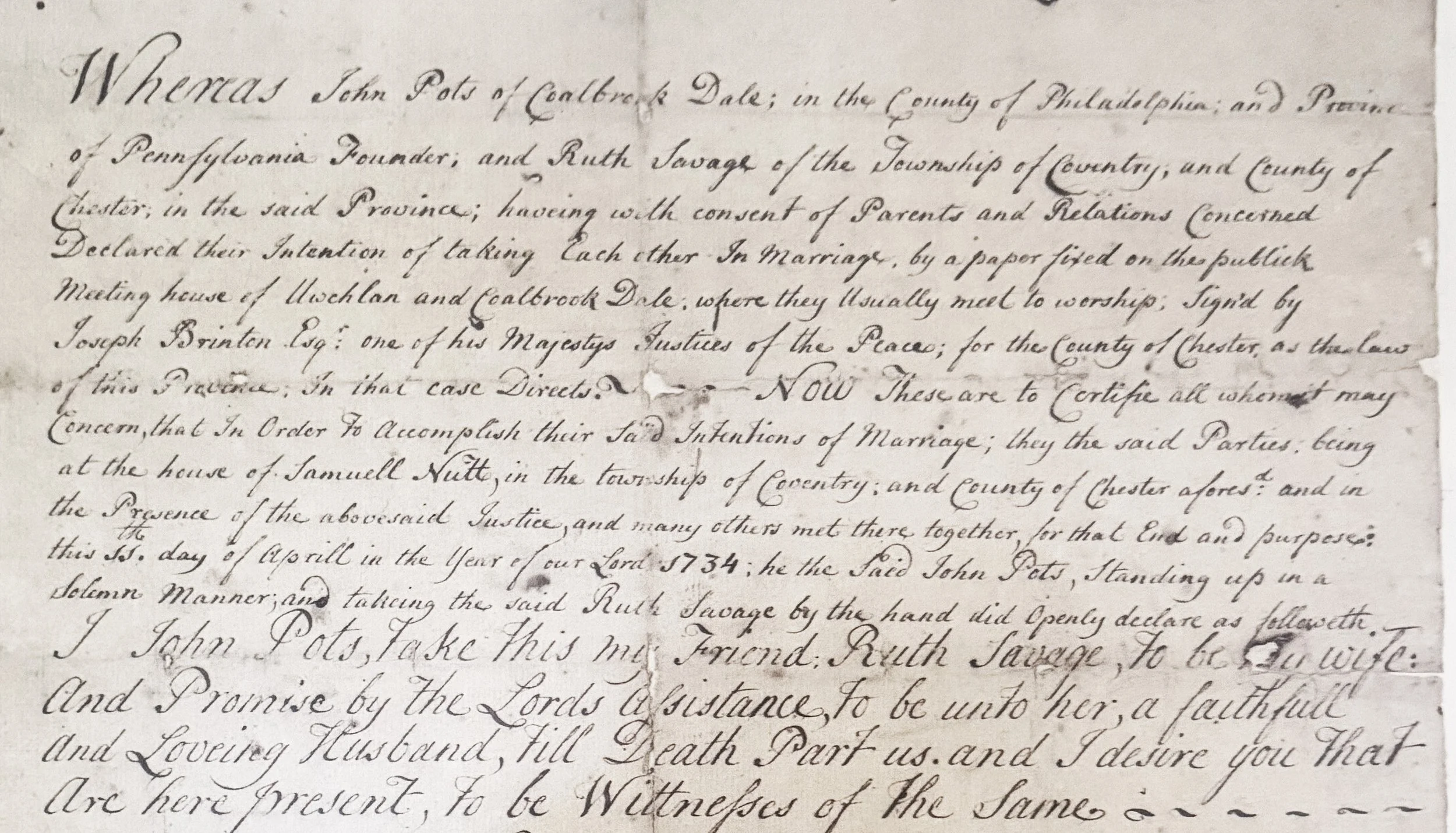
Above: The marriage certificate of John Potts and Ruth Savage is exhibited at Pottsgrove Manor. The document records their marriage on April 11, 1734, in a Quaker-style form. A marriage notice was “fixed on the public meeting house of Uwchland and Coalbrook Dale where they usually meet to worship.”
The text includes the signatures of numerous witnesses from the Potts, Rutter, Savage, and Nutt families.
Interpreting the Family’s Quaker History:
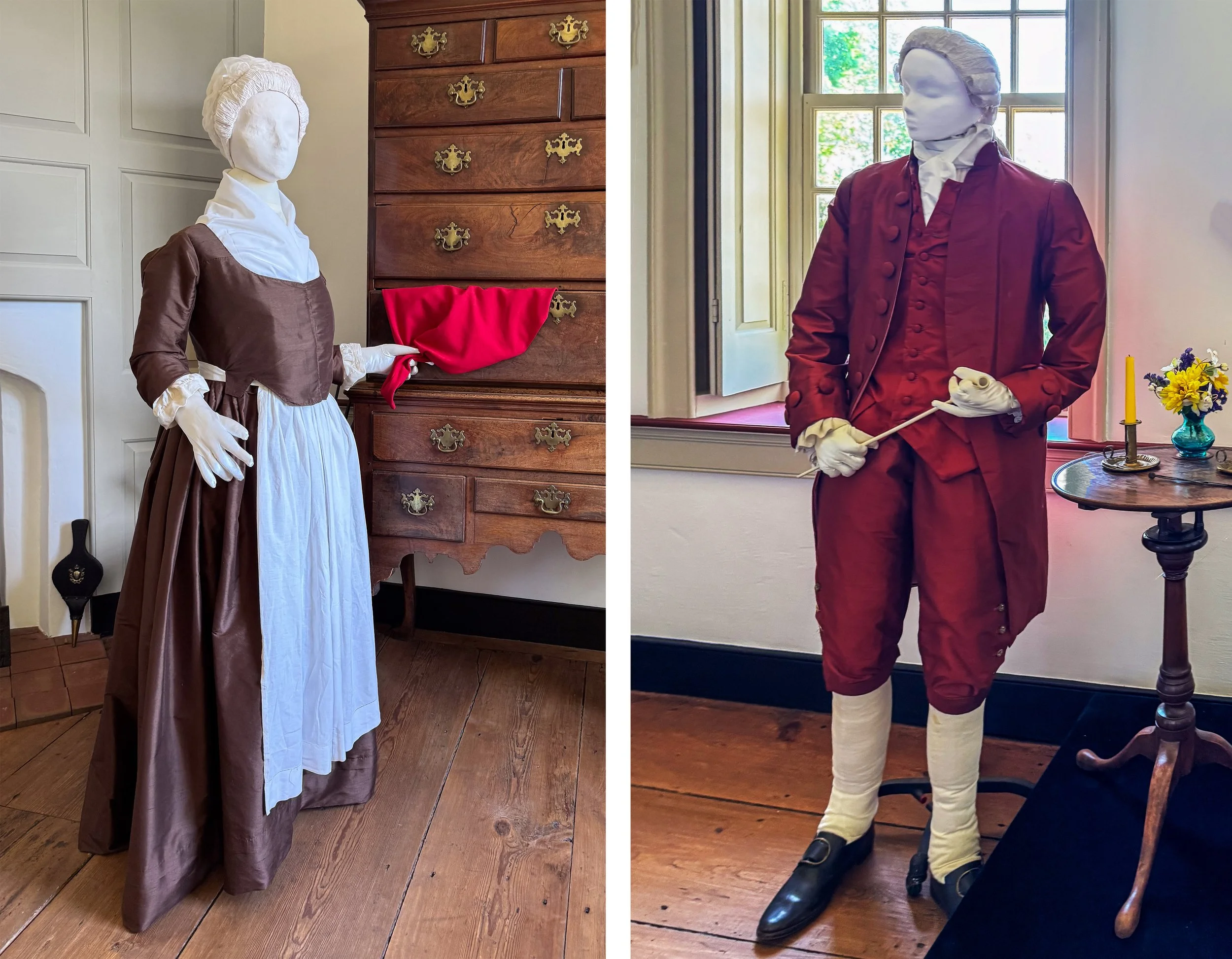
Above: Mannequins in an upstairs bedroom of Pottsgrove Manor wear clothing typical of elite Quaker families in 18th-century Pennsylvania. The clothing is plain but of the finest textiles. While most Potts family members moved away from Quaker membership, two of John and Ruth Potts’s son remained Quaker, Isaac Potts of Valley Forge and Joseph Potts.
Quaker Meetinghouse:
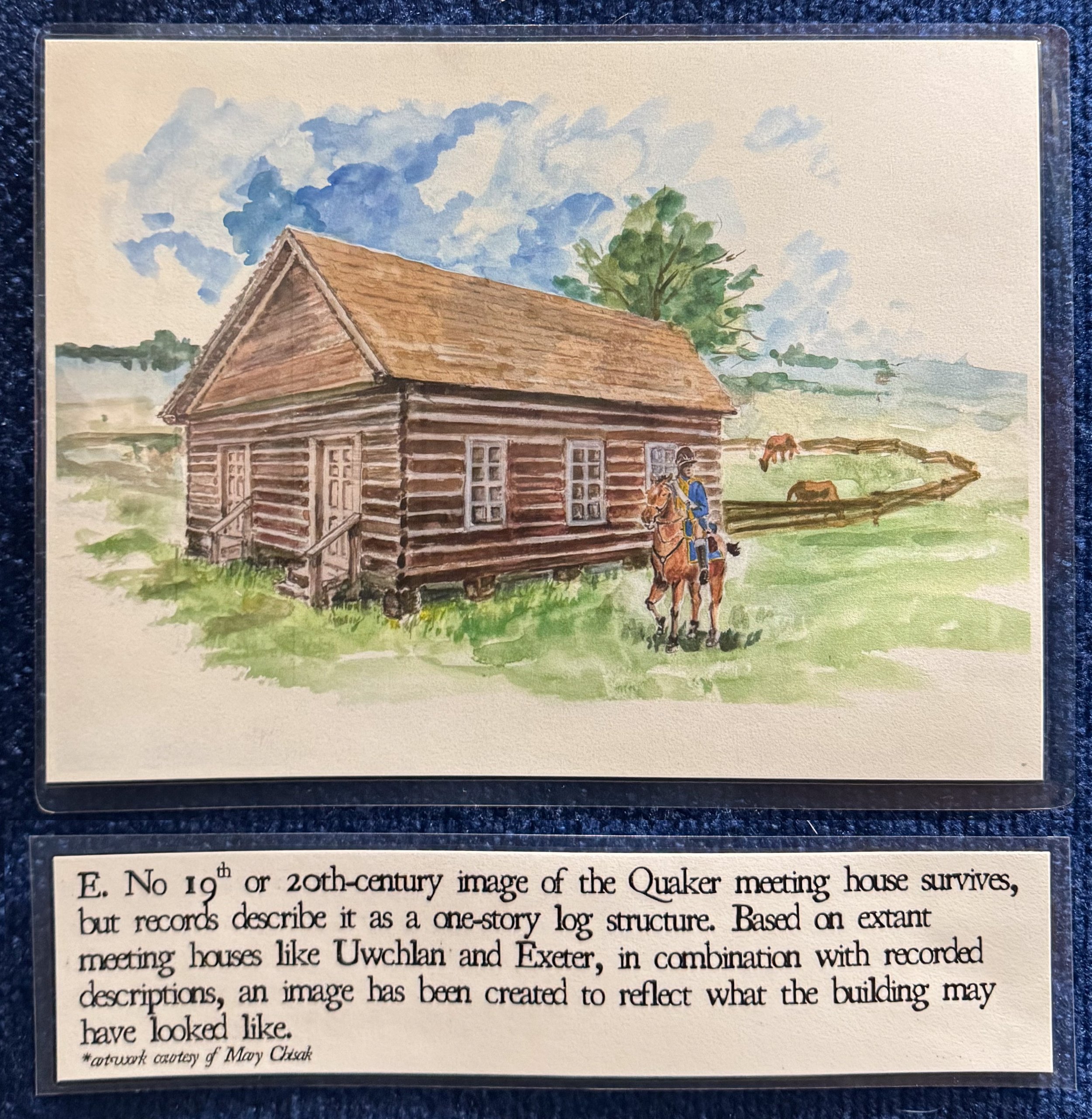
Above: Meetinghouse painting at Pottsgrove Manor. Image source: Lee J. Stoltzfus.
While John Potts was establishing his iron plantation and village, he donated a parcel of his own land in 1753 for the area's first Quaker meetinghouse and burial ground. Initially overseen by the Exeter Monthly Meeting, this assembly worshiped under the name "Pottsgrove Meeting" for its first two decades.
Although John and Ruth Potts lived an affluent, worldly lifestyle that conflicted with various Quaker testimonies, their Quaker lineage helped shape the next generation.
Portrait of Ruth (Savage) Potts
Matriarch of Pottsgrove Manor:
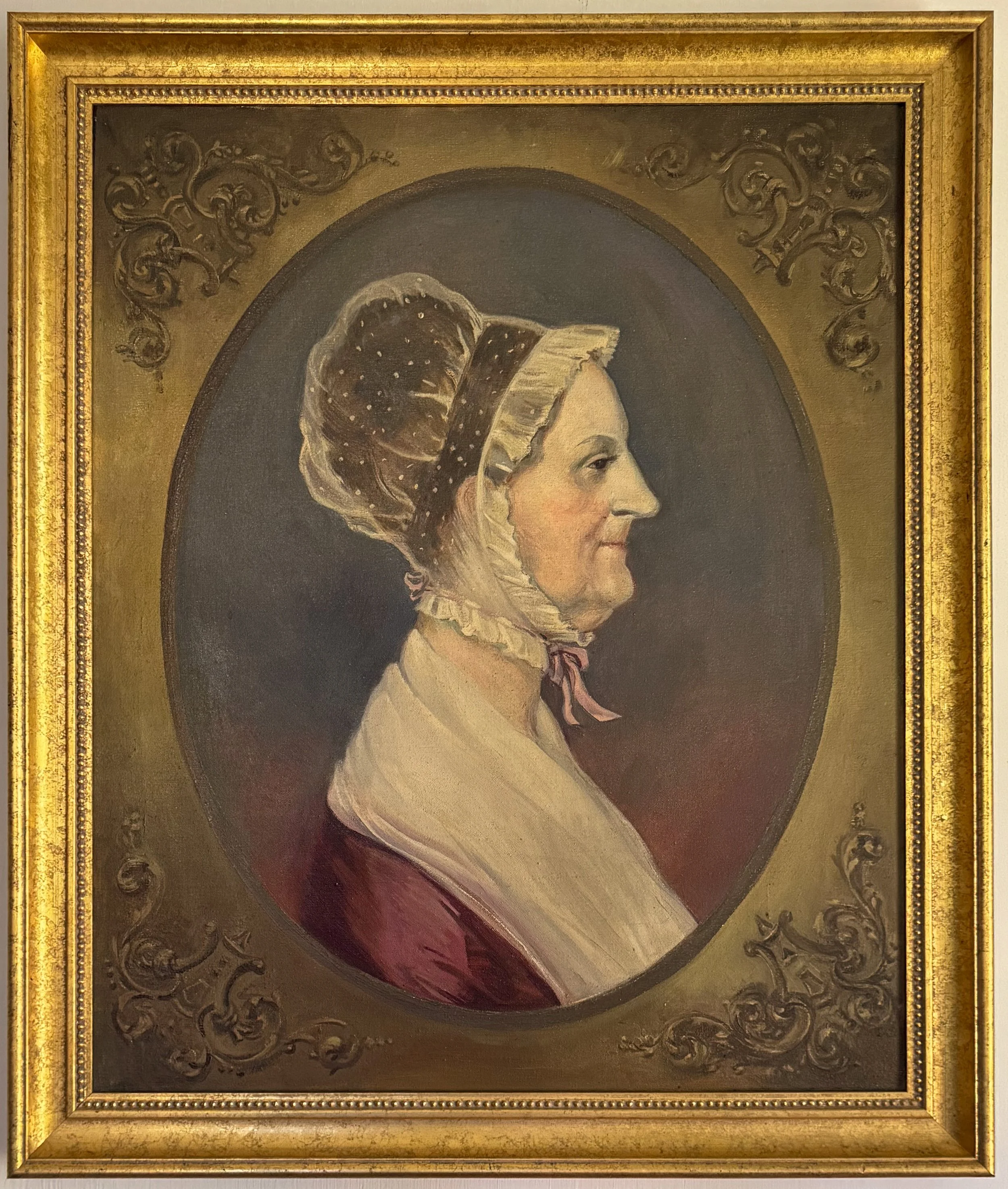
Above: Portrait of Ruth (Savage) Potts hanging in Pottsgrove Manor. Image source: Lee J. Stoltzfus.
Ruth Potts brought her husband, John Potts, into one of Southeast Pennsylvania’s most influential ironmaking families. Her mother, Anna Rutter Savage Nutt, was one of the principal heirs to ironmaking dynasties of the Rutter, Savage, and Nutt families. In 1745, Anna Nutt transferred her half interest in Warwick Furnace to John and Ruth Potts. That family alliance helped John Potts expand his iron holdings and build the wealth that supported Pottsgrove Manor.
The 1750s Miller’s House:
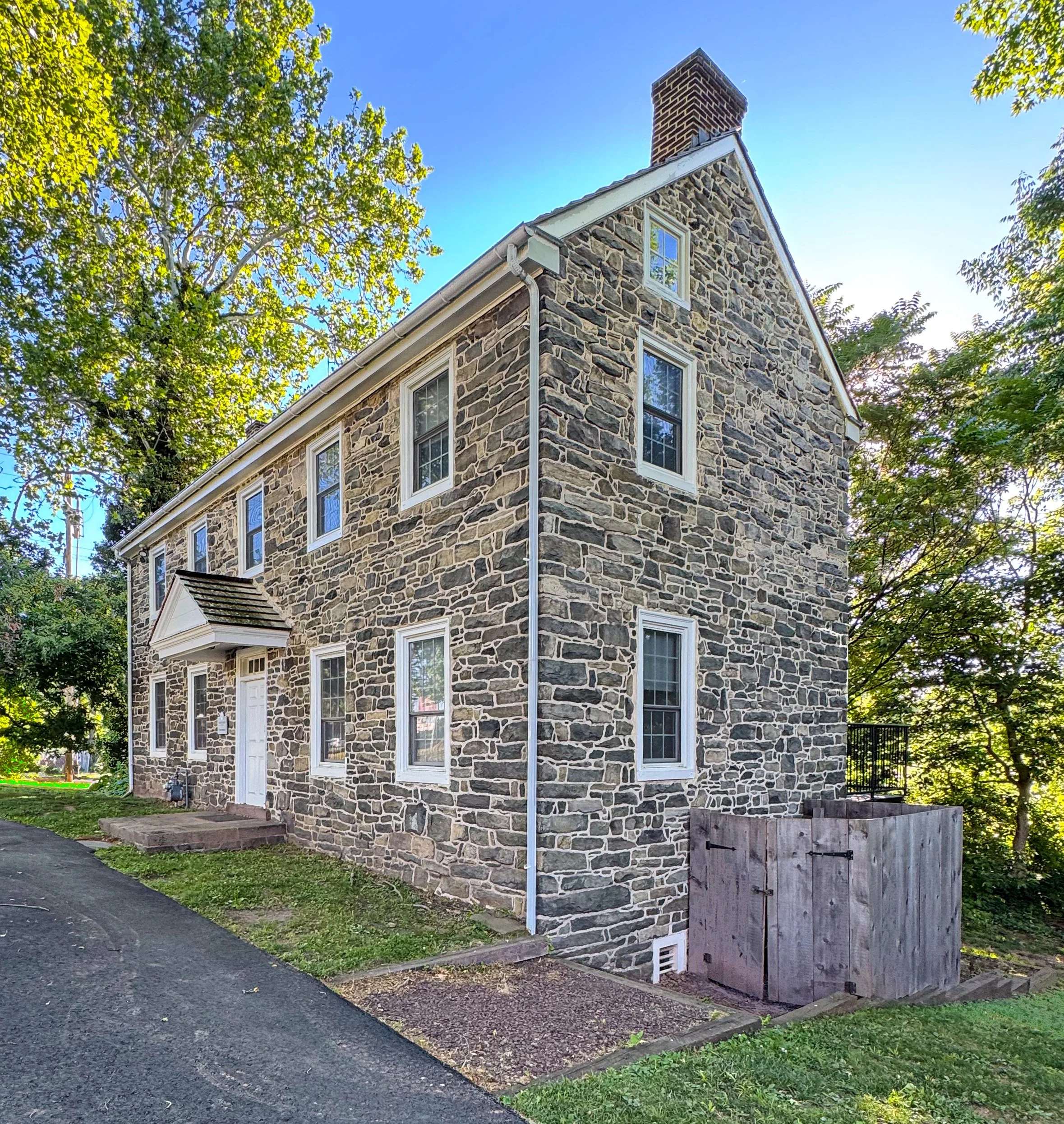
Above: The 1750s mill manager’s house stands near the manor house. Image source: Lee J. Stoltzfus.
The Pottsgrove estate combined industrial and agricultural operations, including two grist mills, a sawmill, and Pottsgrove Forge. The mill manager’s house is a vernacular I-house, a two-story, one-room-deep house form typical of Pennsylvania and the Middle Atlantic region.
Links: