
Historic Quaker Houses of Montgomery County, PA
The Potts House
Owned by Quaker Businessman Isaac Potts
While used as George Washington’s Headquarters
at Valley Forge
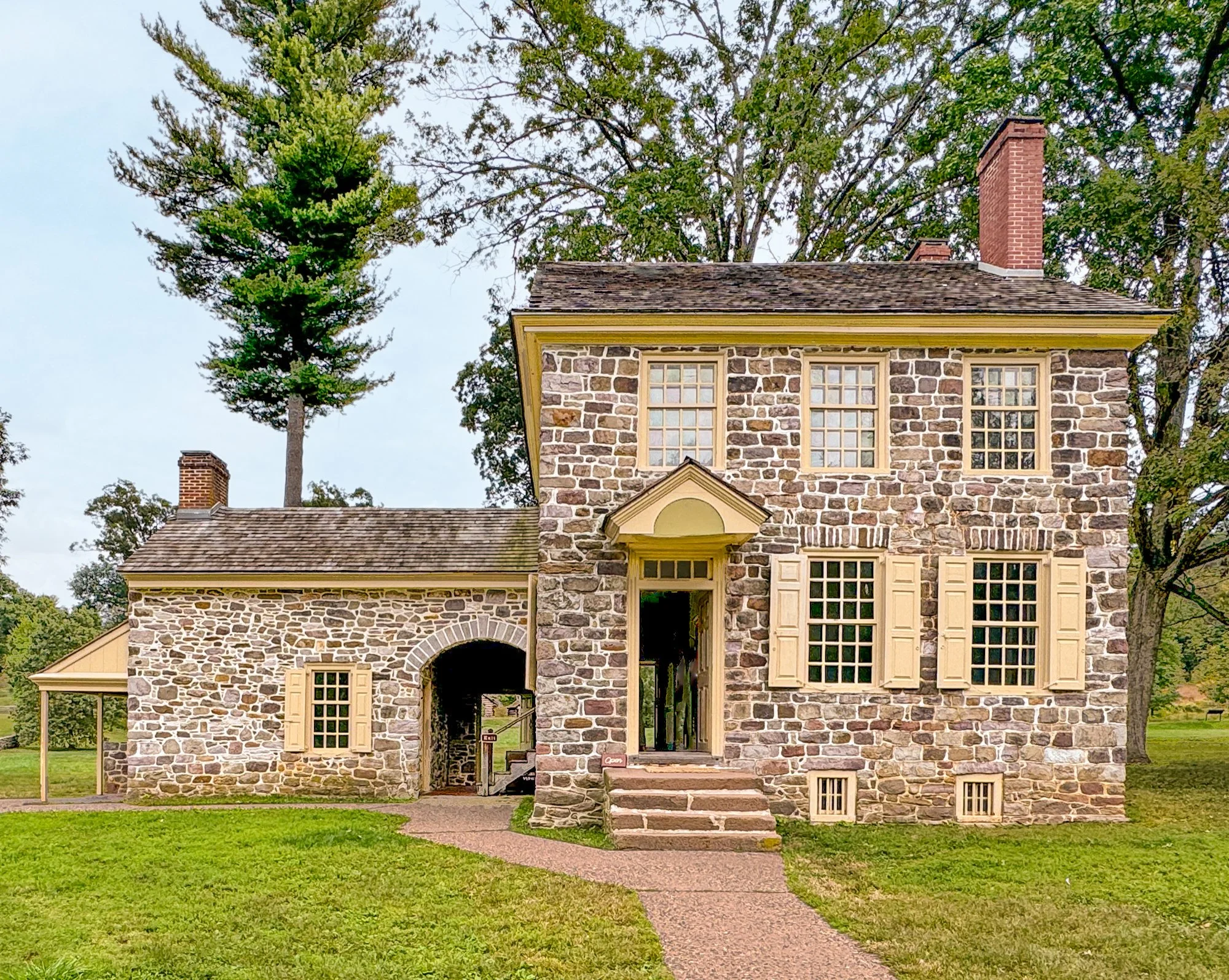
Above: The Potts House at Valley Forge was built ca. 1773 for Isaac Potts, a Quaker mill owner and ironmaster. Image source: Lee J. Stoltzfus
This sandstone farmhouse was the headquarters and residence of General George Washington during the winter encampment of the Continental Army at Valley Forge in 1777 / 78.
In 1777, Potts was renting this house to his relative Deborah Hewes. She sublet the house to General George Washington. Martha Washington lived here with her husband during the later months of the encampment. The house is open to the public as part of the Valley Forge National Historical Park.
The Bake Oven and Kitchen:
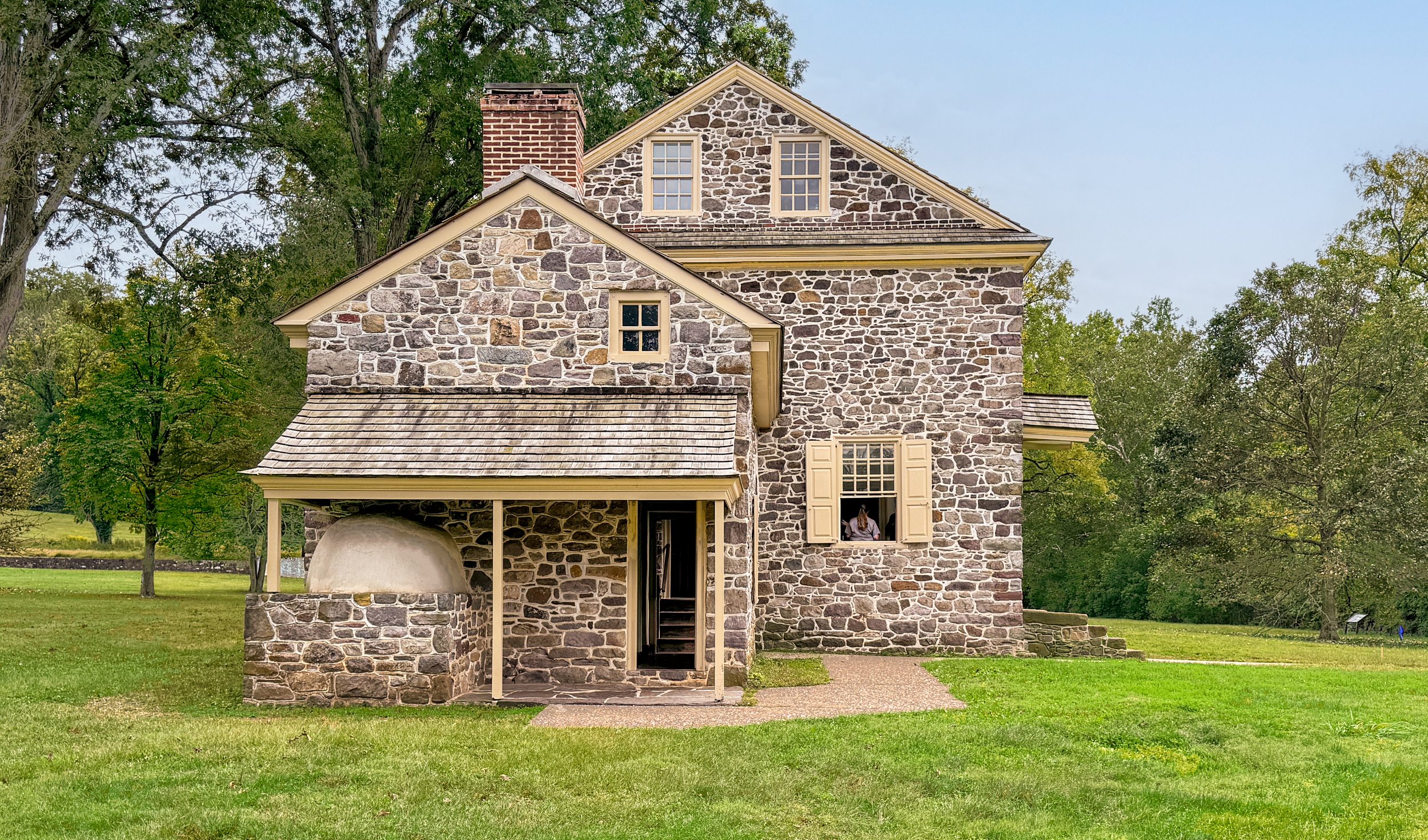
The bake oven and kitchen at the Potts House. Image source: Lee J. Stoltzfus
The Potts House at Valley Forge (Washington’s headquarters) is among the most published Quaker houses of southeast Pennsylvania. George Washington’s association with this Quaker farmhouse has transformed this home into a Revolutionary War pilgrimage site.
Isaac Potts’ father, John Potts, was a Quaker ironmaster who founded the village that became the borough of Pottstown, PA. He built Pottsgrove Manor and developed the surrounding village.
A Side Hall Floorplan
Historic American Buildings Survey:
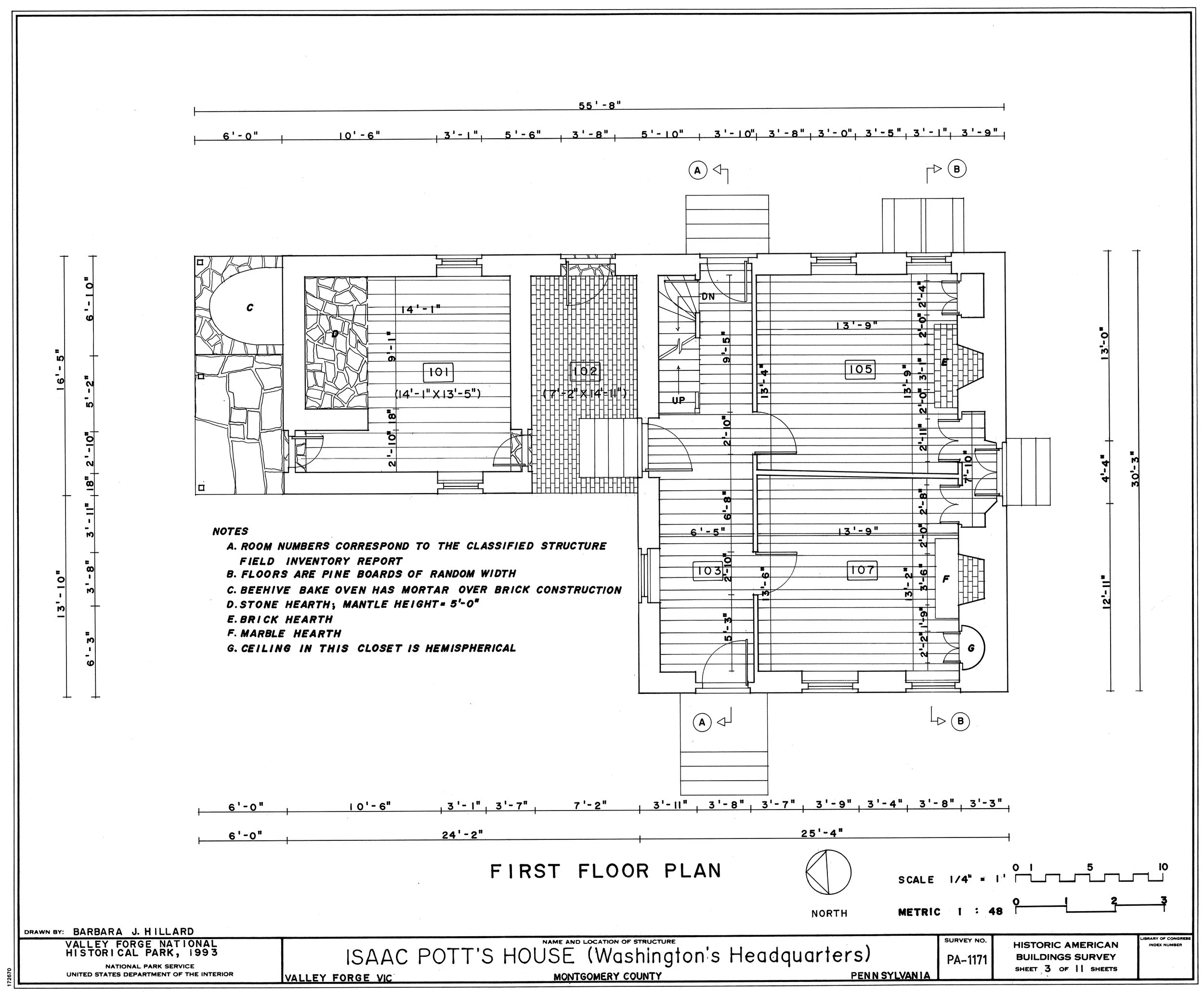
Above: First floor plan of the Potts House. Historic American Buildings Survey. Drawn by Barbara J. Hillard, 1993, Library of Congress
The side hall plan was a classic floorplan for 18th century houses in Philadelphia and southeast Pennsylvania. The entrance and staircase occupy a hallway on one side of the house. That arrangement leaves the full depth of the front for two rooms. It worked well on narrow urban lots and with local building traditions.
Architectural historian Henry Glassie describes these houses as a "two-thirds Georgian" type.
The Kitchen at the Potts House:
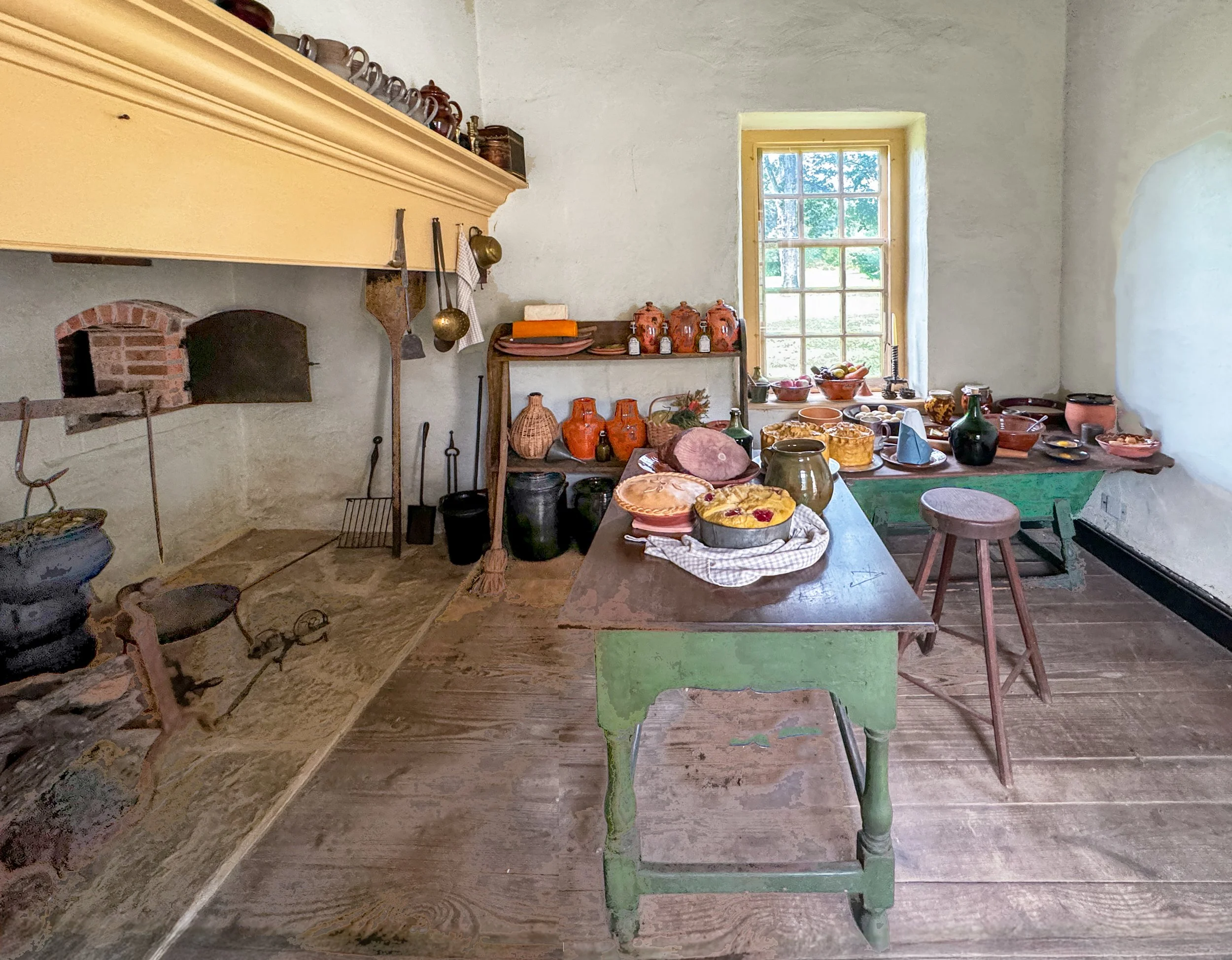
A stretcher-base table and a dough box hold pies in the kitchen of the Potts House / Washington’s headquarters. Image source: Lee J. Stoltzfus
The Continental Army rented this farmhouse and its furnishings for General Washington's headquarters during his encampment at Valley Forge. The house, owned by Isaac Potts, was occupied at that time by Mrs. Deborah Hewes, Isaac Potts' cousin by marriage.
The house was constructed between 1768 and 1773 on Isaac Potts' property, which he acquired through his father's estate in 1773. Isaac Potts may have built the house, but no evidence documents that he ever lived there. Isaac Potts probably moved to Pottstown in 1774 when he applied to join Exeter Meeting, transferring from Radnor Quaker Meeting.
Finely Crafted Sandstone Construction:
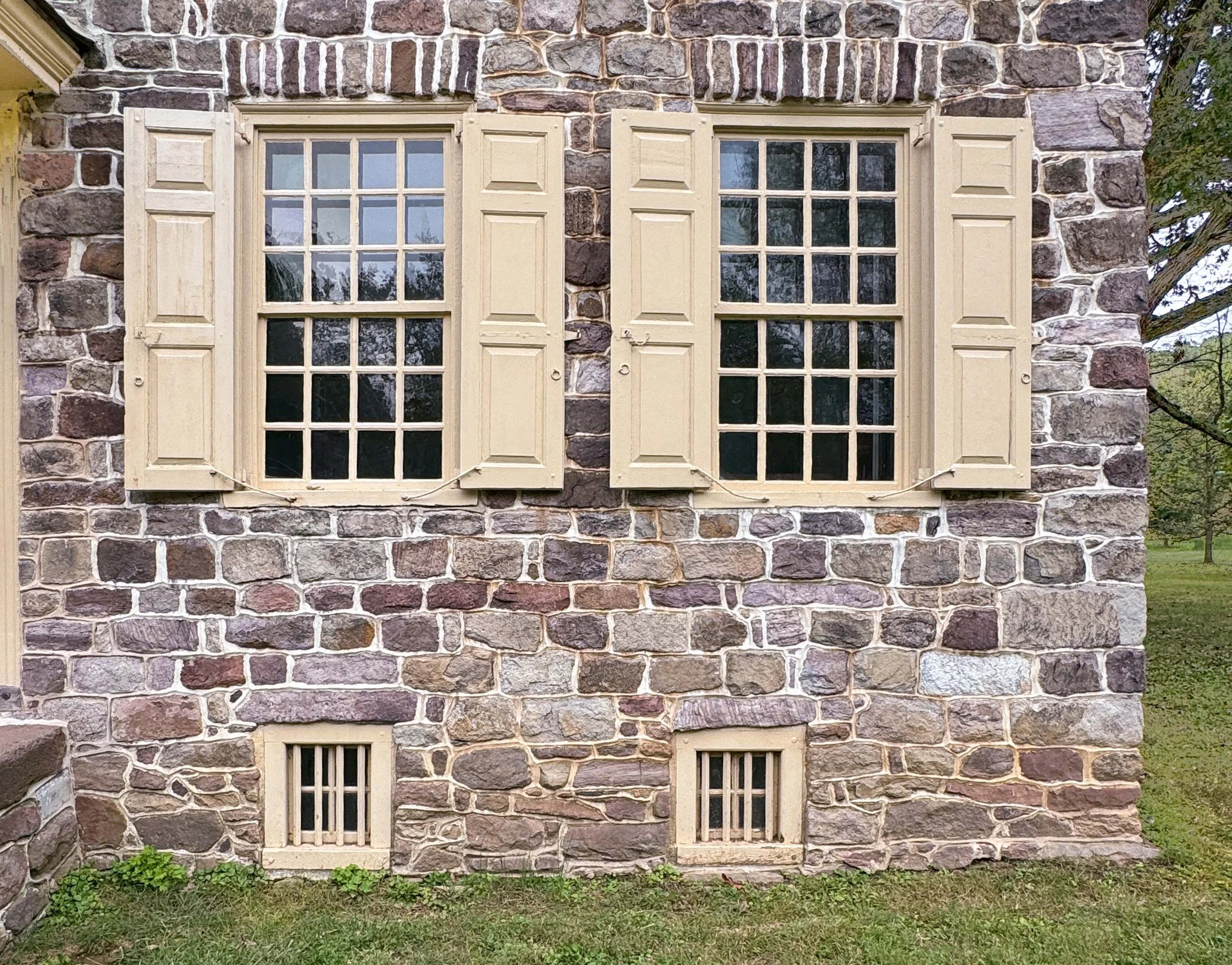
Above: The building stone of the Potts House includes sandstone from the Stockton Formation, which is the bedrock formation of this site. The house’s front elevation is laid in dressed ashlar with jack arches above the first-floor windows. The other elevations are uncoursed rubble stone.
Pottsgrove Manor, built by Isaac Potts’ father John Potts in 1752, has similar brownstone construction. Both Potts houses have ashlar masonry for the front elevation, with rubble masonry elsewhere.
Isaac Potts
"…like most of the Quakers was decidedly opposed to the war…”
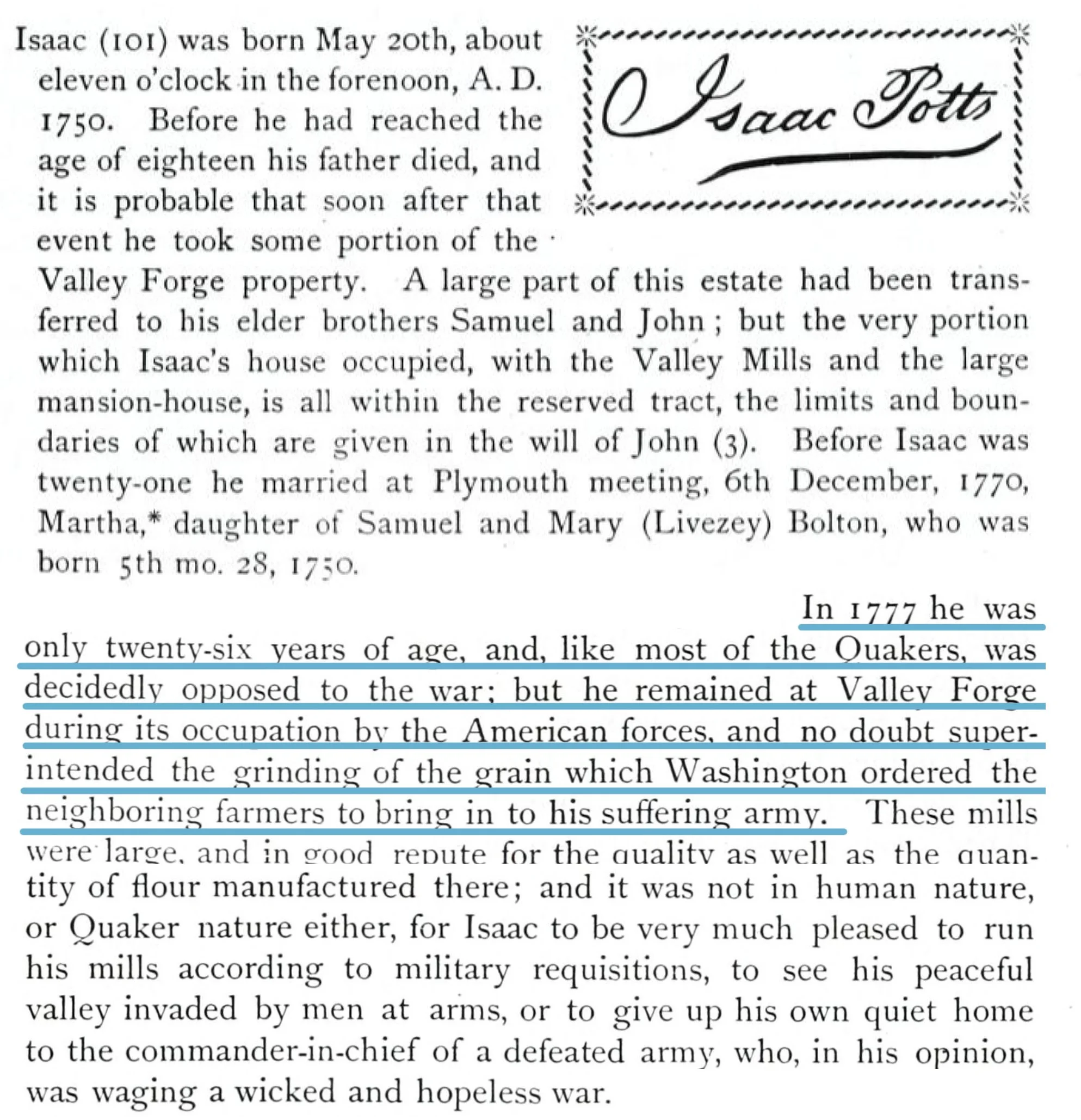
Above: Text source: Memorial of Thomas Potts, Jr. , by Mrs. Thomas Potts James, 1874. Internet Archive
“as a Friend he did not approve of the war, although one brother [Thomas Potts] was a colonel in the army, and another brother [Dr. Jonathan Potts] was surgeon-general and head of the medical staff at Fort Ticonderoga.” Quote: Mary Isabelle de Gozzaldi, Every Evening, Wilmington, DE, Jan, 19, 1928.
Isaac Potts (1750–1803) was born into a prominent Quaker family. His parents, John Potts and Ruth Savage, were members of the Society of Friends, and Isaac was raised within that tradition.
While some family histories and local traditions describe him as a Quaker minister, there is no surviving primary evidence in the meeting minutes or registers that he was formally recognized as a recorded minister. Nevertheless, he maintained cultural and religious ties to the Quaker community throughout his life, participating in meeting activities and upholding Friends’ ethical and social values.
Isaac Potts Refused to Pay a Tax…
…as an Anti-War Protest?
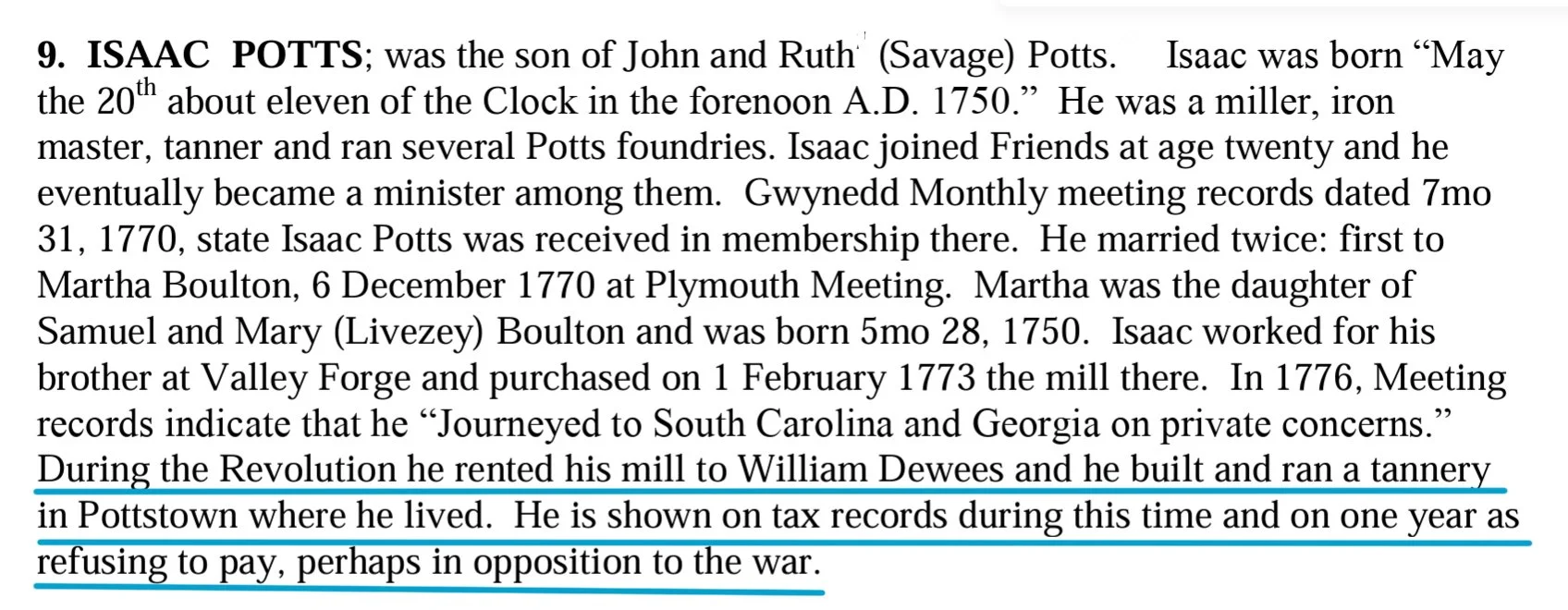
Above: Image source: The Family of John Potts (1709/10-1768), IRONMASTER, and Ruth Savage (1715/16-1786), Daniel A. Graham, 2006.
Isaac Potts’ Quaker Family Tree:
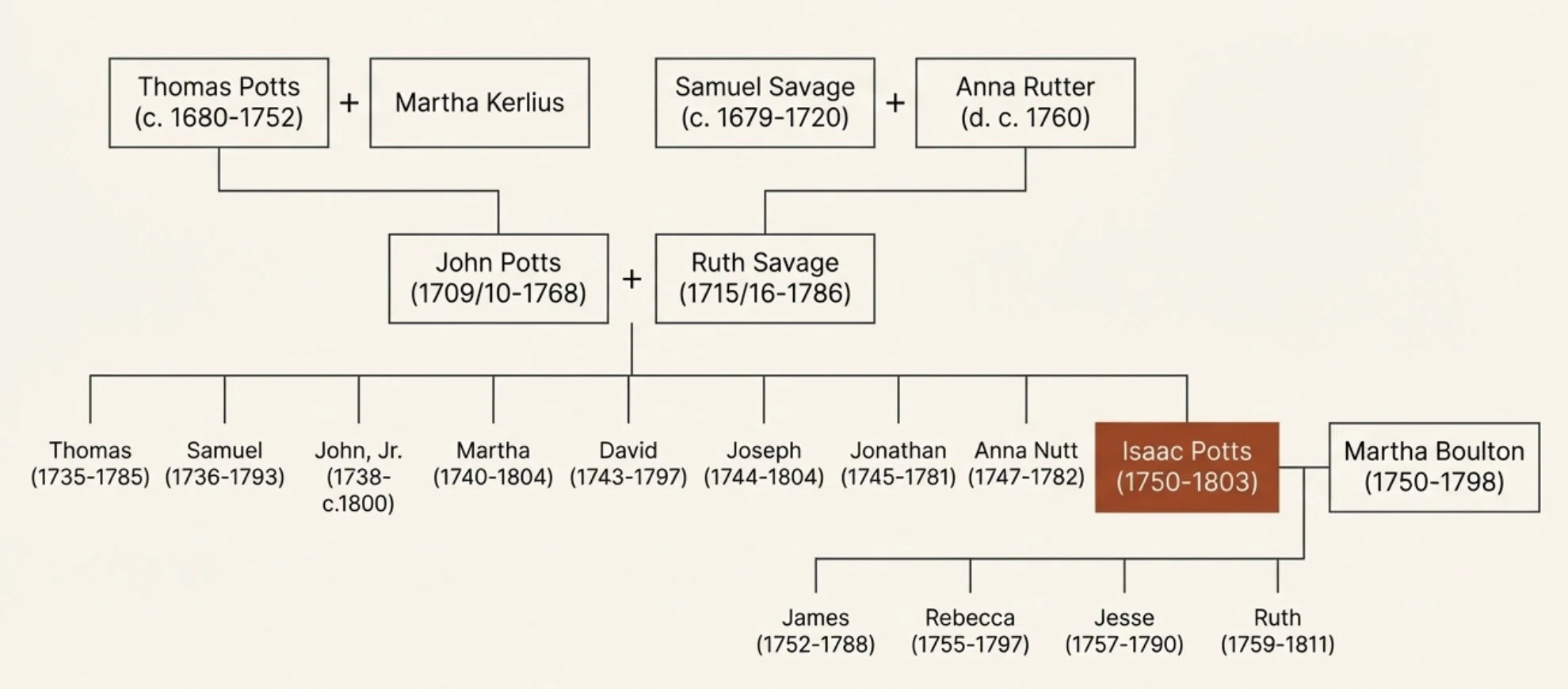
Above: Information source: The Family of John Potts (1709/10-1768), IRONMASTER, and Ruth Savage (1715/16-1786), Daniel A. Graham, 2006.
Links: