
Historic Quaker Houses of Chester County, PA
The 1839 Brinton House
Built by Edward Brinton
Who Also Owned Brinton’s Mill
(Andrew Wyeth’s Home: Brinton’s Mill)
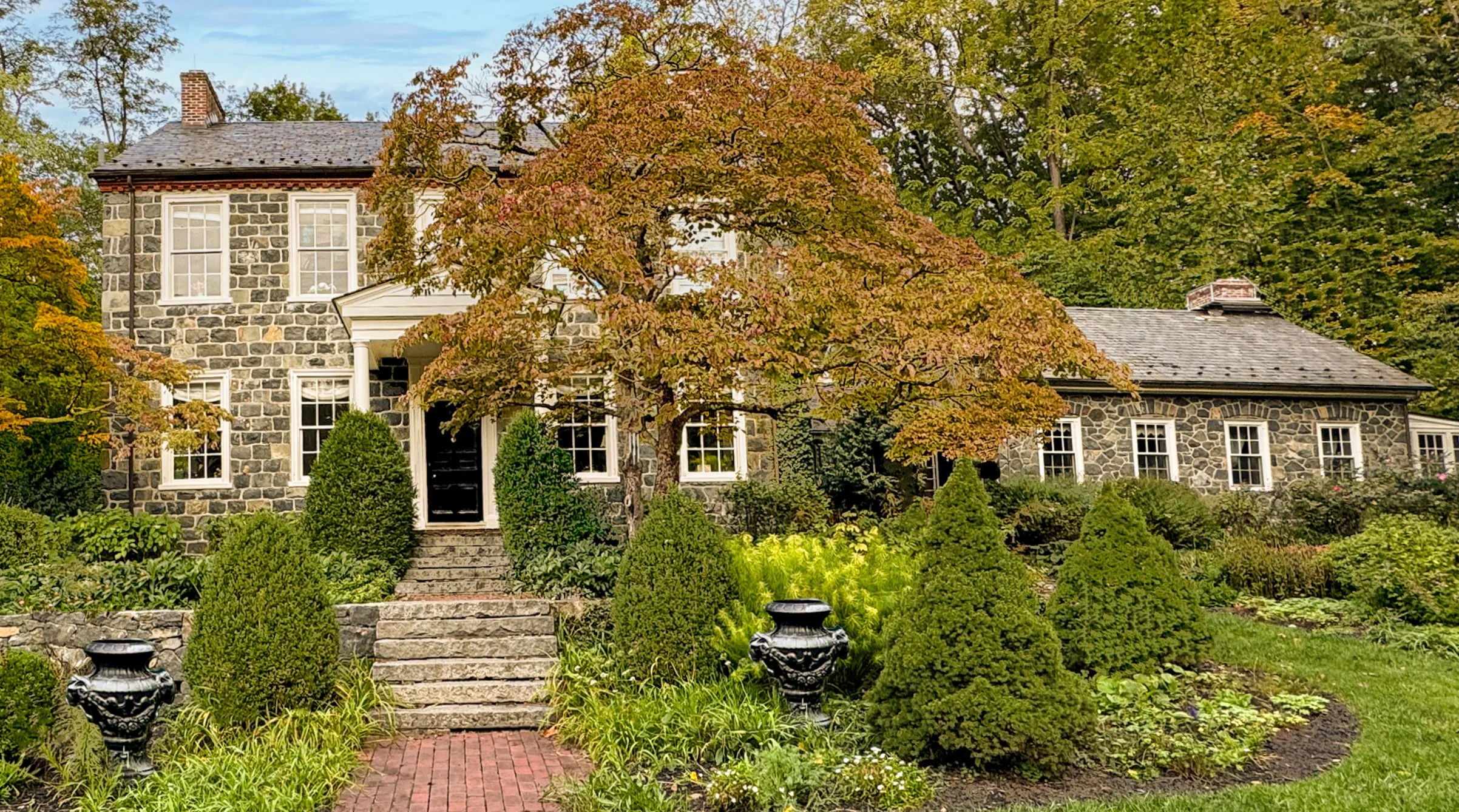
Above: Quaker farmer and mill owner Edward Brinton built this center-hall home for his family in 1839. Image source: Lee J. Stoltzfus
Edward Brinton inherited this land from his father, Amos Brinton, in 1822. His great-great-grandparents, William Brinton, Jr. and Jane (Thatcher) Brinton, emigrated here from England. This house was the primary Brinton residence for the farm and nearby Brinton’s Mill property. Edward’s first wife, Susanna (Bond) Brinton died in 1827, before he built this house. He previously lived in a stone house built nearby by his parents, Amos Brinton and Sarah (Darlington) Brinton.
The Nearby Brinton’s Mill
Purchased by Andrew Wyeth in 1958
As Their Home and Art Studio:
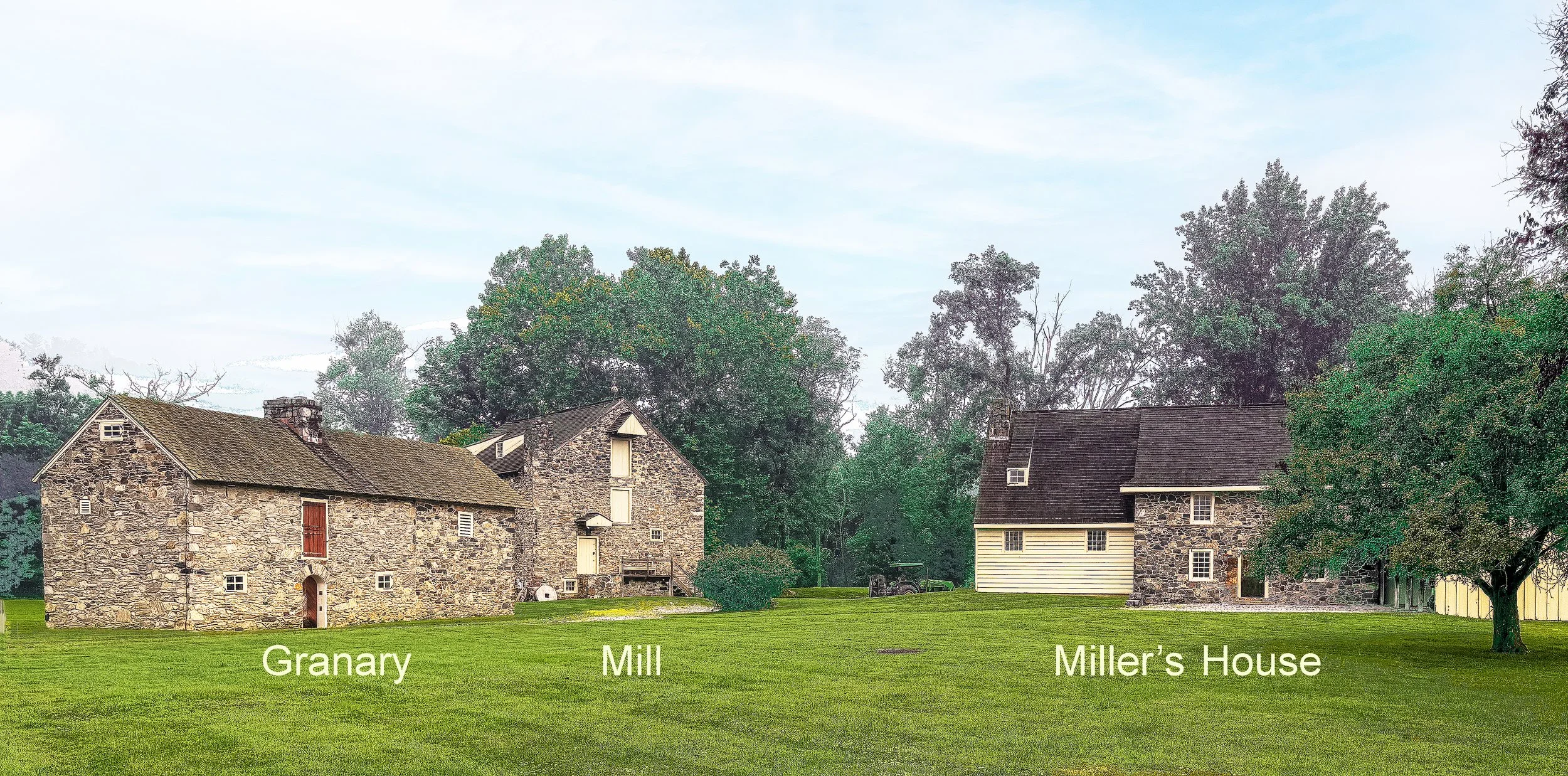
Above: Brinton’s Mill as restored and rebuilt by Andrew Wyeth and Betsy Wyeth. Image source: Lee J. Stoltzfus
Andrew and Betsy Wyeth purchased this mill property in 1958 for their home and art studio. The three buildings at Brinton’s Mill are:
An 18th-century stone mill. The original mill was built ca. 1720 by Nicholas Fred. The mill was enlarged ca. 1760 and the roofline was raised. Edward Brinton renovated the mill in 1824. Andrew and Betsy Wyeth restored the mill in the 1960s to an 18th century appearance.
A granary, built ca. 1824. Edward Brinton built this granary ca. 1824 when he renovated the mill. The Wyeths temporarily lived in the granary while rebuilding the miller’s house. The exterior eventually preserved much of its original appearance, except that a large window replaced the barn doors on the west elevation.
A 20th century miller’s house. In the 1950s Andrew Wyeth and Betsy Wyeth rebuilt and restored this house for their primary residence. They lived here for the rest of their lives, while also maintaining their house in Maine. This miller’s house had burned in the 1920s after being altered numerous times.
1963 Portrait of Andrew Wyeth
At his Home, the Brinton Mill Property:
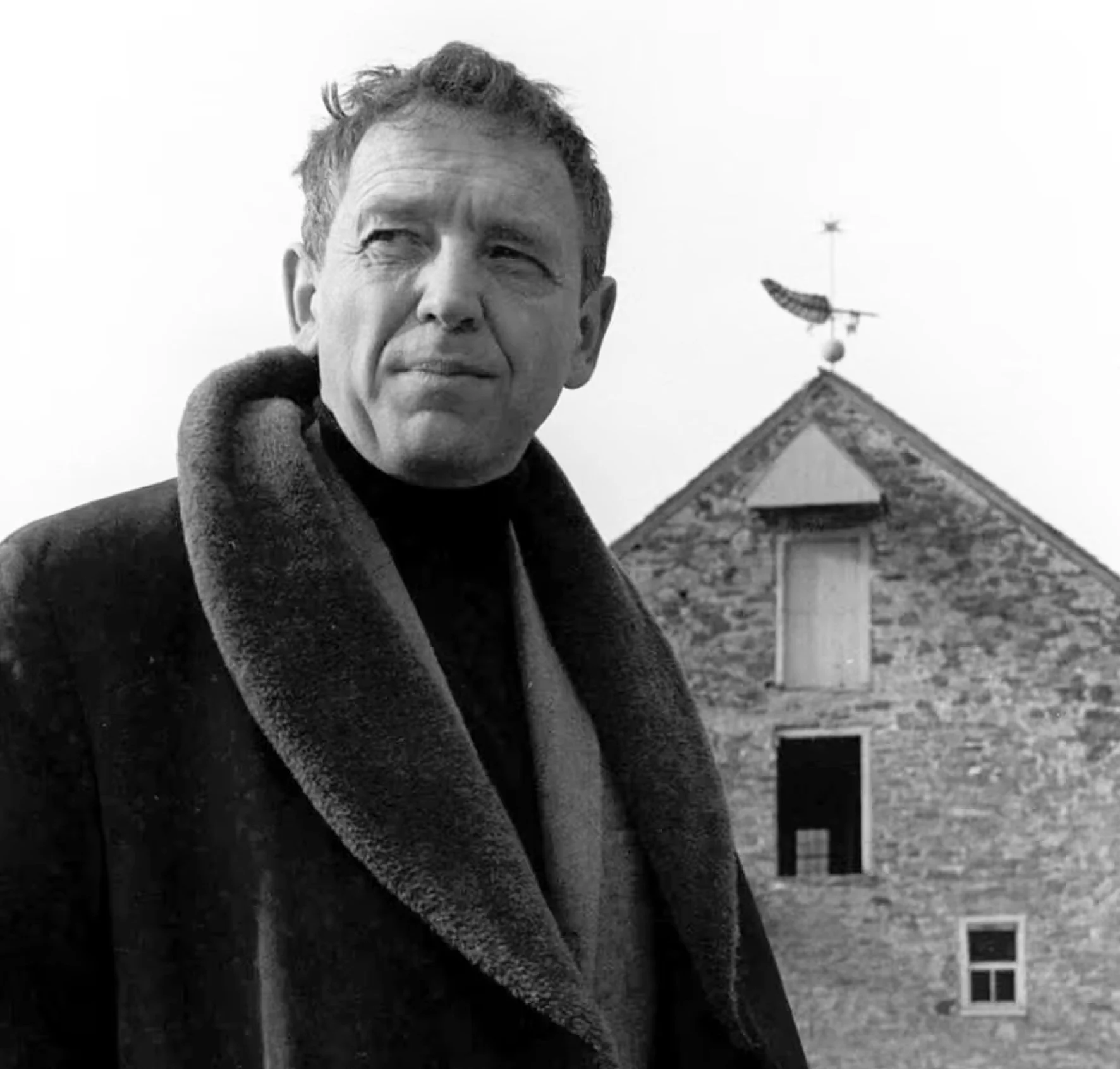
Above: In February 1963, Andrew Wyeth posed in front of his Brinton mill for this Associated Press photograph. By the 1960s, Wyeth had become one of the best-known American painters of that era. Image source: Today.com
1959 Drawing of Brinton’s Mill
Before the Wyeths Renovated the Buildings:
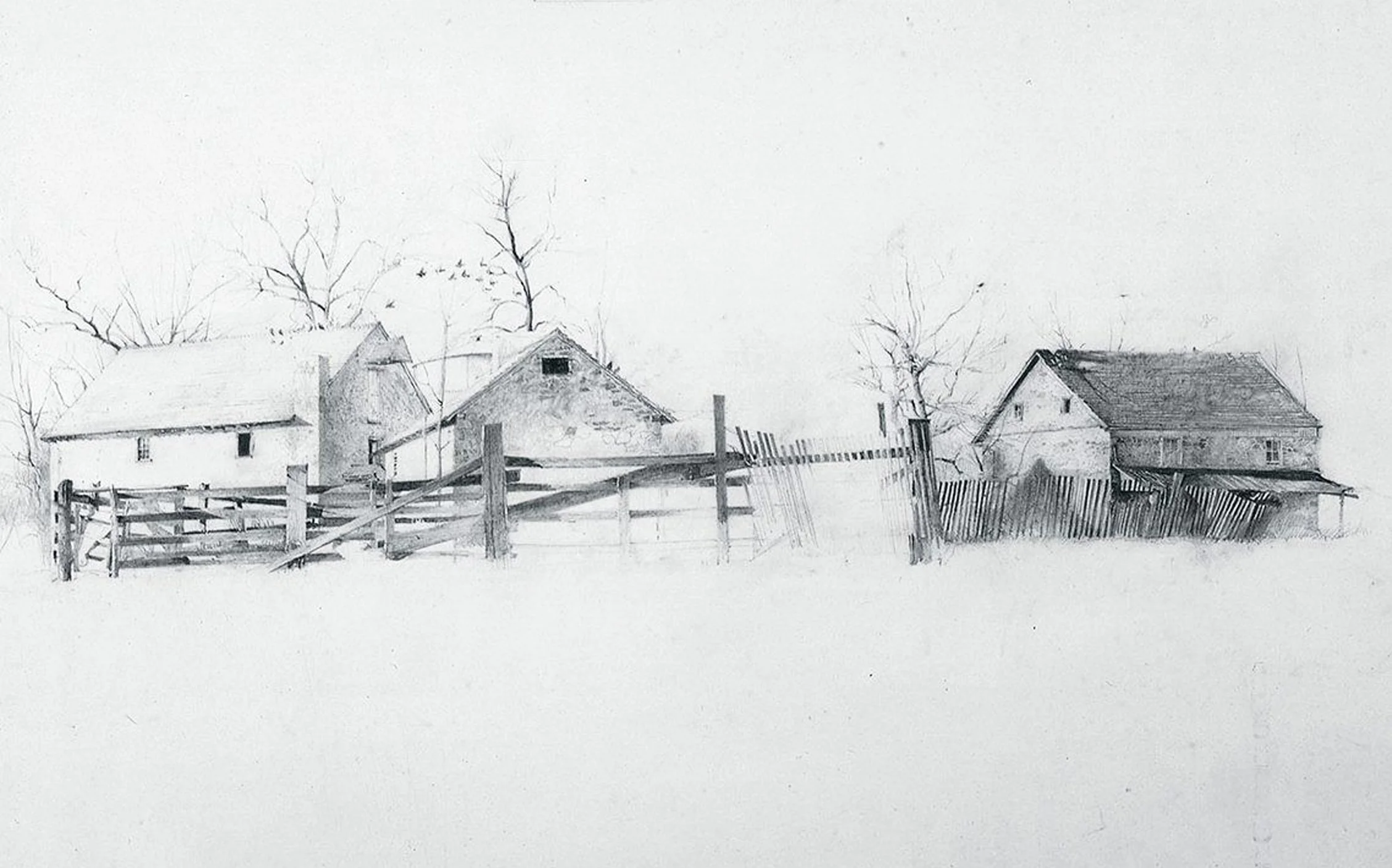
Above: Drawing of the Mill by Andrew Wyeth, before he and Betsy Wyeth restored the buildings: Mill Buildings, Study for The Mill, 1959, Pencil on paper. Image source: Brandywine.org
The Wyeths’ Brinton Mill Property
By Photographer Peter Ralston:
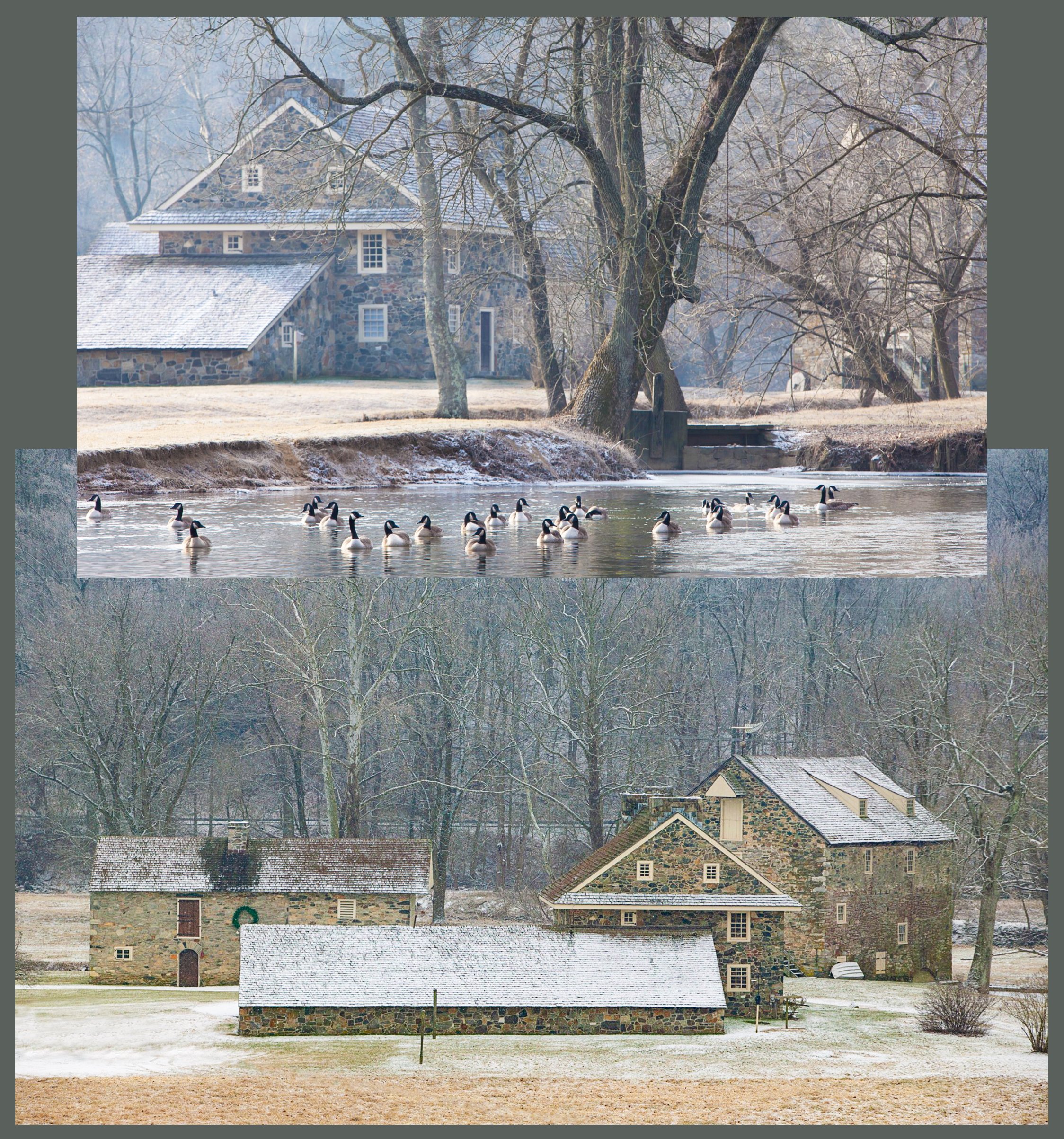
Above: Top: “For Life”, Bottom: “The Mill”, Dye sublimation prints on aluminum after photographs by Peter Ralston. Images source: Ralston Gallery
Photographer Peter Ralston grew up next door to the Wyeths’ Brinton Mill property. The Wyeths became like a second family for him. His photograph, For Life, depicts the Wyeths’ miller’s house near his parents’ property along the Brandywine River. The title refers to Canada geese pairing for life.
1966: Andrew Wyeth’s Painting
Betsy Wyeth as a Quaker Woman:
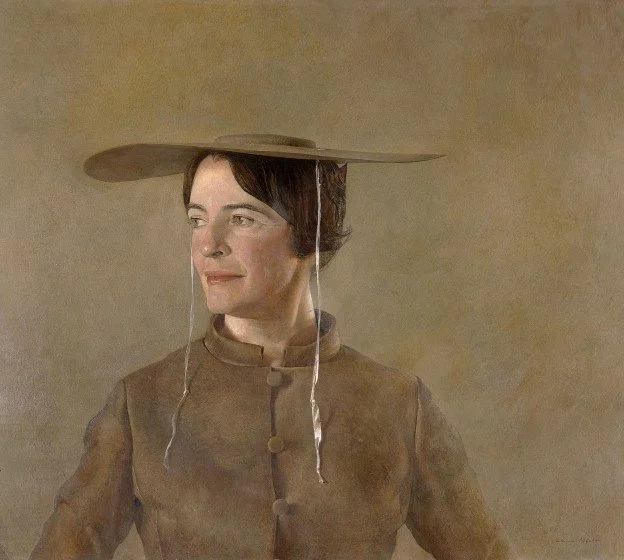
Above: Maga’s Daughter, 1966, tempera on panel, Image source: Andrew and Betsy Wyeth Collection, Brandywine River Museum of Art.
Andrew Wyeth painted this portrait of his wife Betsy Wyeth while she posed in the living room of their home, the miller’s house at Brinton’s Mill. She wears a vintage Quaker flat hat and a plain jacket that suggests a Quaker coat. The Wyeths were not Quaker, but they identified very much with the local Quaker aesthetic.
The Local Building Stone:
Gneiss and Gabbro
“Brandywine Blue Granite”
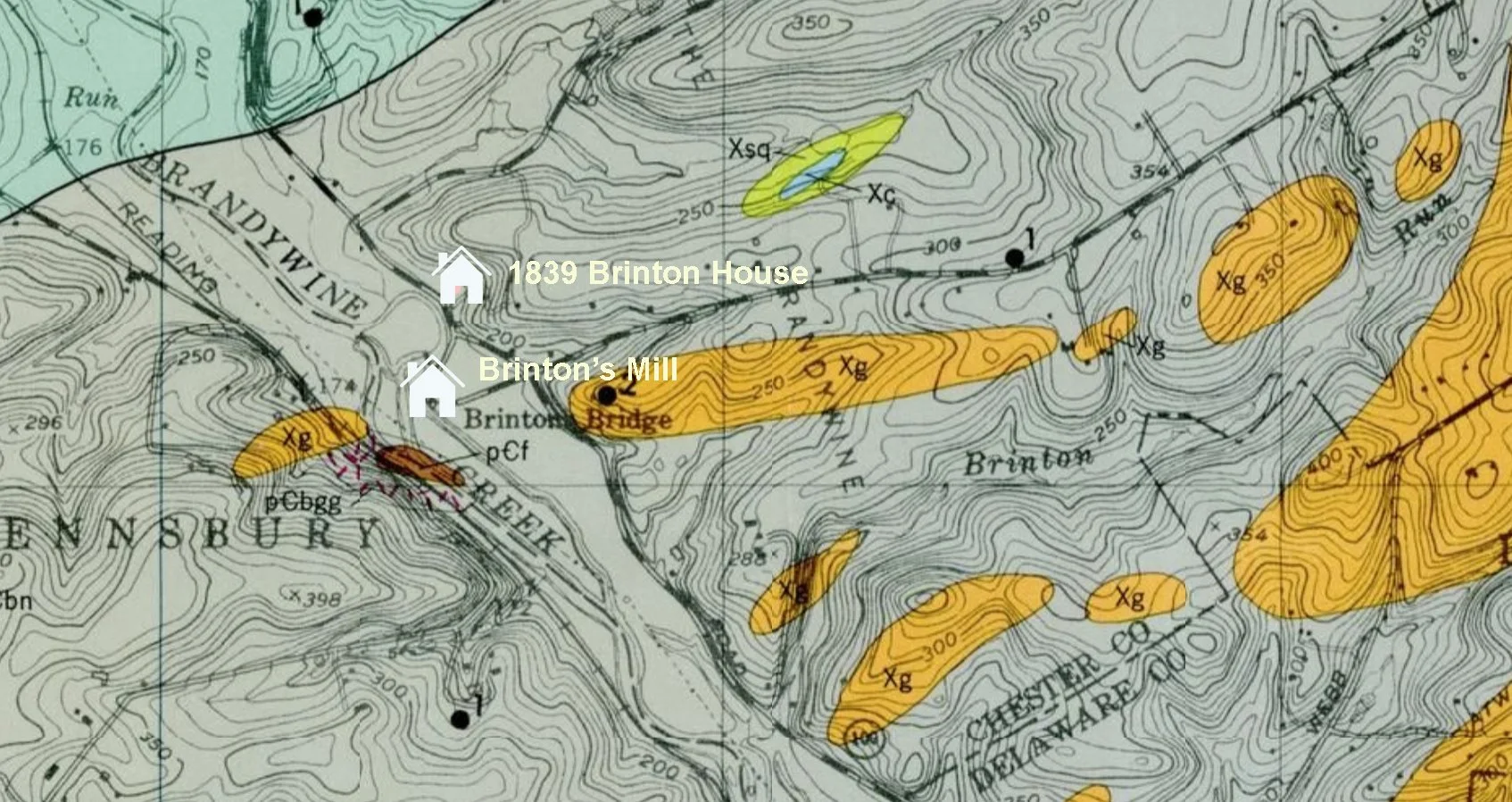
Above: Image source: National Geologic Map Database
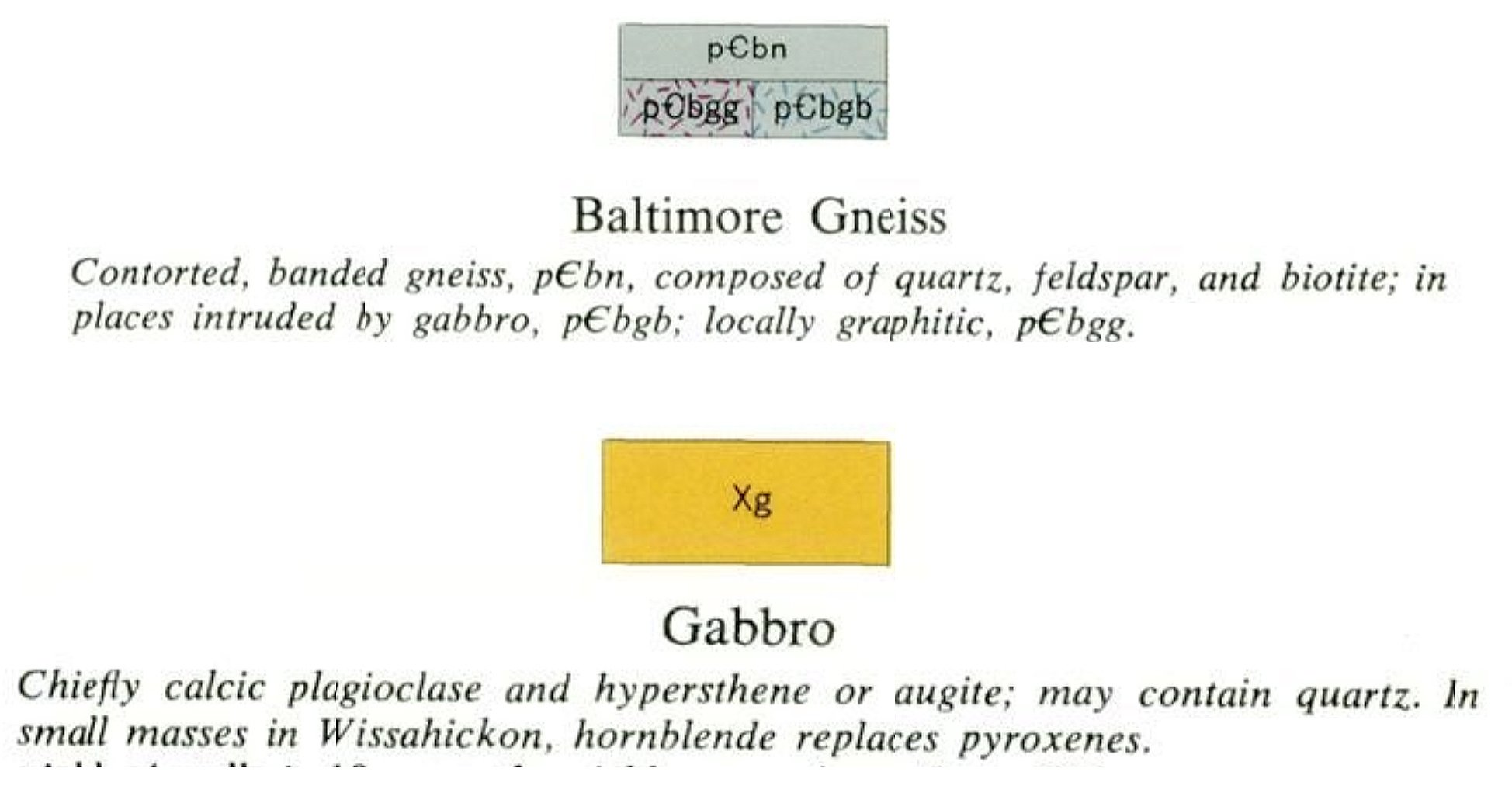
Image source: National Geologic Map Database
The local bedrock and building stone of the Chadds Ford area is mostly gneiss and gabbro. Historic buildings sometimes include stone of both these types. Brandywine Blue Granite is a traditional mason’s term for this Brandywine blue gneiss and gabbro native to the local Wilmington Complex bedrock.
Chadds Ford is situated within the Wilmington Complex, a geological region characterized by dark iron-rich rocks. While the underlying bedrock is technically classified as mafic gneiss, it contains massive outcrops of gabbro that provided local masons with an exceptionally durable, dark-colored stone for construction.
Gabbro building stone appears as a solid, dark, "massive" block with a uniform speckled texture, while gneiss displays distinct "zebra-stripe" banding.
Two Brinton House Museums
Built by Edward Brinton’s Relatives:
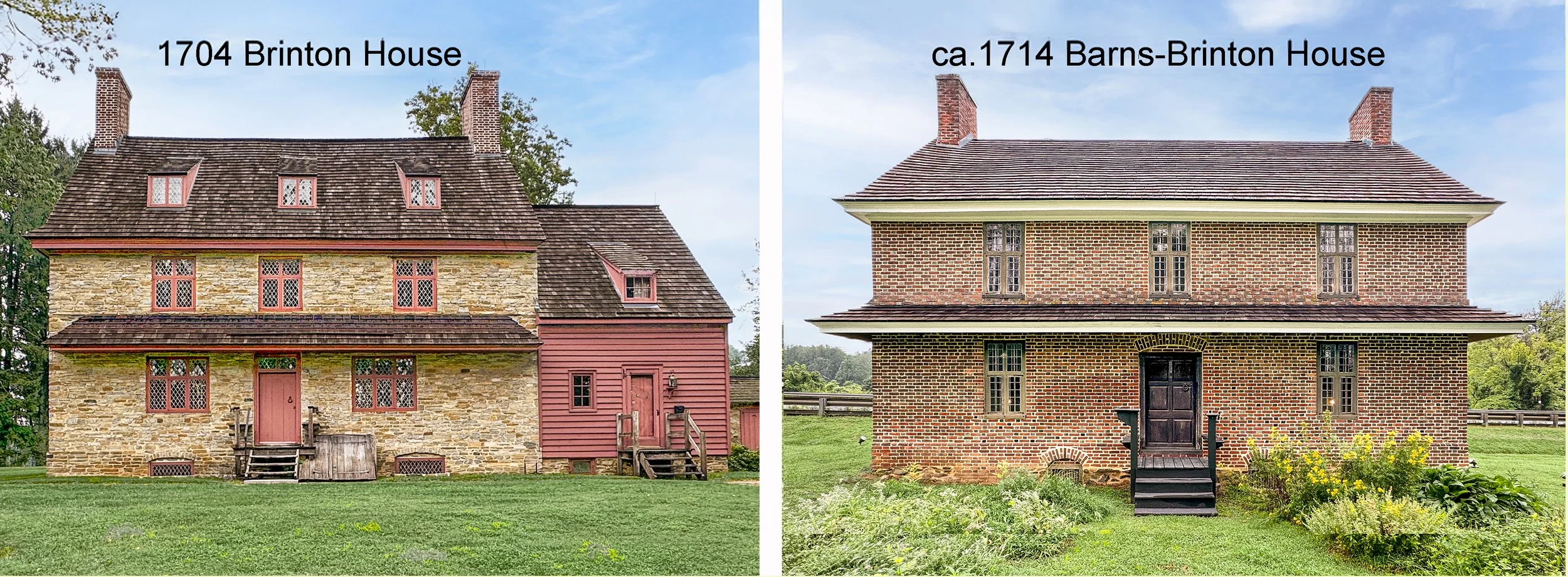
Edward Brinton’s great-great-grandparents built the 1704 Brinton House near West Chester. They were English Quaker immigrants William Brinton, Jr. and Jane (Thatcher) Brinton. The building stone of this house is Precambrian gneiss.
Edward Brinton’s great-aunt and great-uncle lived at the ca. 1714 Barns-Brinton House at Chadds Ford. They were James Brinton, Sr. and Mary (Ford) Brinton.
So the Brintons who built the 1704 Brinton House were grandparents of the Brintons who purchased the ca. 1714 Barns-Brinton House in 1753. Image source: Lee J. Stoltzfus
Ancestry of Edward Brinton
Who Built the 1839 Brinton House
And Owned Brinton’s Mill:
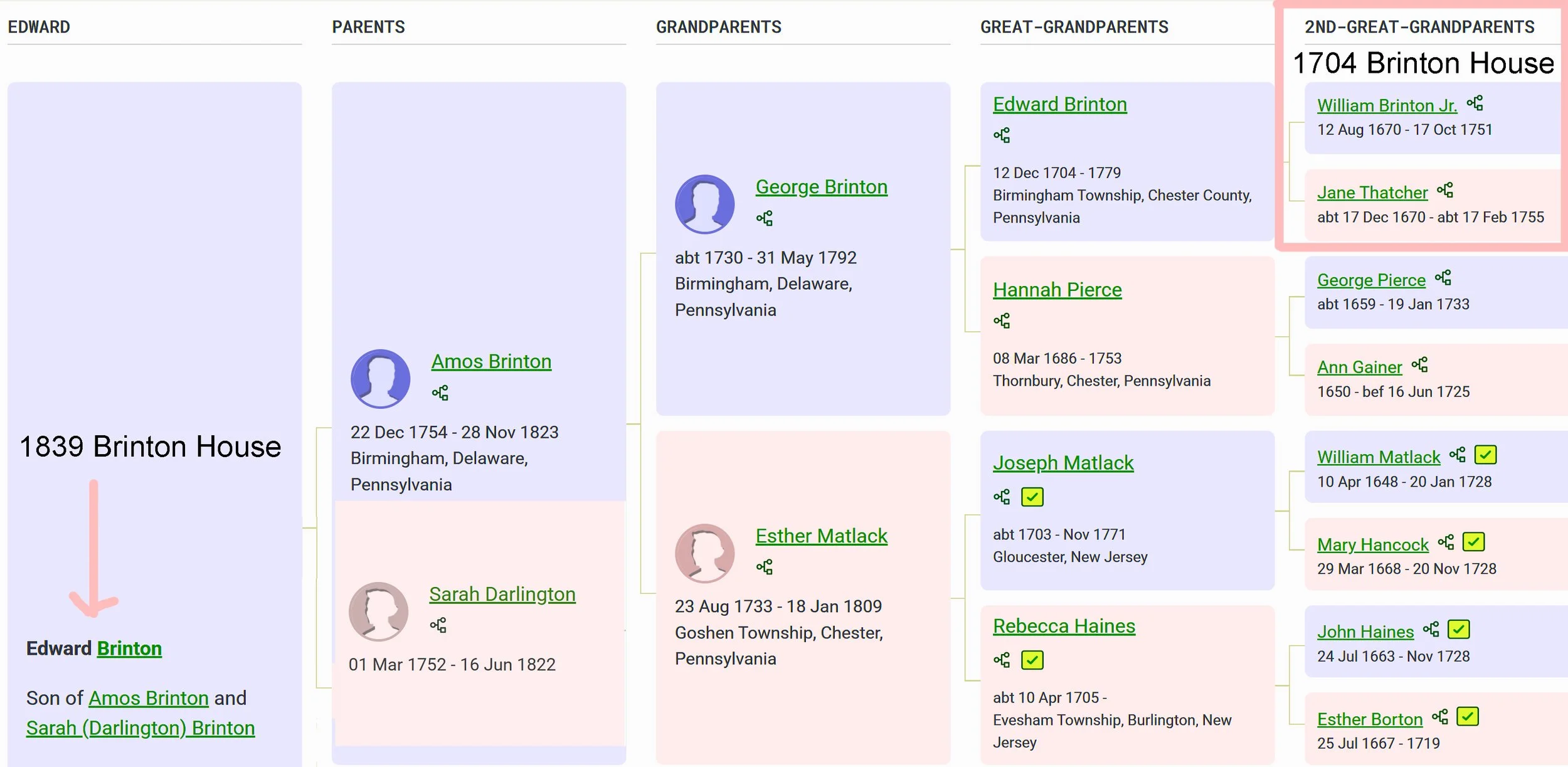
Above: Image source: WikiTree.
Links: