
Historic Quaker Houses of Chester County, PA
The Arnold - Cooper House
Built ca. 1720, with ca. 1800 Addition:
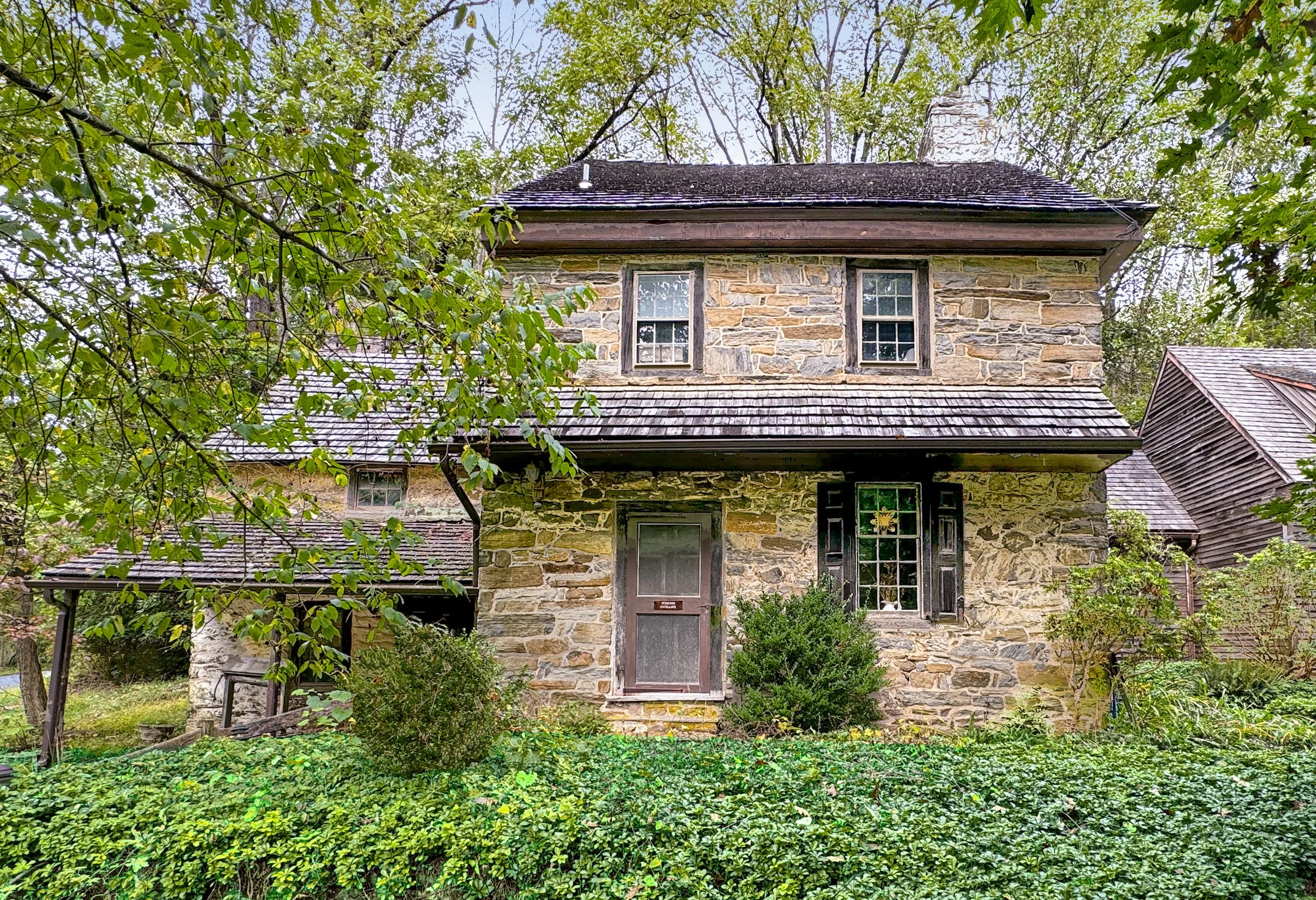
Above: The house is also known as the Temple-Webster-Stoner House (National Register of Historic Places) and the Arnold-Temple House (Historic American Buildings Survey). Image source: Lee J. Stoltzfus.
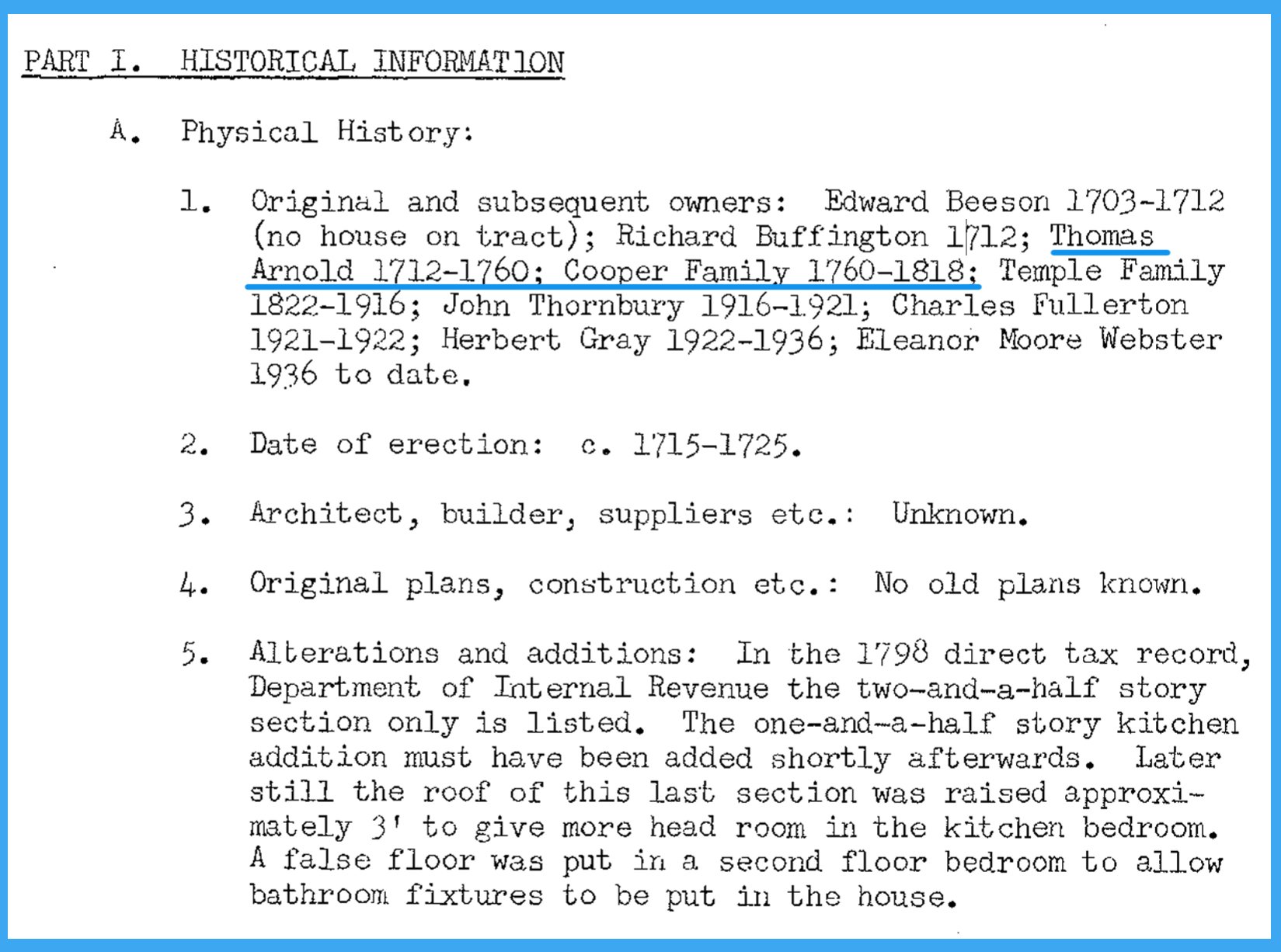
Between 1713 and 1716, Thomas Arnold received a land grant here. He moved to West Bradford, Chester County, around 1720 and established a fulling mill for cloth production on the Brandywine Creek ca. 1730. Arnold married Hannah Eavenson at Concord Quaker Meeting in 1714. In 1729 he married his second wife, Ann Rattew, again at Concord Meeting.
The home’s main section was constructed between 1720 and 1730, likely by Arnold himself during his 50-year residency. The house saw significant changes in 1774, when William and Ella Cooper remodeled the house. They owned the property from 1760 to 1818.
Two First-Floor Corner Fireplaces:
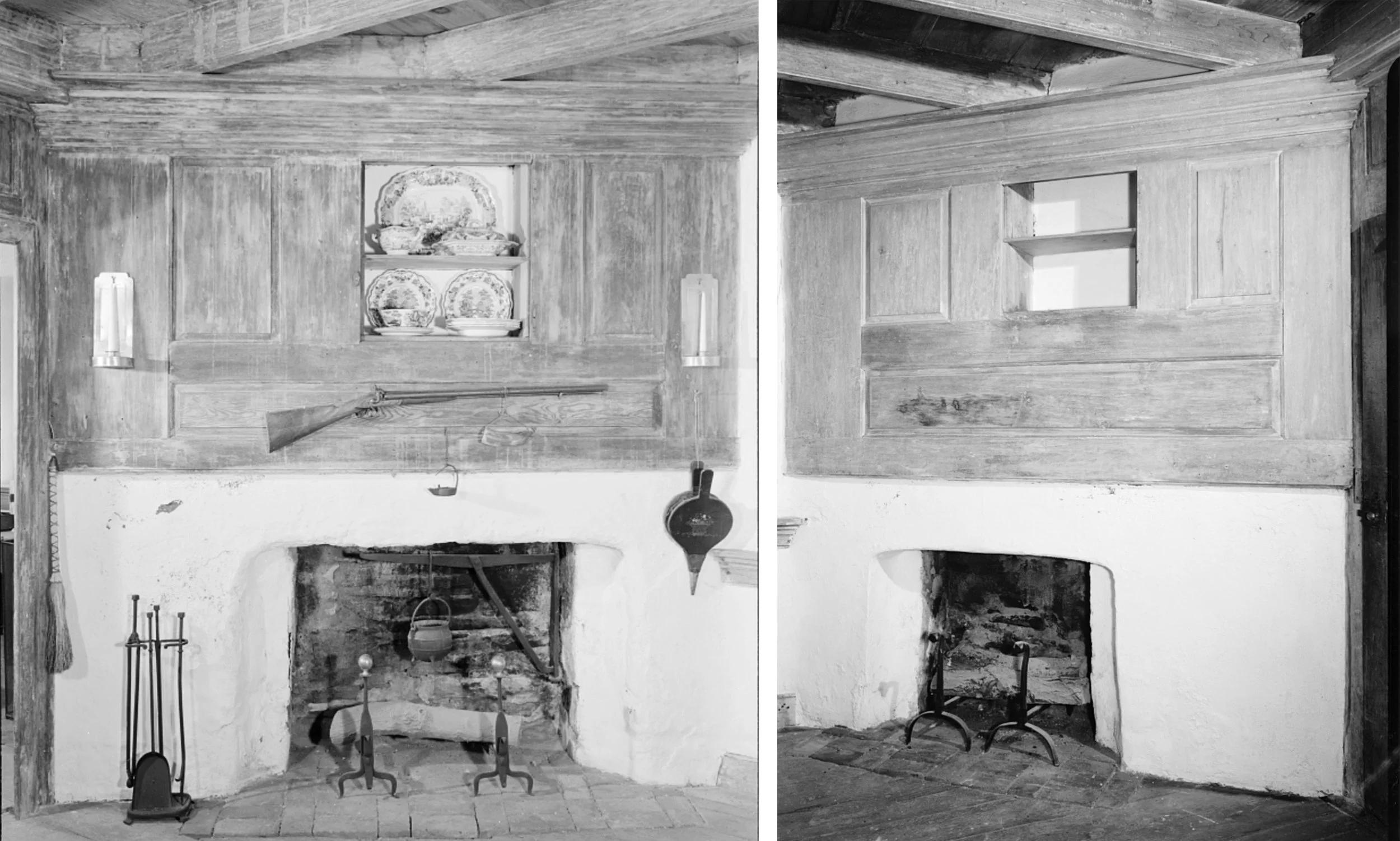
Above: Images source: Historic American Buildings Survey, Photographer: Ned Goode, 1958.
The first floor features two rooms with back-to-back corner fireplaces. There is also a small stair hall on the first floor. The rooms have original board partitions. This two-room plan is known as a double-cell floor plan, and has also been named a “Penn Plan” or “Quaker Plan.” The house preserves many original details, including a closed-string stairway.
1958: House History
for the Historic American Buildings Survey:
Above: Image source: Historic American Buildings Survey, Text by Bart Anderson, curator of Chester County Historical Society.
Around 1800, the Cooper family added a one-and-a-half-story kitchen wing. The home was owned by only three families between 1712 and 1916. Following the Cooper era, the Temple family took possession in 1822 and maintained the estate for 94 years. Today, the property is a Swedenborgian retreat center named Temenos.
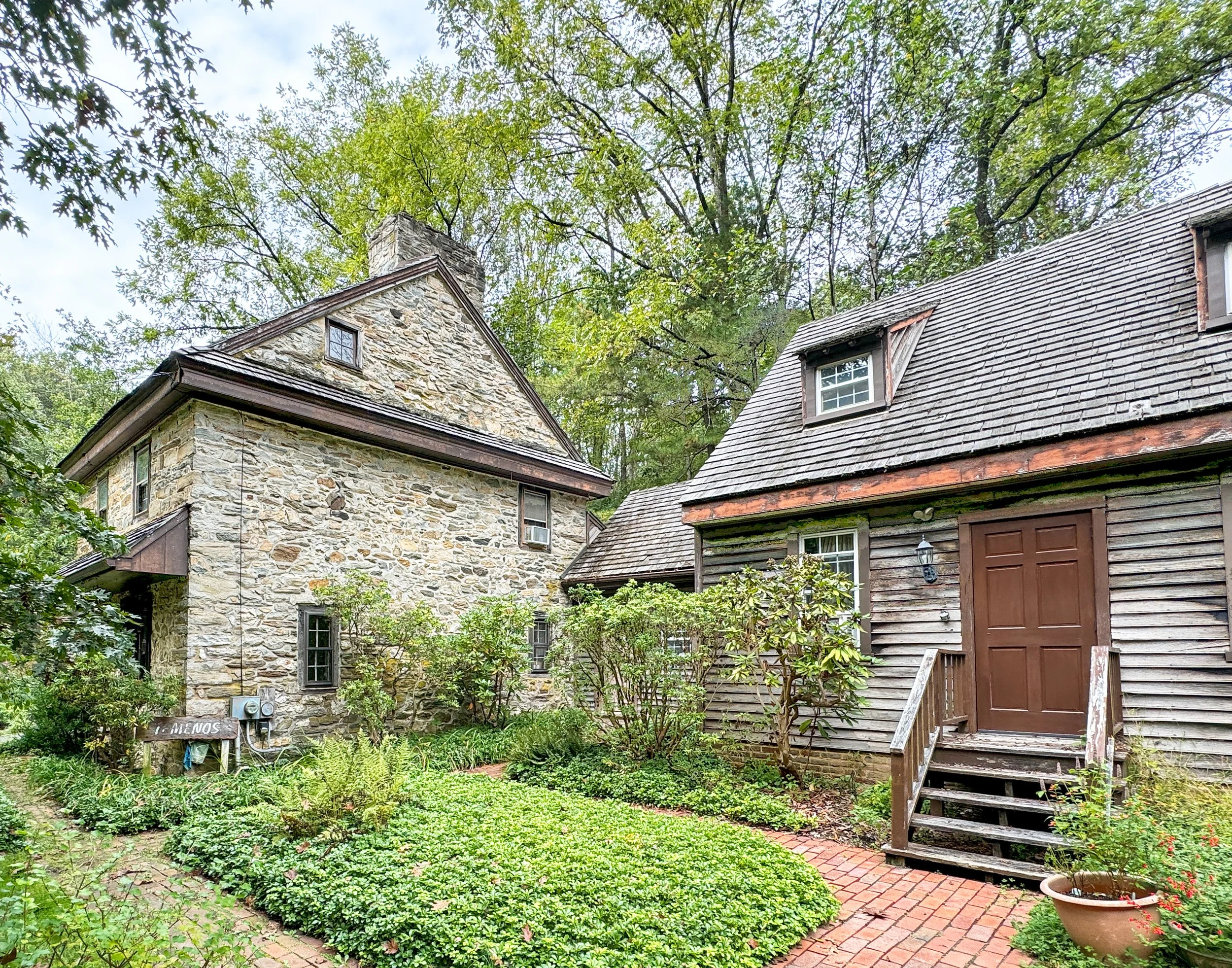
Above: The Arnold-Cooper House has a full cornice return, creating the effect of a pedimented gable. This is a typical vernacular detail in southeastern Pennsylvania architecture. It is also defined as a pent or pent eave. Image source: Lee J. Stoltzfus.
The Local Building Stone:
Doe Run Schist and Baltimore Gneiss:
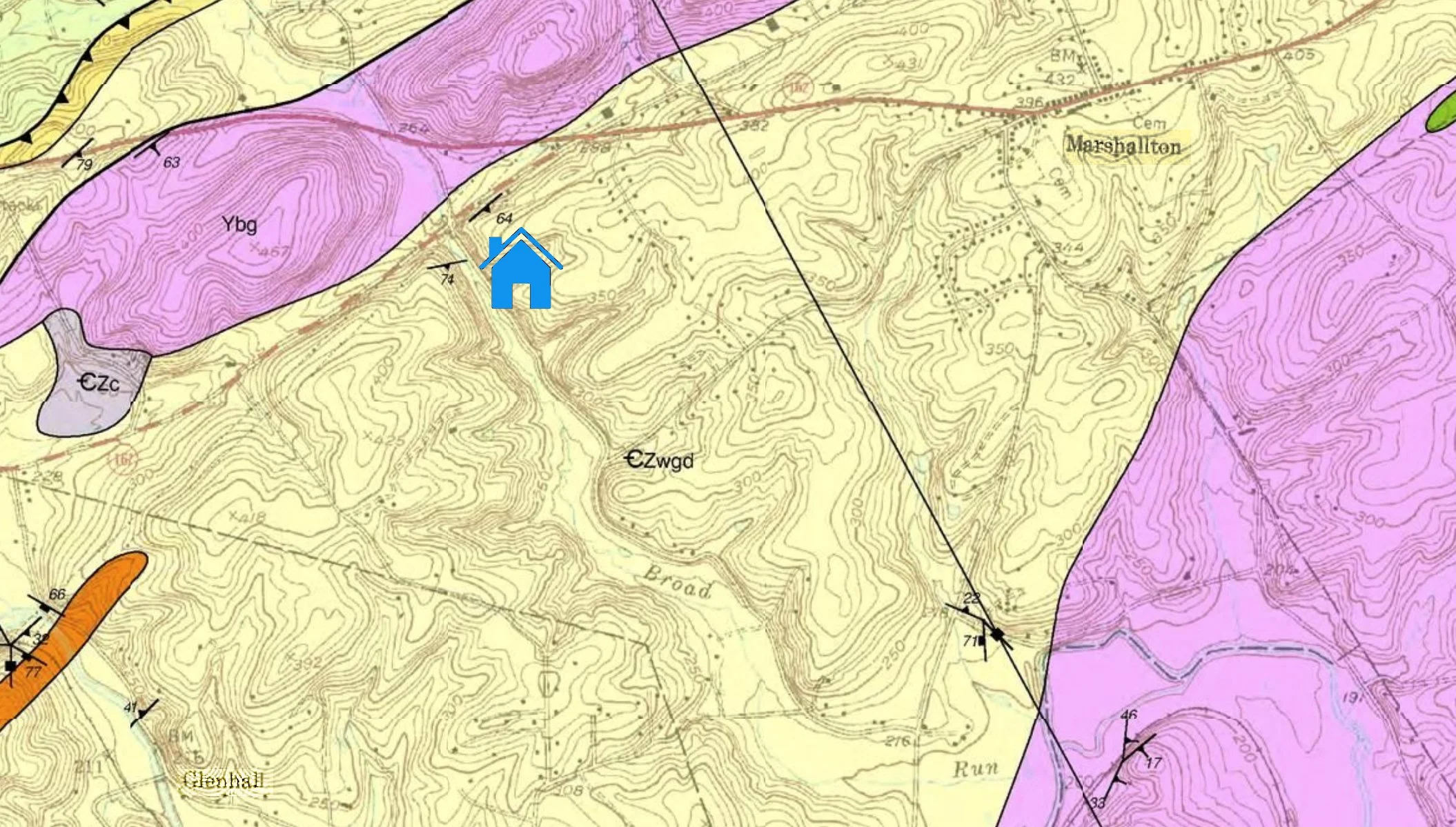
Above: Image source: MapView, National Geologic Map Database. (House icon added)
The Arnold-Cooper House rests on Doe Run Schist within the broader Glenarm Wissahickon Formation. It adjoins the area's Baltimore Gneiss outcrops. The building stone of this house apparently includes both Doe Run Schist and Baltimore Gneiss.
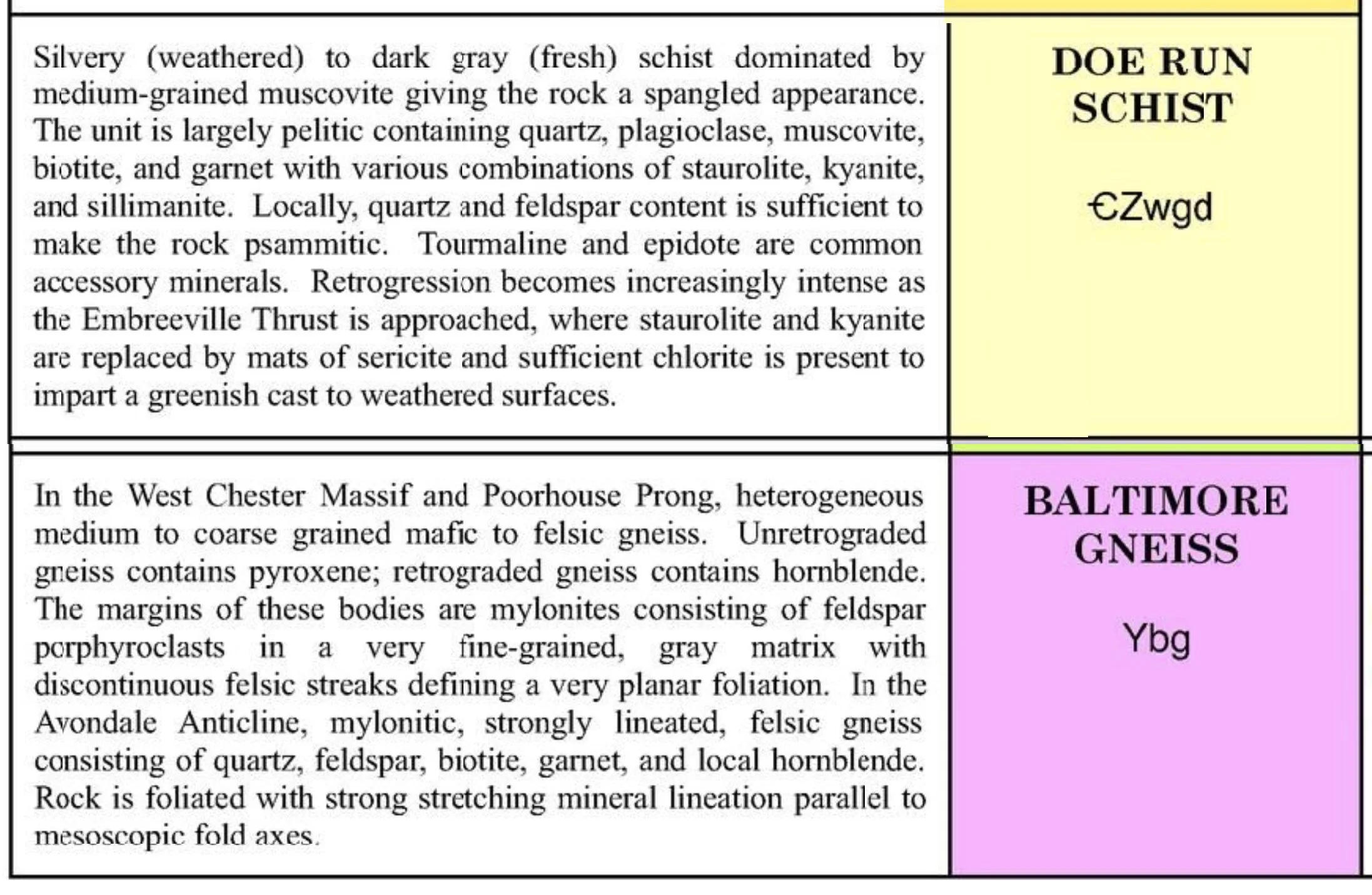
Above: Image source: MapView, National Geologic Map Database.
Links: