
Historic Quaker Houses of Chester County, PA
The Williams - Garrett House
Built ca. 1754 - 1790
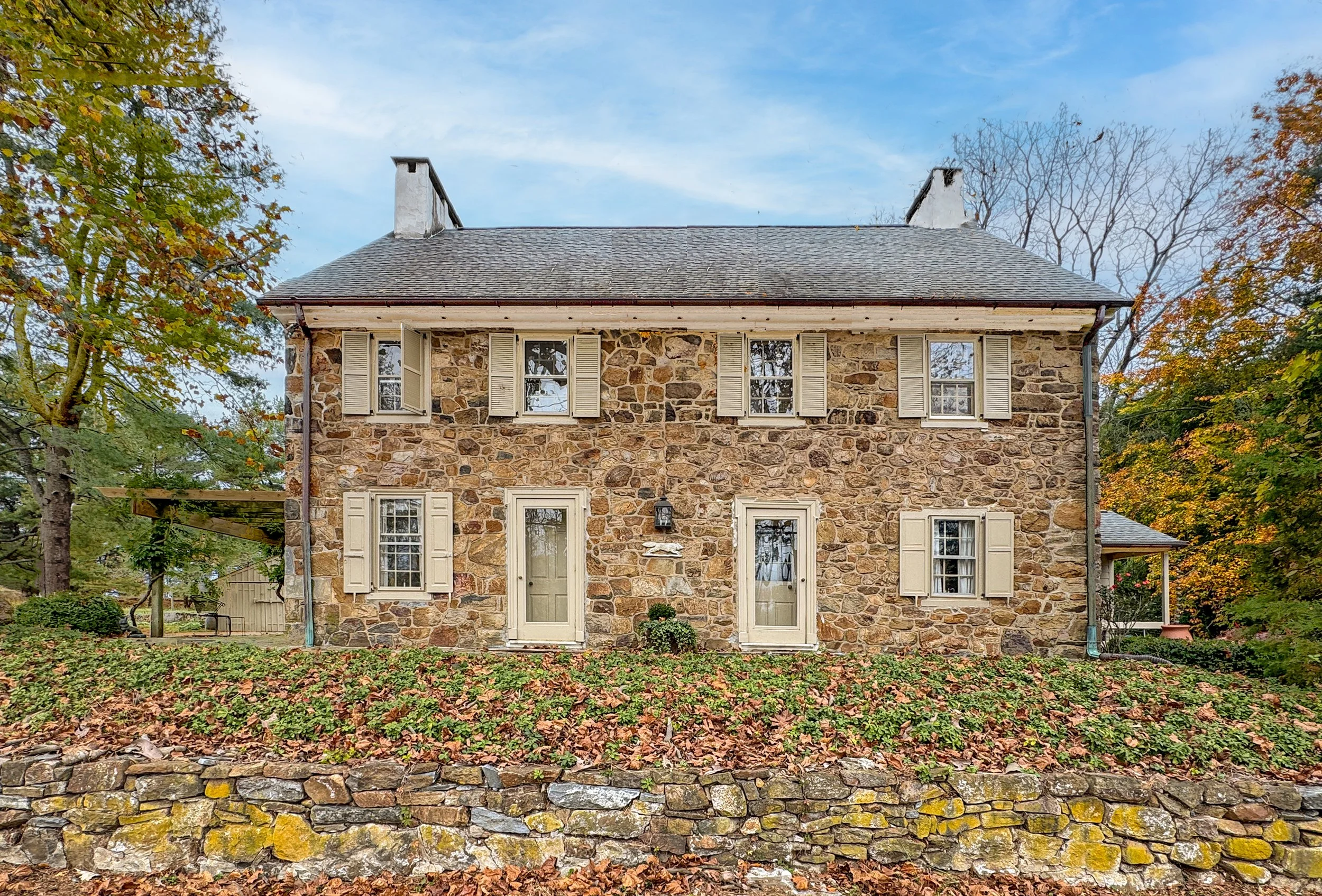
Above: The Williams - Garrett farmhouse in East Goshen Township. Image source: Lee J. Stoltzfus
The oldest section of this house, on the right side (east), is a one-third Georgian house built ca. 1754 by Ellis Williams, Jr. and Lydia Williams. In 1790, Josiah Garrett, Sr. and Mary Garrett built an addition on the left side (west) to create a four-over-four house.
This property apparently was the location of an earlier house built ca. 1704 by Quaker Welsh immigrant Robert Williams. He and his wife Gwen Cadwalader were among the first European settlers in Goshen Township. Ellis Williams, son of Robert Williams, owned the property from 1715 until he sold it to his son Ellis Wiliams, Jr. in 1754.
Ellis Williams Jr. died around 1765. In his will he left twelve acres of land to his widow, Lydia Williams, who sold the parcel to Josiah Garrett, Sr. in 1785. His widow, Mary Garrett, sold the property to their son Josiah Jr. in 1797
Floor Plan of the Williams - Garrett House:
Paired Two-Room Plans:
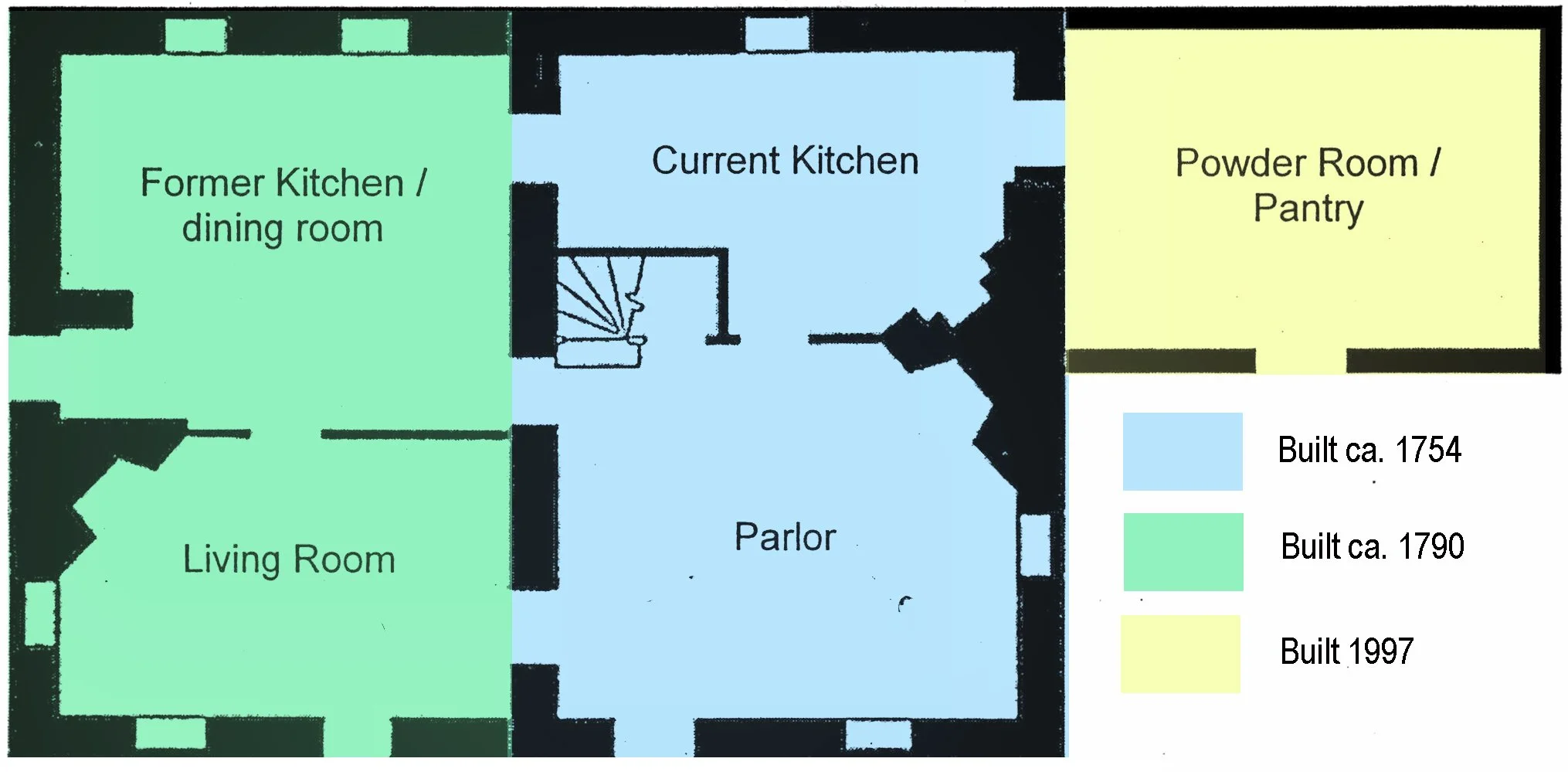
Above: First-floor plan. Image source: National Register of Historic Places, Seth B. Hinshaw, 2004
Names for this Two-Room Floor Plan:
1. One-Third Georgian House
2. Double-Cell House
3. Penn-Plan or Quaker-Plan House:
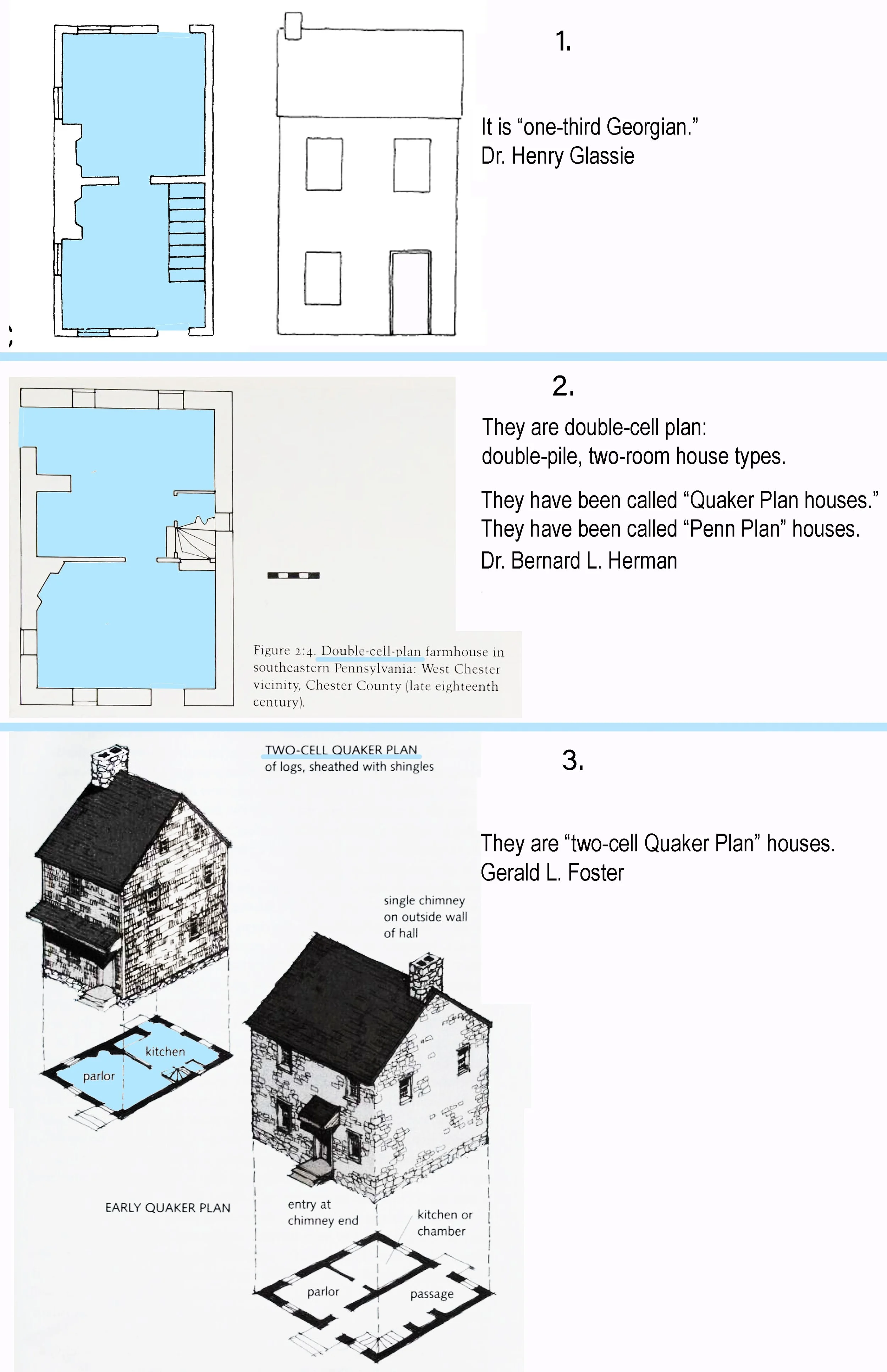
Above: Architecture historians use multiple terms for historic Pennsylvania houses with two-room plans arranged front to back rather than side by side. (Color added.)
1. Henry Glassie: One-third Georgian. In his article “Eighteenth-Century Cultural Process in Delaware Valley Folk Building”, 1972, JSTOR.
2. Bernard L. Herman: Double-cell, two-room house type, also called Quaker plan and Penn plan. In his book Architecture and Rural Life in Central Delaware…, 1987, Internet Archive.
3. Gerald L. Foster: Two-cell Quaker plan. In his book American Houses, 2004, Internet Archive.
And: Gabrielle M. Lanier and Bernard L. Herman: Double-cell plan houses. In their book Everyday Architecture of the Mid-Atlantic, 1997, Internet Archive.
The Williams - Garrett House and Workshop:
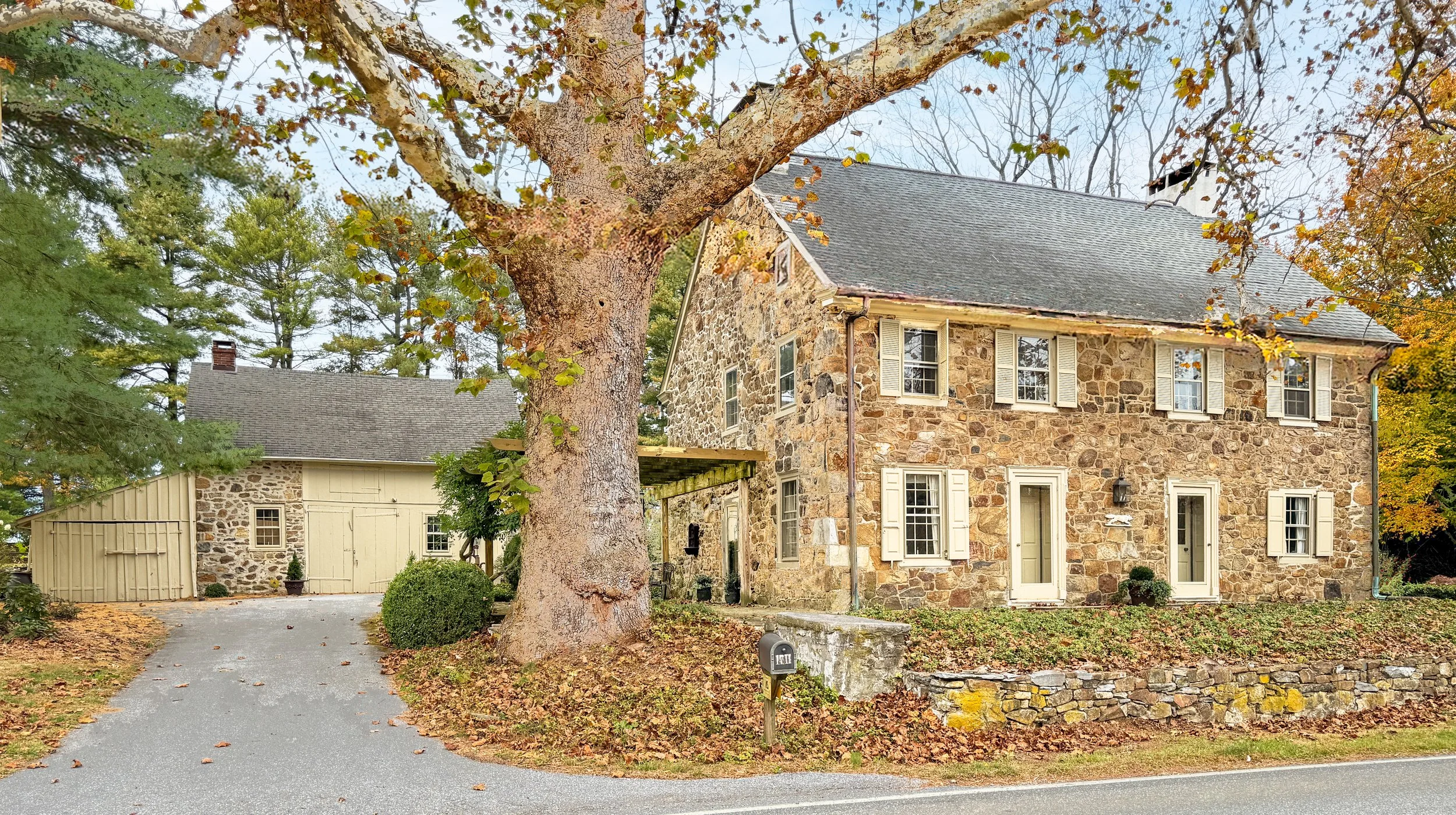
Above: An ancient sycamore tree beside the farmhouse. The ca. 1820 workshop is in the rear. Image source: Lee J. Stoltzfus
The ca. 1820 Workshop:
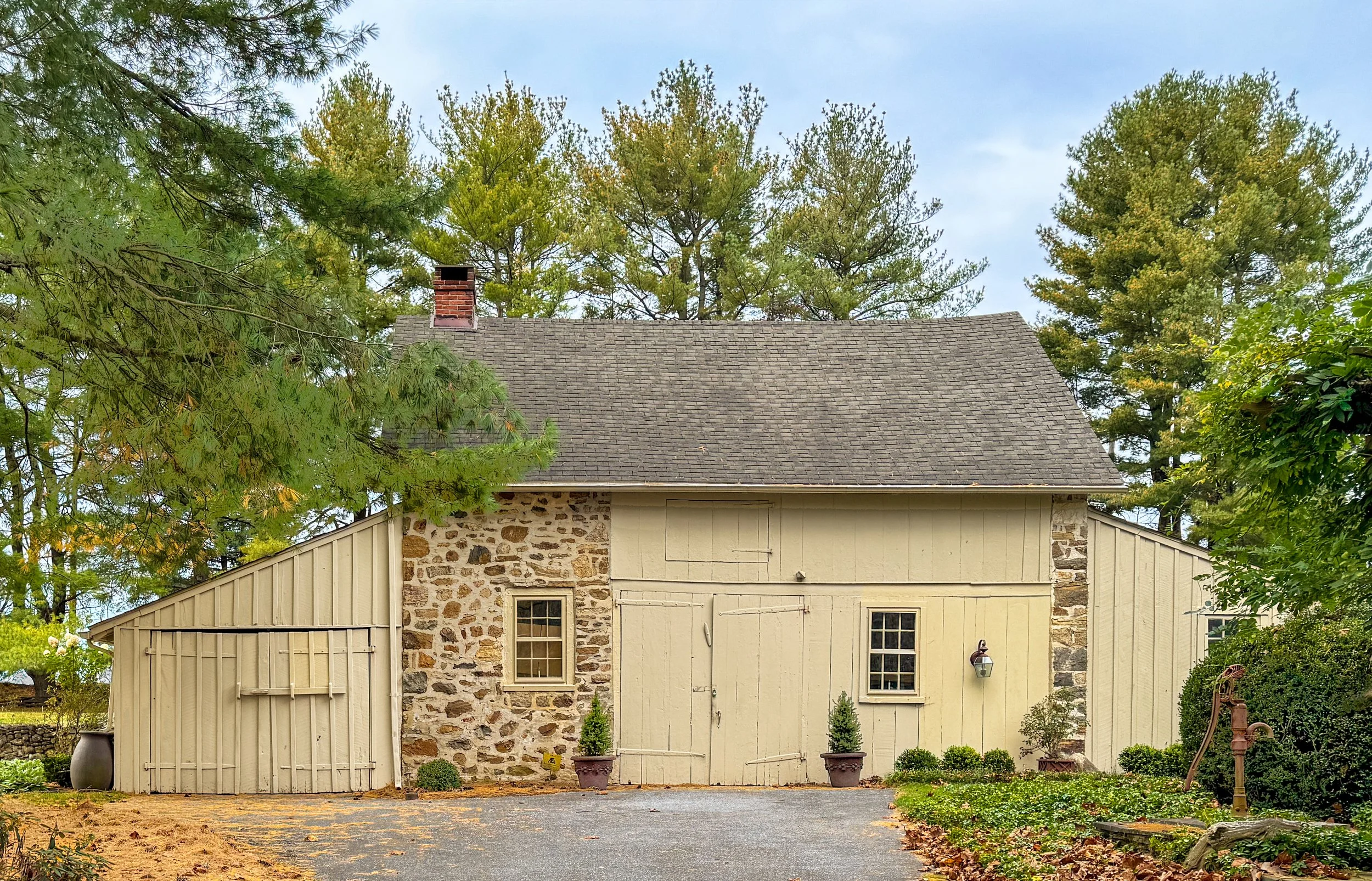
This farm building was constructed ca. 1820, according to tax records. It is built into a slope, with frame additions built ca. 1982. Image source: Lee J. Stoltzfus
The Building Stone:
Baltimore Gneiss:
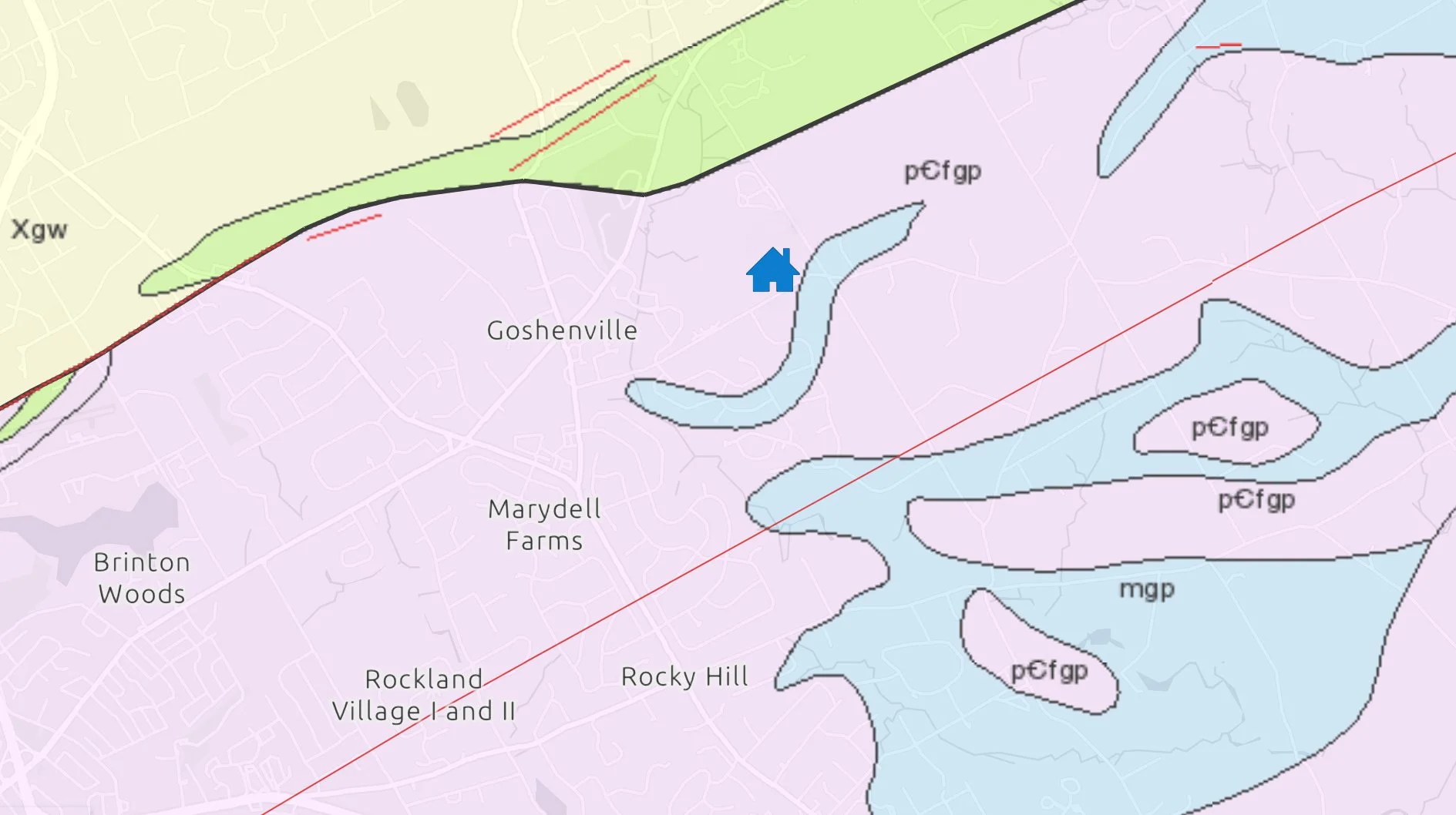
Above: Image source: PaGEODE - Pennsylvania Department of Conservation and Natural Resources
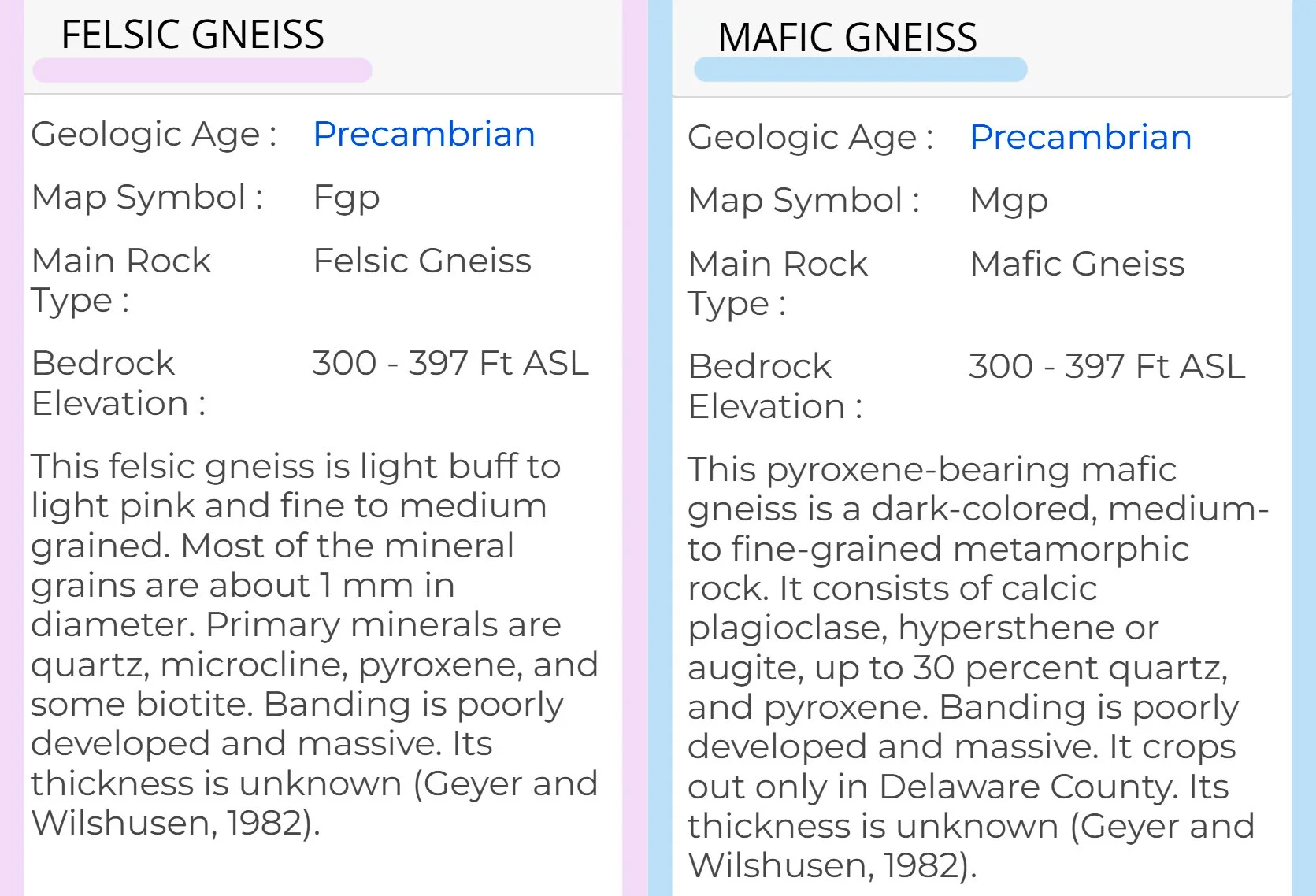
Above: Image source: PaGEODE - Pennsylvania Department of Conservation and Natural Resources
The Williams - Garrett House is constructed from local Baltimore Gneiss, a bedrock that constitutes the ancient foundation of the Pennsylvania Piedmont. The masonry showcases the characteristic appearance of this formation, where light-colored, quartz-rich felsic gneiss alternates with dark, mineral-heavy bands of mafic gneiss. This interplay of felsic and mafic layers creates the distinctive building stone appearance, which has weathered over centuries into the soft buff and gray tones typical of early Chester County stone architecture.
Baltimore Gneiss Building Stone:
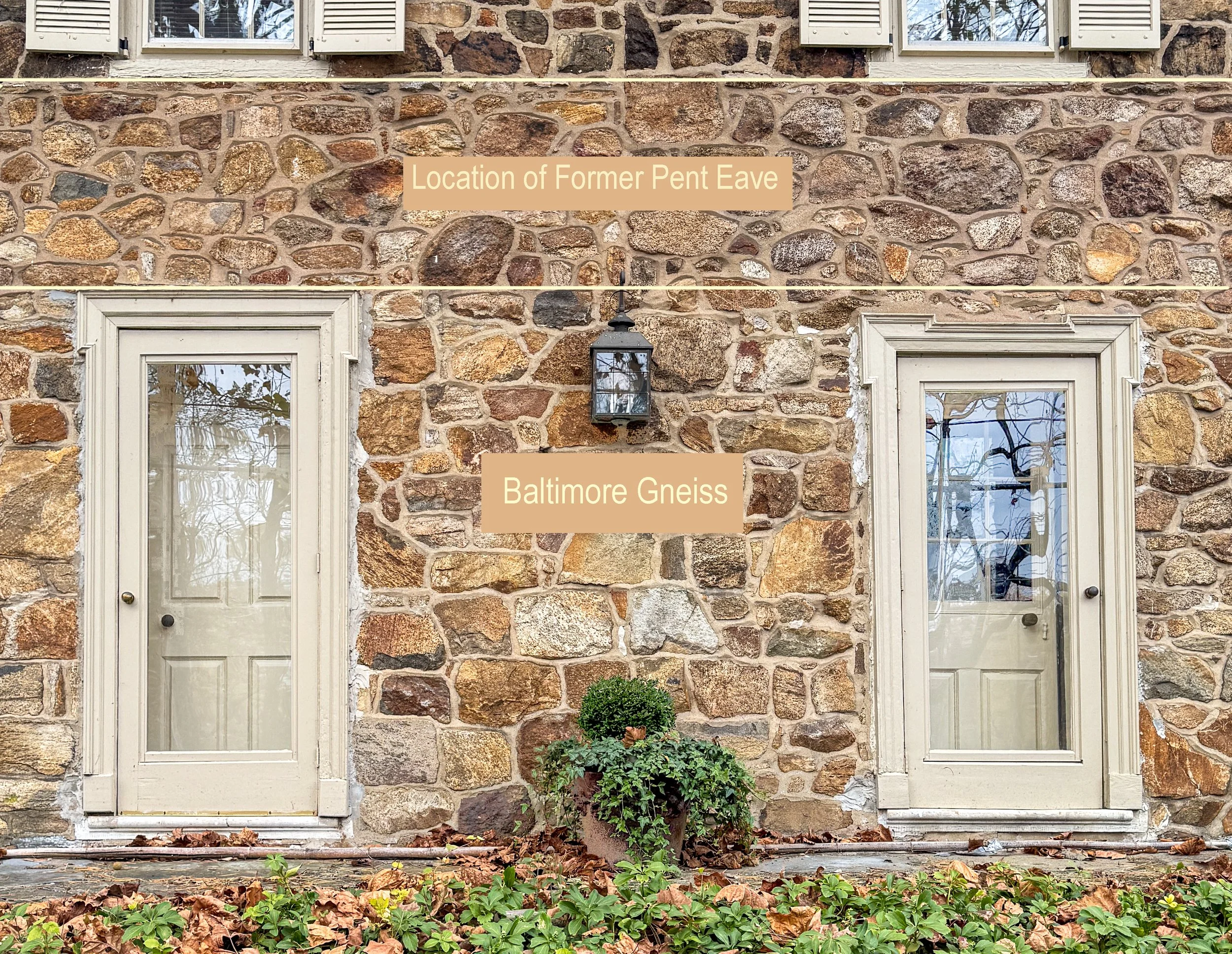
Above: Two front doors of the Williams - Garrett House. Image source: Lee J. Stoltzfus
The house originally featured a pent roof along the southern elevation. As was typical, the masonry between the first- and second-story windows, where the pent attached, is of noticeably lower quality than the rest of the wall. Because this area was concealed by the pent, masons commonly used less carefully finished stone there.
Links: