
Washington Crossing Historic Park
A Paradox: A Historic Quaker Village
Becomes a Shrine To the Revolutionary War:
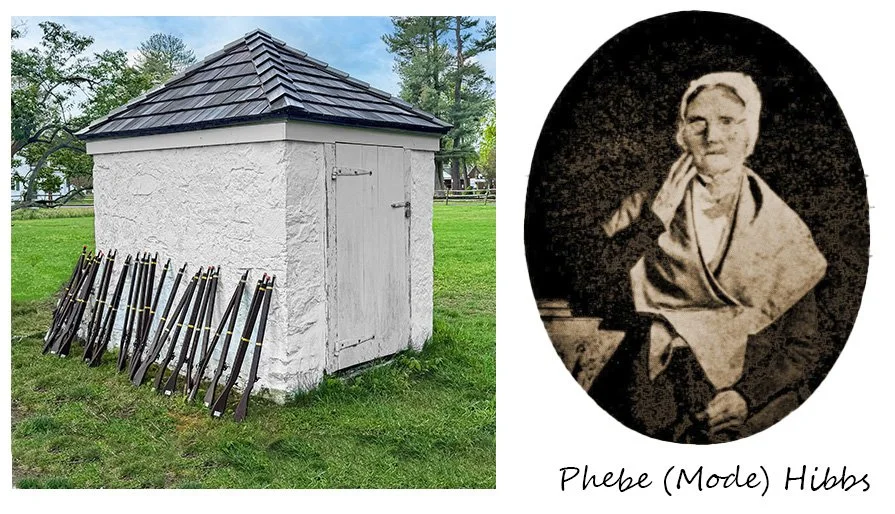
Above: Replica muskets for schoolchildren at Washington Crossing Historic Park. And Quaker matriarch Phebe (Mode) Hibbs, mother of Abdon Hibbs of the Hibbs House.
Image sources: Muskets: Lee J. Stoltzfus. Portrait: Annals of a Bucks County Family of Old Taylorsville, Pennsylvania, Mary Snyder Taylor, Open Library.
The Hibbs House:
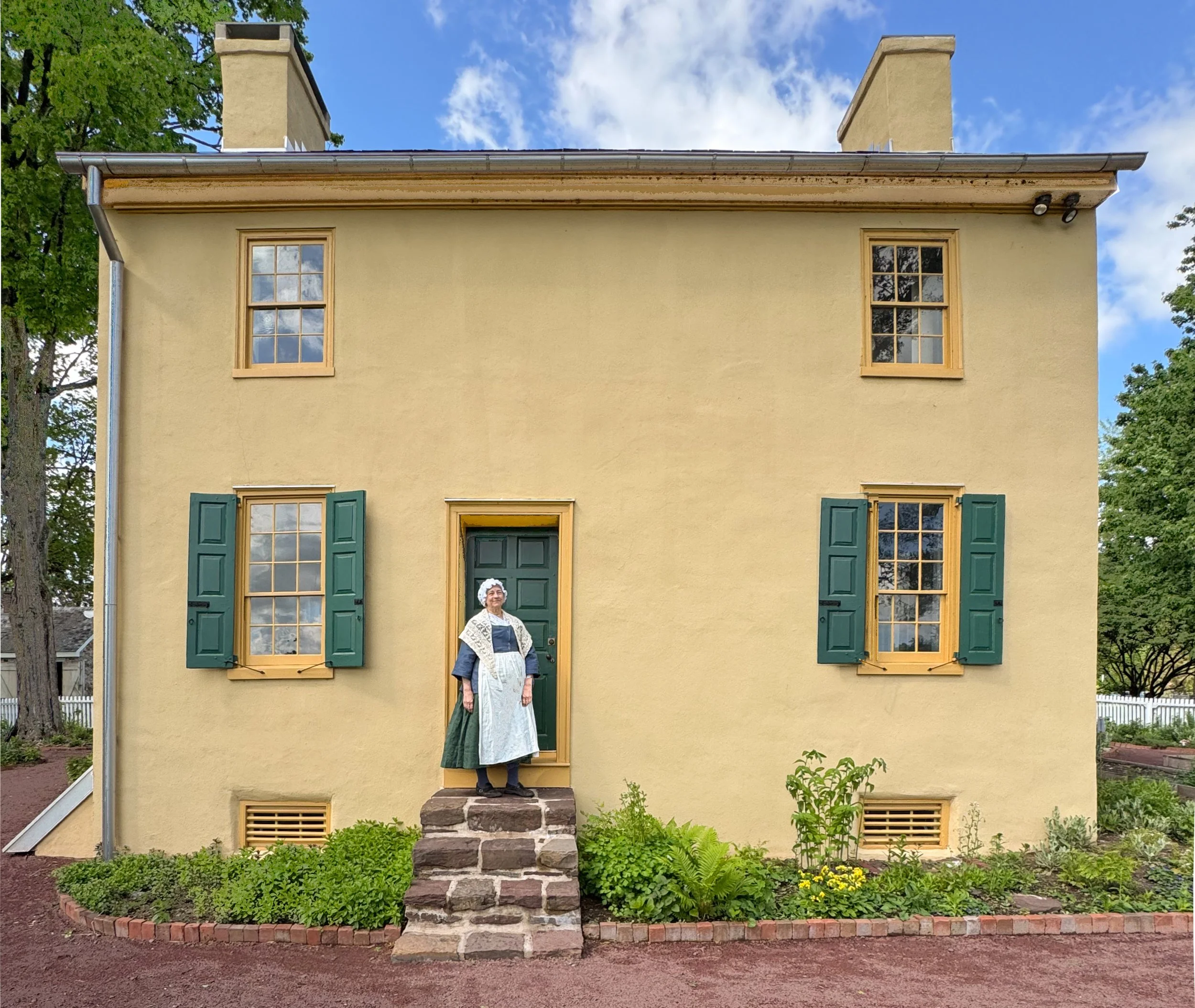
The Quaker Taylor family built this tenant house in Taylorsville in 1828. The Taylors also built several other tenant houses here in the village. Today the house is a beautiful highlight of Washington Crossing Historic Park. The house was the workshop and home of a carpenter named Abdon Buckman Hibbs. He was the son of Phebe (Mode) Hibbs and Lambert Hibbs.
Abdon Hibbs married Esther B. Lownes in 1836. Following her death, he married Emma Louisa Lownes, in 1844. The Hibbs and Lownes families had deep roots in the local Quaker community. Image source: Lee J. Stoltzfus.
Taylor’s Ferry on an 1817 Map
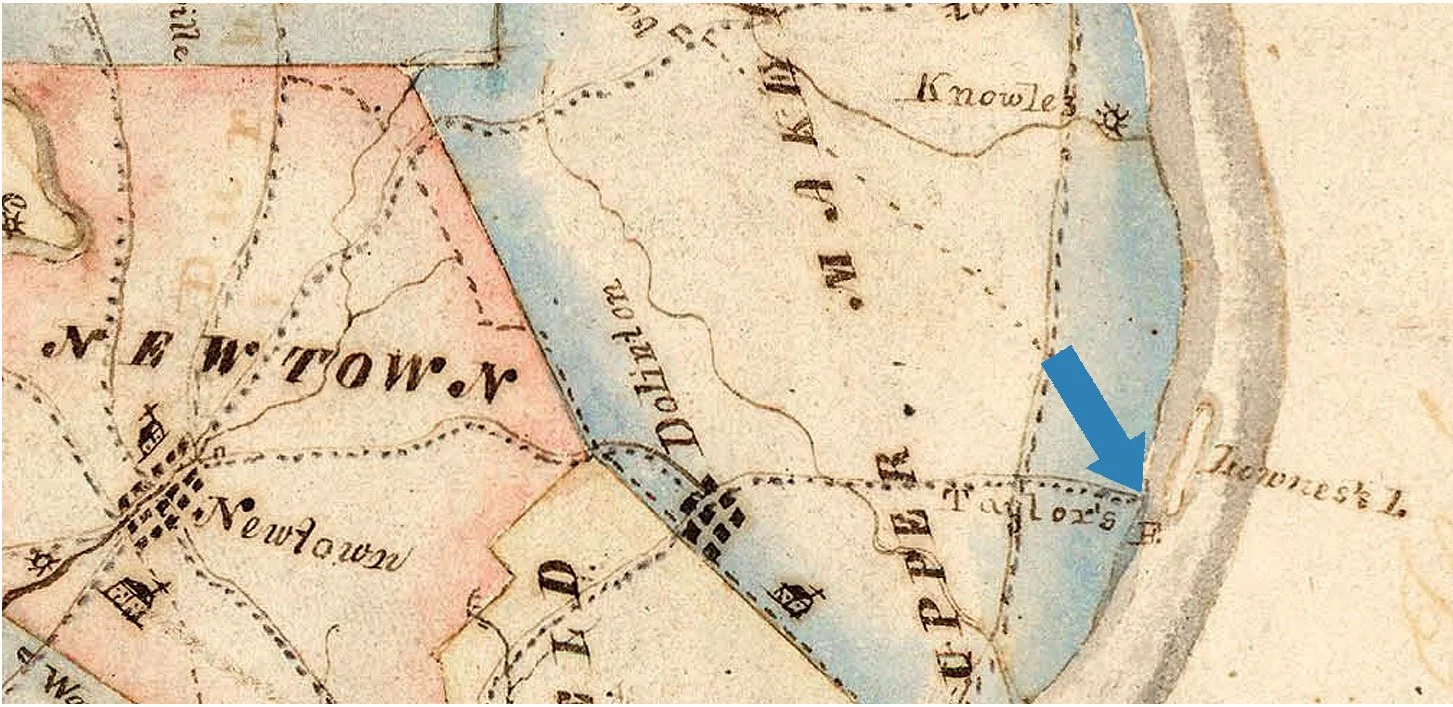
Above: A Map of the County of Bucks, Kennedy and Whiteside, 1817, PHMC, arrow added.
This map shows Taylor’s Ferry on the Delaware River near Lownes’s Island. Mahlon K. Taylor, a Quaker businessman and one of Taylorsville’s founding figures, owned both the ferry and the nearby inn at this time. Around 1817, he also built his own home across the road from the inn. By 1850, Bucks County maps identified Lownes’s Island as Taylor’s Island, reflecting the family’s growing association with the site.
1850 Map:
Taylorsville, now Washington Crossing
No Complete Building Survives in Taylorsville from 1776.
Taylors Built Much of Historic Taylorsville.
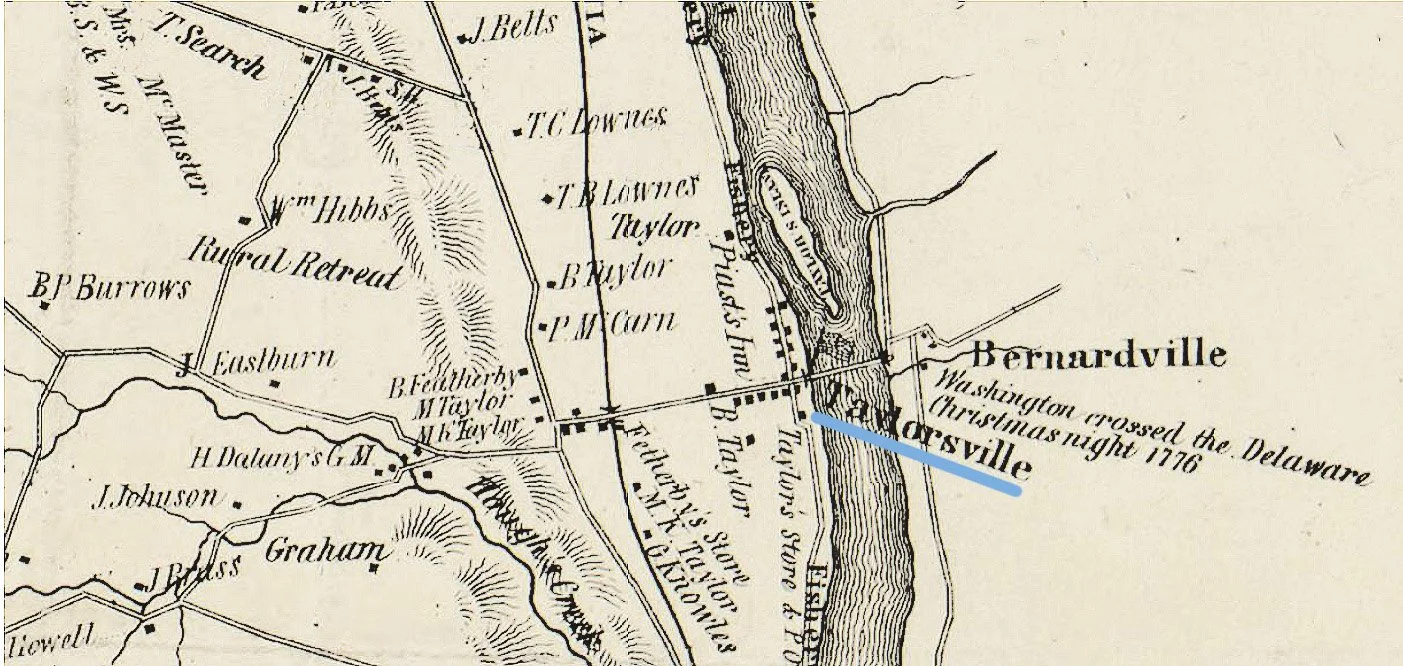
Above: Map of Bucks County, Pennsylvania…, W. E. Morris, [1850], Library of Congress.
The village of Washington Crossing has deep ties to Bucks County Quaker families, especially the Taylors, who helped shape historic Taylorsville. Benjamin Taylor III was the first Taylor to purchase land here. In 1777, he purchased land along the Delaware River from Samuel and John McConkey, including the ferry property and land now within Washington Crossing Historic Park. Under Taylor ownership, the earlier ferry building was replaced or rebuilt, though the present inn is said to retain the original basement kitchen from the first ferry building.
According to Washington Crossing Historic Park, the first ferry building was built in 1752, but only the basement kitchen remains. The west side of the present inn, farthest from the river, was built around 1790 and includes the original basement.
Benjamin Taylor’s sons, Bernard Taylor and Mahlon K. Taylor, later owned large tracts here. The community became known as Taylor’s Ferry and eventually Taylorsville.
The Home of Mahlon and Elizabeth Taylor
A Founding Family of Taylorsville:
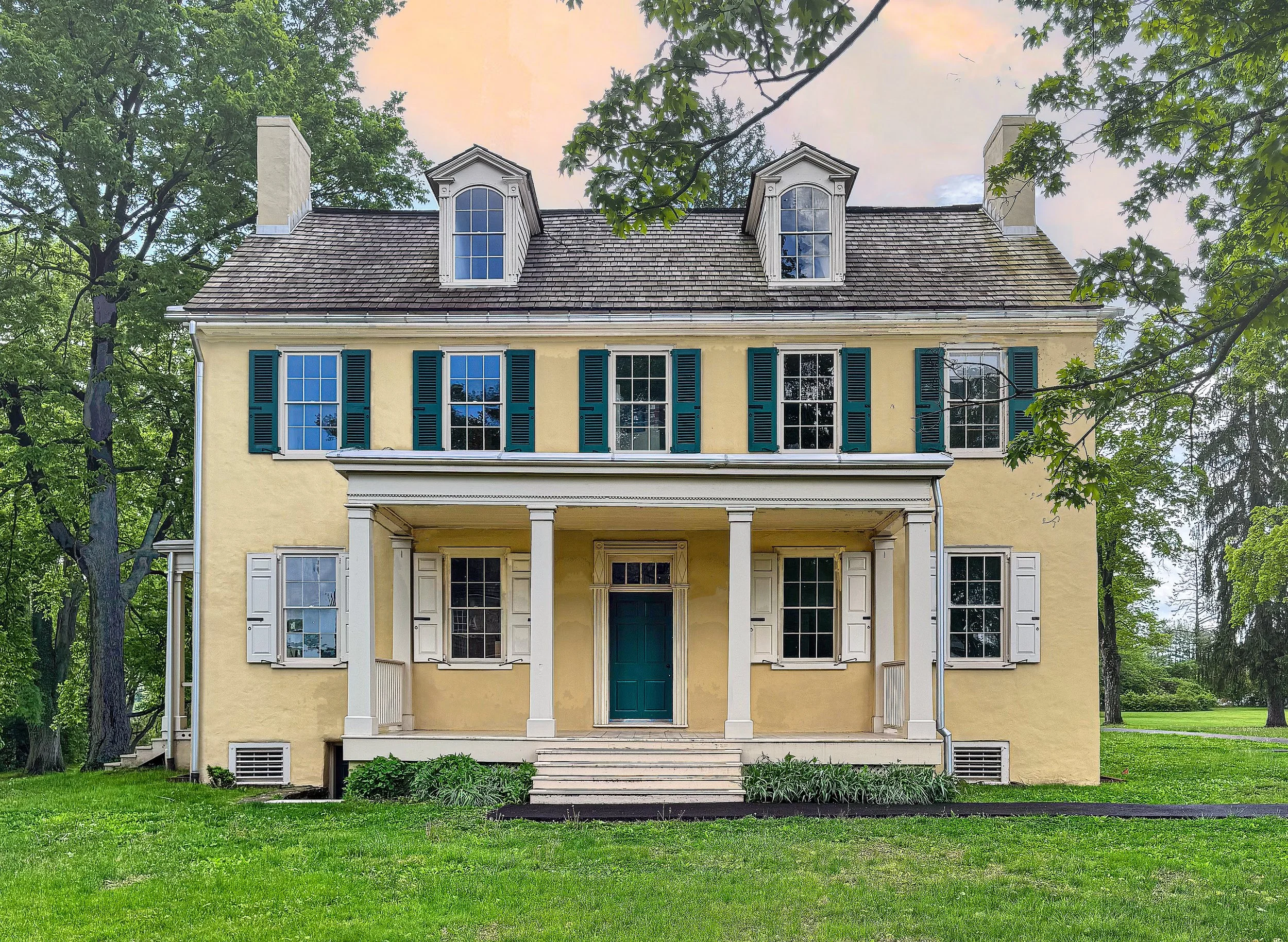
Above: The ca. 1816 Taylor House was the residence of Taylorsville’s most prominent family. Image source: Lee J. Stoltzfus
Mahlon Kirkbride Taylor (1791 - 1870) has often been called the “Founder of Taylorsville.” He was the village’s wealthiest and most influential early citizen. Taylor acquired his father's original tract here at Baker’s Ferry. Taylor eventually owned several local farms, the village store, and the ferry inn across the street from his home. He operated a prosperous shipping business and was postmaster for decades.
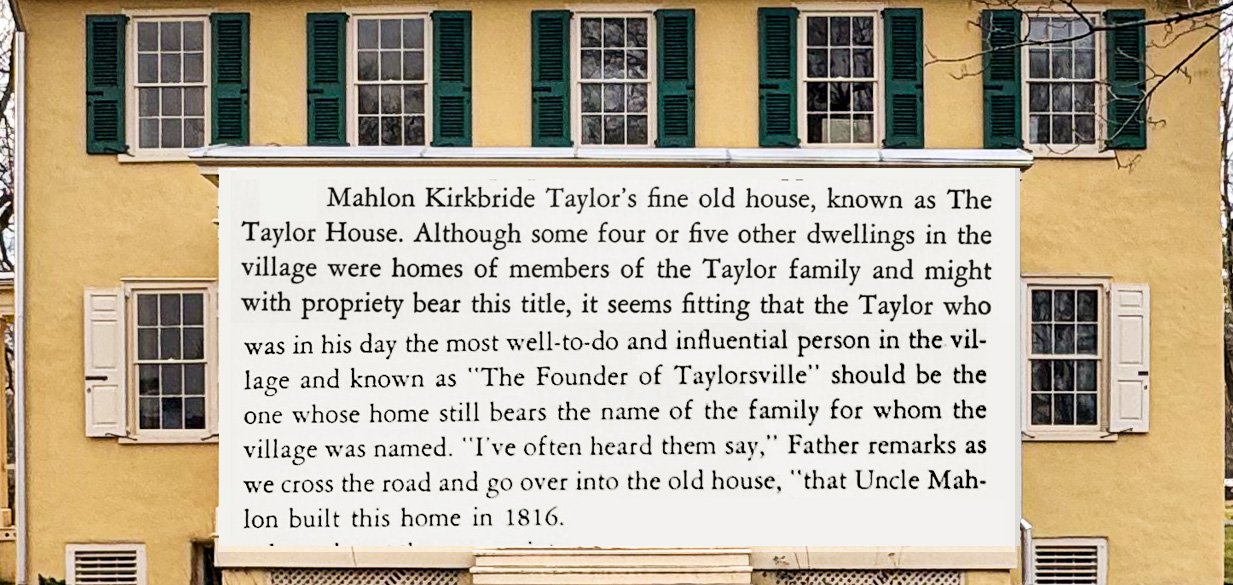
Above: Text source: Annals of a Bucks County Family of Old Taylorsville, Pennsylvania, by Mary Snyder Taylor, 1940, Open Library.
The Mahlon and Elizabeth Taylor House:
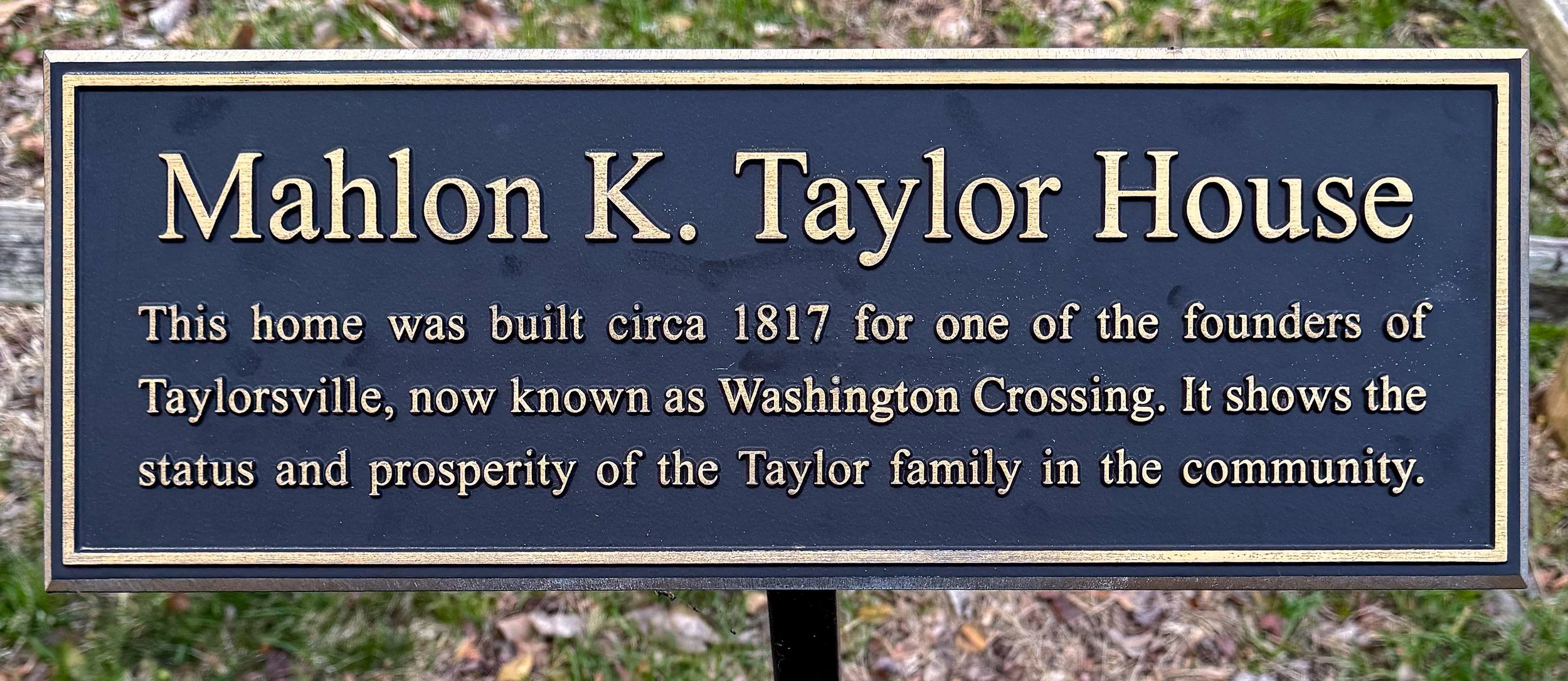
Above: A historical marker identifies the Taylor House at the park. In 1817 Mahlon Taylor married Elizabeth Hough and the newlyweds moved into this new house. The couple lived here for 46 years, until Elizabeth’s death in 1863. Taylor then married Sarah Longshore Walker. Mahlon and Sarah Taylor only lived here a few short years until his death in 1870. Mahlon Taylor became the wealthiest and most influential member of the Taylor family and one of the leading figures in the development of Taylorsville.
1817 Marriage Record
of Mahlon and Elizabeth Taylor:
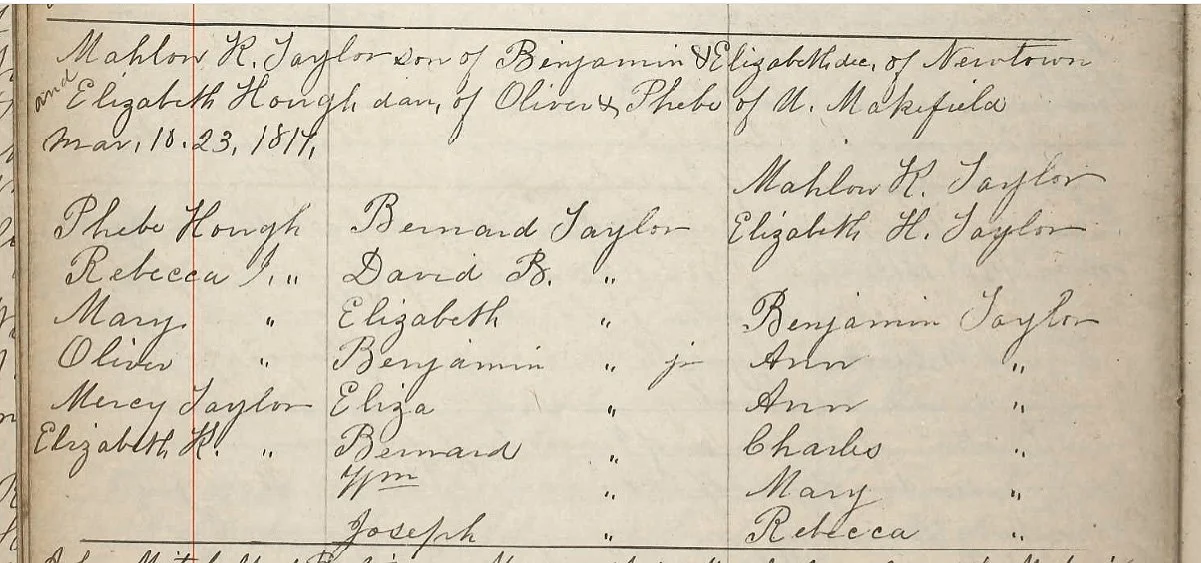
Above: The 1817 marriage record of Mahlon Taylor and Elizabeth Hough, recorded by Falls Monthly Meeting, Bucks County. Image source: U.S., Quaker Meeting Records, 1681-1935, record for Elizabeth Hough, Ancestry.com.
The Name Change of Taylor’s Ferry Inn
To McConkey’s Ferry Inn:
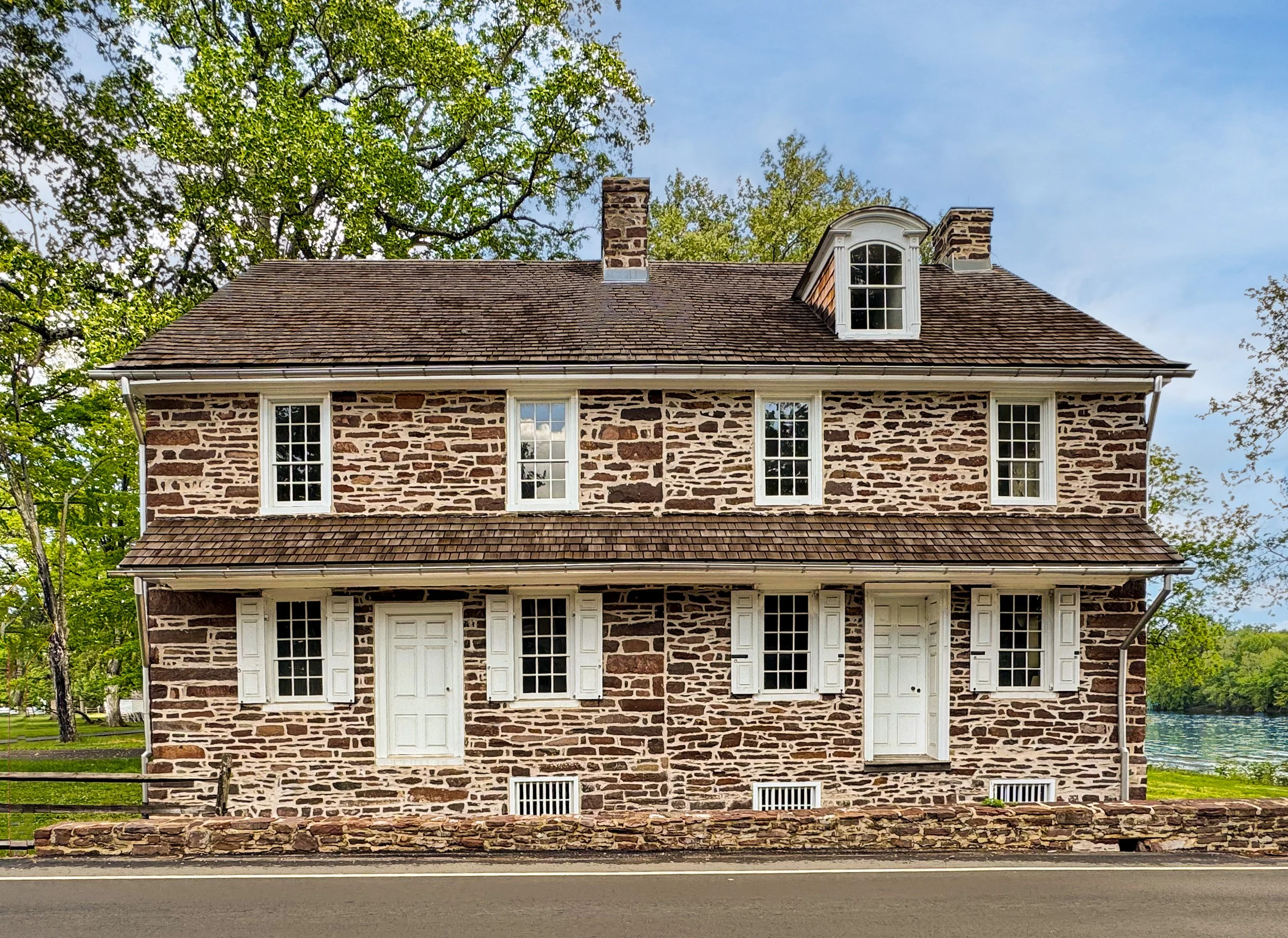
Above: The park names the building McConkey’s Ferry Inn, although the present building was built mostly by the Taylors. Image source: Lee J. Stoltzfus
The village of Taylorsville is the lower section of Washington Crossing Historic Park and is the historic core of the lower park. But this village contains no above-ground buildings that stood when Washington crossed the Delaware in 1776. These structures were all built later, with many erected by the Taylor family. The community grew around two substantial Taylor dwellings that anchored the settlement: Mahlon Taylor’s 1816 house and Bernard Taylor’s 1831 dwelling.
Though the park labels the standing stone tavern as McConkey’s Ferry Inn, the building is structurally and historically Taylor’s Ferry Inn. McConkey’s ferry crossing was located at this site in 1776, but McConkey’s original tavern is long gone. The Taylor family constructed this stone inn in successive phases between 1790 and 1837.
Mahlon Taylor vs. The Quaker Ladies:
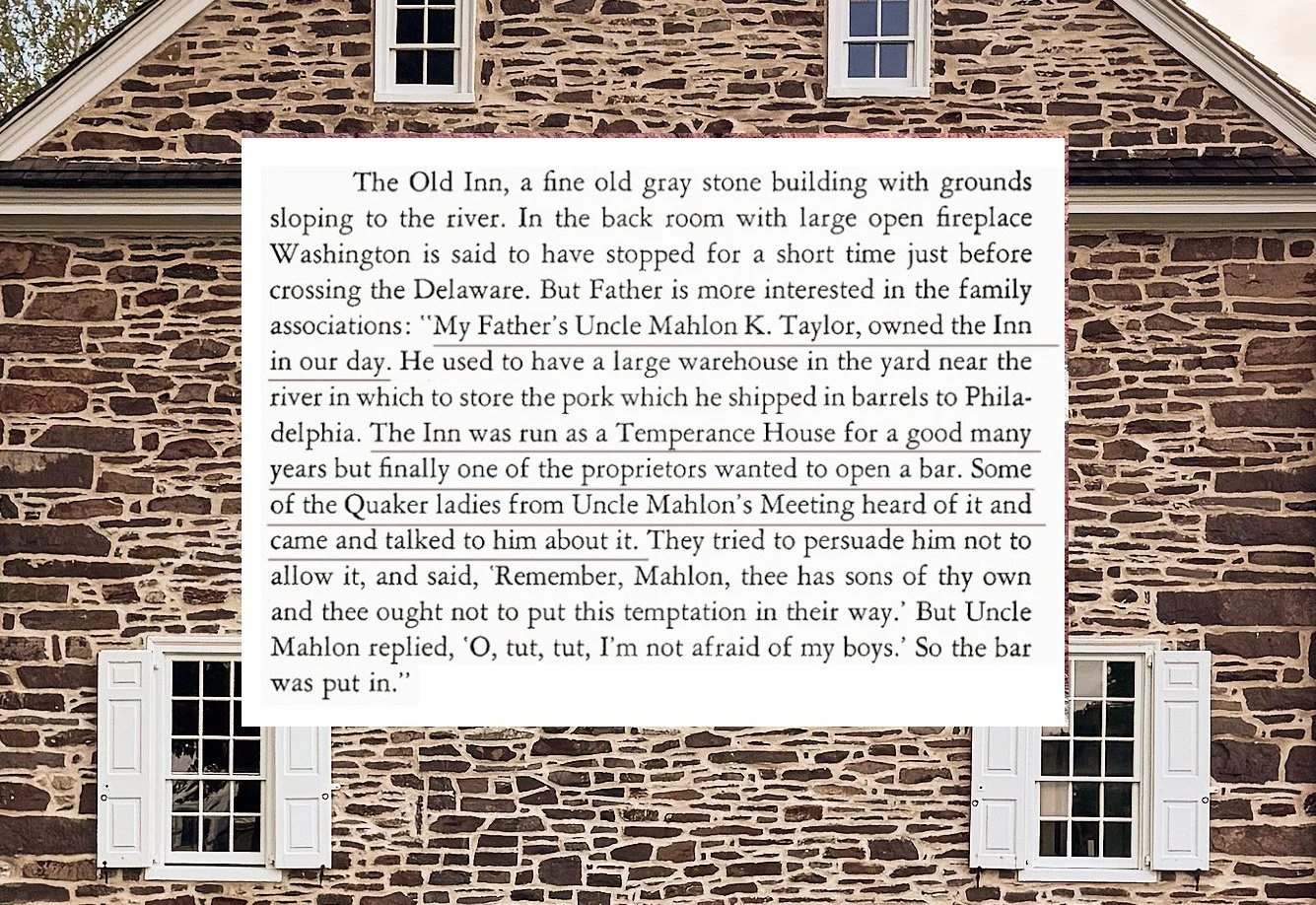
Above: Text source: Annals of a Bucks County Family of Old Taylorsville, Pennsylvania, by Mary Snyder Taylor, 1940, Open Library.
Bernard Taylor’s Home at Taylorsville
Became the Washington Crossing Inn:
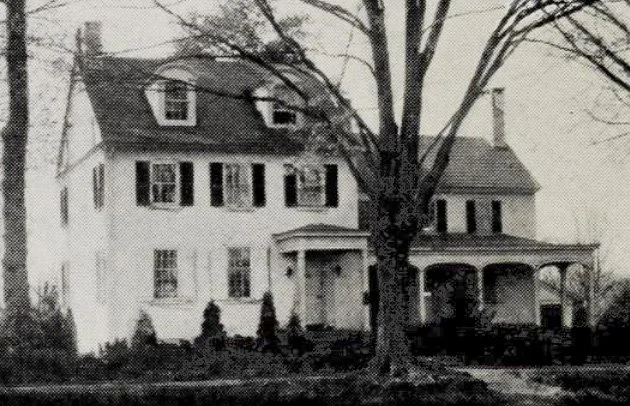
Above: Bernard Taylor, brother of Mahlon K. Taylor, built this house for his family by 1831. Image source: Annals of a Bucks County Family of Old Taylorsville, Pennsylvania, by Mary Snyder Taylor, 1940, Open Library.
Taylor family members continued to build the community throughout the 19th century. Samuel Taylor ran a sawmill, David Taylor operated a gristmill, and Marshall Taylor built his own house here in 1850. The original land was over time subdivided among Taylor grandchildren.
Quaker influence remained strong in the village, but its religious life broadened in 1855, when a Methodist church was established on land donated by William Taylor. In 1917, the Commonwealth of Pennsylvania created Washington Crossing State Park to commemorate the historic crossing site.
Taylors Who Built Taylorsville:
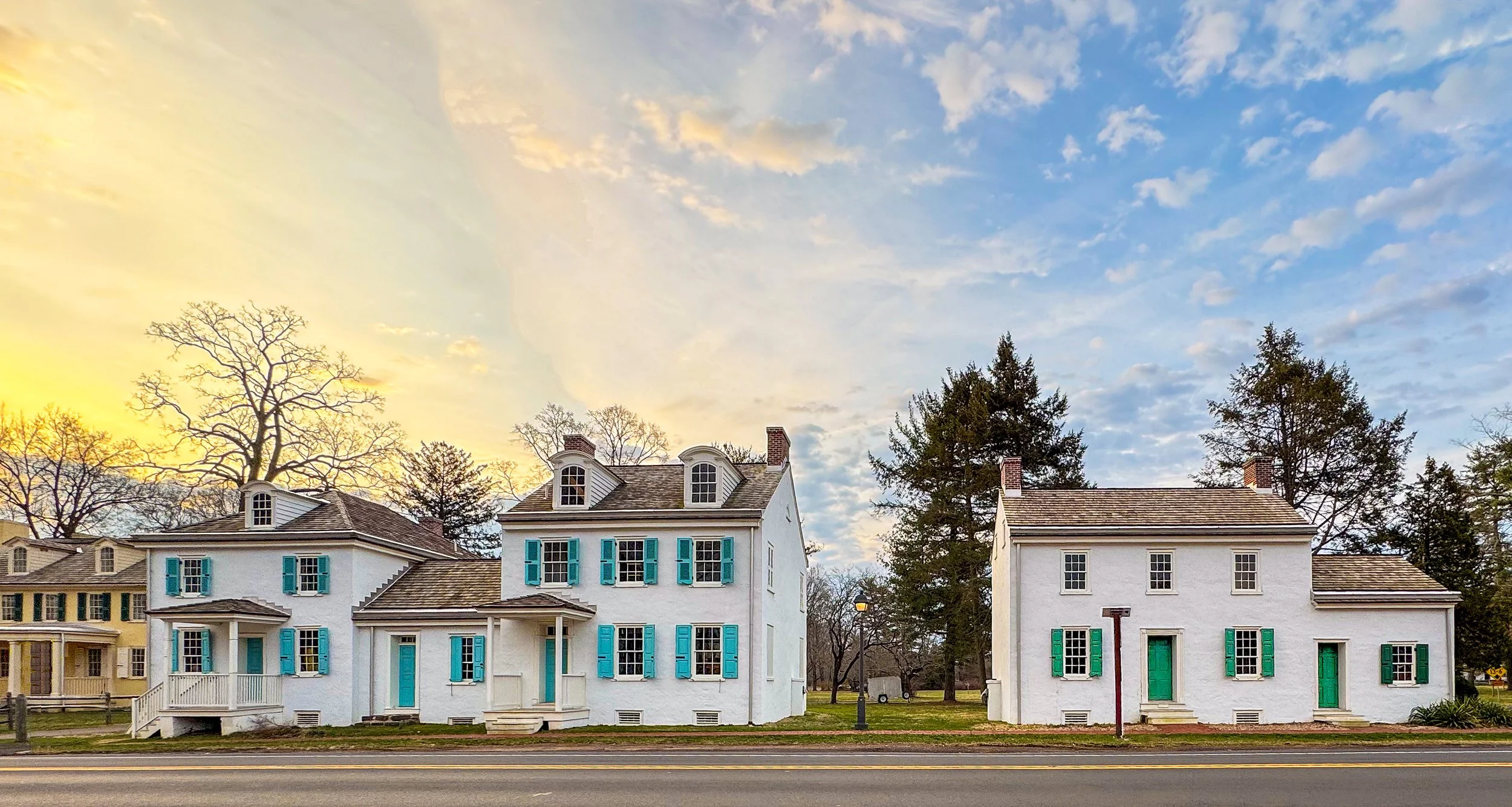
Above: Taylorsville at sunrise. The buildings are now part of Washington Crossing Historic Park. Image source: Lee J. Stoltzfus.
Many Taylorsville buildings were built by Taylor family members as their residences or as rental buildings. Mahlon K. Taylor opened the Taylorsville store ca. 1828, visible as the white building on the left above, while Bernard Taylor built the Frye House in 1828 as a tenant property.
The Taylor Family
Founders and Builders of Taylorsville:
The Taylor Parents, Benjamin and Elizabeth Taylor:
Benjamin Taylor III (1751 - 1832) married Elizabeth Burroughs (1751 - 1811). Benjamin Taylor was the first Taylor to own land at this ferry site. He purchased this tract in 1777, including the McConkey ferry property.
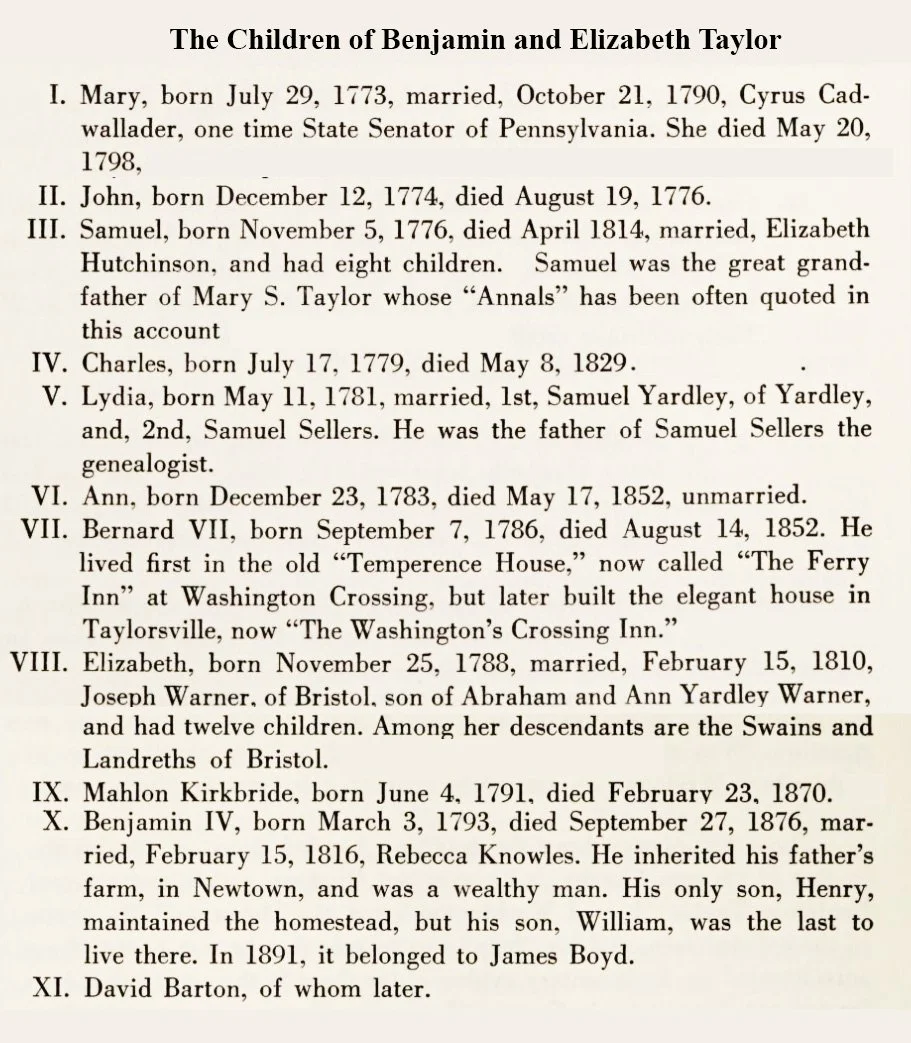
Above: Text image source: A Friendly Heritage along the Delaware, Arthur Edwin Bye, 1959, Internet Archive.
Makefield Meetinghouse
The Quaker Meetinghouse of Many Taylors:
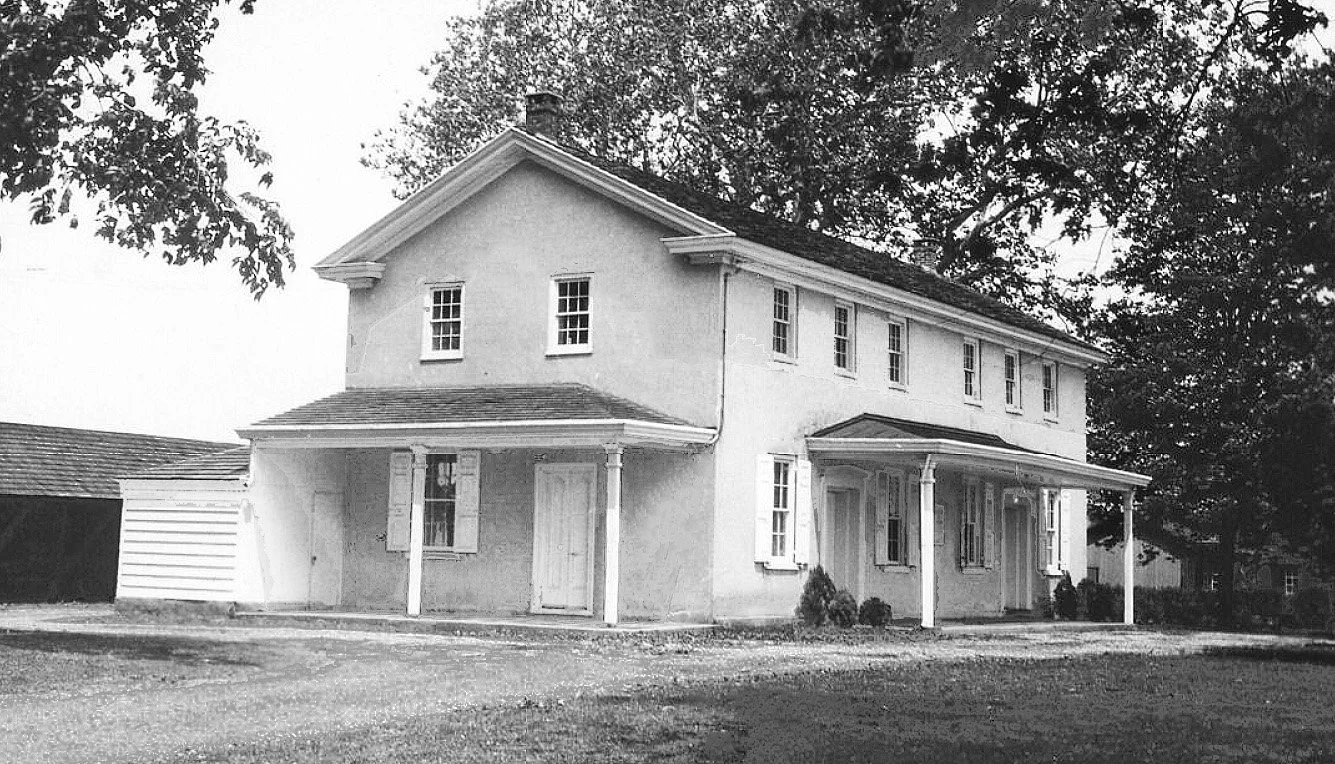
Above: Makefield Meetinghouse near Washington Crossing, 1936 photograph. Image source: TriCollege Libraries
Makefield was the early Quaker meetinghouse most closely associated with the Washington Crossing area. The building was completed in 1752.
The original section survives as the east end of the present building. It was a one-story stone meetinghouse measuring 25 feet by 30 feet. In 1764, a second story was added and the building was enlarged to its present size. Many Bucks County Taylors attended this meeting, and many Taylor family members are buried in the graveyard.
The Taylors & the Revolutionary War:
Quakers faced a painful conflict between their deeply held anti-war religious faith and the pressure to support the Revolutionary cause. The Society of Friends opposed military participation and financial support for war. Because of this peace testimony, many Pennsylvania Friends endured heavy taxes, militia fines, and property seizures during the Revolution.
In 1777, seventeen prominent Pennsylvania Quakers were stripped of their legal rights and forcibly exiled to Virginia because the Revolutionary government viewed their anti-war pacifism as dangerous to the American cause.
Some young Quaker men nevertheless supported the Revolutionary cause, including young Benjamin Taylor III. According to family tradition, he was among the men who helped Washington cross the Delaware. He was paid sixty dollars for two months of service in Captain Henry Van Horn’s militia company.
Benjamin Taylor’s wartime association apparently was brief and he was never officially censured by the Friends’ Meeting. He later served as a meeting clerk and trustee. His sons, Mahlon and Bernard, were Quakers in good standing, and went on to become founding figures of Taylorsville.
Taylorsville in 1925:
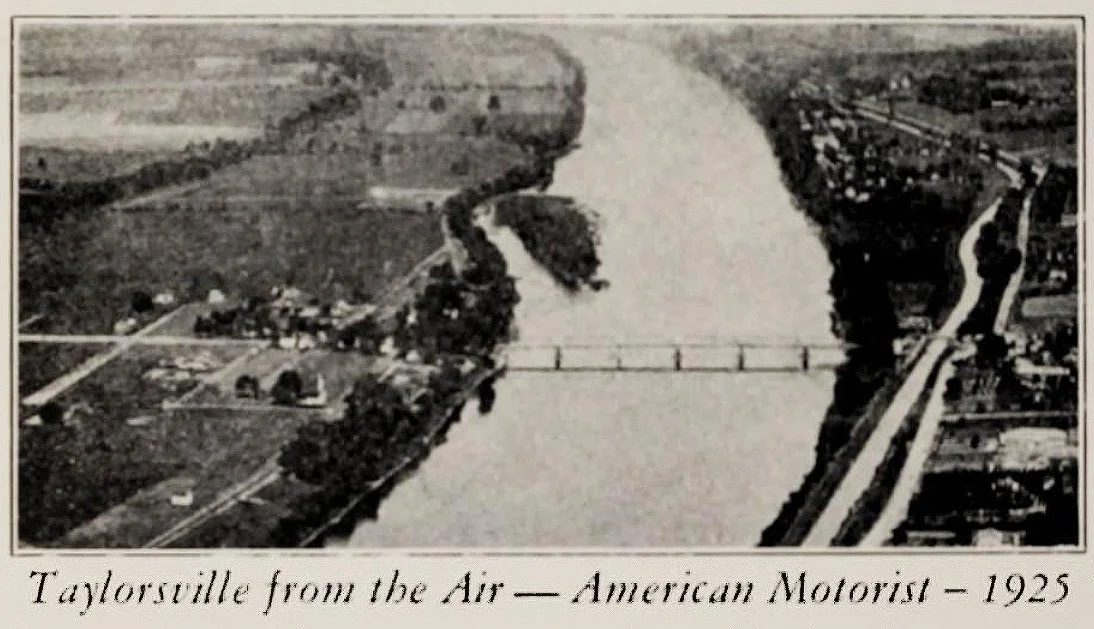
Image source: Annals of a Bucks County Family of Old Taylorsville, Pennsylvania, by Mary Snyder Taylor, 1940, Open Library.
Replica Muskets for Schoolchildren
at Washington Crossing Historic Park:
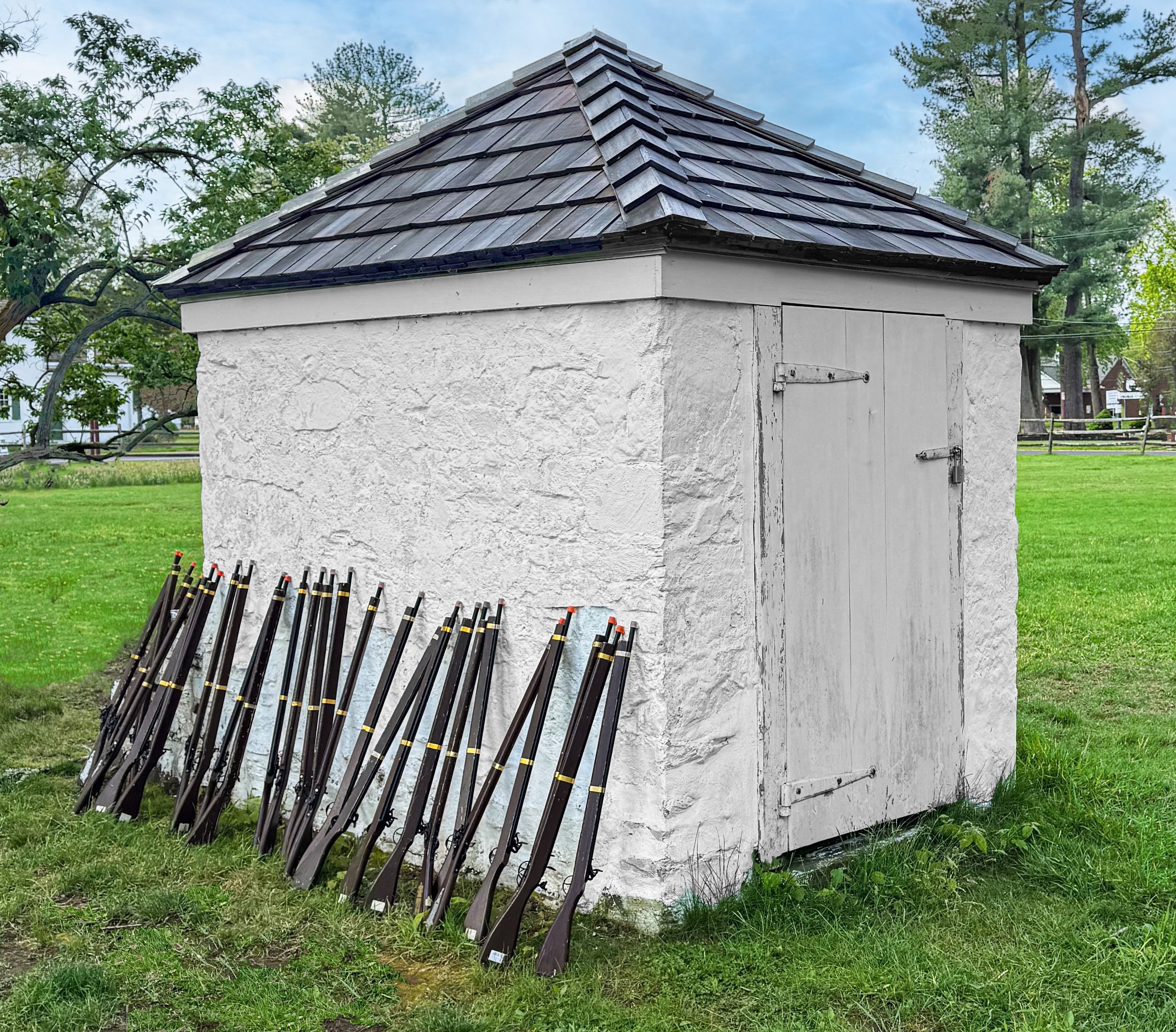
Above: Replica muskets used with schoolchildren at the park to interpret Washington’s crossing of the Delaware.
The Commonwealth of Pennsylvania established Washington Crossing Park in 1917. The next year, the name of the Taylorsville post office was changed to Washington Crossing. Today, the Pennsylvania Department of Conservation and Natural Resources manages the park in partnership with the Friends of Washington Crossing Park.
Thousands of visitors explore the park each year, including many local schoolchildren. Some educational programs use replica muskets and other living-history activities to interpret eighteenth-century military life. This creates a striking historical contrast: a village shaped by Quaker families and traditions of peace now serves as one of Pennsylvania’s best-known settings for commemorating Revolutionary warfare.
Washington Crossing Historic Park
Reshaping Taylorsville’s Quaker Legacy
To Celebrate the War:
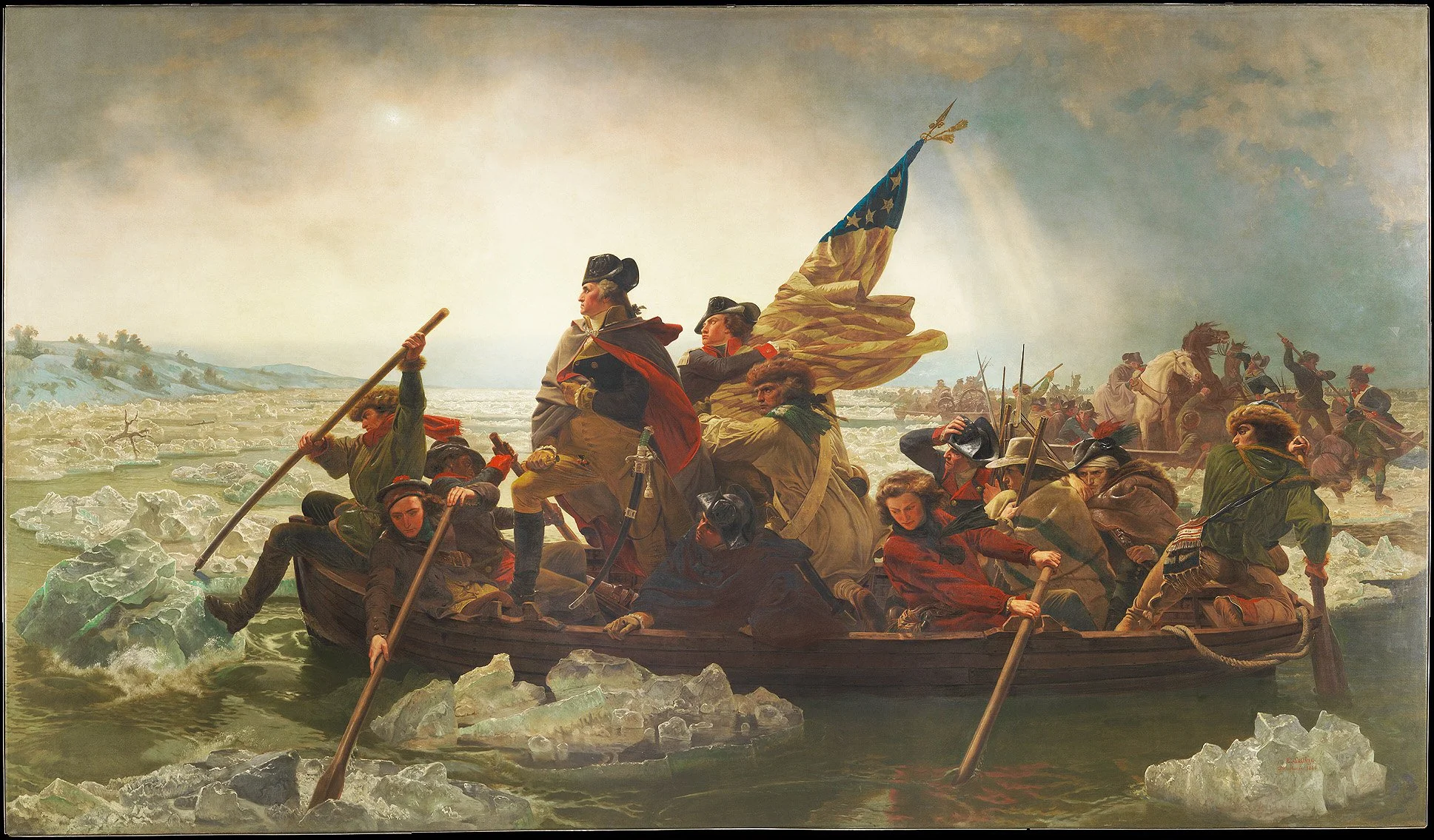
Above Washington Crossing the Delaware, Emanuel Leutze, 1851. Image source: Metropolitan Museum of Art.
In 1917, Pennsylvania created the Washington Crossing Park Commission and began acquiring land for Washington Crossing State Park. Taylorsville properties, including Taylor-era buildings, were among the buildings and lands absorbed into the new park. Some properties were acquired by purchase, while the 1917 legislation also authorized acquisition through condemnation if needed. As the park took shape, some Taylorsville buildings were moved and others were razed.
The state’s memorial project transformed an authentic 19th-century village into a commemorative landscape focused on the Revolutionary crossing. In the process, the Park Commission preserved some Taylor-era buildings, but also diminished the village setting that the Taylors and other local families had built over generations. The result was a curated historic shrine, centered on Washington’s 1776 crossing, rather than a full preservation of Taylorsville’s 19th-century community landscape.
There is a deep historical irony here. A village with strong Quaker associations was reshaped into a military memorial. At Washington Crossing, a long legacy of Quaker settlement and peace is overshadowed by the commemoration of Revolutionary warfare.
1947: British and American Quakers
Awarded the Nobel Peace Prize:
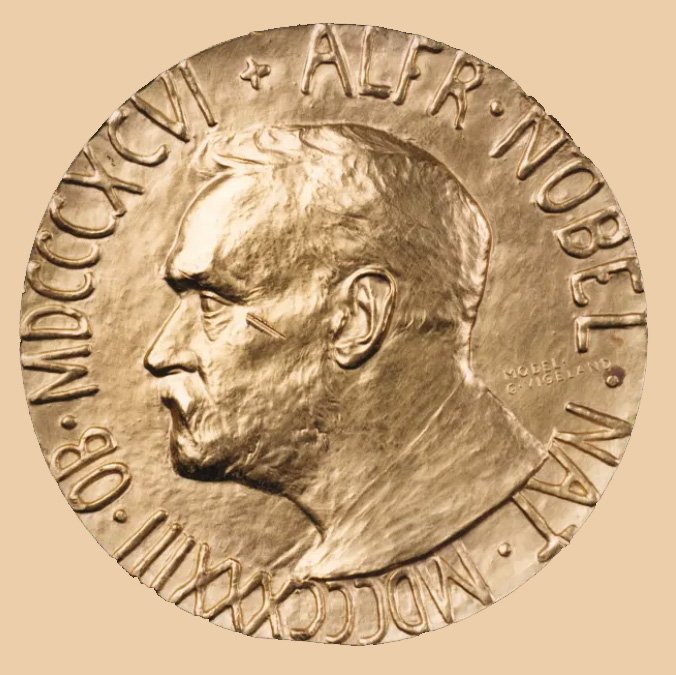
Image source: Quakerstrongrooms
In 1947, two Quaker organizations jointly received the Nobel Peace Prize: the British Friends Service Council and the American Friends Service Committee. This date was also the 300th anniversary of the Quaker movement. The Nobel Committee chose these Quaker groups to honor three centuries of nonviolence, pacifism, and tireless humanitarian work.
After the destruction of World War II, Quaker volunteers built a reputation for providing compassionate aid to victims of war, without regard to race, nationality, or political alignment. Quaker relief efforts ranged from feeding starving children to helping rebuild war-torn European communities. Quaker humanitarian work continues today.
American Friends Service Committee
Quakers in Britain - Quaker Peace and Social Witness
British and American Quakers
Receiving the 1947 Peace Prize:
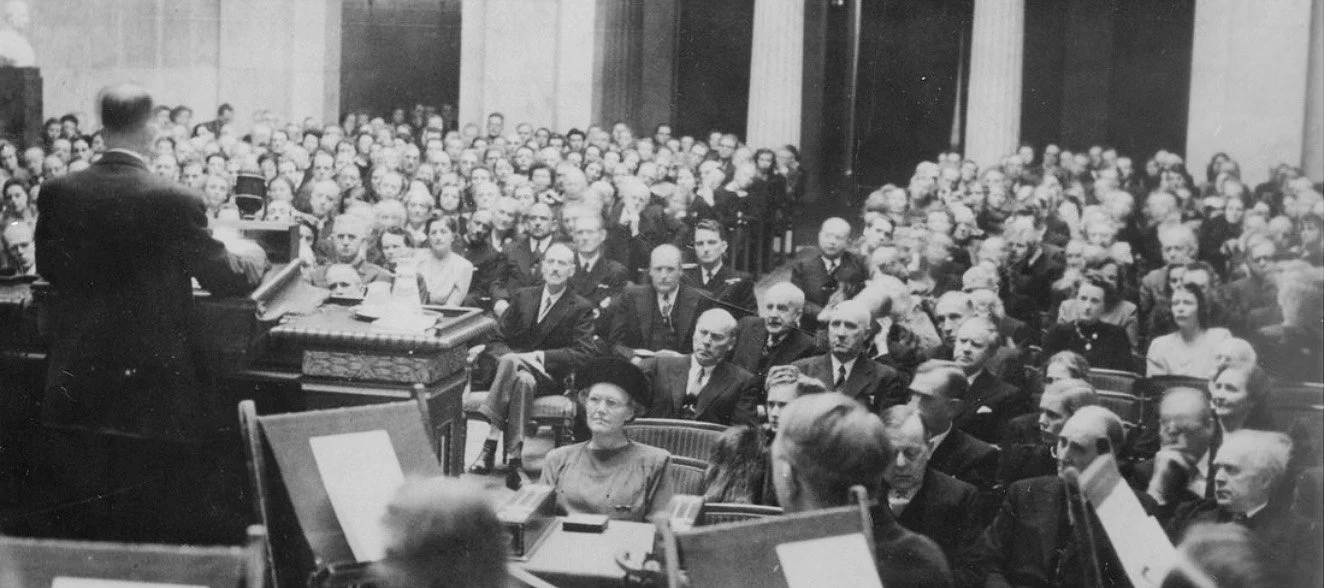
Above: Representatives of the British Friends Service Council and the American Friends Service Committee at the 1947 Nobel Peace Prize ceremony. Image source: American Friends Service Committee
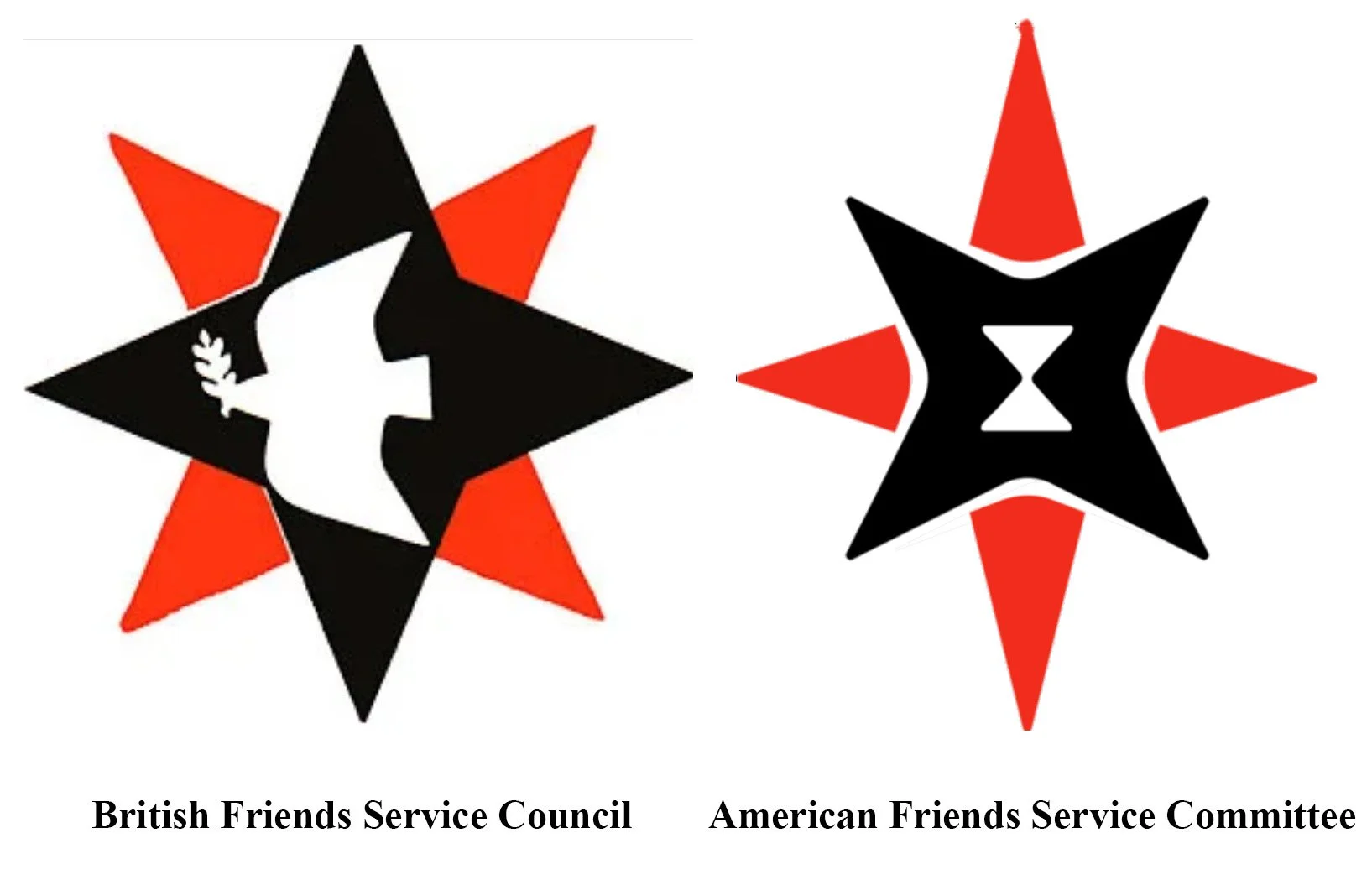
Above: Logos of the two Quaker service organizations that jointly received the 1947 Nobel Peace Prize. Image sources: NobelPrize.org, American Friends Service Committee.