
Historic Quaker Houses in Bucks County, PA
Quakertown, PA
A Selection of Houses:
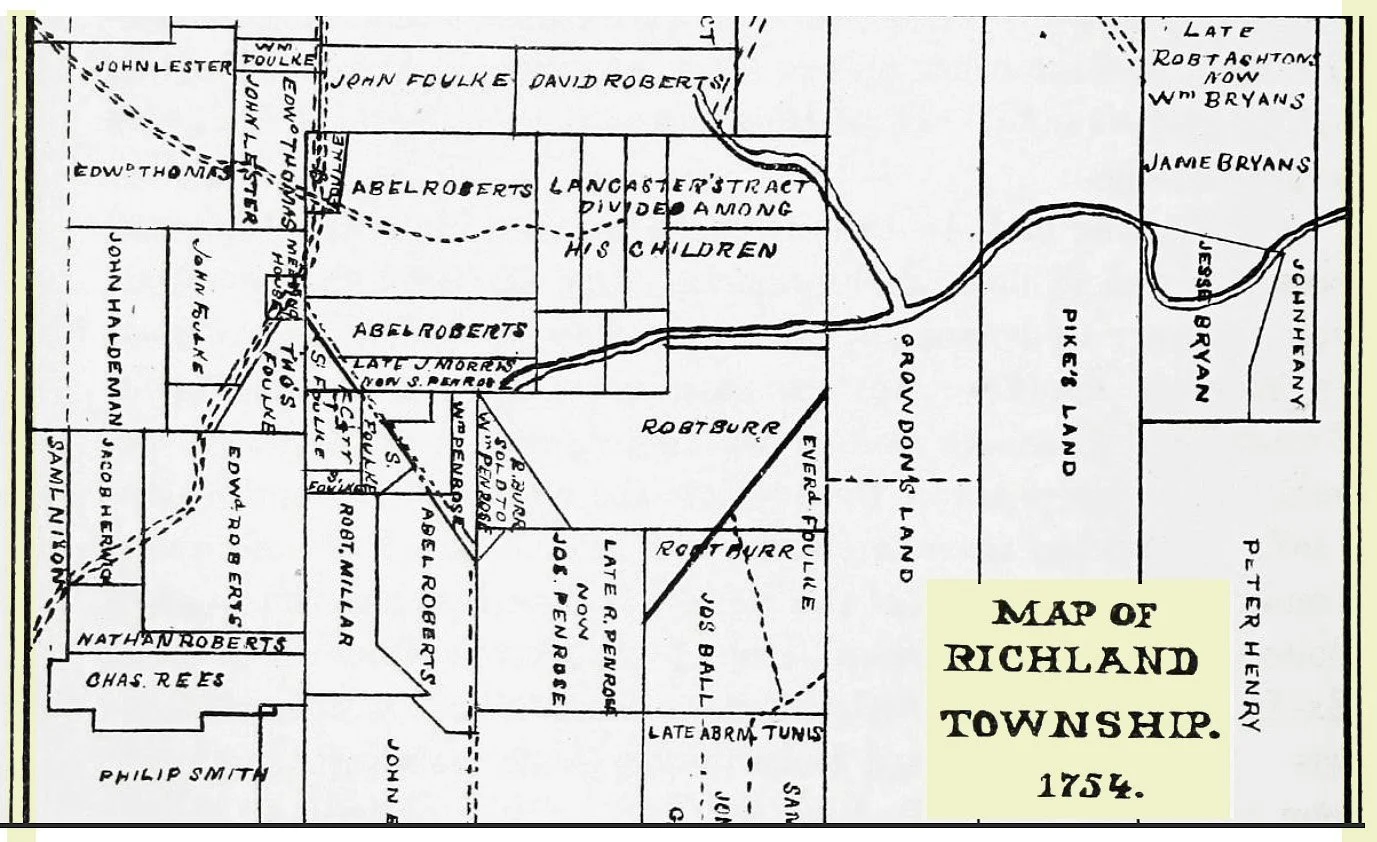
This 1754 map (detail) includes the crossroads community that became Quakertown. Quaker families named on the map include Roberts, Morris, Foulke, Lester, Penrose, Nixon, etc. Image source: The History of Bucks County…, W. W. H. Davis, 1876, Internet Archive.
English and Welsh Quakers were among the earliest European settlers of this farming community, later joined by German families. The village became known as Quakertown in the early nineteenth century. Local tradition says that in 1803 Postmaster William Green called the community “The Quaker’s Town.” The town remains a historic hub of the Upper Bucks County region.
The Friends Meetinghouse at Quakertown:
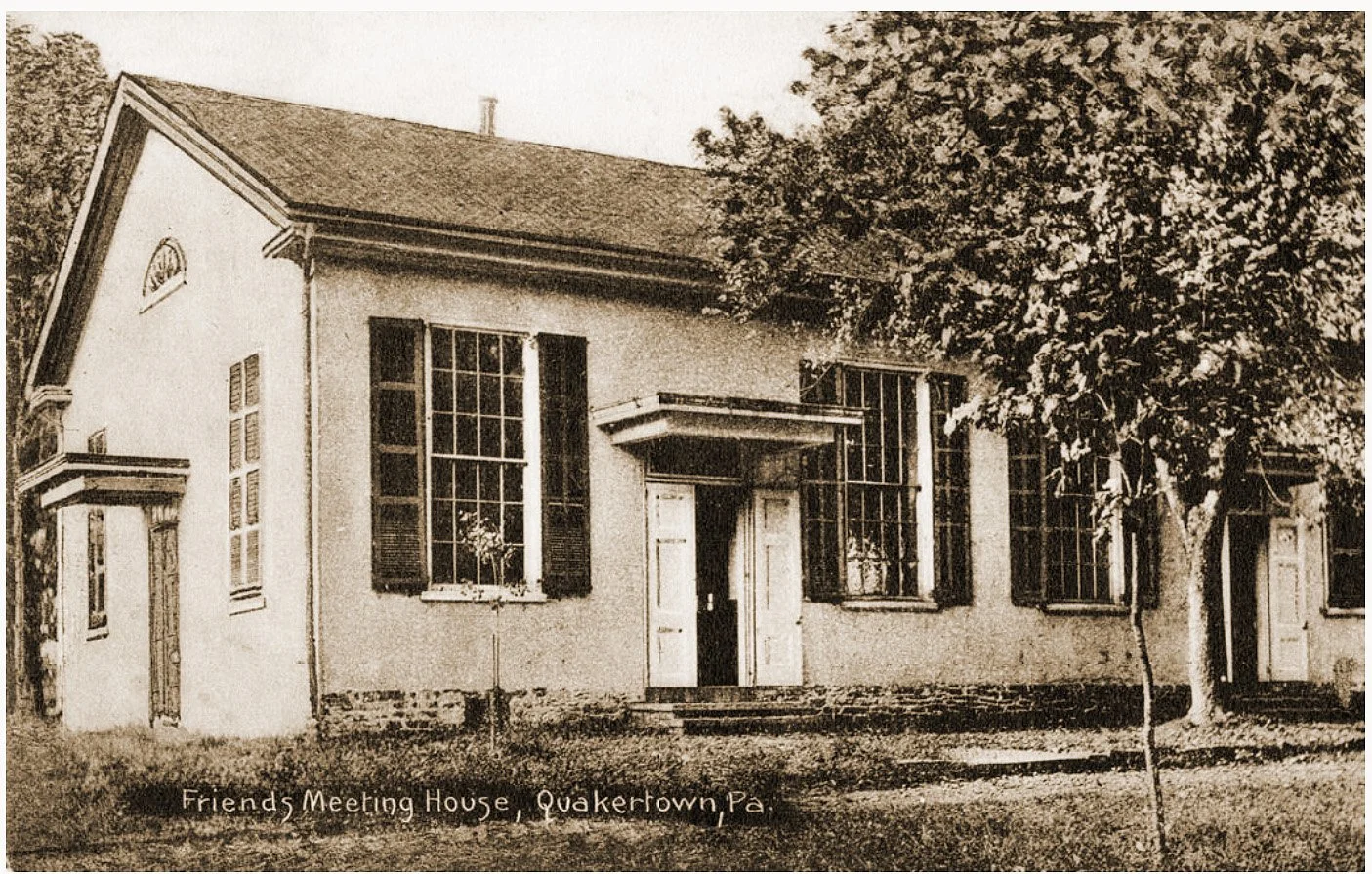
Above: This stone meetinghouse was built in 1862. Image source: TriCollege Libraries.
Richland Monthly Meeting was established in 1742 by Philadelphia Quarterly Meeting. After the Hicksite Separation of 1827, the Hicksite branch retained the 1795 stone meetinghouse and cemetery and became the forerunner of today’s Richland Monthly Meeting.
The present white-plastered stone meetinghouse was built in 1862 on the site of the earlier building. A brick schoolhouse built beside it in 1860 was later remodeled for use as a kitchen and First-day school after classes ended in 1884.
Liberty Hall
Hiding Place for the Liberty Bell:
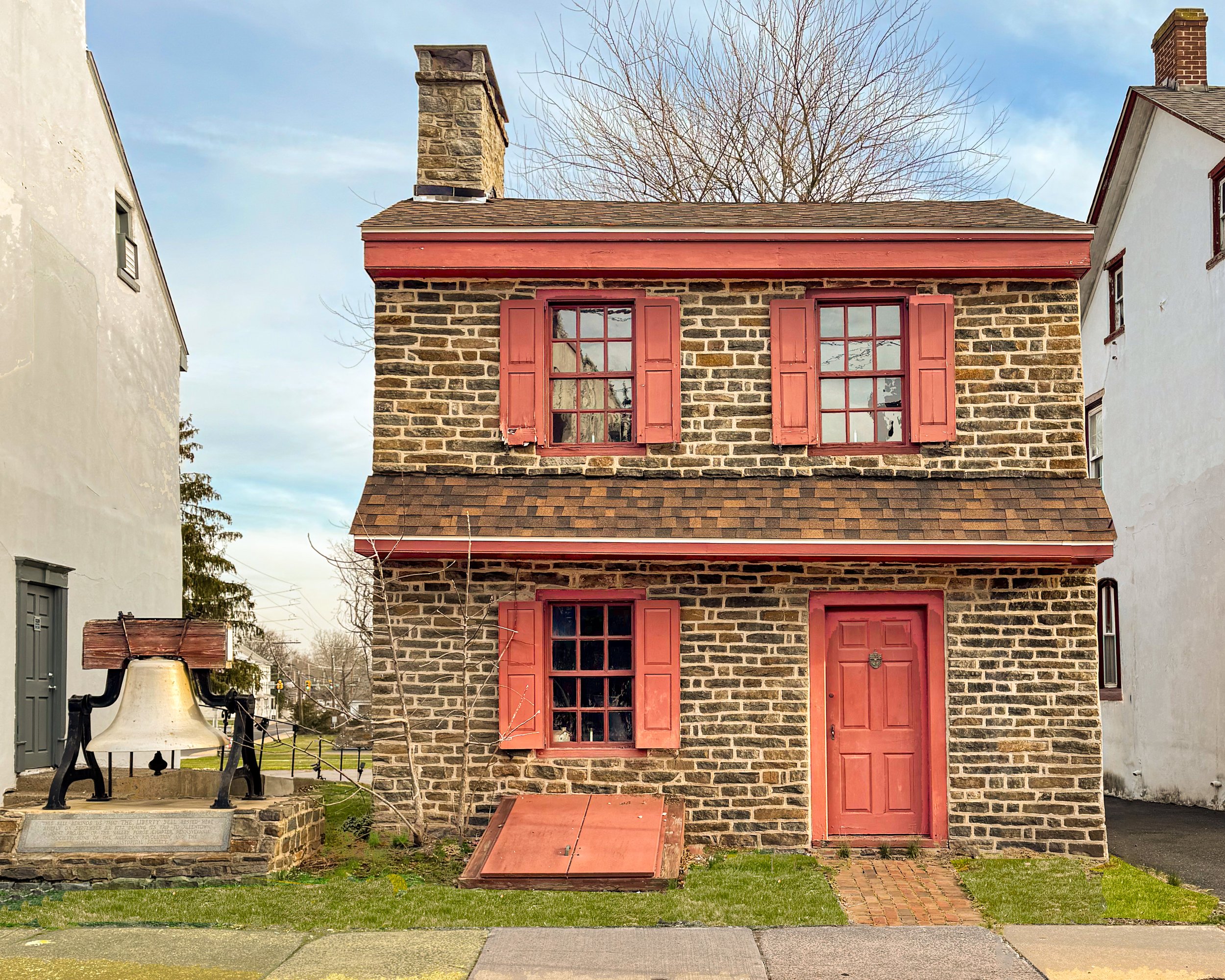
Image source: Photos on this Quakertown page: Lee J. Stoltzfus.
Abel Roberts and his wife, Gainor (Morris) Roberts, built this little house in 1772. They were both Quakers of Welsh descent. The house is now known as Liberty Hall because of its association with the Liberty Bell. In September 1777, as British forces threatened Philadelphia, Pennsylvania officials removed the city’s bells to keep them from being seized and melted down for military use.
The State House Bell traveled north with other Philadelphia bells by horse-drawn wagons. According to Quakertown tradition, the bell was hidden overnight behind this house, then occupied by Evan Foulke, while the escort stayed nearby at the Red Lion Inn. The bell then continued toward Northamptontown, now Allentown, where it was concealed with other bells beneath the floor of Zion’s Reformed Church until the danger had passed.
The Lester Tannery House
Built ca. 1734, & ca. 1800 Addition:
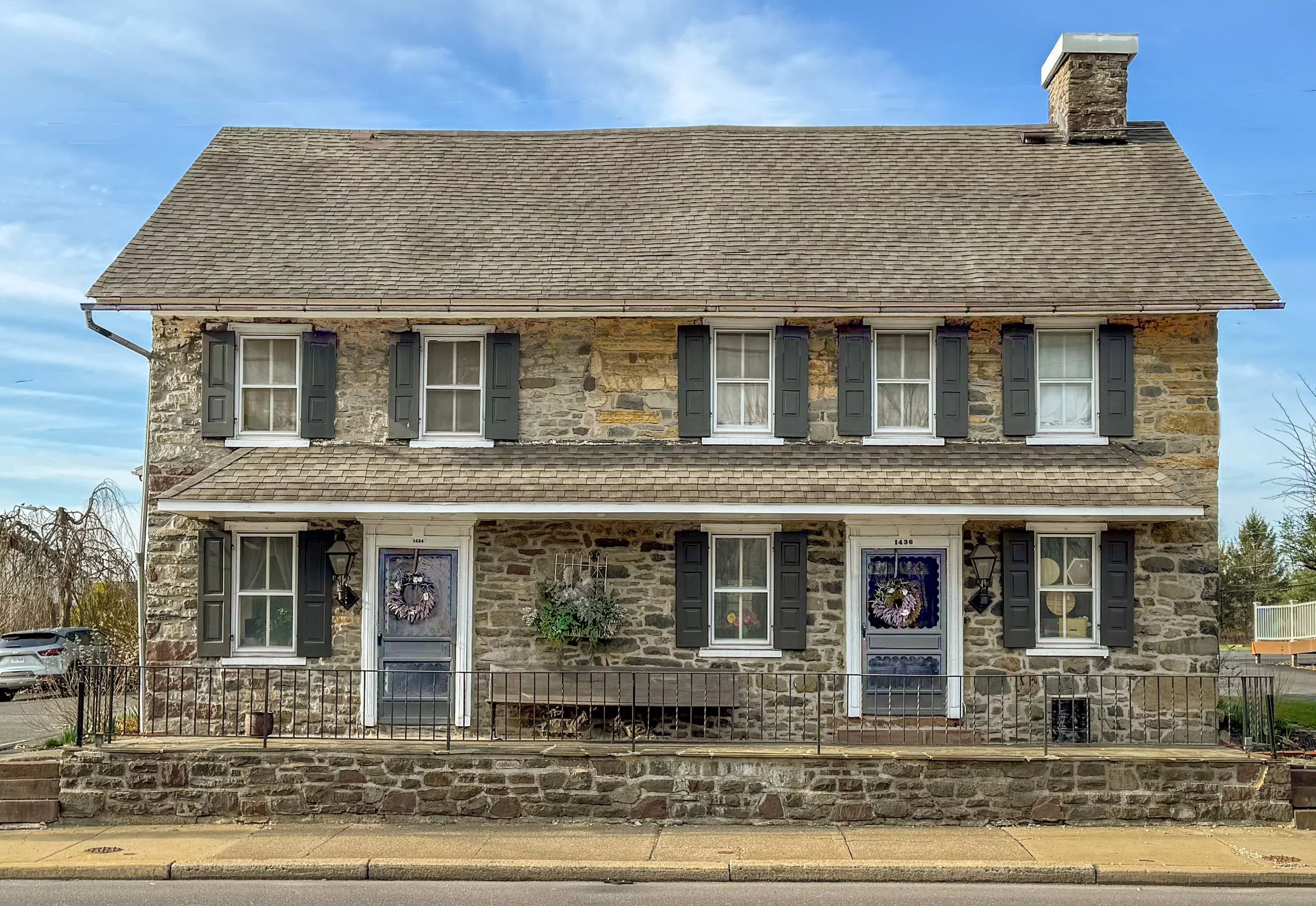
This stone house was the home of the Lester family, who started a tannery business here ca. 1734 for tanning hides. Peter Lester, a Quaker immigrant from Leicestershire, England, was one of the first English settlers in Richland.
The Lester family built the first section of this house ca. 1734, the three-bay section on the right above. The two-bay section on the left was added ca. 1800.
The Hicks Log House
Built ca. 1761:
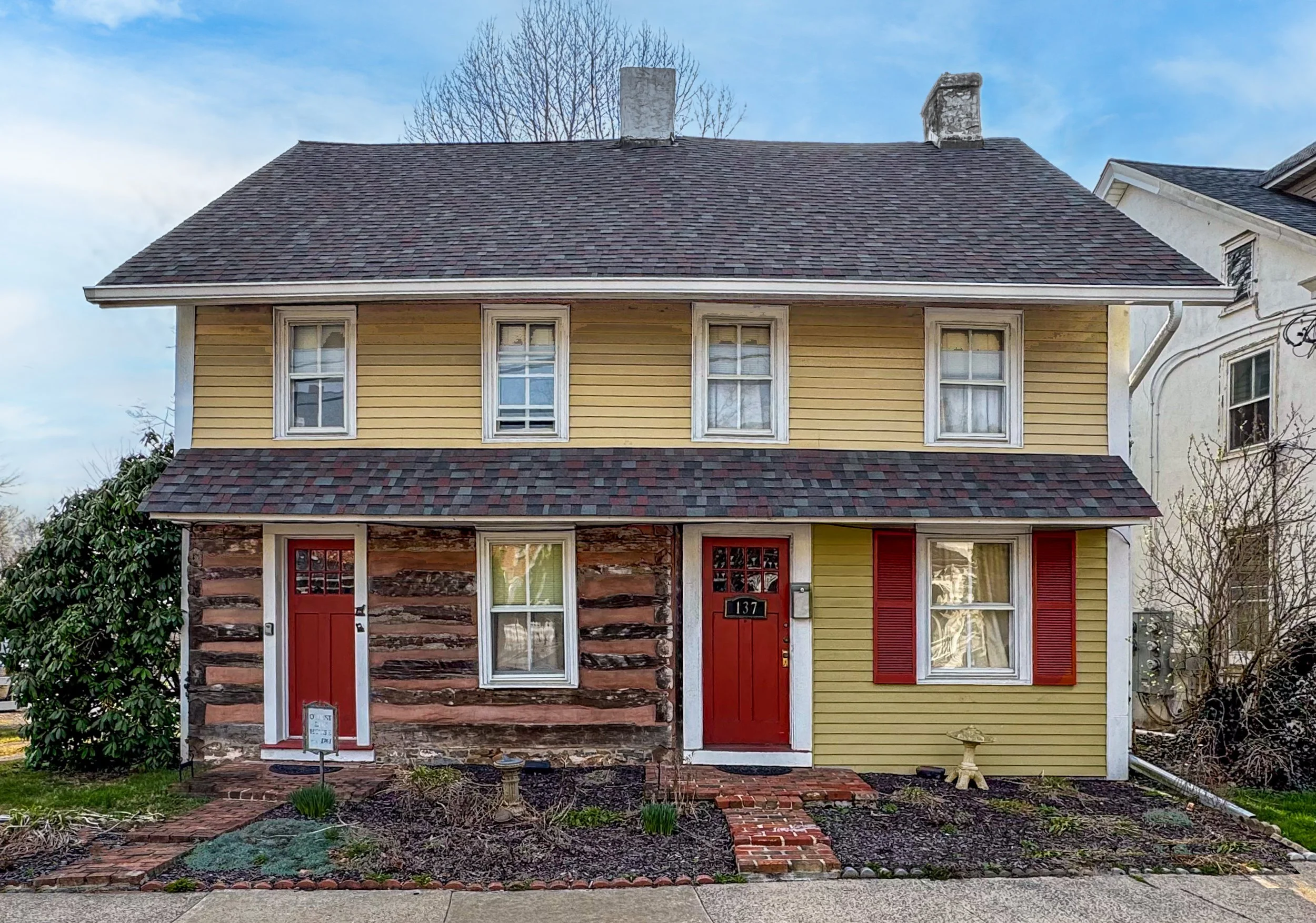
This 1761 log house is one of Quakertown’s earliest surviving dwellings. Built by an early Quaker settler, it recalls the log houses that once stood in the 18th-century village around Richland Friends Meeting. The house is a rare surviving example of early log construction in the Quakertown region. The nomination form for the National Register of Historic Places identifies this house as the John Hicks Log House. The brick addition was added at a later date.
The Burgess Foulke House
Home of Quakertown’s First Burgess (Mayor):
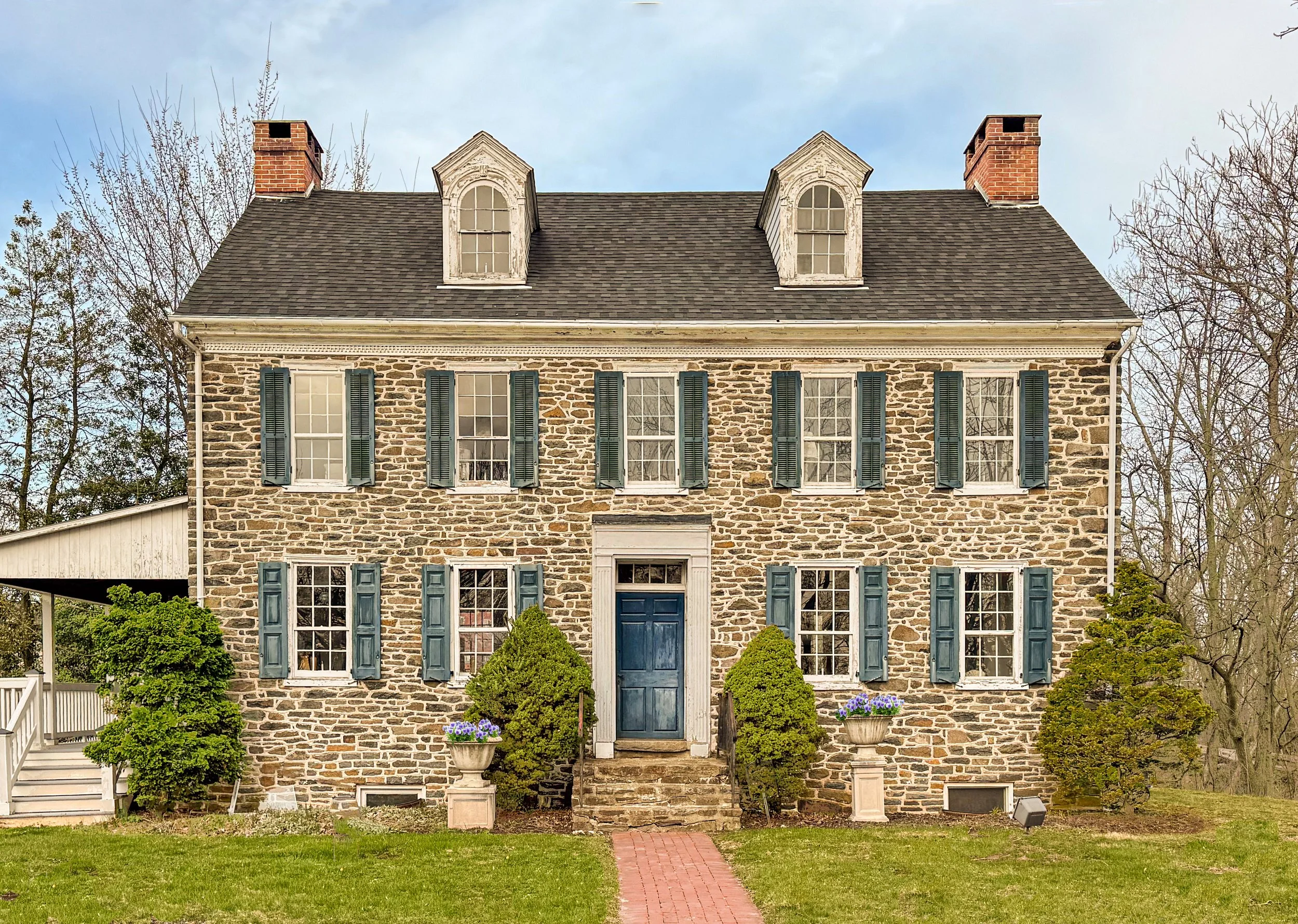
The Foulkes were a Welsh Quaker family who were among the first to settle the Richland area. Edward Foulke Sr. built this Georgian-style house ca. 1812. His son, Edward Foulke, Jr., became Quakertown’s first burgess (mayor) in the 1850s, when the borough was incorporated. The Quakertown Historical Society rescued this house and relocated it to this site in 1974 from its original location on Route 309 to make room for a shopping center. The building now serves as the headquarters of the society.
The Roberts House
Built ca. 1814:
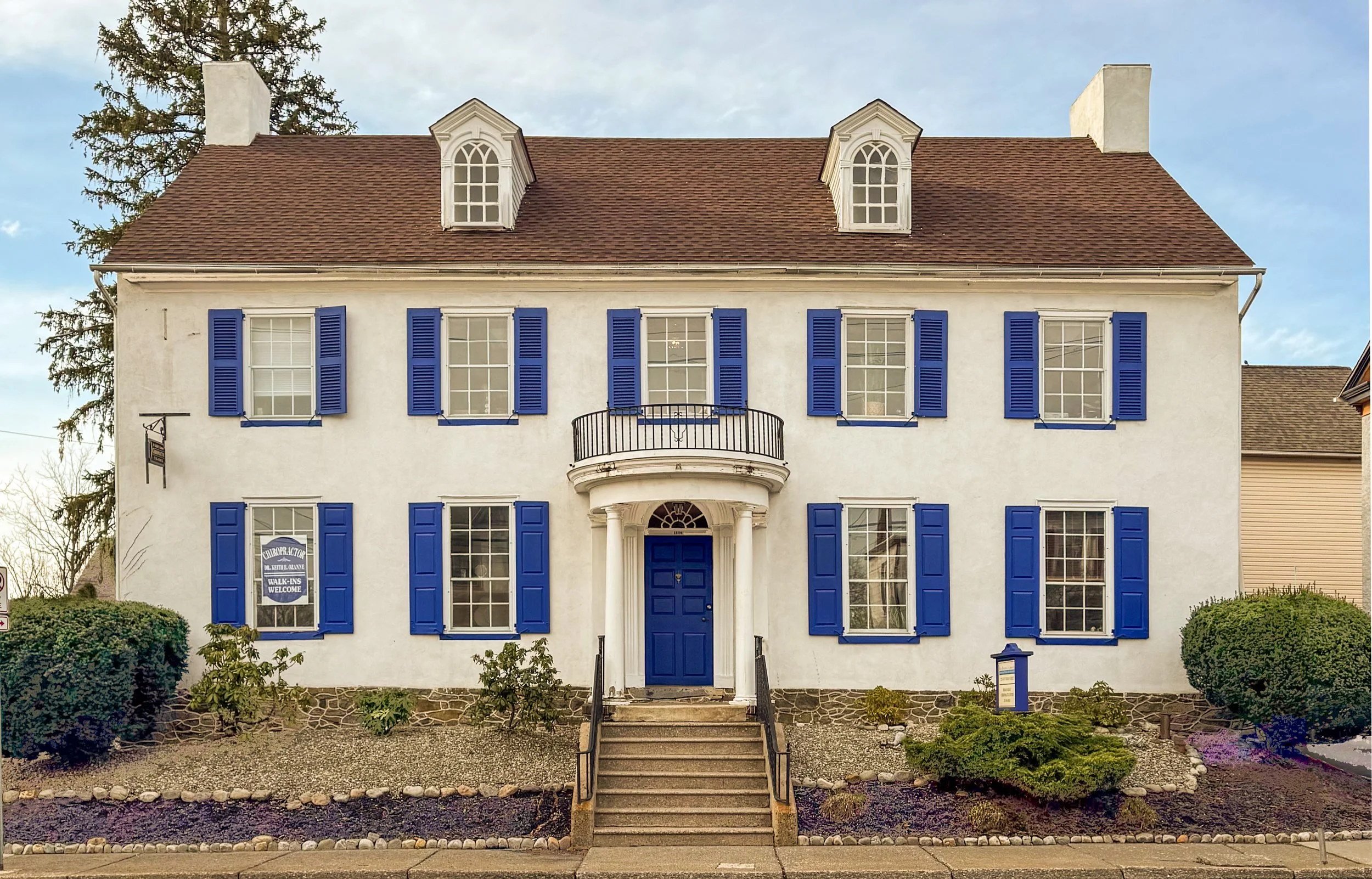
The Roberts House was built ca. 1814 by Enoch Roberts and his wife, Rachel (Blackledge) Roberts, members of a prominent Quaker family. The building reflects the Federal period while retaining the earlier Georgian center-hall form. The house is constructed of fieldstone covered with stucco. The dormers were added in the 1830s, and the entrance portico dates from the 1940s.
In 1781, Enoch Roberts and ten other prominent local Quakers were formally disowned by Richland Monthly Meeting for subscribing to the Oath of Allegiance to the Revolutionary Pennsylvania government. This political oath conflicted with the Quaker peace testimony, which called Friends to wartime neutrality, and with the society’s long-standing testimony against swearing legal oaths. The disownment appears to have been unevenly enforced, since some of these prominent local Quakers continued to participate in meetings despite the ruling.
The Lester House
Built ca. 1815:
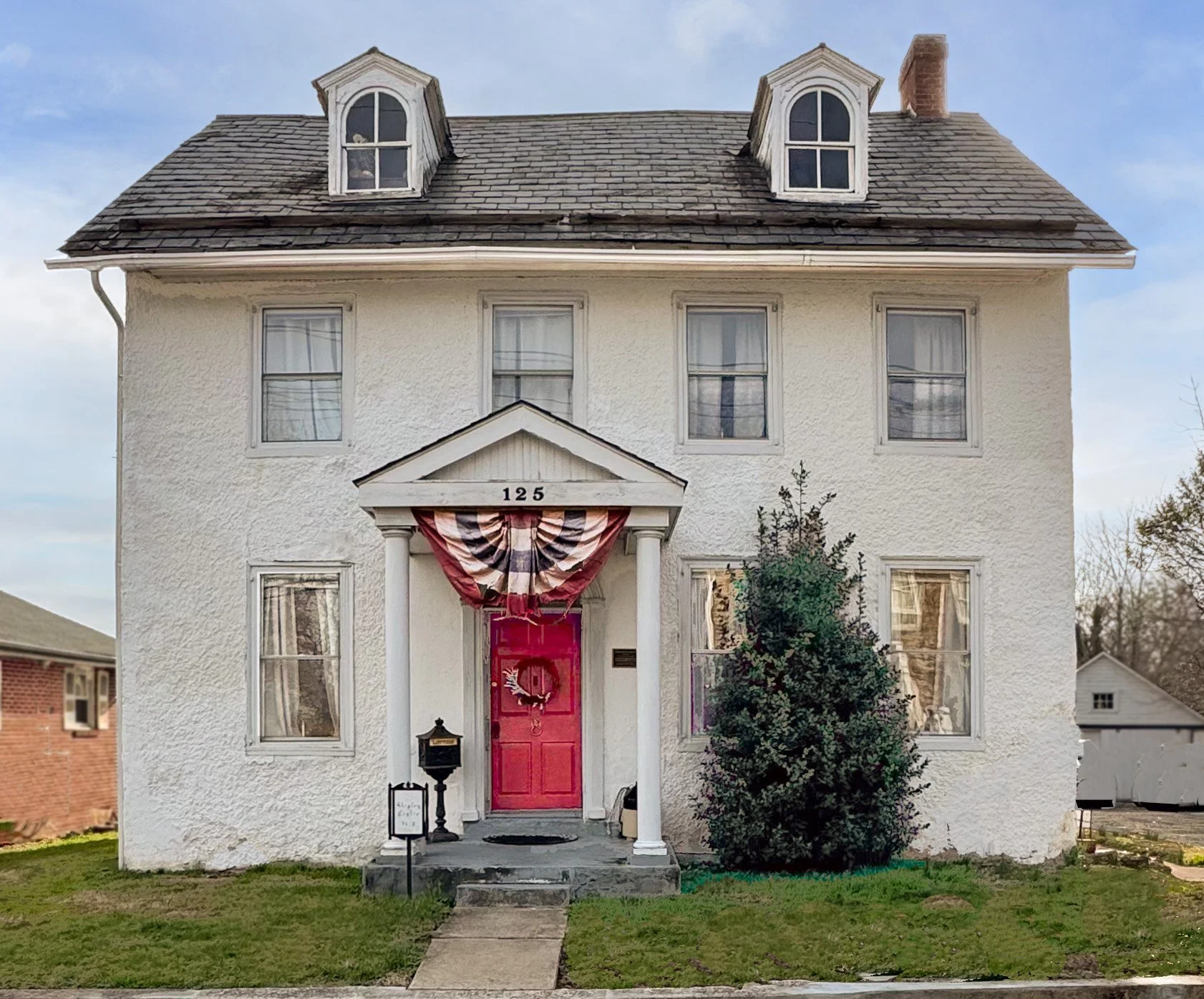
The ca. 1815 Lester House was the home of Quaker businessman Shipley Lester and wife Margaret (Nixon) Lester. Shipley Lester and his father, John Lester, operated a tannery business here in Quakertown. See the Lester Tannery House.
The recessed front door features an arched transom and raised-panel door reveals. After Shipley Lester’s death, the property was sold to his cousin, Caleb Foulke.
A Historic Quakertown House
With an 1825 Datestone:
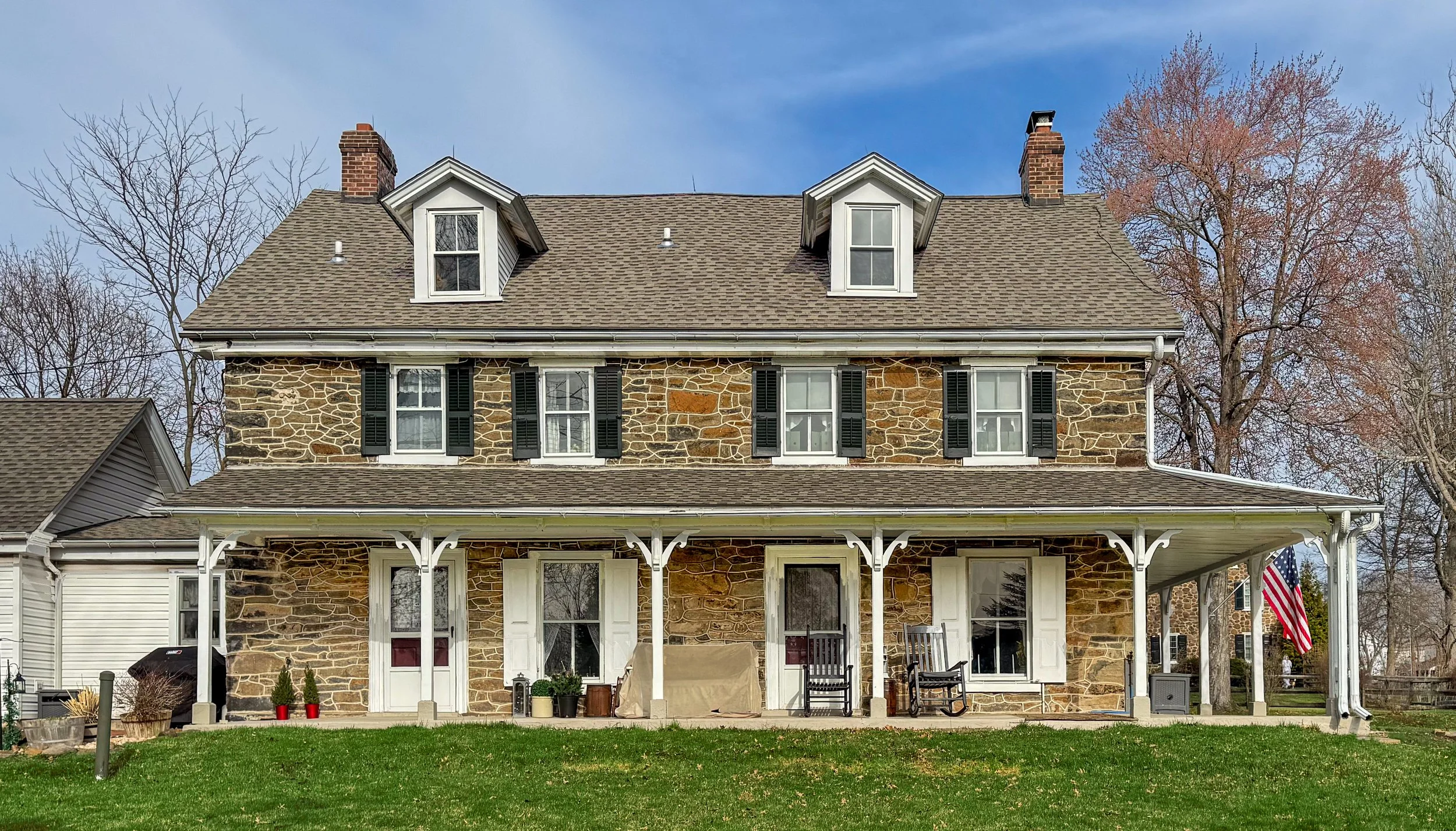
A datestone in the gable of this Federal-era house is inscribed with the date 1825. The rear of the house reveals the presence of a former pent roof, indicated by a row of cut-off outriggers and a projecting stone flashing course extending the full width of the dwelling. The porch is a later addition.
The Moore House
A Station on the Underground Railroad:
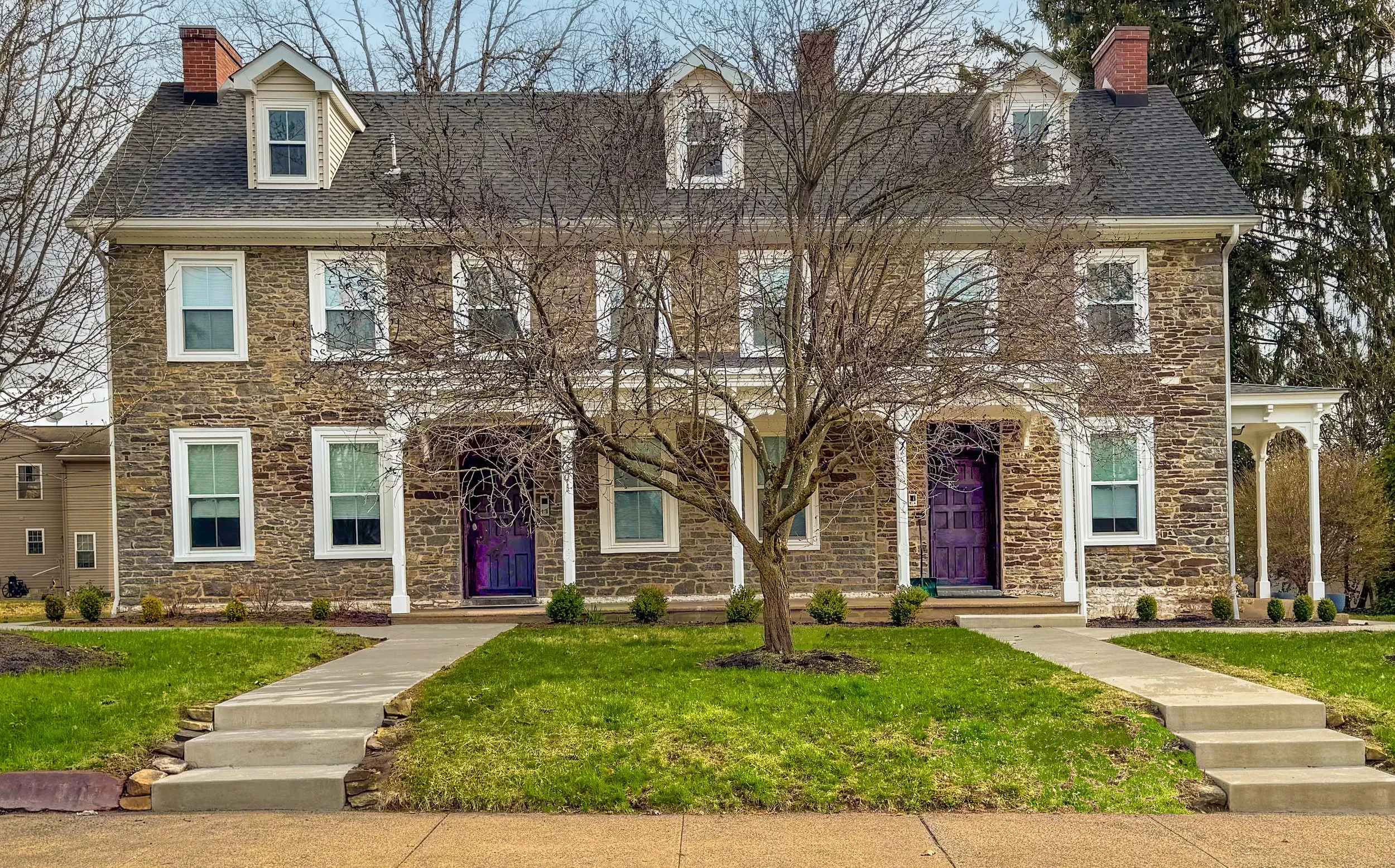
Quaker potter and businessman Richard Moore built this house in 1834. Moore was a tireless abolitionist and made his home a safe haven for escaped slaves traveling north on the Underground Railroad. For 30 years, Moore helped approximately 600 freedom seekers find their way out of bondage.
Moore dug clay for his redware pottery from his 70-acre Quakertown farm, and pottery wagons associated with his business were used to help carry freedom seekers northward. Today a Pennsylvania historical marker in front of the house commemorates the anti-slavery activism of this Bucks County potter.
Diabase:
The Local Building Stone of Quakertown:
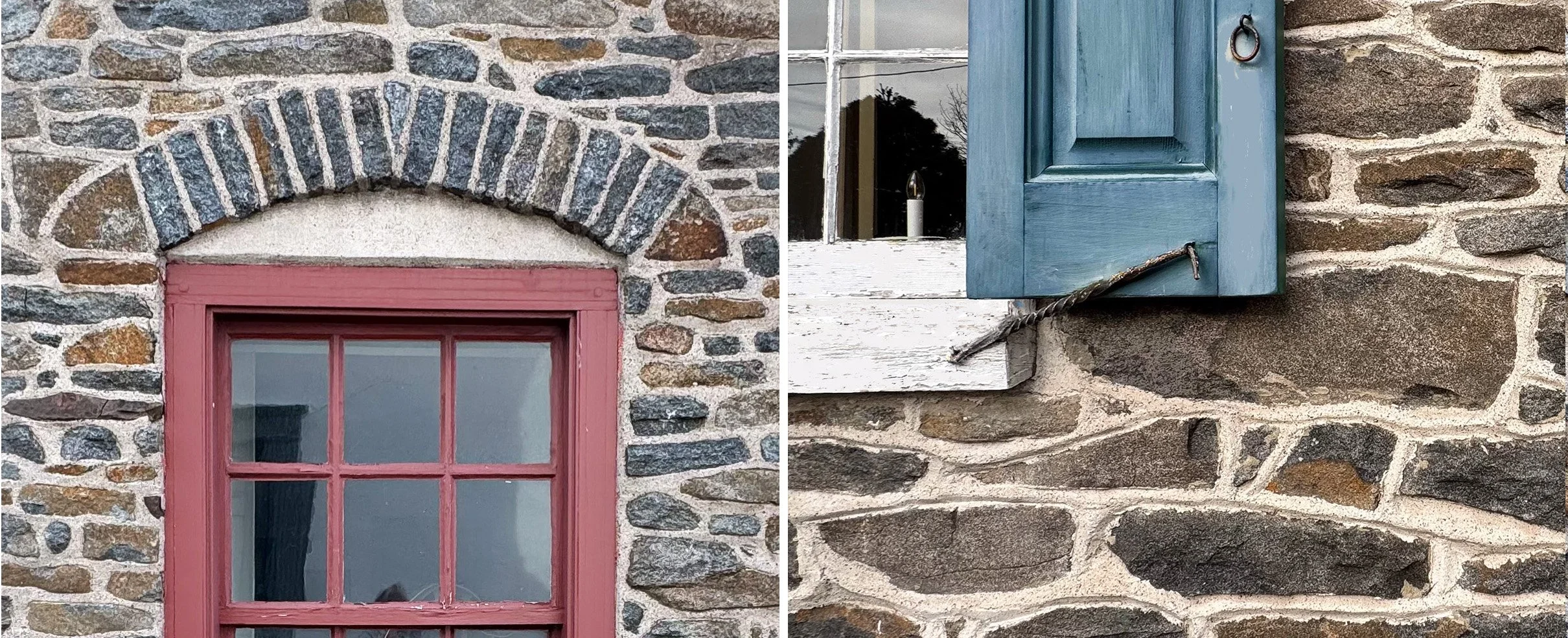
Above: Left: Liberty Hall, Right: Burgess Foulke House
Quakertown is located in a region of extensive intrusions of diabase, a dense, dark-gray igneous rock. Diabase is also known as trap rock, ironstone, and black granite, although it is not true granite.
Early settlers used diabase fieldstone because it was a readily available building material. Historic Quakertown homes built from diabase feature thick walls that have weathered into attractive shades of charcoal, slate gray, and oxidized rust.
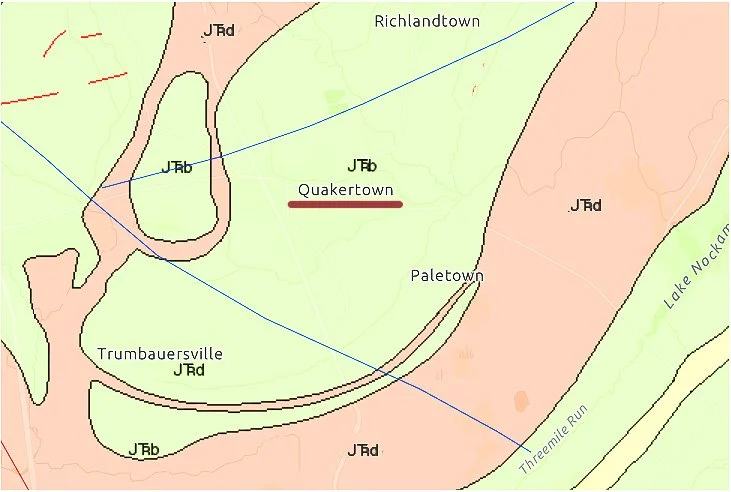
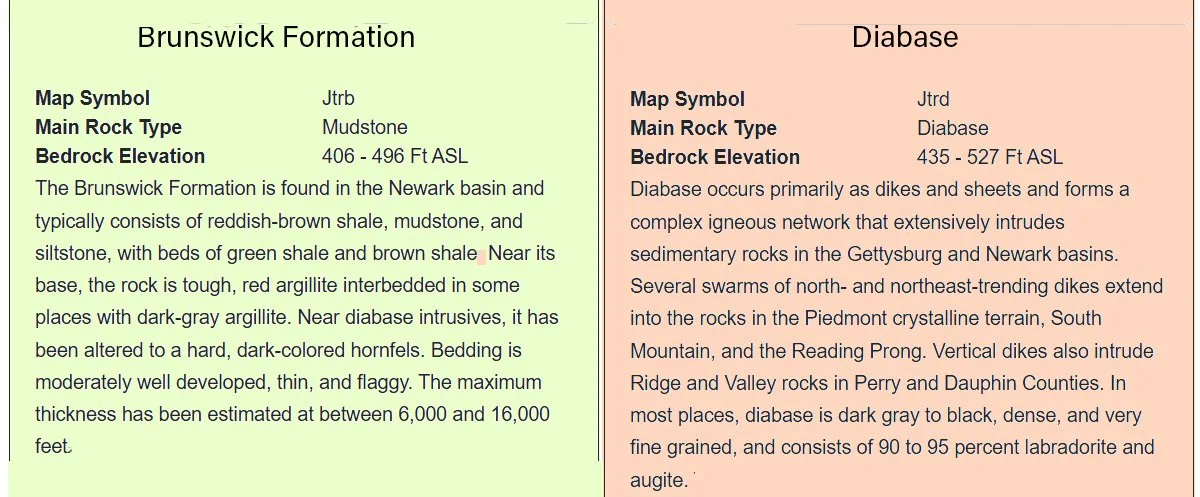
Above: Much of the Brunswick Formation in the Quakertown area was not well suited for building stone, but nearby diabase provided a durable alternative. For that reason, many historic Quakertown houses are constructed of this rugged local fieldstone. Image source: PaGEODE
Links: