
Historic Quaker Houses of Montgomery County, PA
Mill Grove
Home of the Quaker Evans Family
During the Revolutionary War
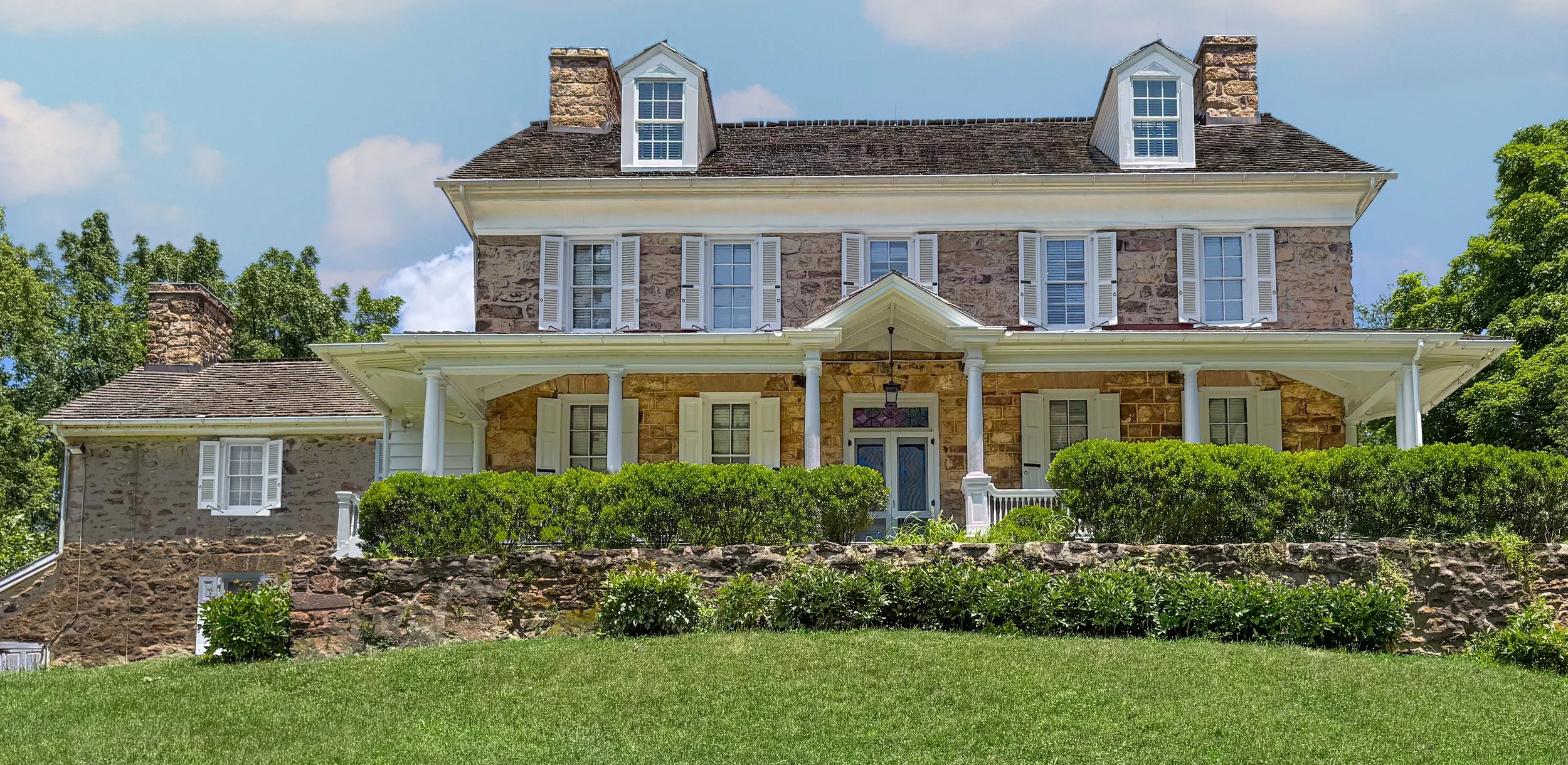
Above: James Morgan built the house ca. 1762. He operated a mill and lead mine on the property. Image source: Lee J. Stoltzfus.
Looting of the Farm by British Troops:
During the Revolutionary War, Quaker miller Rowland Evans and his family lived in this stone farmhouse. Evans leased the property from John Penn.
The farm was in the path of the British and American armies. The Evans family suffered severe losses and property damage from both armies. Evans wrote letters to the Penn family agent, Edmund Physick, explaining that he was unable to pay rent because of destruction brought by British troops and then by American forces.
The British stopped here at Mill Grove in September 1777 on their way to capture Philadelphia. Evans later wrote the British “took about Three Hundred Bushels of Oates, trampled and ruined Five or Six Acres of Buckwheat, besides potatoes, apples, etc. for which I never received any compensation. They likewise tore the bolting cloths [out of the mill] . . .
The British damaged the mill’s bolting cloth to make the mill inoperable, and unable to provide food for the Continental army. Information source: Continental Army in Montco.
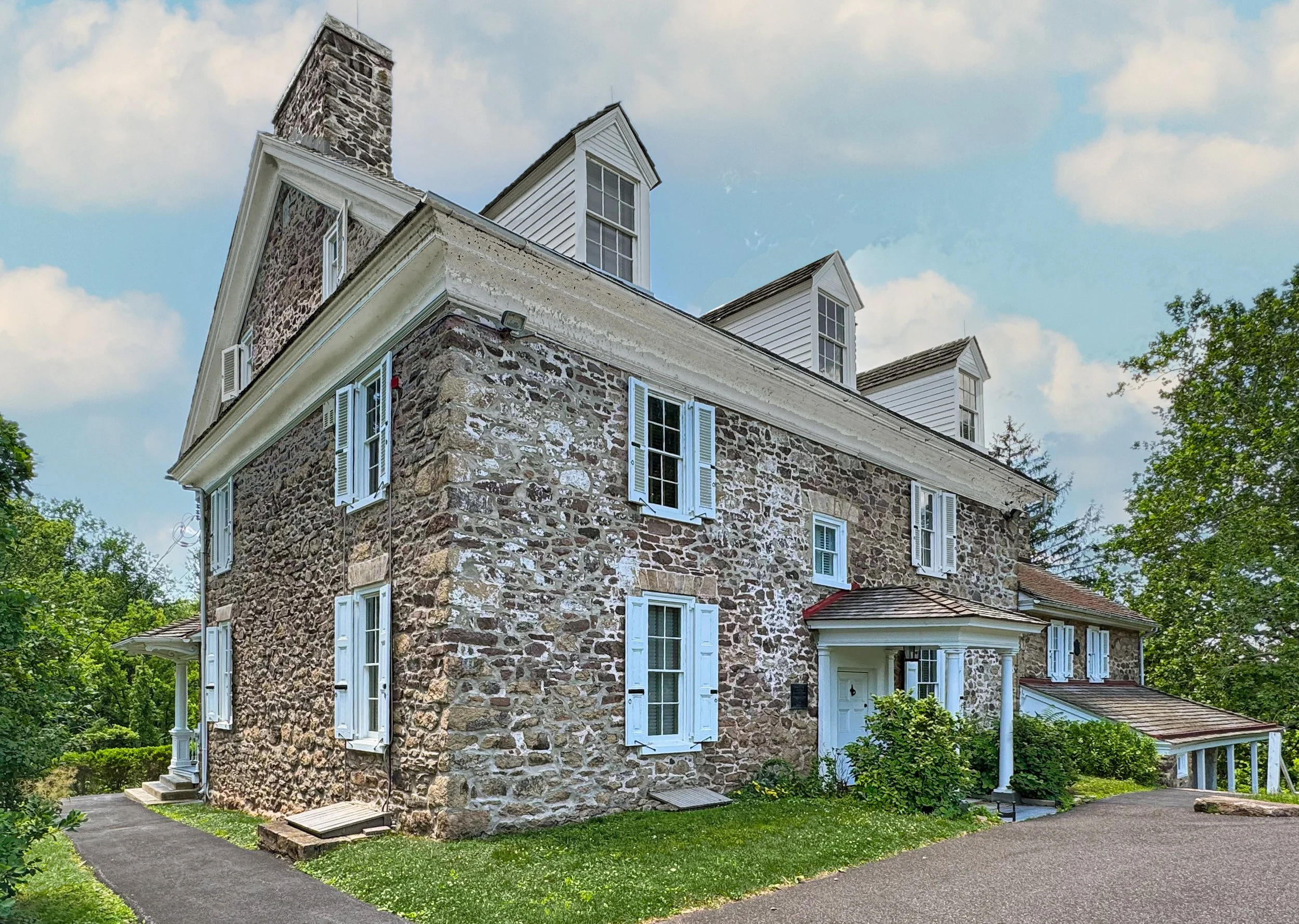
Above: The rear elevation of the farmhouse. Image source: Lee J. Stoltzfus
Looting of the Farm by American Troops:
During the Continental Army’s encampment at Valley Forge, soldiers were urgently short of food and supplies. Mill Grove was across the Schuylkill River from the main camp and had fields of grain and hay needed by the army. In 1777, American forces seized nearly 400 bushels of wheat from Rowland Evans, offering little compensation and leaving him unable to pay his rent.
In 1778, American troops again commandeered wheat and hay from the farm, further damaging Evans’s finances and bringing him close to ruin. Information source: Continental Army in Montco.
A ca. 1830 Painting of Mill Grove:
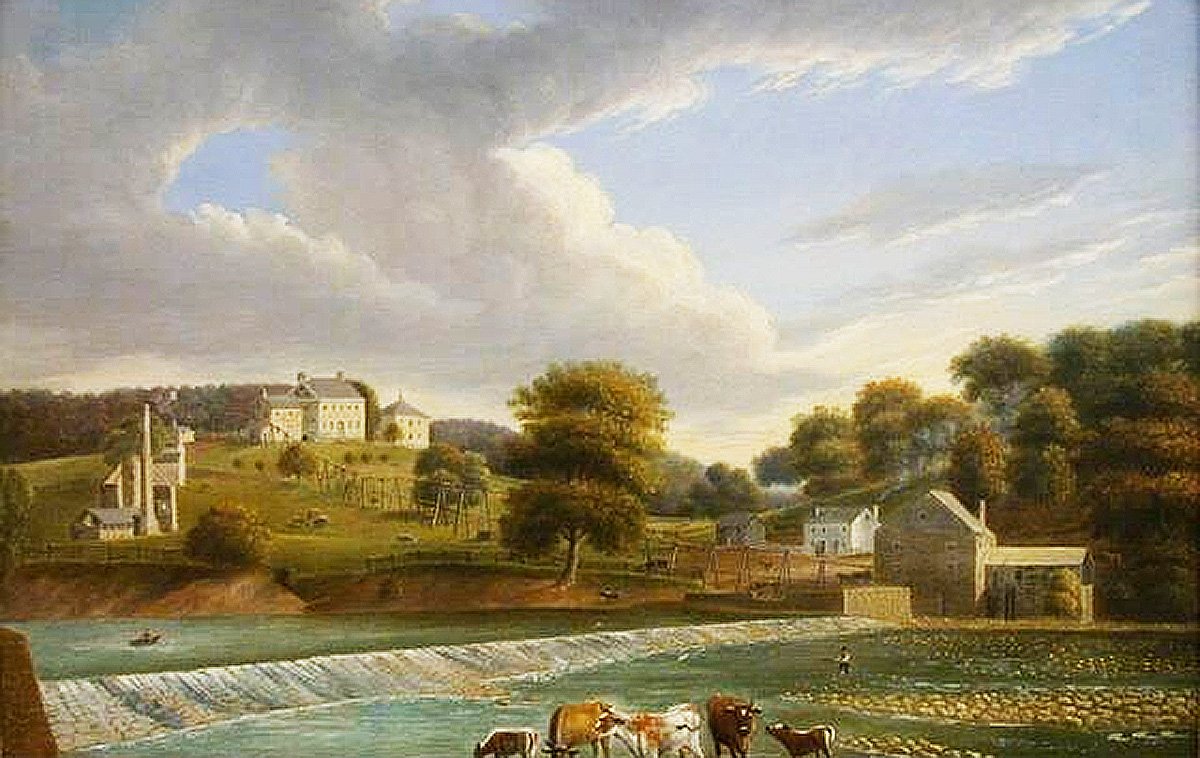
Mill Grove Farm, Perkiomen Creek, Pennsylvania by Thomas Birch, 1820 - 1830. Image source: New York Historical Society, Wikimedia.
Quaker manufacturer Samuel Wetherill purchased Mill Grove in 1813 to mine lead for his white-lead paint business in Philadelphia. The Wetherill family maintained this property for generations. In 1951 they sold the estate to Montgomery County for a wildlife sanctuary and historic site.
John James Audubon at Mill Grove
And Audubon’s Quaker Connections:

Above: The John James Audubon Center at Mill Grove. Image source: Lee J. Stoltzfus.
Mill Grove was John James Audubon’s first American home. In 1789, the property was acquired by his father, Jean Audubon, a French sea captain. In 1803 or 1804, he sent his eighteen-year-old son, Jean-Jacques (John James), to Pennsylvania to develop the mine on the Mill Grove property.
Philadelphia Quaker lawyer Miers Fisher had long served as an agent for Audubon’s father. Fisher escorted Audubon to Mill Grove, where he introduced him to William Thomas, the Quaker tenant living on the farm. Mill Grove became the place where Audubon began studying and drawing birds of the Pennsylvania countryside.
Photos of an Interior Room
by Historic American Buildings Survey:
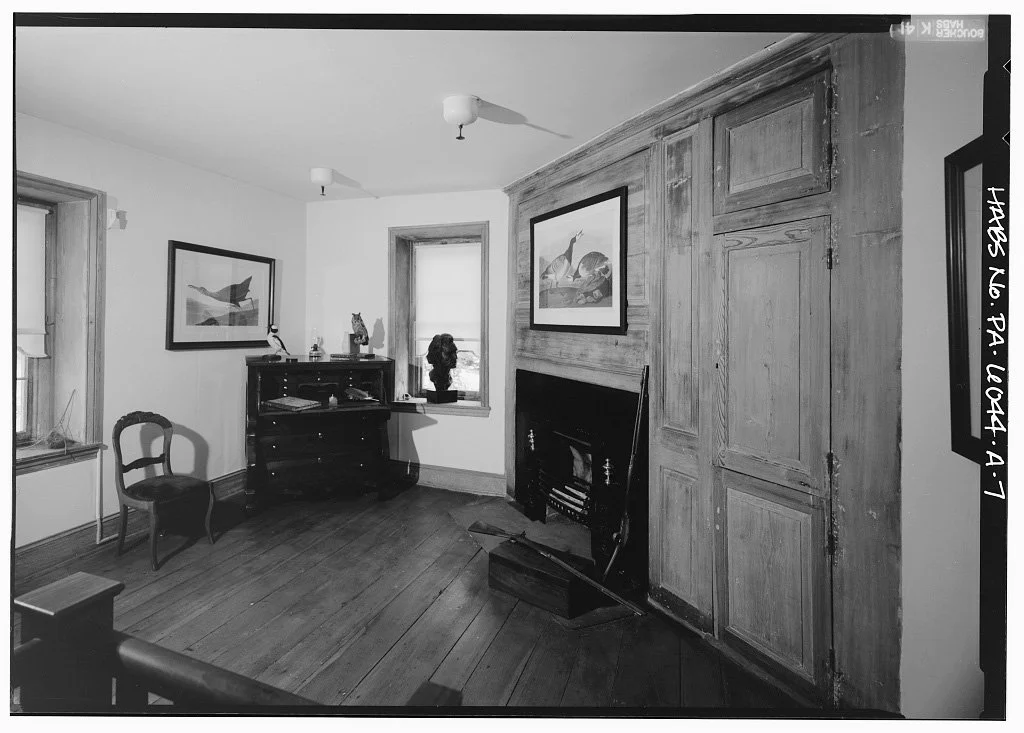
Above: This room was furnished to interpret Aububon’s years at Mill Grove. Image source: Historic American Buildings Survey, Jack Boucher, 1994, Library of Congress.
The Barn at Mill Grove:
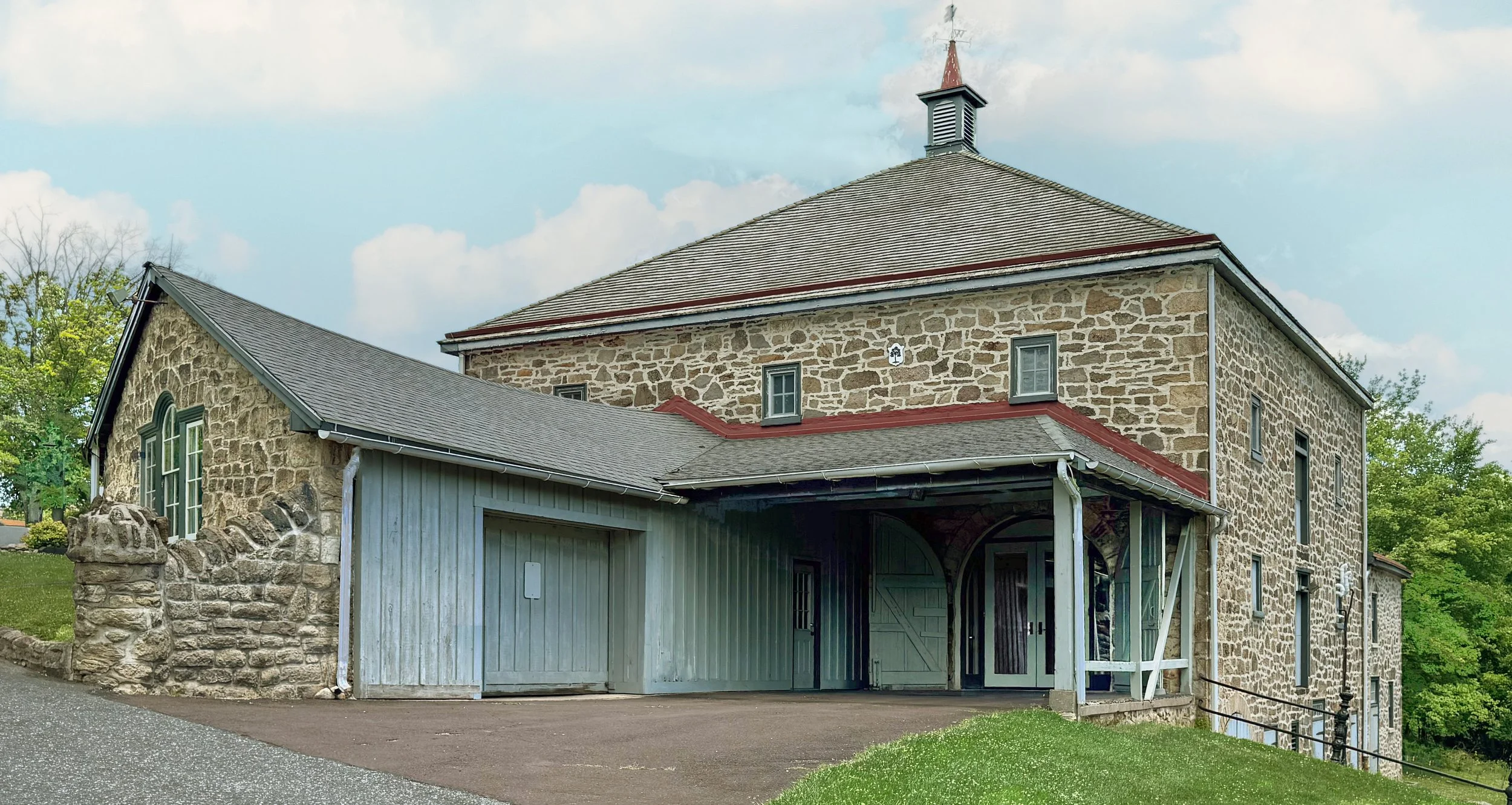
The house and barn are the only surviving buildings that date from John James Audubon’s years at Mill Grove, traditionally identified as 1803 to 1806. Image source: Lee J. Stoltzfus.
The Building Stone of Mill Grove
Stockton Sandstone:
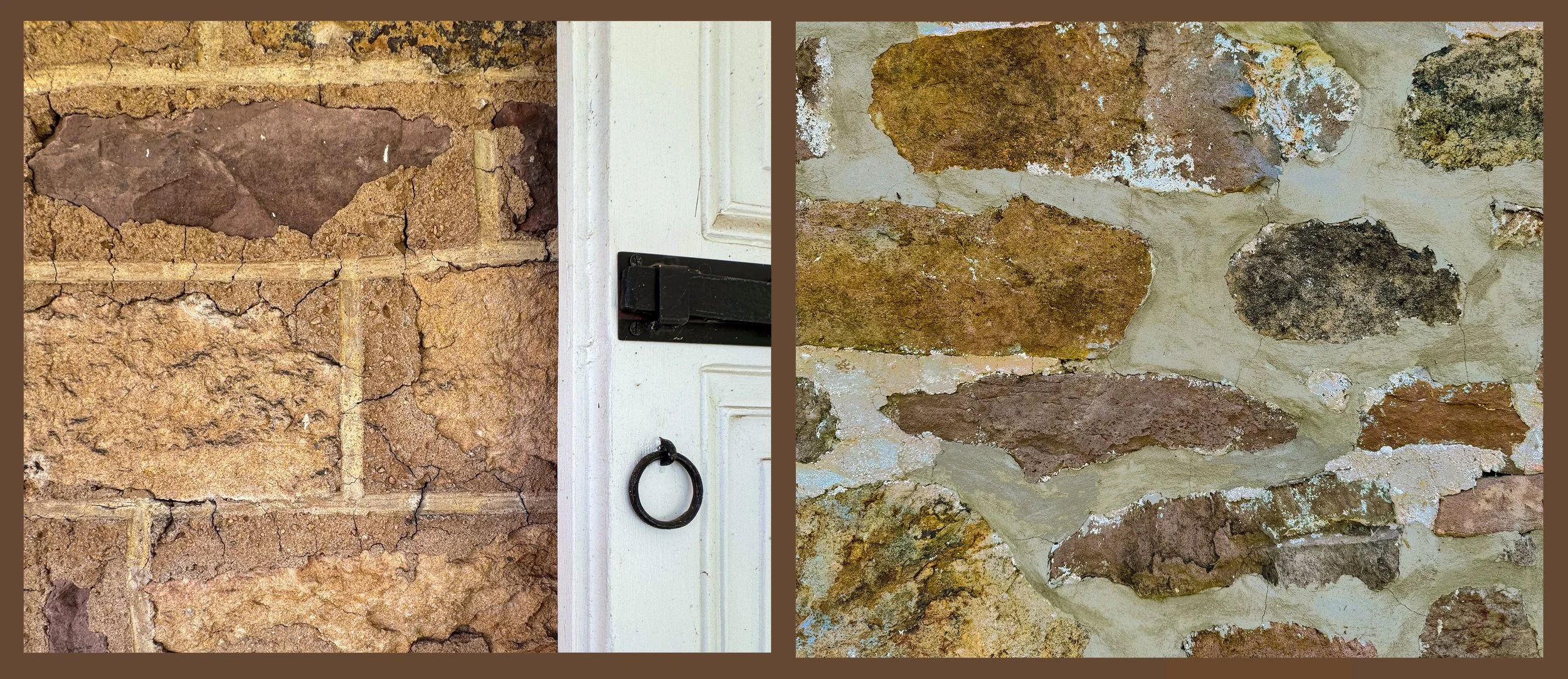
Above: Sandstone of the Stockton Formation is a defining building stone of Southeast Pennsylvania. This Triassic-age bedrock provided tan, brown, gray, and reddish sandstone that local builders used for farmhouses and other buildings. The stone’s warm color and ready availability helped shape the appearance of many historic buildings across the region.
Mill Grove’s front elevation is built of squared sandstone laid in regular courses (above left), while the other elevations use irregular rubble stonework (above right). Image source: Lee J. Stoltzfus.
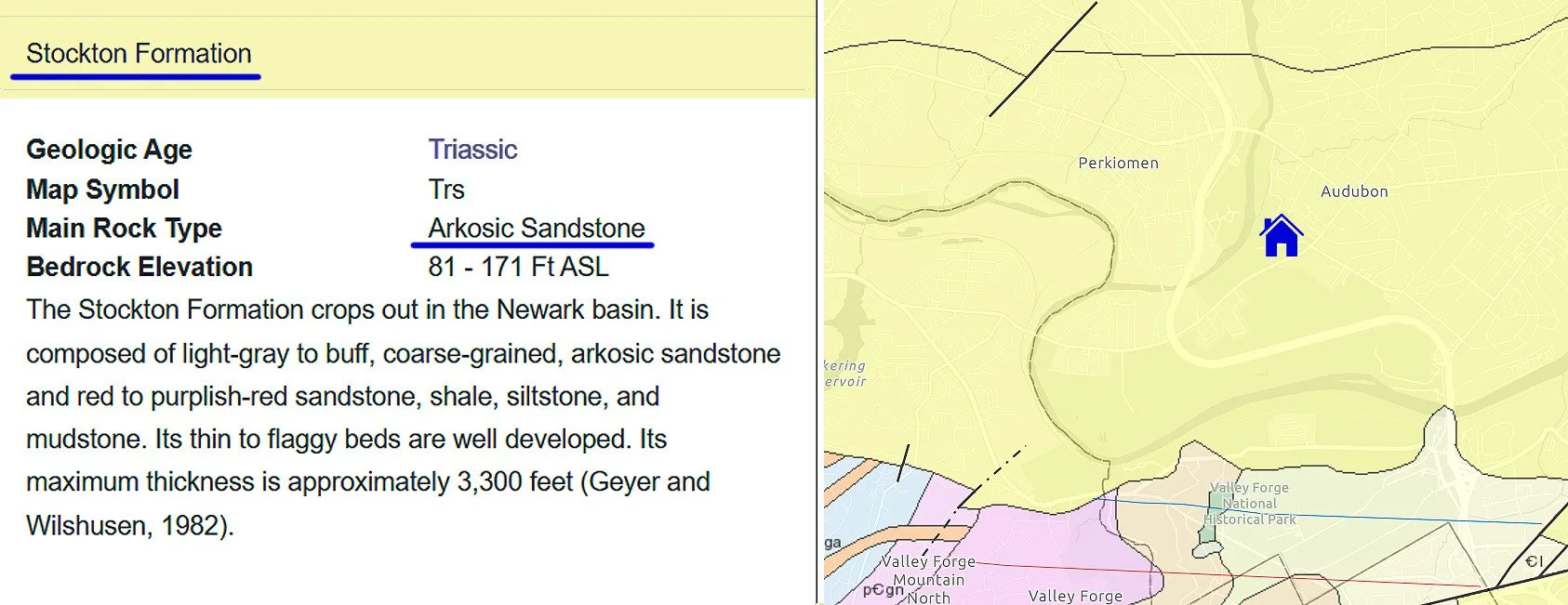
Above: This PaGEODE bedrock map shows Mill Grove within the mapped area of Stockton Formation sandstone. Image source: PaGEODE.
Links: