
The ca. 1758 Kenderdine Residence
(Previously the Hard Times Tavern)
Home of Quaker Anti-Slavery Activist
John E. Kenderdine
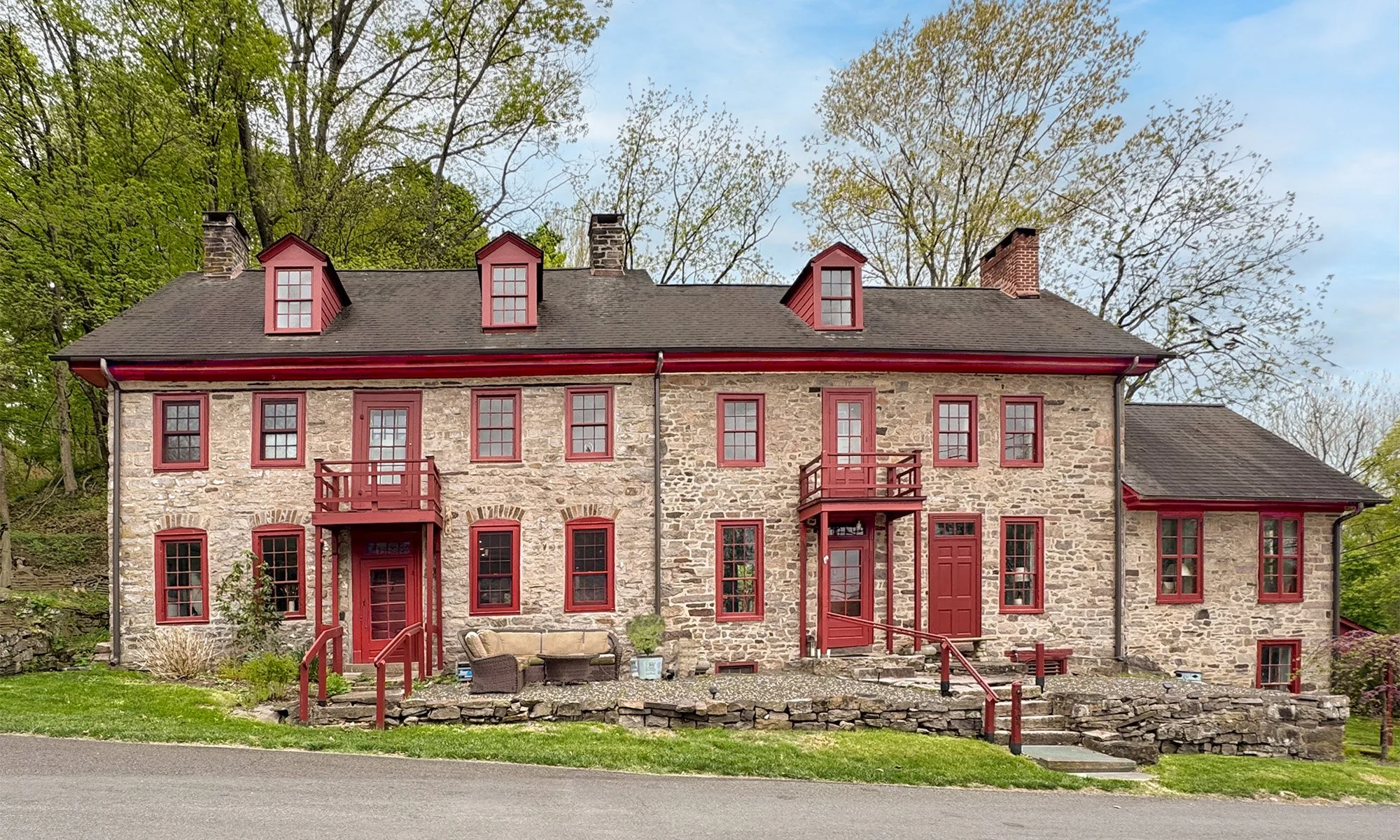
Above: The Kenderdine residence (former Hard Times Tavern) follows the typical regional floor plan of single-pile design (single row of rooms) with lateral additions. Image source: Lee J. Stoltzfus.
William Penn’s heirs conveyed a 200-acre tract here to Quaker immigrants John and Eleanor (Sands) Hough in 1741. This ferry inn and tavern dates to ca. 1758 and is only a short walk from the river. Eventually, the inn suffered financial losses and became known as the Hard Times Tavern.
The inn remained a licensed tavern until 1842, when the Kenderdine family closed the business and used the building as their residence.
Home of John E. Kenderdine
Quaker Anti-Slavery Activist:
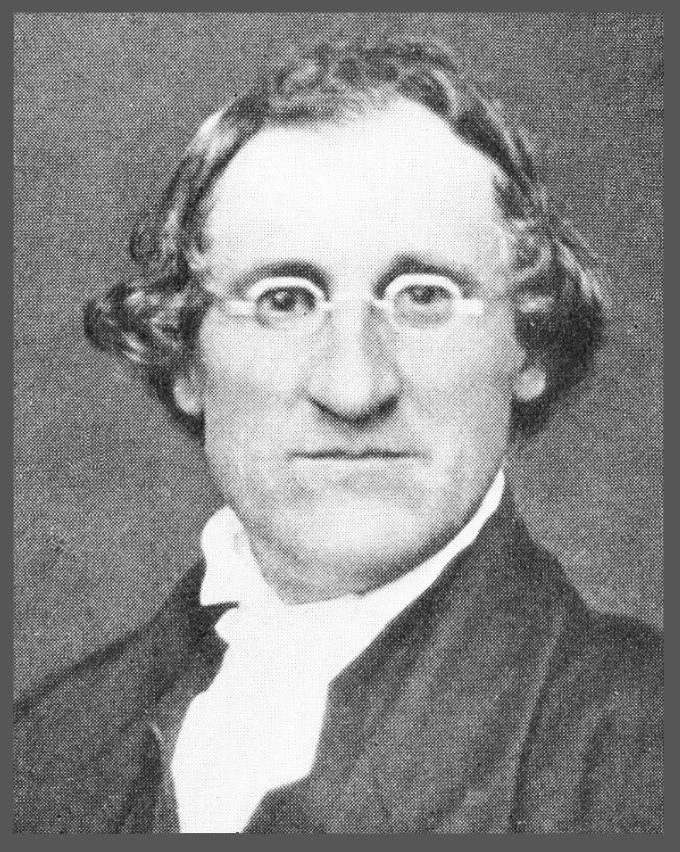
Image source: Wikipedia
John E. Kenderdine was a prosperous Quaker mill owner whose business success helped build the community of Lumberton. In 1833 he purchased 20 acres here, including the ferry property. He eventually transformed the inn from a tavern to his residence, with his wife Martha (Quinby) Kenderdine. He helped establish the Quaker identity of this Cuttalossa Valley.
John and Martha Kenderdine moved from the inn to a new house nearby. They were actively involved in the Underground Railroad, helping fugitive slaves escape from the South. A residence at their sawmill was the home of fugitives named Charley and Maria.
A Son, Thaddeus Stevens Kenderdine
Named for Abolitionist Thaddeus Stevens:
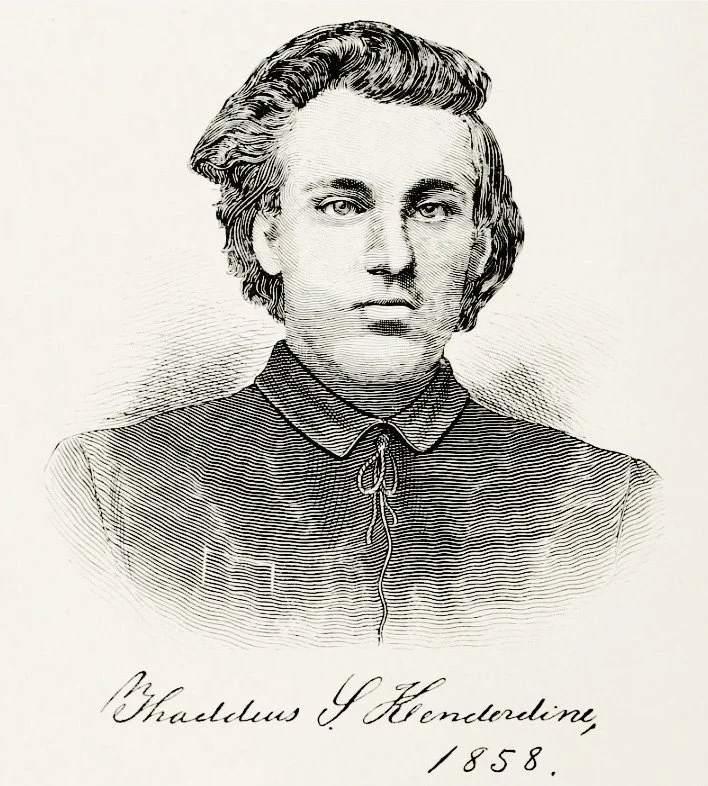
Above: Image source: Thaddeus Kenderdine, Recollections, Travels, Autobiography, 1921. Internet Archive.
John and Martha named their son Thaddeus Stevens Kenderdine, after U.S. Congressman Thaddeus Stevens, who was a tireless opponent of slavery.
Thaddeus Stevens Kenderdine described the Kenderdine house, the former tavern, as: a double dwelling, an end of which was the Camel Tavern [previously known as Hard Times Tavern]. The hotel end has sentimental associations for me, for here my parents [John and Martha Kenderdine] first lived when coming to Bucks County, where I commenced housekeeping in 1863, and where two of our children were born. Quote: Thaddeus Kenderdine, Recollections, Travels, Autobiography, 1921.
The Kenderdine Home:
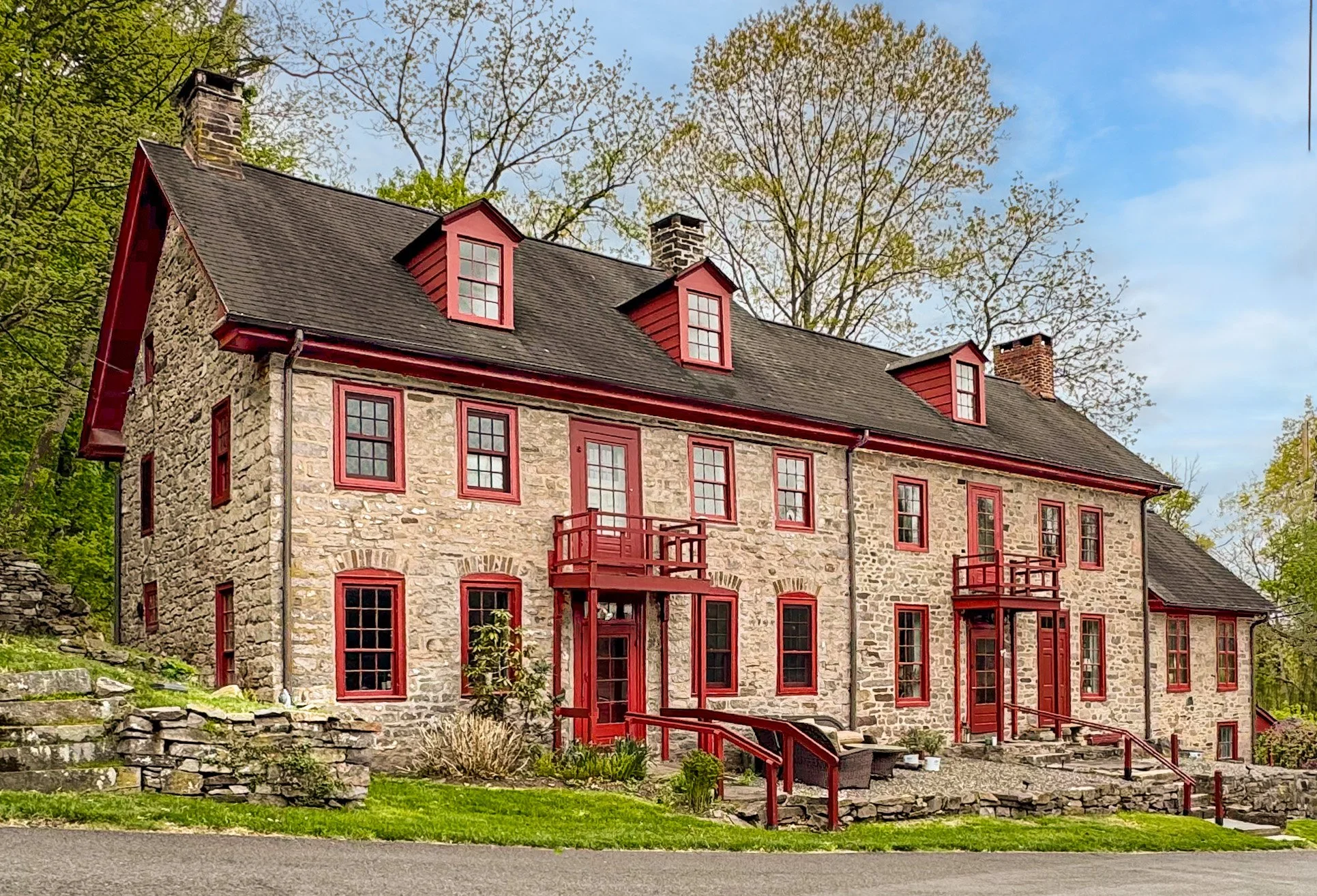
Above: The sandstone building has segmental arches above first-floor windows of one section. These window arches are typical of the earliest stone structures in the region. Image source: Lee J. Stoltzfus.
The Colonial-Era Segmental Arches:
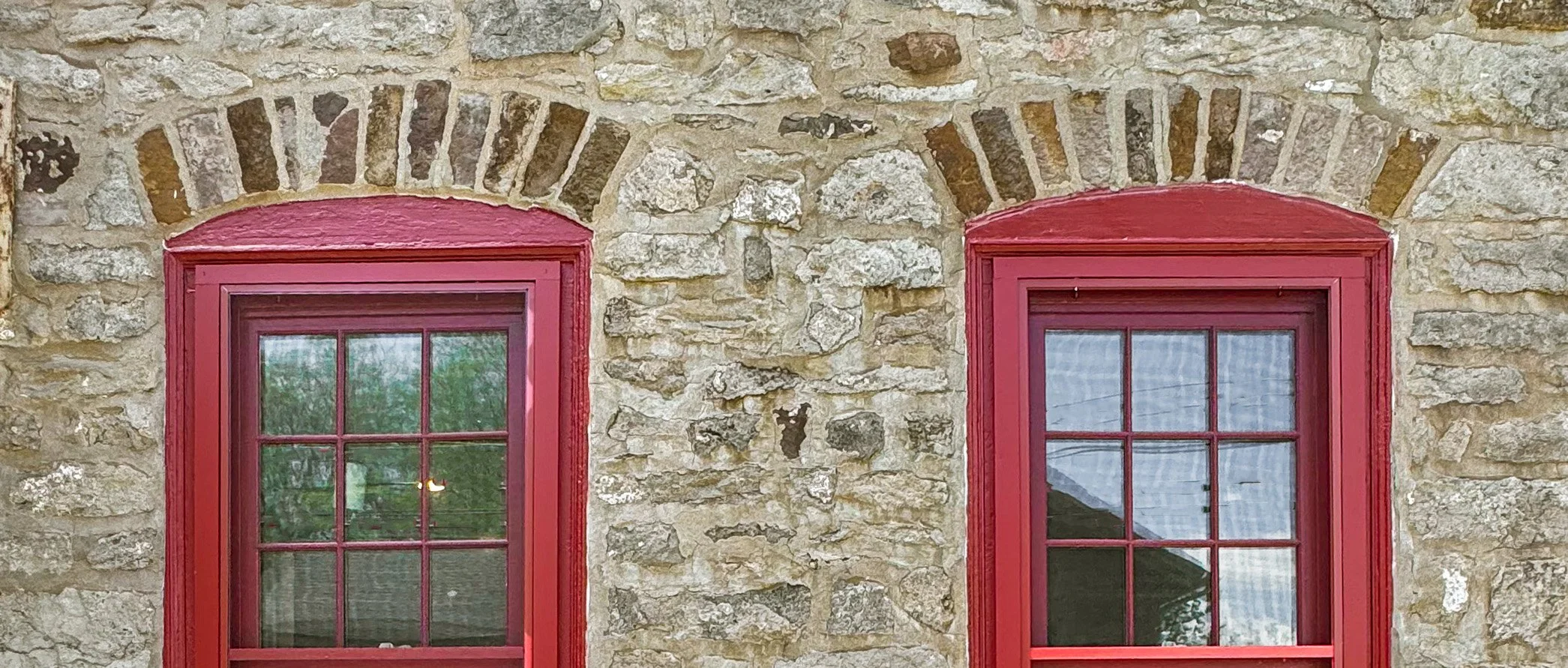
Above: The building facade features striking segmental arches that distribute the weight above the windows. The wall is rubble masonry of gray and buff sandstone. Image source: Lee J. Stoltzfus.
This Building on a Geological Map:
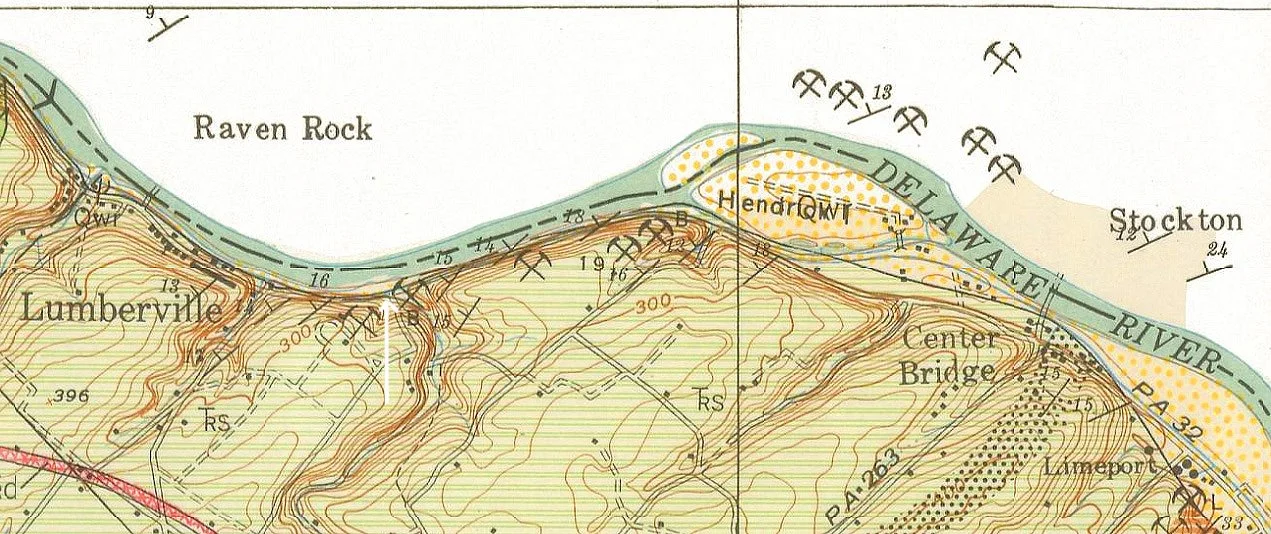
Above: Image source: Geology and mineral resources of Bucks County…, 1959, (arrow added), National Geologic Map Database
The white arrow points to the historic Kenderdine residence, formerly the Hard Times Tavern, within the sandstone bedrock of the Stockton Formation. The crossed-pick symbols show nearby historic quarries along the steep hillsides. These outcrops supplied building stone for local construction.
Sandstone from this area also provided the building stone for Philadelphia’s Reading Terminal Market and the old Bucks County Courthouse. In addition, this hard sandstone was used for Belgian blocks to pave streets in Philadelphia and elsewhere.
Sandstone from the Stockton Formation:
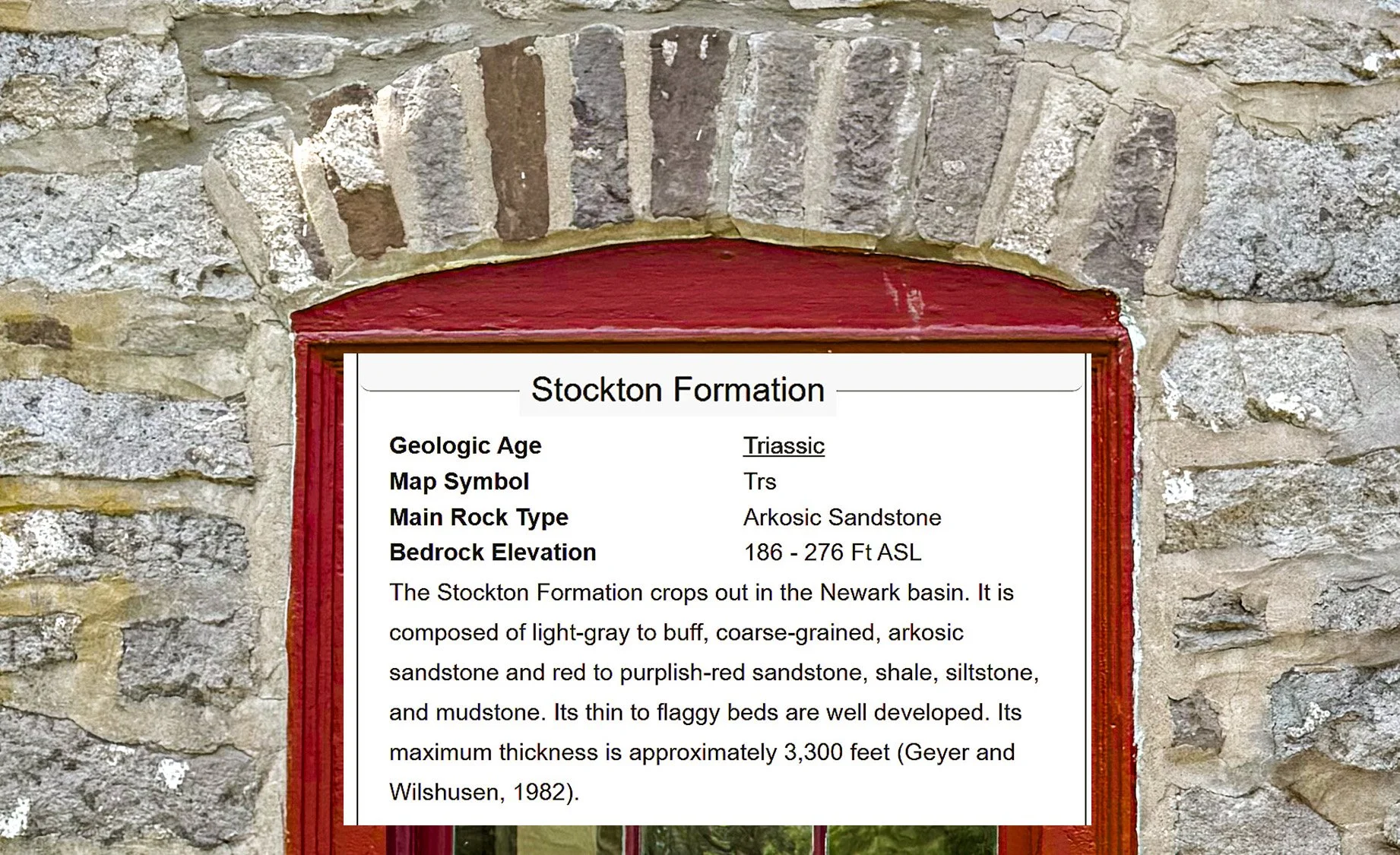
Above: Text source: PaGeode
The wall of the Kenderdine house is local gray to buff arkosic sandstone from the Stockton Formation. The stone is part of the Triassic Newark Basin sequence and is typical of the Cuttalossa area.
Some darker stones in the rubble masonry and window arches may be argillaceous sandstone or siltstone.
The Inn / Residence was Restored
by Artist William Francis Taylor
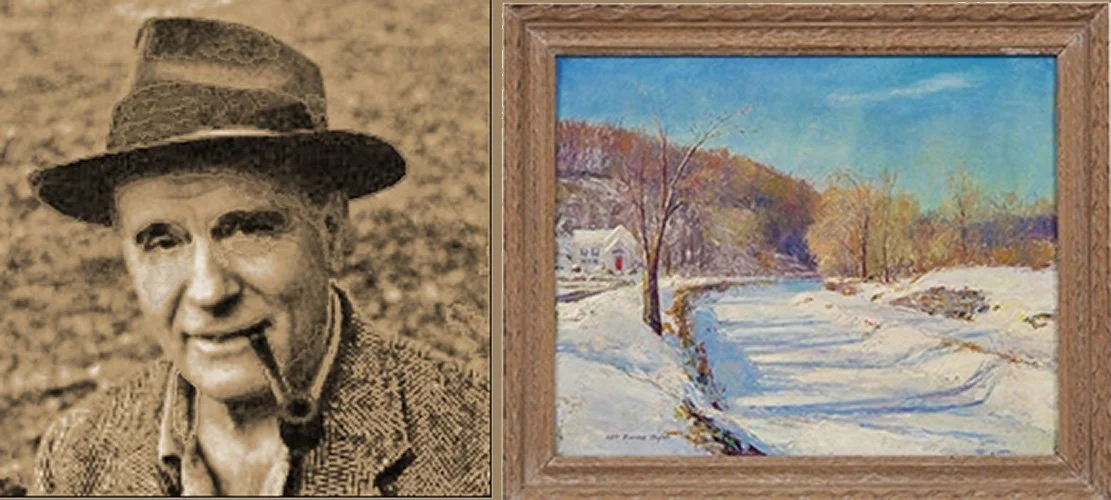
Above: William Francis Taylor painted this view of the Delaware Canal from his window in the Kenderdine Inn (Hard Times Tavern), which he restored for his home and studio. In 1930 he started the Cuttalossa Inn across the road. Image sources: Portrait: Solebury Historical Society, Painting: Artnet
Taylor arrived in Bucks County ca. 1910 and soon married his first wife, painter Mary Smyth Perkins. The Taylors were part of the group of New Hope artists who gathered at Phillips’ Mill. The Phillips’ Mill Community Association was founded in 1929 after Taylor formed a subscription committee to purchase the mill for the group.
Taylor was the first president of the Delaware Valley Protection Association, which he helped organize in 1933.
Links: