
Historic Quaker Houses of Montgomery County, PA
Idlewild Farm
Farmhouse Built by the Lloyd Family
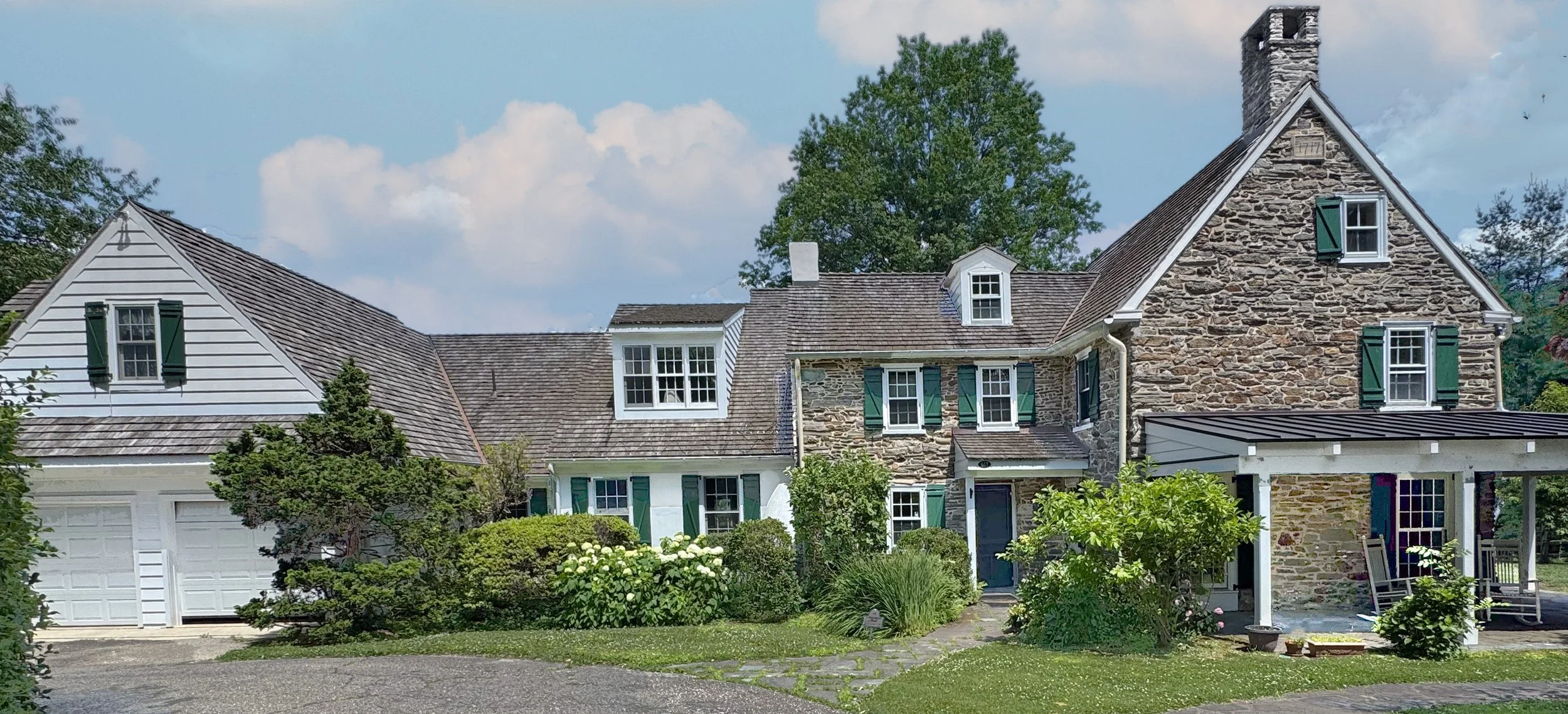
Above: The earliest sections of the farmhouse are constructed of Wissahickon Schist fieldstone. Image source: Lee J. Stoltzfus.
The first documented European settler on this land was Quaker farmer Robert Lloyd, who emigrated from Merionethshire, Wales, around 1694. He settled in the Welsh Tract, a rural area west of Philadelphia whose land rights had been purchased by Welsh Quakers.
In 1698, Lloyd married Lowry Jones at Merion Meetinghouse. That same year, he bought a tract of more than 400 acres from John Williams. Around 1700, Lloyd built a one-room stone farmhouse with a loft. There he and Lowry raised a family that eventually included eight children. That building survives today as the earliest section of this farmhouse.
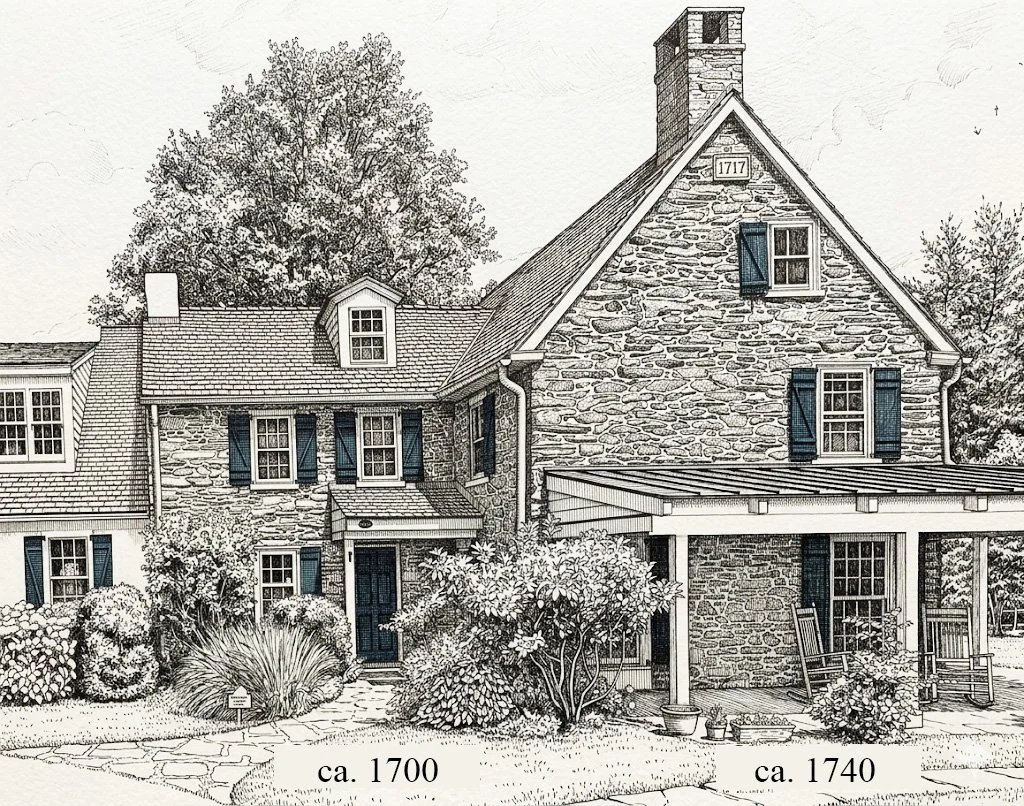
Above: The stone farmhouse. Image source: Lee J. Stoltzfus.
David Lloyd, Robert Lloyd’s son, inherited the house and 150 acres when he came of age in 1728. Around 1740, he likely built the two-story stone house in front of the smaller house his father had built. The earlier house then became a detached farm kitchen.
David Lloyd sold the property in 1763. By 1798, a later owner had added a second story above the kitchen, and both buildings were recorded in the 1798 Direct Tax. Throughout the 18th century, the farm continued to be used mainly for growing wheat and other grains.
First-Floor Plan:
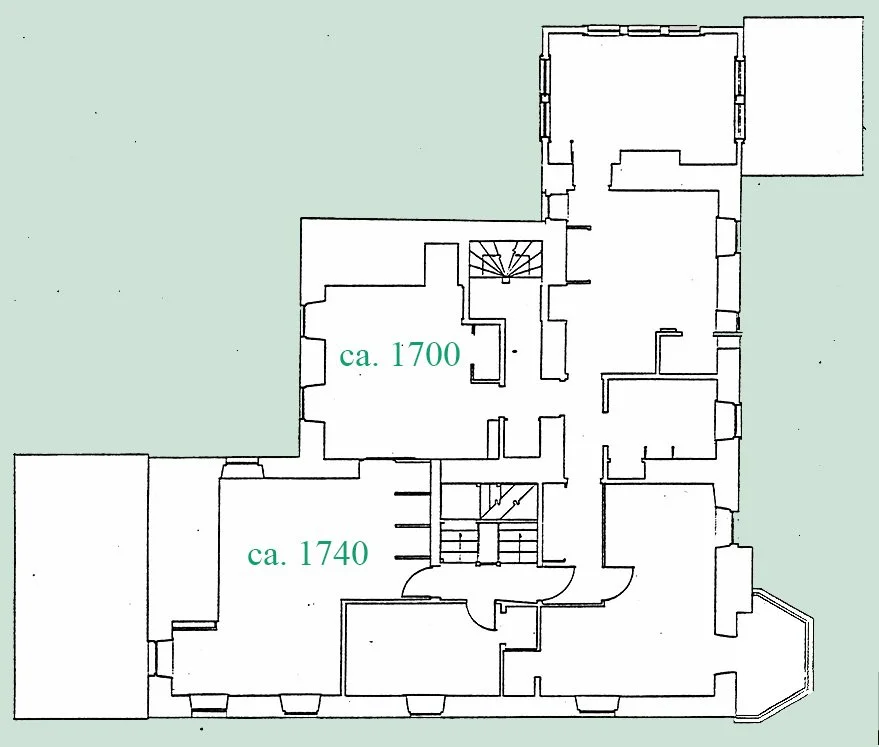
Above: Image source: National Register of Historic Places, Robert L. DeSilets. A.I.A., dates and color added.
The National Register nomination form identifies the farmhouse construction timeline. The section built around 1700 was originally 1½ stories high. It was later enlarged and raised to two stories. The larger two-story addition was built ca. 1740. A datestone marked “1717” was added ca. 1930 based on oral tradition.
The Farm in 1979
National Register of Historic Places:
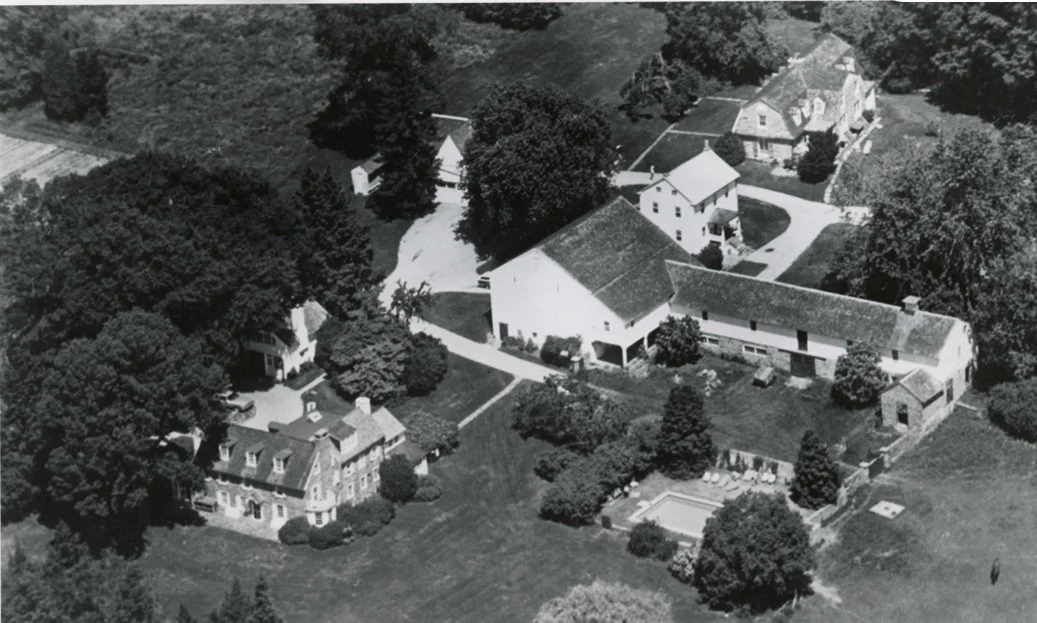
Above: An aerial view of Idlewild Farm in 1979 by Louis Bruhnke and Gloria Becker, National Register of Historic Places.
Farm Map
National Register of Historic Places:
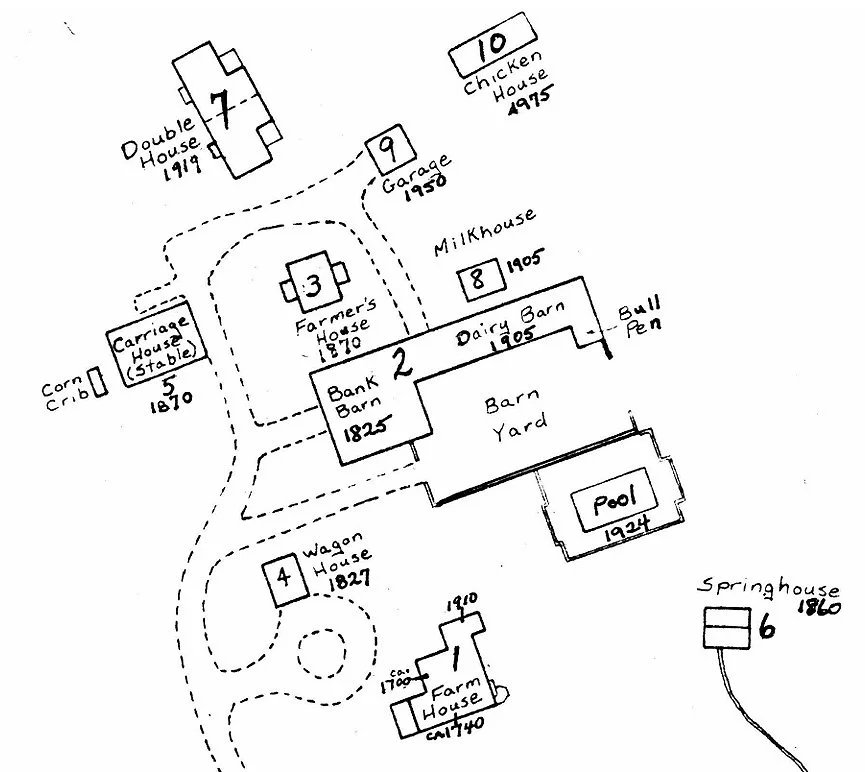
Above: A 1981 map of Idlewild Farm by J. Newby and G. Becker. Image source: National Register of Historic Places.
In 1990, Dorothy Saunders conveyed 21.2 acres of Idlewild Farm, including its farm buildings, to Natural Lands Trust to be kept as a preserve. The main house and remaining lots were sold to create an endowment to support the preserve.
Links: