
Historic Quaker Houses of Chester County
The Downingtown Log House
Built ca. 1700
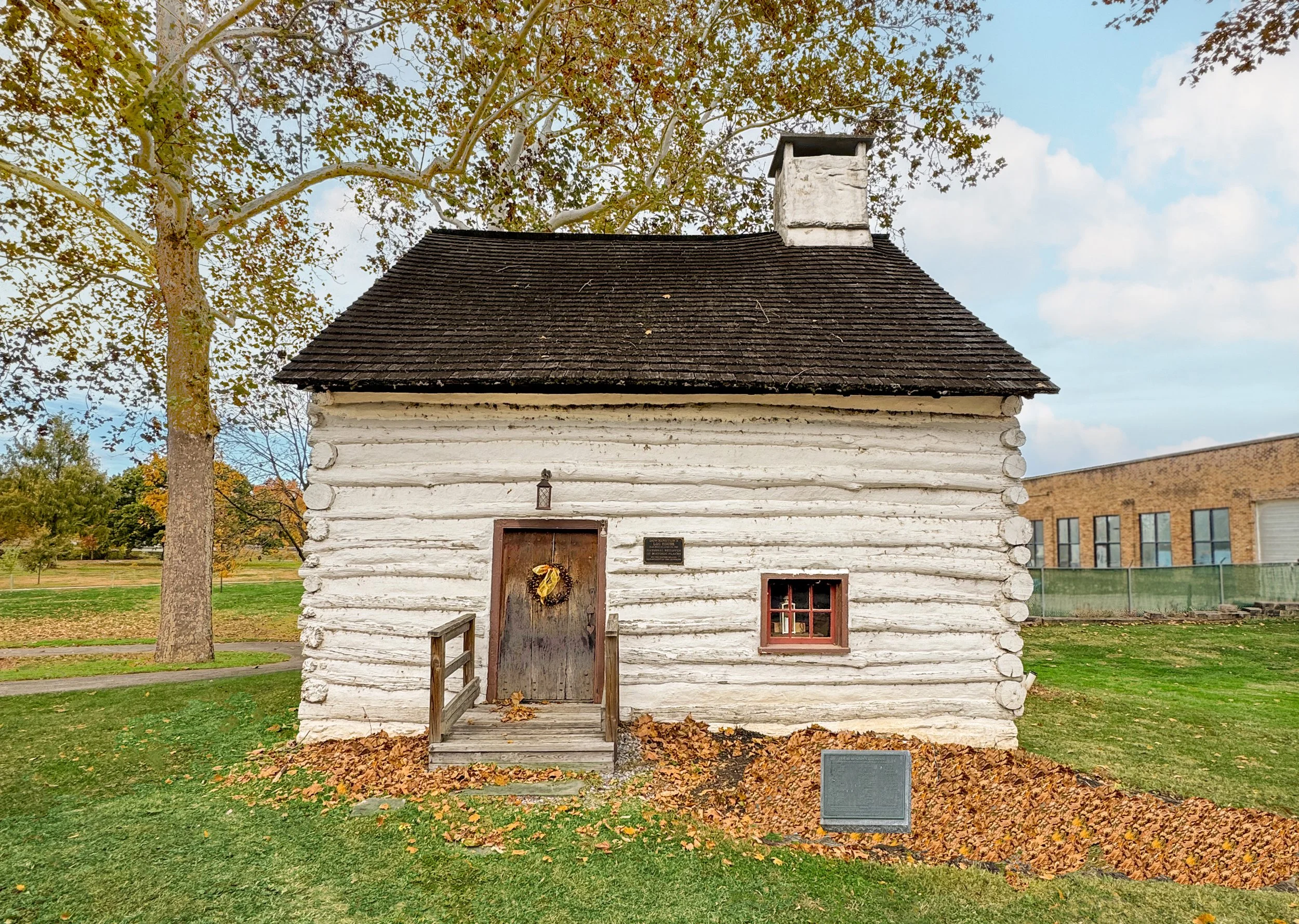
This little log house is one of the most intensely researched historic houses in Chester County. The dwelling has become an architectural icon of Downingtown. The property was owned by the Downing family for almost 200 years.
The Downing family was a prominent Quaker family who helped shape the region throughout the 18th and 19th centuries. After patriarch Thomas Downing aligned with the Friends in 1730, generations of the family anchored the local community, eventually helping to establish the Downingtown Friends Meetinghouse in 1806. Thomas W. Downing’s 1937 will left the log house and adjoining property to the Borough of Downingtown.
Log House Photo ca. 1910:
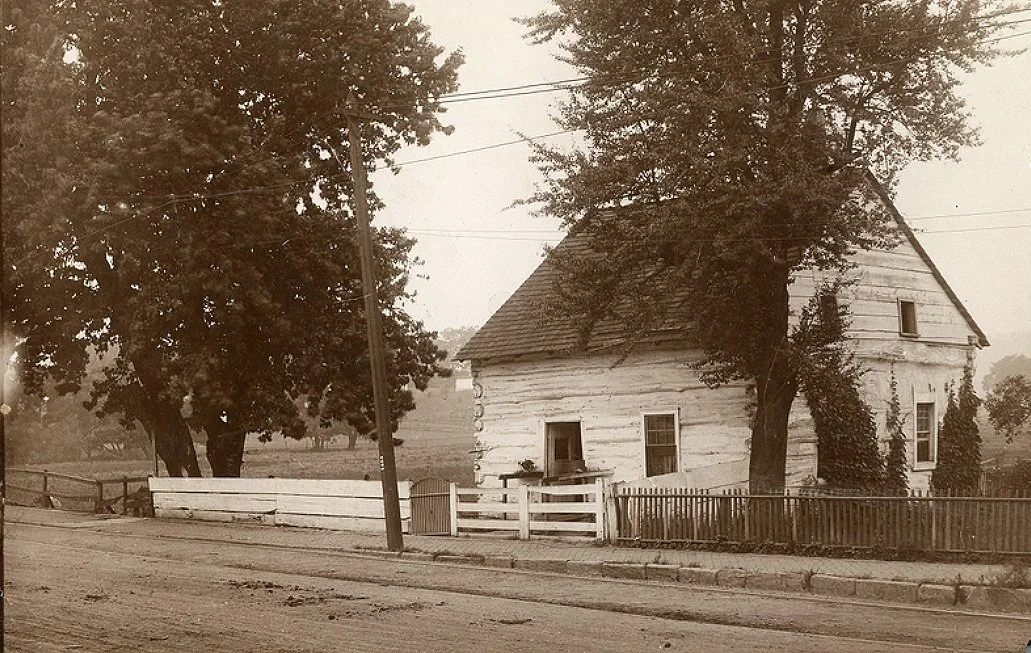
Above: The log house surrounded by farm fields ca. 1910. Image source: Chester County Press.
After the Log House was deeded to the Borough of Downingtown in 1940, Philadelphia architect Theodore B. White directed a comprehensive restoration of the building, completed in 1947. The house subsequently served as headquarters for the Downingtown Chamber of Commerce. By the 1980s, persistent moisture problems and the building’s proximity to Business Route 30 required that the house be moved to preserve it.
A fundraising campaign led by the Downingtown Historical Society and concerned residents, supplemented by borough funds, paid for the relocation and restoration. In 1988, the log house was moved about 70 feet to a safer site nearby. The historic-building contractor 18th Century Restorations, of Coventryville, restored the log structure, which was rededicated in 1990.
A 1981 Restoration Study
by John Milner Associates:
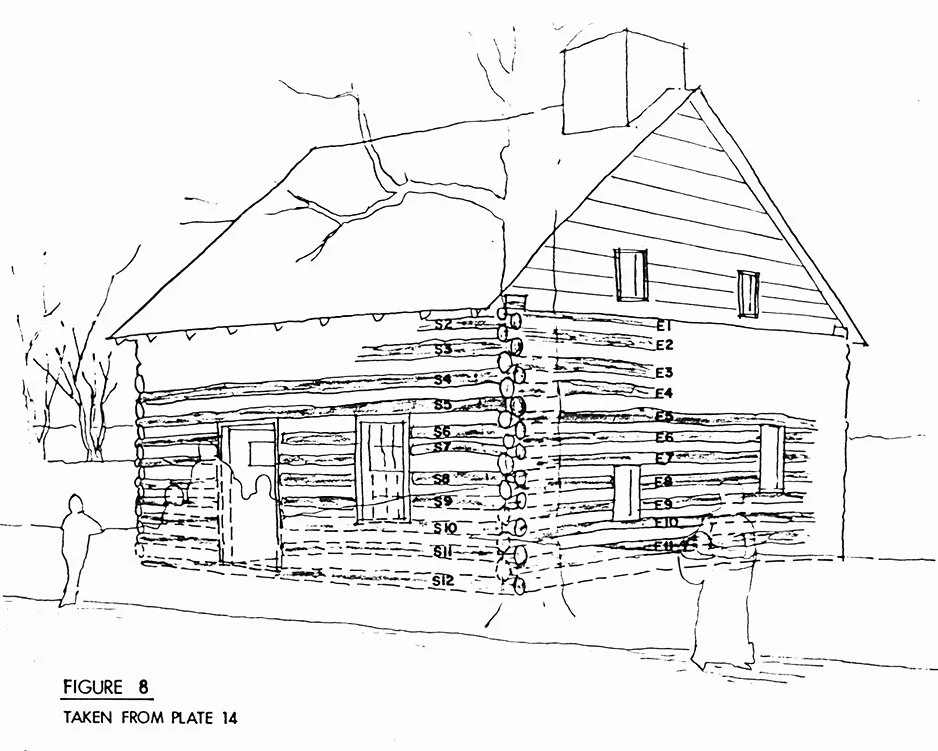
Above and below: Architectural drawings of the log house by John Milner Associates prepared for the Borough of Downingtown in 1981, before the house was rescued and relocated. Image source: National Register of Historic Places.
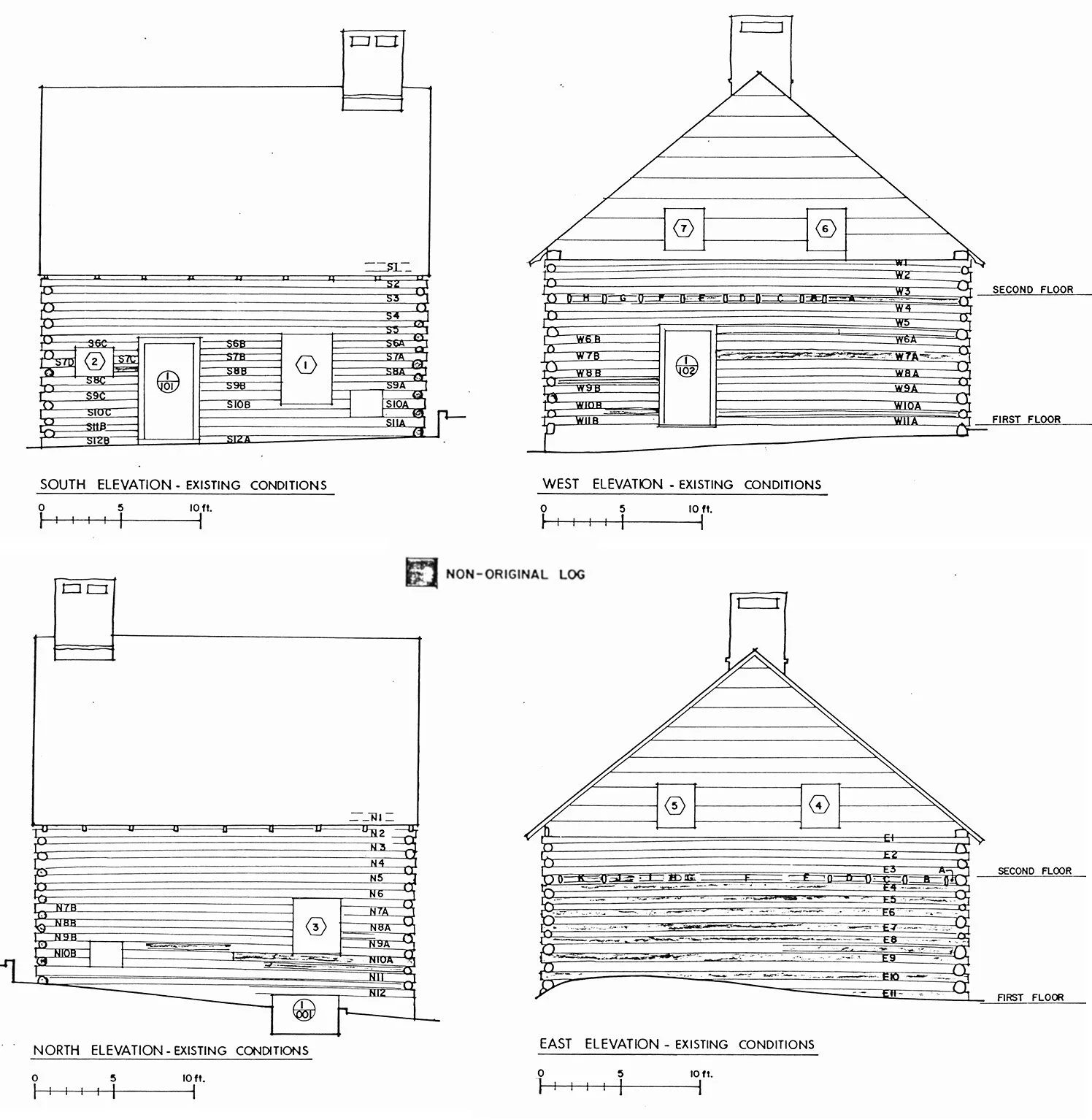
Above: Architectural drawings of the log house by John Milner Associates, 1981. Image source: National Register of Historic Places.
Log dwellings of the Delaware Valley trace design origins to early Swedish settlers. Log houses became so prevalent here that by 1798 half the buildings in Chester County incorporated log construction. The majority of the logs appear to be original except below the second-floor level of the east wall where severe weathering necessitated replacement in 1947.
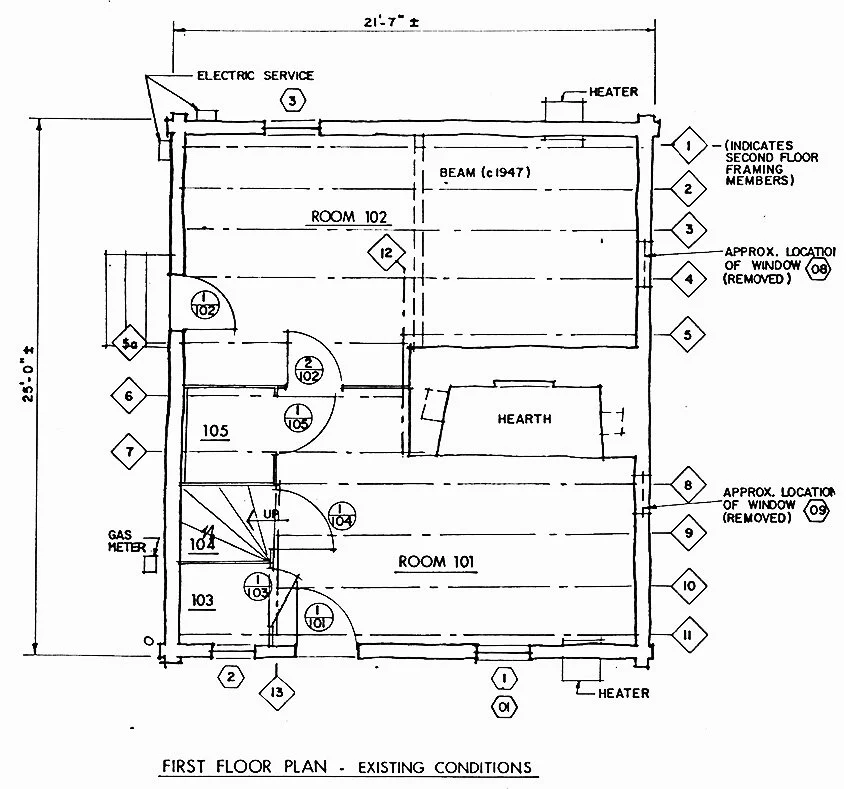
Above: A 1981 restoration study for the Downingtown Log House by John Milner Associates, Inc. prepared for the Borough of Downingtown. Image source: National Register of Historic Places.
The present first-floor plan closely follows the original arrangement with the original fireplace and probable original stair opening in situ. For functional reasons, it is likely that an earlier partition and door would have completed the separation between Rooms 101 and 102. The plan is atypical but practical in the location of the room-dividing fireplace. Room 101 would have functioned as an all-purpose "hall" in the eighteenth century, with Room 102 serving as the best chamber or sleeping quarters. The large stone fireplace has survived with apparently little modification. Quote: “Restoration Study for the Downingtown Log House,” John Milner Associates, Inc., 1981.
1981: A Study of Wood Samples
From the Downingtown Log House:
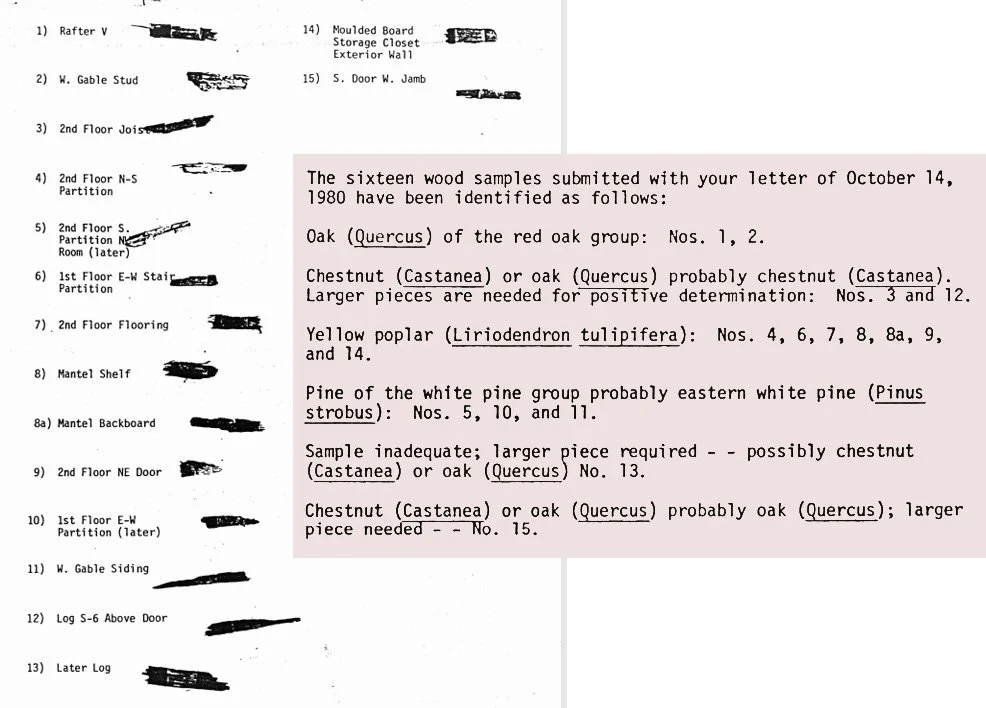
Above: Source: “Restoration Study for the Downingtown Log House,” John Milner Associates, Inc., 1981, National Register of Historic Places.
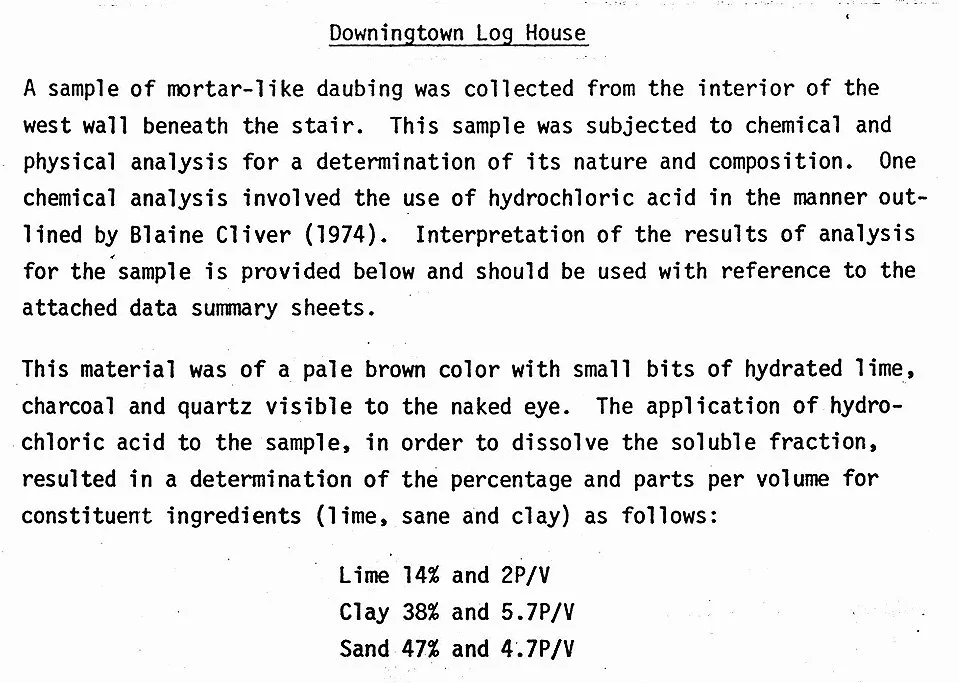
Above: Source: “Restoration Study for the Downingtown Log House,” John Milner Associates, Inc., 1981, National Register of Historic Places.
1986: The Proposed Rescue and Relocation
of the Downingtown Log House:
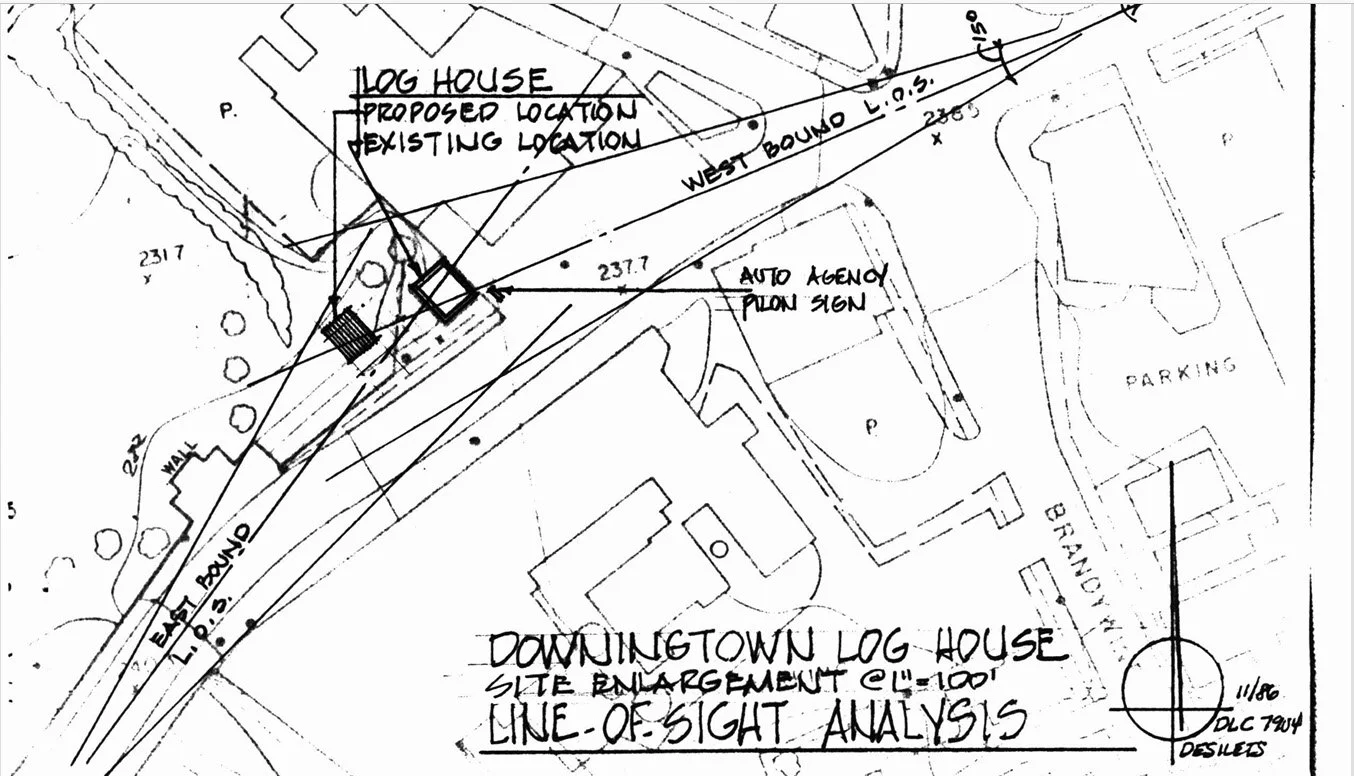
Architect Robert L. DeSilets studied the property in 1986. His report included this drawing of the proposed move of the log house. Image source: National Register of Historic Places.
The Downingtown Community Raised Funds
To Rescue and Relocate the Log House:
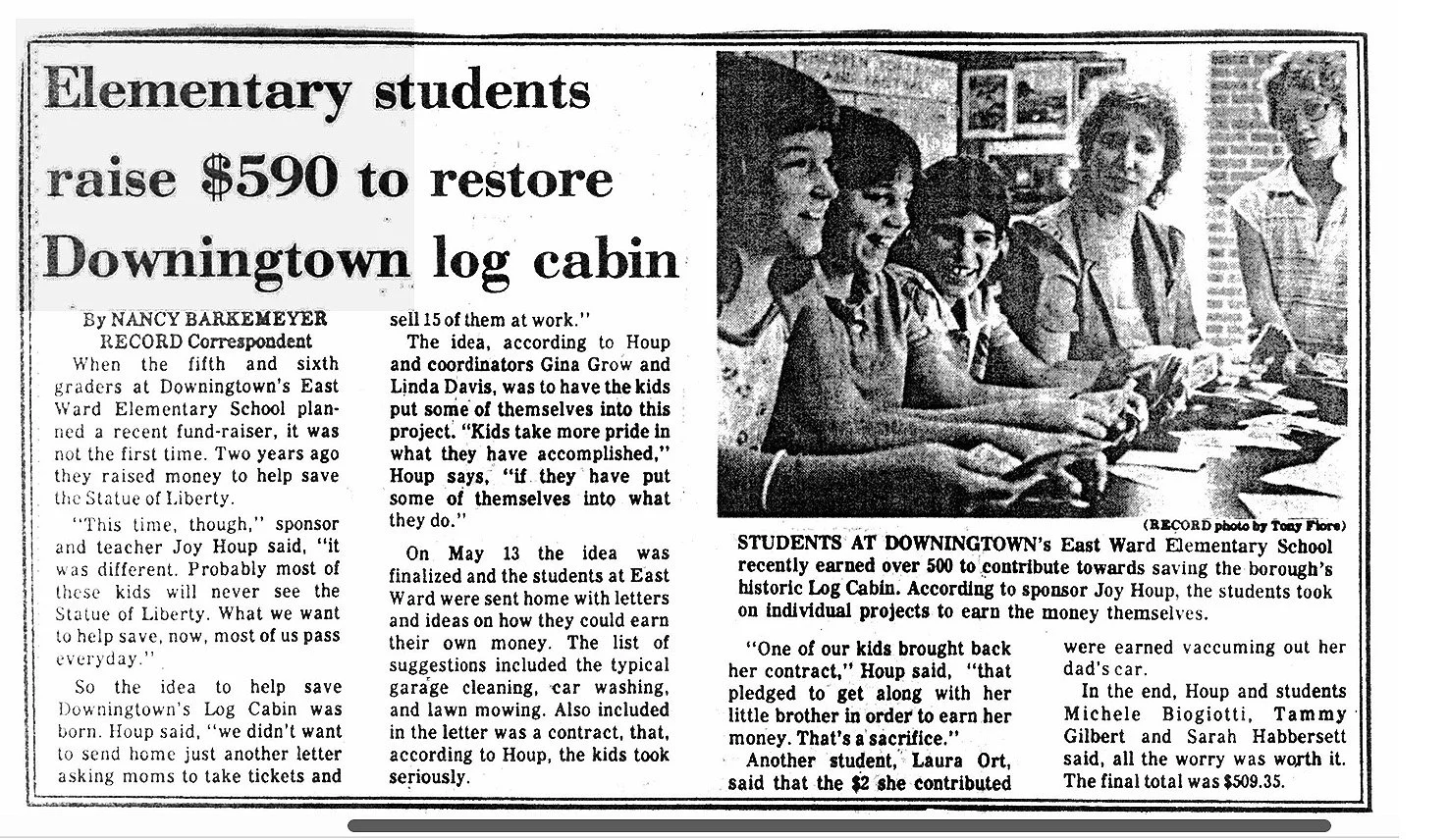
Above: By July 1986 Friends of the Log House Committee raised more than $100,000 in funds and pledges to move and restore the historic structure. The project was a joint venture of the Downingtown Historical Society, Friends of the Log House, and Borough Council of Downingtown. Image source: Record June 1985, Newspapers.com.
1988: The Log Houses Moves to its New Home:
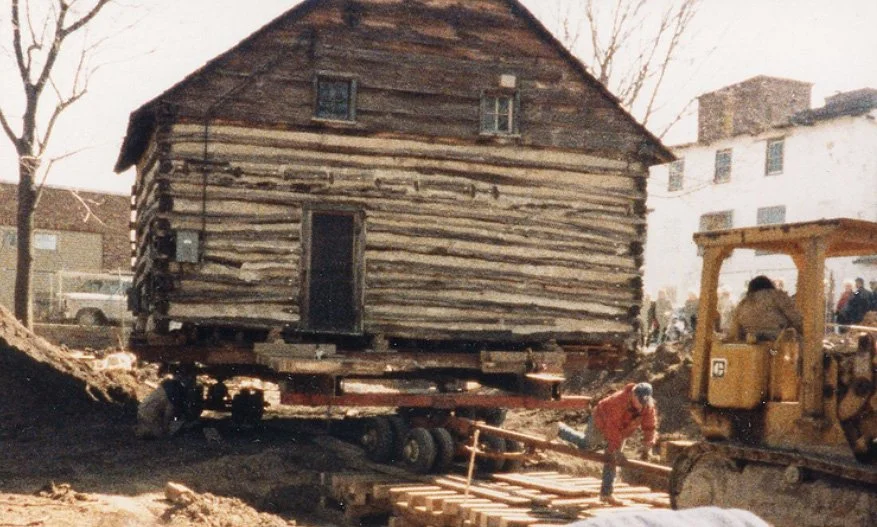
Above: The log house moved to its current location in 1988. The log house remains listed on the National Register of Historic Places despite this move away from its original location. Image source: Chester County Press.
Links: