
Historic Quaker Houses of Chester County, PA
The Barnard House / Barnard Station
A Landmark of the Underground Railroad
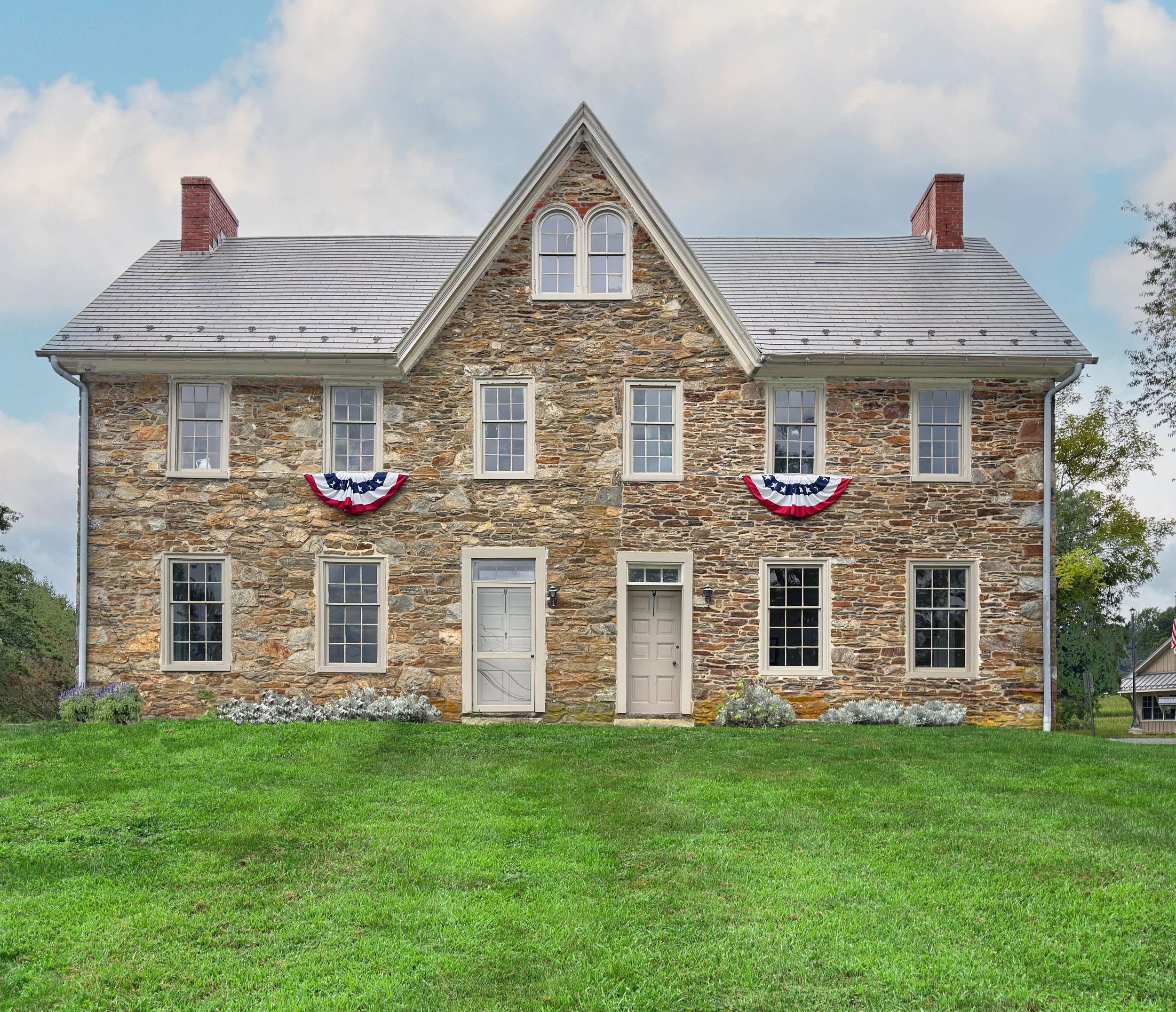
This historic farm was the home of Quaker farmers Eusebius and Sarah Barnard. The Barnards were unwavering abolitionists who opened this home to escaped slaves traveling on the Underground Railroad. Eusebius Barnard also helped establish the Longwood Progressive Friends Meeting and signed the petition calling for the creation of Pocopson Township. Image source: Lee J. Stoltzfus.
Historical Marker at Barnard Station:
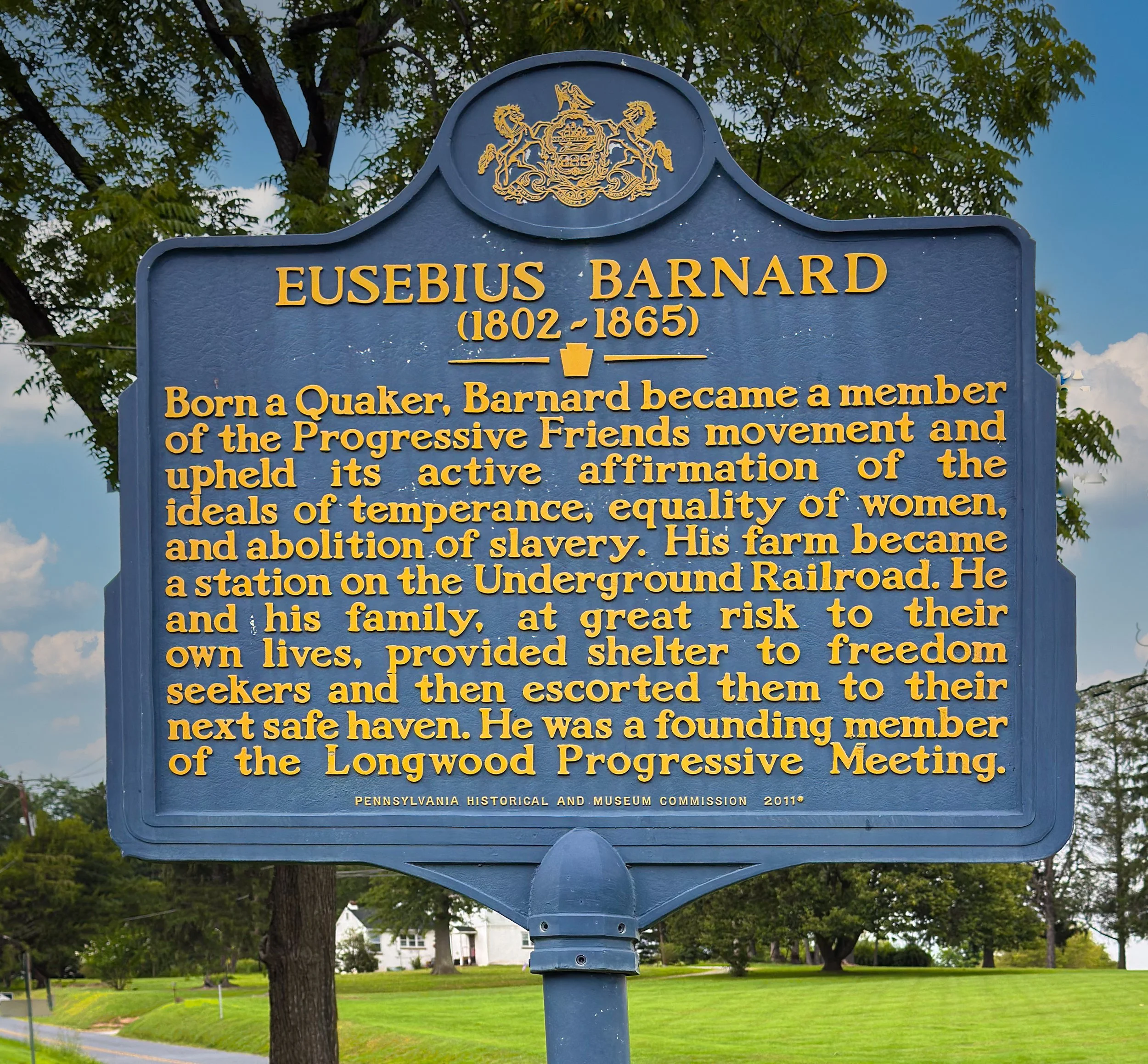
Above: The Pennsylvania Historical & Museum Commission dedicated this roadside historical marker honoring Eusebius Barnard on April 30, 2011. Image source: Lee J. Stoltzfus.
Barnard Family of Anti-Slavery Activists:
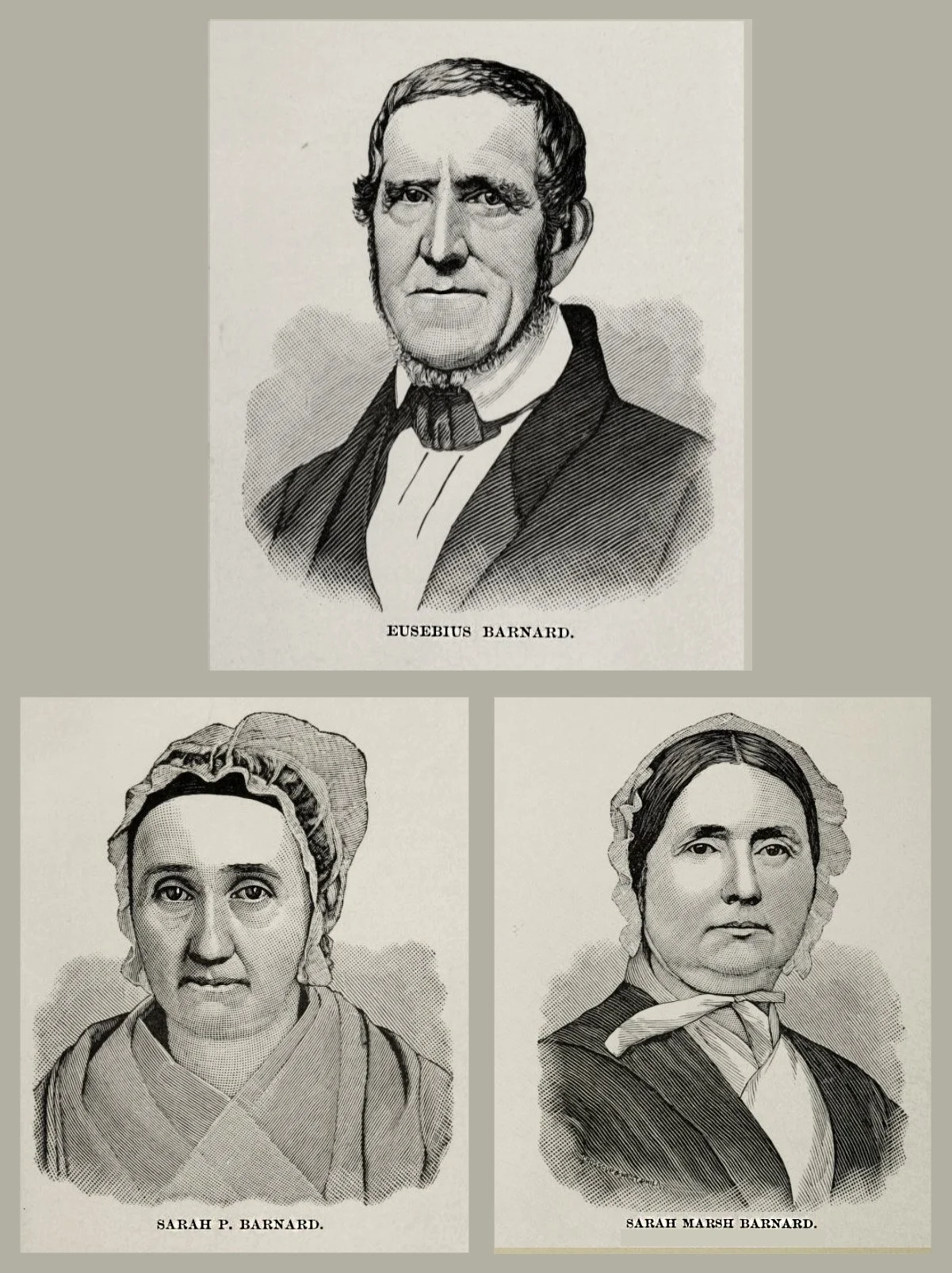
Above: Eusebius Barnard; his first wife, Sarah Painter Barnard, whom he married in 1829; and his second wife, Sarah Marsh Barnard, whom he married in 1854. Images source Internet Archive.
Heritage Center at the Barnard House:
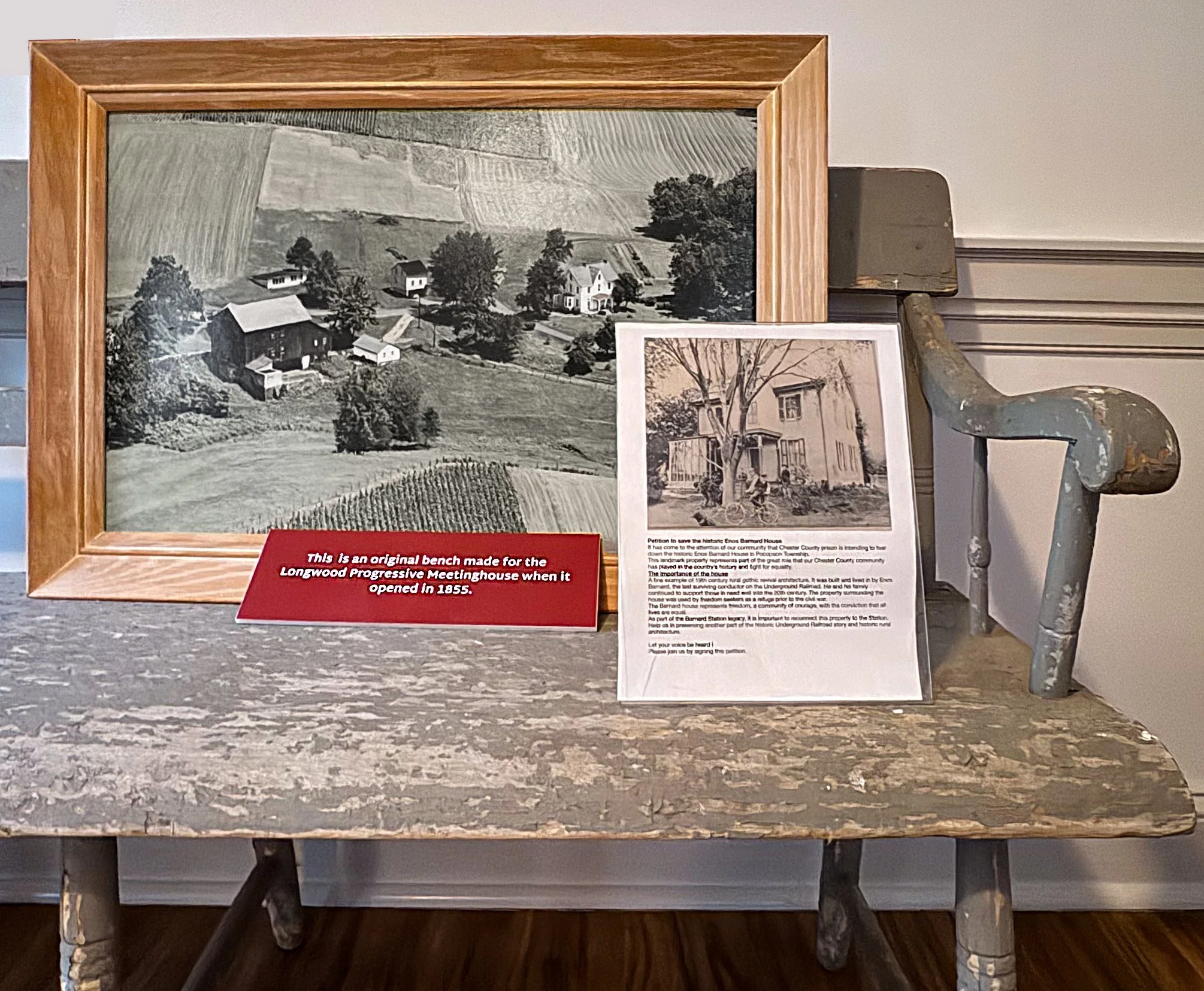
Above: In 2021 Friends of Barnard Station and Pocopson Township entered into an agreement allowing the first floor of the historic Barnard House to be developed as a new Heritage Center. Image source: Lee J. Stoltzfus.
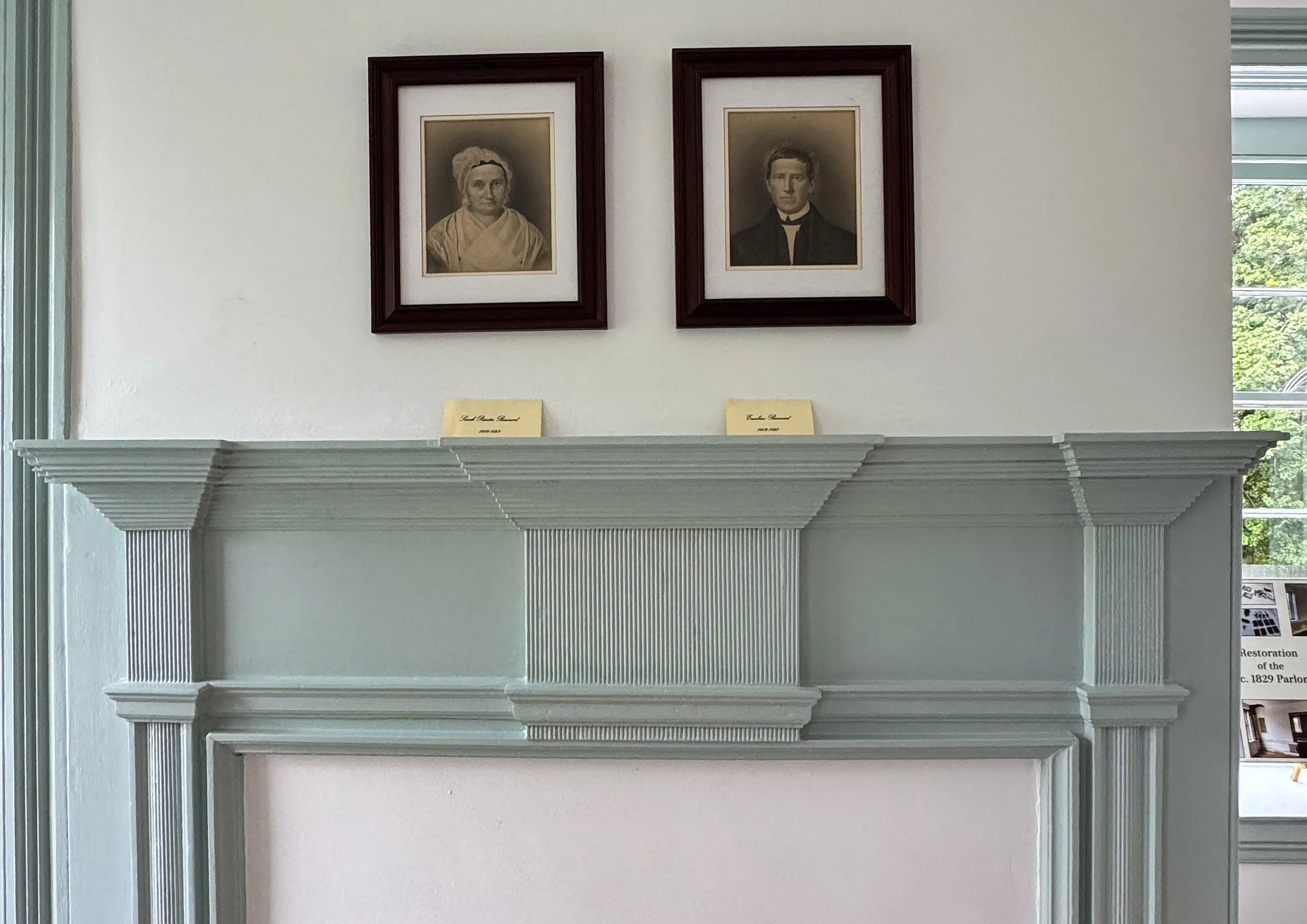
Above: Portraits of anti-slavery activists Sarah Painter Barnard and Eusebius Barnard hang above a fireplace mantel. Image source: Lee J. Stoltzfus.
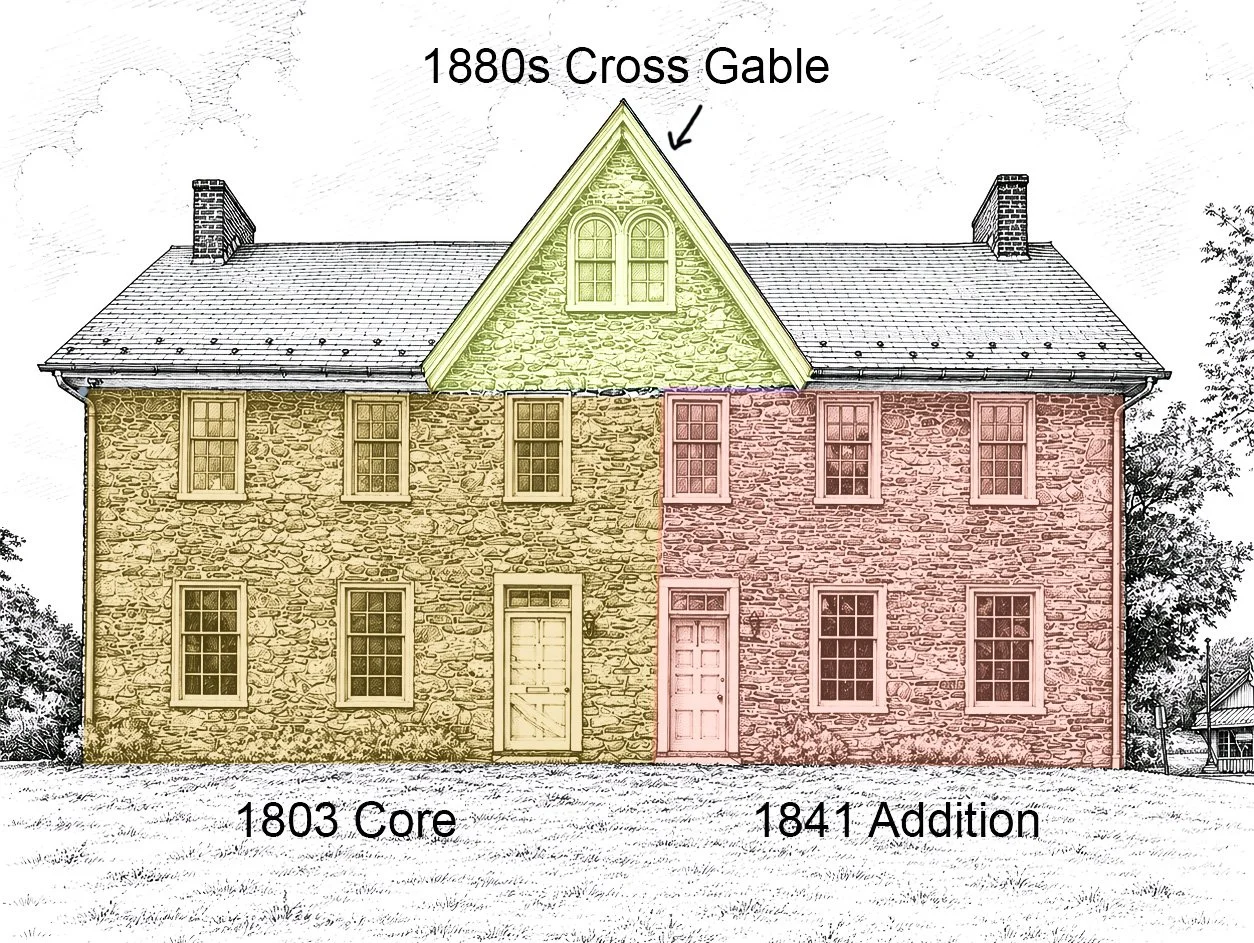
Above: Additions to the Barnard House. Image source: Lee J. Stoltzfus.
Floor Plan of the Barnard House, ca. 1829:
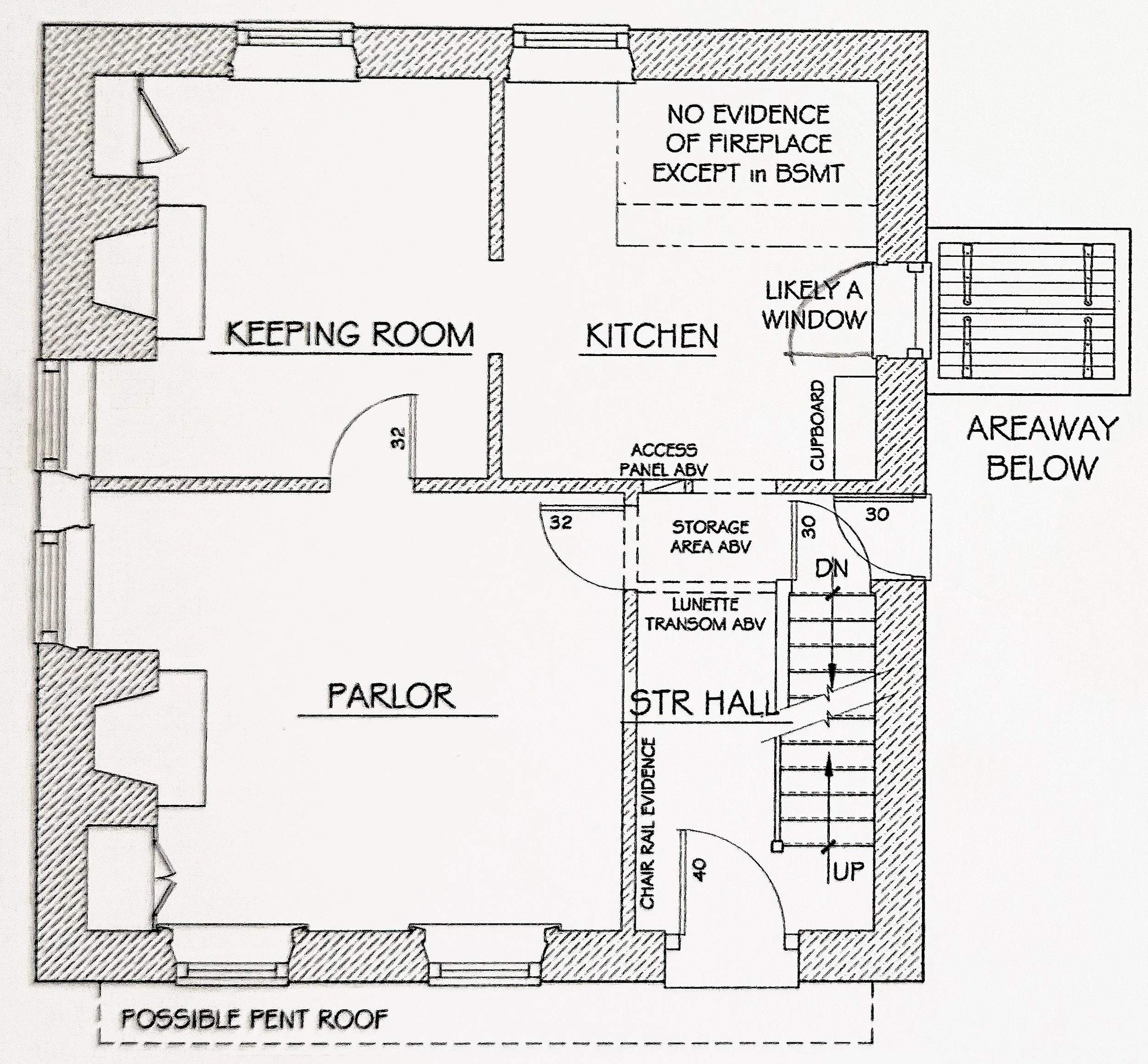
Above: Image source: Preservation architect Daniel Campbell, 2023. Plan photographed at Barnard Station.
Barnard Station’s Building Stone
Doe Run Schist
of the Glenarm Wissahickon Formation:
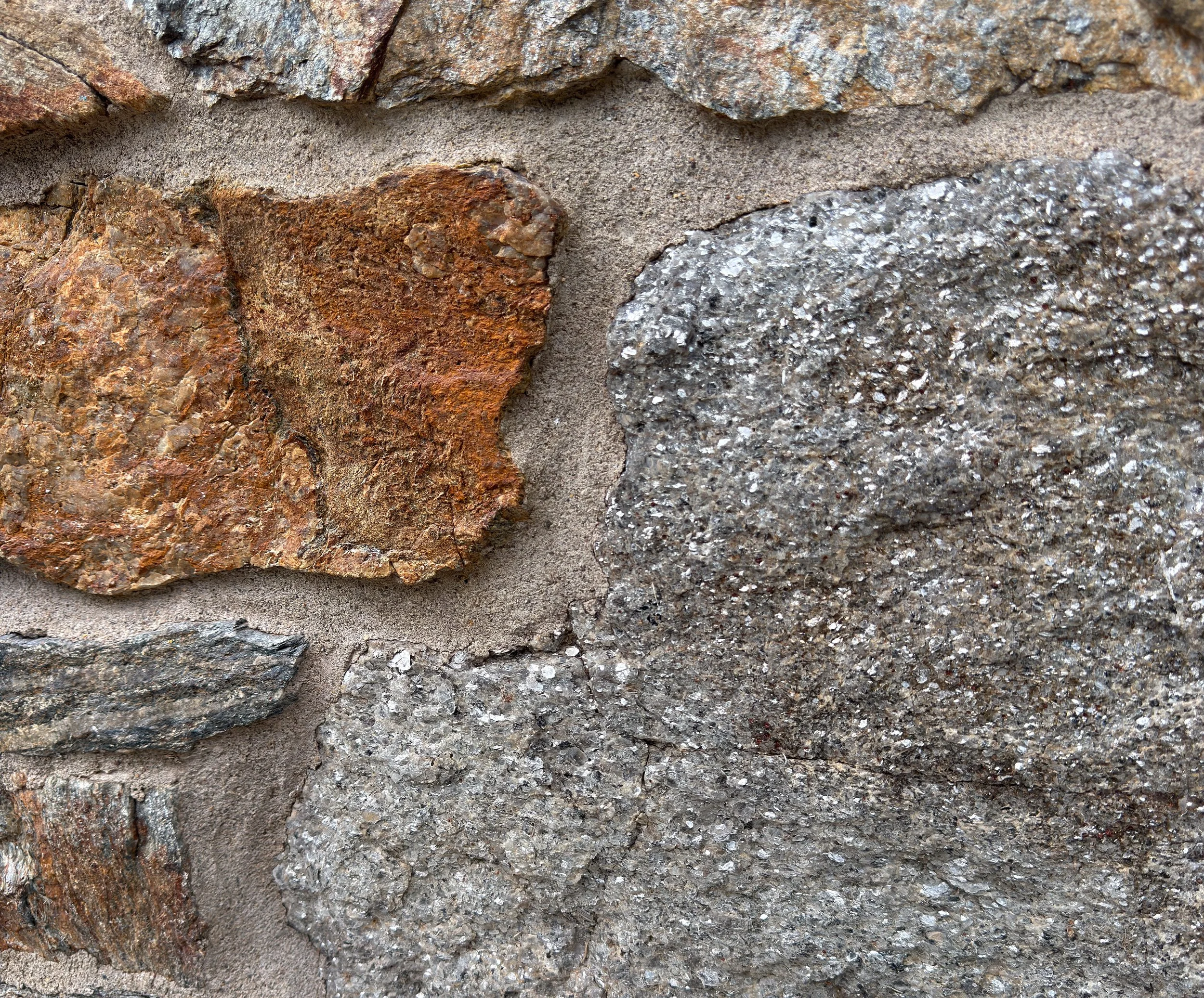
Barnard Station is constructed of local fieldstone, principally Doe Run Schist, a mica-rich metamorphic rock mapped by the Pennsylvania Geological Survey as part of the Glenarm Wissahickon Formation. Its abundant muscovite mica gives many of the stones their distinctive silvery, glittering appearance.
The brown stone, above, is also likely Doe Run Schist that has weathered to a rusty brown color as iron-bearing minerals oxidized at the surface.
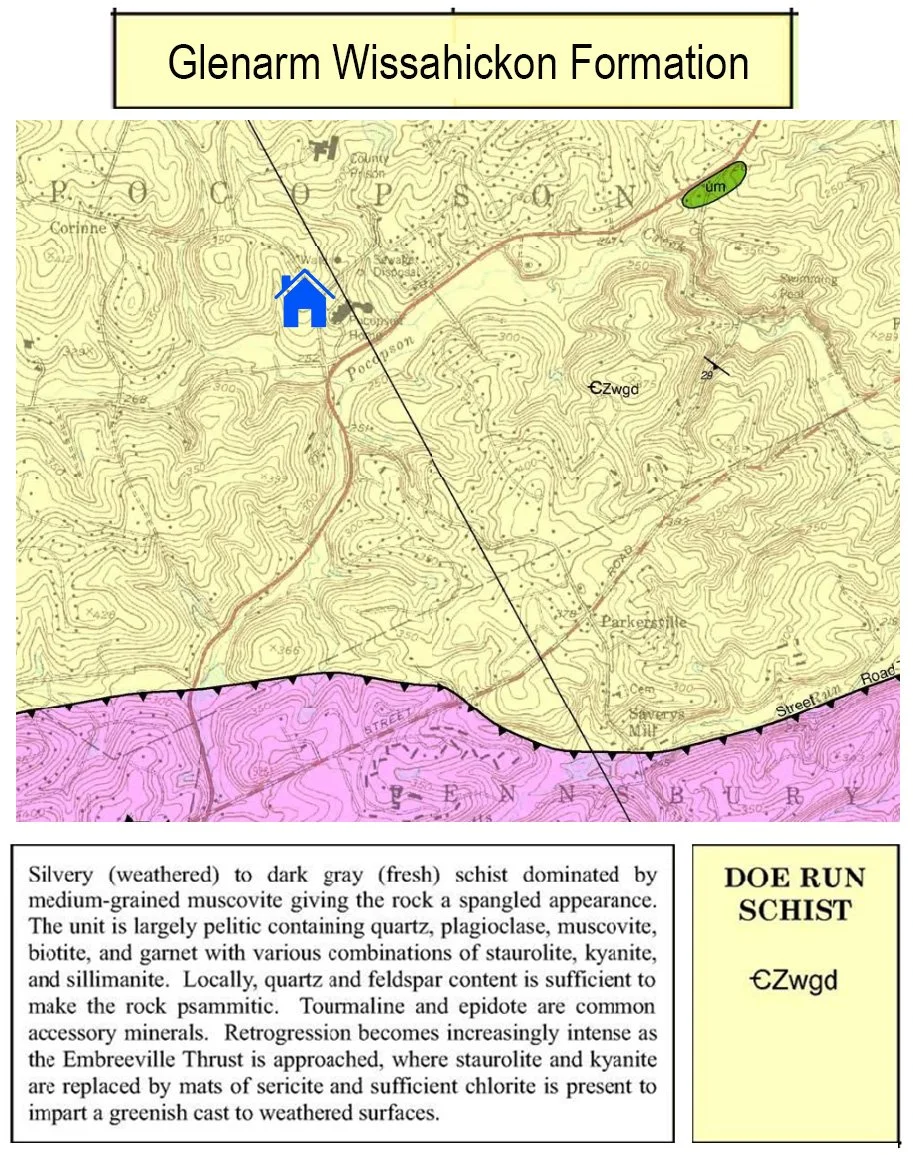
Above: The blue house icon marks the location of Barnard Station, which stands on bedrock mapped as Doe Run Schist. Image source: National Geologic Map Database, house marker added.
The Barnard House
and The Cox House at Longwood Gardens:
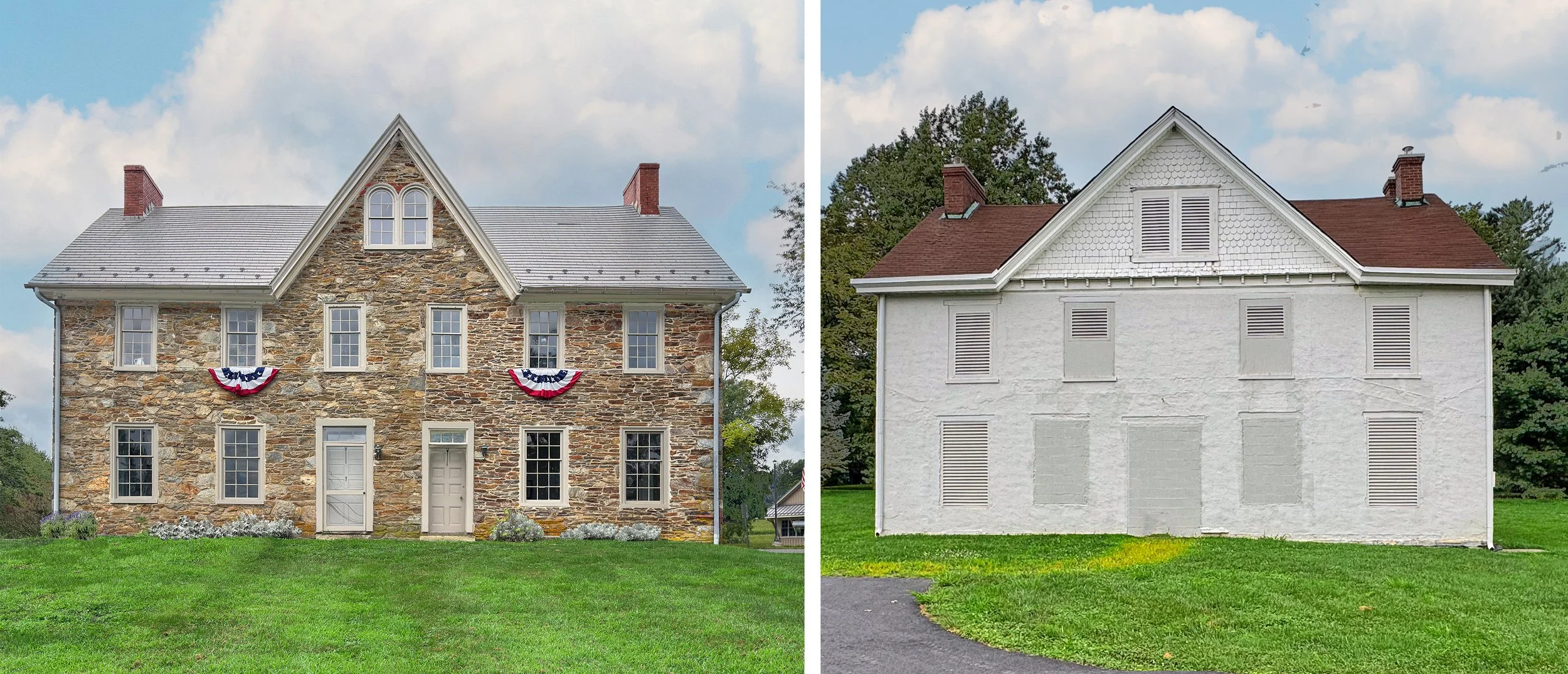
Both Barnard Station and the Cox House at Longwood feature prominent central cross gables rising from otherwise side-gabled roofs. Barnard Station’s prominent cross gable was added during alterations begun after Eusebius Barnard Jr. married Alta Downing in 1878.
The Cox House’s large cross gable was added during major remodeling around 1910, after the Cox family sold the property to George E. Thatcher in 1898.
Links: