
The Three Leading Artists
of Pennsylvania Impressionism at New Hope
Their Historic Stone Farmhouses
#1. Artist Daniel Garber
The ca. 1799 Kenderdine House
An Indiana Farmboy in a Quaker Farmhouse:
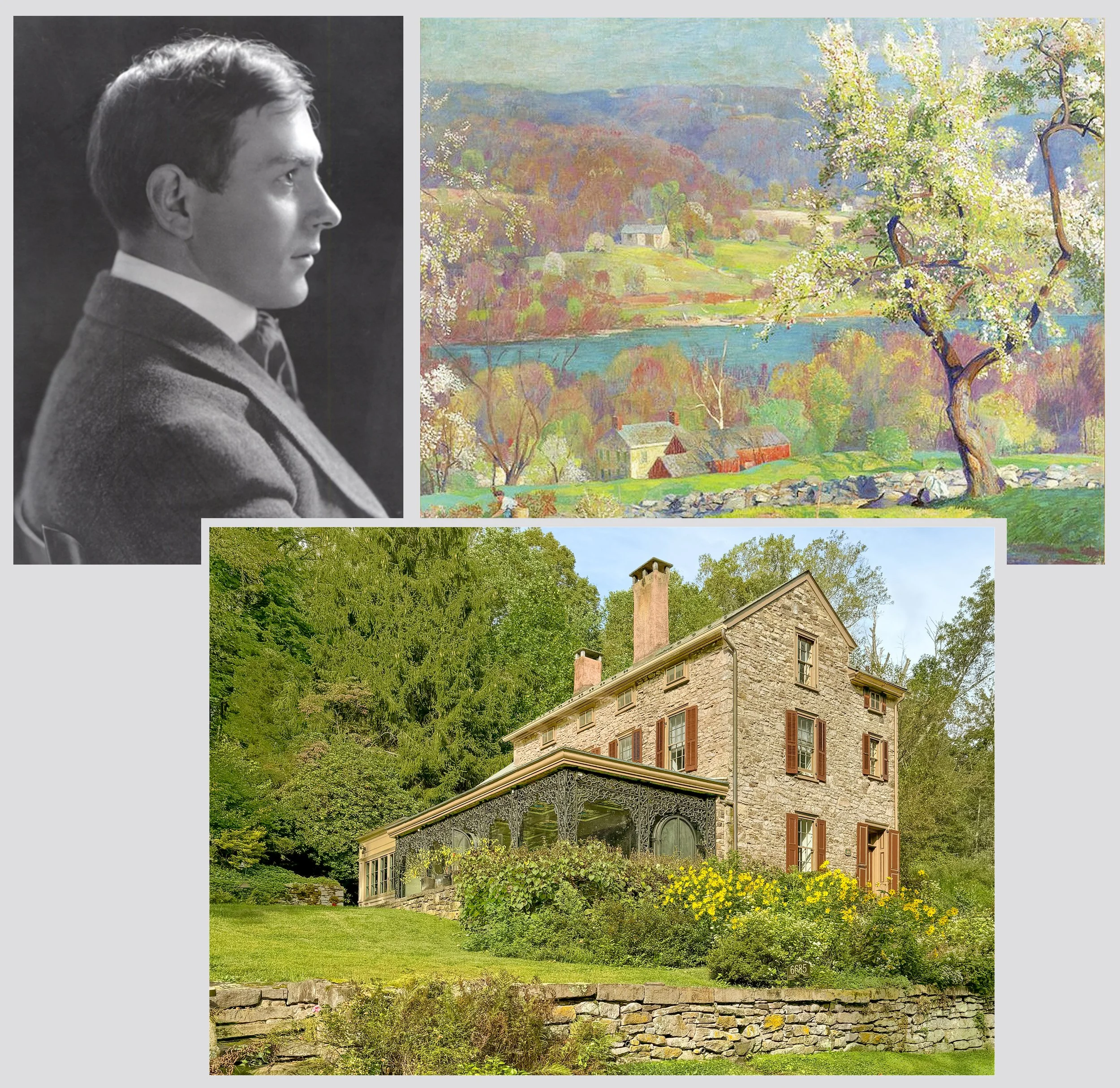
Daniel Garber painted this Delaware River landscape in 1937. The painting, Byram Hills, Springtime, sold for $1.1 million at Sotheby’s in 2003, a record auction price for a painting of the Pennsylvania Impressionist movement.
Daniel Garber and his wife Mary Franklin Garber acquired this Kenderdine farm in 1907 and made it their home.
Image sources: Portrait: Artnet, Daniel Garber Catalogue, Hollis Taggart Galleries. Painting: Sotheby’s. House: Lee J. Stoltzfus.
This Garber house is here on Quakerhouses.com.
#2. Quaker Artist Edward Redfield
His Home:
The 1815 Mitchell Farmhouse:
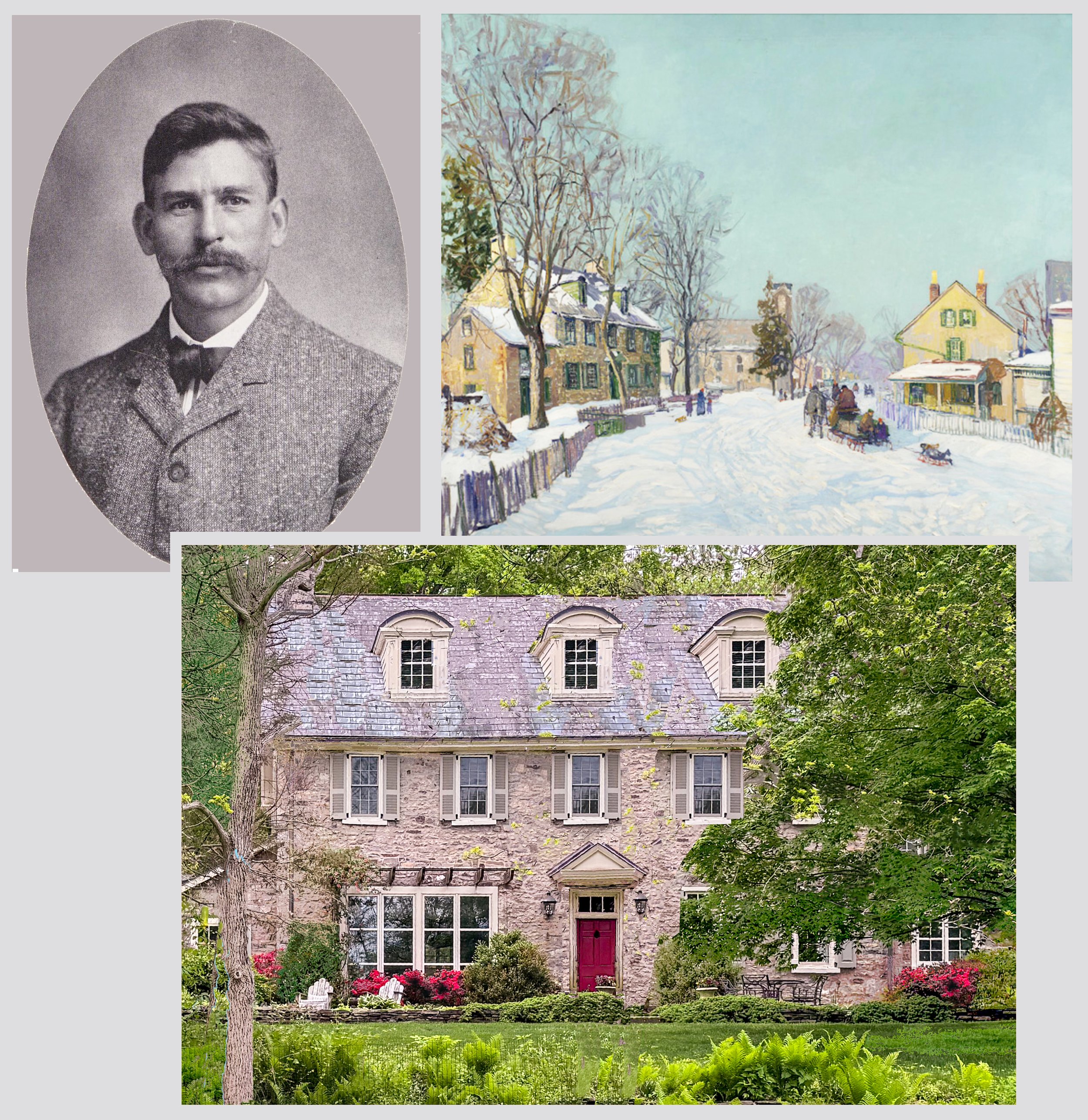
Quaker artist Edward Redfield and his wife, Elsie (Deligant) Redfield, lived in the New Hope area beginning in 1898. In 1935, he purchased this sandstone farmhouse on the Delaware Canal and later added the large studio window. William Mitchell built the house in 1815. Mitchell was an active member of the local Baptist congregation.
Image sources: ca. 1905 Redfield portrait: The Pennsylvania Impressionists, Thomas C. Folk, (1997), Internet Archive. Painting: New Hope, ca. 1926, PAFA. House photo: Lee J. Stoltzfus.
#3. Artist William Lathrop
Living in a Quaker Farmhouse
The Miller’s House at Phillips’ Mill:
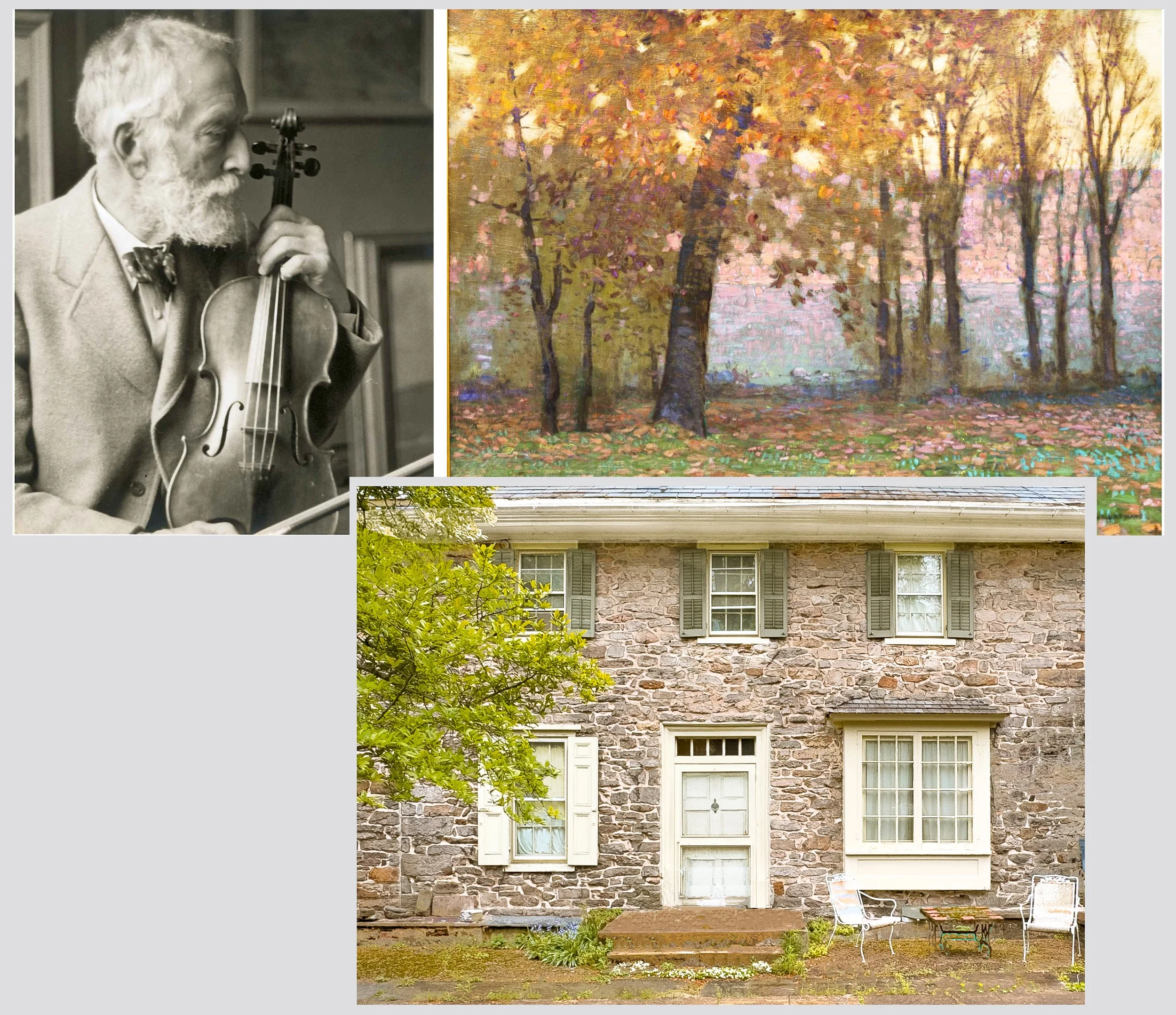
Artist William Lathrop was a founding father of the New Hope Art Colony. He and his wife, Annie Sarah (Burt) Lathrop, lived in a historic Quaker farmhouse / miller’s house next door to Phillips’ Mill. Their home became a social center for the local arts community. In 1929 the Phillips’ Mill Community Association organized at the mill for art exhibits and theatrical performances.
Image sources: Lathrop portrait: Jim’s of Lambertville. Painting: October Evening, 1922, Cottone Auctions, House photo: Lee J. Stoltzfus.
Afternoon Tea at the Lathrop House
The Birth of the New Hope Artist Colony:
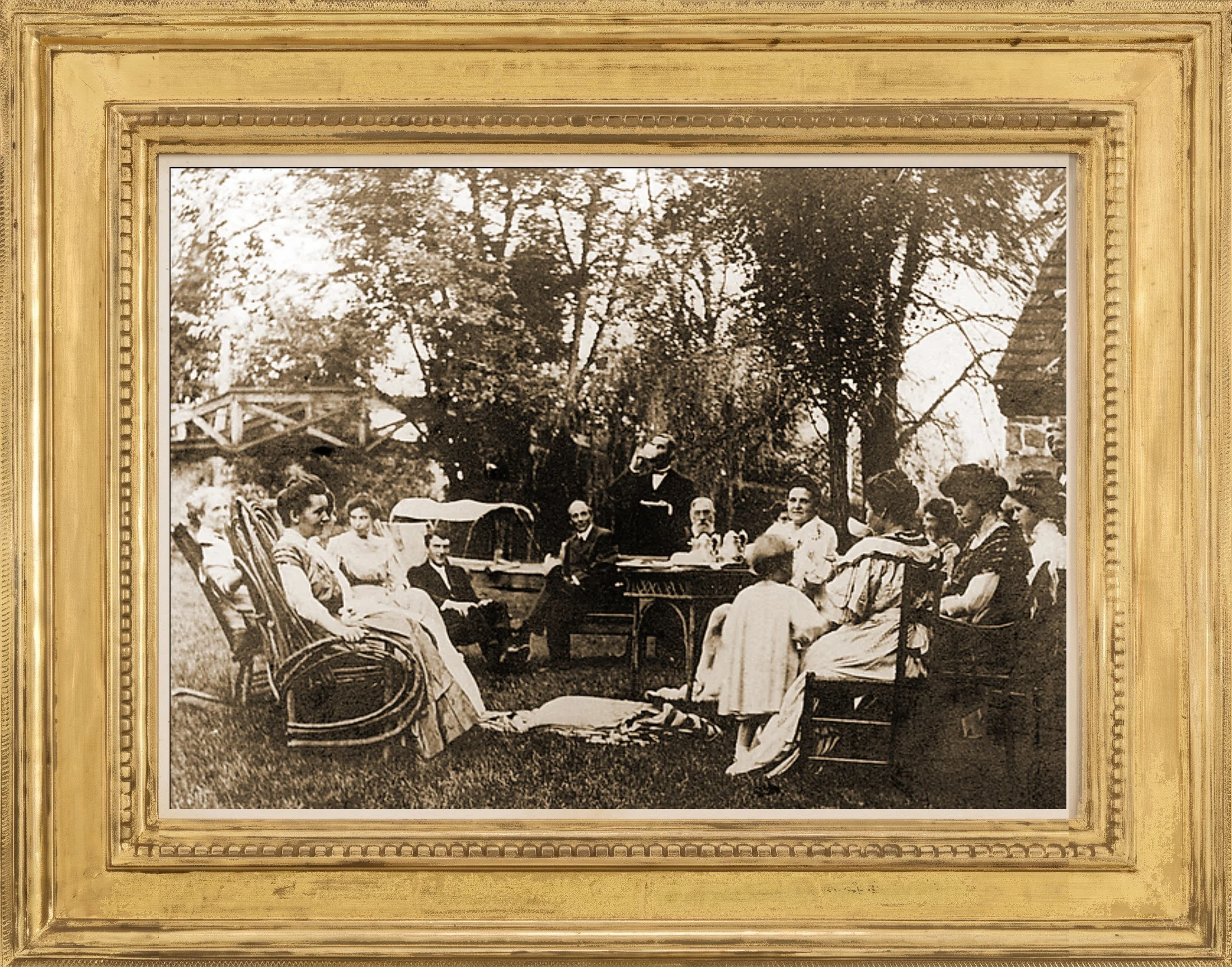
Above: William and Anna Lathrop hosted legendary afternoon teas for their artist friends at their home in the miller’s house at Phillips’ Mill. This community attracted many other artists to the New Hope neighborhood. Photo source: The Genius Belt, The Story of the Arts in Bucks County, Michener Art Museum, (frame added).
These Three Impressionist Pioneers
at the Solebury Quaker Graveyard
Along with Other New Hope Artists:
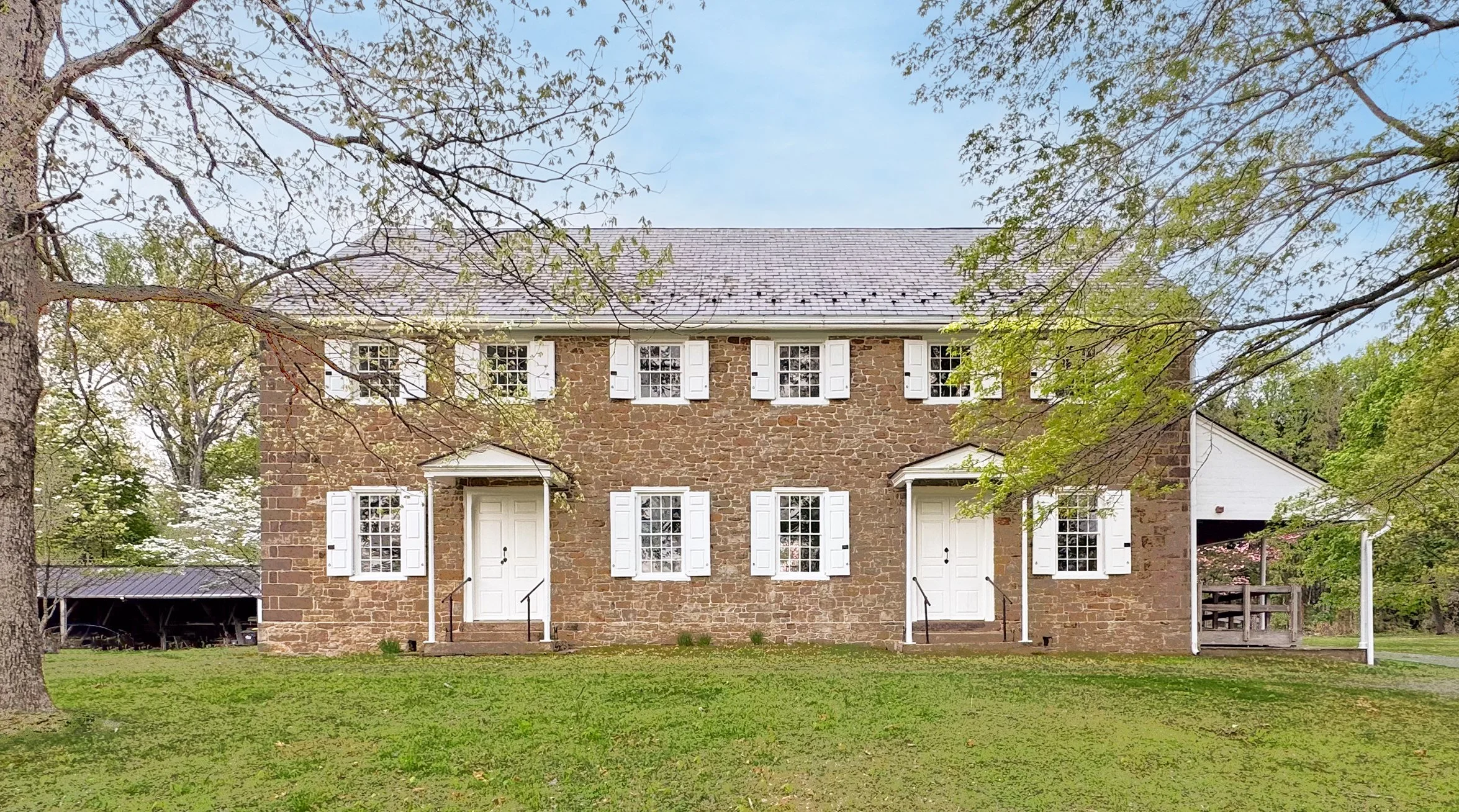
Above: Solebury Friends Meetinghouse near New Hope sits quietly in a bucolic setting. Local Quakers founded this meeting in 1806. It is pastoral and peaceful here, removed from the conflicts of the outside world. It is no surprise that numerous artists who came to New Hope in the early 20th century chose this picturesque meetinghouse landscape for their final resting place. Most of these artists were not Quaker, but Friends welcomed them.
Solebury Friends Meetinghouse in Spring:
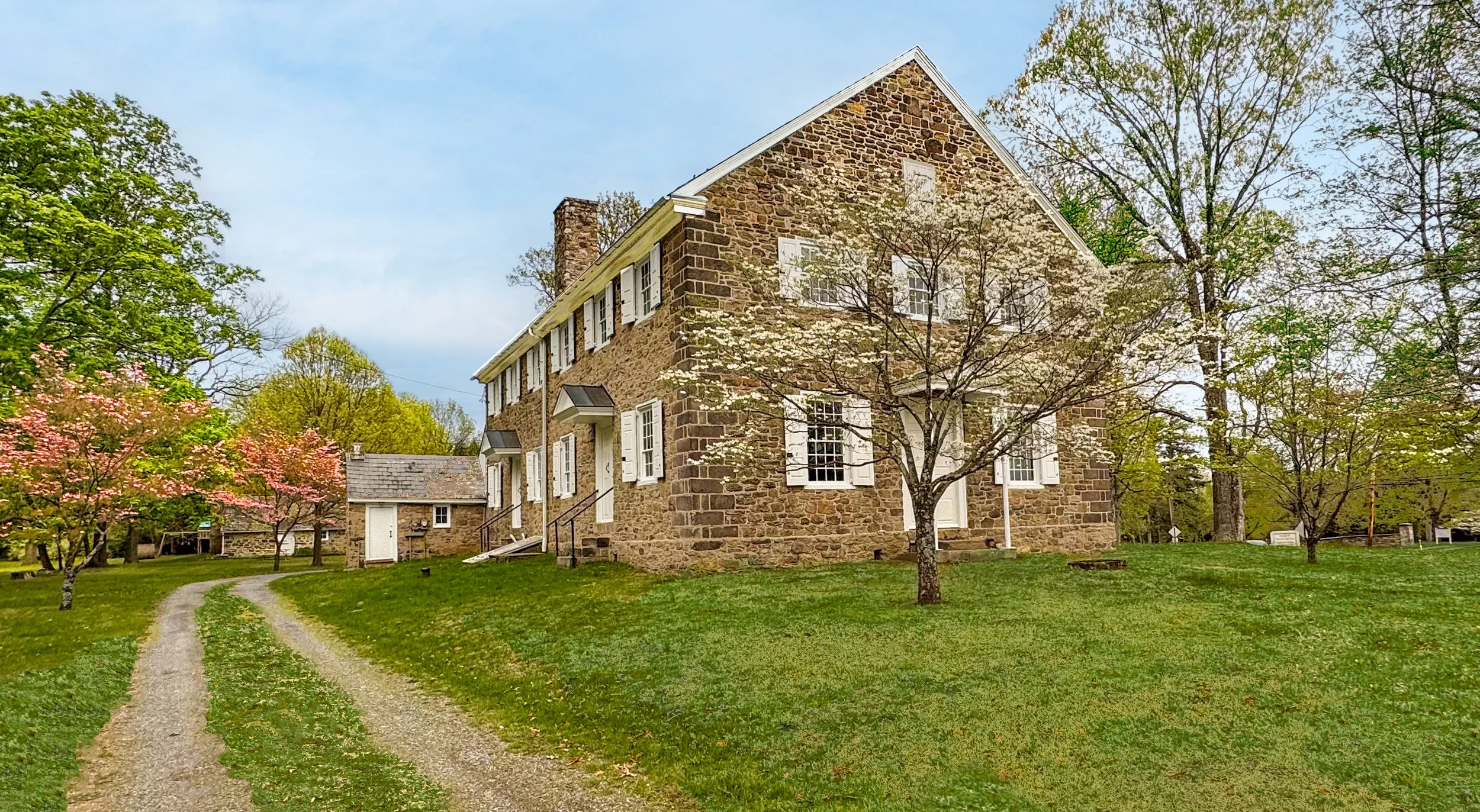
Above: Dogwoods are in full flower beside the sandstone Solebury meetinghouse. Image source: Lee J. Stoltzfus.
The Graveyard at Solebury Quaker Meetinghouse
Where Many Pennsylvania Impressionist Artists are Buried
Including Garber, Redfield, and Lathrop
And the Price Family:
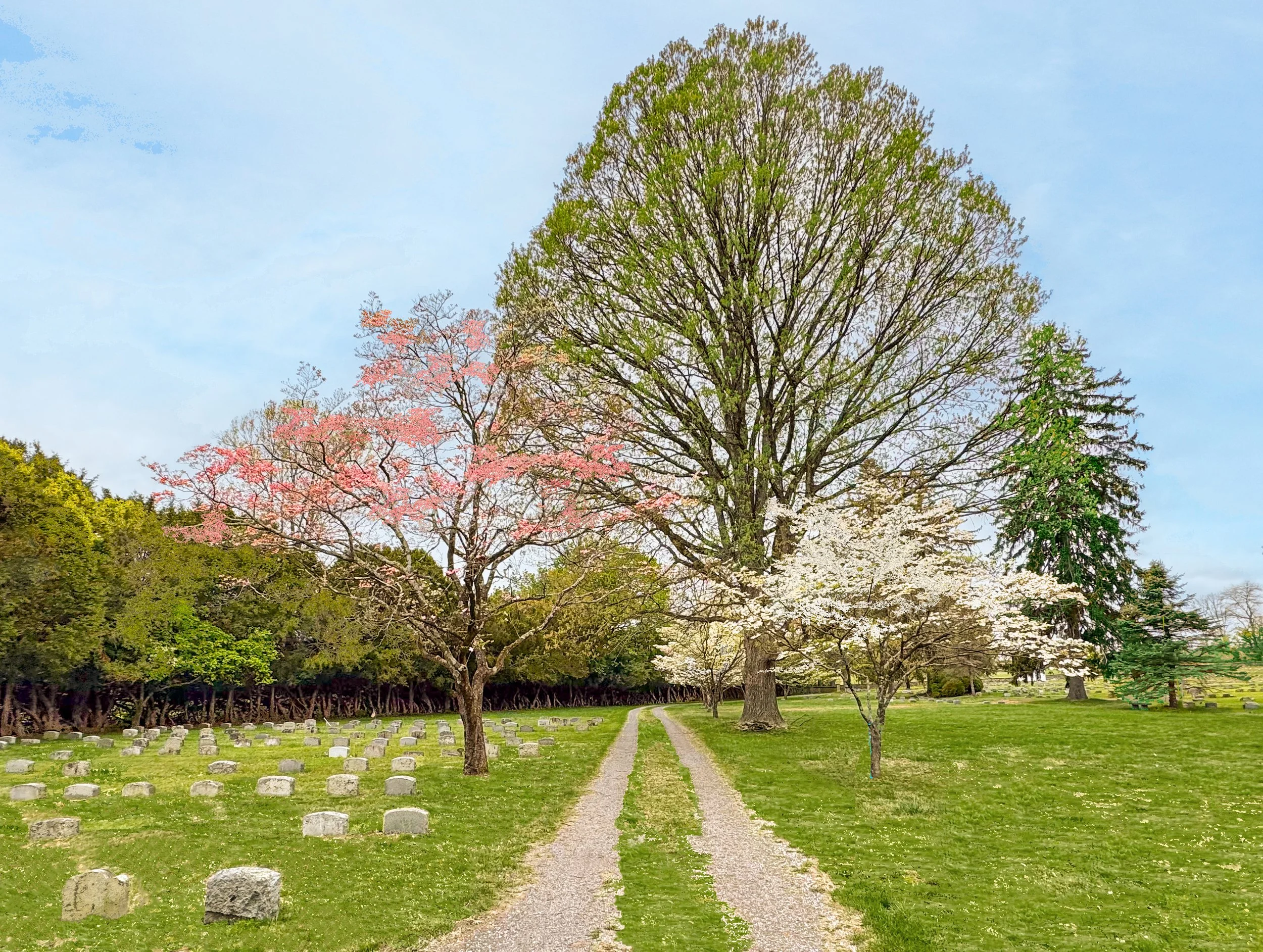
It’s springtime at the Solebury Friends Graveyard near New Hope. The small, equal-sized grave markers are a testimony to Quaker ideals of humility and equality.
Numerous New Hope artists chose to be buried here, side by side with their Quaker friends and neighbors. This peaceful graveyard is a beautiful memorial to the Bucks County artists who helped place New Hope on the arts-and-culture map of Pennsylvania. These artists laid the foundation for New Hope becoming the artistic mecca of American Impressionism that it is today. Image source: Lee J. Stoltzfus.
The Price Family
Quaker Icons of the New Hope Art Scene
Interred Here at Solebury Meetinghouse:
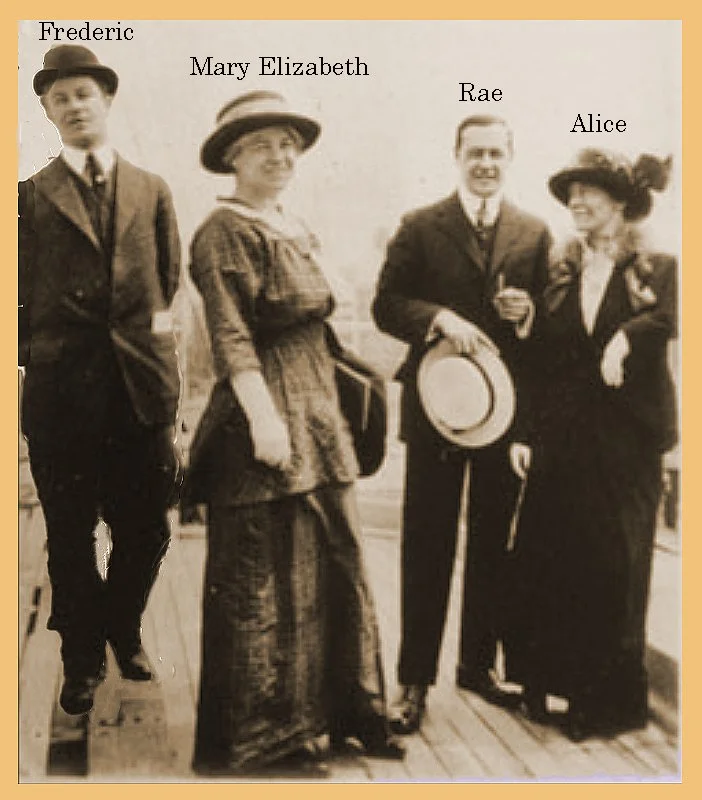
Above: Left to right: Frederic Newlin Price, Mary Elizabeth Price, Rae Sloan Bredin, Alice (Price) Bredin. Image source: Wikipedia
The Solebury graveyard is the final resting place of many artists of the New Hope School. The majority of those artists were not Quaker. But there is also a prominent family of Quaker artists and art dealers, the Price family, who are interred at this site. This family has deep roots in the Bucks County community of Friends.
The Price family has a remarkable number of talented family members who were prominent in the art world as artists, dealers, or frame makers. This family had many close connections with the other New Hope artists here at the Solebury Graveyard. Price family members buried here at Solebury include:
1919: Frederic Price’s Manhattan Art Gallery
Showcasing New Hope Artists:
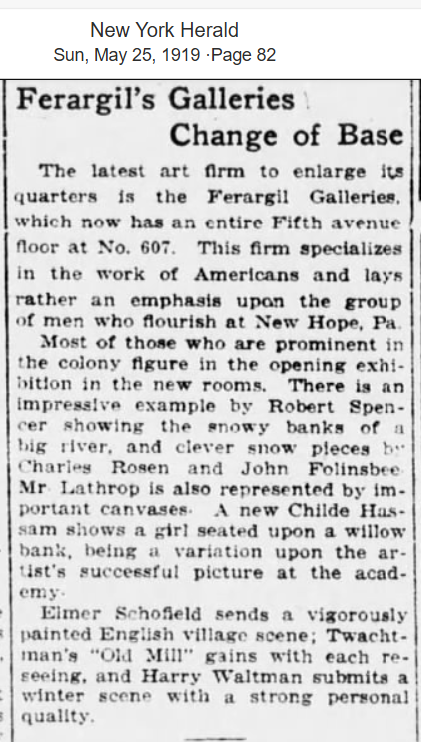
Above: Image source: Newspapers.com
Frederic Price was a member of the Quaker Price family of Bucks County. He created Ferargil Galleries in Manhattan which was one of the primary Manhattan venues selling paintings by New Hope artists during the early 20th century.
This gallery quickly became an important New York sales venue for the leading Bucks County artists, such as Garber, Redfield, and Lathrop. Frederic Price also helped introduce American Regionalism to East Coast audiences in the 1930s, exhibiting and promoting leading figures such as Grant Wood, Thomas Hart Benton, and John Steuart Curry.
Today this Solebury Graveyard is the final resting place for Frederic Price and for numerous other Bucks County artists he helped promote in New York City.
Mary Elizabeth Price:
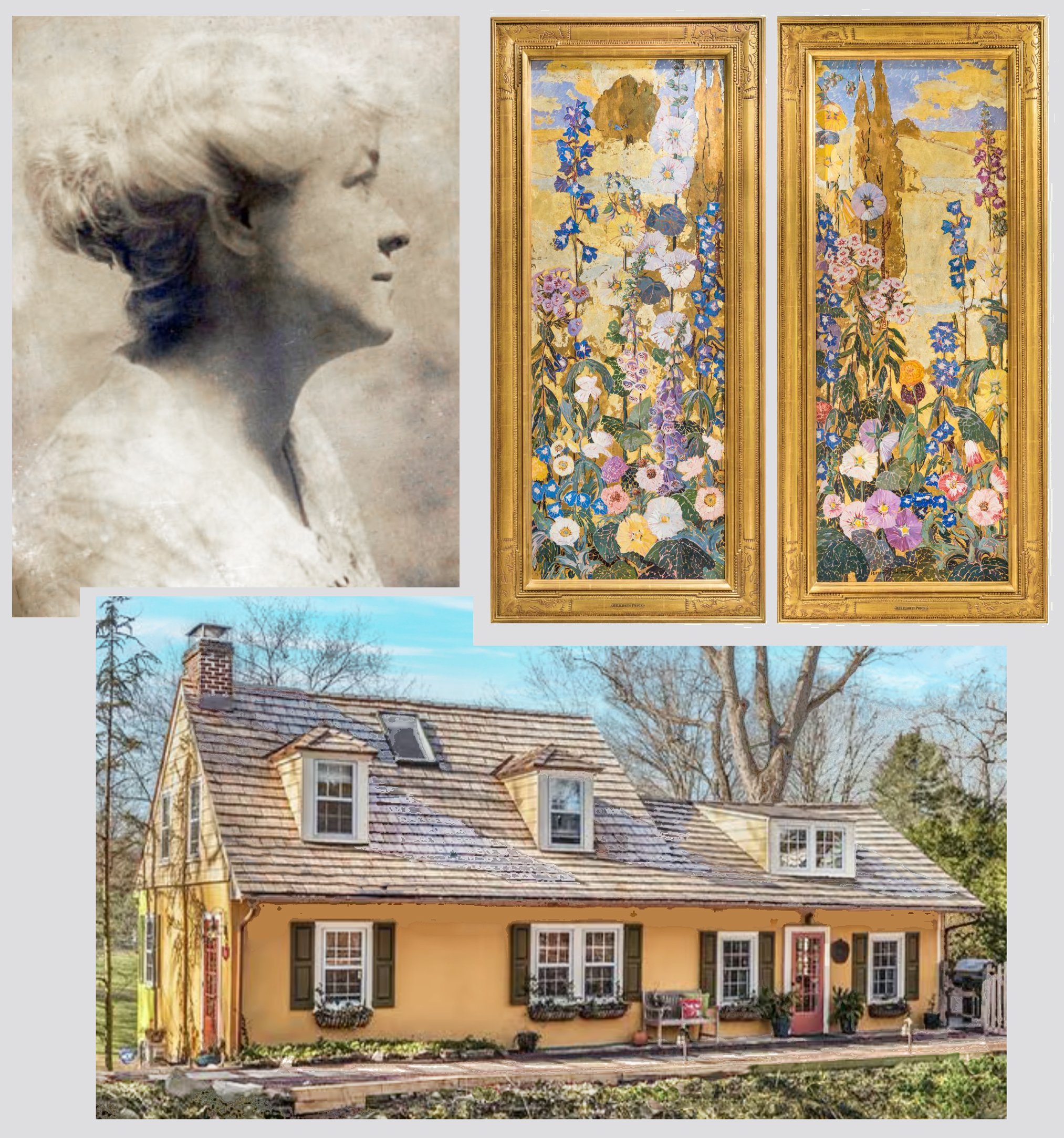
Image sources: Price portrait and flower panels: Michener Art Museum, House: Vimeo.
Mary Elizabeth Price
1877–1965
Painter, lecturer, art teacher, and member of the Philadelphia Ten. She is best known for floral still lifes and decorative panels painted over gold and silver leaf. Mary studied in New Hope with William Lathrop. She named her home and studio at New Hope “Pumpkin Seed Cottage.” She and Fern Coppedge are considered the leading women artists of the Pennsylvania Impressionists. Mary Elizabeth Price and her brother Frederic Newlin Price never married.
Frederic Newlin Price
1883–1963
Art dealer, critic, author, and founder of Ferargil Galleries in New York City, which represented many leading American artists, including Pennsylvania Impressionists.
Rae Sloan Bredin
1880–1933
Painter and member of the New Hope group of landscape painters. He married Alice Price and became closely connected to the Price family’s artistic circle.
Elizabeth Freedley Price
1891–1988
Painter and wife of Reuben Moore Price. She was active in the Phillips’ Mill art community and painted florals, landscapes, and still lifes.
Reuben Moore Price
1879–1963
Art dealer and important frame maker associated with the New Hope art colony. He was the brother of Mary Elizabeth Price and Frederic Newlin Price.
Rae Bredin’s Portrait of His Family
At their Home near New Hope:
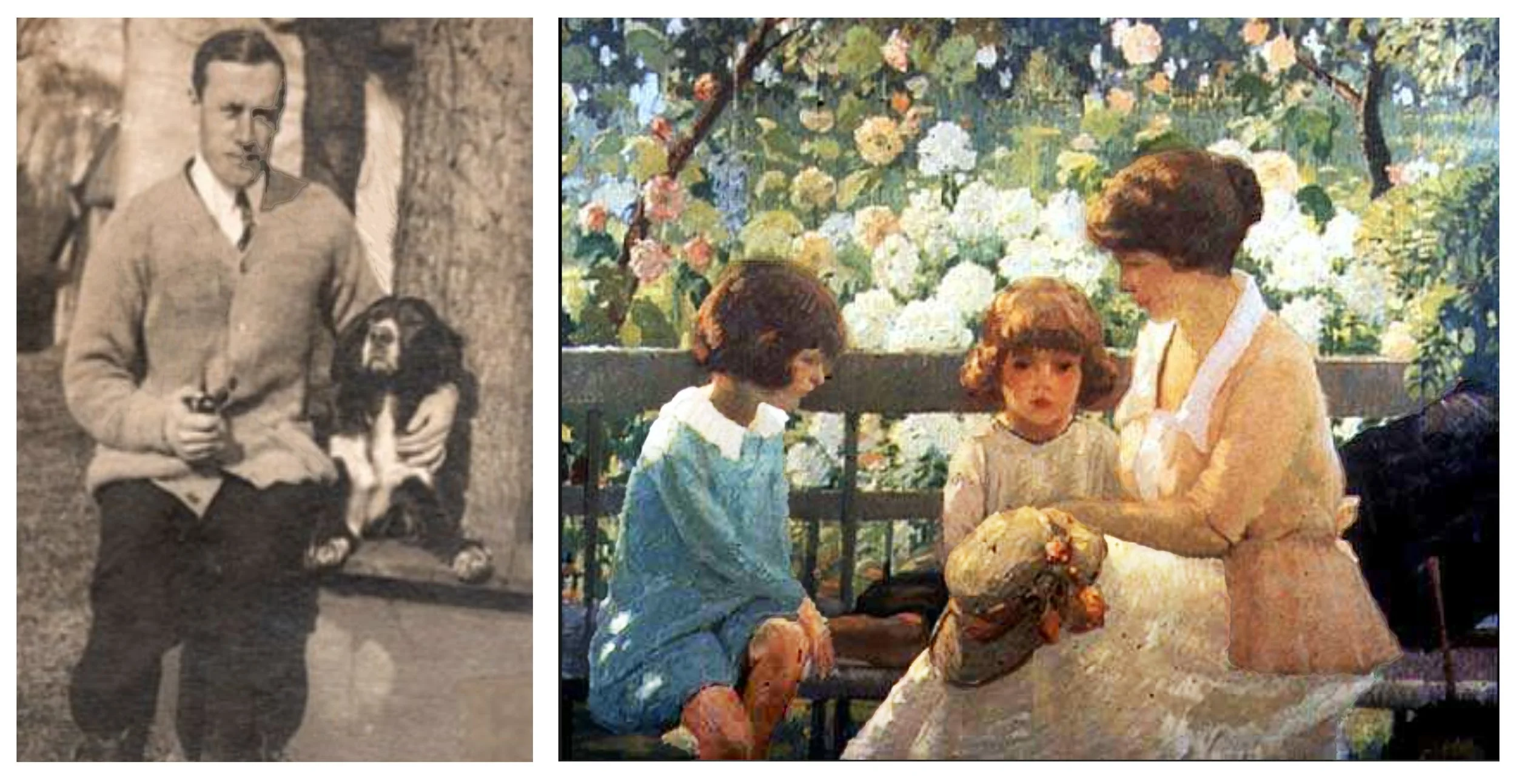
Above: Artist Rae Sloan Bredin married Alice Price, one of the Price sisters. His ca. 1920 painting The Garden Bench portrays Alice with their two daughters, Jean and Barbara.
Images source: Michener Art Museum
Other Artists Buried Here
At Solebury Friends Meetinghouse:
Art instructors Daniel Garber and William Lathrop of New Hope were guiding lights who led many artists to New Hope and the nearby river town in the early 1900s. Solebury Quakers welcomed these artists as their neighbors in life and in the afterlife.
Letitia Maxwell Ely (1886 - 1967) She was a student of Daniel Garber at the Philadelphia School of Design for Women, today’s Moore College of Art.
Charles Evans II (1907 - 1992)
A modernist artist who purchased the old silk mill in New Hope. He helped design sets for the Bucks County Playhouse.
Charles Skinner Garner (1891 - 1933)
A student at the Pennsylvania Academy of the Fine Arts when Daniel Garber was an instructor there.
Francis Wood “Frank” Godwin (1889 - 1959)
An illustrator and a cartoonist. He drew the newspaper comic strips Connie (1927-1944) and Rusty Riley (1948-1959).
Jean Harris Halter (1915 - 1981)
A self-taught artist who operated the River House Restaurant in New Hope with her husband Robert Halter.
Ty Hodanish (d. 2018)
A renowned plein air painter, a teacher, a gallery owner, and president of Artbridge.
Harry H. Horn (1900 - 1982)
A self-taught artist whom Daniel Garber and Edward Redfield encouraged as a painter.
Sandra G. Phillips Lobley (1943 - 2013)
An owner of a sign company in Solebury that showcased her distinctive artwork.
Harry S. McNaught (1923 - 2020)
A prolific book illustrator for decades for multiple publishing houses including Golden Press and Random House.
Robert A. D. Miller (1905 - 1966)
A student of Daniel Garber at the Pennsylvania Academy of the Fine Arts.
Lillian A. Montague (1868 - 1946)
A student of Daniel Garber at the Pennsylvania Academy of the Fine Arts.
Kenneth Rollo Nunamaker (1890 - 1957)
He purchased a home near Edward Redfield for his family. Redfield was a mentor and advisor for Nunamaker’s artwork.
Ethel Short Powell (1904 - 1993)
A founding member of the Easton Community Art League.
Herb Sandor (1926 - 2022)
An antiques dealer, artist, and art collector with an antiques business in Lambertville.
Florence Francis Snell (1850 - 1946)
She and her husband Henry Snell were introduced to the New Hope artists by the Lathrops of Phillips’ Mill.
Henry Bayley Snell (1858 - 1943)
An instructor at the Philadelphia School of Design for Women, now the Moore College of Art.
Mary Smith Perkins Taylor (1875 - 1931)
She received art instruction from William Lathrop at Phillips’ Mill, the center of the arts community in New Hope.
These artists of the New Hope Art Colony were together in life and in afterlife. Solebury Quakers helped provide a welcoming homebase for that community. Today, the collective spirit of these artists lives on through the galleries and publications that champion their cultural achievements.
Links: