
Historic Quaker Houses of Montgomery County, PA
The Warder House
"The Quaker Manor House"
Built ca. 1730
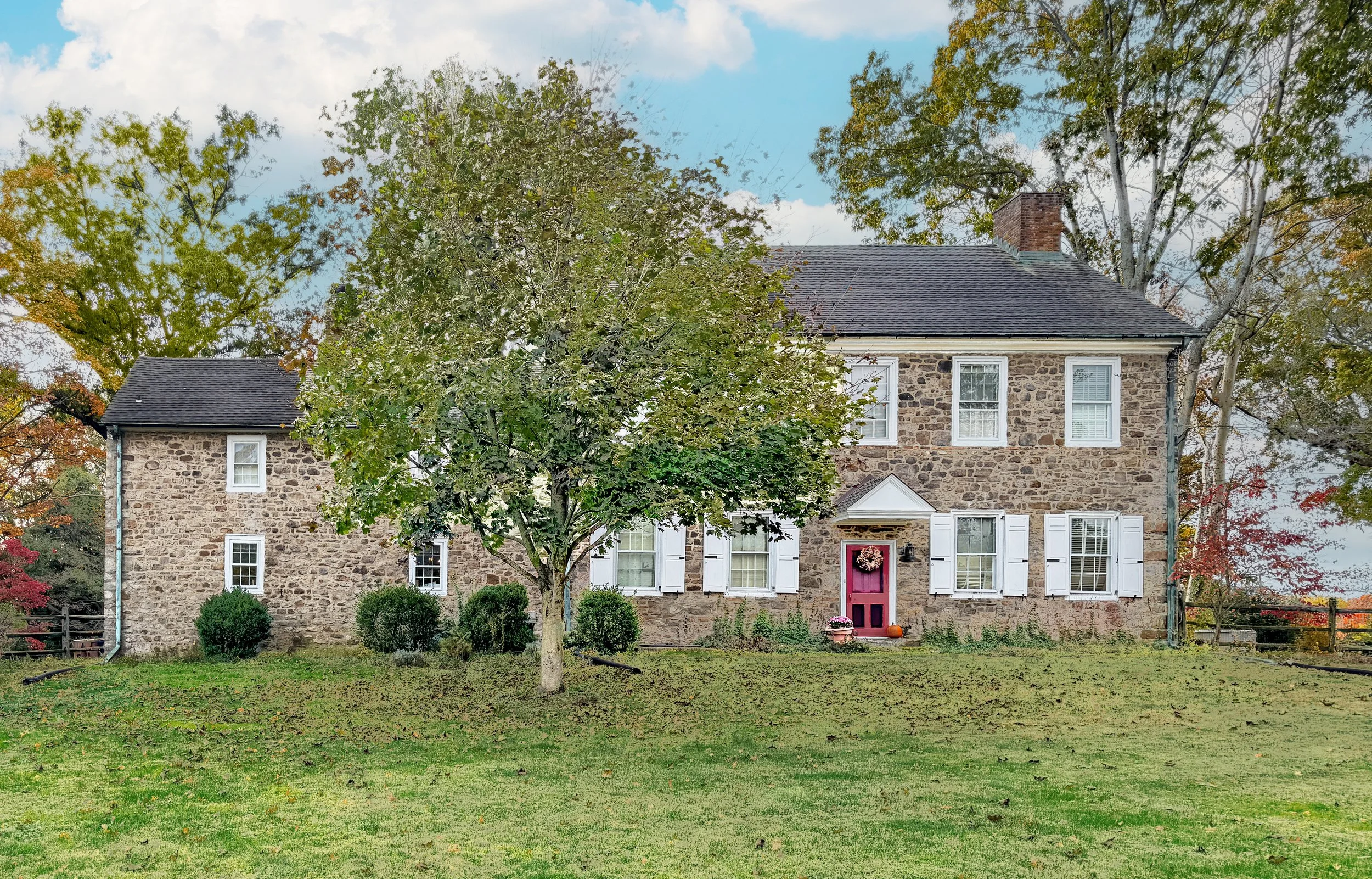
Above: The Warder House was owned by wealthy Quaker merchant Jeremiah Warder from 1774 to his death in 1783. He lived here with wife Mary (Head) Warder. Image source: Lee J. Stoltzfus
The Quaker Manor House in Fort Washington was built ca. 1730 by fur trader John Petty. He owned Petty’s Island in the Delaware River and also was owner of the Whitemarsh Township tract later known as the Highlands. Petty built the house’s main block ca 1730, and he added the wing ca. 1760.
In 1774 the property was purchased by Jeremiah Warder, a wealthy Philadelphia Quaker merchant who used the property to support his firm's expanding interests in the fur trade. In 1736 Jeremiah Warder had married Mary Head.
Under Jeremiah Warder’s ownership, the estate became known as "Warder’s Conquest". While Warder maintained a primary business in Philadelphia he lived at this farm as well until his death in 1783.
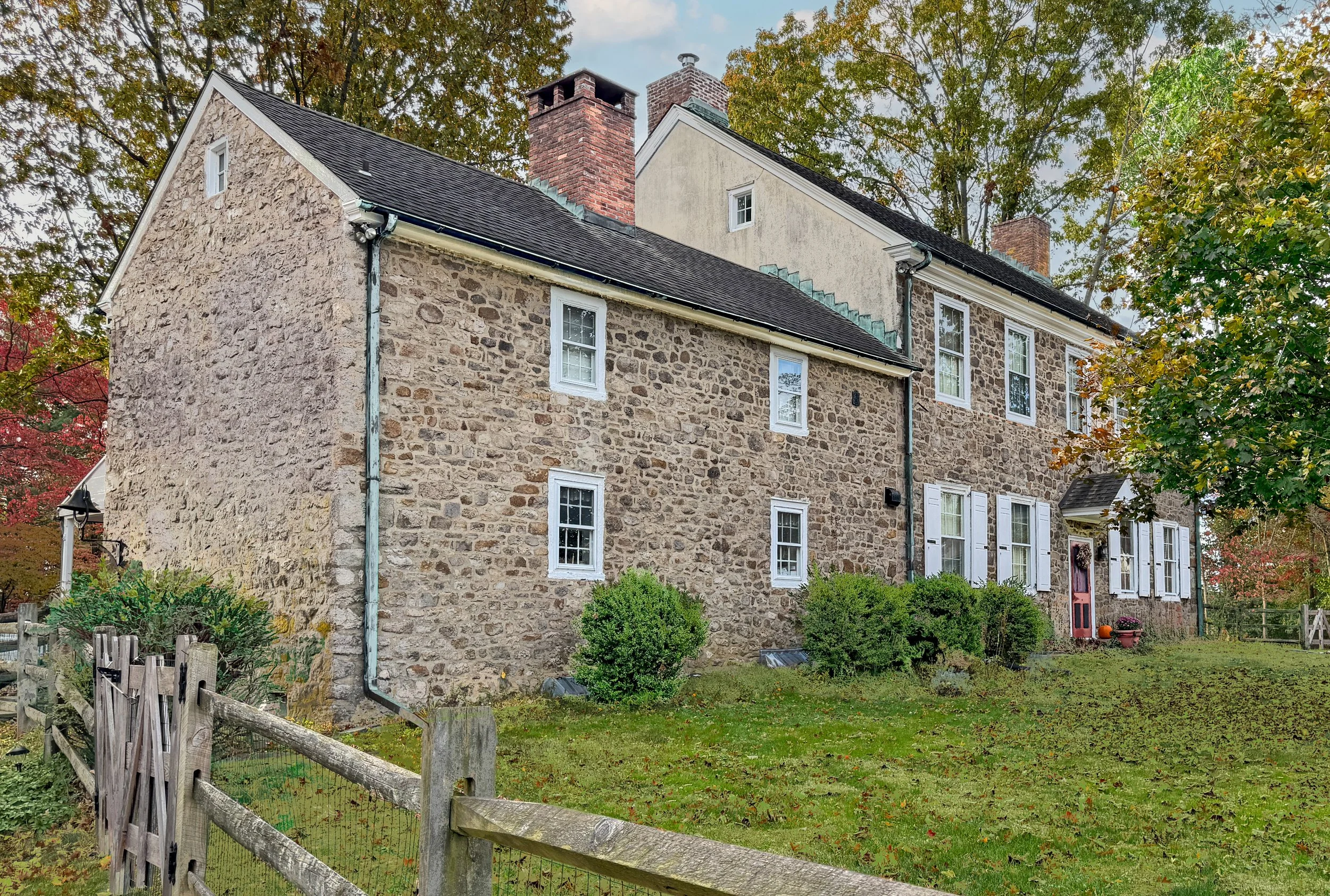
Above: The Warder House. The main block of the house was built ca. 1730, and the addition is ca. 1760. Image source: Lee J. Stoltzfus
During the Revolutionary War,
Warder was Arrested for his Anti-War Neutrality:
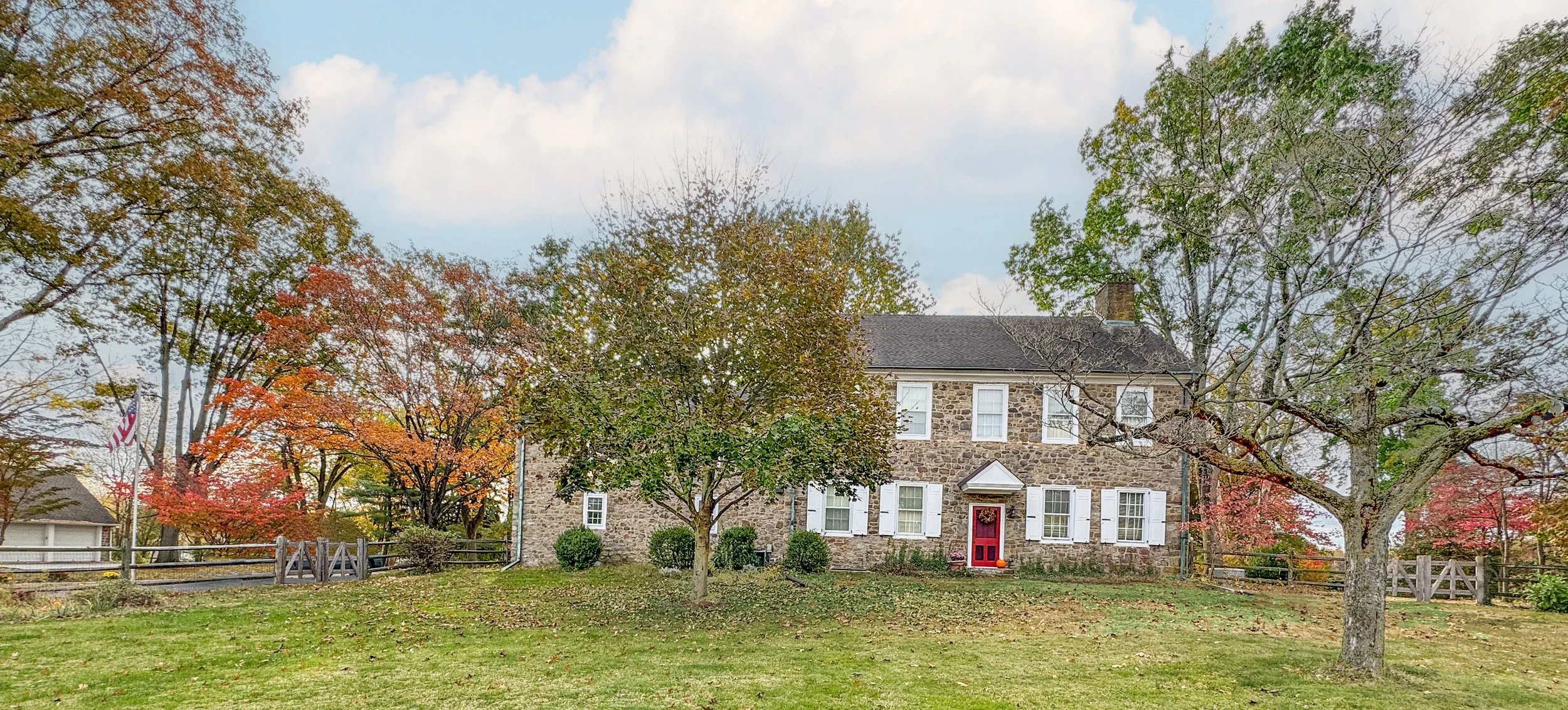
Above: The Warder House and grounds. Image source: Lee J. Stoltzfus
During the Revolutionary War, the house was used by the Continental Army during George Washington’s 1777 encampment at Whitemarsh. For six weeks the Quaker Manor House served as the headquarters for John Cochran, Washington’s surgeon general.
During that same time, Warder himself was facing political persecution for being an anti-war conscientious objector. He was among the prominent Quakers arrested by the revolutionary government for refusing to bear arms or swear oaths of allegiance, although he was ultimately granted parole within Philadelphia rather than being exiled to Virginia.
Anti-War, Pacifist Quakers Labeled
”The Most Dangerous Enemies America Knows”
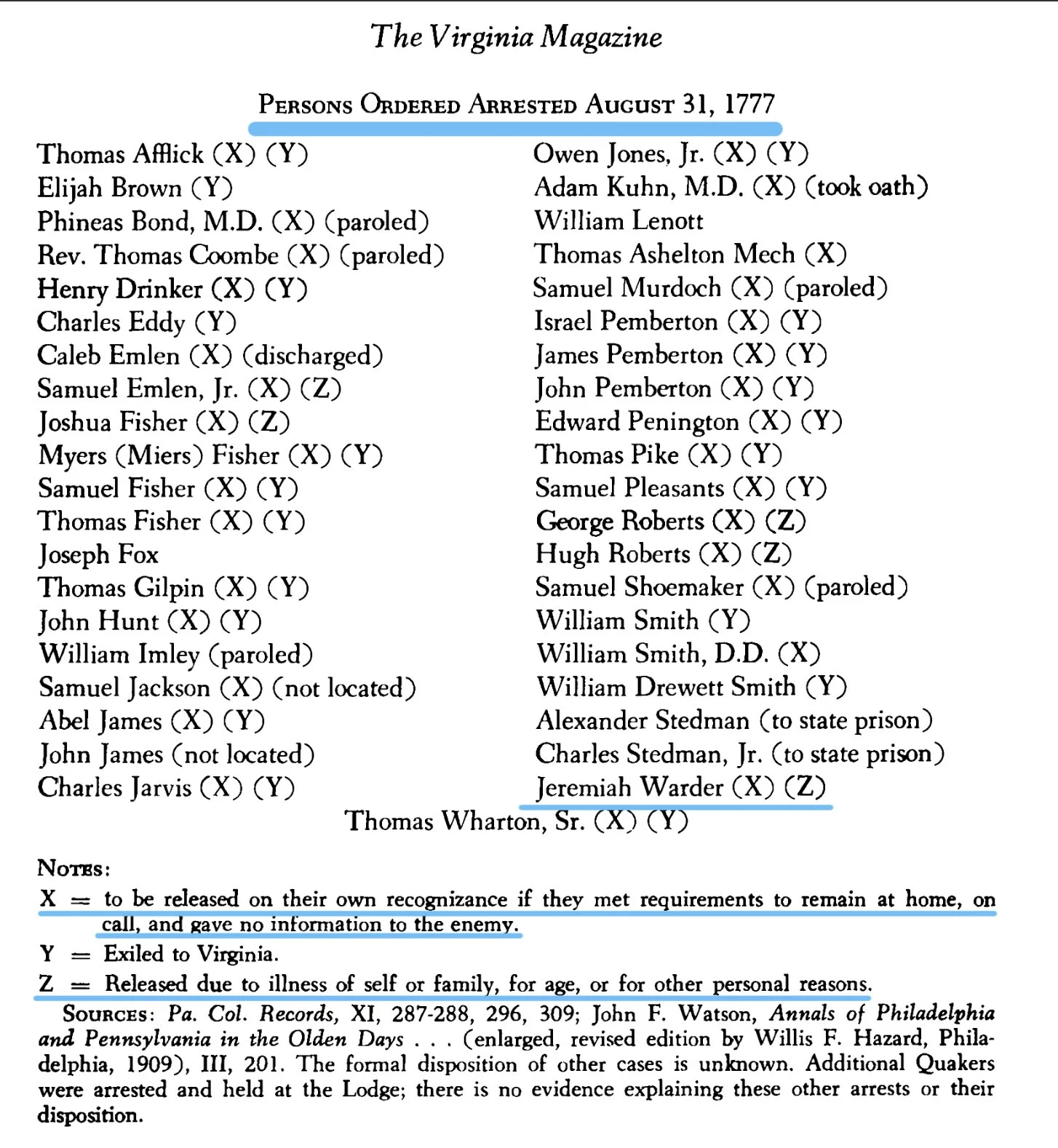
Above: Image source: “Thomas Wharton, Exile in Virginia, 1777-1778”, James Donald Anderson, The Virginia Magazine of History and Biography, 1981.
The revolutionary government viewed the Quakers' anti-war neutrality with deep suspicion, labeling them "the most Dangerous Enemies America knows" due to their refusal to join the military or swear oaths of allegiance to the new order. In 1777 the Continental Congress and the Pennsylvania Supreme Executive Council ordered the arrest of several dozen prominent pacifists.
Jeremiah Warder’s name was included in the warrant of arrest. While twenty of his associates were forcibly removed to Winchester, Virginia, Warder’s personal experience was somewhat different. Due to his age or perhaps the influence of his widespread commercial connections, Warder was among a small group of eight men who were granted a measure of "indulgence."
This reprieve did not mean he was viewed with favor by the revolutionaries. Rather, it reflected the complex and often inconsistent way the revolutionary government dealt with the city's established elite.
A 1976 Newspaper Article
About the Restoration of This House:
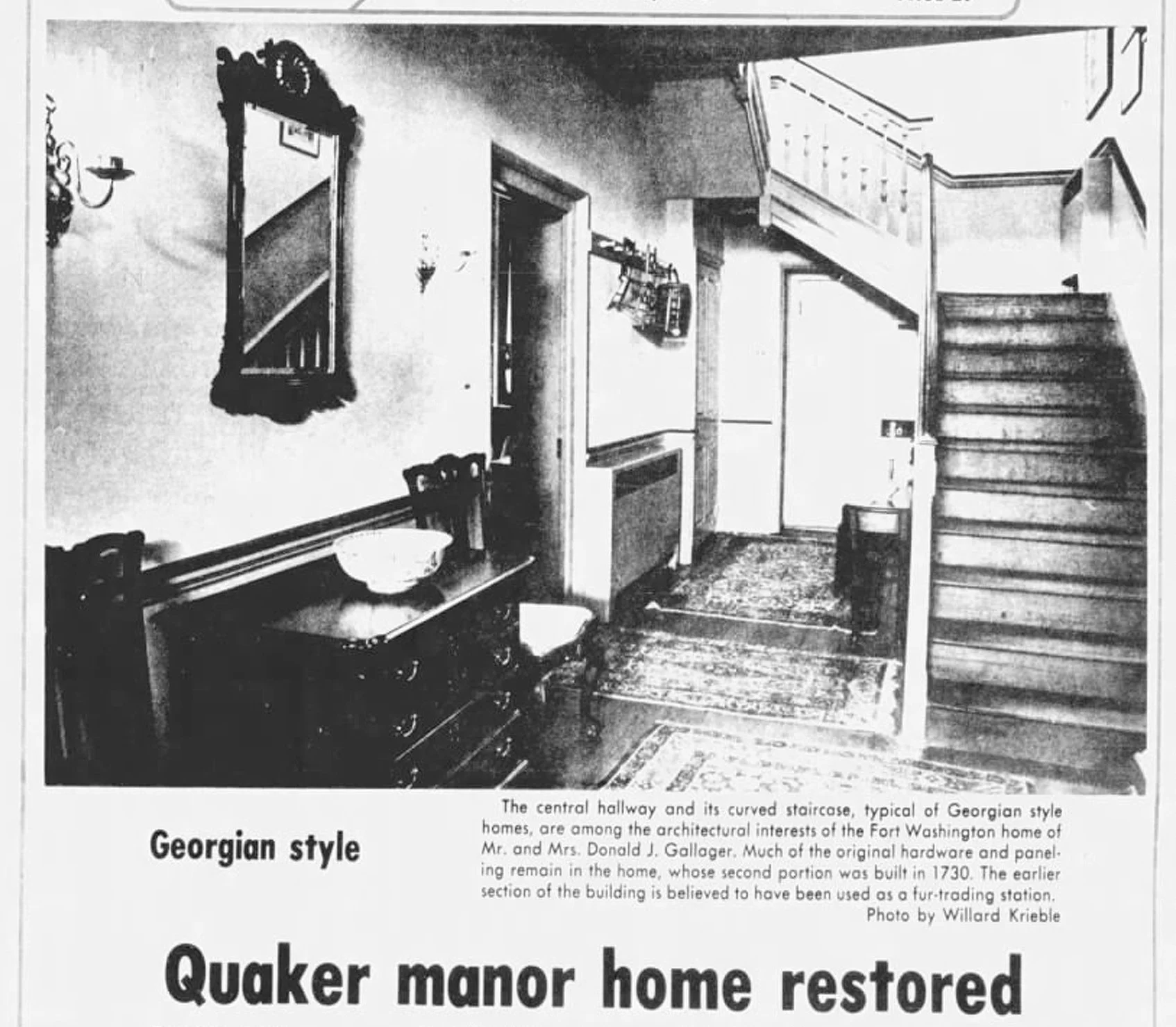
Above: Image source: The Reporter, Lansdale, Feb. 19, 1976, Newspapers.com
The house was restored by Donald A. Gallagher. and Sarah G. Gallagher. He had been president of the Montgomery County Historical Society. The Gallaghiers listed their home on the National Register of Historic Places in 1976.
The house is unusual in that it includes 12 corner fireplaces, one in each room. The house’s main block is divided by a central hall.
1976 Photo of the Stair Hall:
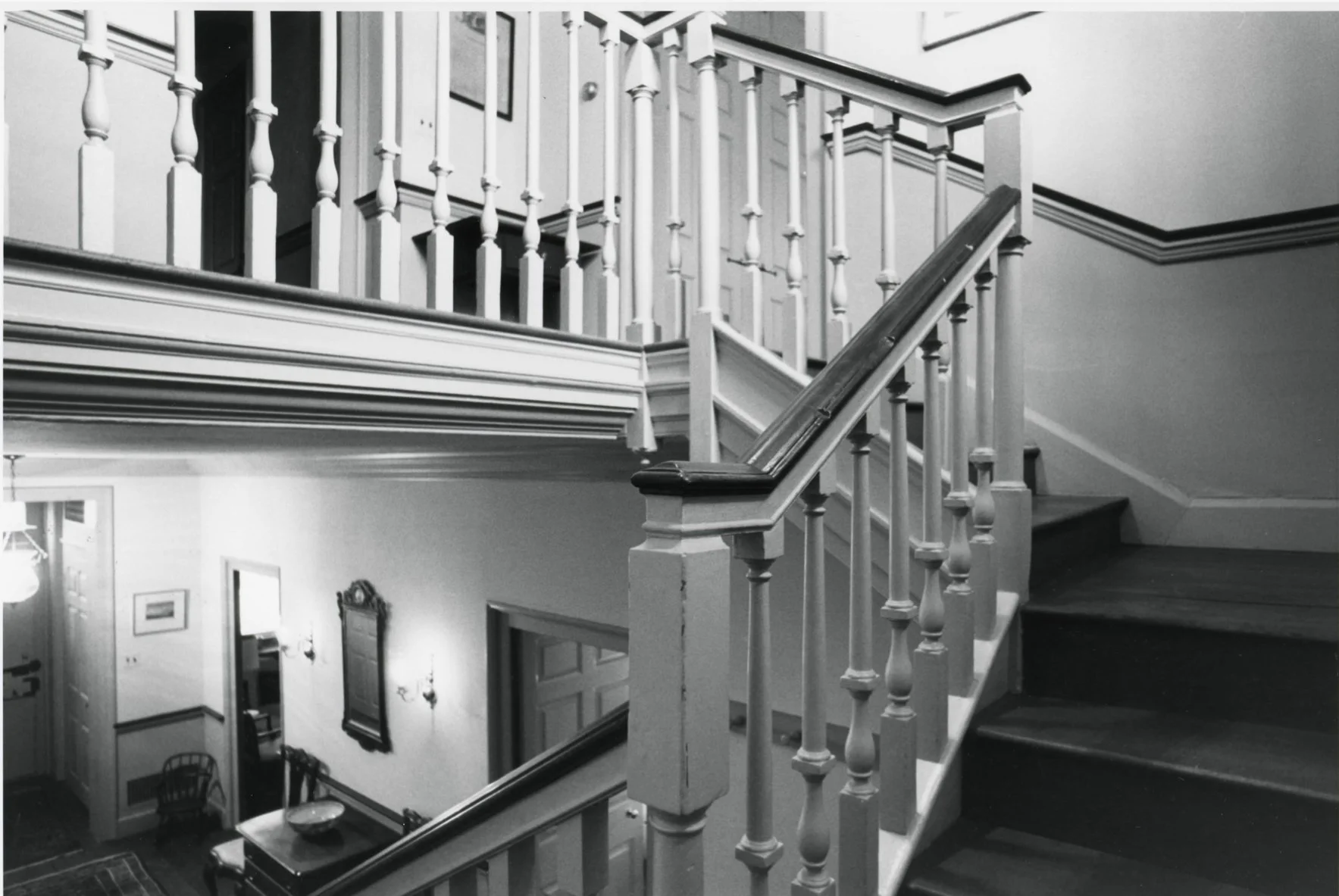
Above: The stair hall in the main block of the Warder House. Photographed in 1976 by Donald A. Gallagher. and Sarah G. Gallagher. Image source: National Register of Historic Places.
Chippendale Chairs Owned by Jeremiah Warder.
He was:
"one of the richest men in outward goods among Friends"
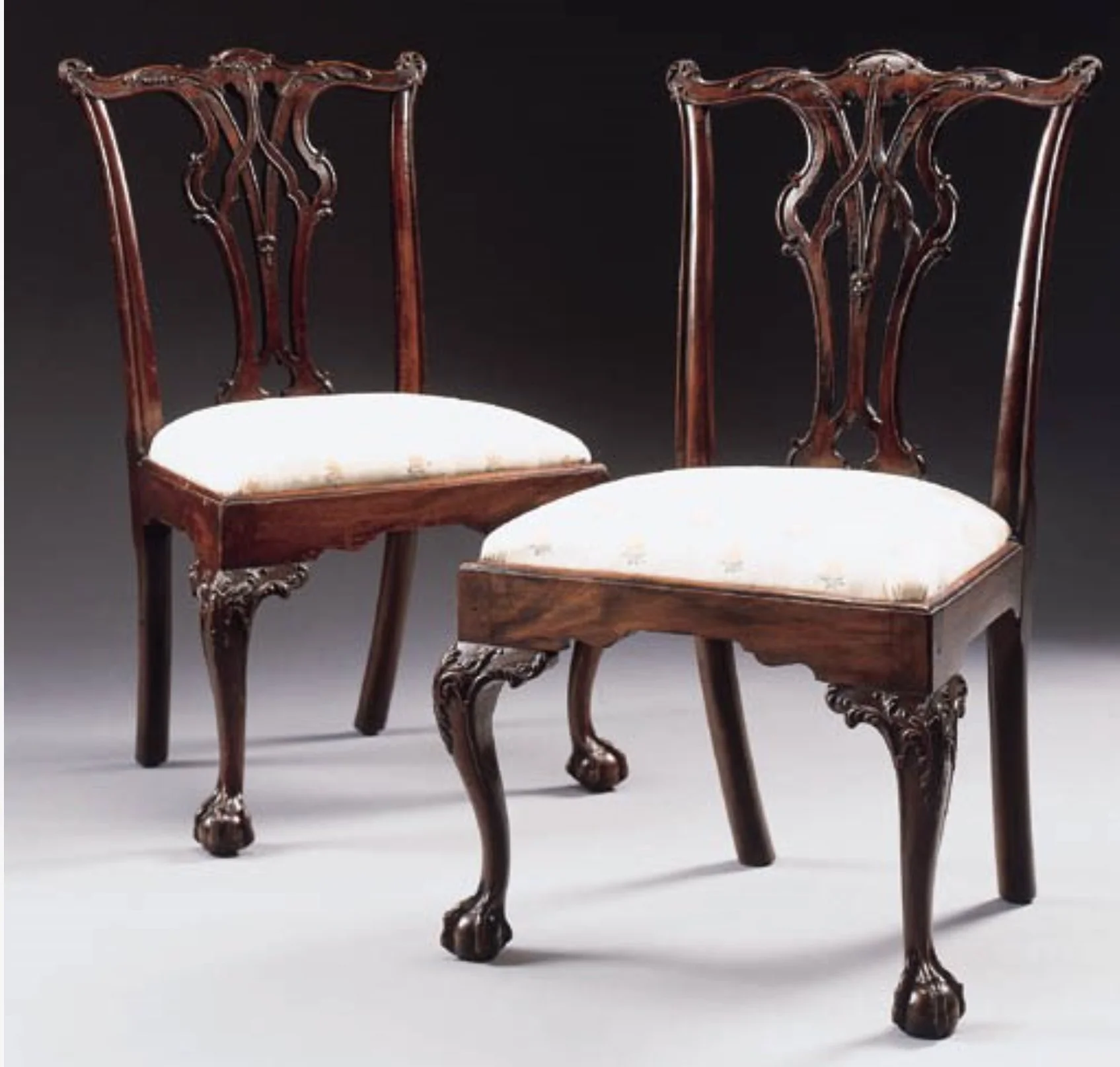
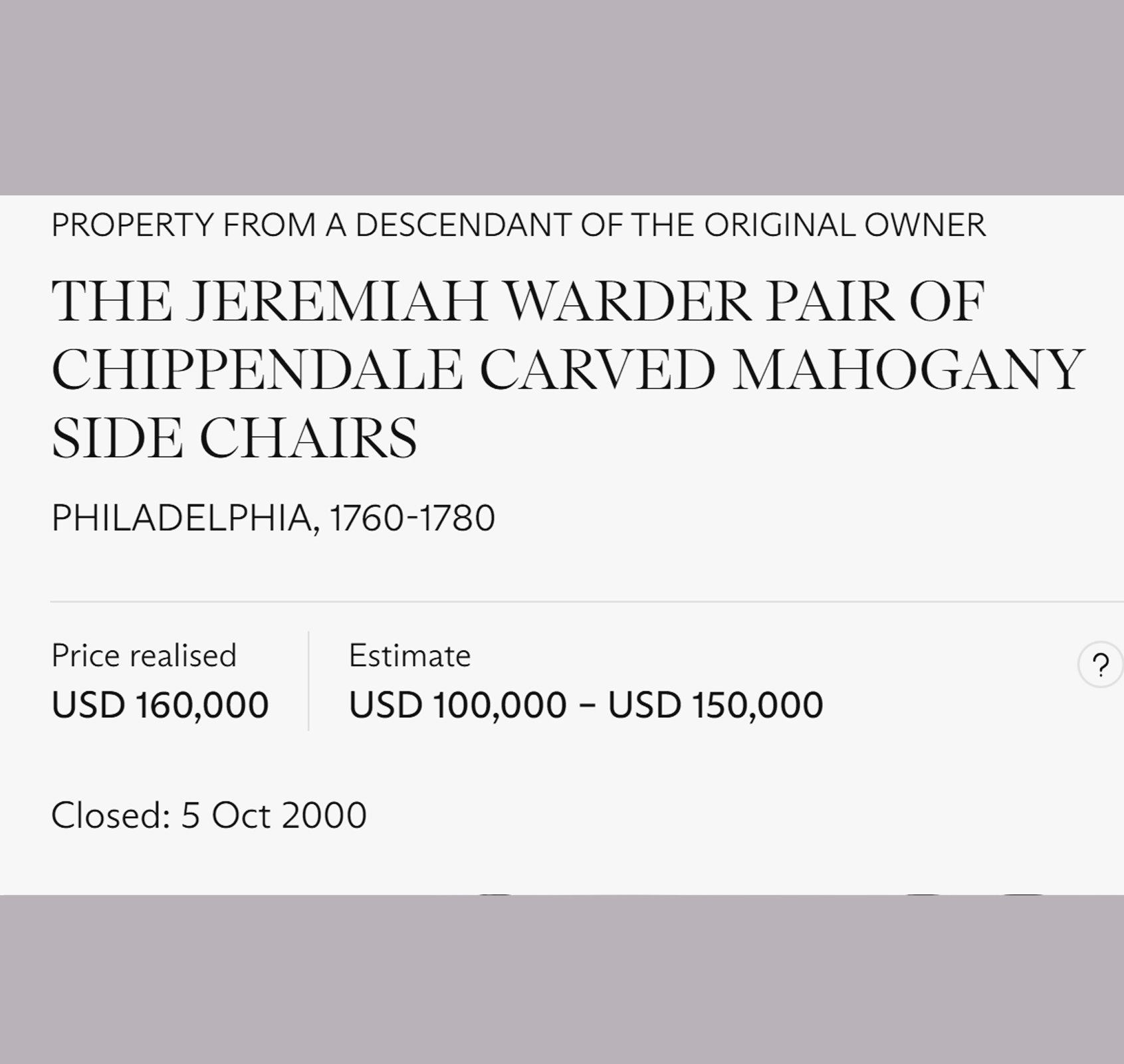
Above: Image source: Christie’s
Jeremiah Warder, of the Warder House, was one of the Philadelphia area’s wealthiest Quakers, according to an 1828 letter written by his grandson, Jeremiah Warder. Because of Warder’s great success as an international merchant, he was "one of the richest men in outward goods among Friends."
These Chippendale chairs were owned by Jeremiah and Mary Warder of the Warder House. The chairs remained in that extended Warder family until they were sold at Christie’s in 2000.
Links: