
Historic Quaker Houses of Montgomery County, PA
The Wall House
A Historic House Museum
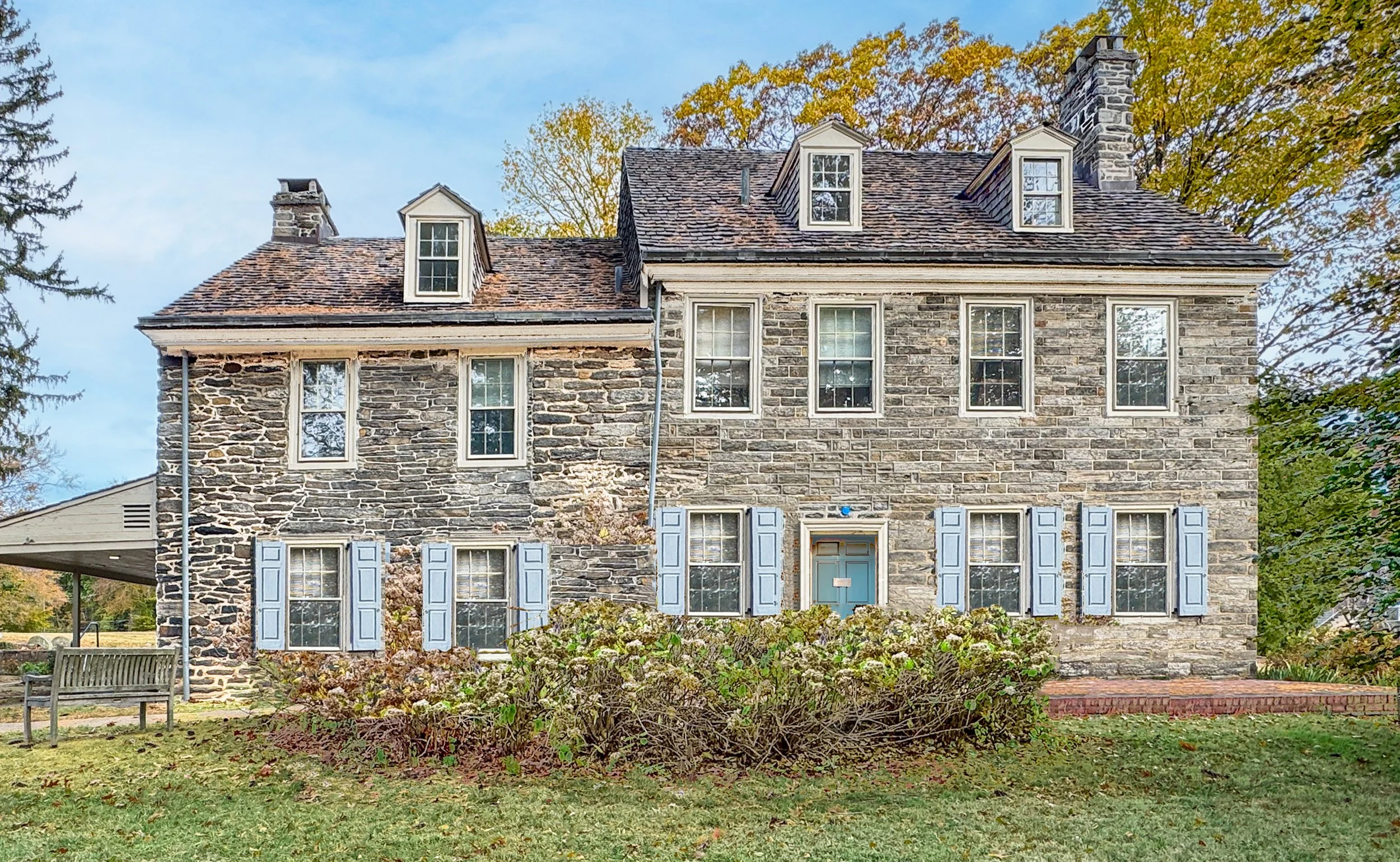
Above: The Wall House. Cheltenham Township was actually named after the home of this Wall family in England. Image source: Lee J. Stoltzfus
Richard Wall and Joane (Wheel) Wall emigrated to Pennsylvania in 1682 with Friends from Cheltenham, England. The next year, in 1683, they built a log house with a stone fireplace wall on the west side.
In 1683 the Wall House became a center of Quaker life. Friends held meetings and weddings there, making it one of the earliest Quaker meetinghouses in America. The Cheltenham meeting served as a parent meeting for Germantown Friends. Worship continued at the Wall House until the Abington Meetinghouse was completed in 1702. Richard Wall helped plan that building but died before it was finished.
The Former Log House Here
One of Pennsylvania’s Earliest Quaker Meetinghouses:
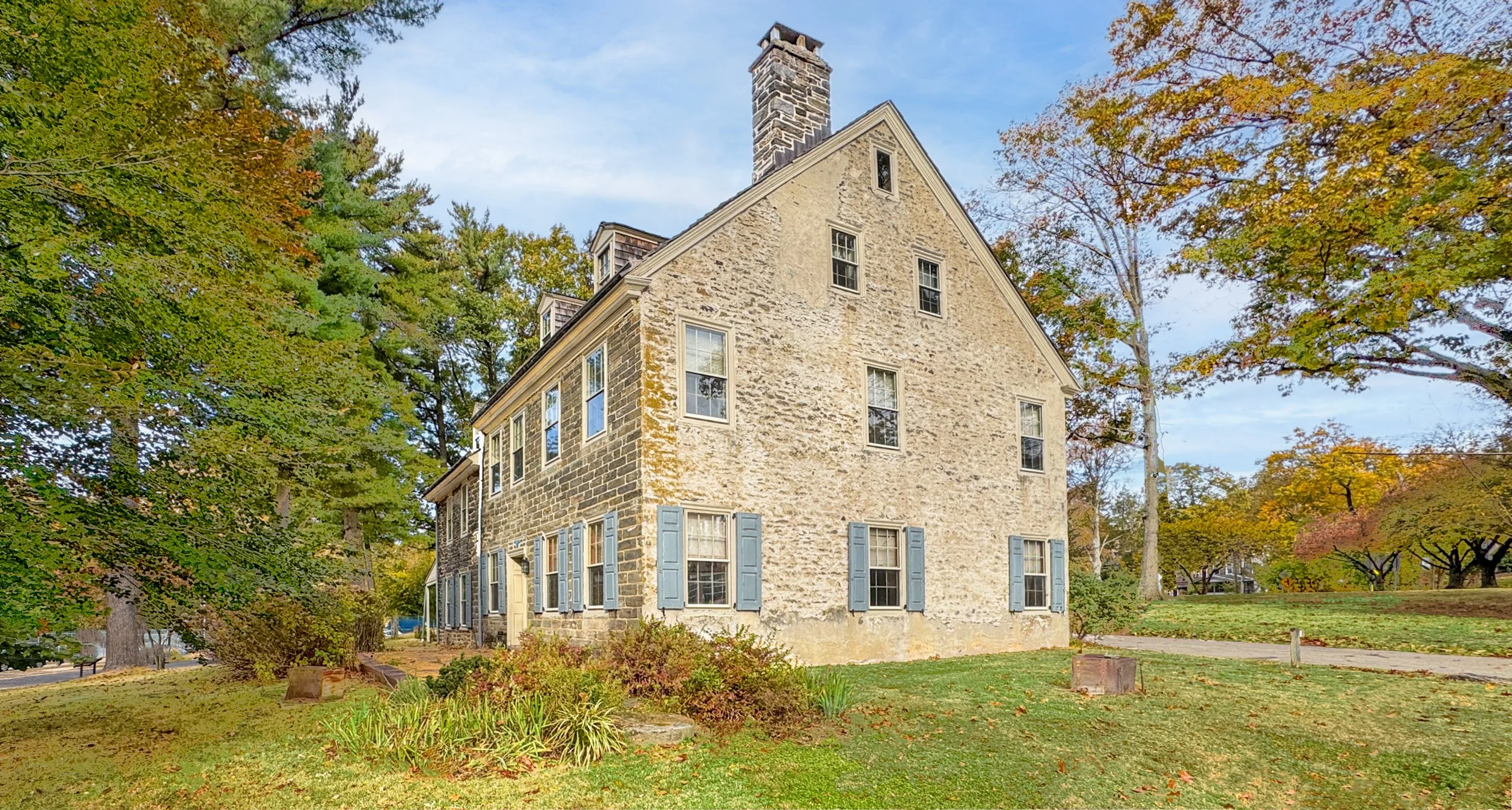
Above: This large section of the house was added to the earlier west section ca. 1805. Image source: Lee J. Stoltzfus
The former log house here at this site was among the earliest known places where Friends met in Pennsylvania. The Wall family built that log home - meetinghouse in 1682, and modified the house with additions over time.
Many Quaker marriages were officiated in this home - meetinghouse. The first wedding here was of James Pratt and Mary Brodwell in 1689. Also, Sarah Wall, the granddaughter of Richard and Joane Wall married George Heinrich Shoemaker, Jr. here in 1694. Shoemaker had arrived in Pennsylvania as part of a settlement company to Germantown, led by Francis Daniel Pastorius. This area became known as Shoemakertown.
A Timeline of the Wall House:
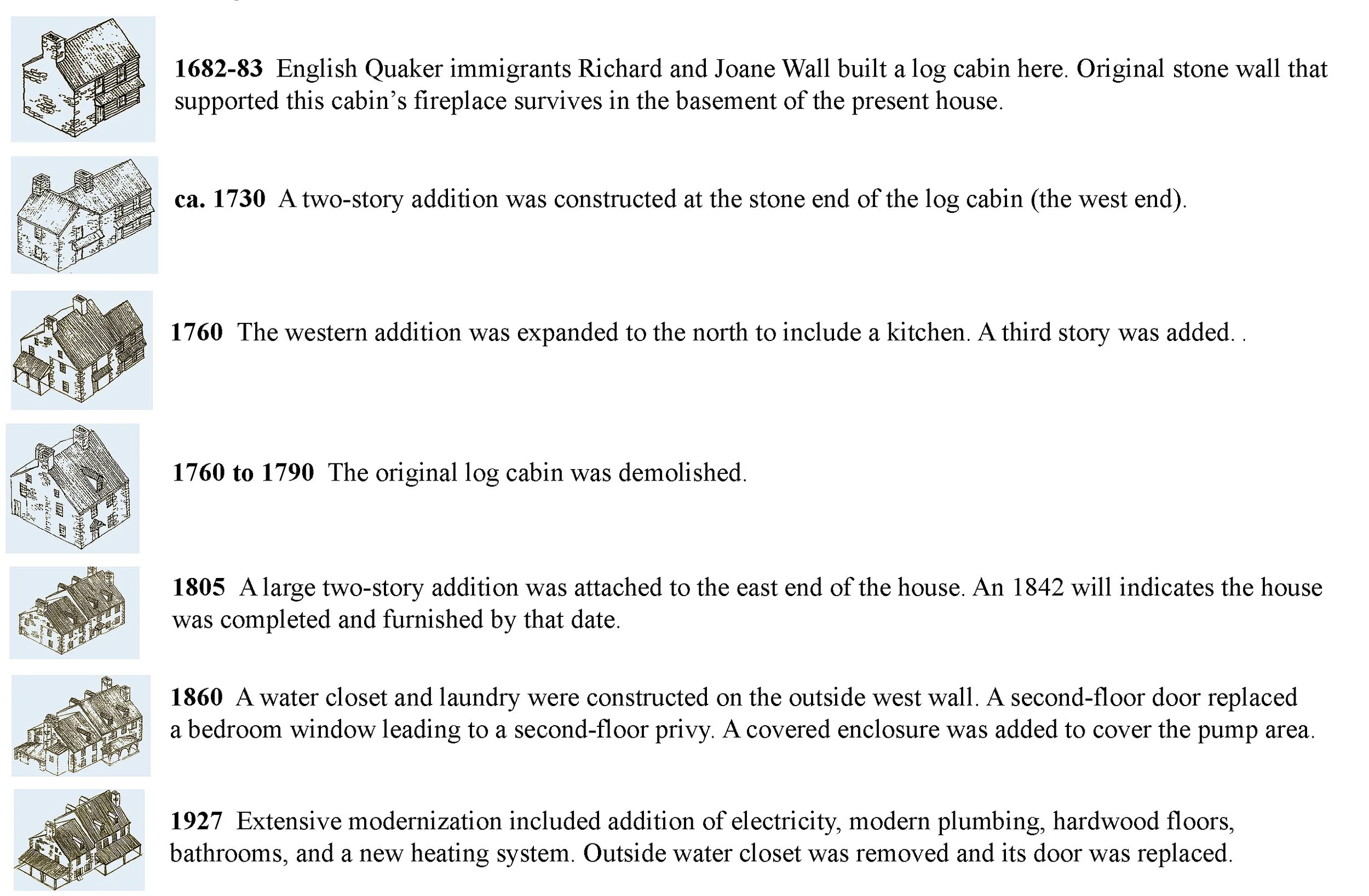
Above: Images and information source: CheltenhamTownship.org
Water Pump and Beehive Oven:
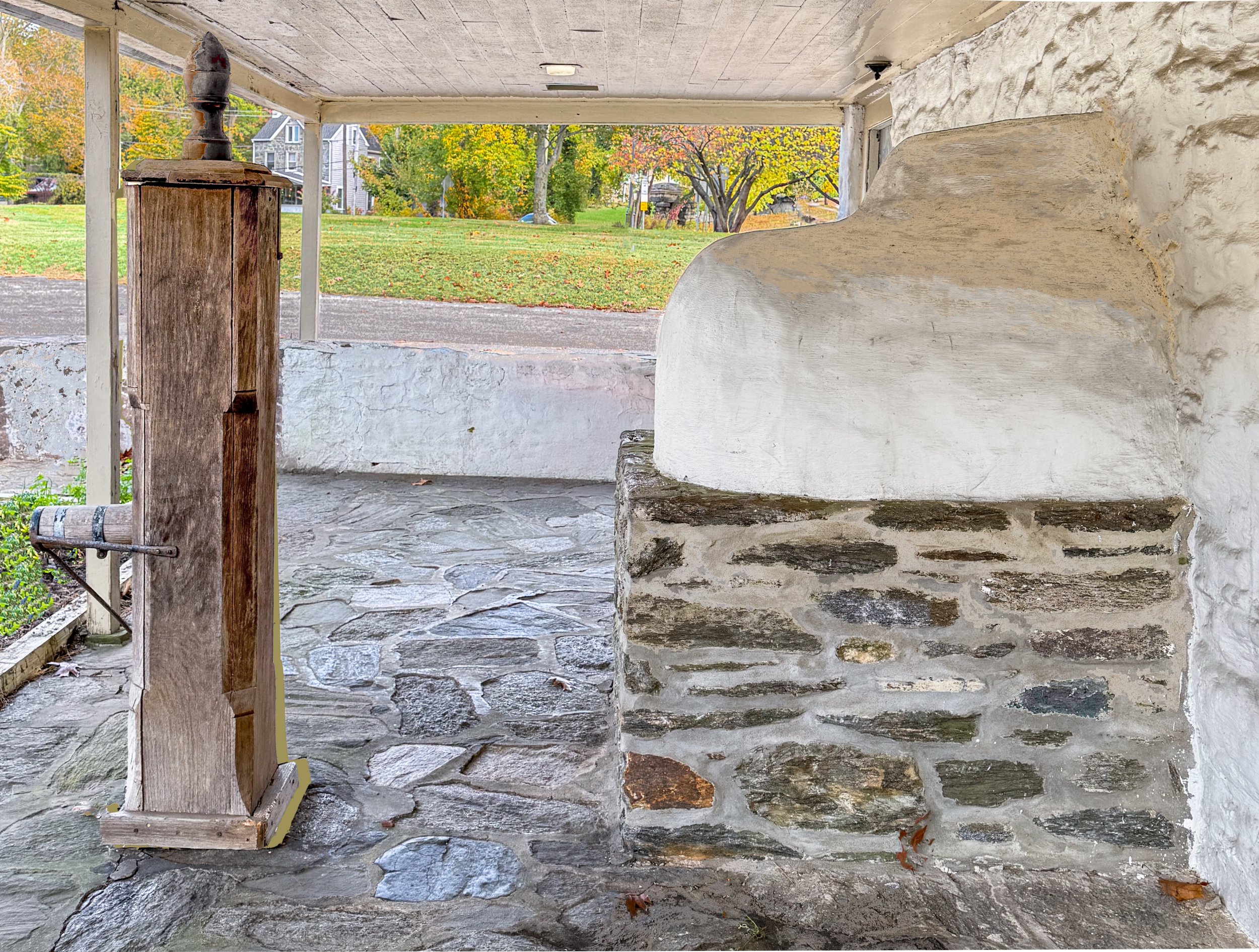
In the 1980s a working beehive oven was installed to replicate the original oven that had been removed during a 20th-century modernization.
The Springhouse:
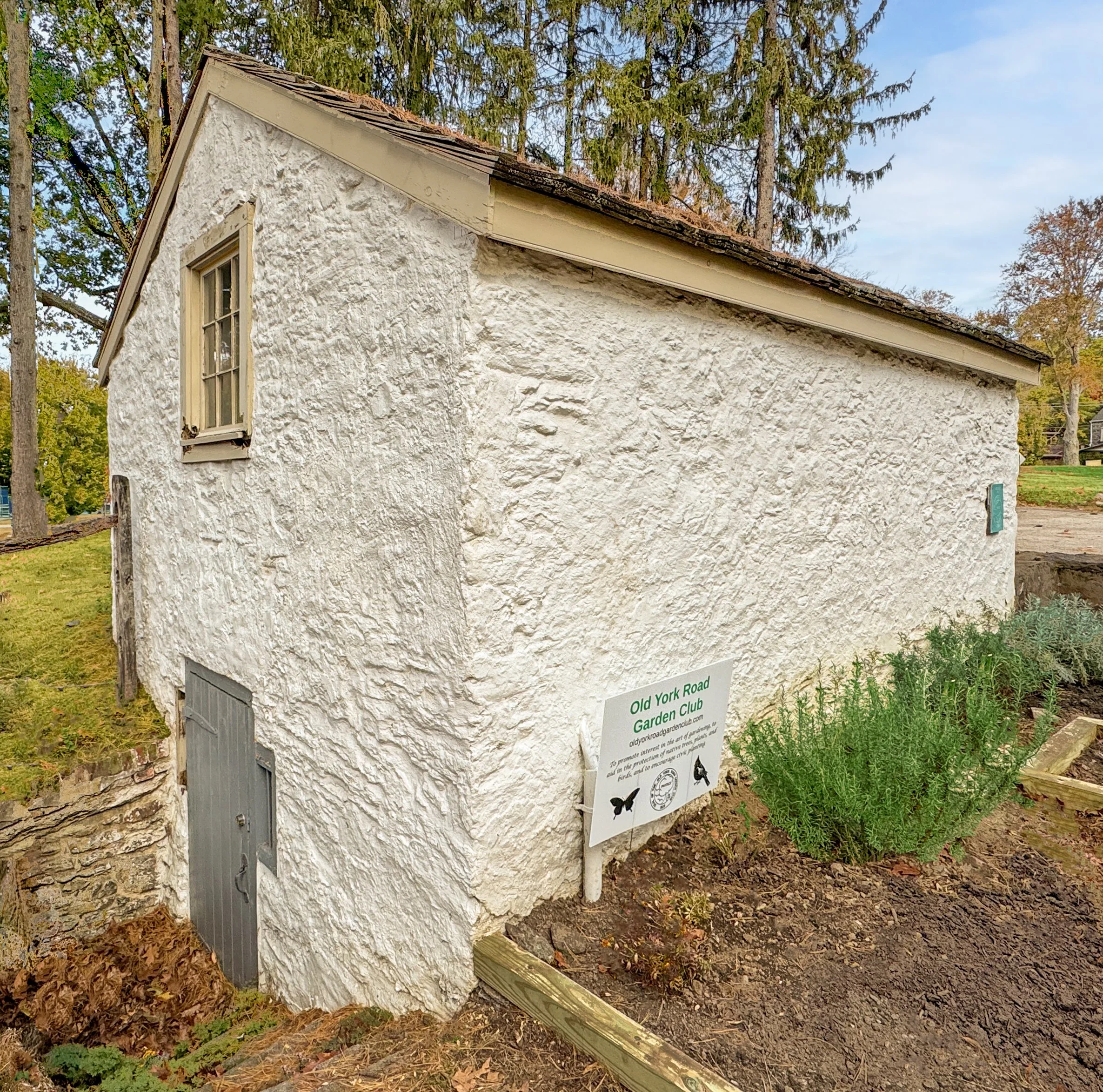
The street level of the springhouse has been used as a wash house, chicken coop and storage space.
Wissahickon Schist
A Signature Building Stone
of Southeast Pennsylvania:
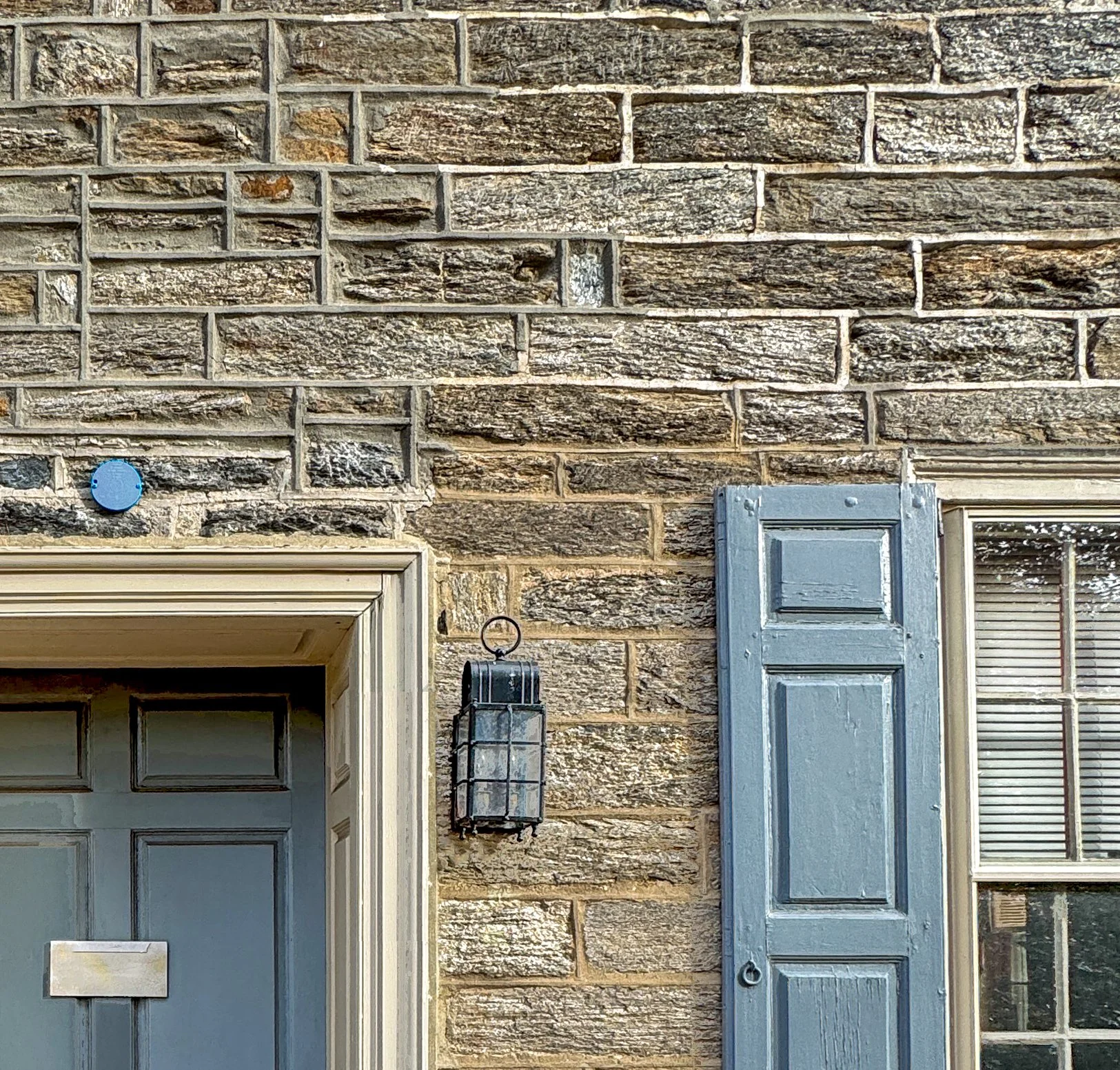
Above: The Wall House’s finely cut Wissahickon schist on the house’s front facade. Image source: Lee J. Stoltzfus
This property rests firmly on bedrock of the Wissahickon Formation, named for the Wissahickon Creek. Early settlers found this stone was readily available and easy to cut. The stone’s appearance is striking. Sparkling mica flakes give its surface a silvery sheen.
Many historic buildings throughout Southeast Pennsylvania showcase this distinctive building stone. Historic Quaker houses in Germantown, such as Grumblethorpe, are other well-know examples of houses built with Wissahickon Schist. The Bartram House at Bartram’s Garden is another landmark Quaker house constructed with this stone.
Wall House on a Geologic Map
Wissahickon Schist Building Stone:
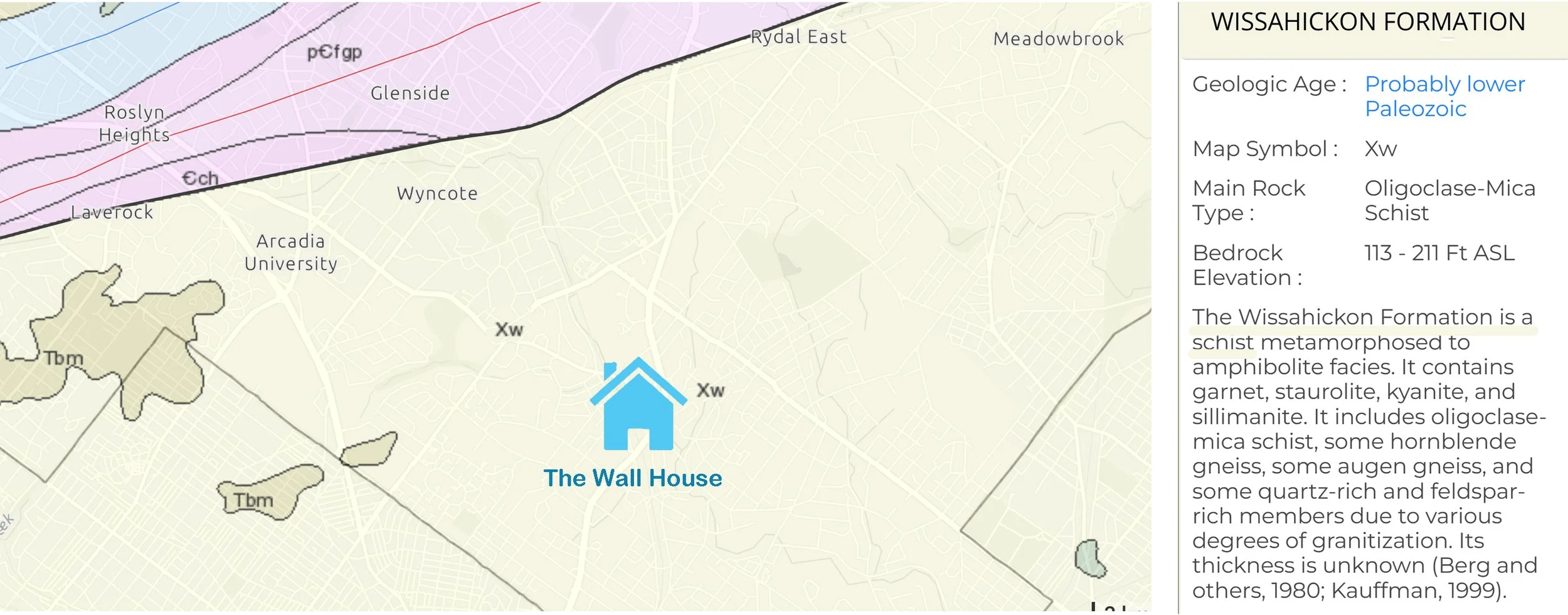
Above: Image source: PAGEODE, Pennsylvania Department of Conservation and Natural Resources (revised)
1694: Sarah Wall Married George Shoemaker
English Quaker and German Mennonite Heritage:
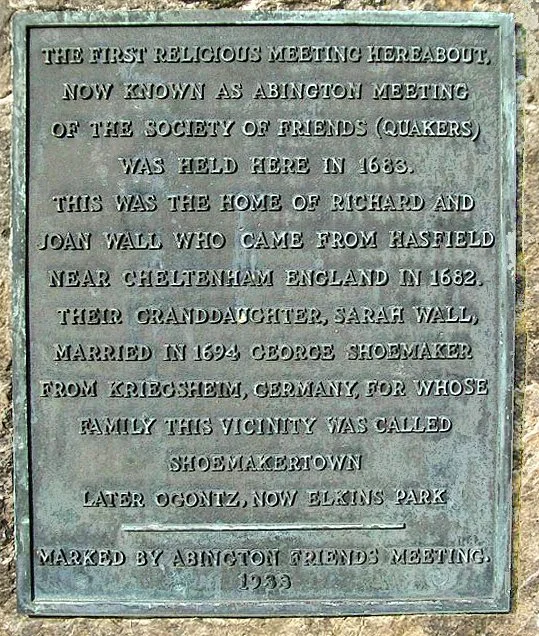
Image source: Historical Marker Database, William Fischer, Jr.
Text of historical marker, above: “The first religious meeting hereabout, now known as Abington Meeting of the Society of Friends (Quakers) was held here in 1683. This was the home of Richard and Joan Wall who came from Hasfield near Cheltenham England in 1682. Their granddaughter, Sarah Wall, married in 1694 George Shoemaker from Kriegsheim, Germany, for whose family this vicinity was called Shoemakertown, later Ogontz, now Elkins Park. Marked by Abington Friends Meeting 1933.”
Sarah Wall was a granddaughter of Richard and Joane Wall of the Wall House. Sarah married into the Shoemaker family of Cheltenham Township. The Shoemakers descended from Mennonite families in Germany. Their Shoemaker / Schumacher ancestors lived in the Palatinate and Lower Rhine regions, where they were Mennonite. In the mid‑1600s some members of that family converted to Quakerism. Through this lineage, Sarah Wall combined her English Quakerism with her husband’s ancestral German Mennonite beliefs
Anti-Slavery Activism
Here at the Wall House:
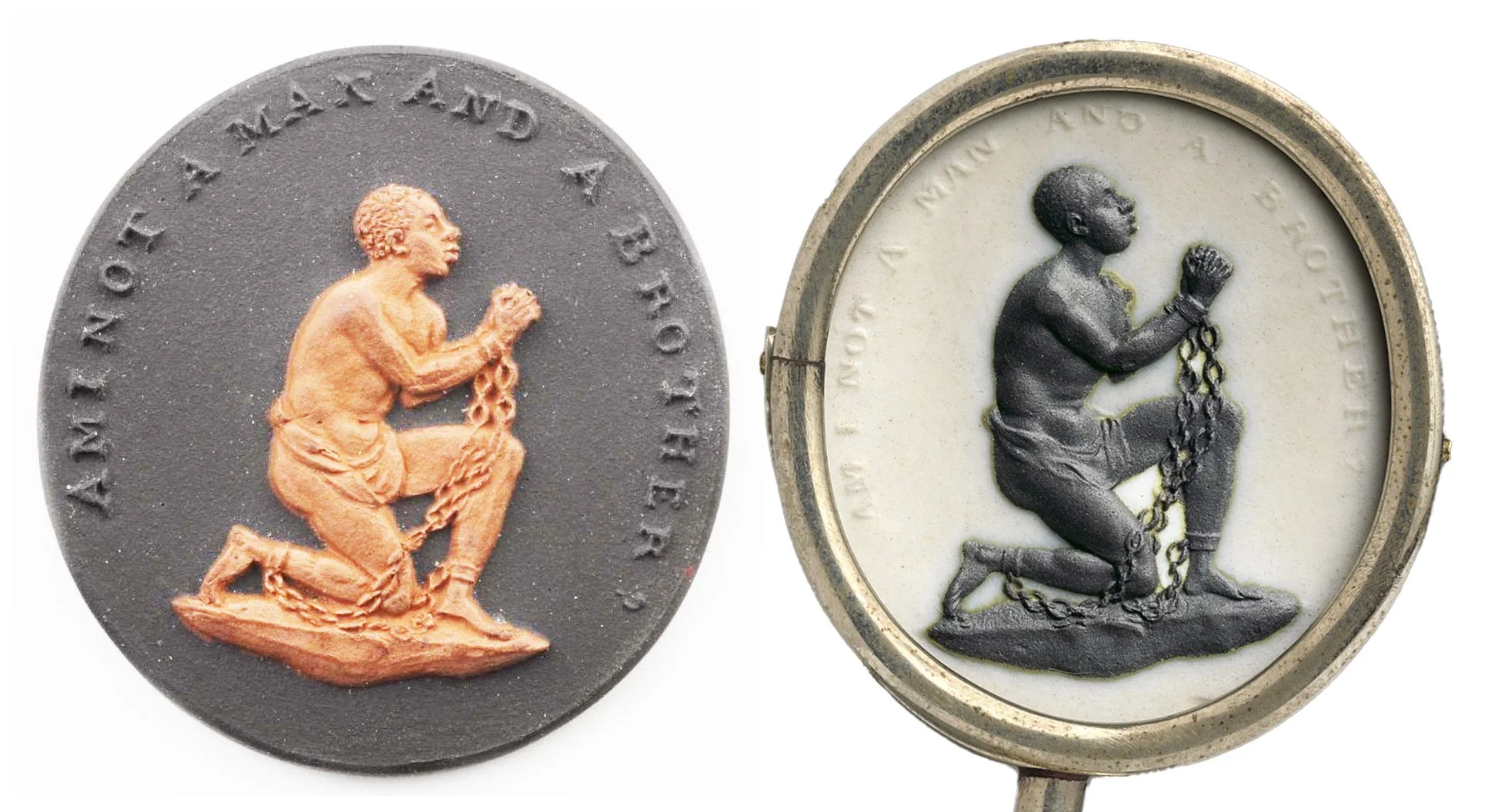
Above: “Am I Not a Man and a Brother” Two Wedgewood anti-slavery medallions. Images source: Wikipedia
1688 Anti-Slavery Proclamation at the Wall House:
In 1688, the Wall House played a pivotal role in early American abolitionism as the site of the second public reading of the Germantown Petition Against Slavery. Authored in Germantown, the petition was the first formal call for the abolition of slavery in the colonies. The Dublin Monthly Meeting, which met at the Wall House, hosted this reading for the Cheltenham and Abington Friends. The reading at the Wall House marked the first institutional engagement with the issue of slavery in the region and ensured that anti-slavery thought became a permanent part of Quaker moral discourse.
The Wall House on the Underground Railroad:
By the mid-1800s, the Wall House became a secret sanctuary on the Underground Railroad. During that era the Bosler family lived here. They were Presbyterians. The Boslers maintained the property's tradition of social justice by participating in the Underground Railroad alongside their Quaker neighbors. Descendants of the family, like Elizabeth Bosler Reeve, recalled seeing groups of African Americans appear and vanish over the course of days. The Wall House worked in close coordination with nearby abolitionist families, including Lucretia Mott’s household, to create a network that made Cheltenham Township a critical corridor of resistance to slavery.
Links: