
Historic Quaker Houses of Philadelphia
Vernon: The Wister House
In Vernon Park, Germantown
Built in 1805
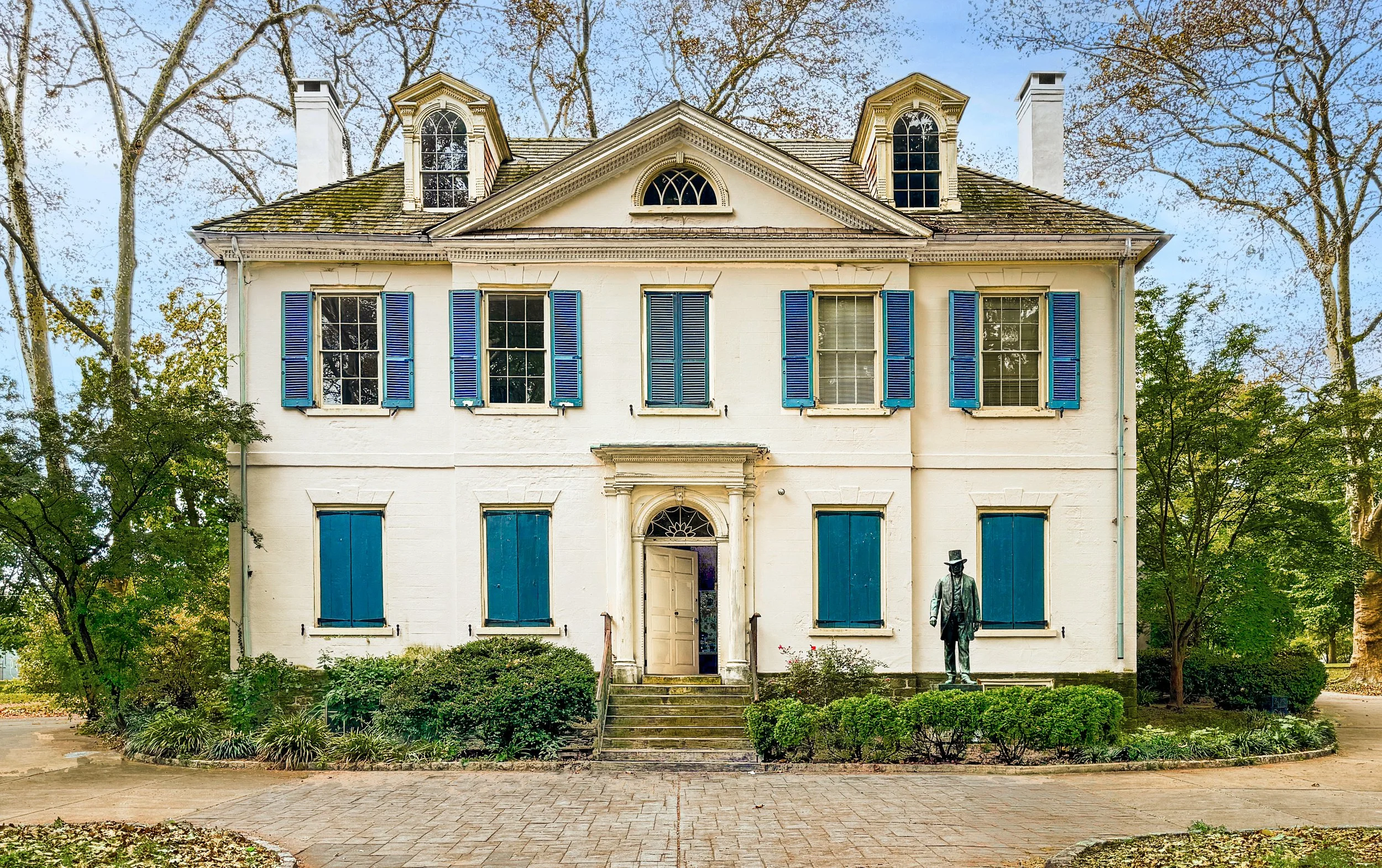
Above: The Wister house was built in 1805 by James Matthews. Quaker merchant John Wister purchased the house in 1812. He was a wealthy dry goods merchant based in Philadelphia. A statue of this John Wister stands to the right of the entry. The statue was commissioned by his grandson, Jones Wister. The City of Philadelphia purchased the house in 1892.
The house eventually was home to the Germantown Branch of the Free Library, and later was home to the Site and Relic Society (Germantown Historical Society).
1904:
A Grandson Memorializes his Quaker Grandfather
With a Statue here at the Family Home
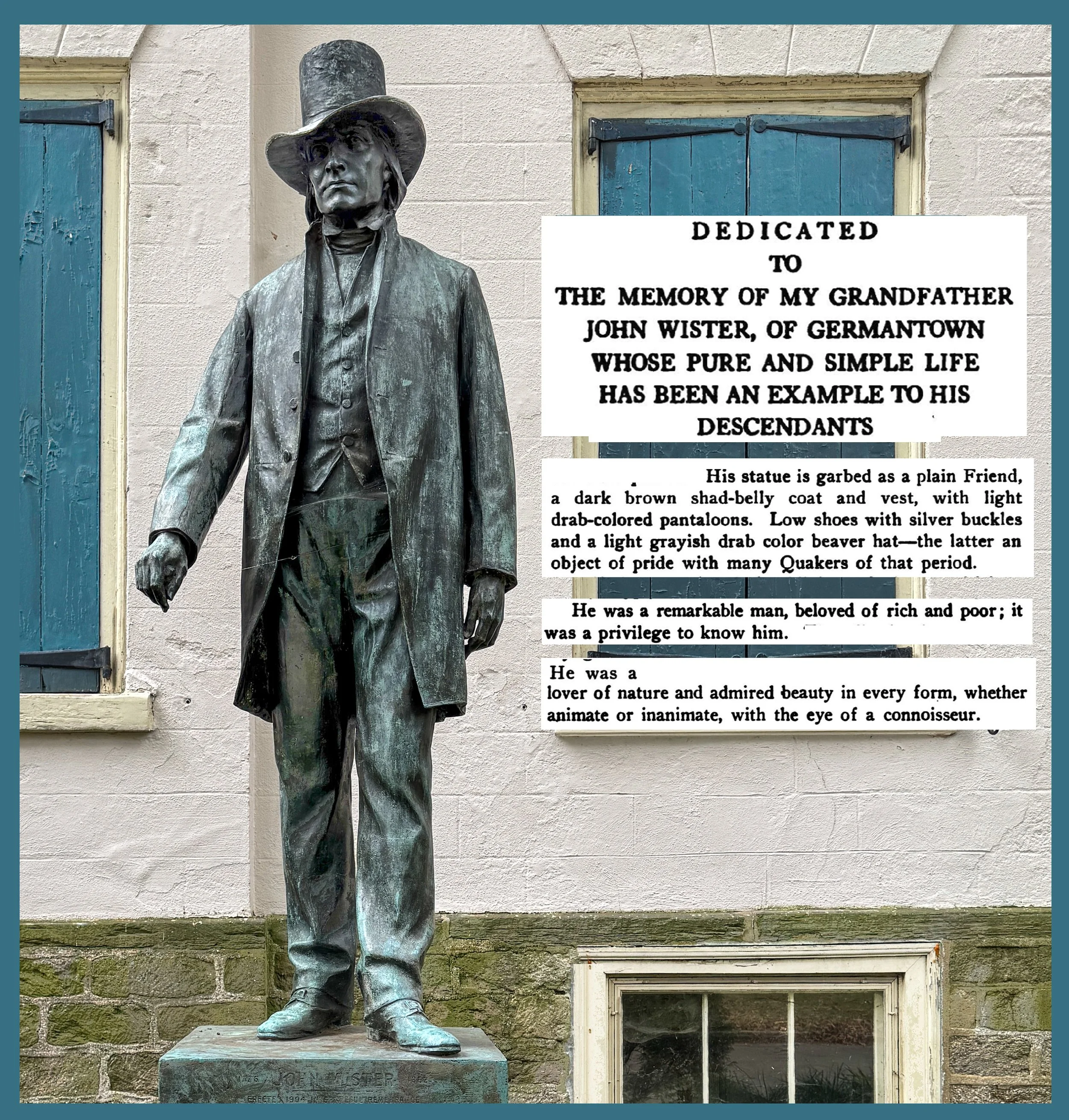
Above: A bronze statue of a Quaker grandfather John Wister (1776-1862), commissioned by his grandson Jones Wister, and text from the grandson’s autobiography (see below). Image source: Lee J. Stoltzfus
The Wister family emigrated from Germany and became one of Germantown’s most prominent families. John Wister’s Quaker grandparents built the family’s home here named Grumblethorpe.
According to grandson Jones Wister, the house was named Vernon to commemorate Diana Vernon, heroine of Sir Walter Scott's book Rob Roy. His grandfatherJohn Wister “belonged to the Orthodox Friends' Society and attended meeting with great regularity every First and Fifth day.” John Wister and wife Elizabeth (Harvey) Wister married in 1799 in Philadelphia Monthly Meeting. They purchased this Germantown house in 1812 and raised their children on this property.
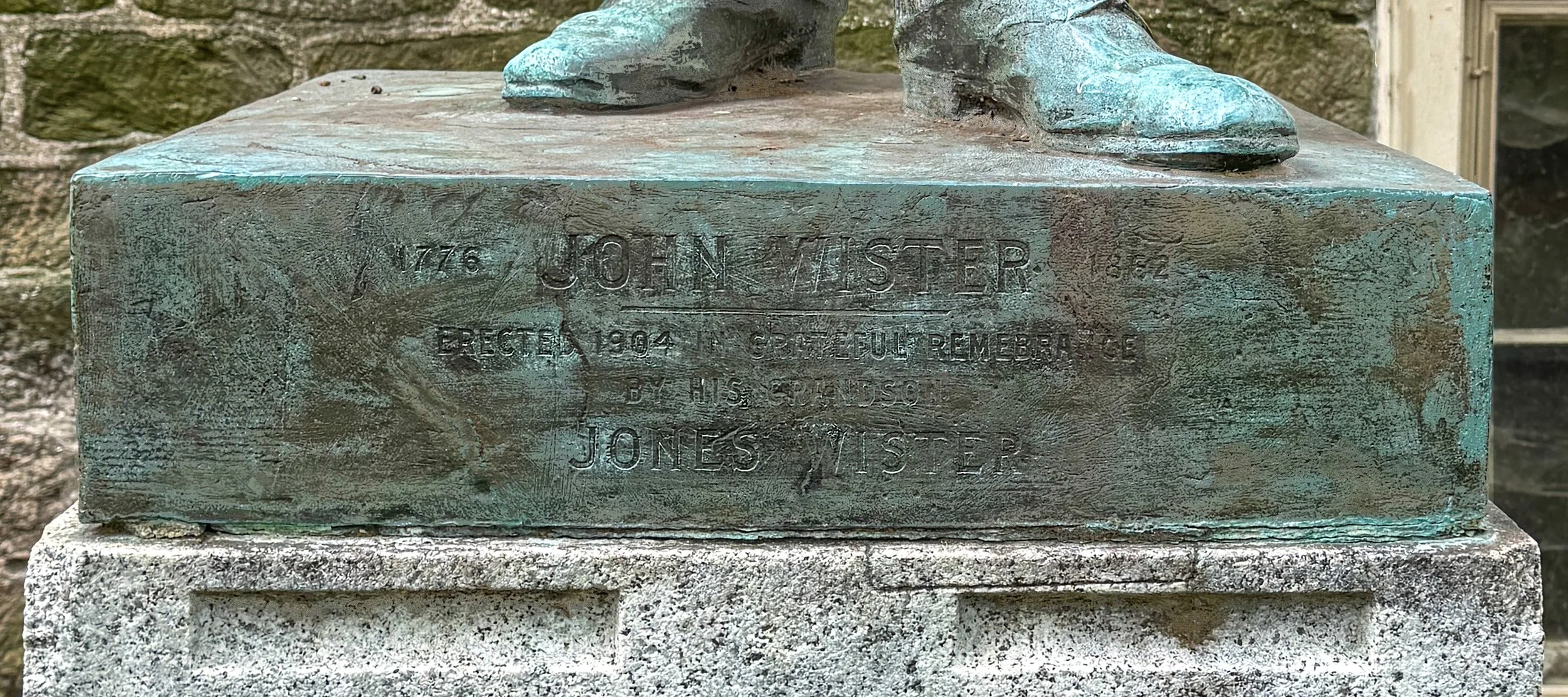
John Wister’s grandson, Jones Wister, memorialized his Quaker grandfather with this bronze statue. It now stands in front of the Wister family home. The inscription in the base reads, John Wister 1776 - 1862. Erected 1904 Grateful Remembrance by his Grandson Jones Wister. Italian sculptor Raffaello Romanelli designed this memorial.
Statue John Wister
Sometimes Incorrectly Identified as a Senator
But He was Just a Quaker Grandfather:
You don’t have to be a politician or a general to have a bronze statue of yourself. Sometimes all you have to be is a Quaker grandfather.
Various online sources incorrectly identify this statue as a senator named John Wister. But there never was a John Wister elected to Congress. The John Wisters of Germantown were:
1. Immigrant John Wister (1708 - 1789) Lived at Grumblethorpe in Germantown. Grandfather of Statue John Wister.
2.Statue John Wister (1776 - 1862) Lived here at Vernon in Germantown. Grandson of Immigrant John Wister.
3.Ironmaster John Wister (1829 - 1900) Lived at Belfield in Germantown and in Duncannon. Grandson of Statue John Wister.
Ironmaster John Wister is sometimes incorrectly identified as a congressman, because he was actively involved in Pennsylvania politics. But he was never elected to Congress at either the state or national level. No one with the surname Wistar or Wister was ever elected to the PA Congress or to the U.S. Congress
John Wister who lived here at Vernon was not a politician or a civic leader. He led a quiet life as a family man and Quaker grandfather. And that was worthy enough to merit a statue in his honor. His grandson who created the statue, Jones Wister (1839 - 1917) was a brother of the Duncannon ironmaster John Wister.
Statue John Wister also Memorialized
By his Grandson in an Autobiography:
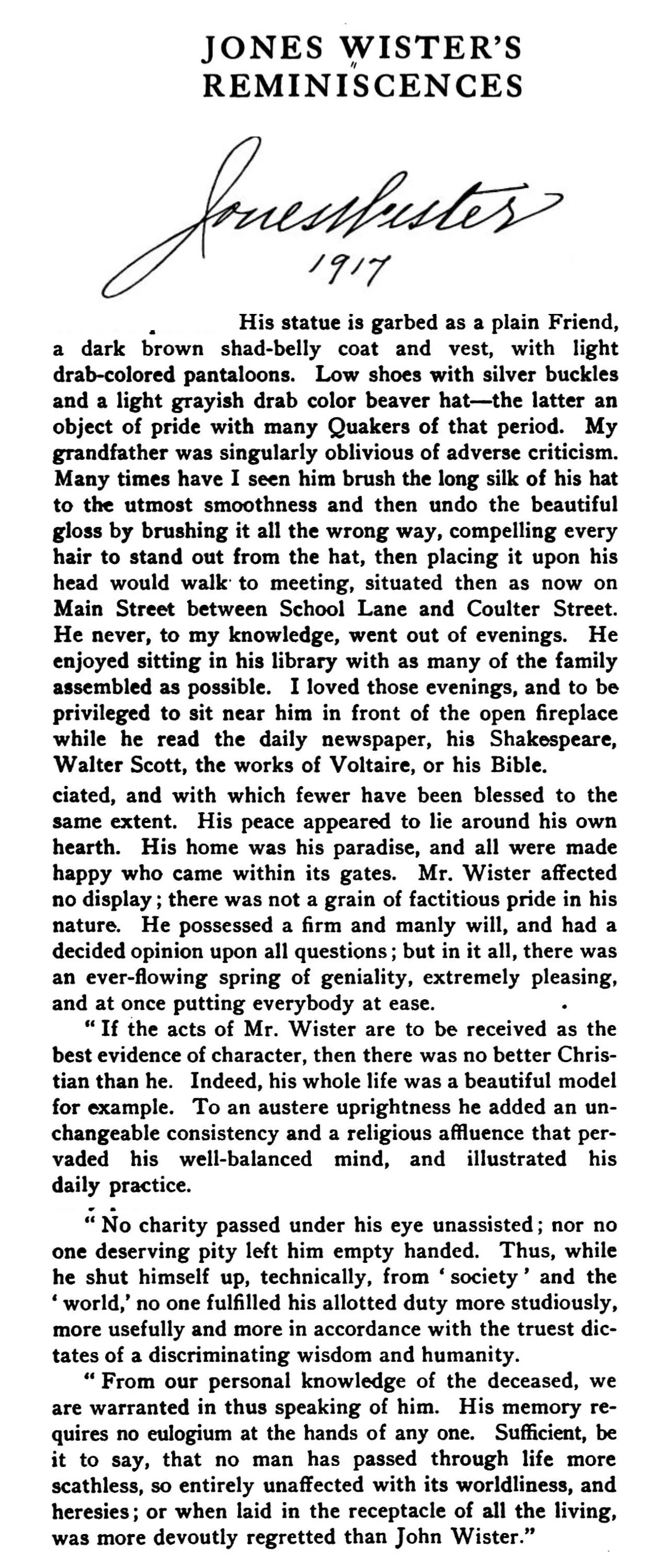
Above: Text image source: Jones Wister’s Reminiscences, by Jones Wister, 1920, Internet Archive
Jones Wister
The Grandson who Created the Statue
of his Grandfather, John Wister:
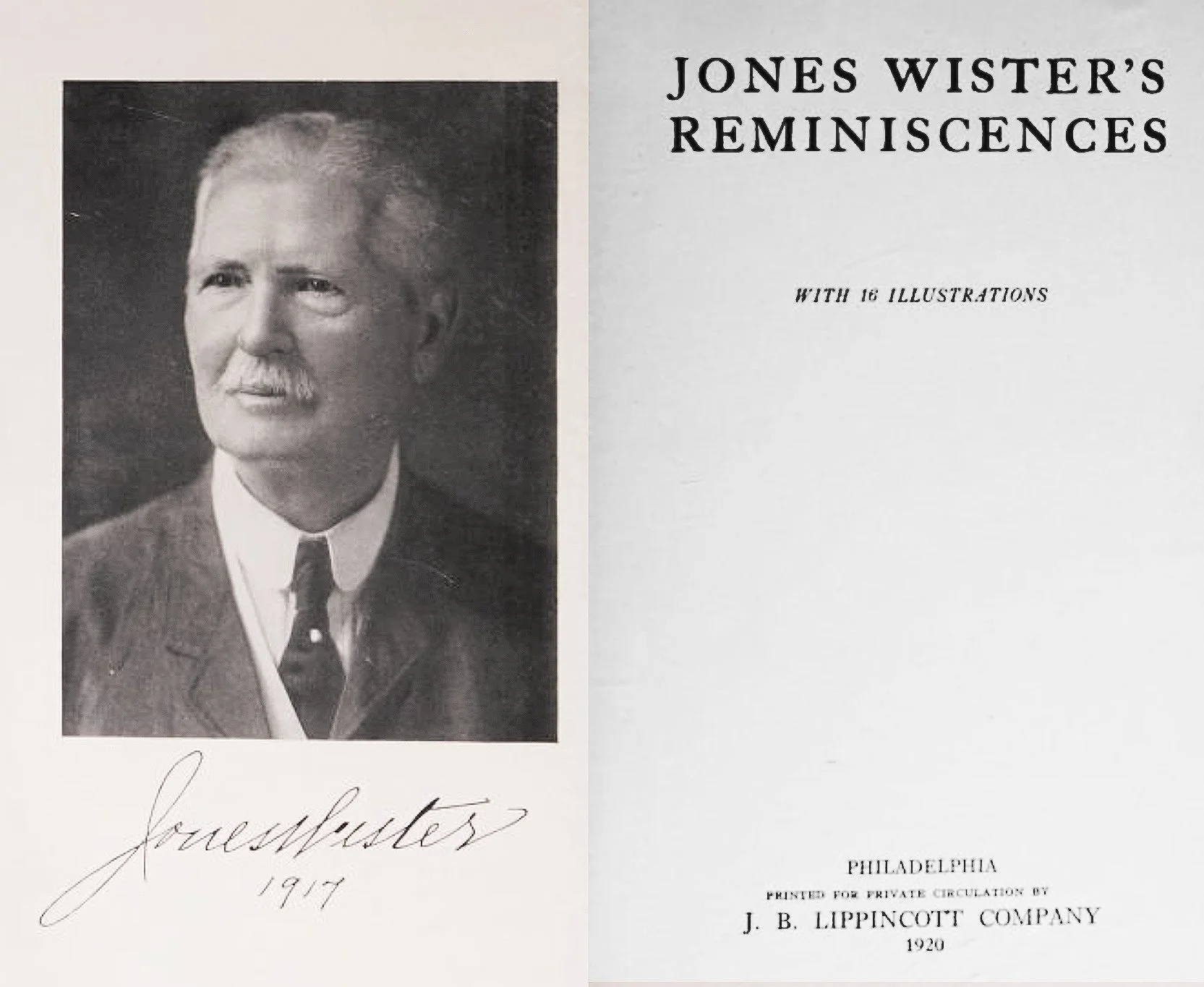
Above: Image source: Jones Wister’s Reminiscences, by Jones Wister, 1920, Internet Archive
Jones Wister was not a member of a Quaker meeting, even though his family had deep roots in Quaker Germantown. His parents were birthright Quakers, but he was not a Peace Church pacifist. During the Civil War Jones Wister was a Sergeant in Company D, 6th Pennsylvania Militia. But Jones Wister celebrated his family’s peaceable Quaker lifestyle in his autobiography. He didn’t fall far from the tree.
Two Houses - Two Generations of Wisters
From Quaker Vernacular to Federal Style:
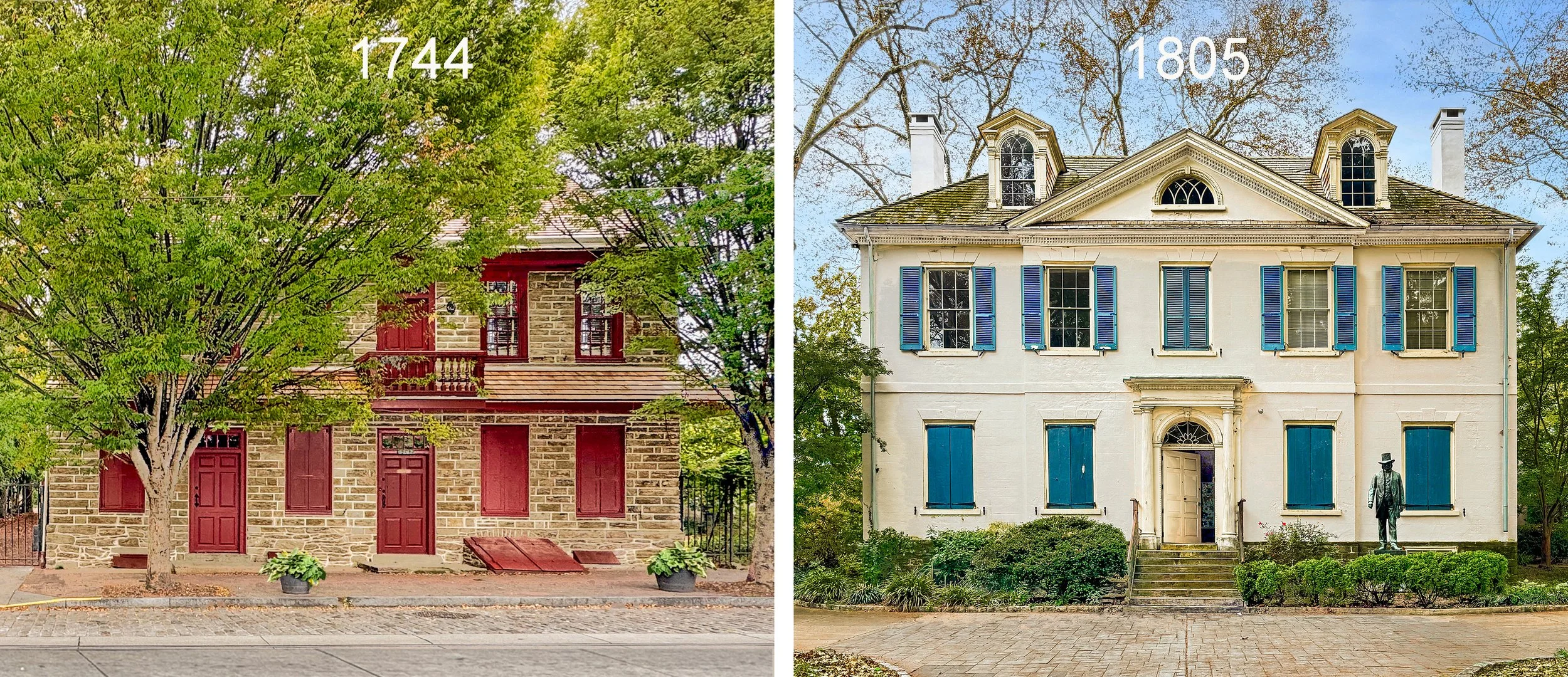
Above left:The immigrant ancestors’ house, named Grumblethorpe: Built in 1744 for John Wister and Anna Catharina (Rübenkam) Wister.
Above right: The third-generation family’s house named Vernon: The home of John and Anna Wister’s grandson John Wister and Elizabeth (Harvey) Wister. Image sources: Lee J. Stoltzfus
1934: Measured Drawings of the House
Historic American Buildings Survey:
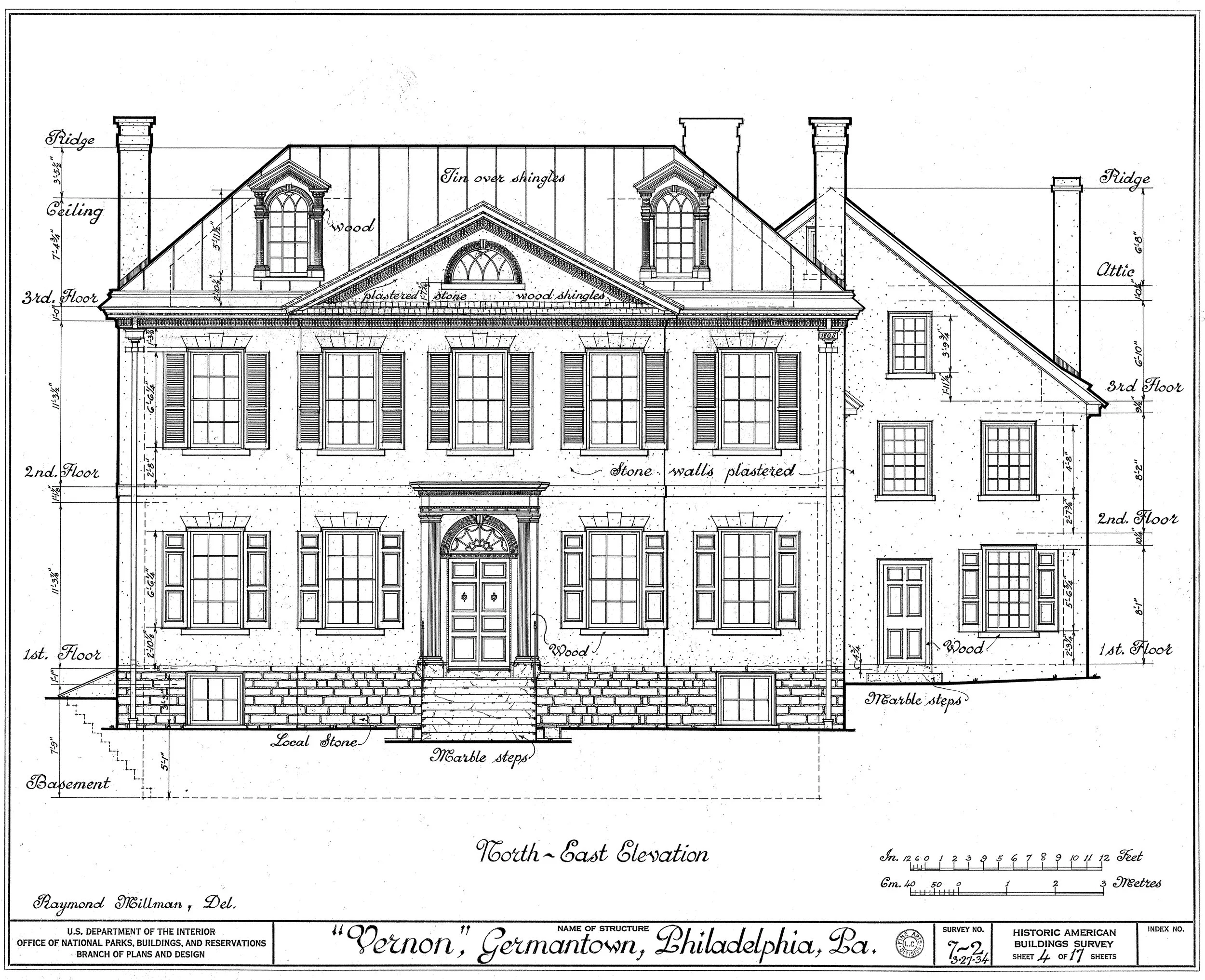
Above: Vernon’s original floor plan had a central hall, before later renovations opened the interior. Image source: Historic American Buildings Survey, Raymond Hillman, 1934, Library of Congress.
1934: An Ornate Federal-Style Mantel
Historic American Building Survey:
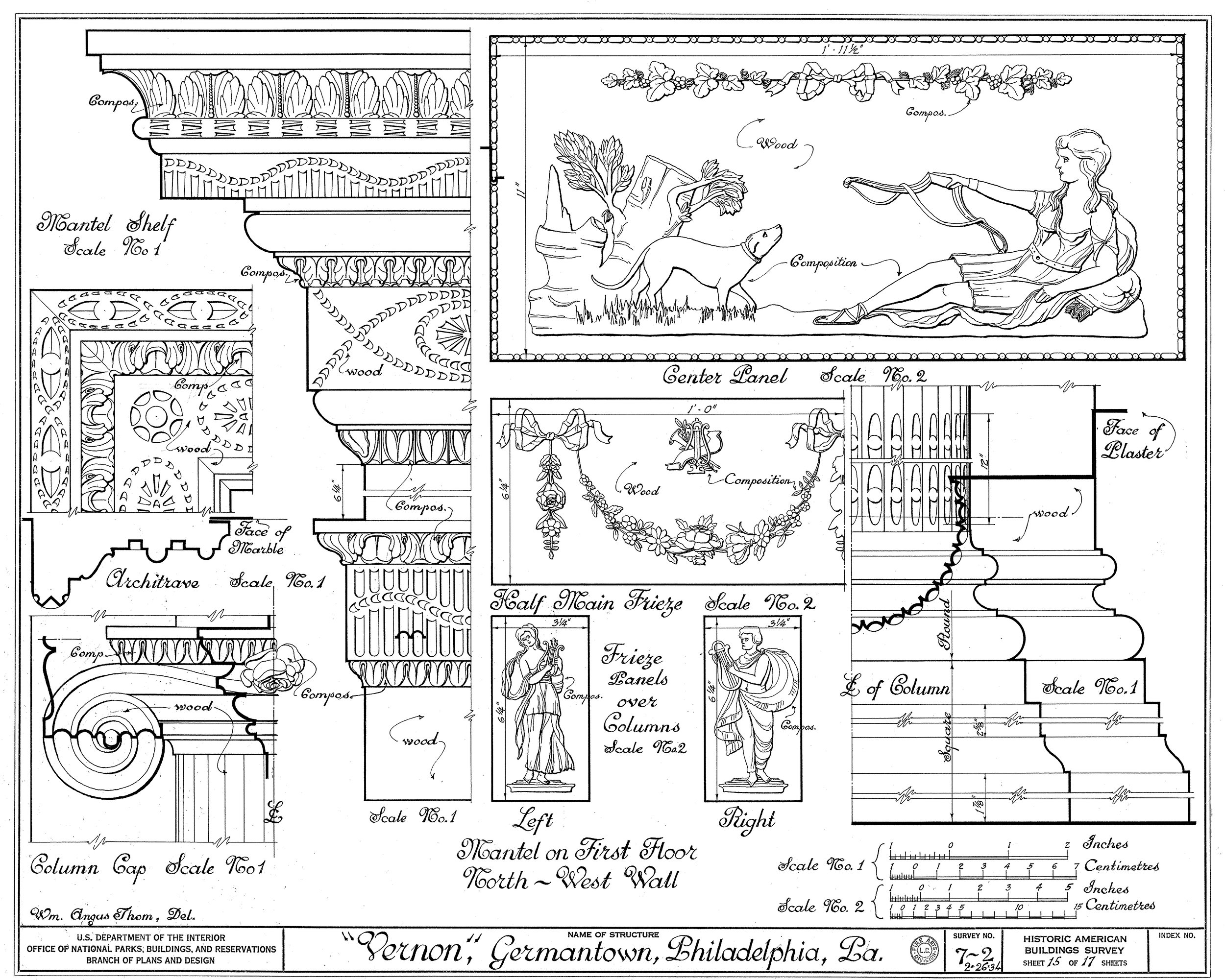
Above: Vernon’s interior has beautifully crafted woodwork in the Federal style, including ornate fireplace mantels. Image source: Historic American Buildings Survey, William Angus Thom, 1934, Library of Congress.
Another Statue Here in the Park
Quaker & Mennonite Immigrants of 1683
Founders of Germantown:
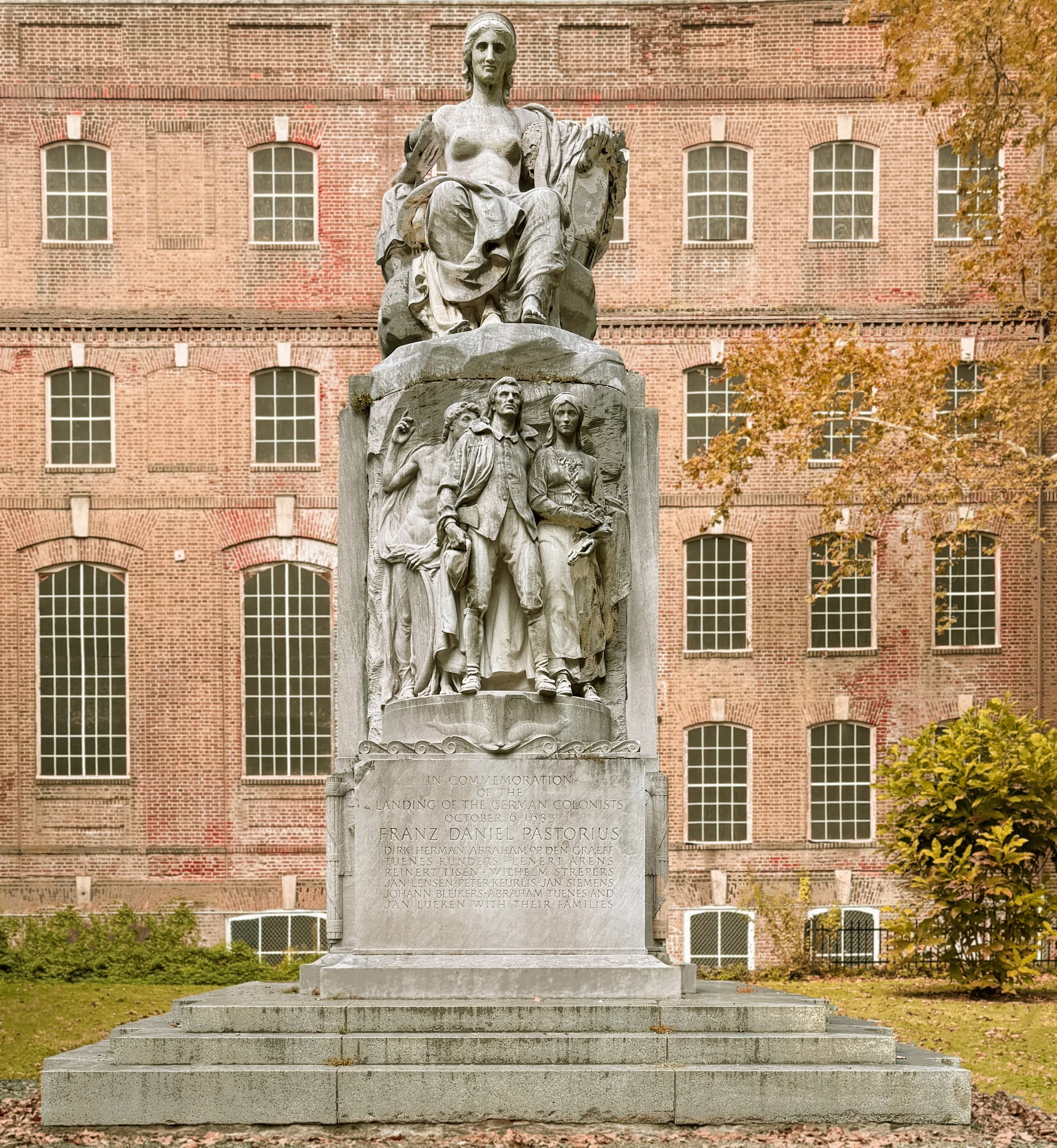
Above: The Pastorius Monument commemorates the first settlers of Germantown. It is carved from Tennessee marble and limestone with granite steps. Image source: Lee J. Stoltzfus
The Pastorius Monument was completed in 1920 by German American sculptor Albert Jaegers. The monument marks Germantown as the site of the first permanent settlement of Germans in America in 1683. Francis Daniel Pastorius led that group of immigrants.
Although the monument was planned to be unveiled in 1917, it was covered with boards during World War I because of anti-German sentiment. The statue depicts Quaker and Mennonite immigrants from Germany who were anti-war conscientious objectors.
Anti-German opponents to the monument called it “an insidious form of pan-German propaganda.” The woman at the top of the statue represents “Miss Civilization.”
The bas-relief sculpture was also titled “The Spirit of Love and Brotherhood of the German Pilgrim Fathers.” During World War II the monument was again boarded up and hidden from view. The anti-war voices of these pacifist Quaker and Mennonite immigrants were censored during both wars.
The First Settlers of Germantown
Mostly German and Dutch Quakers
Who had Previously been Mennonites:
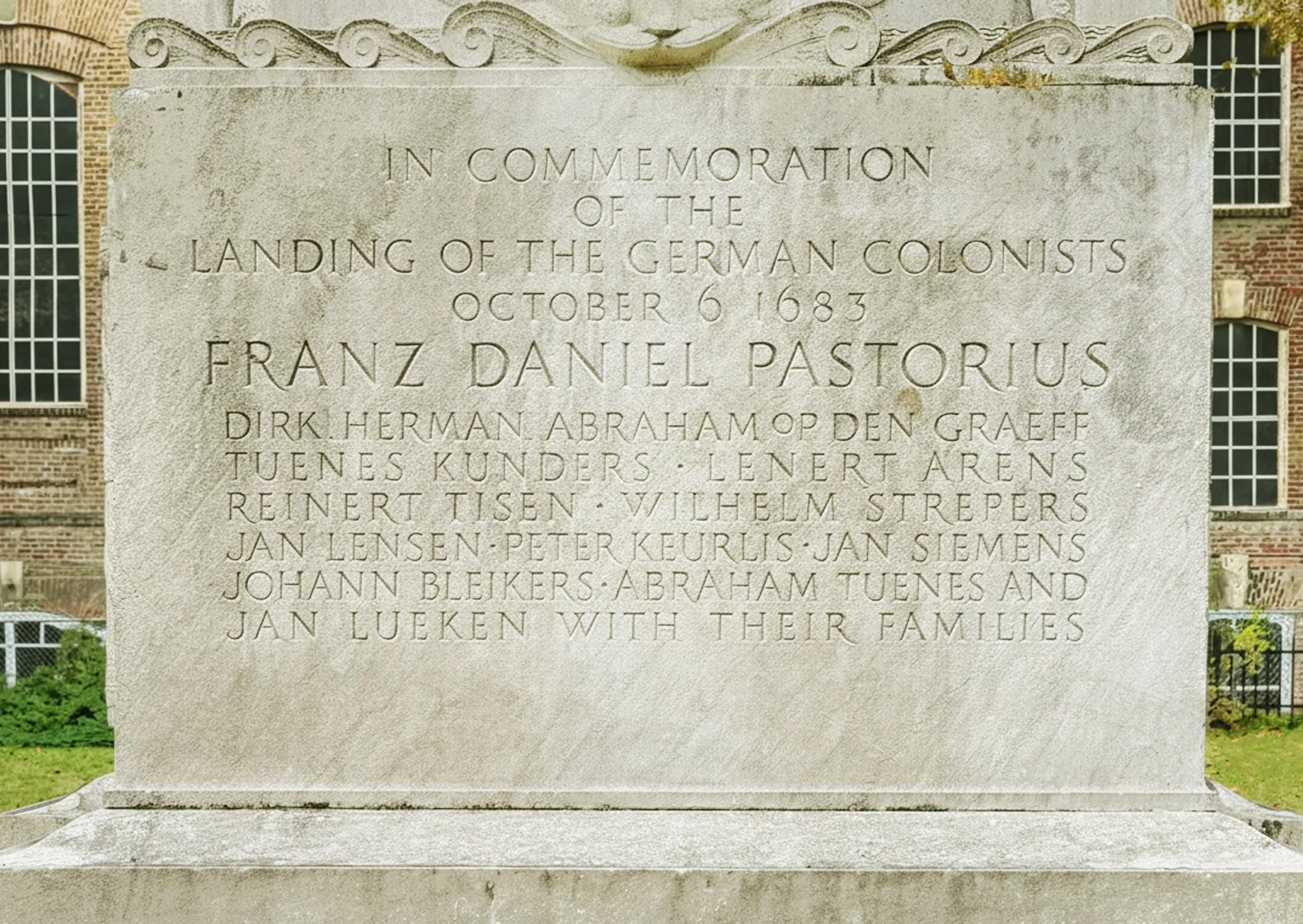
Above: Monument text: In commemoration of the landing of the German colonists October 6, 1683 Franz Daniel Pastorius, Dirk, Herman, Abraham op Den Graeff, Tuenes Kunders, Lenert Arens, Reinert Tisen, Wilhelm Strepers, Jan Lensen, Peter Keurlis, Jan Siemens, Johann Bleikers, Aabraham Tuenes, and Jan Lueken with their families.
The 1688 Protest against Slavery
By Dutch-German Quakers and Mennonites:
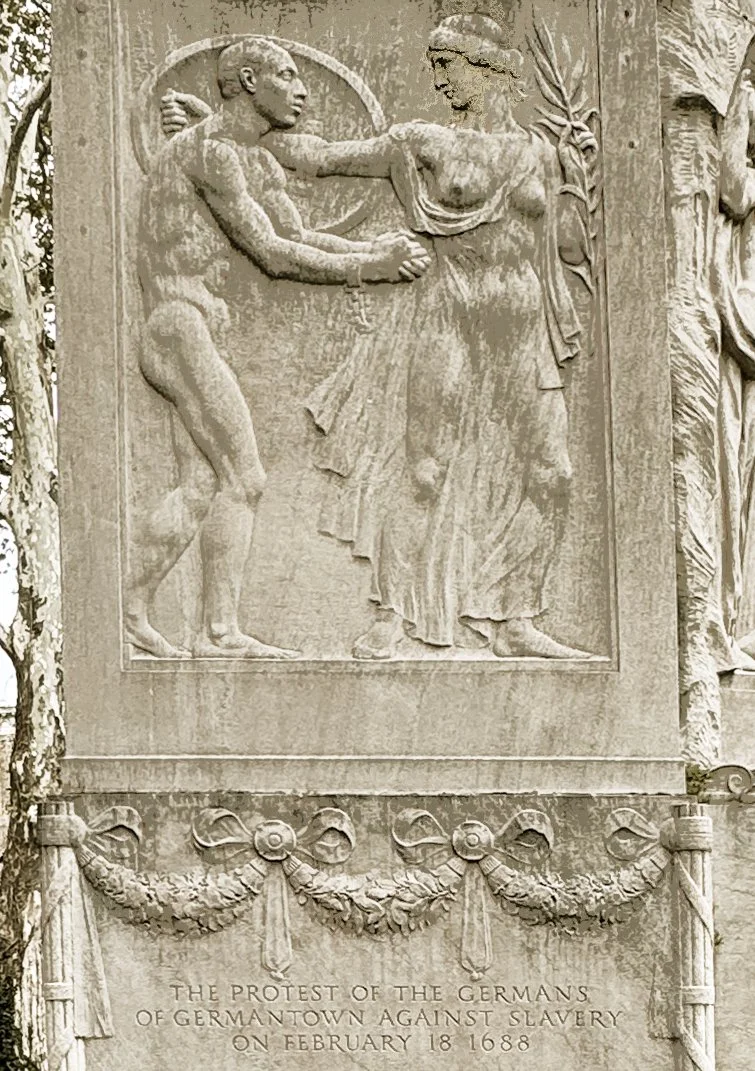
Above: Monument text: The Protest of the Germans of Germantown against Slavery on February 18, 1688. Image source: Lee J. Stoltzfus
This panel of the Pastorius Monument commemorates the 1688 Germantown petition against slavery. That petition is widely regarded as the first formal anti-slavery petition in America. It was a written protest drafted by Germantown Quakers (and former Mennonites) that called for the end of slavery. Franz Daniel Pastorius, founder of Germantown, prepared the document.
Links: