
Historic Quaker Houses of Montgomery County, PA
The Stephens House at Valley Forge
Quarters of Brig. General Varnum
During the Revolutionary War
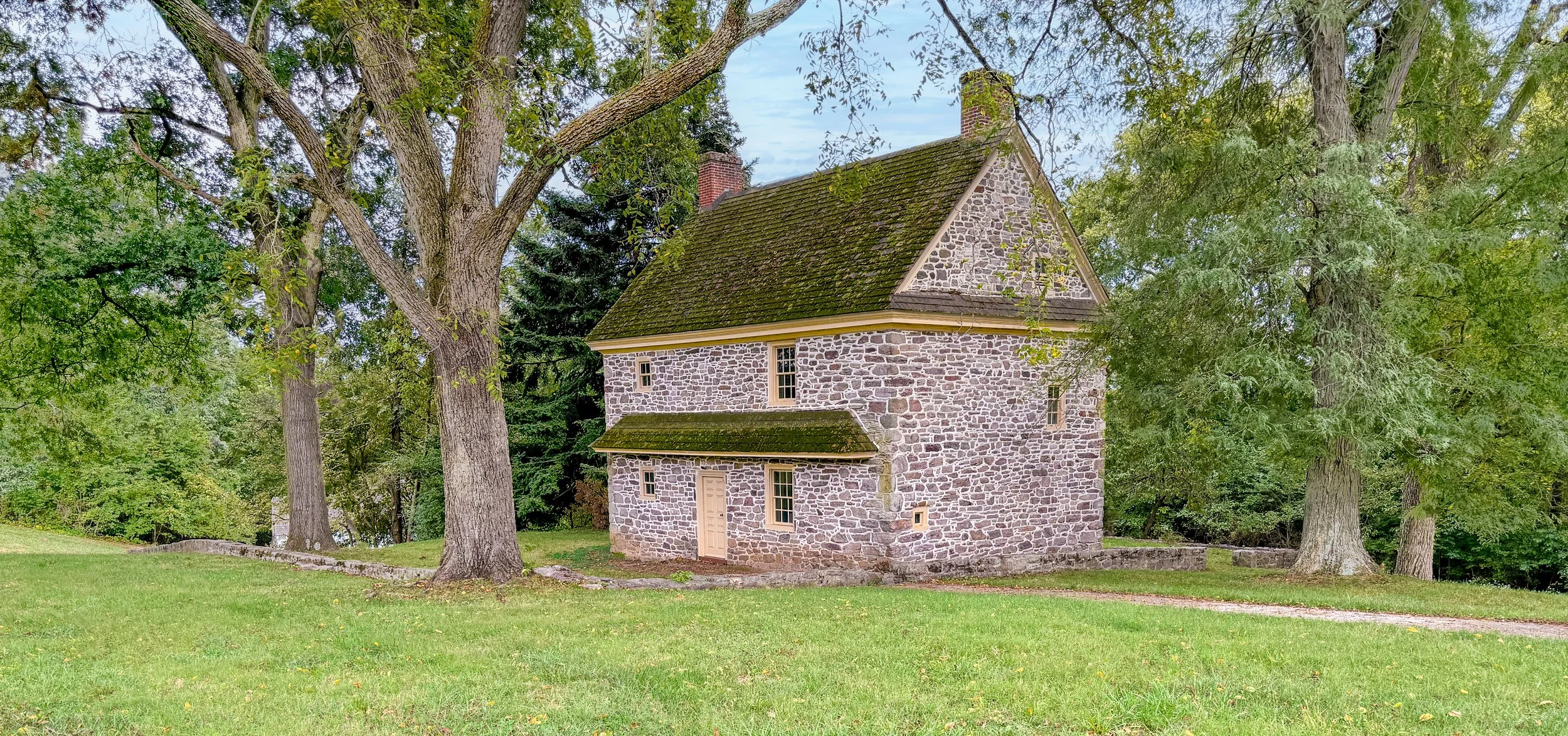
Above: The Stephens House / Varnum’s Quarters at Valley Forge. Image source: Lee J. Stoltzfus
Welsh Quaker Morris Edwards built the Stephens House between 1711 and 1735. Edwards and his wife, Eleanor (Morgan) Edwards, emigrated from Wales in 1700. Morris Edwards became associated with the Baptists, and was a founder of the Great Valley Baptist Meeting in 1711.
Their daughter Elizabeth later inherited the property. She and her husband, David Stephens, brought the house into the Stephens family around 1747 when the couple married.
David Stephens was the grandson of Evan ap Evan (“Evan, son of Evan”), who emigrated from Wales during the early Penn migration in the 1680s. Evan bought a large tract of land in the area that is what is now the Valley Forge National Historic Park. His son was Stephen ap Evan. Stephen’s son was David, who began calling himself David Stephens.
Stephens Family History
Owners of this Stephens House:
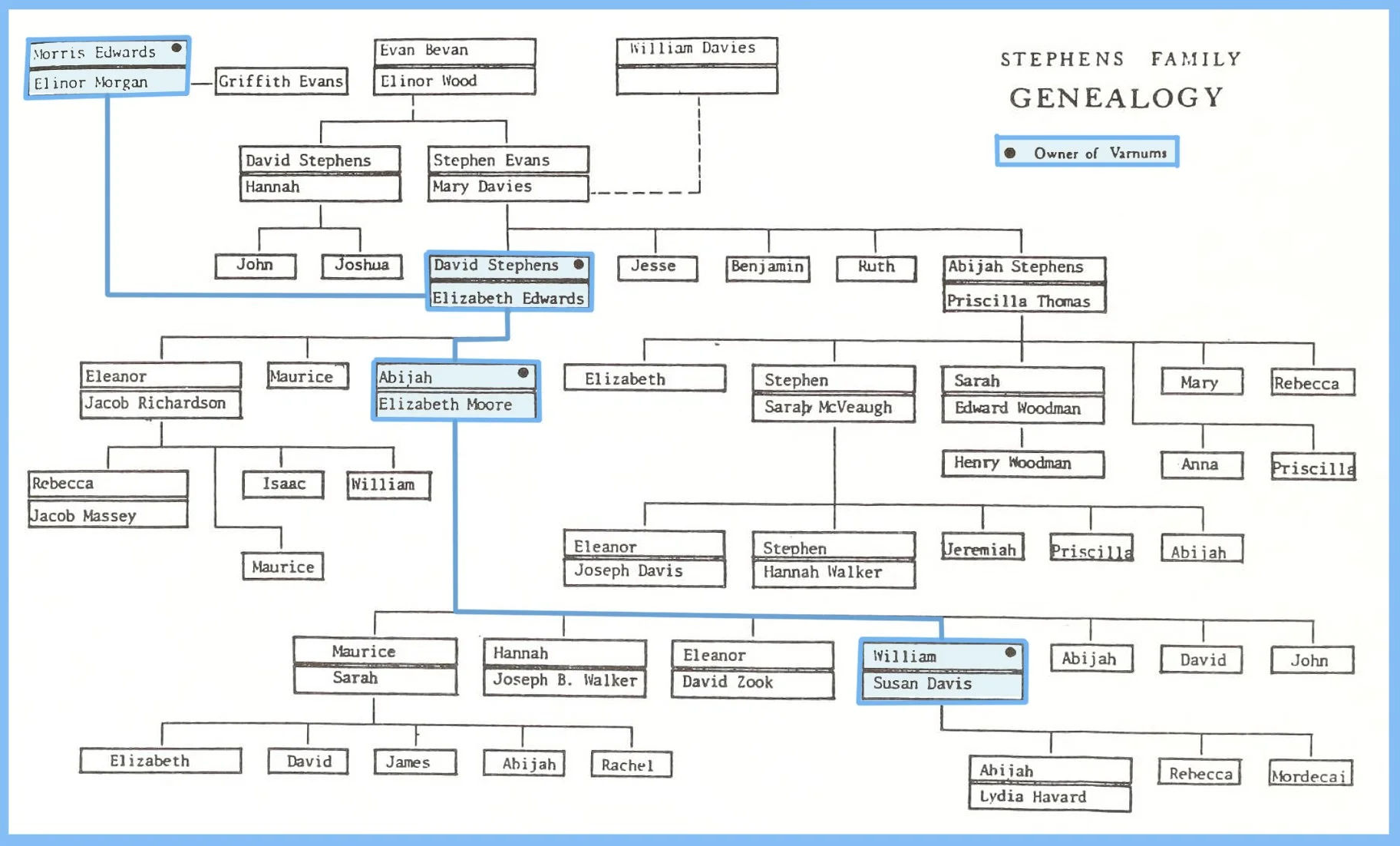
Above: Stephens genealogy researched by the National Heritage Corp, 1974. Image source: Historic Furnishings Report Varnum’s Quarters, John P. Brucksch, 1993. Internet Archive (color added)
It’s the Earliest Building
In Valley Forge National Historical Park:
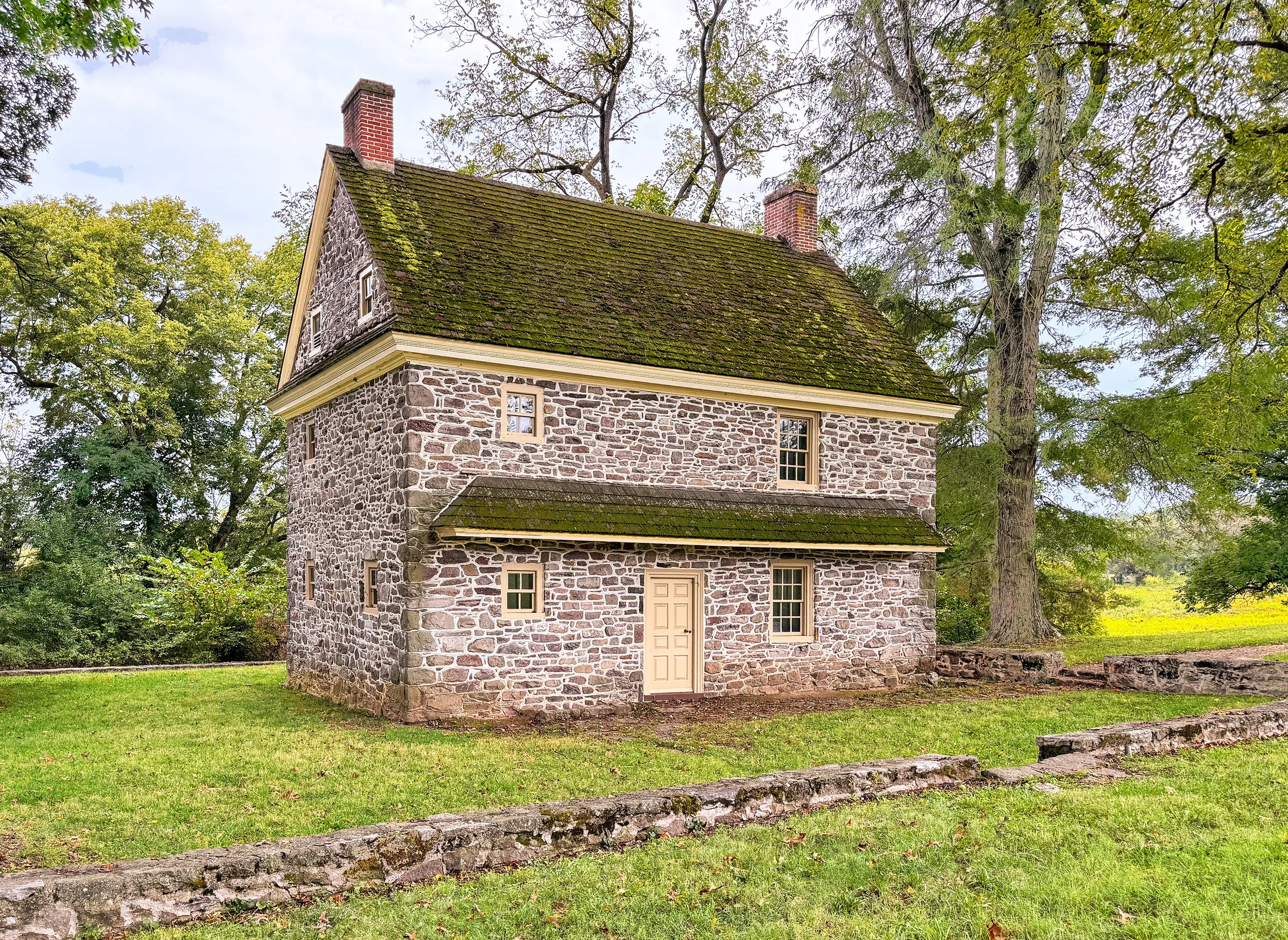
The Stephens House is the oldest building in Valley Forge Park. Image source: Lee J. Stoltzfus
During the encampment, the Stephens rented this house to Brigadier General James Mitchell Varnum of Rhode Island. Apparently David and Elizabeth Stephens and their son Abijah remained here in their house while it was occupied by the army officers.
David Stephens had been read out of Radnor Monthly Meeting (disowned) by the Quakers in 1758. The reasons were his marriage to a Baptist woman and his intemperate habits in taverns.
David Stephens Disowned by the Quakers
Later Charges included Aiding the Military:

Above text: Historic Furnishings Report Varnum’s Quarters, John P. Brucksch, 1993. Internet Archive
The Kitchen
Historic American Buildings Survey:
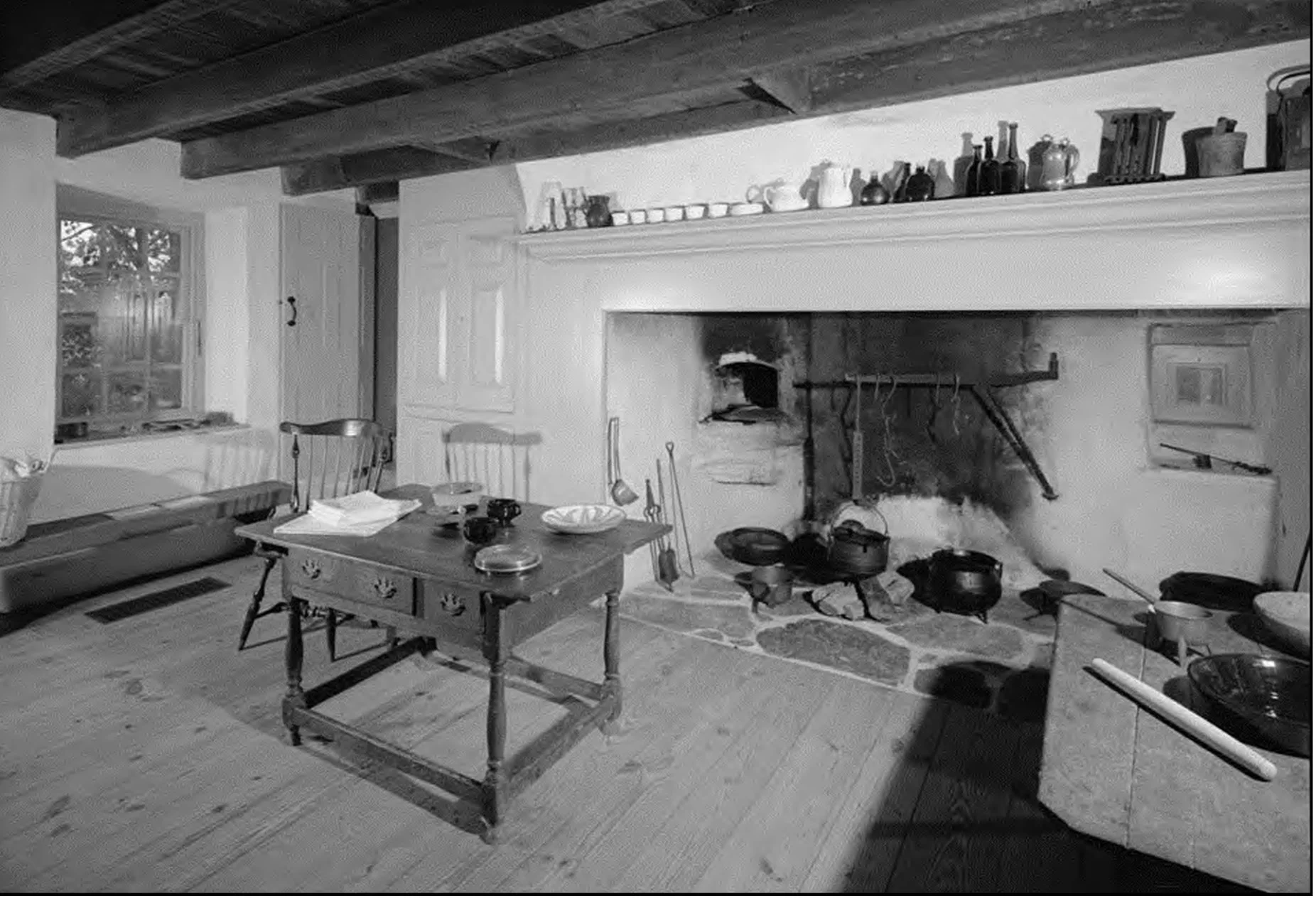
Above: The kitchen photographed for HABS. Image source: Library of Congress
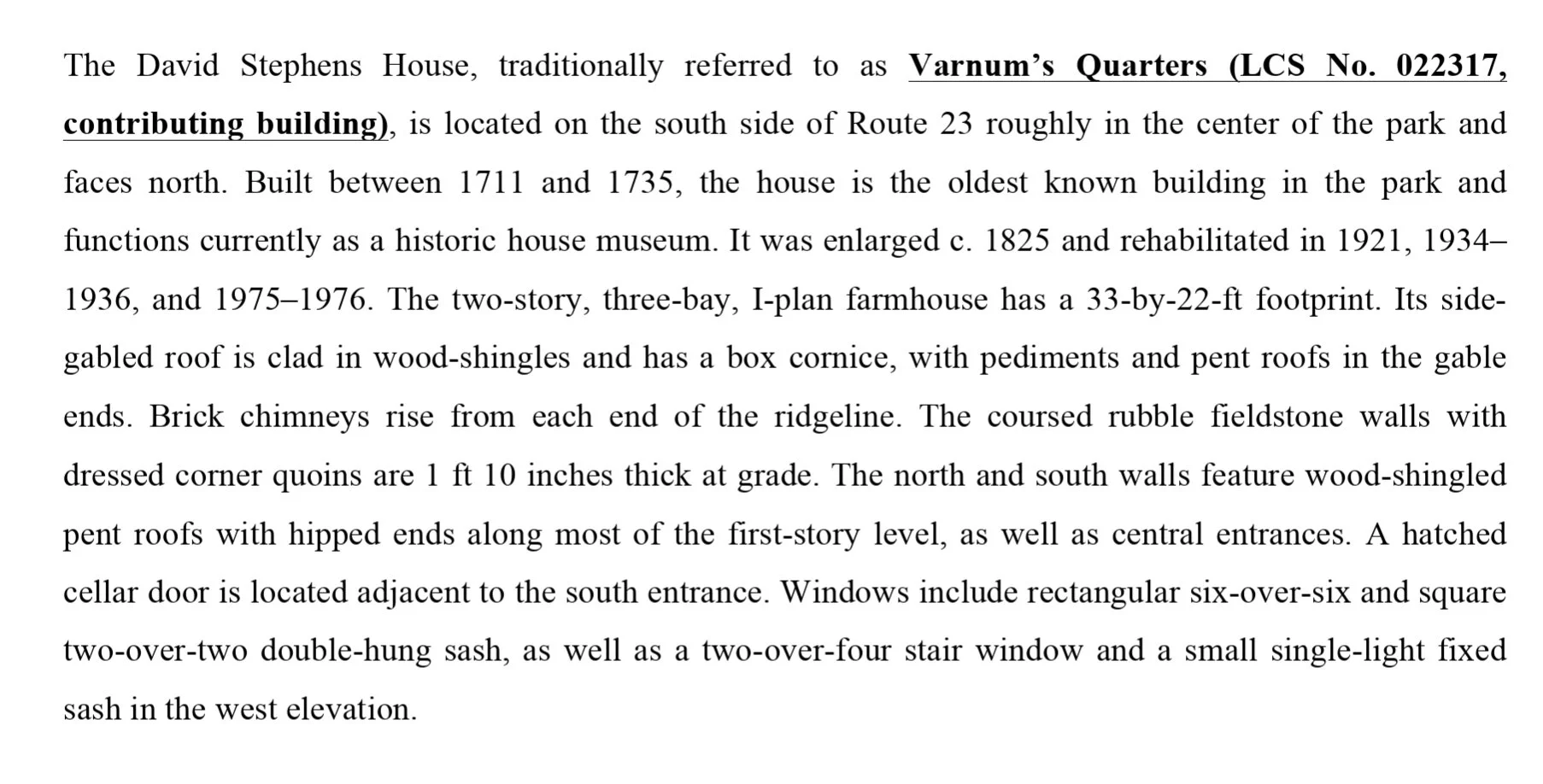
The floorplan is a hall-and-parlor plan. This two-room layout was traditional in Wales, where that house form continued to be built there into the 20th century. Here in Pennsylvania this form was typical of the earliest settlements. Typical details include a steeply pitched roof, three-bay construction, a central entry, a pent roof, and stone arches above the windows.
The house remained in the Stephens family for generations. The house had numerous additions and alterations before restoration. In 1918 the Commonwealth of Pennsylvania acquired the property, The state transferred the property in 1976 to the U. S. Department of the Interior for the Valley Forge National Historical Park.
House Description
National Register of Historic Places:
Above: Text image source: National Register of Historic Places Registration Form
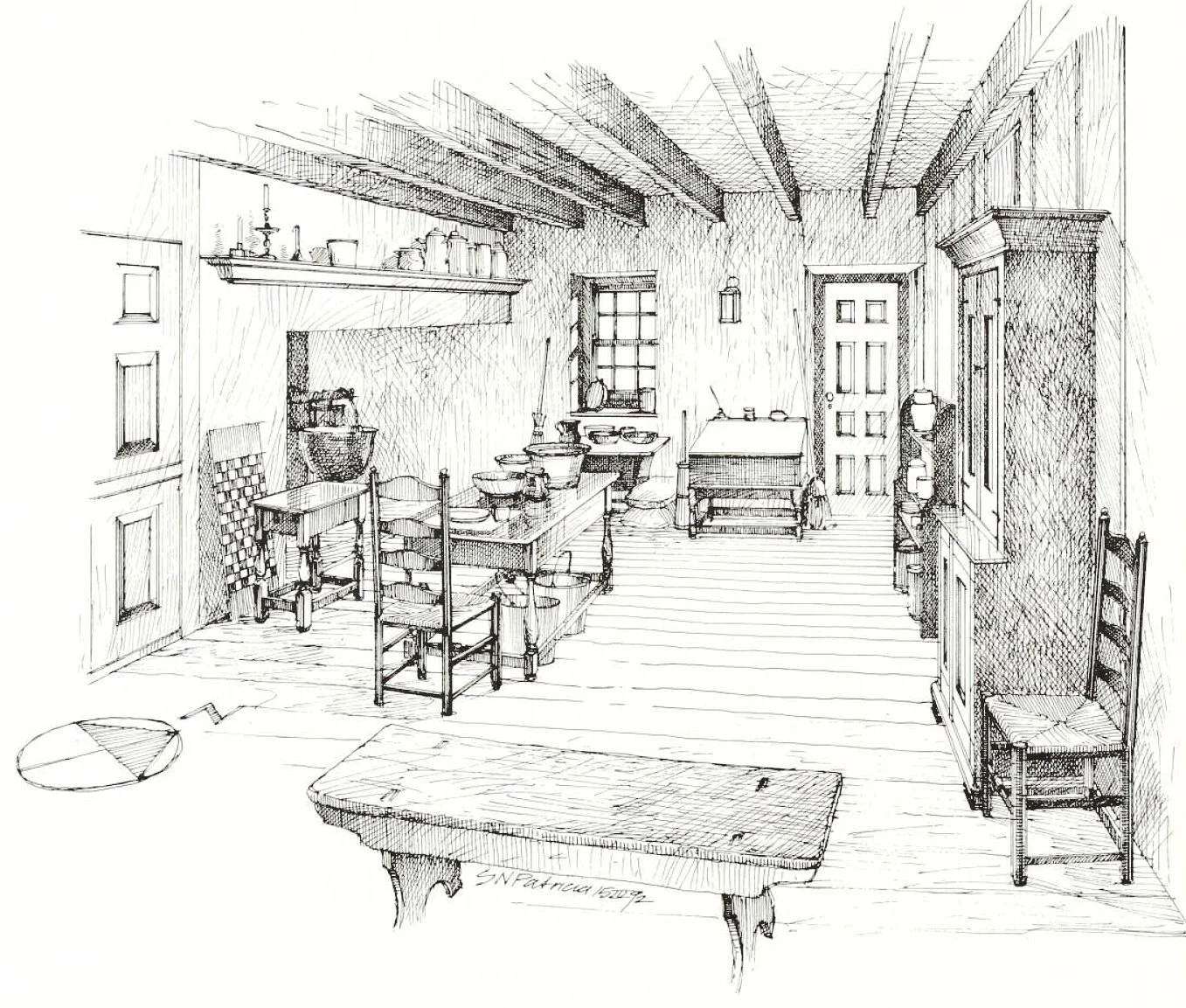
Kitchen Drawing by S. N. Patricia. Image source: Historic Furnishings Report Varnum’s Quarters, John P. Brucksch, 1993. Internet Archive
Links: