
Historic Quaker Houses of Bucks County, PA
Fairview: Home of the Wilkinson Family
Later the Home of Playwright Moss Hart

Above: The central stone farmhouse of the Wilkinson era is flanked by later additions. Image source: Lee J. Stoltzfus.
Lithograph of this Farm in 1859:
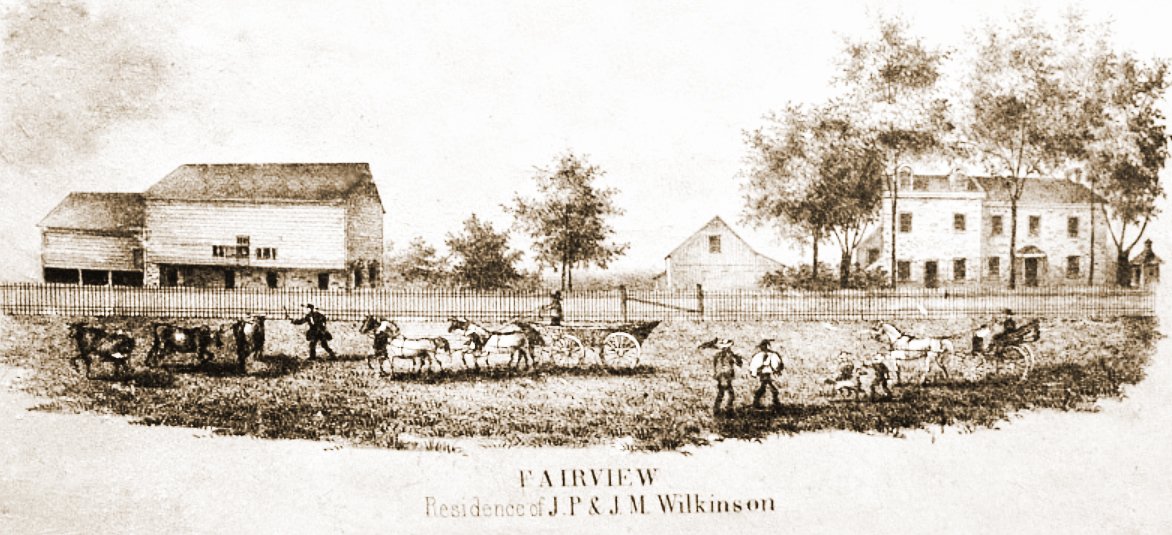
Image source: Farm Map of Solebury Township, 1859, Matthew Hughes, Solebury Historical Society.
Historically known as Fairview Farm, this 18th-century farm was long associated with the Wilkinson family. The caption of this 1859 lithograph refers to Quaker farmers Joseph Paxson Wilkinson (1785 - 1861) and his son, James Moore Wilkinson (1812 - 1899).
Their middle names point to family connections with the Paxson and Moore families, both important names in the local Quaker world.

Above: The home overlooks lawns that once were fields and meadows of the Wilkinson farm. Image source: Lee J. Stoltzfus.
The Farm on an 1857 Map:
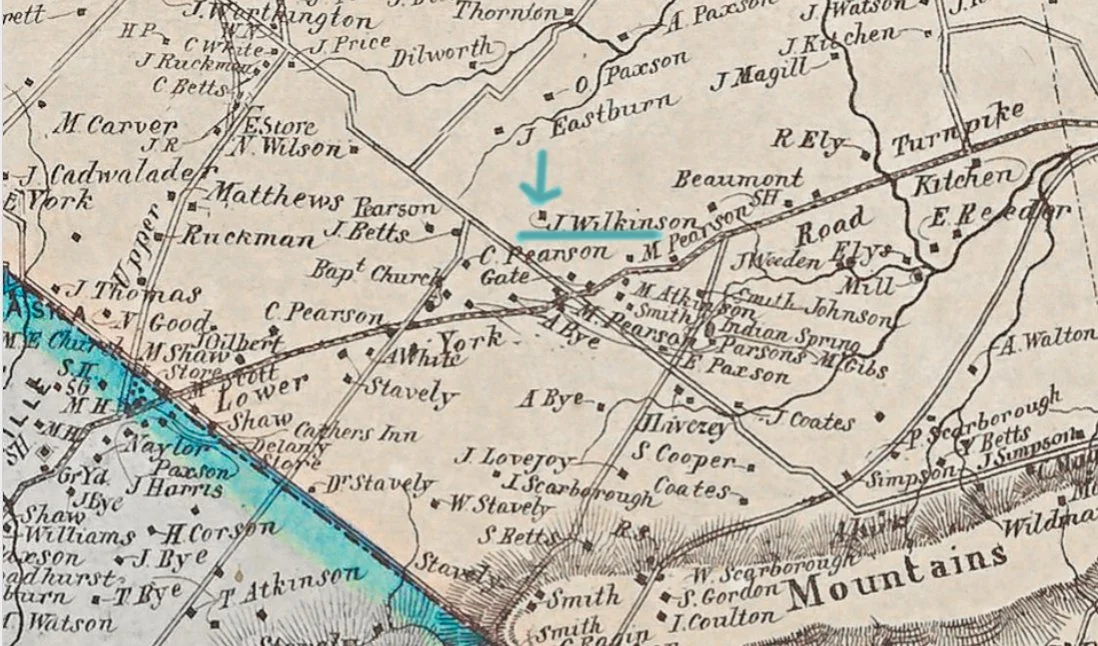
Above: Image source: Map of Bucks and Montgomery Counties…, Kuhn and Janney, 1857, Ruderman Rare Maps.
Became the Home of Playwright Moss Hart
And Actress Kitty Carlisle:
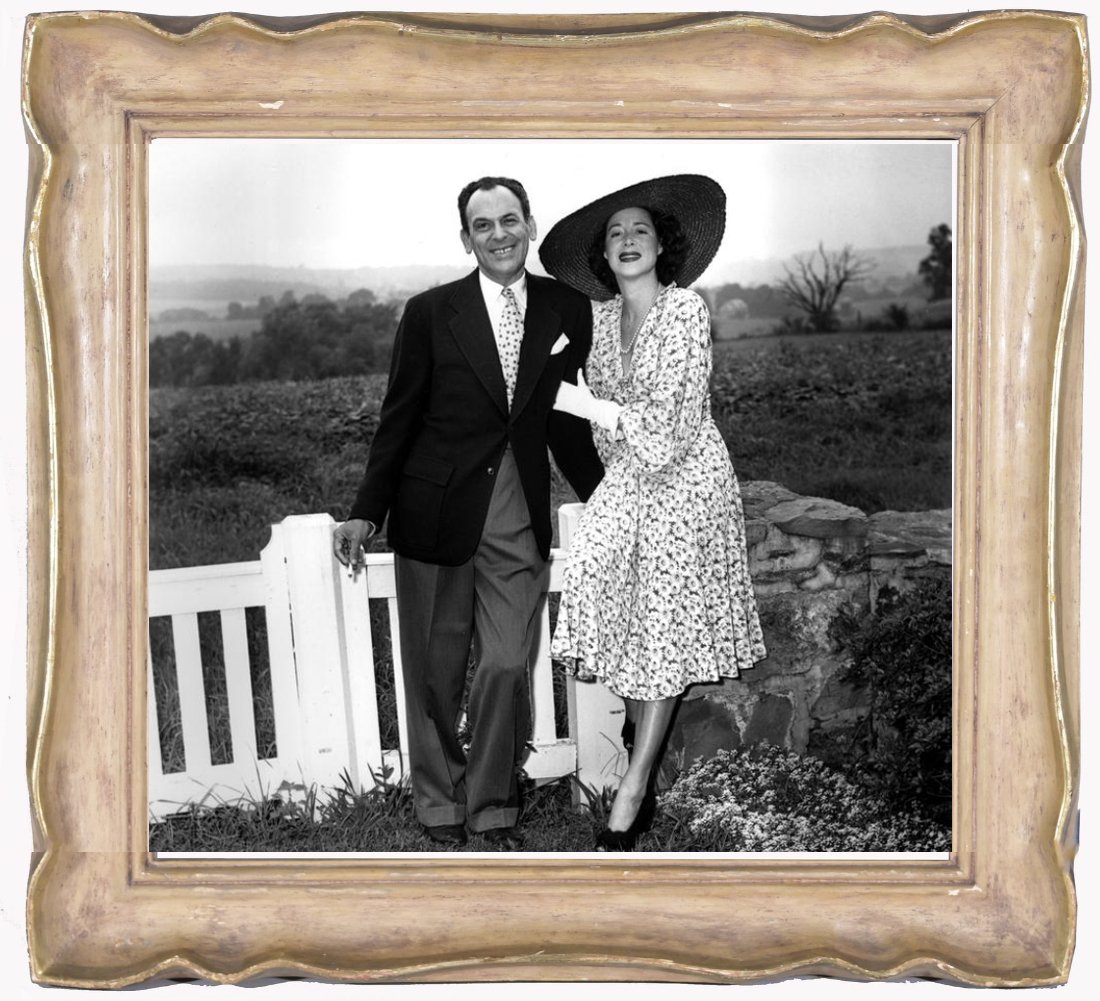
Above: Moss Hart and Kitty Carlisle at Fairview Farm. They were married in New Hope in 1946. Image source: ScreenWritingFromIowa (Digital frame added.)
Moss Hart was one of America’s leading dramatists of the mid-20th century. He frequently collaborated with playwright George S. Kaufman. After Hart’s first great success with Once in a Lifetime in 1930, Hart and Kaufman went on to write several celebrated comedies, including You Can’t Take It With You, which won the Pulitzer Prize for Drama.
Hart also worked with major figures in American theater, including Irving Berlin, Ira Gershwin, Kurt Weill, Cole Porter, Richard Rodgers, Lorenz Hart, Alan Jay Lerner, and Frederick Loewe. His later career included important directing work, especially My Fair Lady in 1956 and Camelot in 1960.
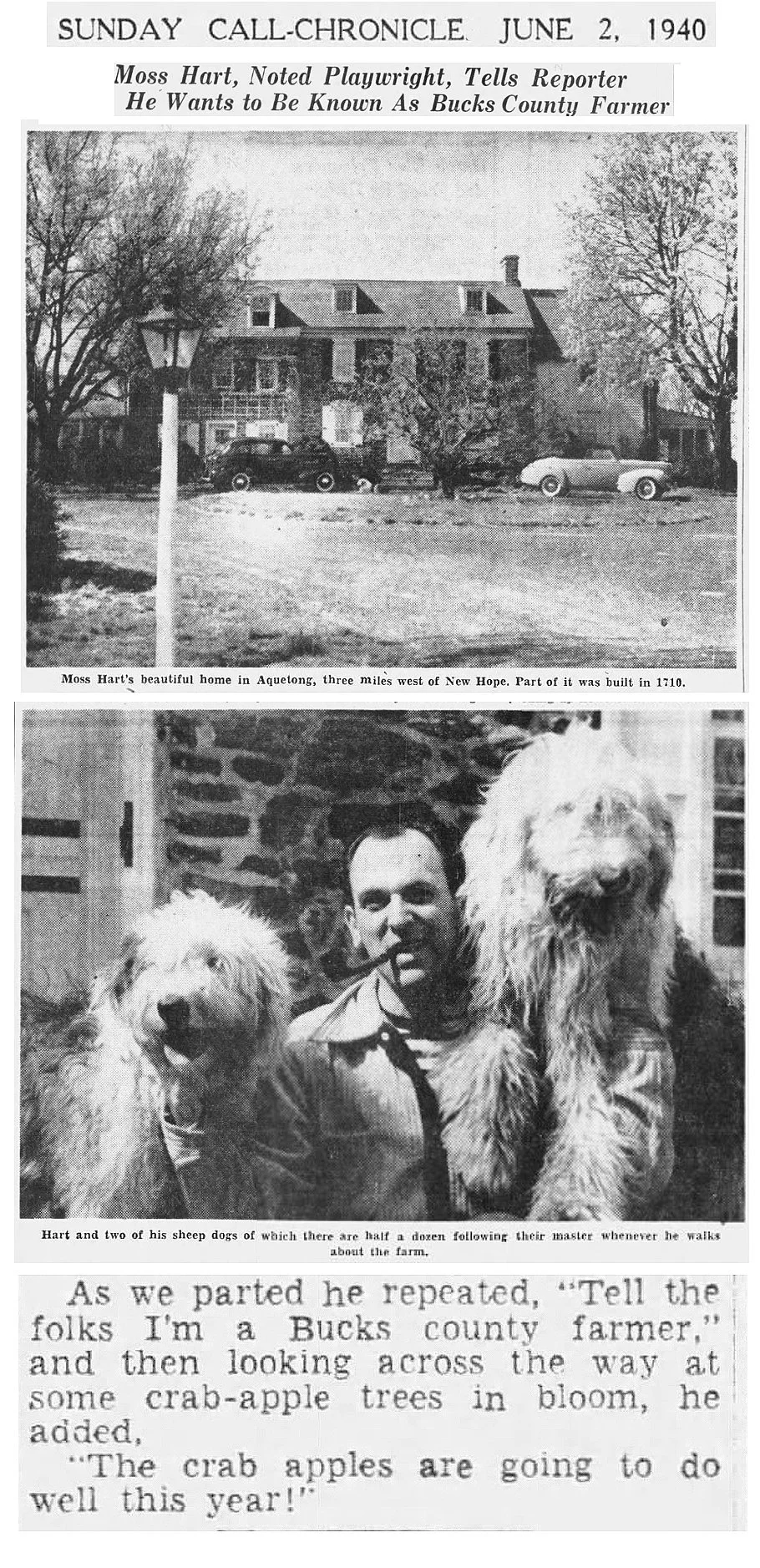
Above: Image source: Allentown Sunday Call - Chronicle, June 2, 1940, Newspapers.com.
Moss Hart’s connection to Bucks County centered on Fairview Farm in Solebury Township, which he purchased in 1937 while visiting George S. Kaufman. Moss transformed this former Quaker farm into a country retreat where he could write away from New York City.
Hart lived there until 1954. He was actively involved with the Bucks County Playhouse and served as one of its original officers when it opened in 1939. Several of his works were staged there, including You Can’t Take It With You, George Washington Slept Here, and The Man Who Came to Dinner.
Moss Hart’s Theatrical Works and Stage Credits:
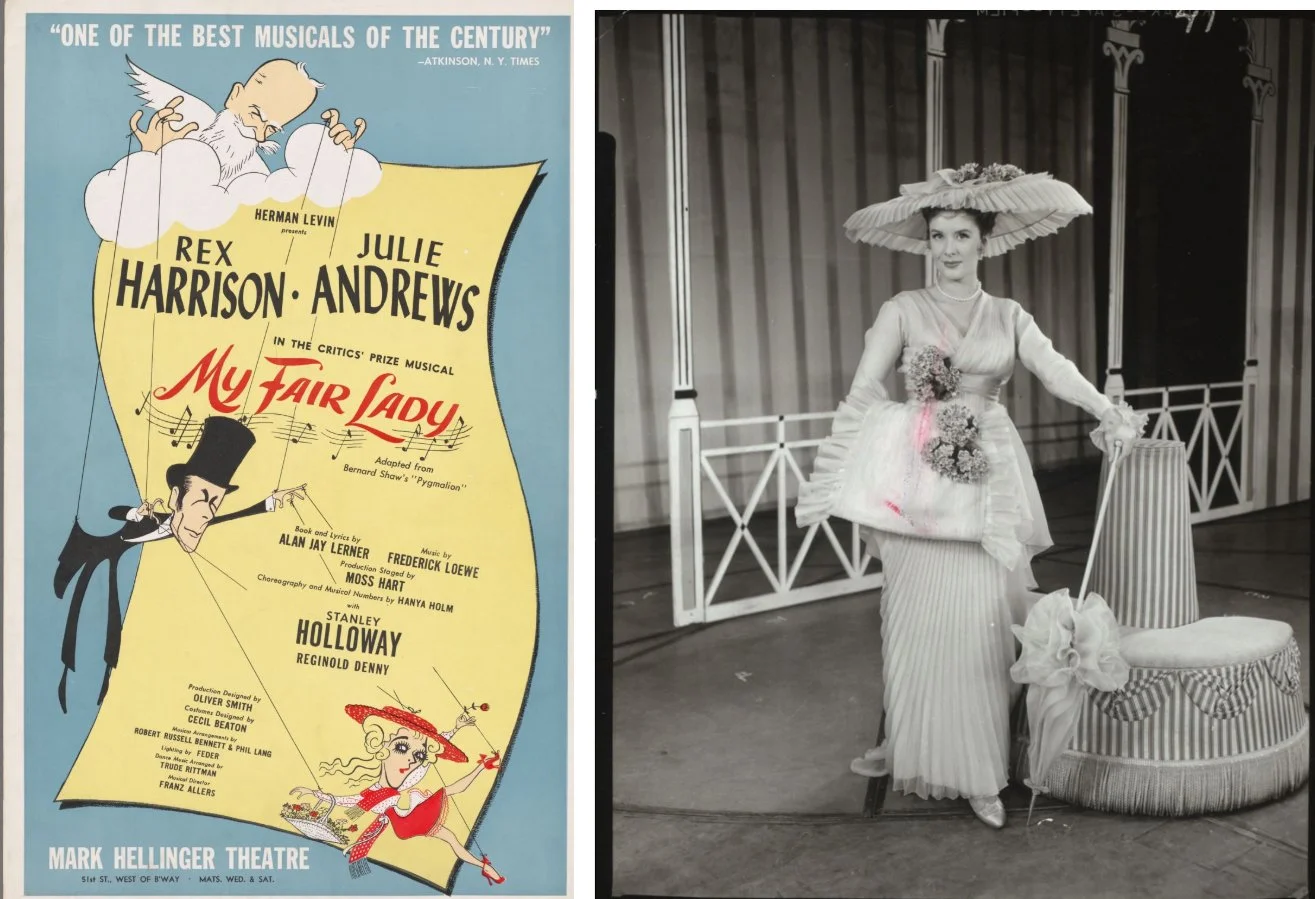
Above: Julie Andrews and Rex Harrison in My Fair Lady, 1956. Musical by Alan Jay Lerner and Frederick Loewe. Moss Hart won the Tony Award for Best Direction. Images source: New York Public Library
Moss Hart: Plays, Musicals, and Sketches as Writer:
Jonica (1930) Book by Dorothy Heyward and Moss Hart.
Once in a Lifetime (1930)
Written with George S. Kaufman. Hart’s first major Broadway success.
Face the Music (1932)
Musical book by Moss Hart, with music and lyrics by Irving Berlin.
As Thousands Cheer (1933)
Book by Moss Hart, with music and lyrics by Irving Berlin.
Merrily We Roll Along (1934)
Written with George S. Kaufman.
The Great Waltz (1934)
Book credited to Moss Hart, with additional source/adaptation credits.
Jubilee (1935)
Book by Moss Hart, with music and lyrics by Cole Porter.
The Show Is On (1936)
Included a sketch by Moss Hart, “Mr. Gielgud Passes By.”
You Can’t Take It with You (1936)
Written with George S. Kaufman. Winner of the Pulitzer Prize for Drama.
I’d Rather Be Right (1937)
Book by Moss Hart and George S. Kaufman, with music by Richard Rodgers and lyrics by Lorenz Hart.
The Fabulous Invalid (1938)
Written with George S. Kaufman.
The American Way (1939)
Written with George S. Kaufman.
The Man Who Came to Dinner (1939)
Written with George S. Kaufman.
George Washington Slept Here (1940)
Written with George S. Kaufman.
Lady in the Dark (1941)
Musical book by Moss Hart, with music by Kurt Weill and lyrics by Ira Gershwin.
Winged Victory (1943)
Written by Moss Hart for the U.S. Army Air Forces during World War II.
Seven Lively Arts (1944)
Miss Lillie’s sketches by Moss Hart.
Christopher Blake (1946)
Written by Moss Hart.
Light Up the Sky (1948)
Written by Moss Hart.
Inside U.S.A. (1948)
Included sketches by Moss Hart.
The Climate of Eden (1952)
Written by Moss Hart, adapted from Edgar Mittelholzer’s novel Shadows Move Among Them.
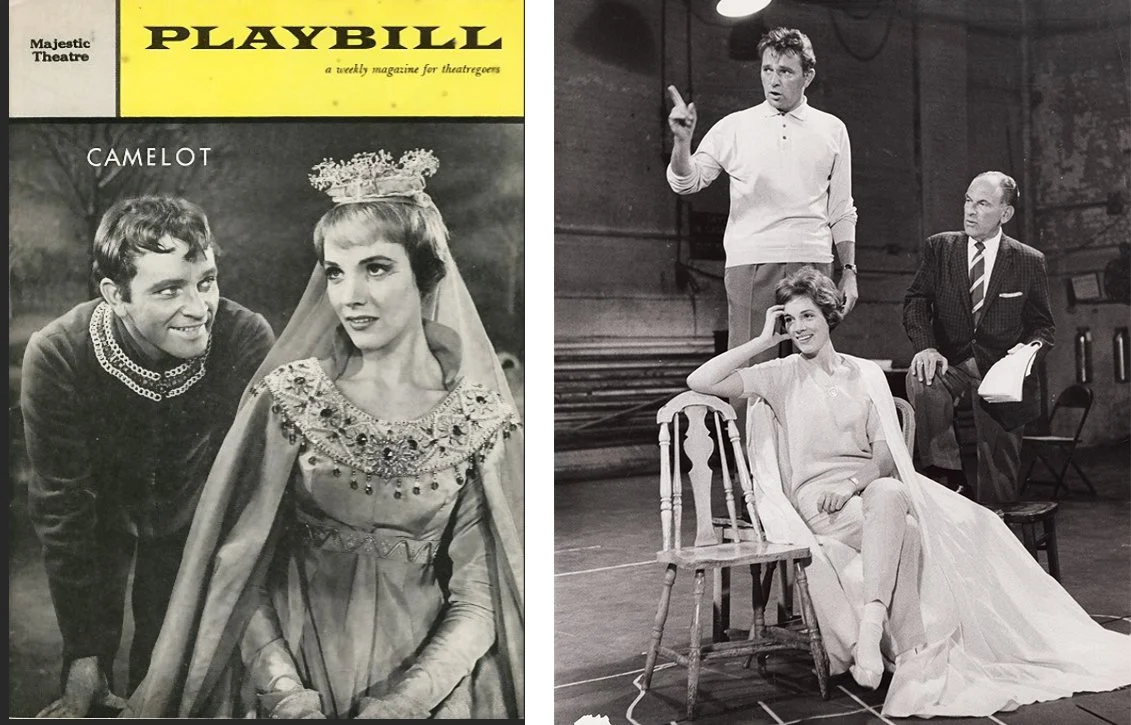
Above: Camelot (1960) Musical by Alan Jay Lerner and Frederick Loewe. Moss Hart staged and co-produced this show, which became his final Broadway triumph. Image sources: Left: TheatreGold. Right: New York Public Library
Major Shows Directed or Staged by Moss Hart:
Lady in the Dark (1941), Junior Miss (1941), Winged Victory (1943), Dear Ruth (1944), The Secret Room (1945), Christopher Blake (1946), Light Up the Sky (1948), Miss Liberty (1949),
The Climate of Eden (1952), Anniversary Waltz (1954),
My Fair Lady (1956) Musical by Alan Jay Lerner and Frederick Loewe. Hart won the Tony Award for Best Direction.
Camelot (1960) Musical by Alan Jay Lerner and Frederick Loewe. Hart staged and co-produced this show, which became his final Broadway triumph.
Writers and Artists Turned Central Bucks County
Into “The Genius Belt”
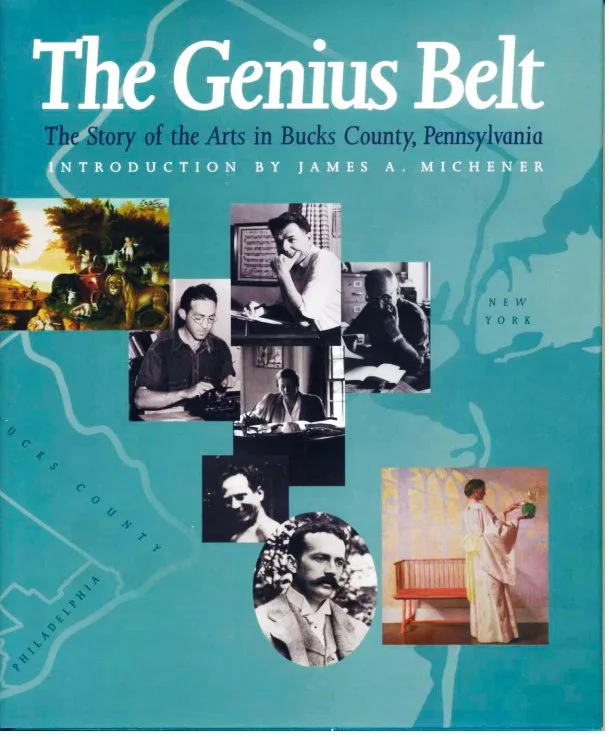
Above: 1996 book by the Michener Art Museum. Image source: Amazon
During the mid-twentieth century, the pastoral landscapes of central Bucks County transformed into a legendary "genius belt," serving as a rural enclave for some of America's most brilliant literary, theatrical, and journalistic minds.
Iconic writers and dramatists like Moss Hart, George S. Kaufman, Dorothy Parker, S. J. Perelman, Pearl Buck, and James Michener purchased historic stone farmhouses throughout the region. This unprecedented migration of creative talent turned the rolling hills of the Delaware Valley into a sophisticated countryside salon. Writers here created Broadway masterpieces and Pulitzer Prize-winning literature. The creativity continues today.
Links: