
Historic Quaker Houses of Delaware County, PA
The Minshall House
Built ca. 1750
The Earliest House in Media, PA:
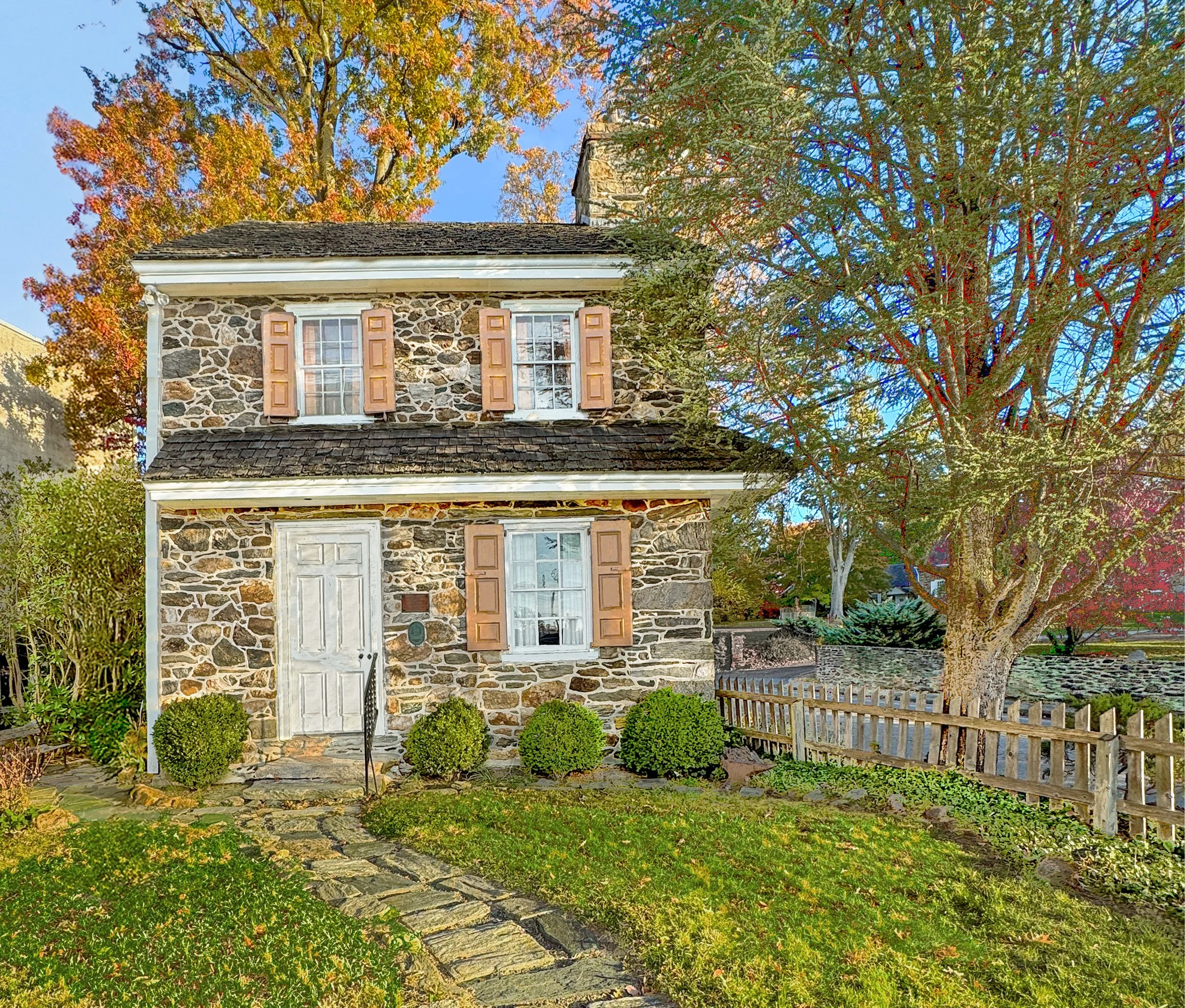
Above: The Minshall House in Media, Delaware County. Image source: Lee J. Stoltzfus.
The Minshall story in America began in 1681 when Quaker immigrant Thomas Minshall purchased 625 acres from William Penn. Minshall and his wife Margaret (Hicock) Minshall arrived in Pennsylvania in 1682. They secured warrants for land in Nether Providence and Middletown. This vast tract established the Minshalls as the primary landowners of the area that would eventually become Media.
The location of the original Minshall home was a few hundred feet southeast of the meetinghouse located across the road from this stone house. This residence may have been used as a tenant house for the Minshalls.
Minshall House Rear Elevation:
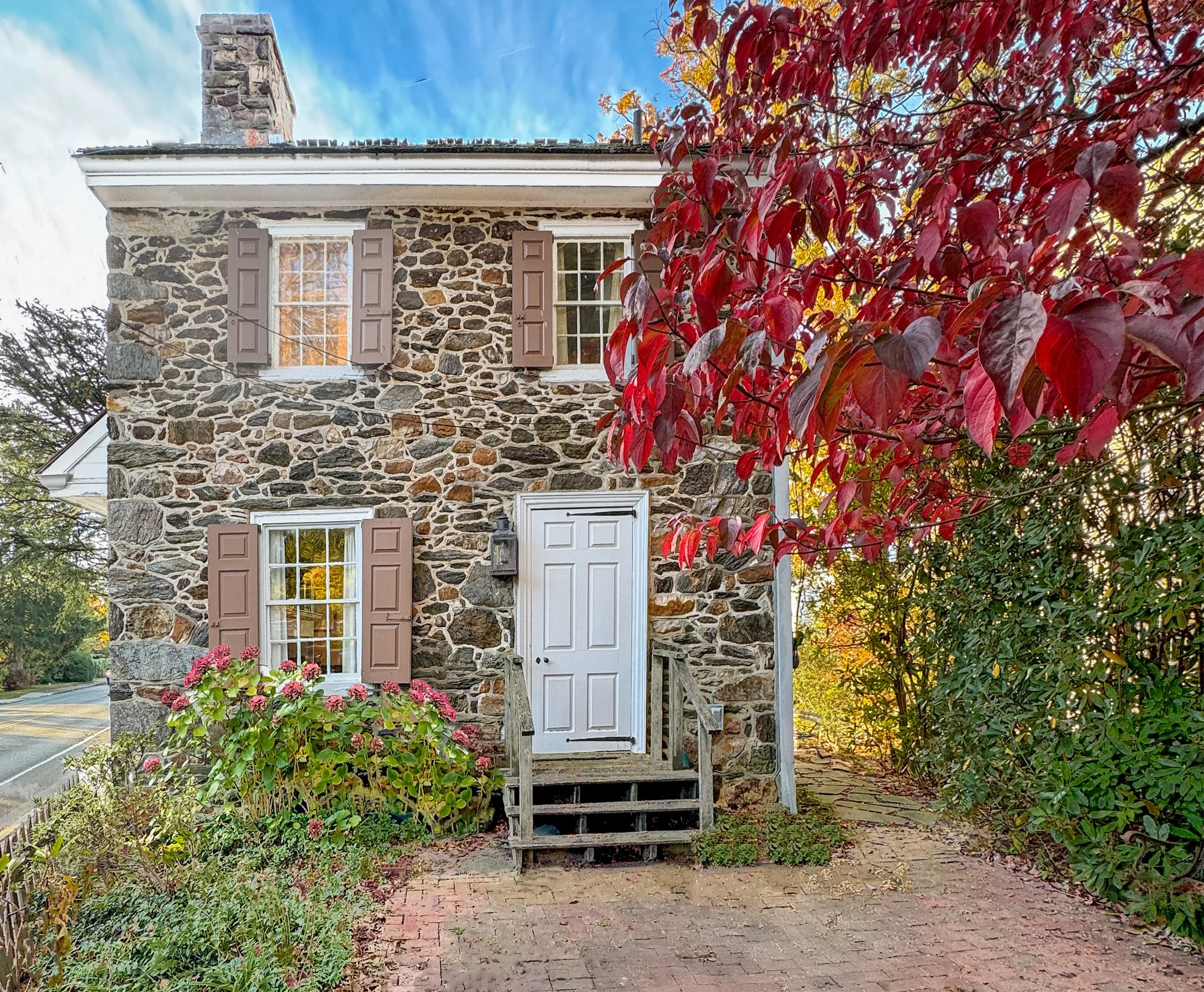
Above: The rear elevation of the Minshall House. Image source: Lee J. Stoltzfus.
In 1975 the owner, Marion Lewis, deeded the land to the borough in memory of her husband George Lewis. Architect John M. Dickey directed restoration of the building. The Media Historical Society maintains the house today.
Historic Markers by the Front Door:
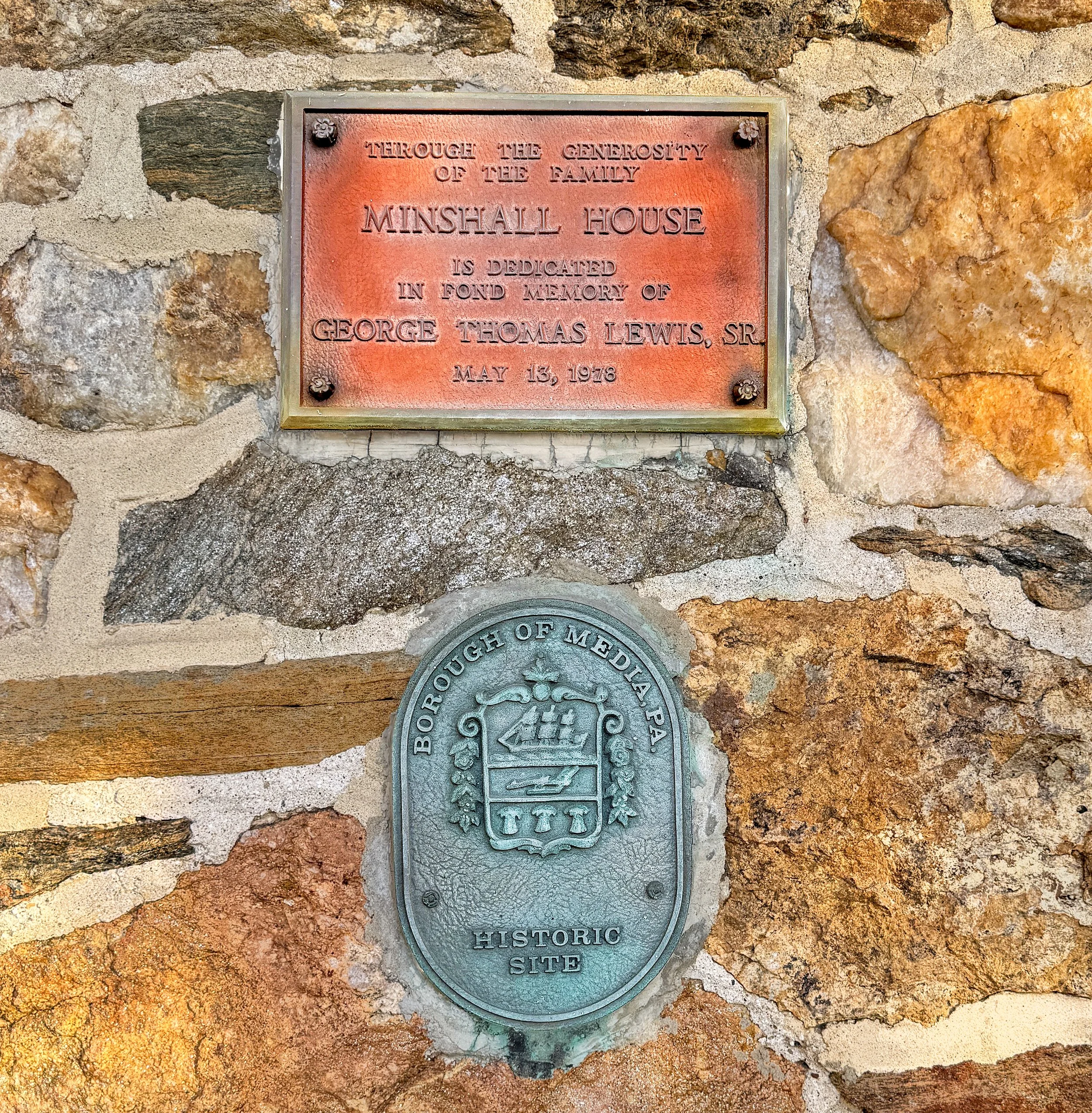
Above: Two historical markers by the front door include a dedication to George Thomas Lewis and a historic-site marker by the borough of Media.
Corner Quoins of Wissahickon Schist:
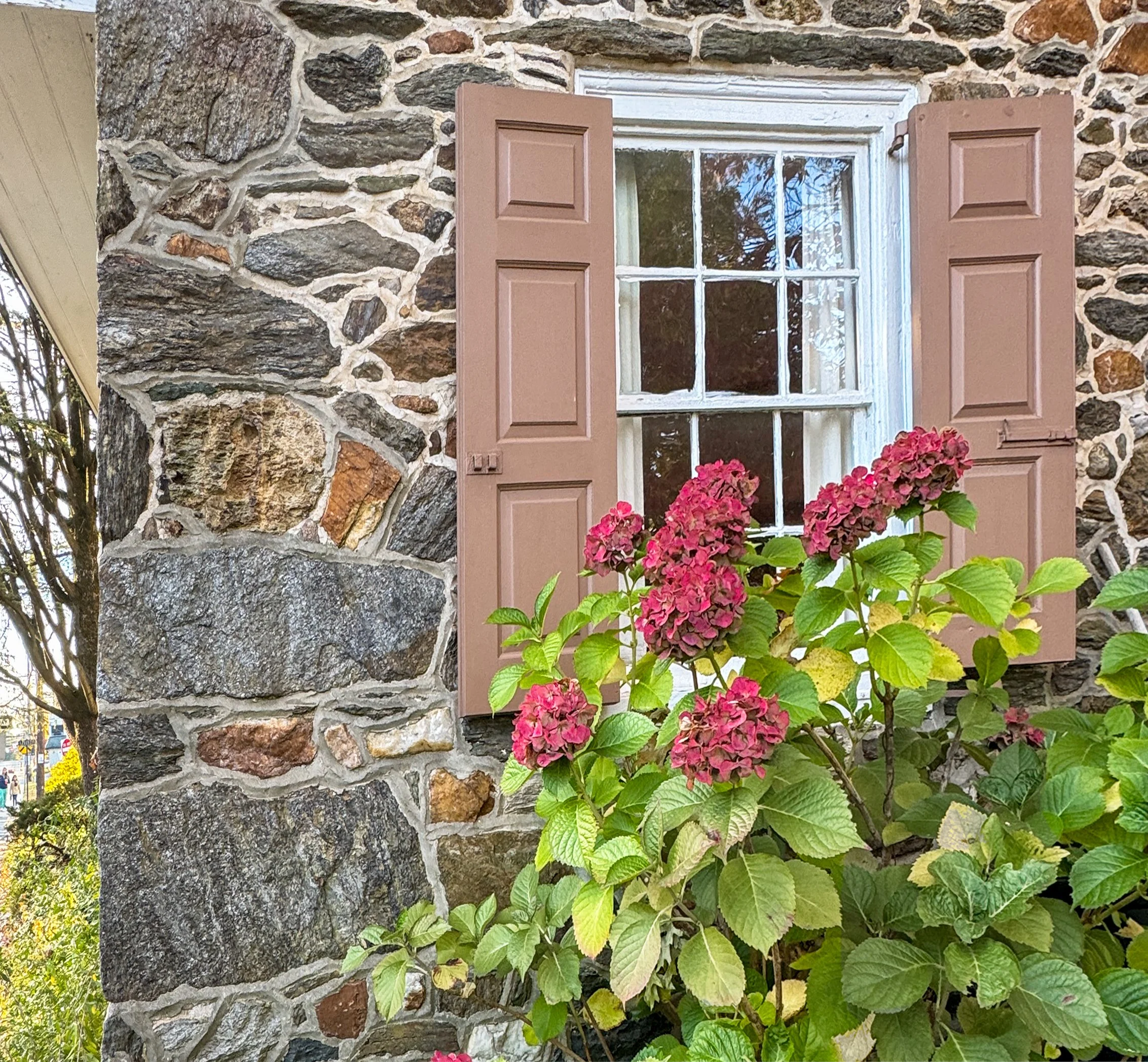
Above: Corner quoins of Wissahickon Schist. Image source: Lee J. Stoltzfus.
The rubble building stone used here includes Wissahickon Schist which can be identified by the silver mica that sparkles in the gray stone. The local bedrock and building stone is mica schist of the Wissahickon Formation. This distinctive stone is a signature building material for the historic architecture of Southeast Pennsylvania.
Providence Quaker Meetinghouse
Land Donated by Thomas Minshall:
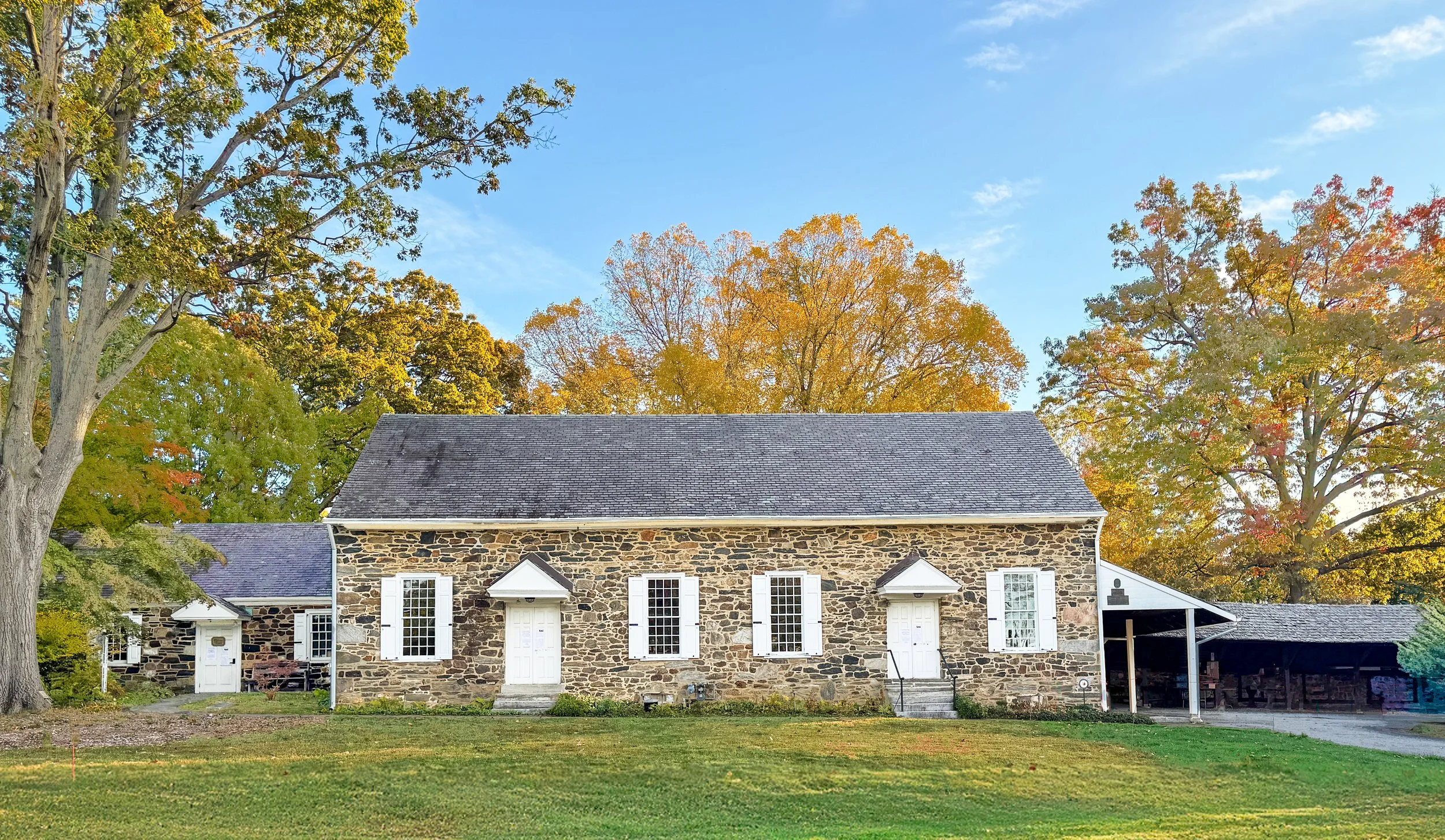
Above: Providence Monthly Meeting, across the road from the Minshall House. Image source: Lee J. Stoltzfus.
A historical marker here reads, “Friends met for worship on this site in 1684. A log meetinghouse was built here in 1699 on land given by Thomas and Margaret Minshall. Present building erected in 1814.” Meetings began in the Minshall house in 1688.
A 1931 Article about Thomas Minshall
And the Providence Meetinghouse:
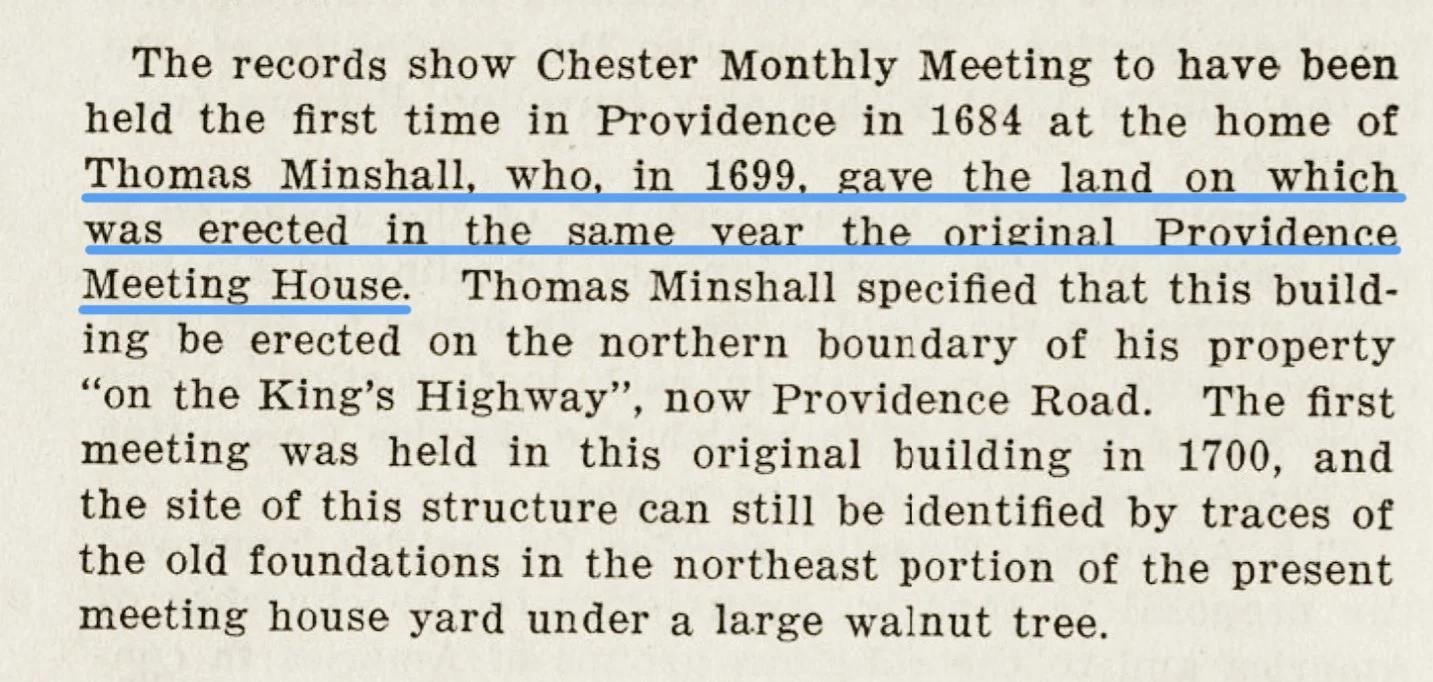
Above: Image source: Friends Intelligencer, Tenth Month 10, 1931, TriCollege Libraries
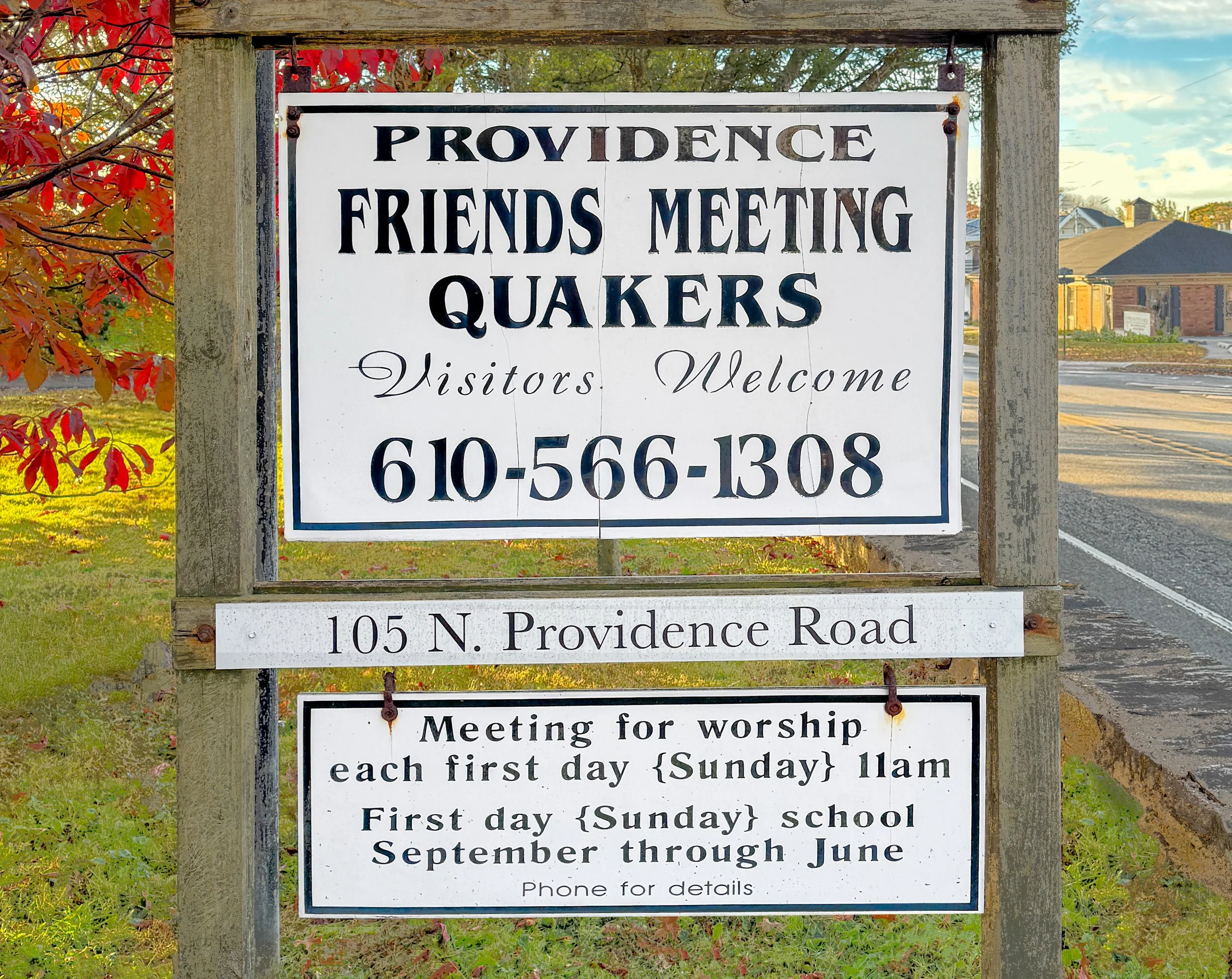
Above: Meetinghouse across the road from the Minshall House. Image source: Lee J. Stoltzfus.
1711: Another Hall-and-Parlor House
The Next Generation of Minshalls:
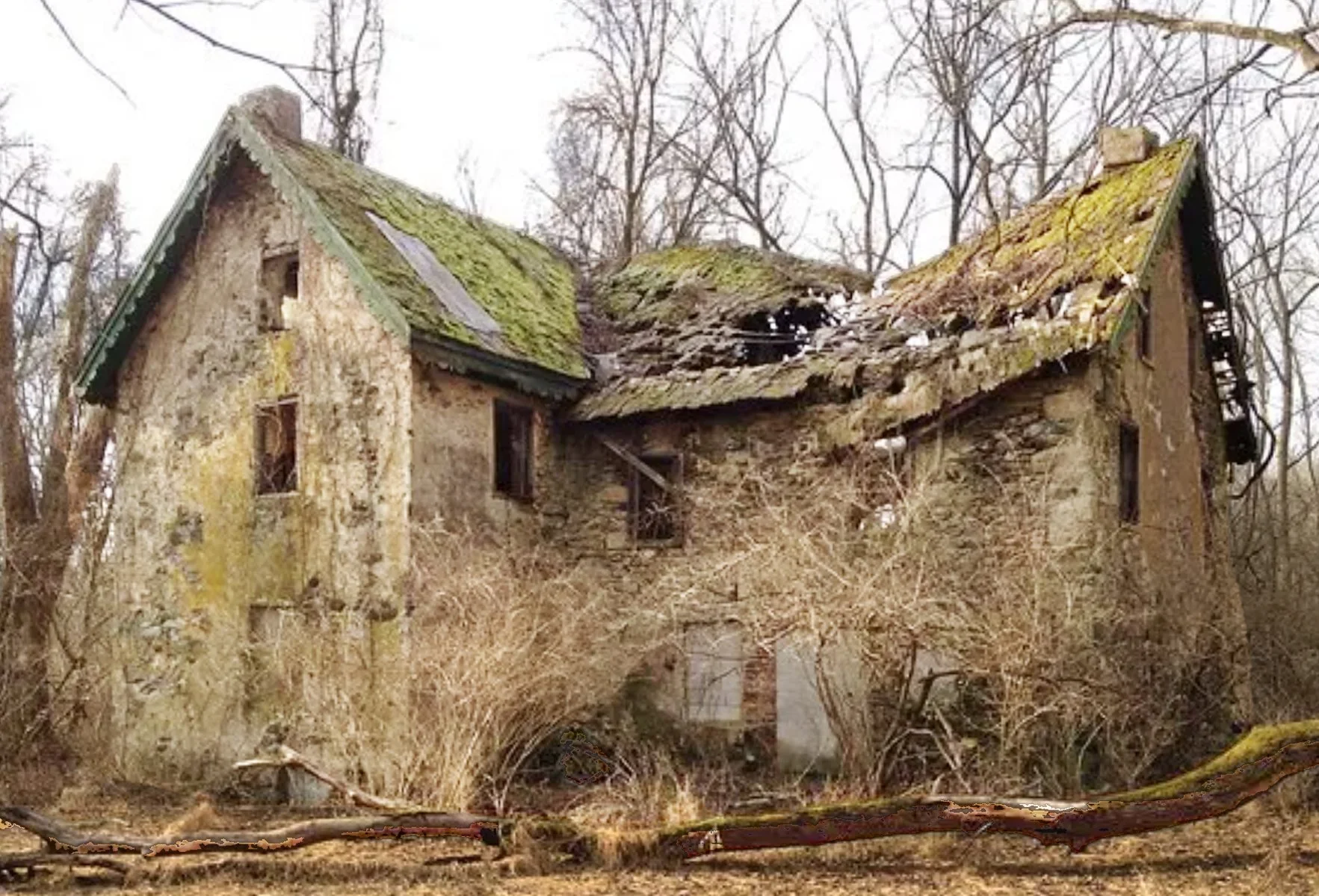
Above: Ruins of the Minshall House (Roundtop Farm) in Ridley Creek State Park. Image source: Dr. Laura Guertin, Journeys of Dr. G at Tyler Arboretum.
The original 1711 section of this house has a hall-and-parlor floor plan. The house was built by Jacob Minshall and Sarah (Owen) Minshall. He was a son of Thomas and Margaret Minshall of the Minshall House in Media.
Hall-and-parlor floor plans are a defining feature of many early Quaker houses here. Flurküchenhaüser (corridor-kitchen houses) define historic Pennsylvania German houses, while these two-room, hall-parlor houses define early Quaker houses.
Hall-and-Parlor Floor Plan
Of this Ruined 1711 Minshall House:
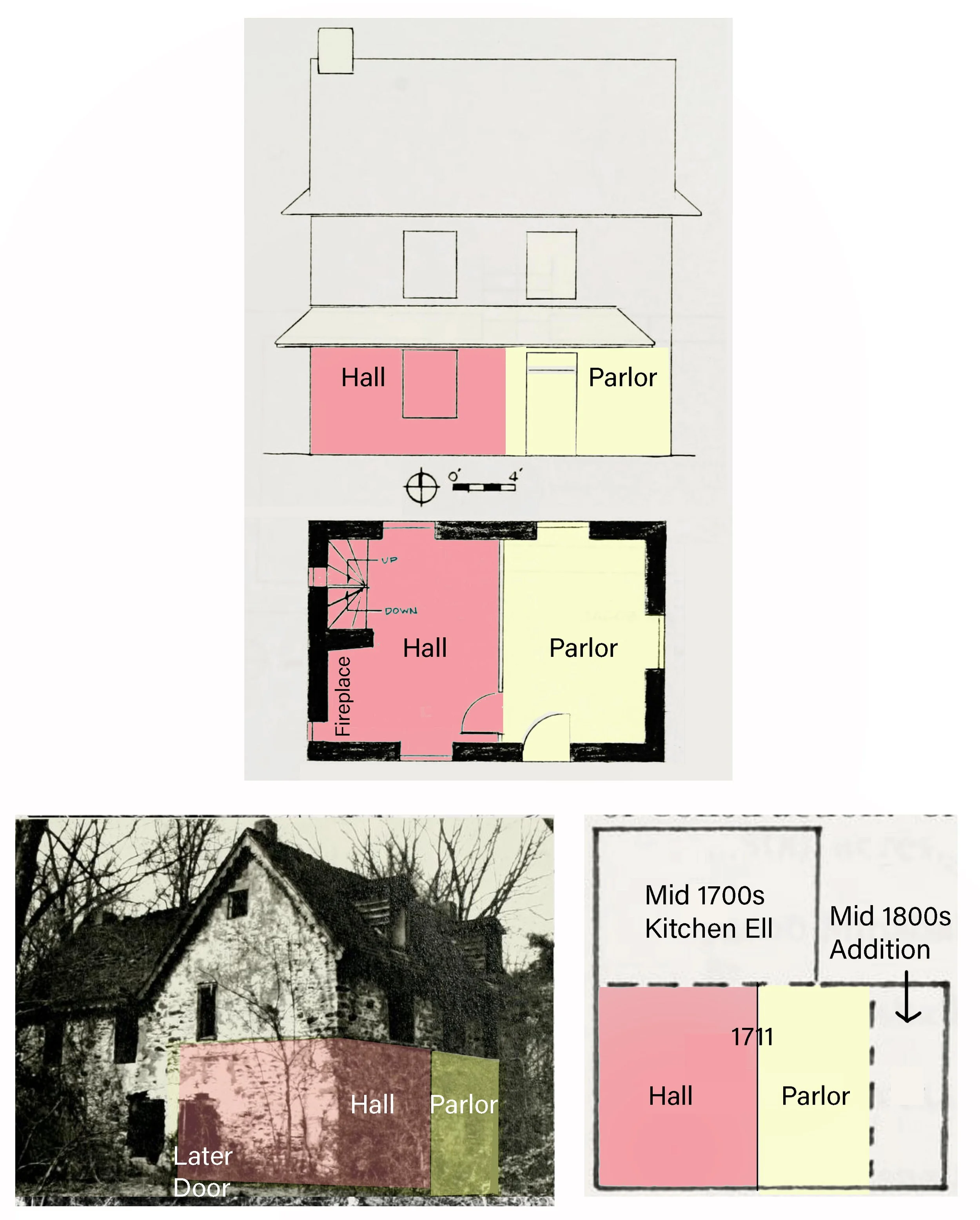
Above: Image source: Preservation in Ridley Creek State Park: Documentation of the Historic Farmsteads, Jeffrey Robert Barr, 1993, (color and text added), Open Library.
The 1711 section of the house had leaded-glass casement windows, a pent roof on three sides, and a double pent on the west gable. The building evolved from a hall-and-parlor house to a center-hall house with a kitchen ell.
A third generation of Minshalls continued the hall-and-parlor house tradition at the 1738 Lachford Hall, below.
1738: Lachford Hall of Tyler Arboretum
Another Hall-and-Parlor House
For a Third Generation of Minshalls
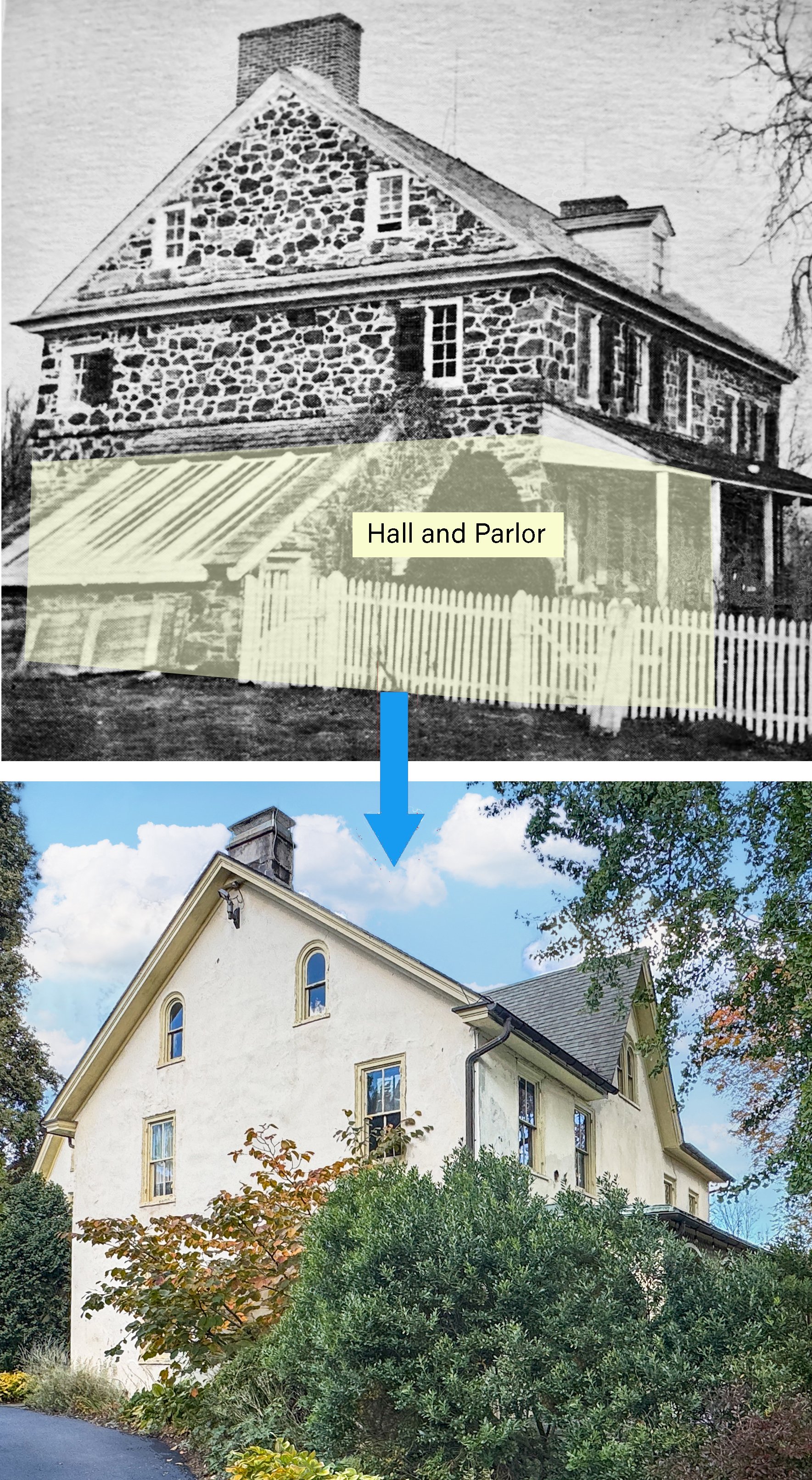
Above: The evolution of Lachford Hall. Images source: Top photo: Tyler Arboretum, Bottom photo: Lee J. Stoltzfus.
The history of Tyler Arboretum represents eight generations of the Minshall-Painter-Tyler family who owned the land from 1682 to 1944. The first owners were Thomas and Margaret Minshall, of the Minshall House in Media, They purchased about 300 acres where Media is today and another 300 acres where Tyler Arboretum is located today.
In 1738 the Minshalls’ grandson, Thomas Minshall II and his wife, Agnes (Salkeld) Minshall, began building Lachford Hall, named for a Minshall birthplace in Lachford, England. The first dwelling was a hall-and-parlor house at the west end of today’s Victorianized residence, above. In 1748 the Minshalls added the section to the east. This addition was a Penn-plan structure, with back-to-back fireplaces.
Tyler Arboretum:
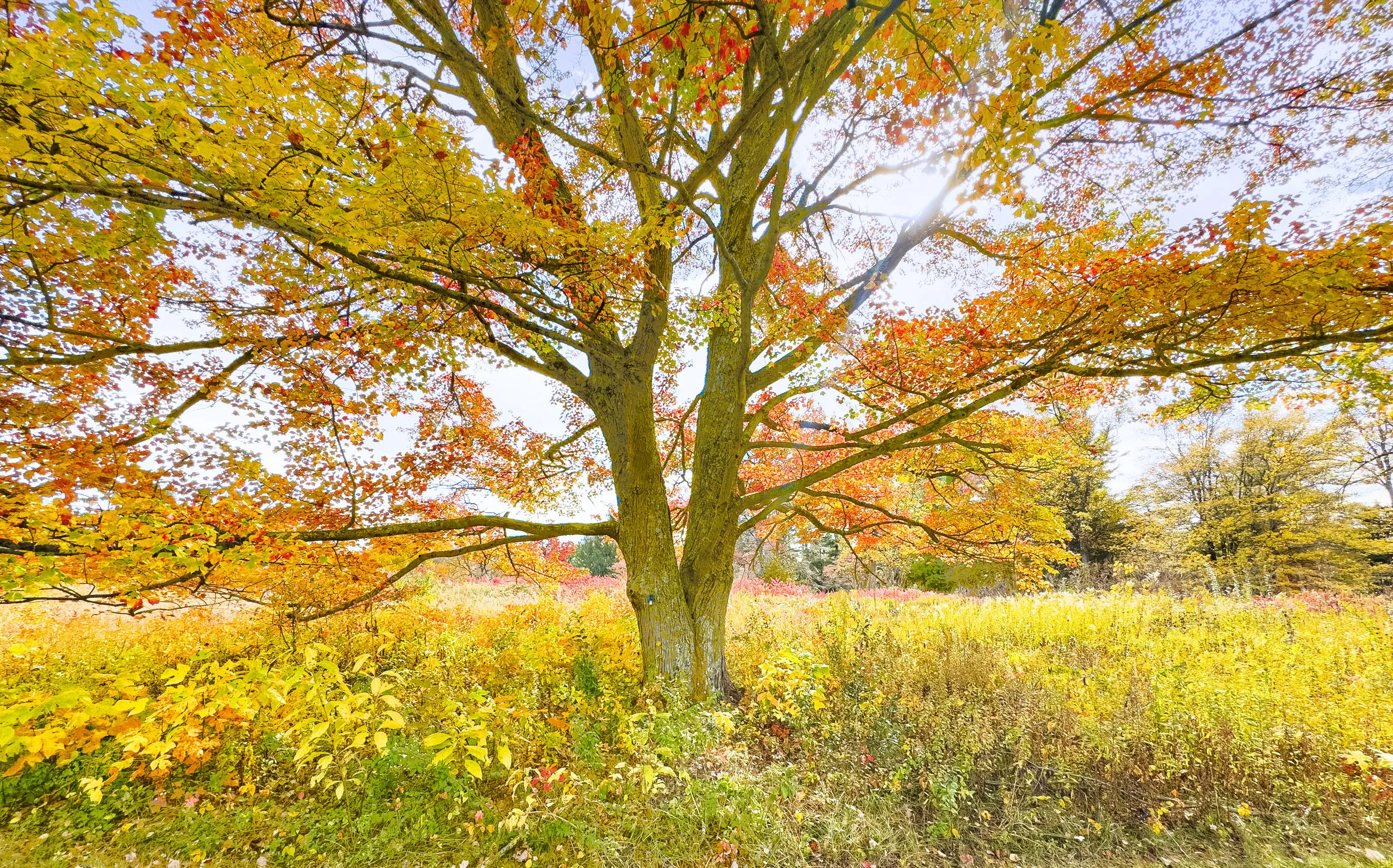
Above: Tyler Arboretum in autumn. Image source: Lee J. Stoltzfus.
Beginning with Thomas and Margaret Minshall of Media’s Minshall House, eight generations of their extended family gave Tyler Arboretum its historic heritage. Quaker bachelor brothers Minshall Painter and Jacob Painter owned the farms here from the 1850s to 1870s. They lived their entire lives here on this farm, except when away at school. The brothers created the botanic collection on this farm that became Tyler Arboretum.
Brothers Minshall and Jacob Painter were great-great-great-grandsons of Thomas and Margaret Minshall of the Minshall House in Media. The Minshall/Painter/Tyler family owned Lachford Hall until the 1940s, when Laura Hoopes Tyler left the property in trust as the John J. Tyler Arboretum.
Anti-War Activism of the Minshall Family
During the Revolutionary War:
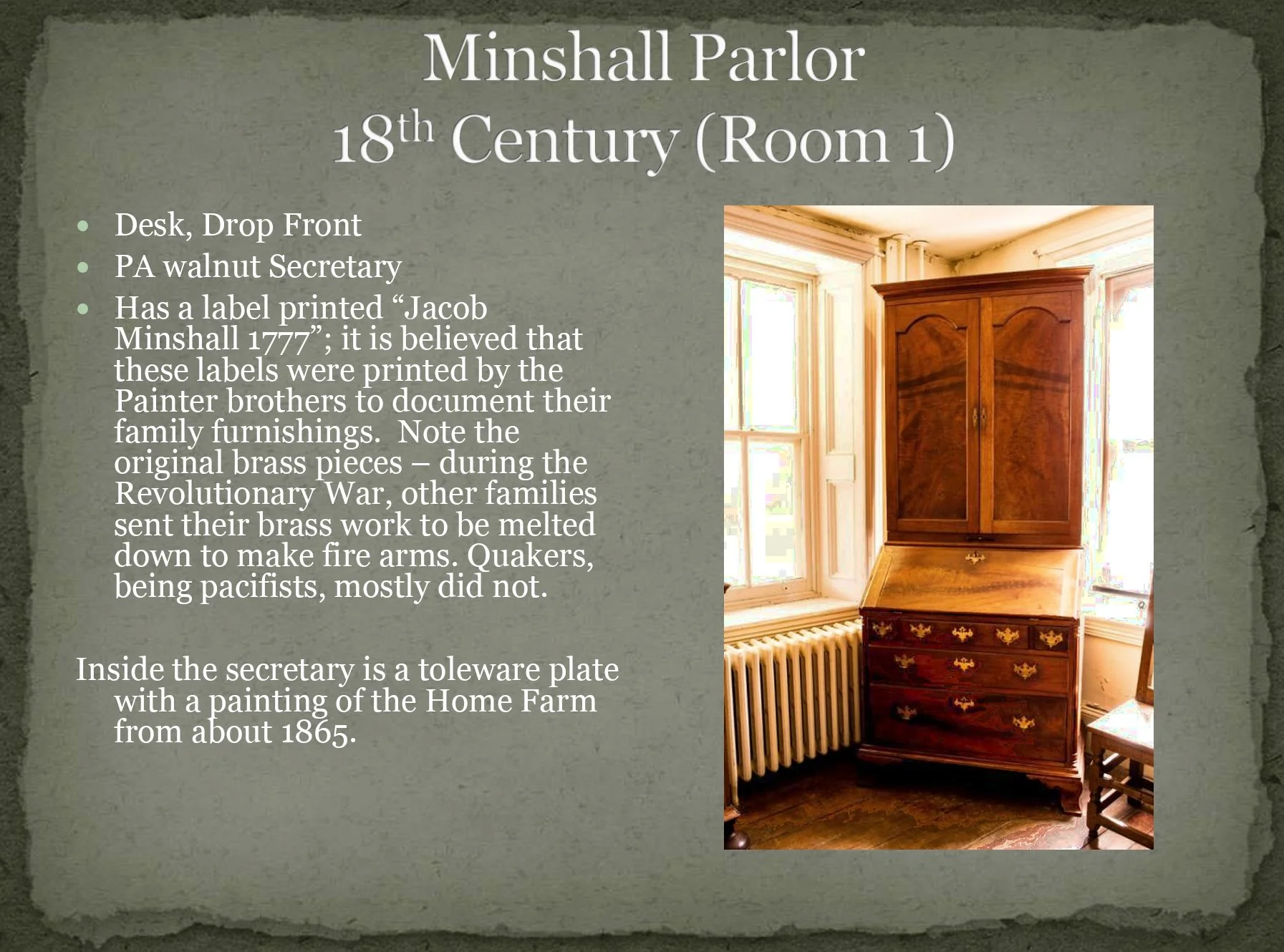
Above: The Parlor of Lachford Hall at Tyler Arboretum. Image source: Tyler Arboretum
The Minshall family’s anti-war resistance was rooted in their Quaker Peace Testimony, which prohibited participation in war or the voluntary supply of military materials. During the Revolutionary War, the Pennsylvania government ordered collection of household lead and brass for manufacturing musket balls and artillery.
Pacifist Quakers viewed the requisition of items like lead clock weights and brass kettles as a direct violation of their religious beliefs and freedoms.
Records of Middletown Preparative Meeting reveal Jacob Minshall’s "non-compliance with military requisitions." In 1779, his household was penalized with a "double tax" or fine, a standard punishment for Quakers who refused to voluntarily contribute to the war effort or pay military-related fees.
Links: