
Historic Quaker Houses of Montgomery County, PA
The Maulsby-Corson House
A Landmark of the Underground Railroad
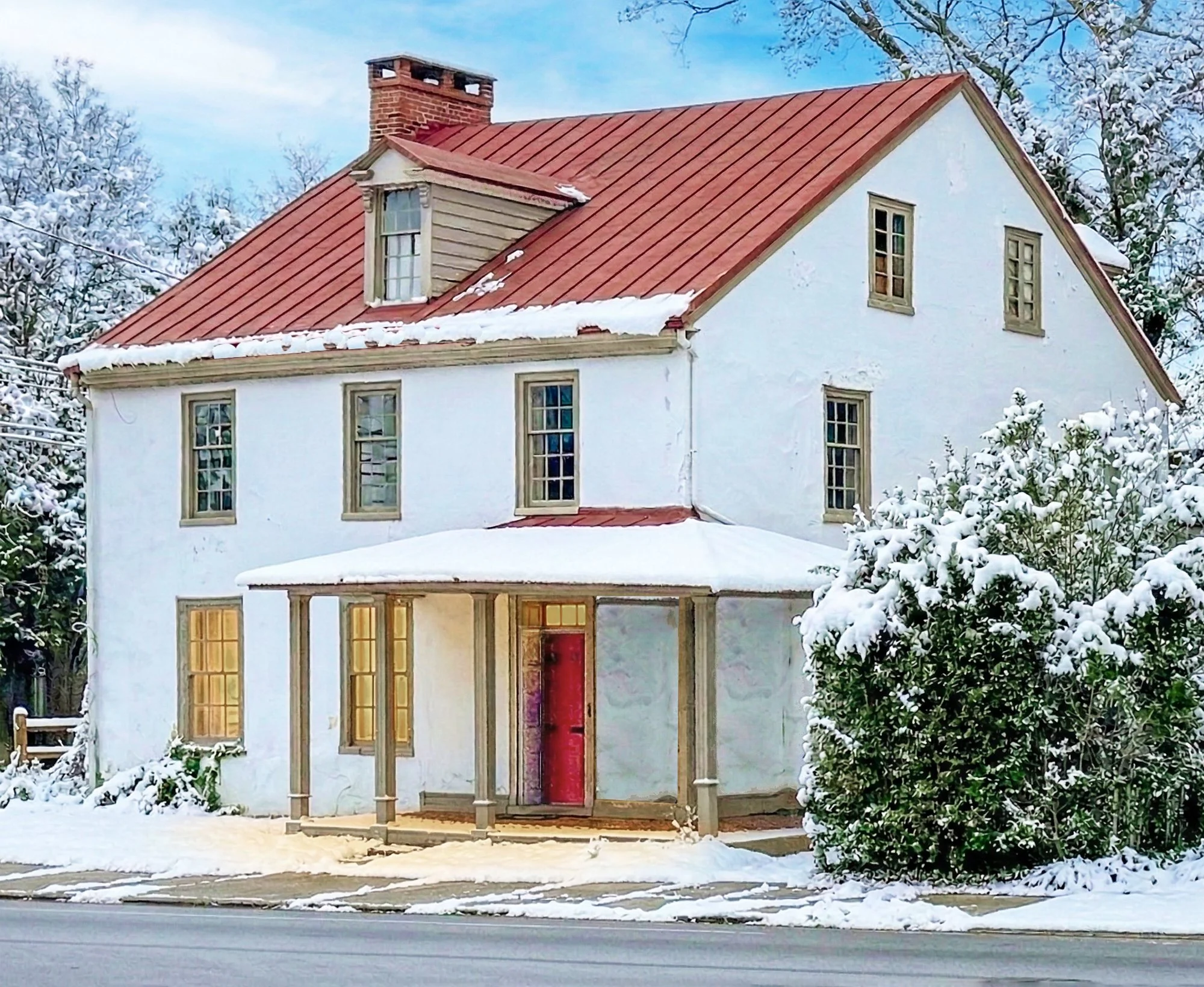
Above: The Maulsby-Corson House, also known as the Hovenden House, at Plymouth Meeting. Image source: Lee J. Stoltzfus
Samuel Maulsby built the initial form of this stone house after purchasing the land in 1794. The house was enlarged over the years to its present size. Stucco covers rubble walls of dolomitic limestone.
George Corson bought the house from the estate of his father-in-law, Samuel Maulsby in 1839. The Corsons were leaders of the local anti-slavery movement. Corson enclosed the lower portion of his carriage house and added a full-length hall to the second story to use as an assembly hall for anti-slavery meetings. That building now known as Abolition Hall, became a center for abolition meetings and Underground Railroad activism.
The Carriage Building and Barn
Used as an Anti-Slavery Lecture Hall:
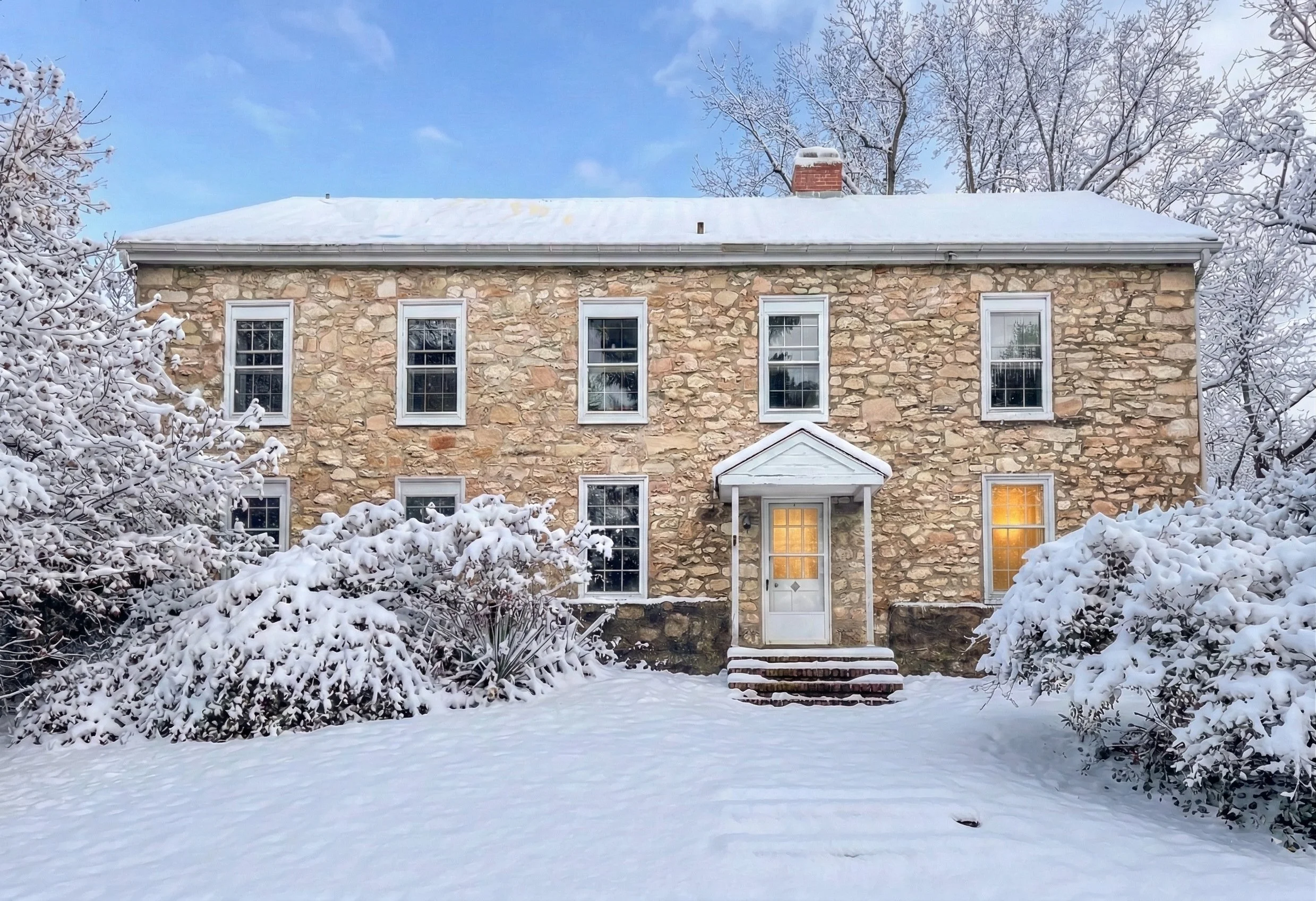
Above: The Maulsbys built this barn ca 1795, using dolomitic limestone rubble masonry. It was later converted to a dwelling. The Corsons converted the carriage house in the rear to an anti-slavery assembly hall known as Abolition Hall in 1856. Image source: Lee J. Stoltzfus
The Quaker village of Plymouth Meeting was a hotspot of anti-slavery activism. Martha and George Corson led a fight to end slavery while living here on their ancestral farmstead.
In 1831 they co-founded the Plymouth Meeting Anti-Slavery Society. The group initially met at the Plymouth Friends Meeting House, located across the street from this home. They also co-founded the Montgomery County Anti-Slavery Society a few years later.
George and Martha Corson turned this homestead into an important station on the Underground Railroad. They provided food and shelter here to hundreds of escaped slaves.
Abolition Hall
The Farm’s Former Carriage Building:
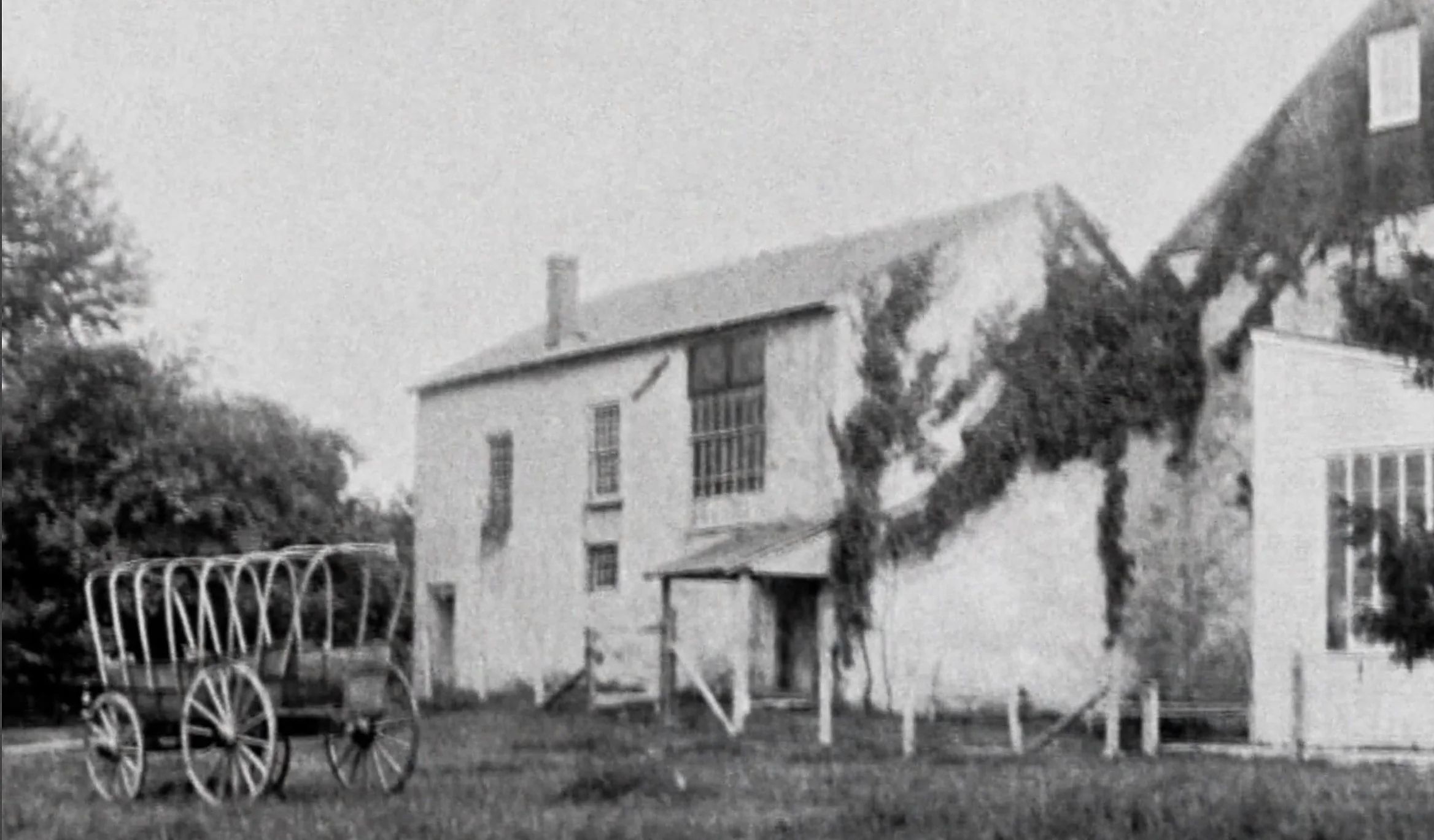
Above: The Corsons converted their farm’s carriage building to an anti-slavery lecture hall. This hall adjoins the barn, visible on the right. Image source: AbolitionHall.com
Plymouth Quaker Meetinghouse
Across the Street from the House:
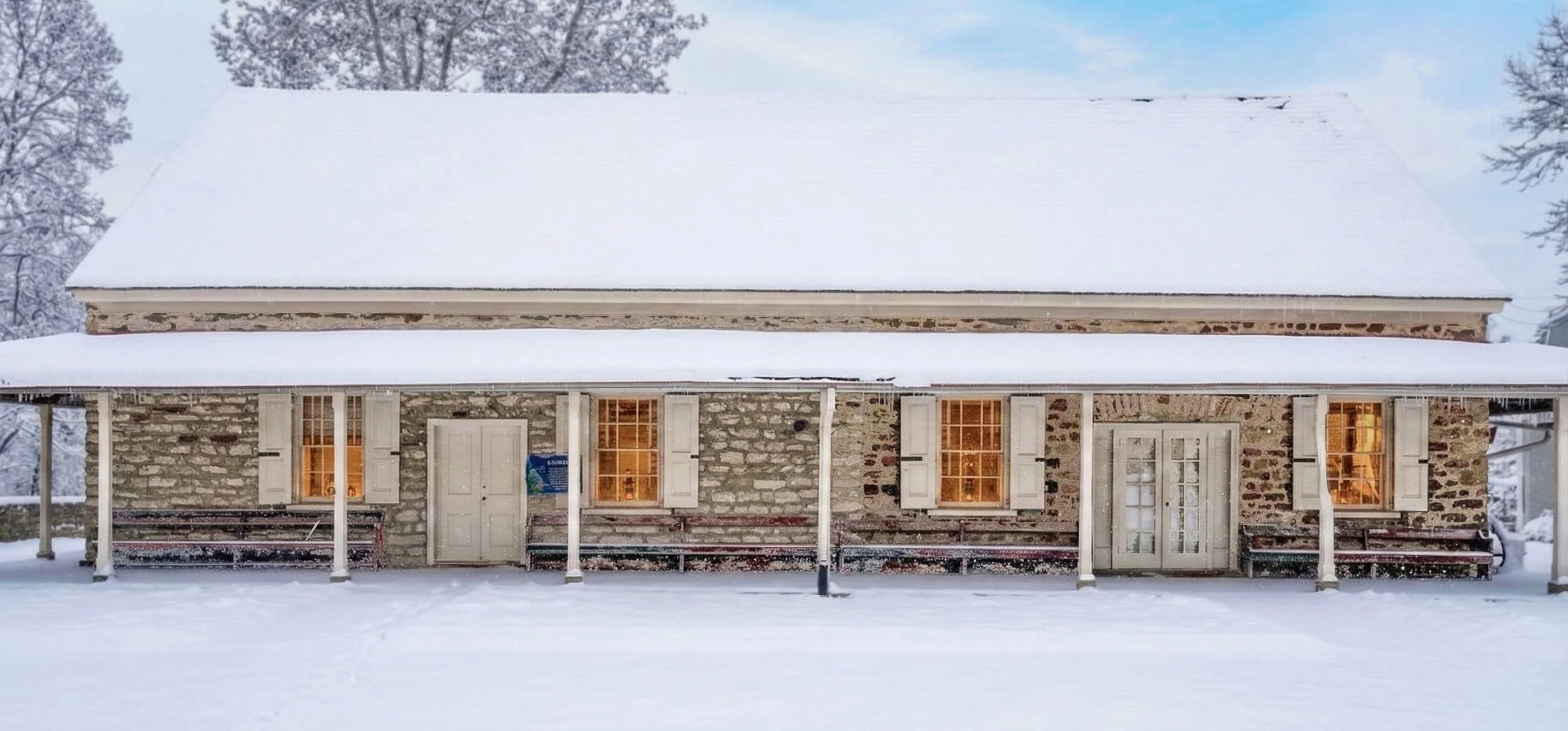
Above: The Plymouth Friends Meetinghouse, constructed with local dolomitic limestone. Image source: Lee J. Stoltzfus
"The entire village was abolitionist. It’s the most intact Underground Village in my experience." Quote: Charles L. Blockson. Author, historian, and descendant of escaped slaves. AbolitionHall.com
The Plymouth Meeting Anti-Slavery Society first met in this Quaker meetinghouse, before moving across the street to Abolition Hall.
Anti-Slavery Leaders who Spoke in Abolition Hall
Harriet Beecher Stowe, Frederick Douglass, Lucretia Mott, etc.
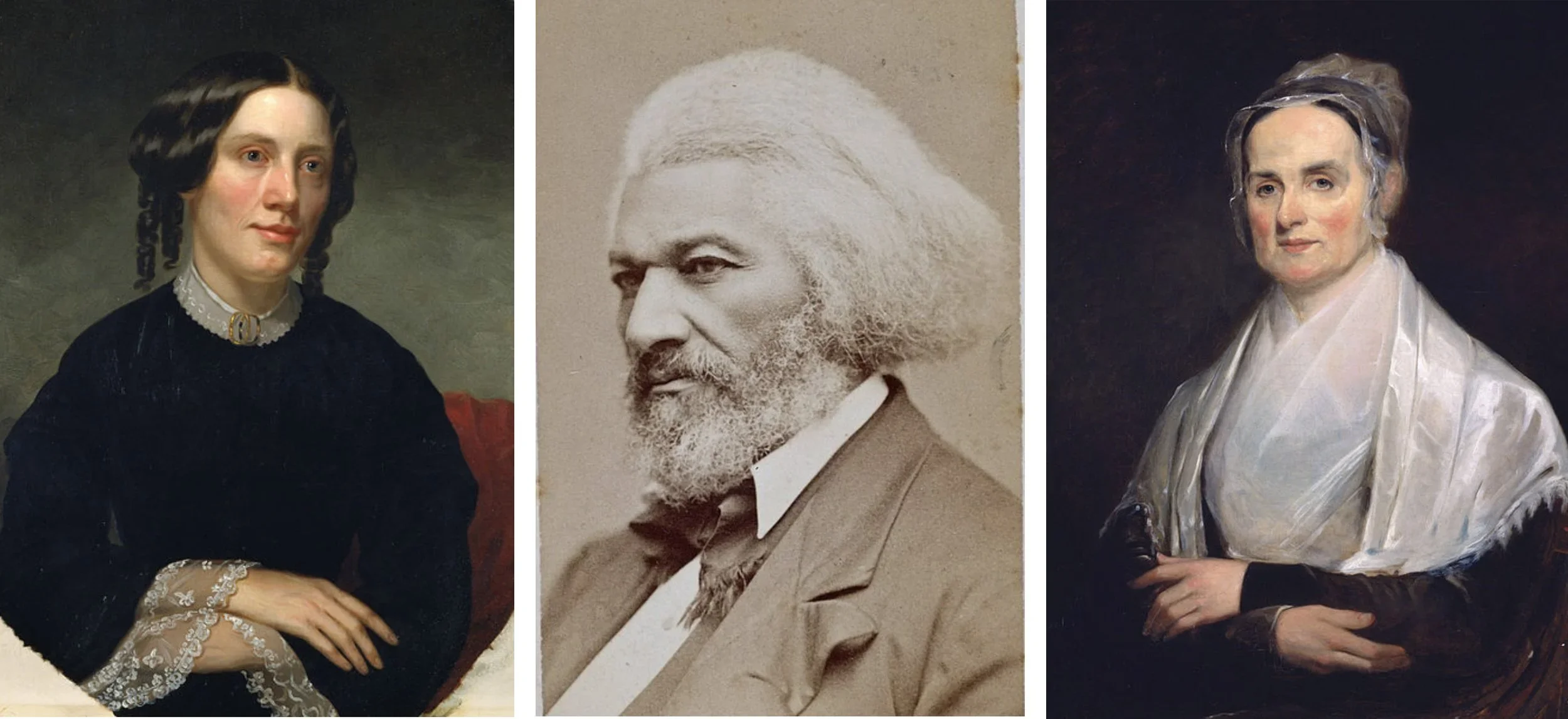
Above left to right: Anti-slavery activists Harriet Beecher Stowe, Frederick Douglass, Lucretia Mott. Images source: Wikimedia
Anti-slavery lectures drew crowds as large as 200 attendees into Abolition Hall here at the Maulsby-Corson House. The farm was then the home of George and Martha (Maulsby) Corson, who built Abolition Hall.
Historical Marker at Abolition Hall:
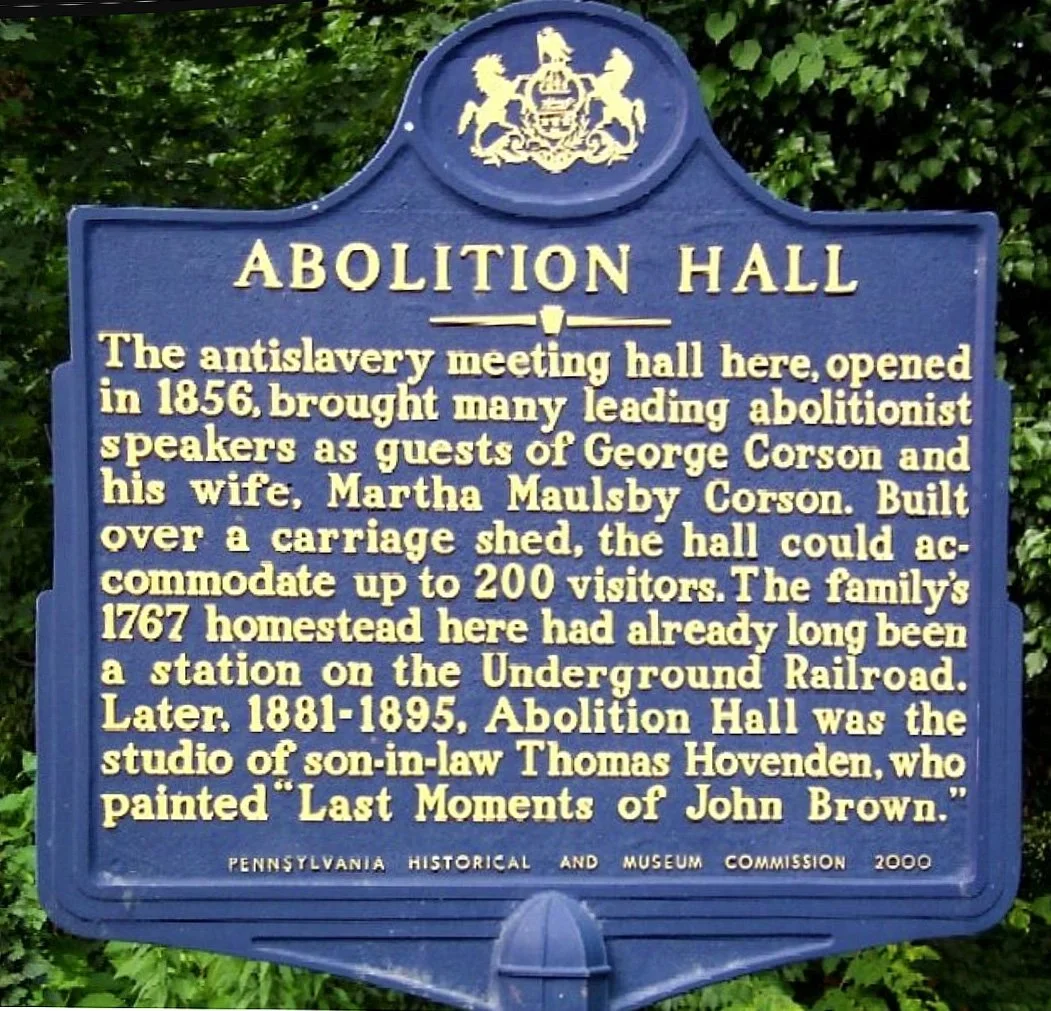
This Homestead later was Home to
Artists Thomas and Helen Hovenden:
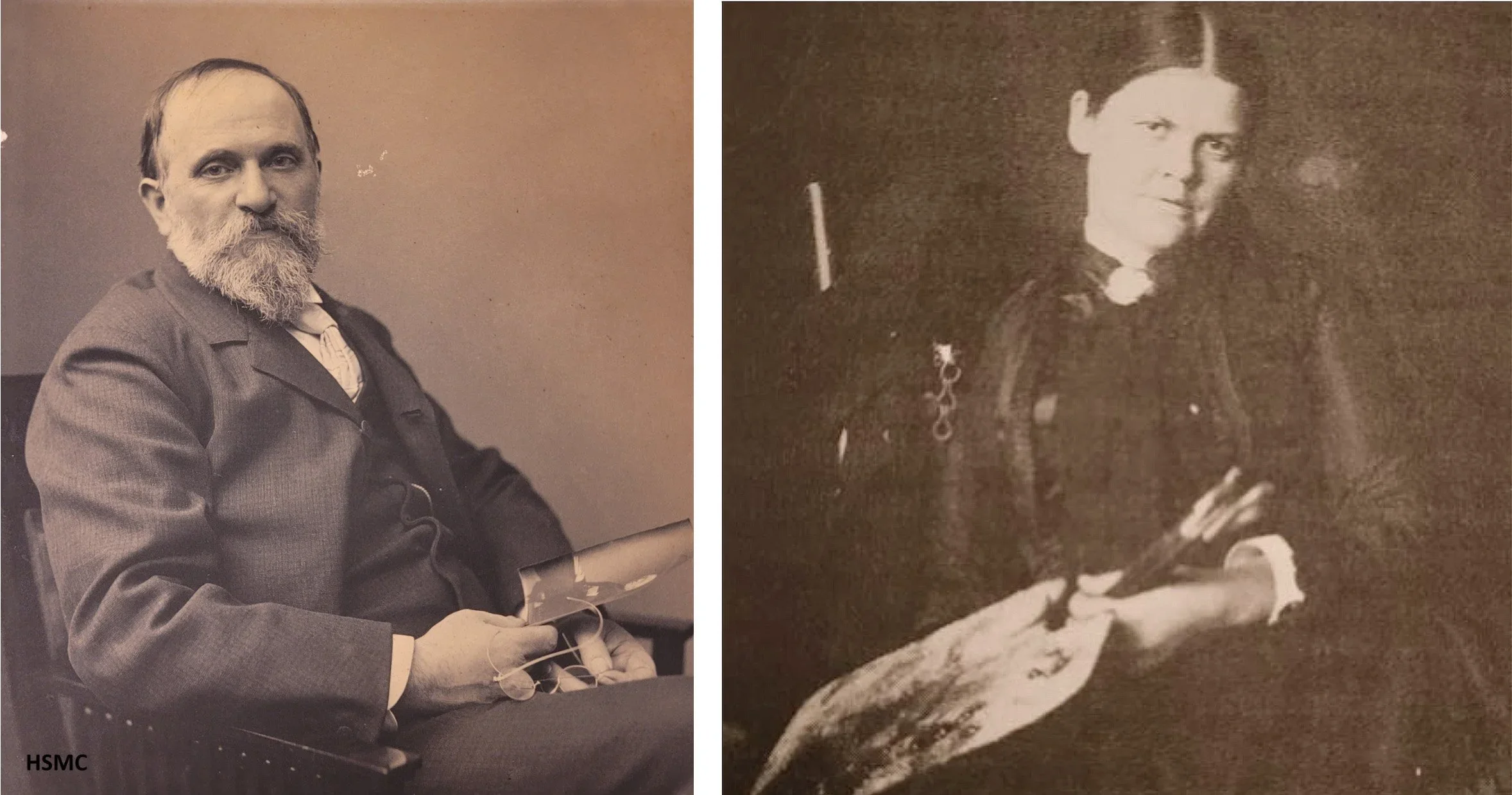
Above: Artists Thomas Hovenden and Helen Corson Hovenden. Image source: Historical Society of Montgomery County
Thomas Hovenden was one of the most celebrated American genre painters of his era. He was born in County Cork, Ireland, and became an orphan at age six during the Potato Famine. He emigrated to the U. S. when he was 23 after studying art at the Cork School of Design.
Thomas Hovenden married artist Helen Corson. The couple moved here to her family’s homestead, the Maulsby-Corson House. Helen Corson’s abolitionist parents had used this home as a safe house in the Underground Railroad, and converted the carriage building into Abolition Hall. The Hovendens used that building for their art studio. Their daughter Martha Hovenden also used this building for her art studio.
Thomas Hovenden’s Most Famous Paintings:
Breaking Home Ties (1890)
and The Last Moments of John Brown (1884)
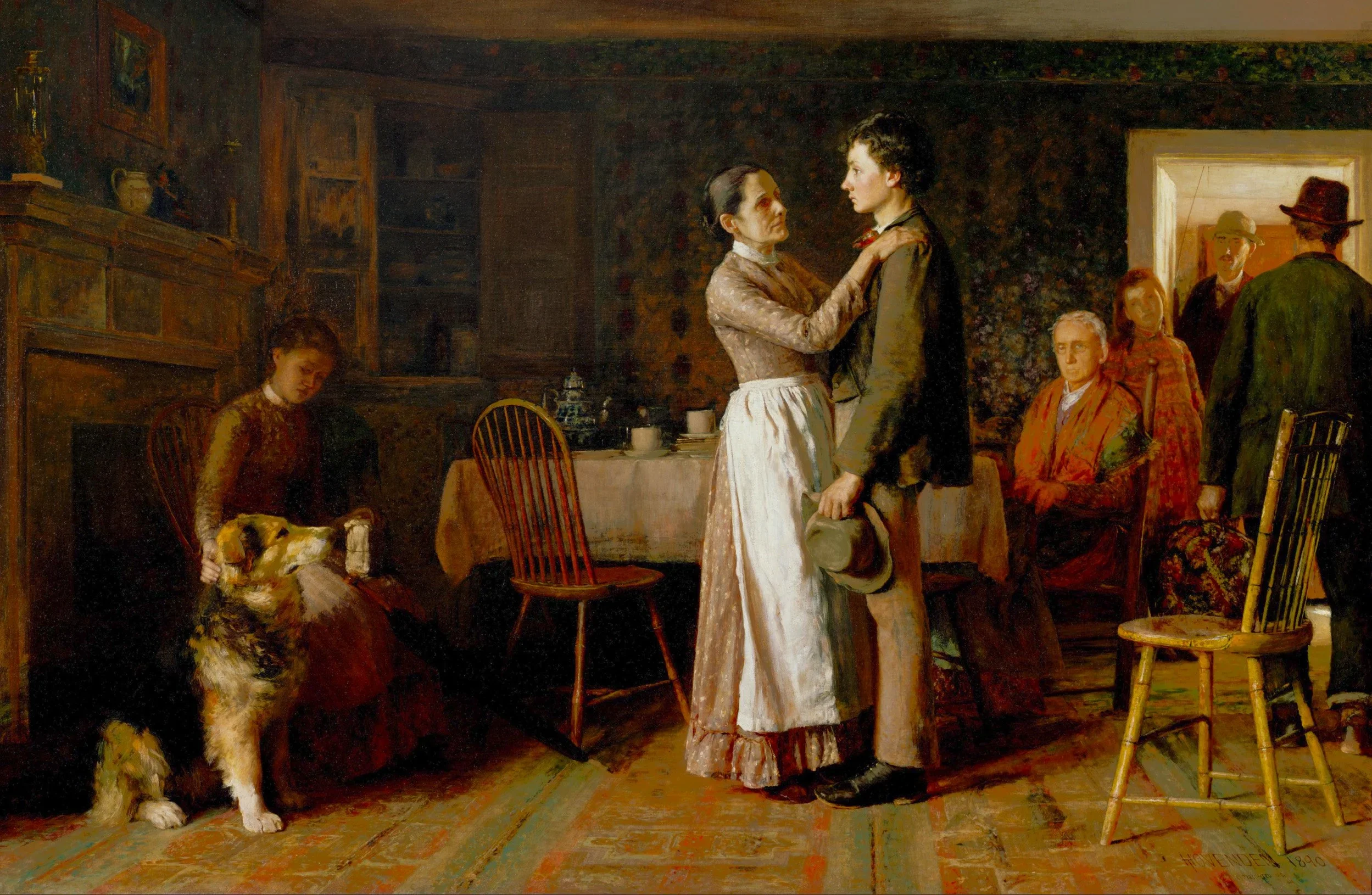
Above: Breaking Home Ties by Thomas Hovenden. Image source: Metropolitan Museum of Art
Above: Thomas Hovenden’s painting, Breaking Home Ties, was one of the most acclaimed American genre paintings of its era. It was the most popular painting exhibited at the 1893 Columbian World’s Fair in Chicago. By the late 1890s reproduction prints of this painting appeared in thousands of homes.
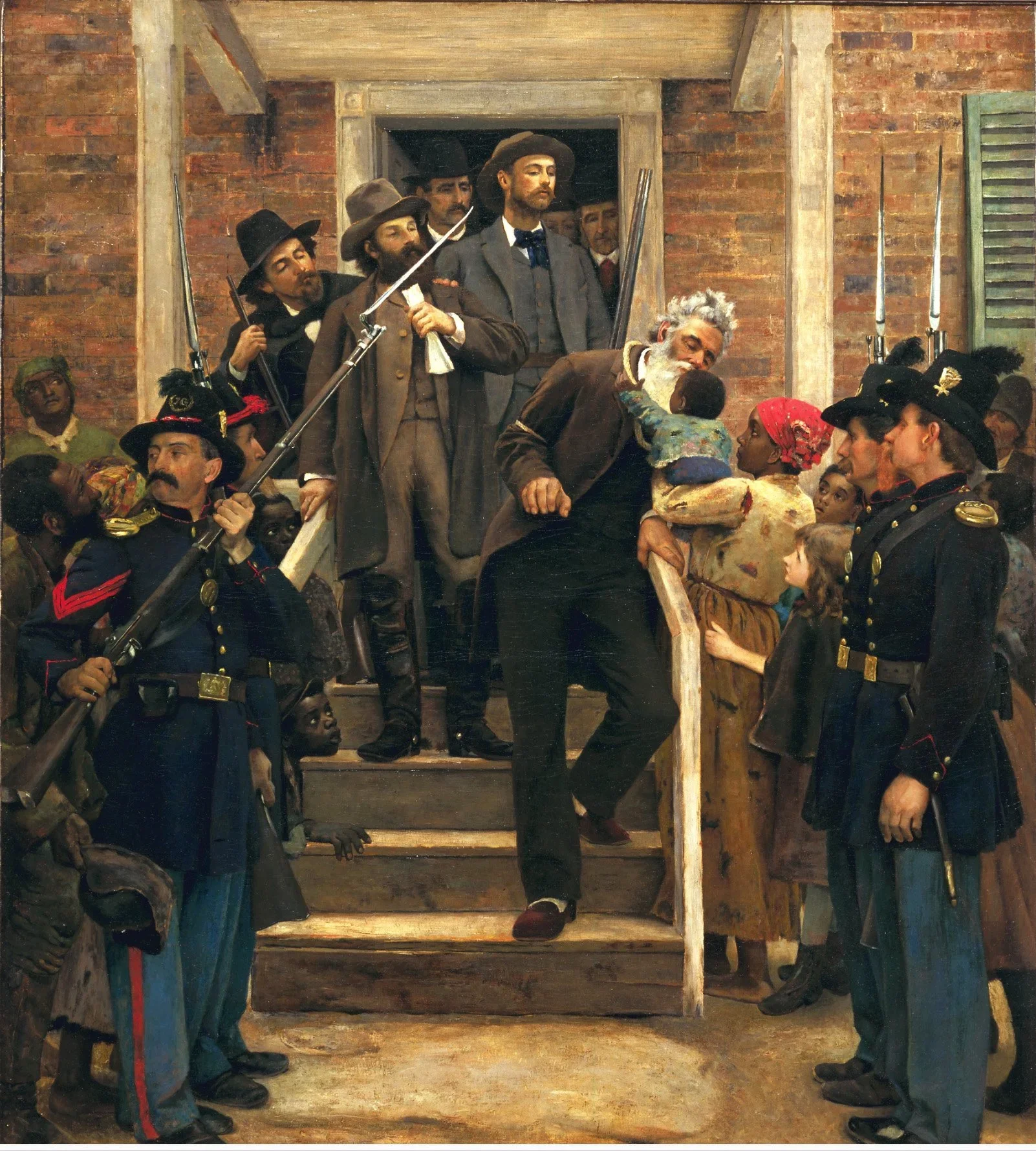
Above: The Last Moments of John Brown, by Thomas Hovenden. Image source: Wikimedia.
Thomas Hovenden painted this portrait of John Brown, the controversial abolitionist. He had led a failed attempt to capture weapons for a slave revolt in Harper’s Ferry, West Virginia. The painting depicts him on the way to his execution.
John Hovenden was an art professor at the Pennsylvania Academy of Fine Arts. His students included Alexander Stirling Calder and Robert Henri.
Links: