
Quaker Business Success in Ireland
And Irish Quaker Leadership in Social Reform:
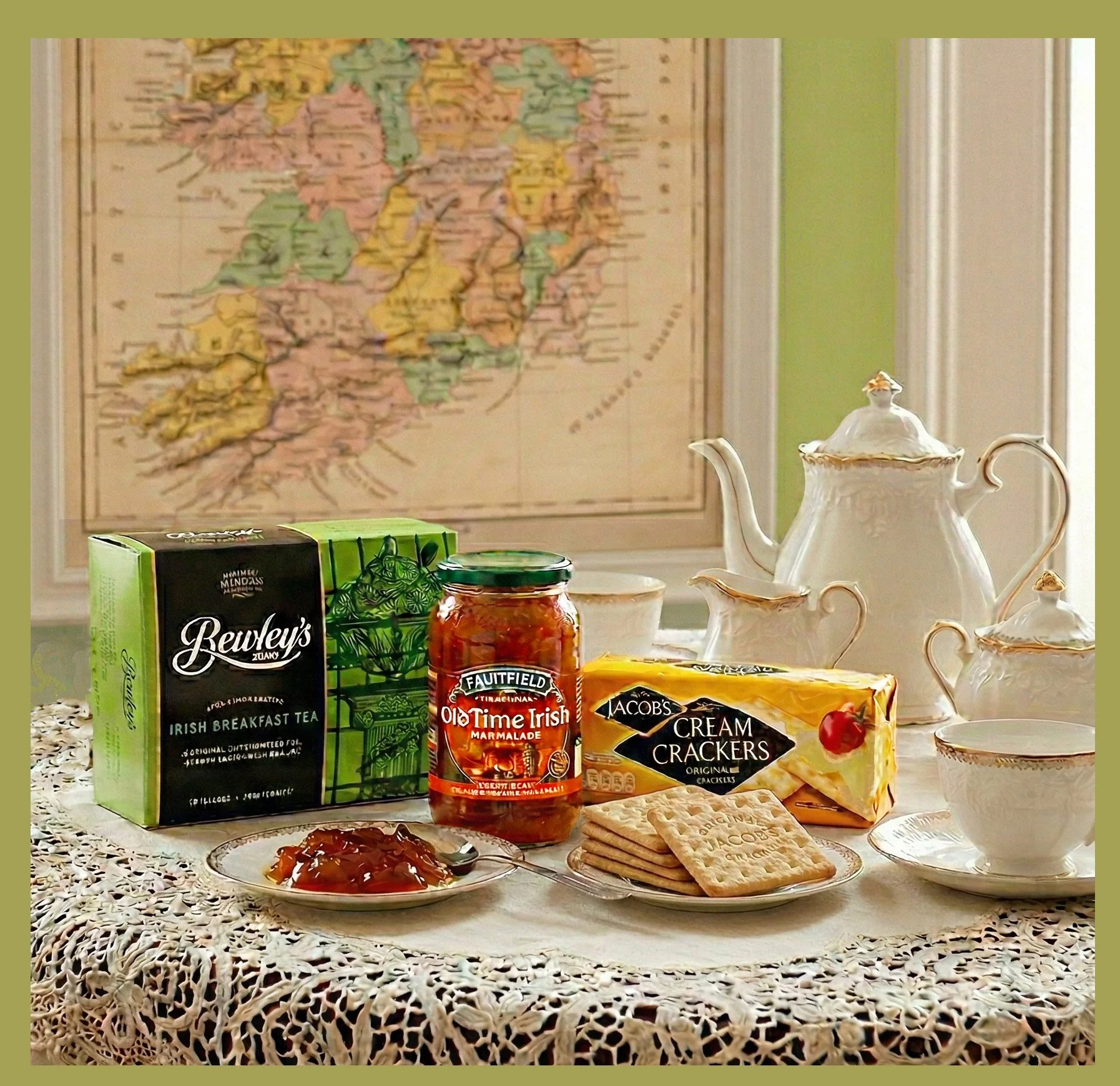
Above: Quaker families in Ireland such as the Jacobs, Bewleys, and Lambs created food brands that helped define Irish foodways. Image source: Lee J. Stoltzfus, Google Gemini.
In the eighteenth and nineteenth centuries, Quakers influenced local economies in ways that exceeded their small numbers. In both Ireland and Pennsylvania, they built successful businesses while also providing leadership of major social reform movements.
Quaker Business Success in Ireland:
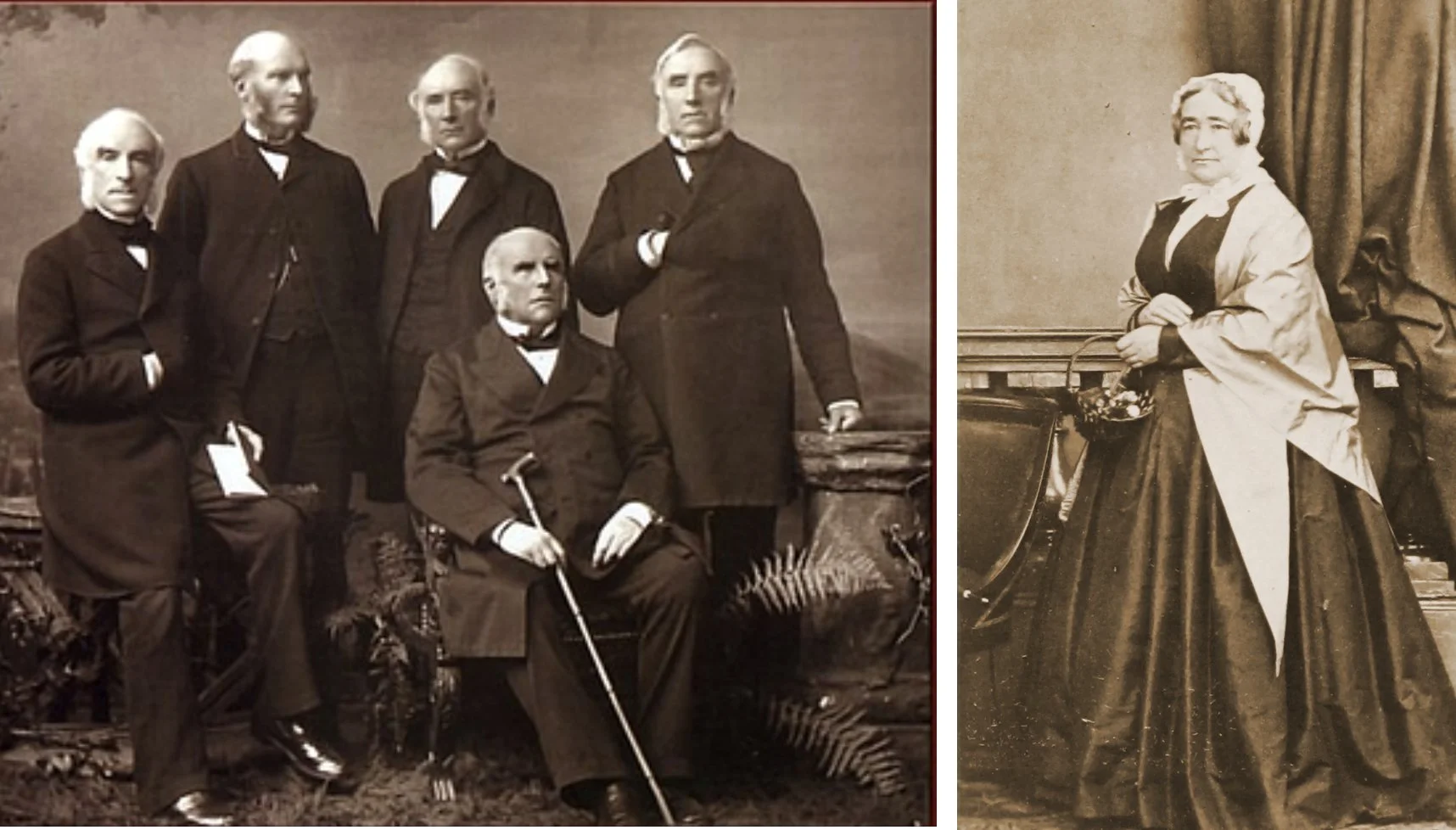
Above: The Goodbody family of County Offaly were prosperous Quaker entrepreneurs in flour milling, jute spinning, etc. Images source: OffalyHistory.com.
Irish Quakers were deeply involved in the industrial and commercial transformation of the country during the 19th century. They were very influential in food production, textiles, milling, engineering, and finance.
Jacob’s began in Waterford under Quaker leadership and later moved to Dublin. The firm became one of the largest biscuit manufacturers in the United Kingdom and Ireland. The company introduced the popular cream cracker in 1885. The brand survives, though not under family ownership.
Bewley’s was established in Dublin by Quakers who originated in Cumberland and moved to Ireland in the 17th century. The family developed a major tea and coffee importing business and later opened the well-known cafes on Grafton Street. The name continues today, though ownership has changed.
Fruitfield was founded by the Lamb family and became a large company producing preserves and jam. It survives today within larger corporate structures. The company expanded to Dublin in 1922, and merged with Jacob’s Biscuits in 2004
The Goodbody family, based in County Offaly, built one of the most diversified Quaker enterprises in Ireland. Their interests included flour milling, jute spinning, tobacco production, and finance. The jute mill at Clara was once the largest in Ireland.
The Malcomson family of County Waterford created a vast cotton-spinning enterprise and operated shipping interests and iron works.
The Richardson Family
A Dynasty of Irish Linen Industry:
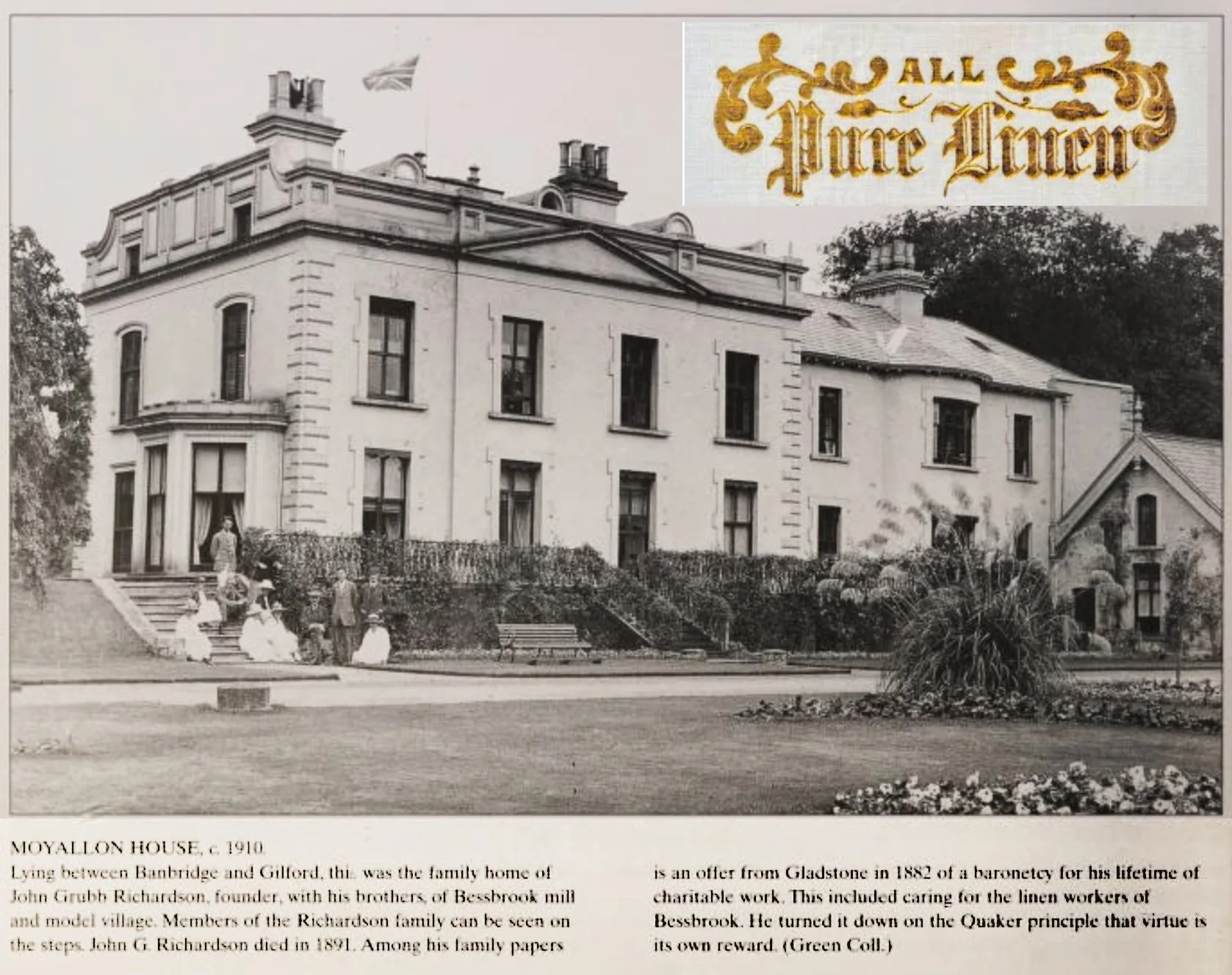
Above: Image source: The Making of Irish Linen, Peter Collins, 1994, Internet Archive, and ArtsAndCulture.Google.com
The Richardson family developed the damask linen works at Bessbrook in County Armagh. The mill gained international recognition for quality and technical innovation, and the surrounding village was planned as an industrial community.
The Grubb family of Dublin became internationally known for precision engineering and telescope manufacture. Their instruments were installed in major observatories across Europe and the British Empire.
Members of the Pim and Pike families were active in shipping, railway promotion, and banking.
Most of these firms no longer exist in their original family form. Some brands endure, while others have disappeared. What remains is the record of a distinct commercial culture shaped by Quaker ideals.
Quakers in Ireland: A Postage Stamp:
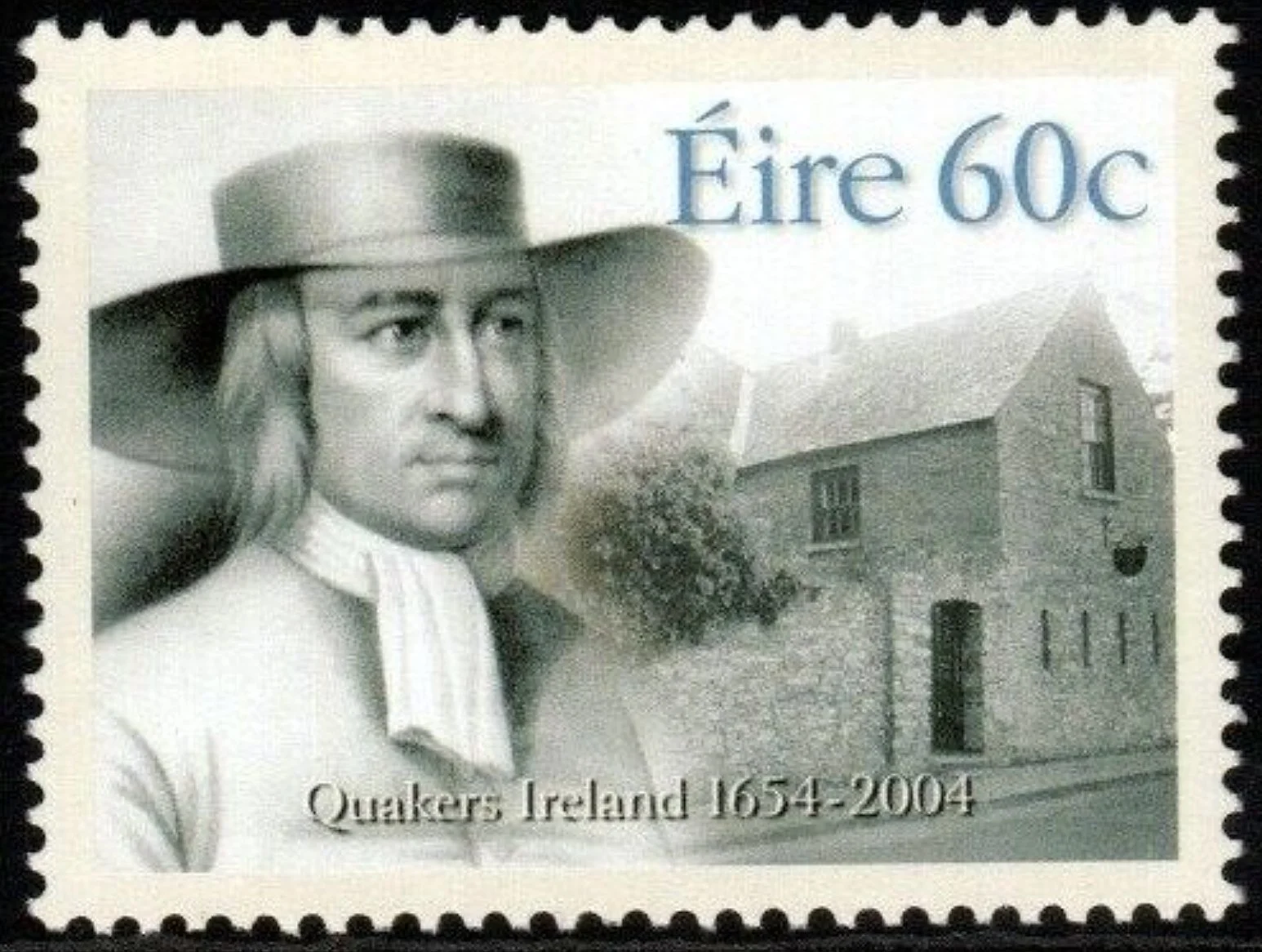
Above: A 2004 Irish postage stamp depicts Quaker leader George Fox with the Friends Meeting House in Ballintore, County Kildare. Image source: HipStamp.com
Irish Quakers and Social Reform:
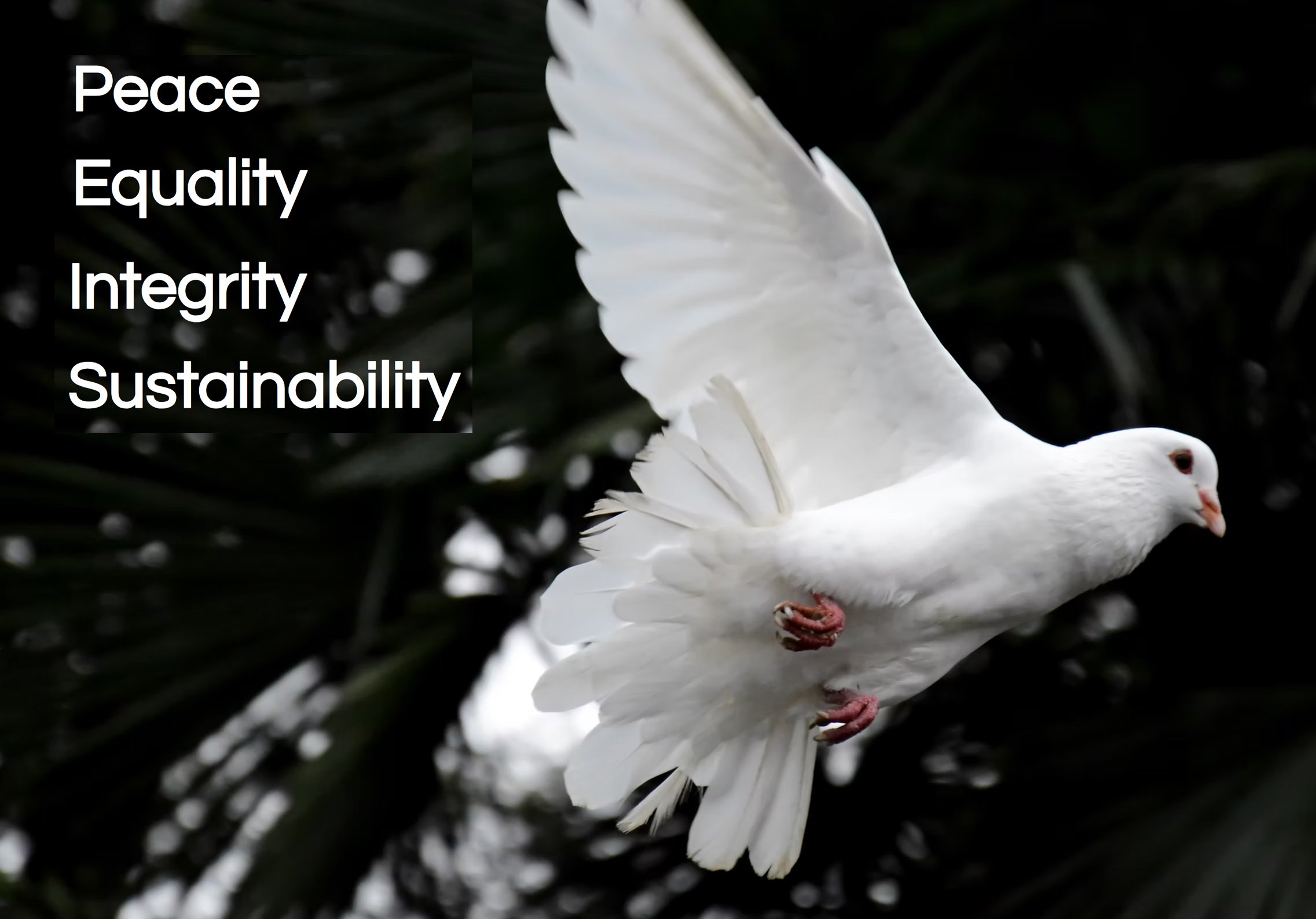
Above: Image source: Quaker Service, Belfast, N. Ireland.
Parallel to their commercial success, Irish Friends were deeply engaged in reform movements.
They supported the abolition of international slavery and maintained connections with British and American abolitionists. Dublin became an important center for anti-slavery advocacy within the British Isles.
Irish Quakers were active in prison reform. They opposed brutal punishments and promoted moral rehabilitation.
During the Great Famine of the 1840s, the Central Relief Committee of the Society of Friends in Dublin organized extensive relief efforts. Their work was widely praised for efficiency and fairness. They distributed aid across regions where government response was slow or insufficient.
Friends also invested in education. They supported schools for boys and girls and encouraged nonsectarian models of instruction. Their peace testimony led them to advocate arbitration and conciliation during periods of political tension.
Irish Quakers in Pennsylvania:
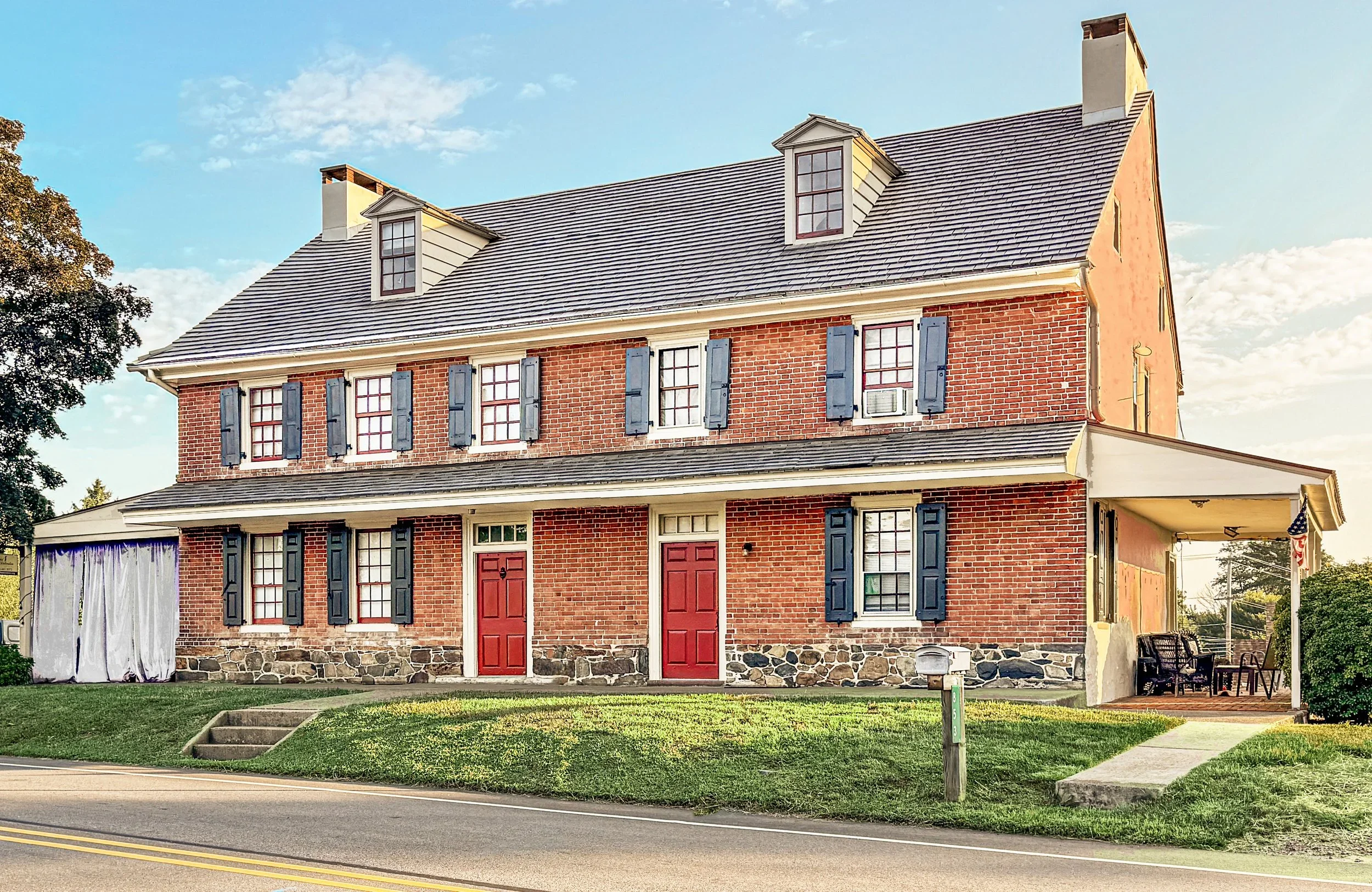
Above: The 1742 Newlin House in Concordville, Pennsylvania, was built by descendants of Irish Quaker immigrants Nicholas and Elizabeth Newlin, who emigrated to Pennsylvania in 1683 from Mountmellick, Queens County. Image source: Lee J. Stoltzfus
The Irish Quaker experience parallels that of Quakers in Pennsylvania. In both regions, Friends were prominent in milling, manufacturing, banking, and trade. In both regions, they were leaders in abolition, prison reform, education, and relief work.
Quaker theology emphasizes equality, honesty, and responsibility toward the wider community. Business success reinforced their capacity to act in public life. Reform activity, in turn, reinforced their moral authority in commerce.
Links: