
Historic Quaker Houses of Montgomery County, PA
Hope Lodge
Built in the 1740s
By Samuel Morris

“Hope Lodge is one of the most important surviving Early Georgian country houses in the Delaware Valley.” The main (south) facade is built of brick laid in Flemish bond.
Quote: Historic Houses of Philadelphia, 1998, Roger W. Moss, Internet Archive.
Samuel Morris (1707 - 1770) was a prominent Quaker businessman and civic leader. His father, Morris Morris, emigrated from Caernarvonshire, Wales, and became a Quaker elder. His mother was Susanna (Heath) Morris, a well-known traveling Quaker minister born in Staffordshire, England. Samuel Morris served on numerous Quaker committees and was elected Assessor of Philadelphia County several times. He later became Justice of the Peace for Whitemarsh Township.
Morris owned a gristmill on the Wissahickon Creek and managed lime kilns, farmland, and other ventures including ships, a brewhouse, and an iron furnace. In the 1740s, Morris built this magnificent Georgian home, “Whitemarsh Estate.” It is now known as Hope Lodge. Morris never married.
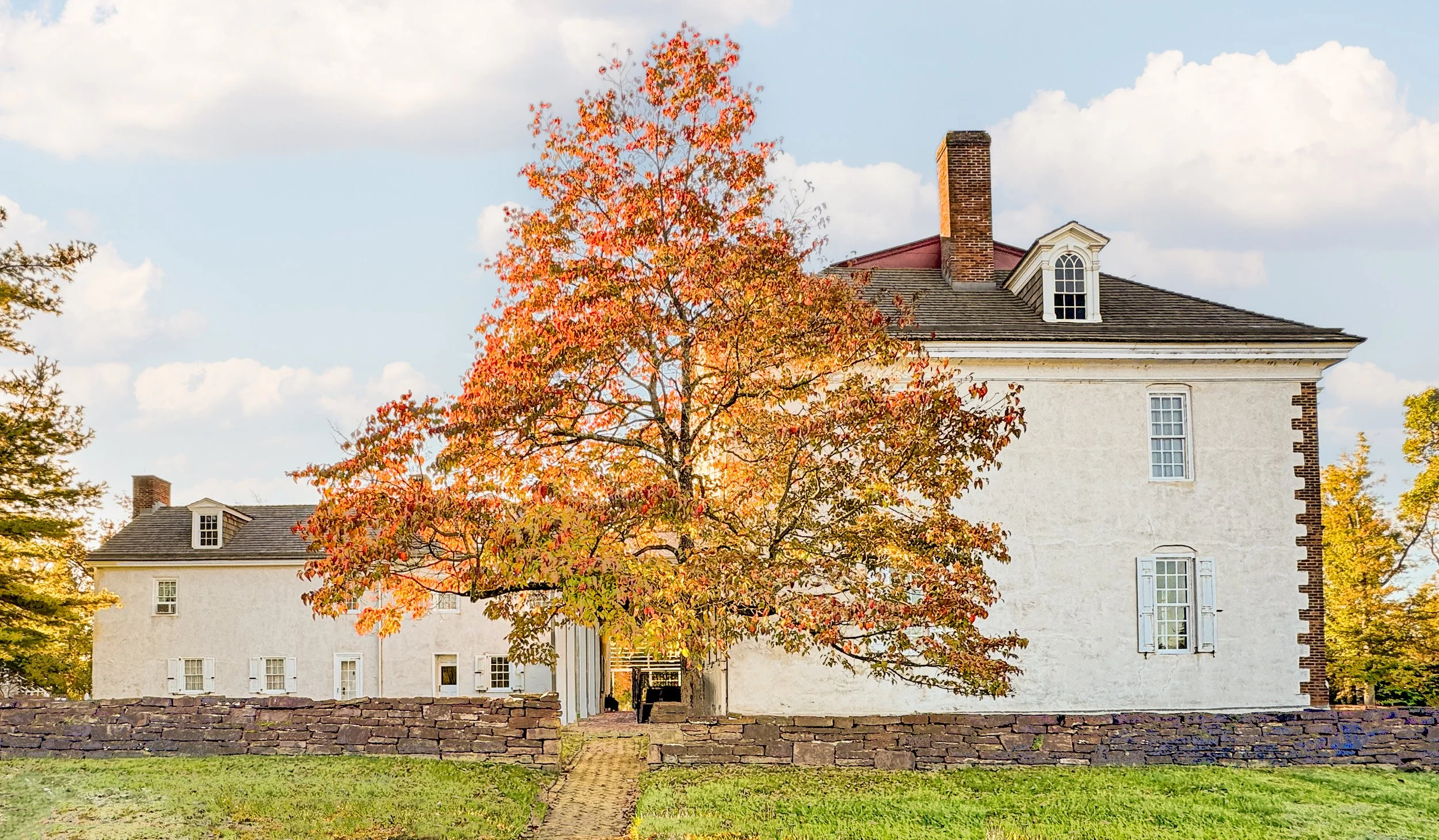
Above: Hope Lodge in October. Image source: Lee J. Stoltzfus
While the front elevation is brick, the other three walls are constructed of plastered rubble-stone masonry. The brick front wall and the stone side walls are quoined together at the corners.
The Georgian Interior of Hope Lodge:

Above: The central hall and the Morris bed chamber. Images source: Hope Lodge / Facebook
The paneled rooms show refined craftsmanship influenced by English design books of the period. The use of proportion, alignment, and formal detailing throughout the house reflects the taste of Philadelphia’s wealthy merchant class in the mid-18th century.
Side Entry and the Garden:
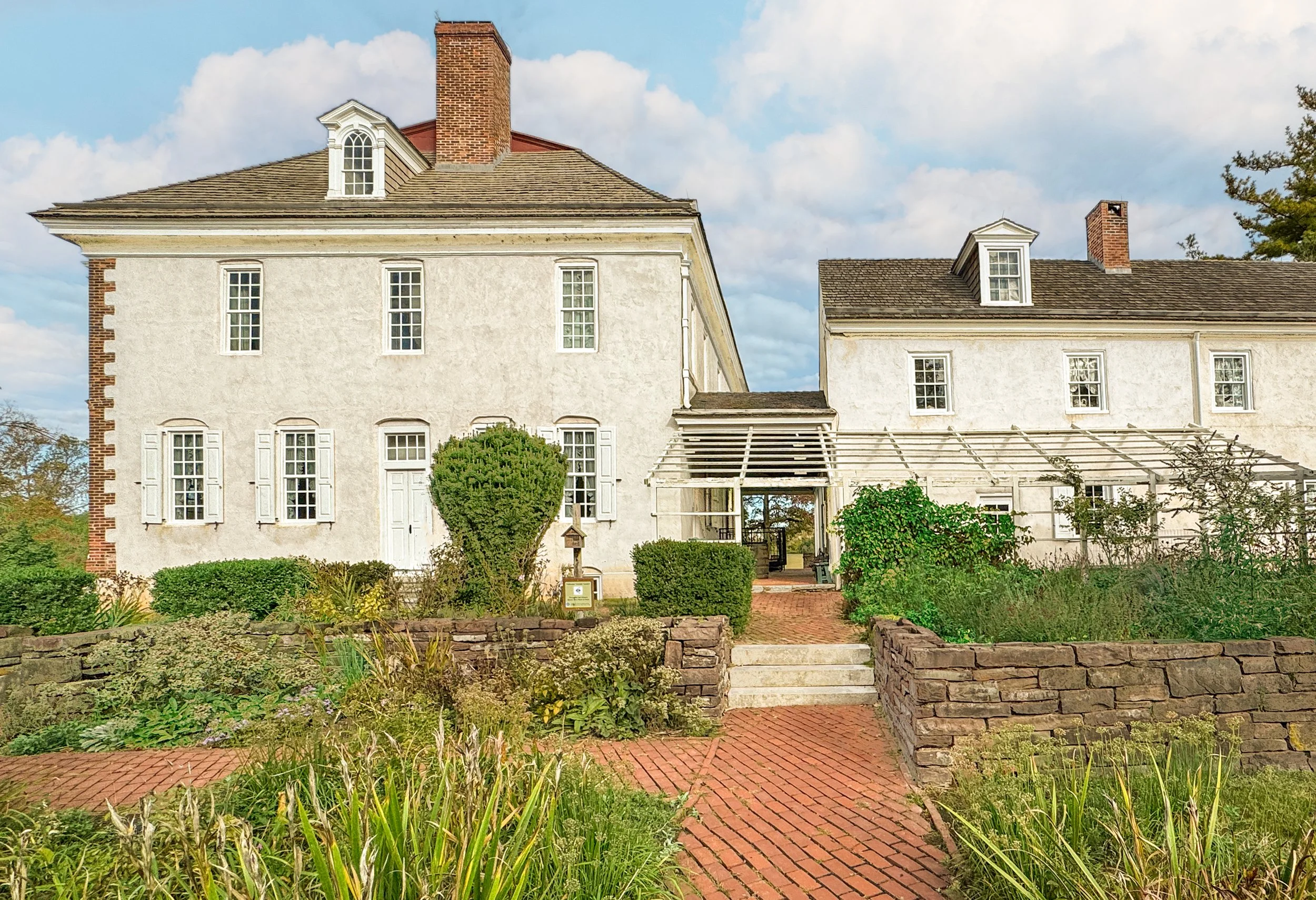
Above: The garden at Hope Lodge. Image source: Lee J. Stoltzfus
William and Alice Degn purchased Hope Lodge in 1922. They planted a Colonial Revival garden near the house. The couple hired Architect Paul Cret to help restore the home. After Mrs. Degn's death in 1953, the house was transferred to the Hope Lodge Foundation. In 1957, the Commonwealth of Pennsylvania received the property.
The Barn at Hope Lodge:
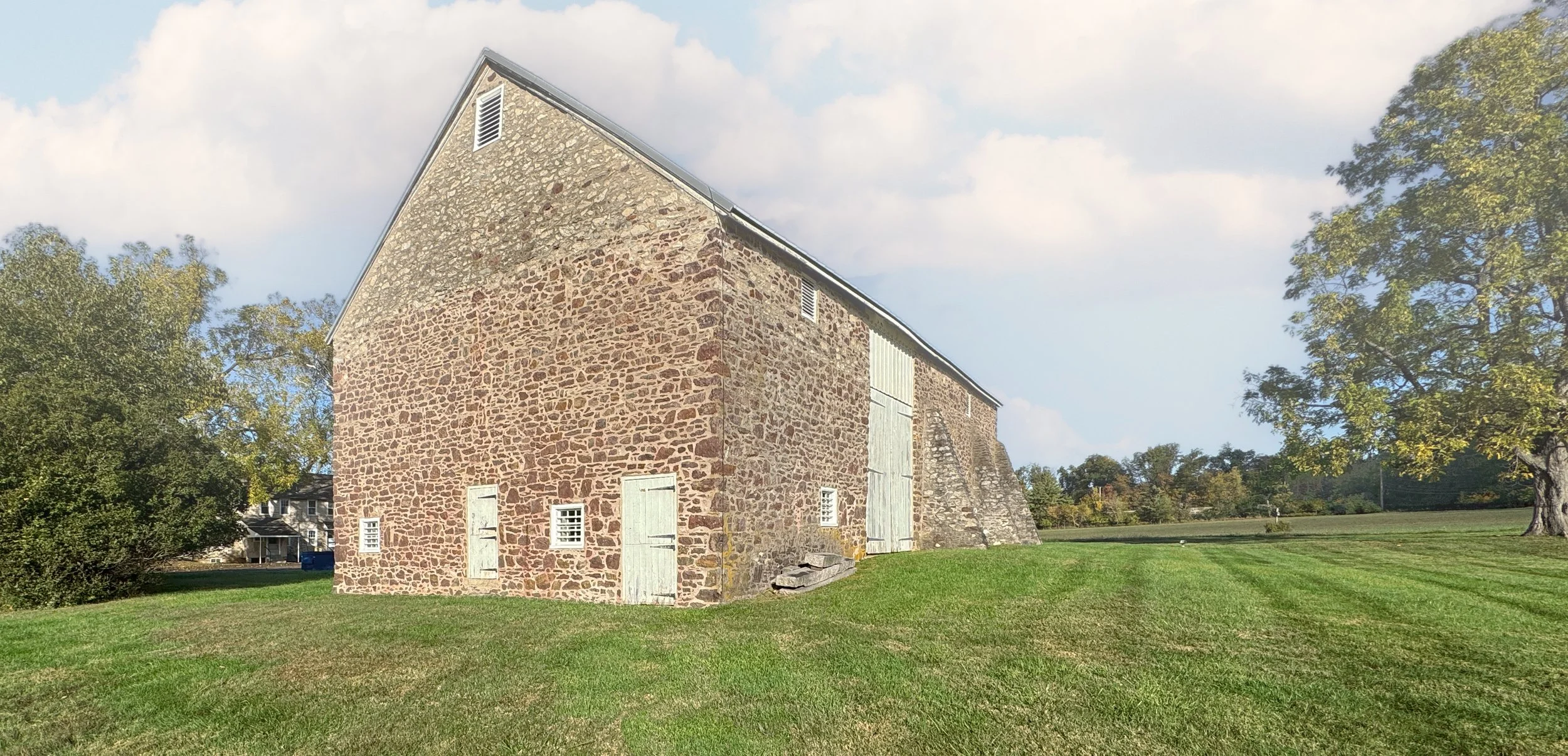
Above: Owners of Hope Lodge modified the barn several times. Jacob Wentz enlarged the barn sometime after 1832. This rear view shows a banked entry that leads to the threshing floor. Stone piers brace the wall. Image source: Lee J. Stoltzfus

Above: Detail of an interpretive sign at Hope Lodge showing former residents.
Samuel Morris’ Welsh Quaker Ancestry
His Welsh Immigrant Grandparents
Evan and Gainor Morris:
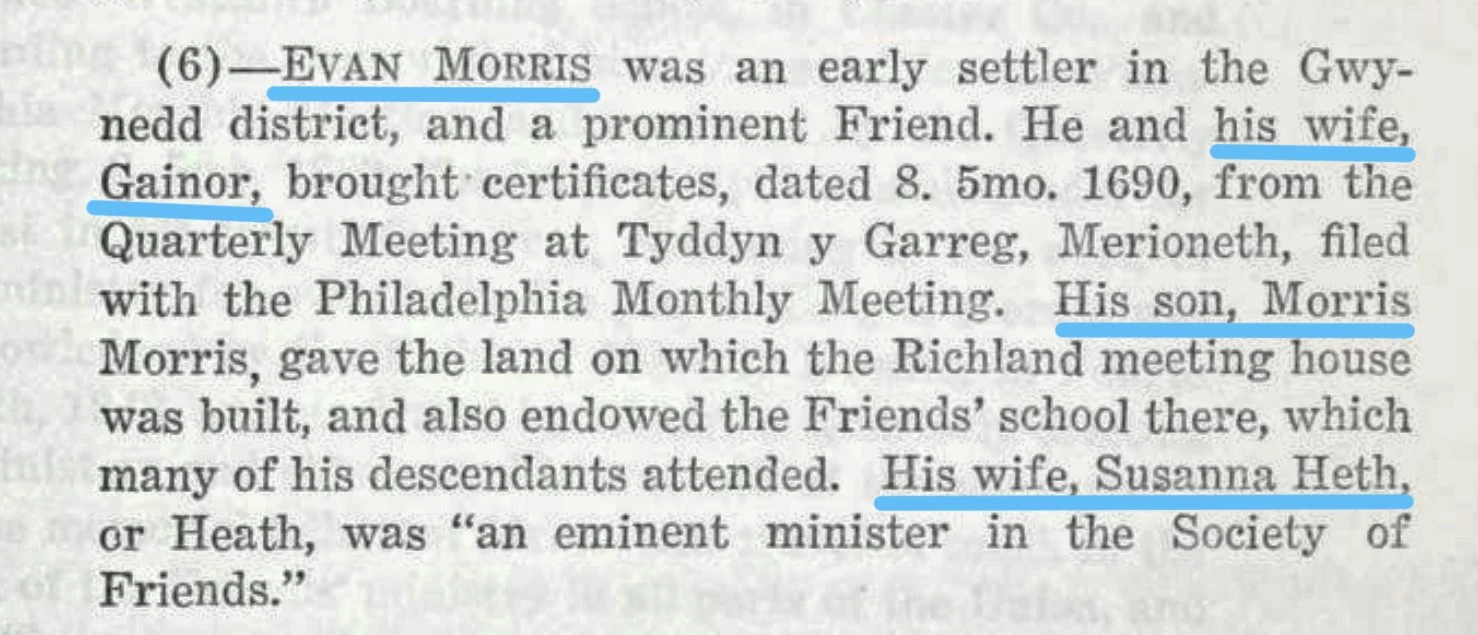
Above: Image source: Welsh Settlement of Pennsylvania, Charles Browning, 1912, Internet Archive
Samuel Morris’ grandparents, Evan Morris and Gainor Morris, emigrated to Pennsylvania from Merioneth, Wales. Samuel Morris’ father, Morris Morris, donated the land for the Richland Quaker Meetinghouse. Samuel Morris’ mother, Susanna Heath, was a prominent Quaker minister.
A Quaker Birth Record of Samuel Morris
Born ye 16th of ye 12 mo, 1707-8:
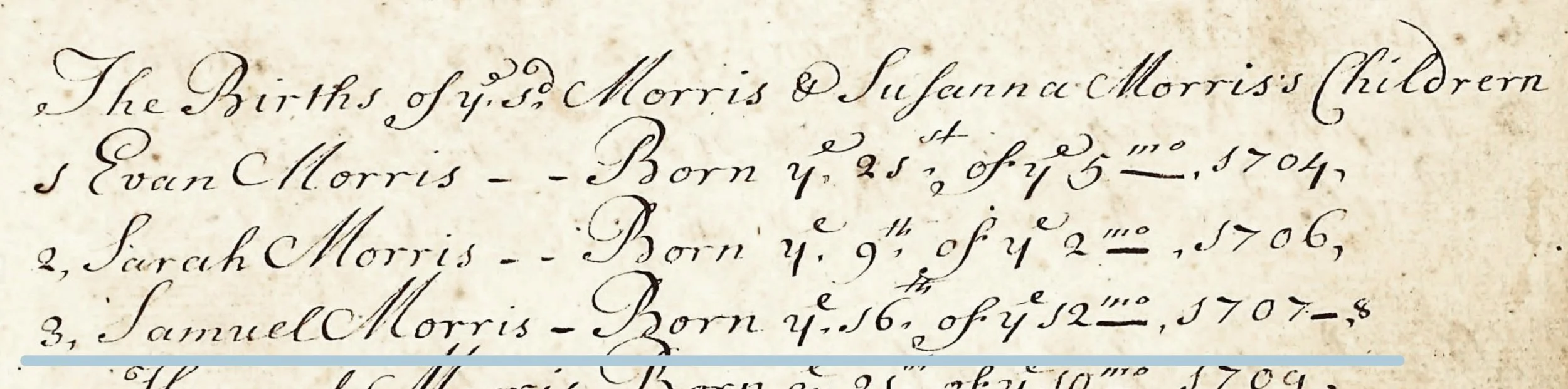
Above: Image source: Bridgitte, RN, FindAGrave.com
The date “ye 16th of ye 12 mo, 1707-8” reflects the old Quaker and English calendar system. At that time, the new year began on March 25, not January 1. The “12th month” was February, so the 16th day of the 12th month was February 16, 1708, in our modern calendar. The double year, 1707/8, shows how the date would have been recorded under both the old style (1707) and new style (1708) calendars. In modern terms, we could also record this date as February 16, 1708.
Quakers avoided the pagan-derived names for months. They numbered months starting with March as the 1st month. The word “ye” was pronounced “the.” The spelling “ye” is a typographical artifact, not a different word or pronunciation.
Samuel Morris Attended Gwynedd Quaker Meeting:
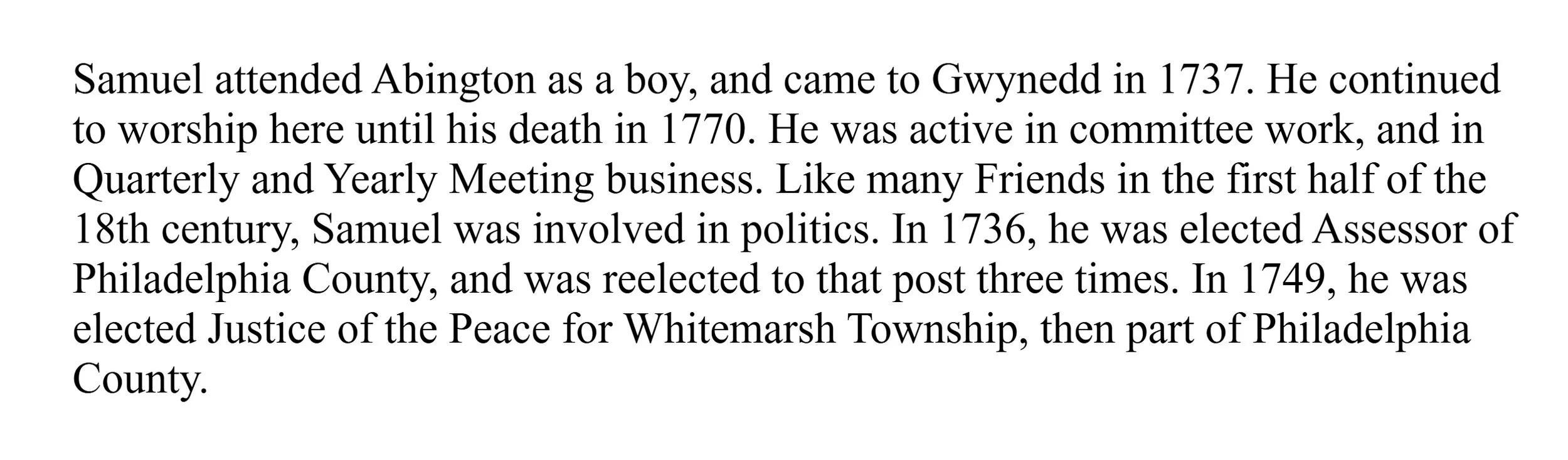
Above: Text image source: The Griffith, Hugh, Pugh and Morris Families of Gwynedd Friends Meeting…, James A. Quinn, 2008, FriendsJournal.org
Gwynedd Friends Meeting House:
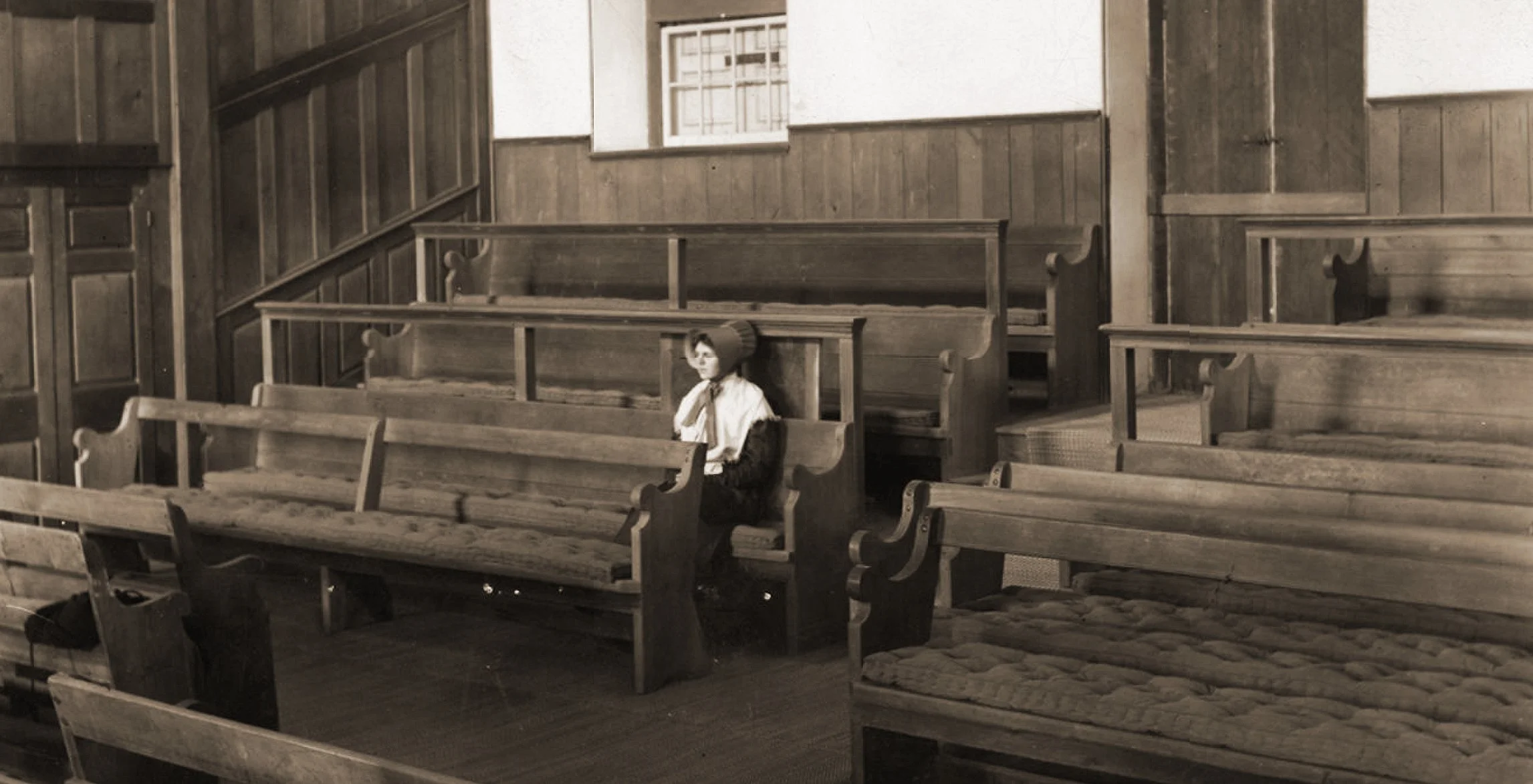
Above: A Quaker woman poses inside Gwynedd Meeting House. An inscription on the photo suggests the woman might be Sarah S. Jenkins in 1913. Image source: TriCollegeLibraries.
A 1716 Welsh Farmhouse Nearby
The Evans House:
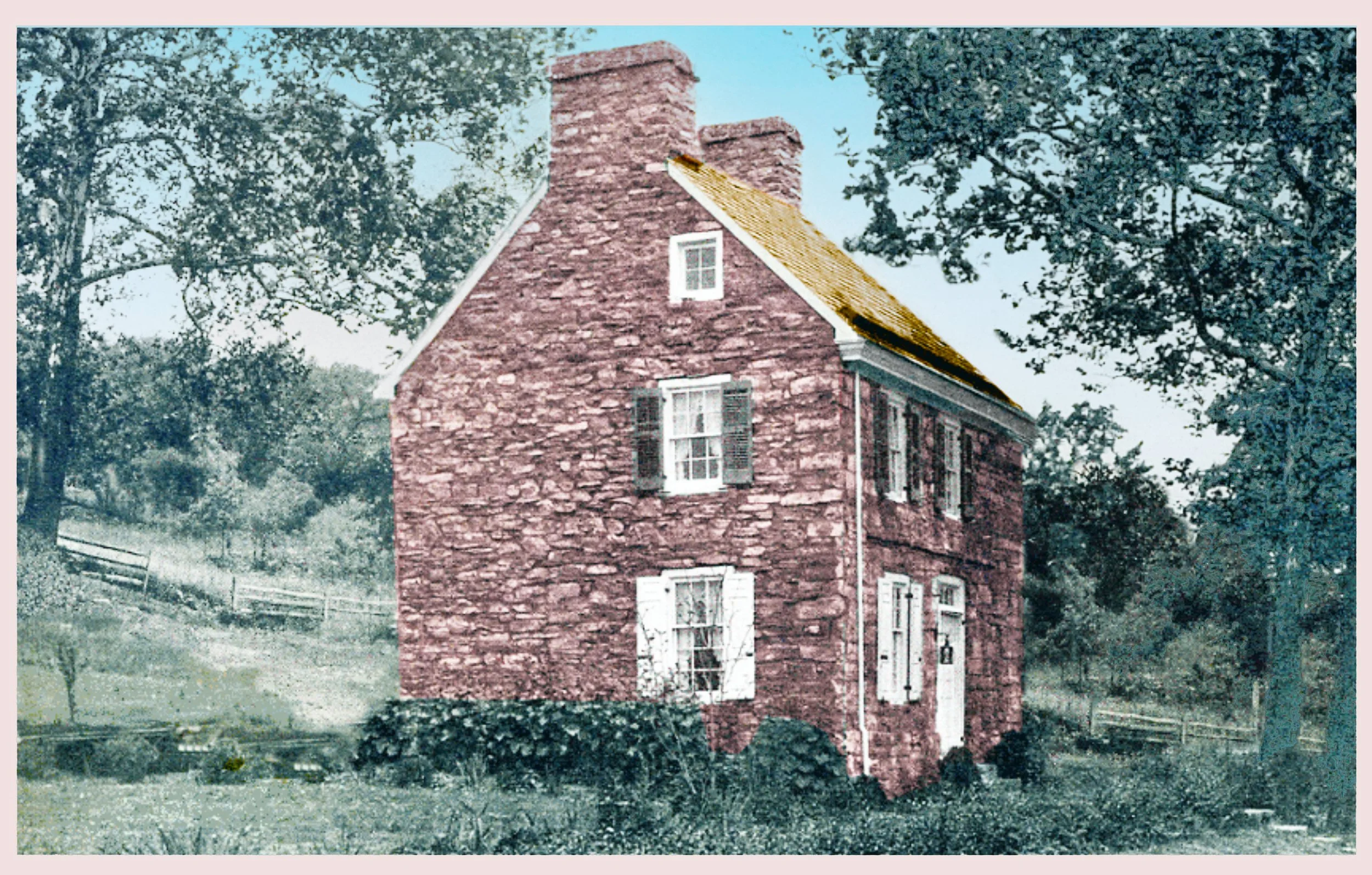
This 1716 Evans farmhouse is much smaller than the 1740s Morris country house. Both houses have Welsh Quaker lineage. Above: Image source: AnalogDial.com, Mike Simpson.
Robert Evans (1658 -1738) arrived in Pennsylvania with Welsh settlers in 1698. Evans emigrated from Merionethshire, Wales. His wife was Ellen Evans. The Welsh settlers here named their new homeland Gwynedd, the name of their ancient kingdom in North Wales. Robert Evans had a stone house by 1716. A stone at the jamb of the front door is inscribed “R. E. 1716” and “H E”, the initials of son Hugh Evans.
Robert Evans was one of the first Quaker ministers in Gwynedd. Quaker meetings were held here in his home before the meetinghouse was built. He donated land for the Gwynedd Friends Meeting. Image source: FriendsJournal.org
The Evans House in 1927:
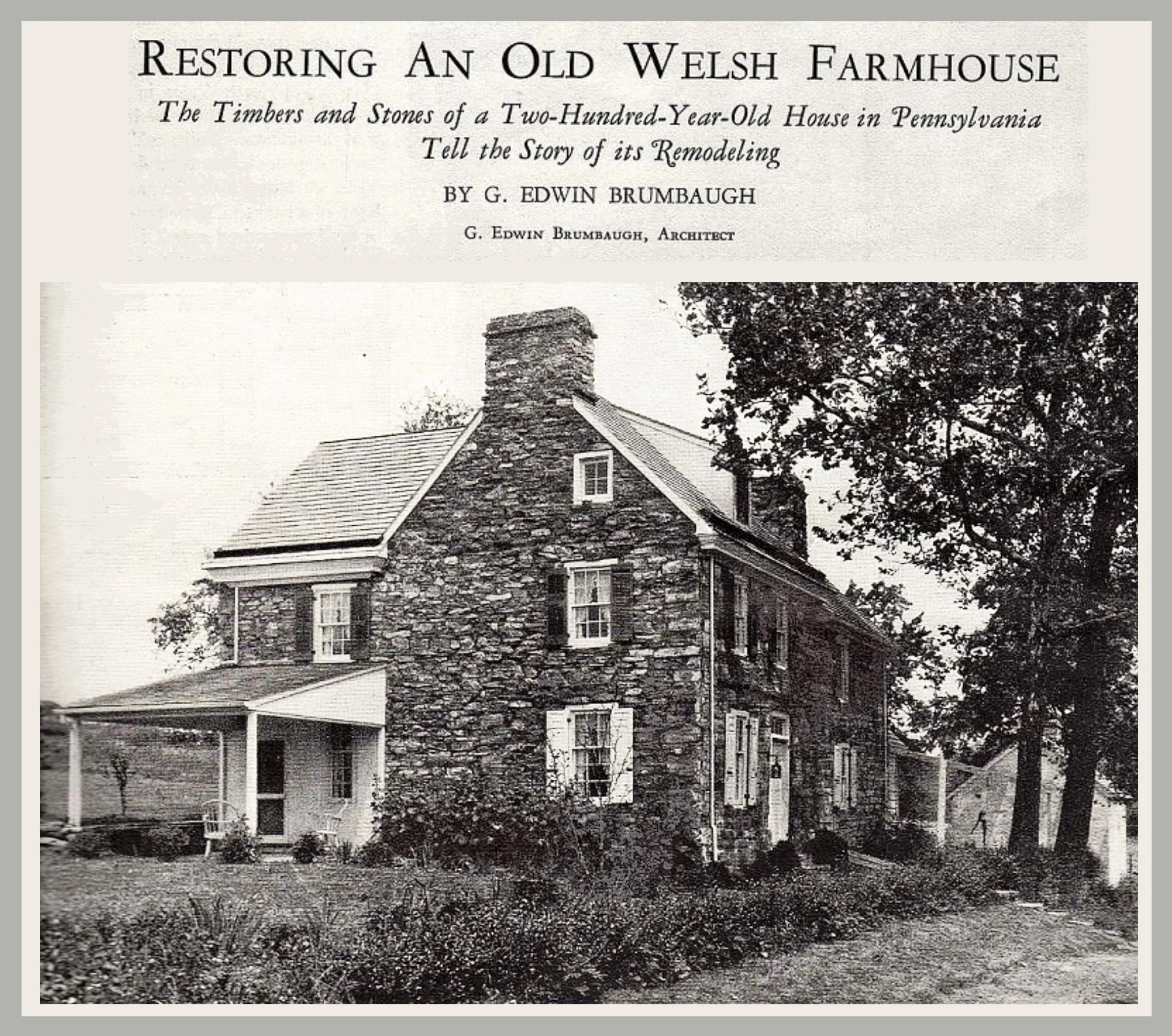
Edwin Brumbaugh (1905 -1986) was a Pennsylvania architect known for his work on historic buildings, including Pennsbury Manor and Ephrata Cloister. This article is in the magazine The House Beautiful, December 1927. The complete article is online.
Links: