
Historic Quaker Houses of Montgomery County, PA
Harriton House - Bryn Mawr
Built in 1704 by Welsh Quaker Immigrants
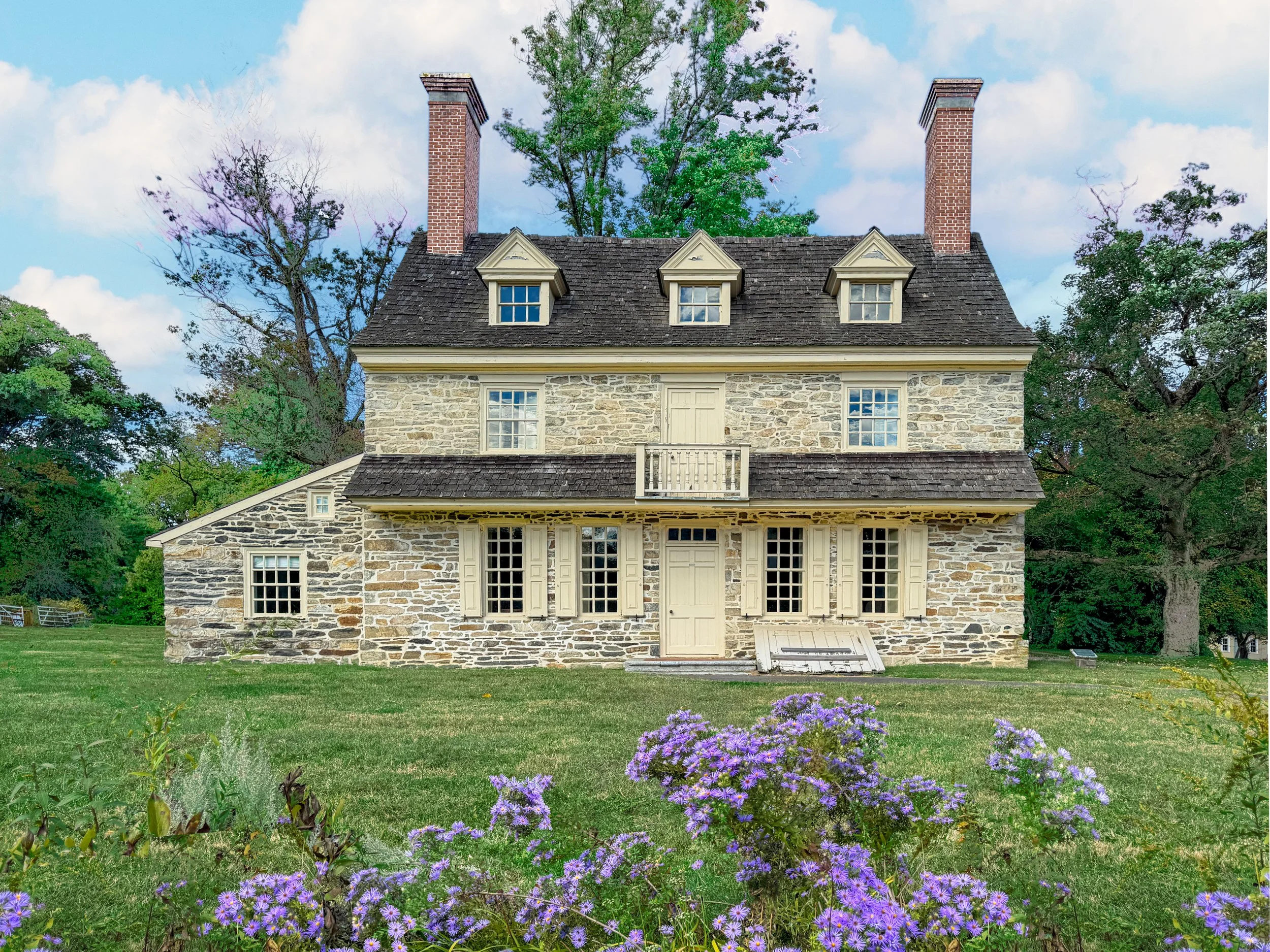
Above: Autumn asters in flower in front of the Harriton House. Image source: Lee J. Stoltzfus
Harriton House traces its origins to the early Welsh Quaker settlement of Pennsylvania. The house was built in 1704 by Rowland Ellis, a prominent Quaker businessman and minister who emigrated to this "Welsh Tract" from Merionethshire, Wales. He originally named the estate "Bryn Mawr," meaning "High Hill" in Welsh, after his ancestral farmstead.
Ellis was a member of the Pennsylvania Assembly, a tax commissioner, and a justice of the peace. He served as an overseer of Radnor Meeting and of the Quaker public schools in Philadelphia.
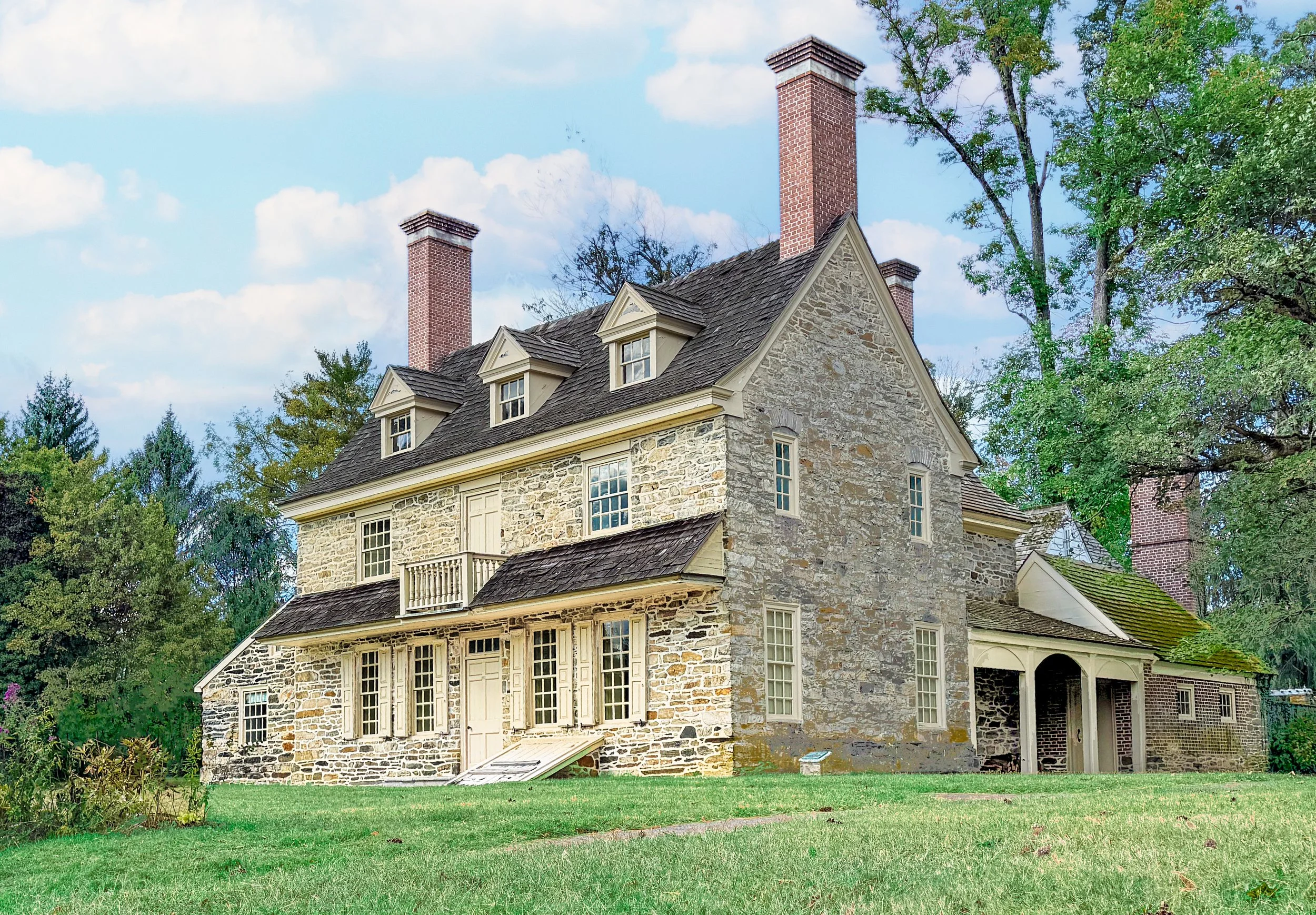
Two chimneys tower over the roof of the Harriton House. Image source: Lee J. Stoltzfus
The property’s Quaker legacy continued when Rowland Ellis sold the estate in 1719 to Richard Harrison, a tobacco planter from Maryland. Harrison was a Quaker. He had married Philadelphian Hannah Norris two years earlier. The Harrisons renamed the property "Harriton" and established a tobacco plantation on the site.
The house later passed to Harrison’s daughter, Hannah Harrison. She married Charles Thomson, the Secretary to the Continental Congress. While Thomson was not a Quaker, he maintained close ties to the Friends, having taught at the Friends’ Academy in Philadelphia.
A 1704 Datestone and Flared Eaves:
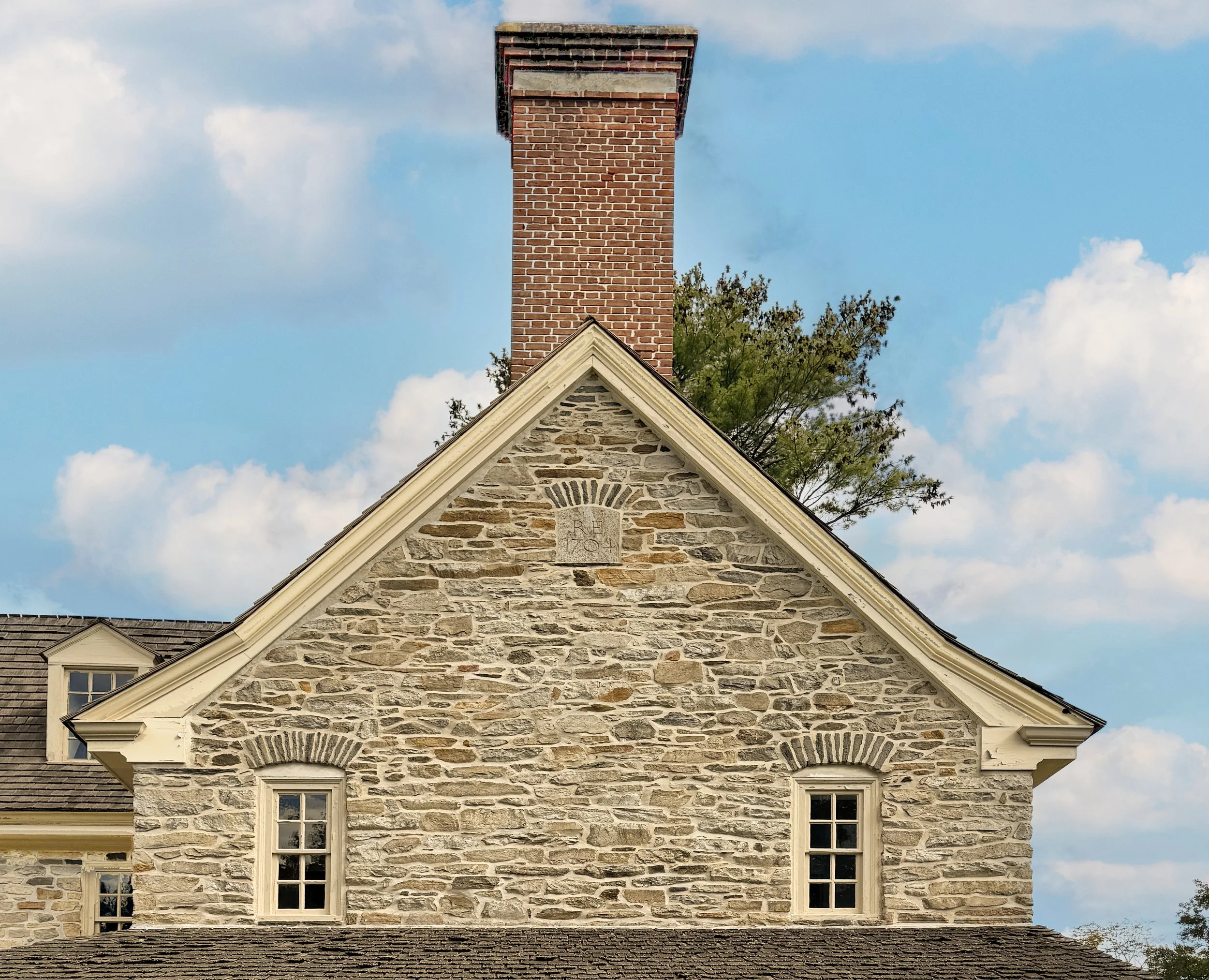
Above: Harriton House’s flaring eaves and tall brick chimneys are distinctive details. A 1704 datestone has the initials “R E.” for Rowland Ellis. The height of the chimneys was increased during later restoration. Image source: Lee J. Stoltzfus
Architecturally, Harriton House stands as an important survivor of early domestic architecture in southeastern Pennsylvania. The house is built of local stone and features a T-shaped floor plan, a layout that was somewhat unusual and ambitious for the early 18th century. The flared eaves, with their pronounced “kick”, are unusual for early Quaker houses. Kicked eaves are more characteristic of historic Pennsylvania German houses.
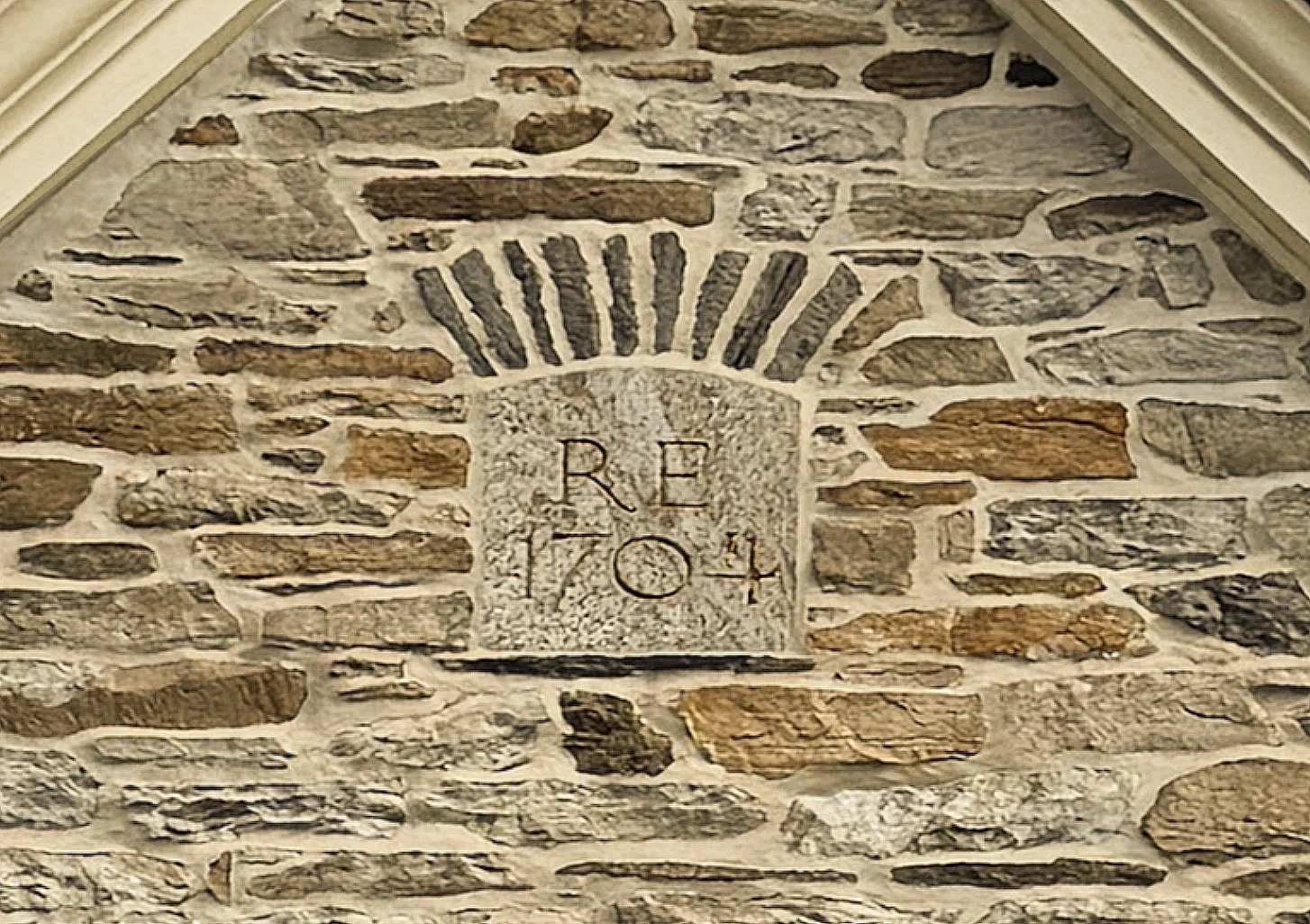
Above: The datestone: “R E 1704” for Rowland Ellis who built the house.
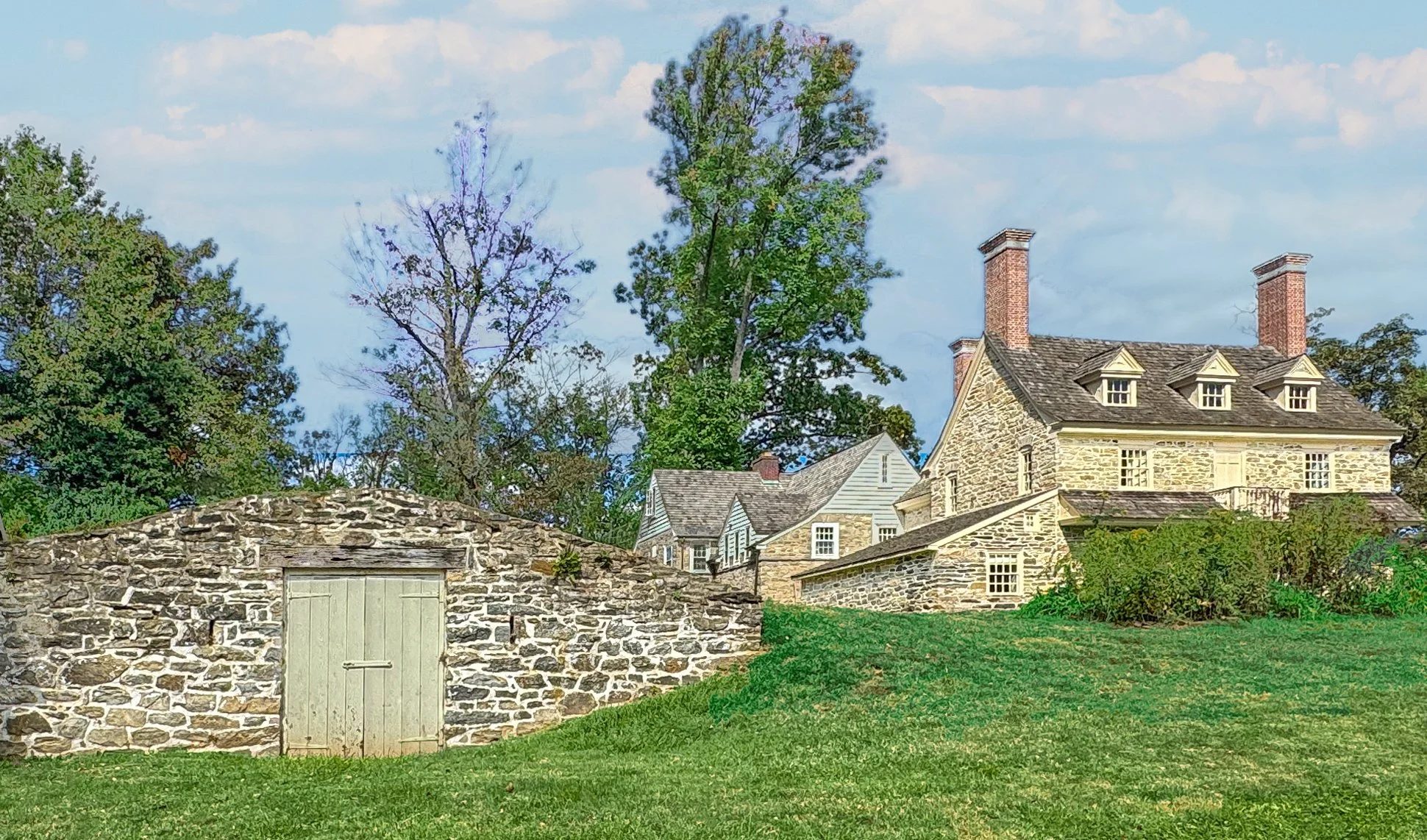
Today the house is situated within a park that preserves the main dwelling and a working landscape. Two barns stand near the house. One is adapted as an education center and the other houses farm animals that suggest the site’s long agricultural past. Nearby is the Kalbach House, a rambling building that began as a late seventeenth-century log cabin and later received stone additions, illustrating how early vernacular structures at Harriton evolved over time.
Balcony and Pent Eave:
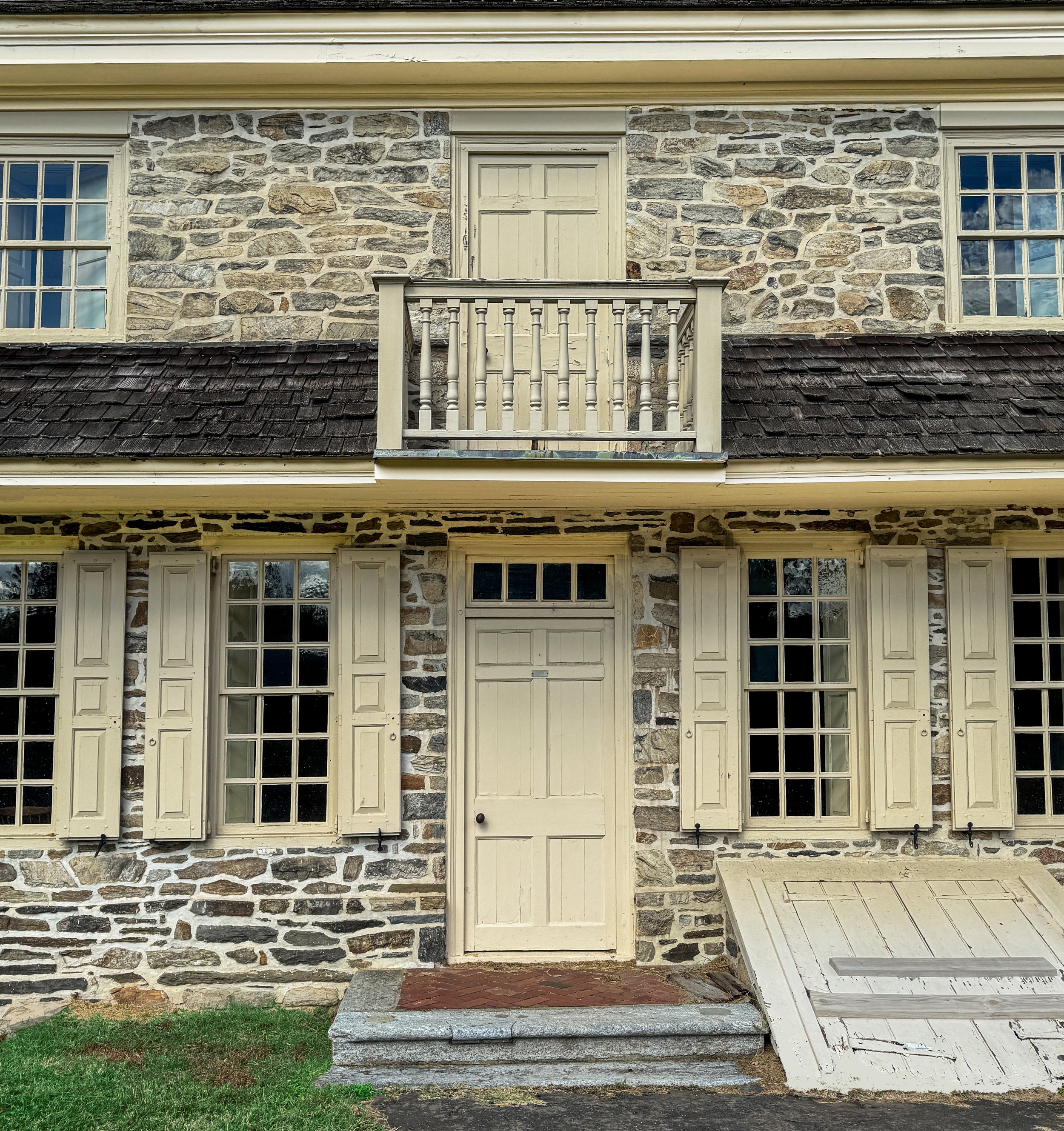
Above: A balcony is centered over the front entry. A pent eave protects the masonry and shelters the doorway. The door opens into the primary room or hall in this hall-and-parlor house. Image source: Lee J. Stoltzfus
A ca. 1920 Photograph of the Harriton House:
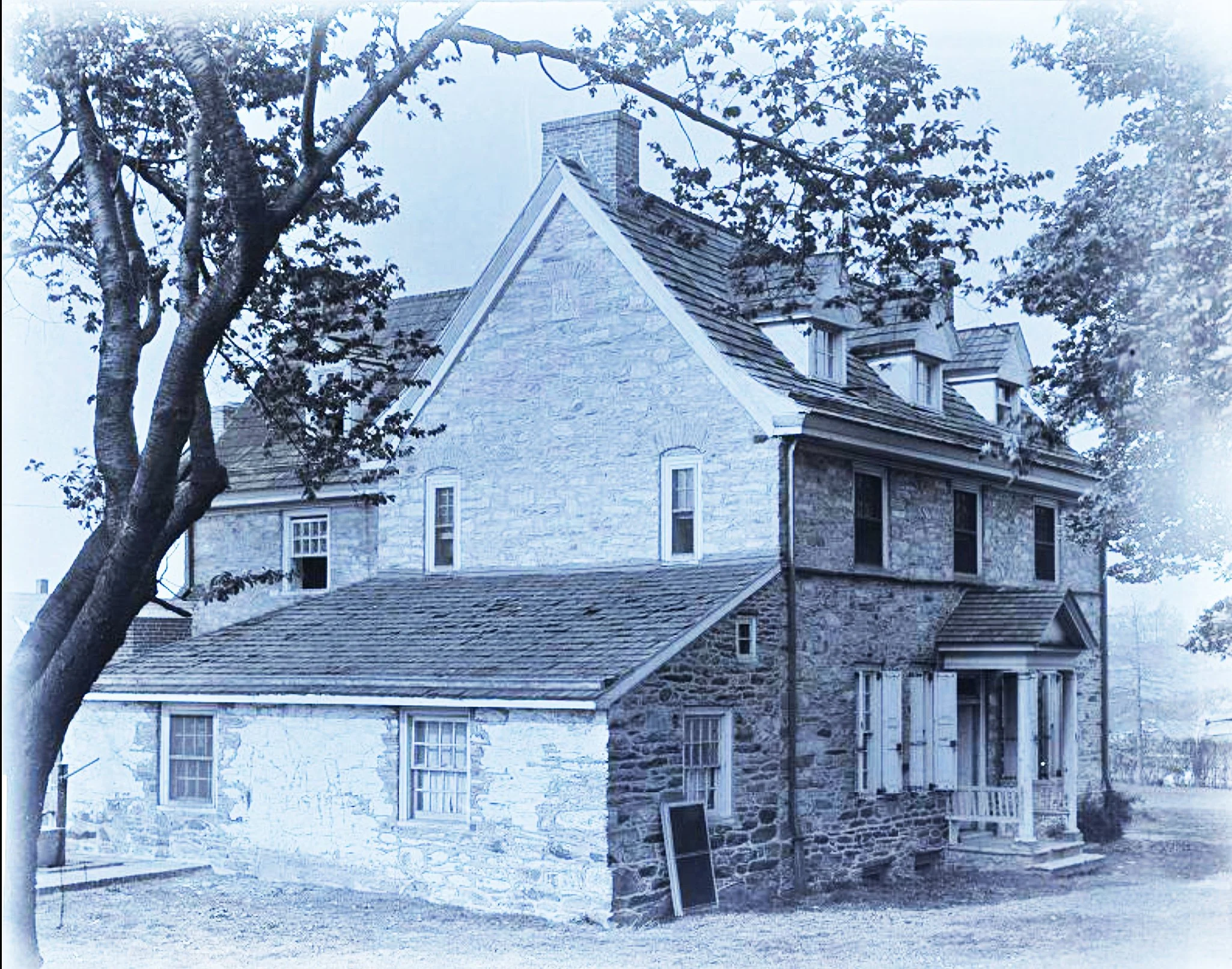
Above: Alfred Hand photographed the house ca. 1920, before restoration. Image source: Library Company of Philadelphia
A 1950 Postcard of Harriton
By Architect Henry T. MacNeill:
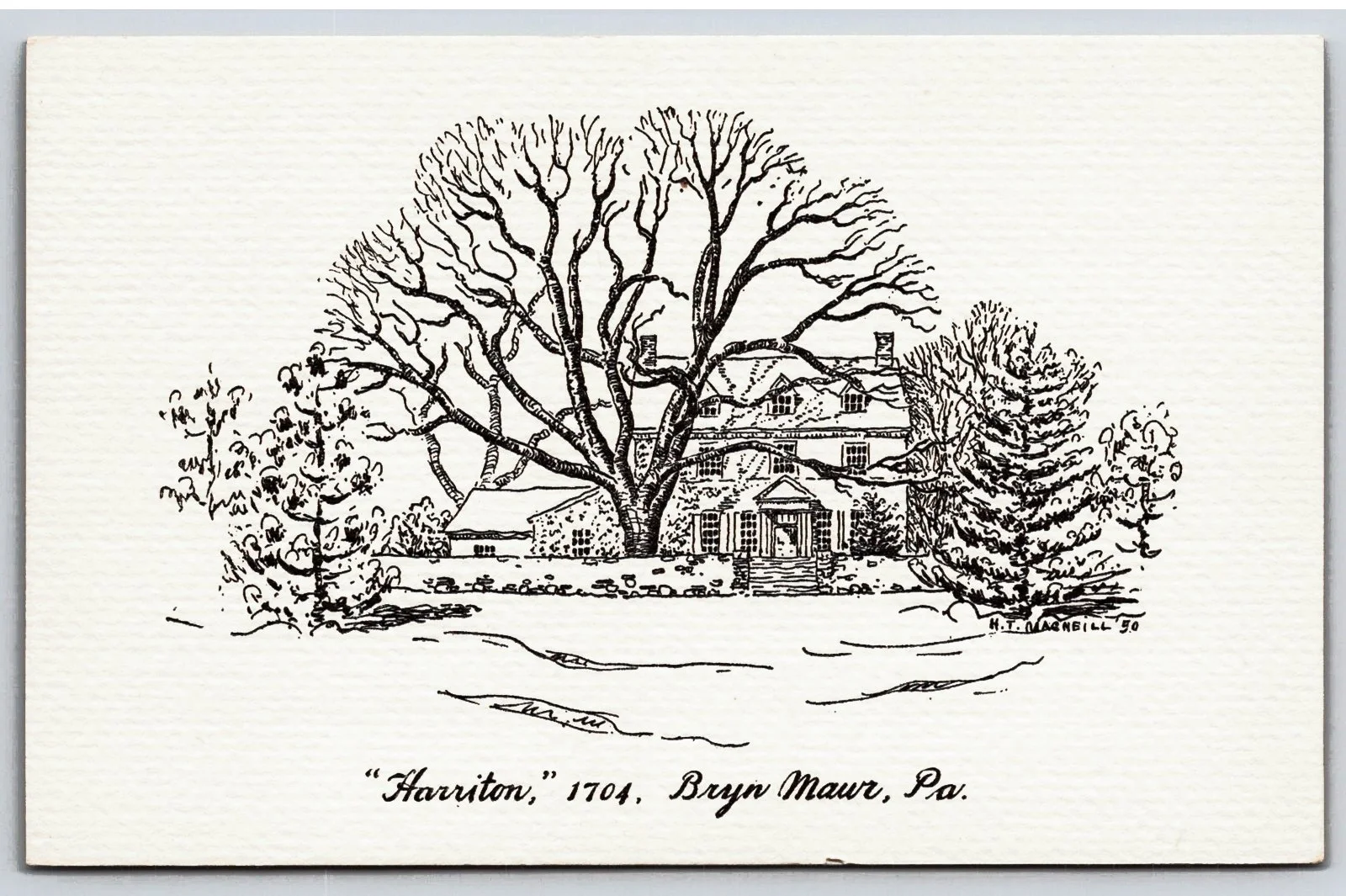
Above: Henry MacNeill’s 1950 sketch of Harriton. This artist / architect lived in Whitford, Chester County. He created more than 300 drawings of buildings in the mid-Atlantic region. Image source: ebay
The Original House on the Property:
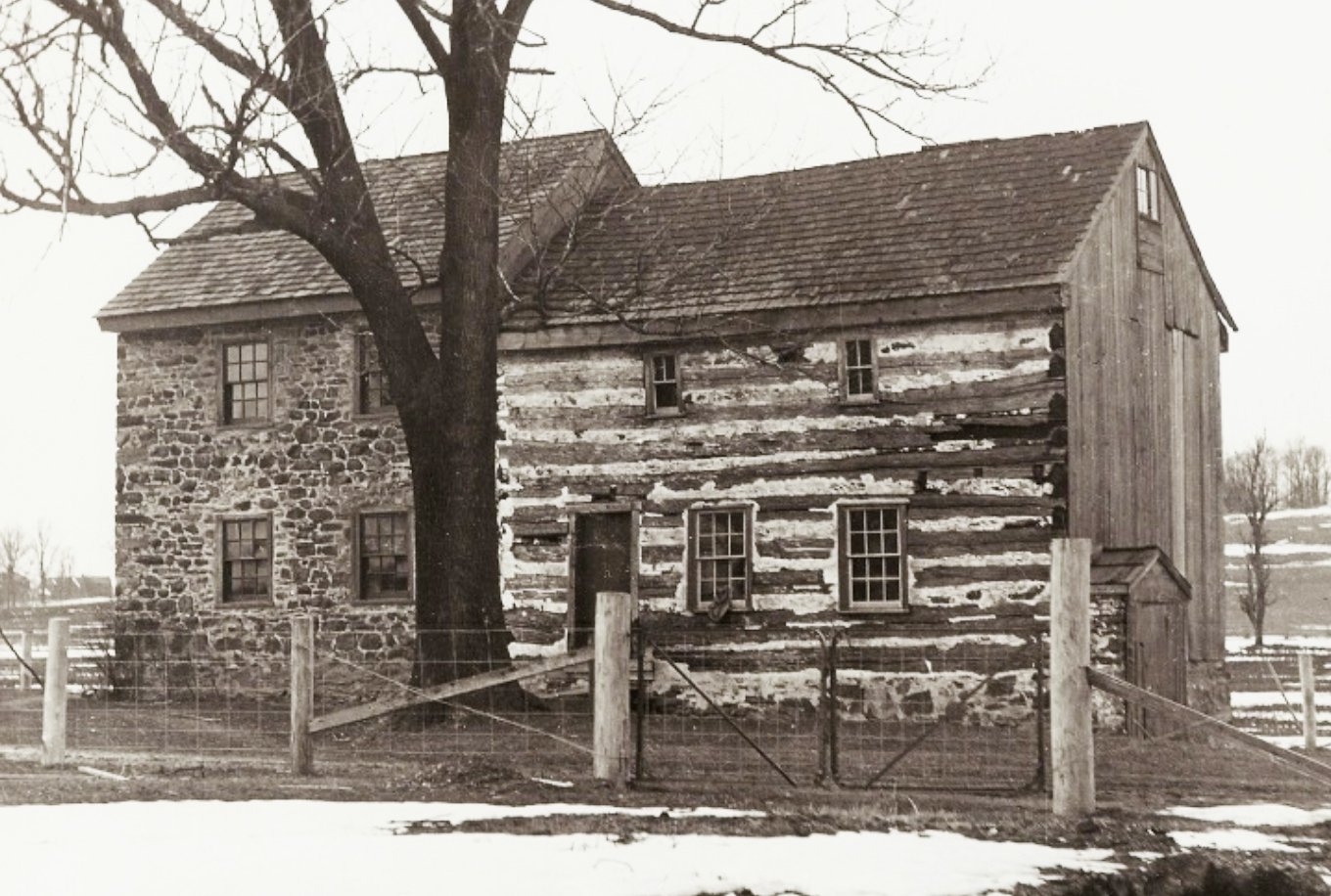
The original house at Harriton was a log house built by Thomas Owen in the late 1600s. A fieldstone wing was added before 1704. Today the log cabin is the core of the Kalbach House. Image source: Harrition House
Links: