
The Garrett House
Built ca. 1722 to 1735, with Additions
Constructed of Serpentine Stone
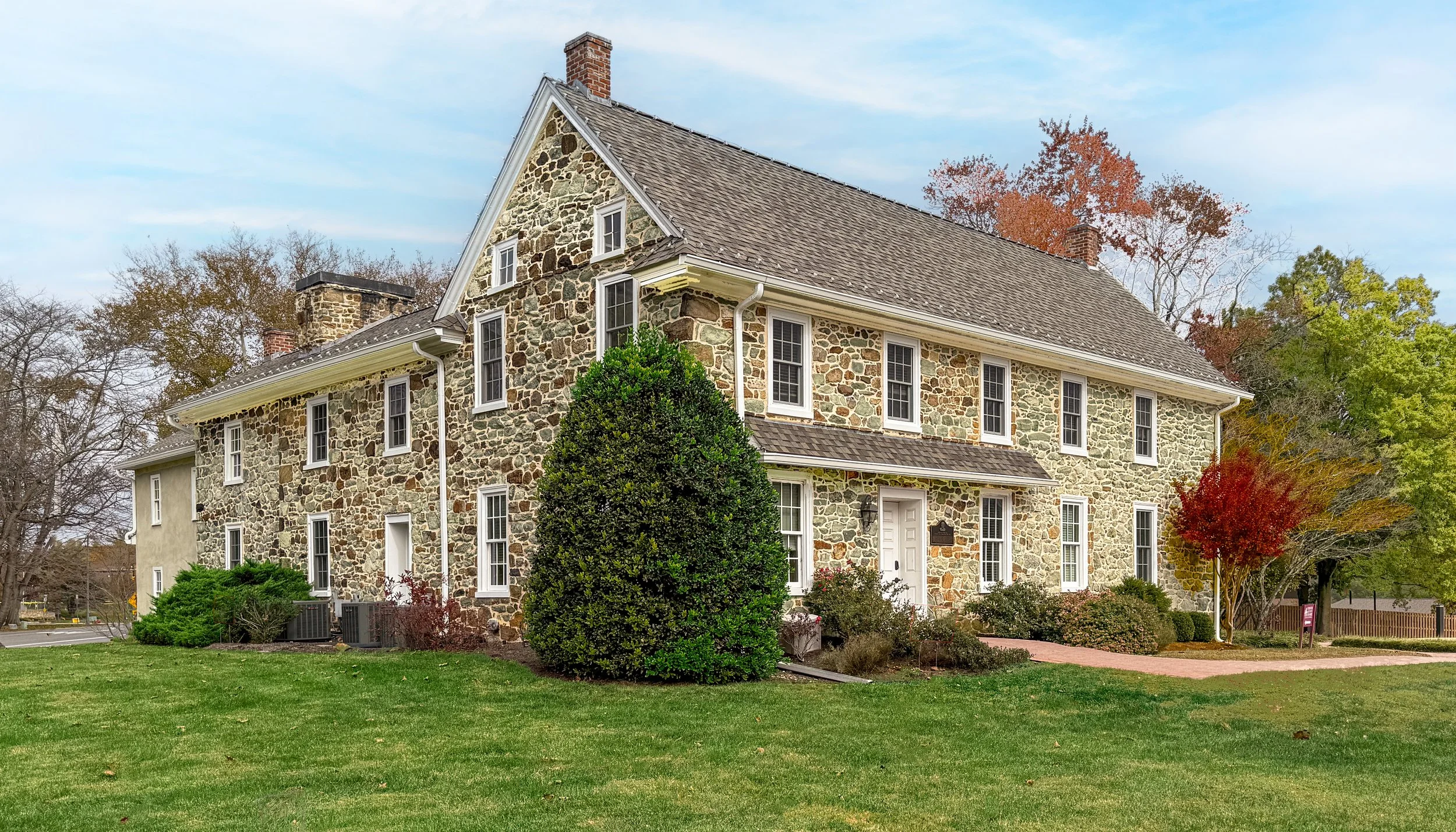
Above: The Garrett House, now the Chester County Chamber of Business and Industry. Image source: Lee J. Stoltzfus
This farmhouse was built ca. 1722 to 1735 by Joseph Garrett, Sr. and Mary (Sharples) Garrett, sometime after their marriage in 1722. Later additions reflect the growth of the Garrett family, who lived here until ca. 1900.
The Garretts were active in the local Quaker meeting. Benjamin Garrett was also in charge of the Quaker school in 1828. The house has been renovated to serve as a meeting place for the Chester County Chamber of Business and Industry. It was named in honor of prominent Chester County businessman John H. Ware.
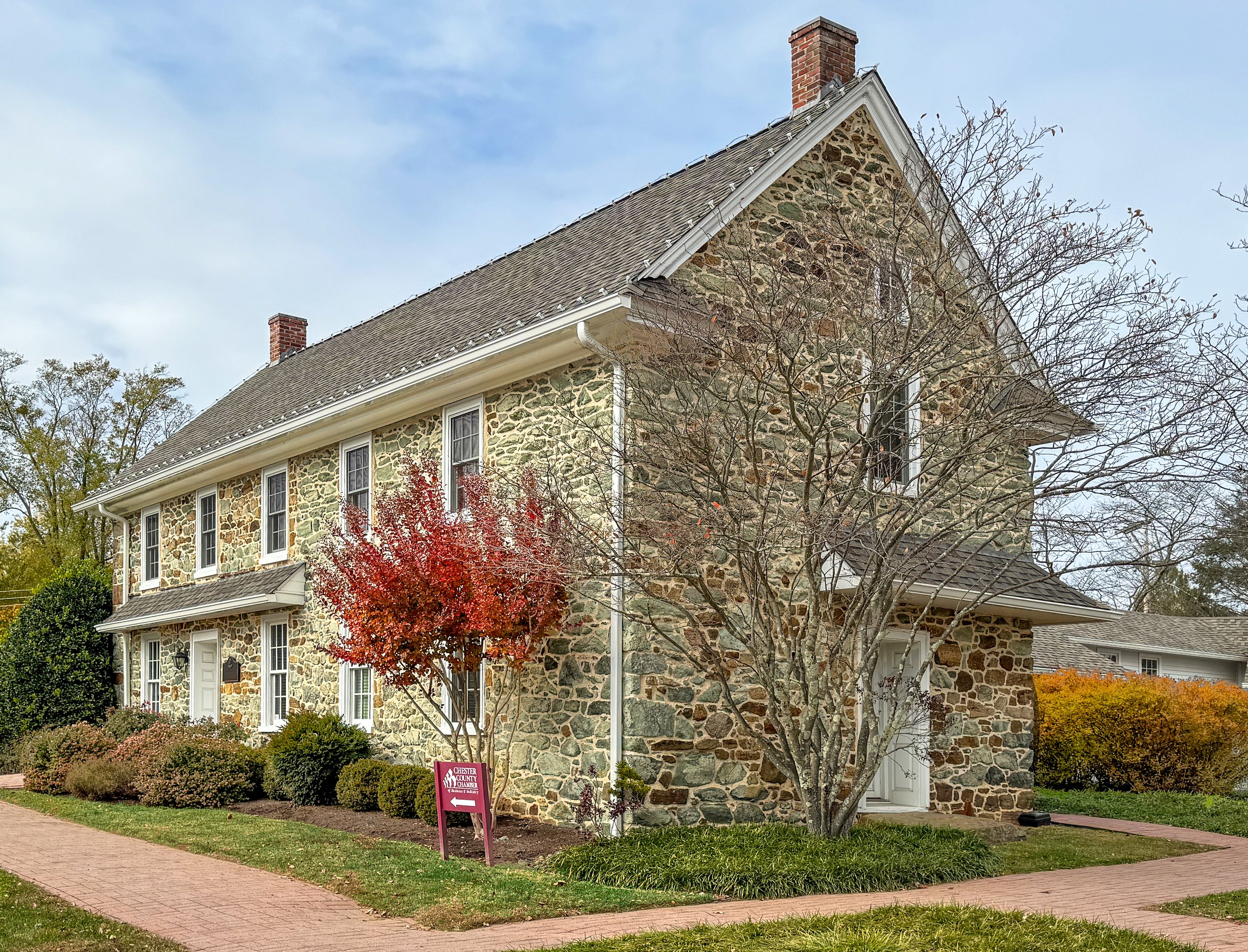
Above: The central block of the Garrett Farmhouse at Goshenville is ell-shaped. It faces southwest, with an end-gabled roof. Image source: Lee J. Stoltzfus
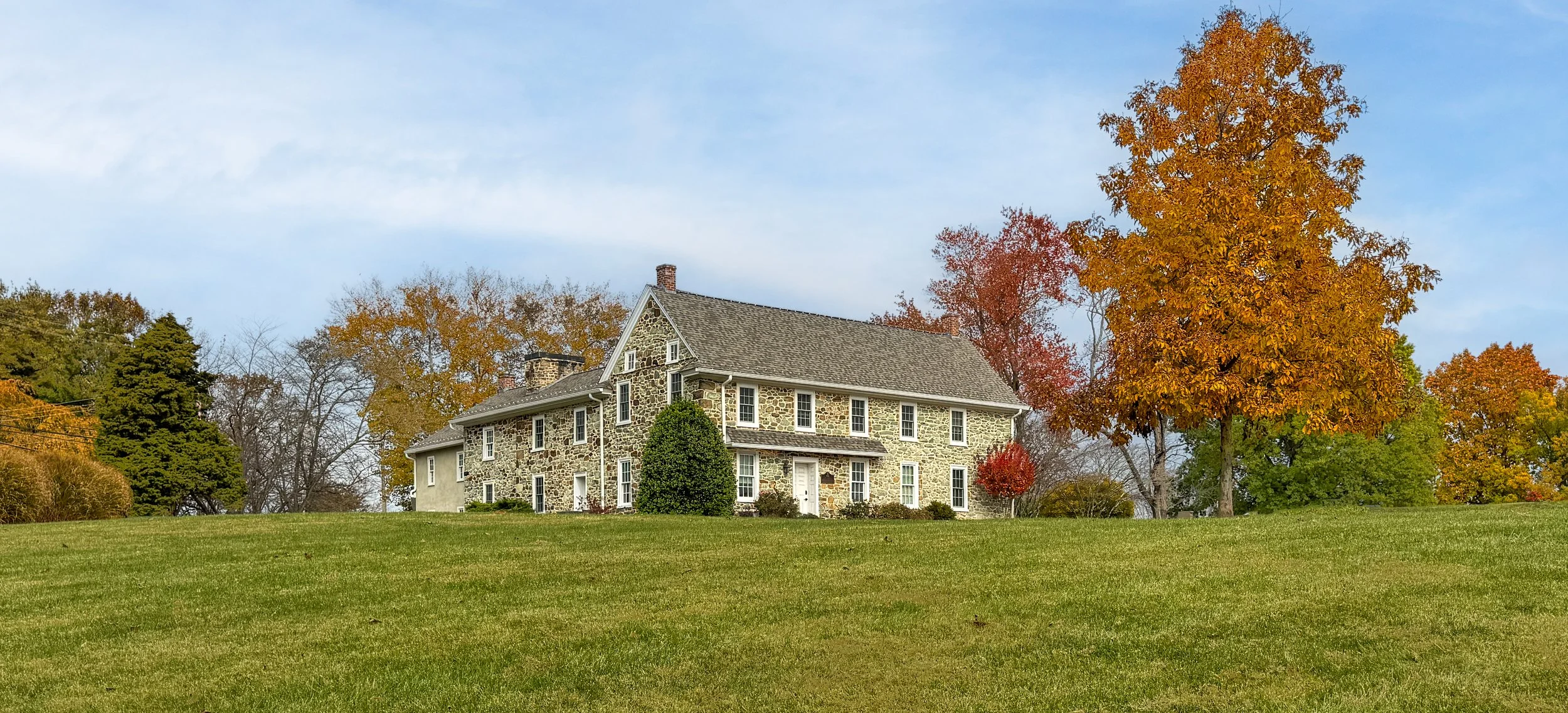
Above: The Garrett House and grounds. Image source: Lee J. Stoltzfus
This site was part of a 755-acre parcel granted by William Penn to Griffith Owen in 1703. In 1715, Samuel Garrett of Upper Darby purchased a 33-acre parcel of land here. The Garrett family had immigrated to Pennsylvania from Leicestershire, England. Samuel Garrett passed that land and 250 additional acres to his son, Joseph Garrett I, who built this Garrett House with his wife Mary (Sharples) Garrett.
The House’s Building Stone
Serpentine Stone:
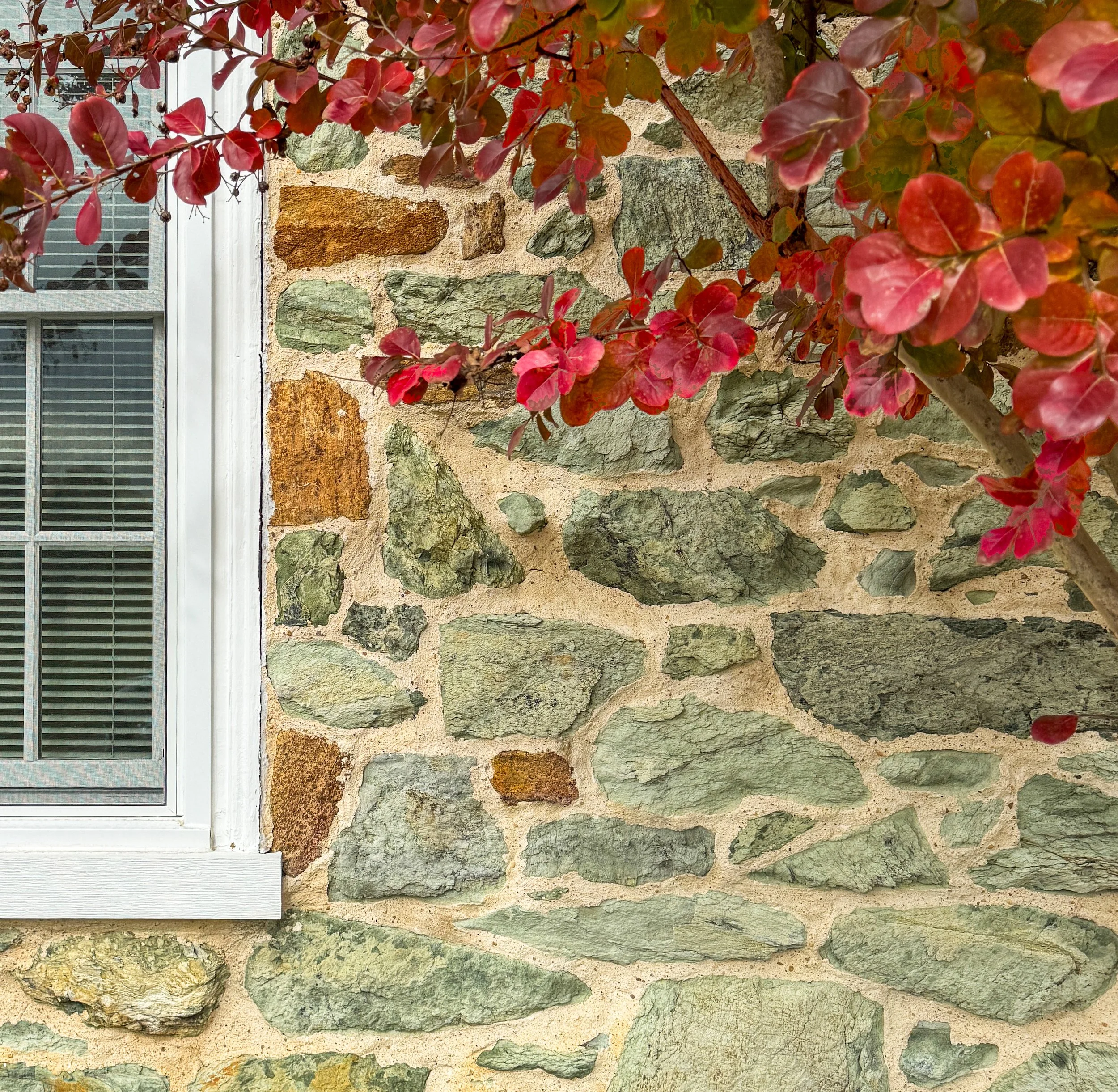
Above: The house’s serpentine building stone has a characteristic greenish hue. Image source: Lee J. Stoltzfus
Chester County Serpentine Bedrock
On an 1880 Geology Map:
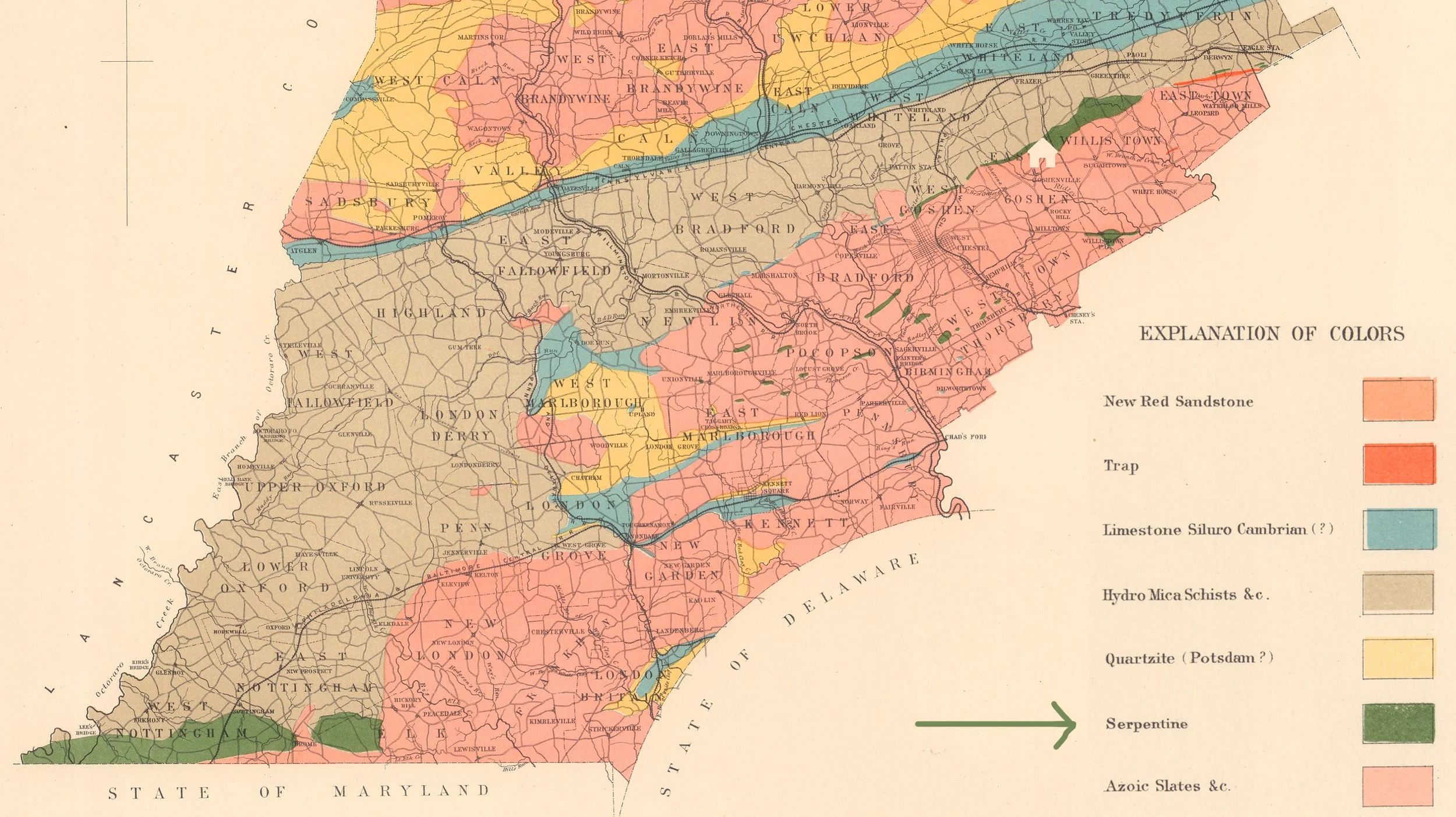
Above: Detail from Geological Map of Chester County, Pennsylvania, Geological Survey of Pennsylvania, 1880. Image source: David Rumsey Map Collection
This 1880 map reveals that one of the largest outcrops of serpentine stone in Chester County is located here at Goshenville and Willistown. The county’s largest serpentine area is near Nottingham: the State Line Serpentine Barrens. The Nottingham area represents one of the largest intact serpentine barrens in the eastern United States. The bedrock of the Goshenville area consists largely of Baltimore Gneiss, which also served as a principal building stone, along with serpentine.
West Chester, PA
A Center of Serpentine Buildings
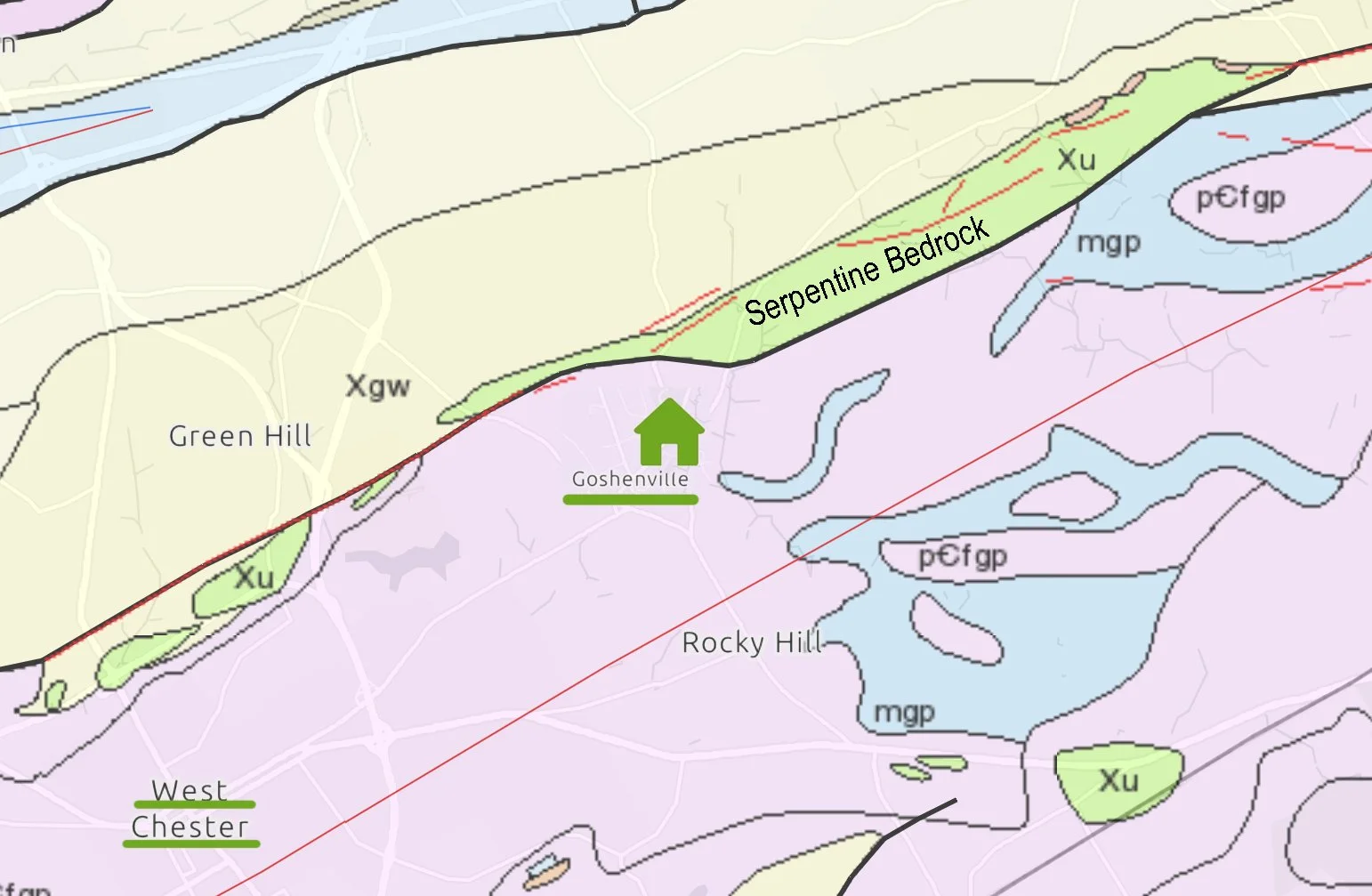
West Chester has been a historic Chester County center for serpentine stone quarries and buildings. The region is bordered on three sides by historic serpentine quarries, including Brinton’s to the southwest and Taylor’s to the north. In this area, many old farmhouses were built of serpentine from local quarries.
Chester County builders began using serpentine as a building stone during the earliest period of European settlement. Green serpentine buildings then became fashionable from 1870 through the 1890s. The map’s purple shading indicates Baltimore Gneiss, which is also a primary building stone in this area.
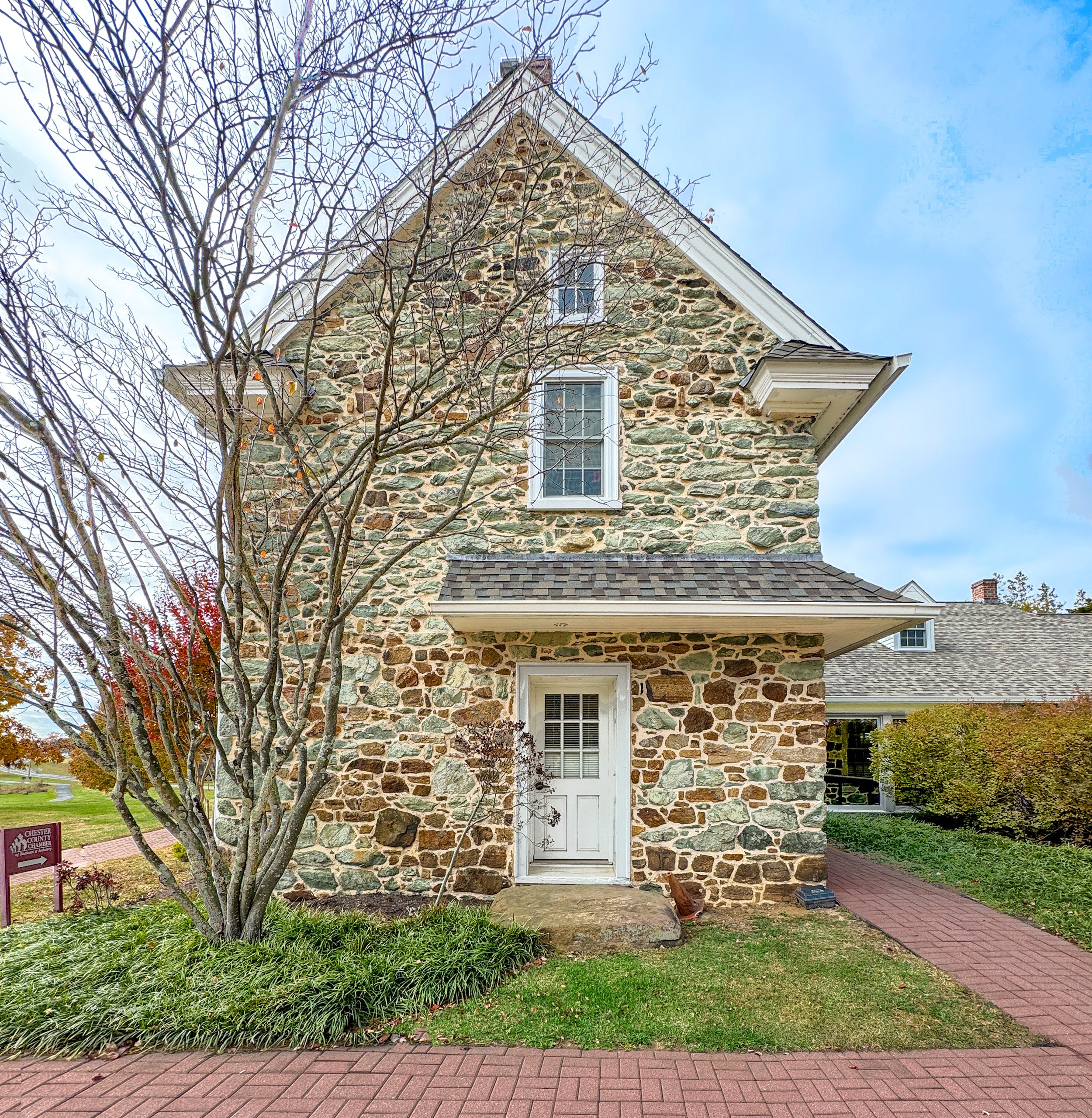
Above: A gable end of the Garrett House. The masonry displays a variety of brown hues, derived from a combination of weathered Baltimore Gneiss and oxidized serpentine stone. Image source: Lee J. Stoltzfus
Links: