
Historic Quaker Houses of Delaware County, PA
Collen Brook Farm
The Lewis-Smith House
Built 1794 to 1805
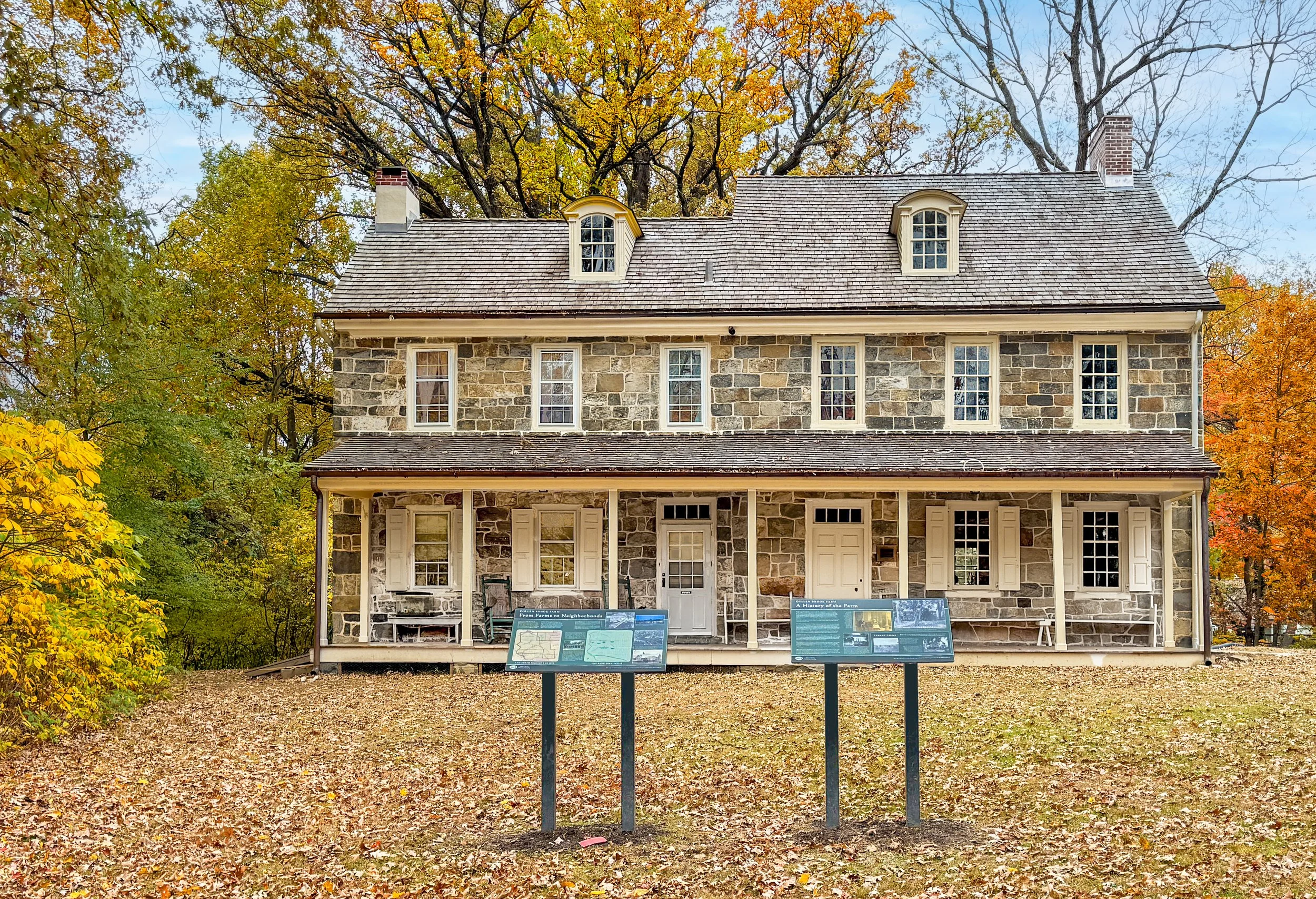
Welsh Quaker immigrants Ralph and Mary Lewis came to Pennsylvania from Wales in 1683. They emigrated with a Quaker preacher named John Bevan who was a founder of the Haverford Friends Meeting. In 1693 John Lewis purchased 150 acres along the east bank of the Collen Brook.
In 1775 Abraham Lewis III inherited this property. He hired his future brother-in-law, carpenter Mordecai Lawrence, for construction of the main section of this house in 1794.
A Lewis daughter, Mary Lewis Smith, inherited this property in 1829. Mary Smith married Dr. George Smith, a farmer and senator who became a co-founder of public education in Pennsylvania. This property was a working farm into the 20th century. The Upper Darby Historical Society restored the house in the 1990s. The society now manages the site as a historic house museum.
Floor Plan of Collen Brook Farmhouse:
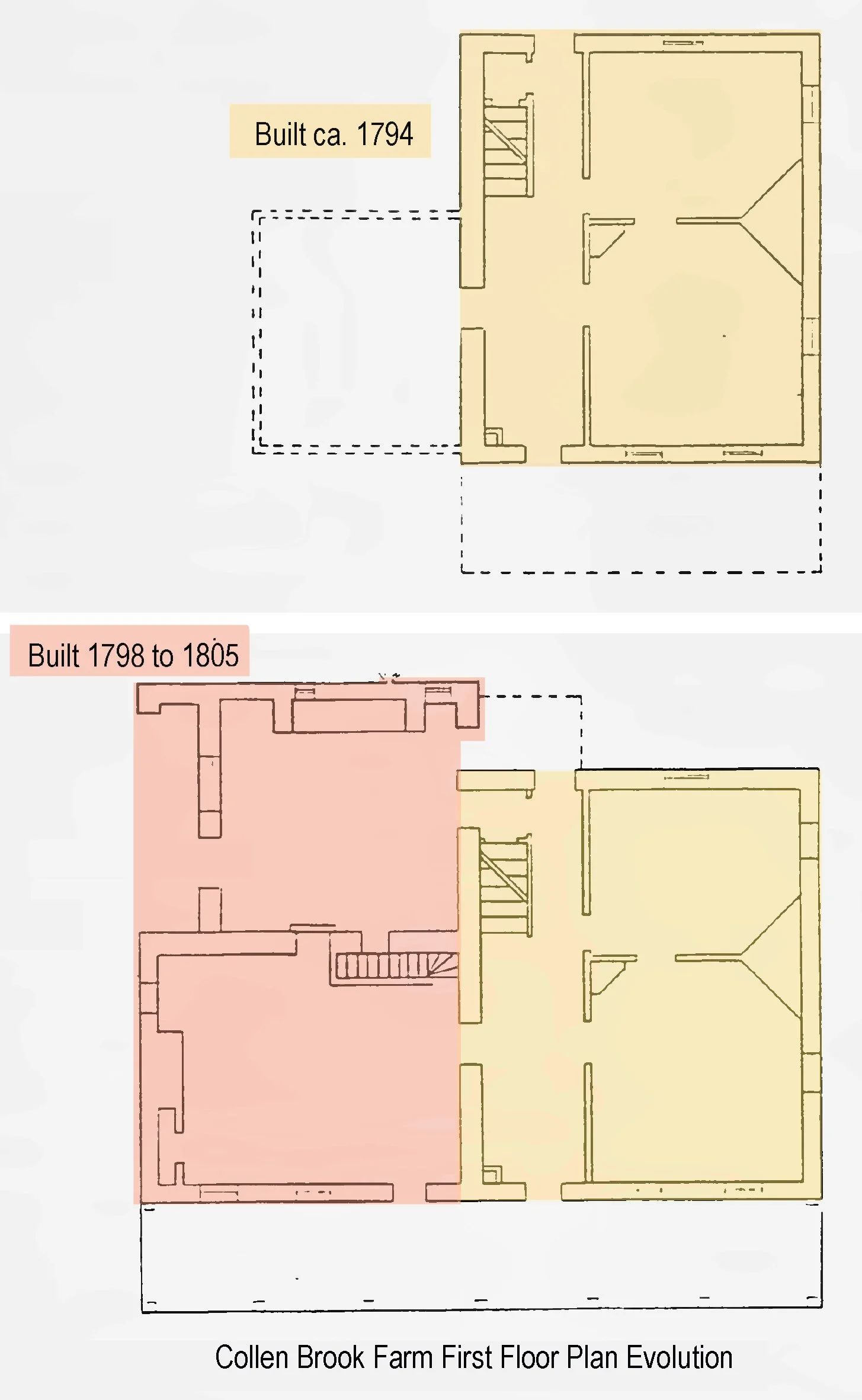
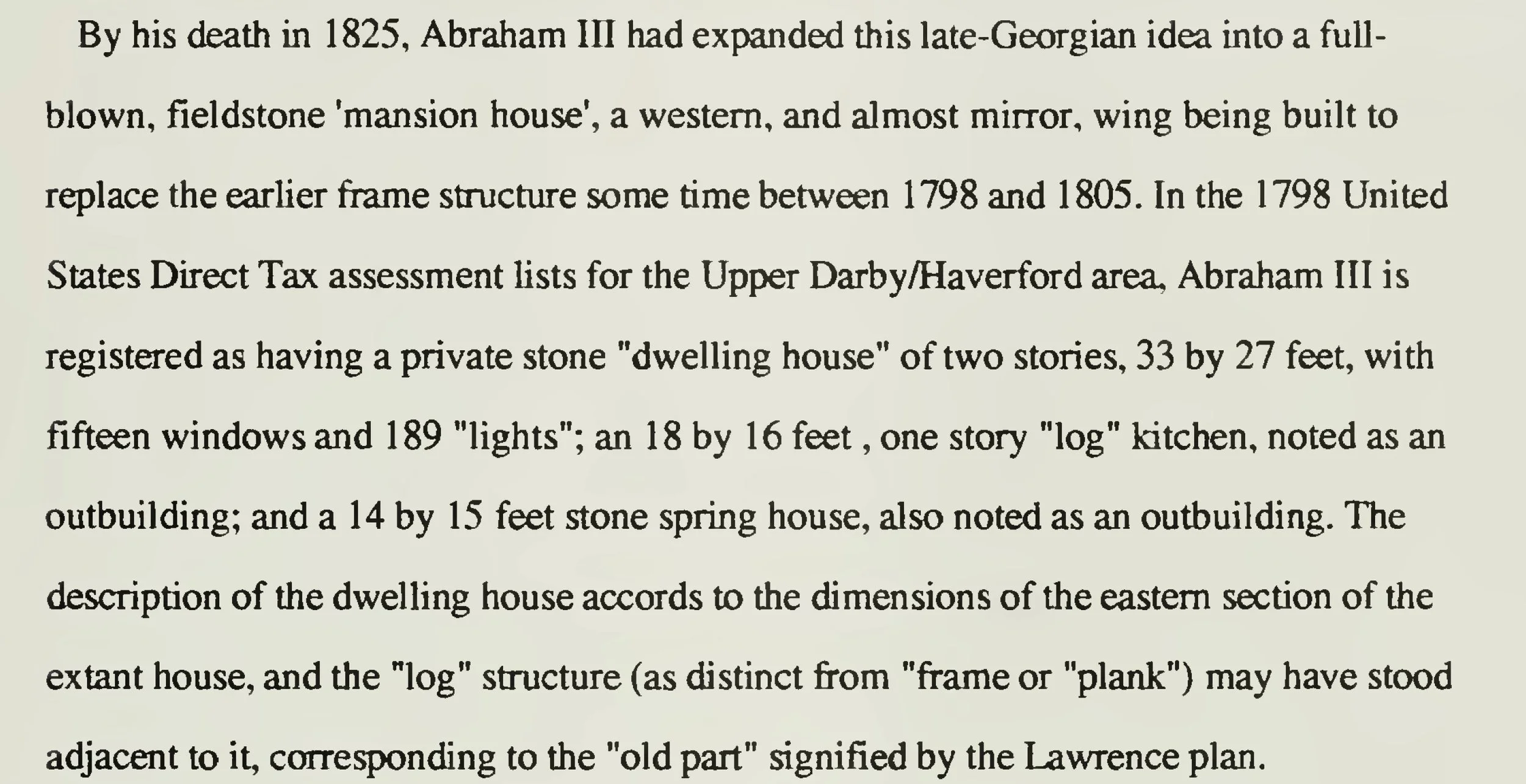
Above: Image and text sources: “The Quaker Domestic Interior, Philadelphia 1780-1830…” by Sara Margaret Pennell, 1992, (color added) www.academia.edu
Sara Pennell’s 1992 thesis on Collen Brook farmhouse provides a definitive timeline for the construction of this house. Her research reveals that the right side of the house, the east side, was built ca. 1794, and the left side (the west) was built between 1798 and 1805. Her thesis updates a construction timeline previously presented in 1988 by Nancy V. Webster and Thomas J. Di Filippo in their nomination for the National Register of Historic Places. Thomas and Di Filippo concluded that the west section predates the east section. But Pennell’s thesis corrects that previous assumption with her analysis of tax lists and other primary-source documents.
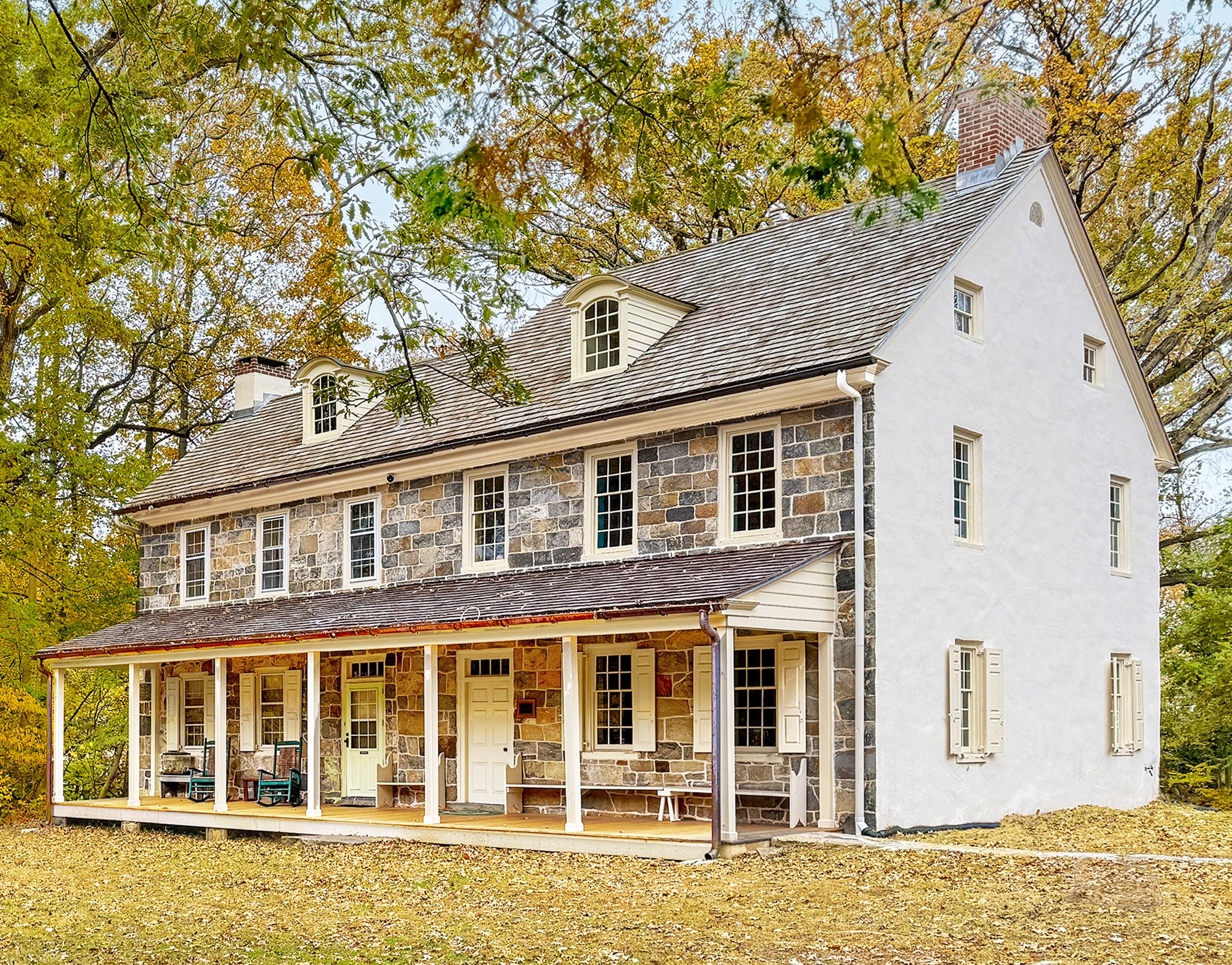
The front elevation features coursed ashlar, while the other sides are rubble stone. Image source: Lee J. Stoltzfus.
A simple box cornice closes the eaves. The facade has a ca. 1870 porch which probably replaces a pent eave. A footing for a pent eave runs the entire length of the front facade, slightly under the second-floor window sills. A root cellar runs the length of the porch.
This stuccoed east elevation has a datestone that reads “A. L. [Abraham Lewis III] 1794.” Each principal room of the 1794 side (the right side above) has a paneled corner fireplace. The kitchen on the left side has a walk-in fireplace, and originally had a beehive bake oven. The dormers were added after 1829 by Mary (Lewis) Smith and her husband Dr. George Smith.
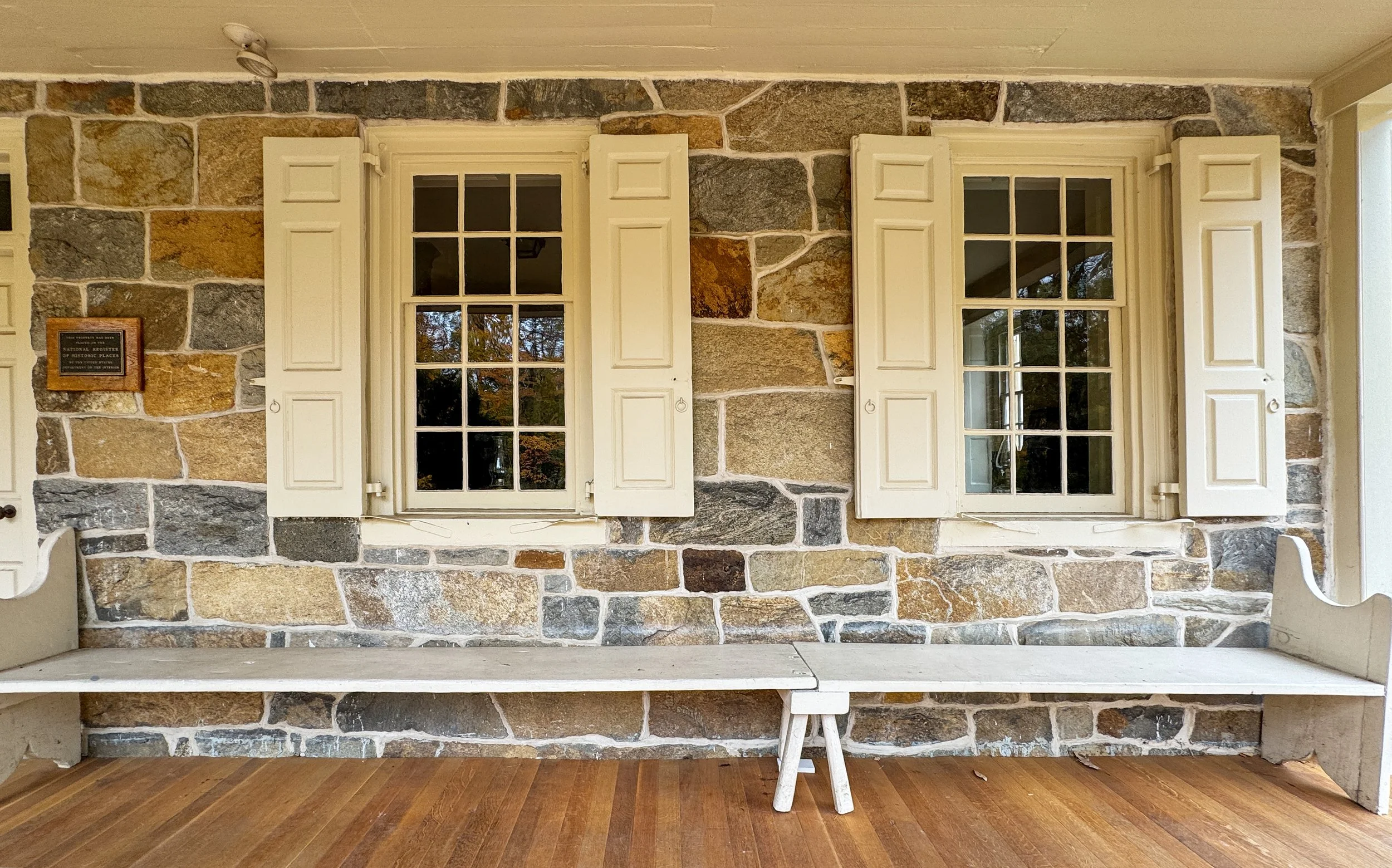
Above: Benches under the front porch. The farmhouse’s stone walls are 18 inches thick. The local bedrock and building stone include gneiss and Wissahickon schist. Image source: Lee J. Stoltzfus.
Woodwork by Carpenter Mordecai Lawrence
A Brother of Rebecca Lewis of Collen Brook:
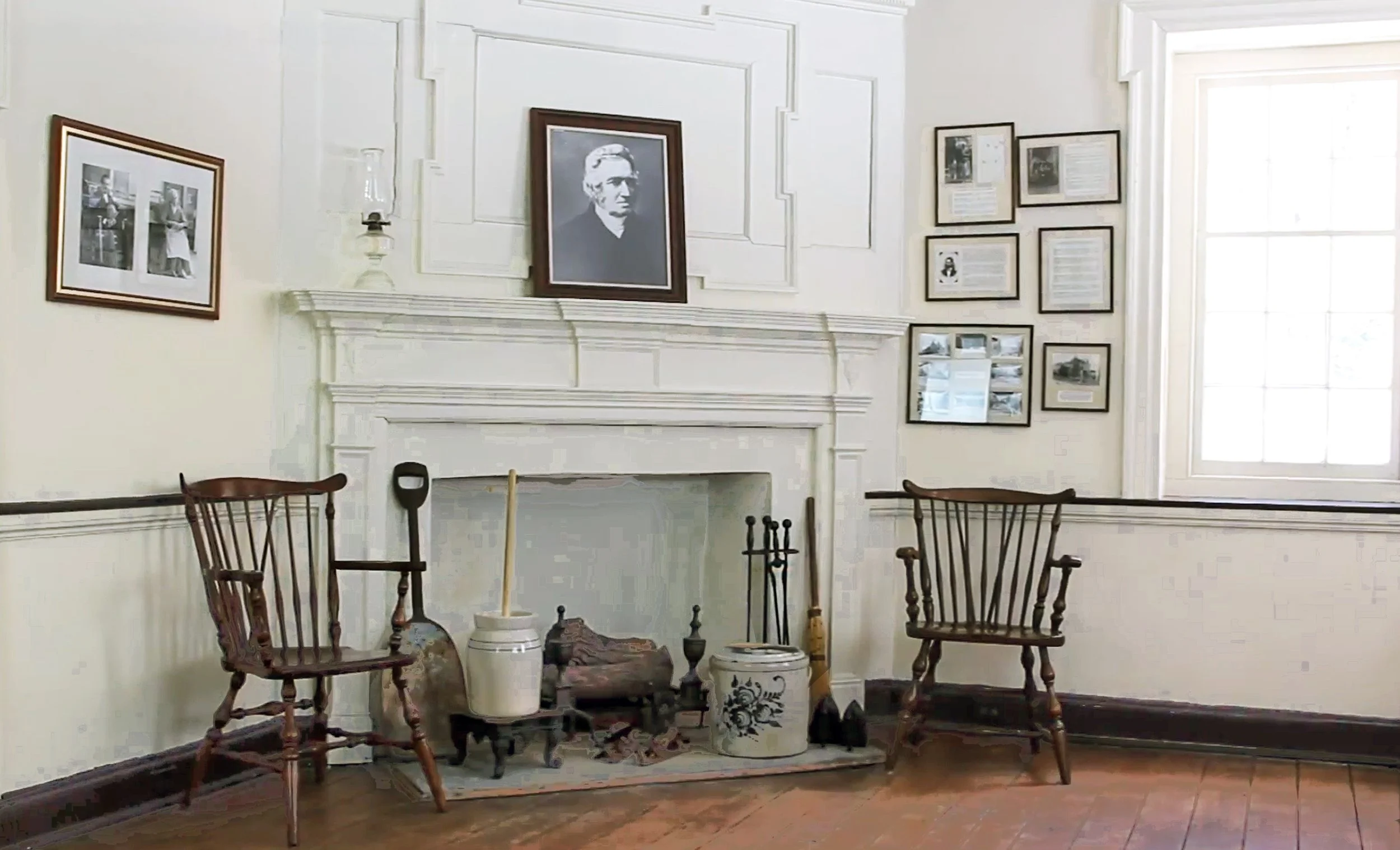
Above: The parlor in the 1794 section of the farmhouse with a portrait of Dr. George Smith. He lived here as a Quaker farmer and state senator, and became a father of public education in Pennsylvania. Image source: Upper Darby Historical Society, YouTube.
A detailed architectural drawing survives of this 1794 section of the farmhouse and is penned and signed by master carpenter Mordecai Lawrence (1752 - 1827). He was a brother of Rebecca (Lawrence) Lewis, the wife of Abraham Lewis III who built most of this house. Collen Brook Farm is the earliest example of the work of this master carpenter.
The parlor’s finely crafted woodwork showcases crossetted (eared) woodwork, including window architraves, overmantel, and door surrounds. The corner fireplace has a reeded tripartite mantel with Grecian urn appliques. The second floor bedroom above this parlor also has crossetted woodwork, as does the central hall.
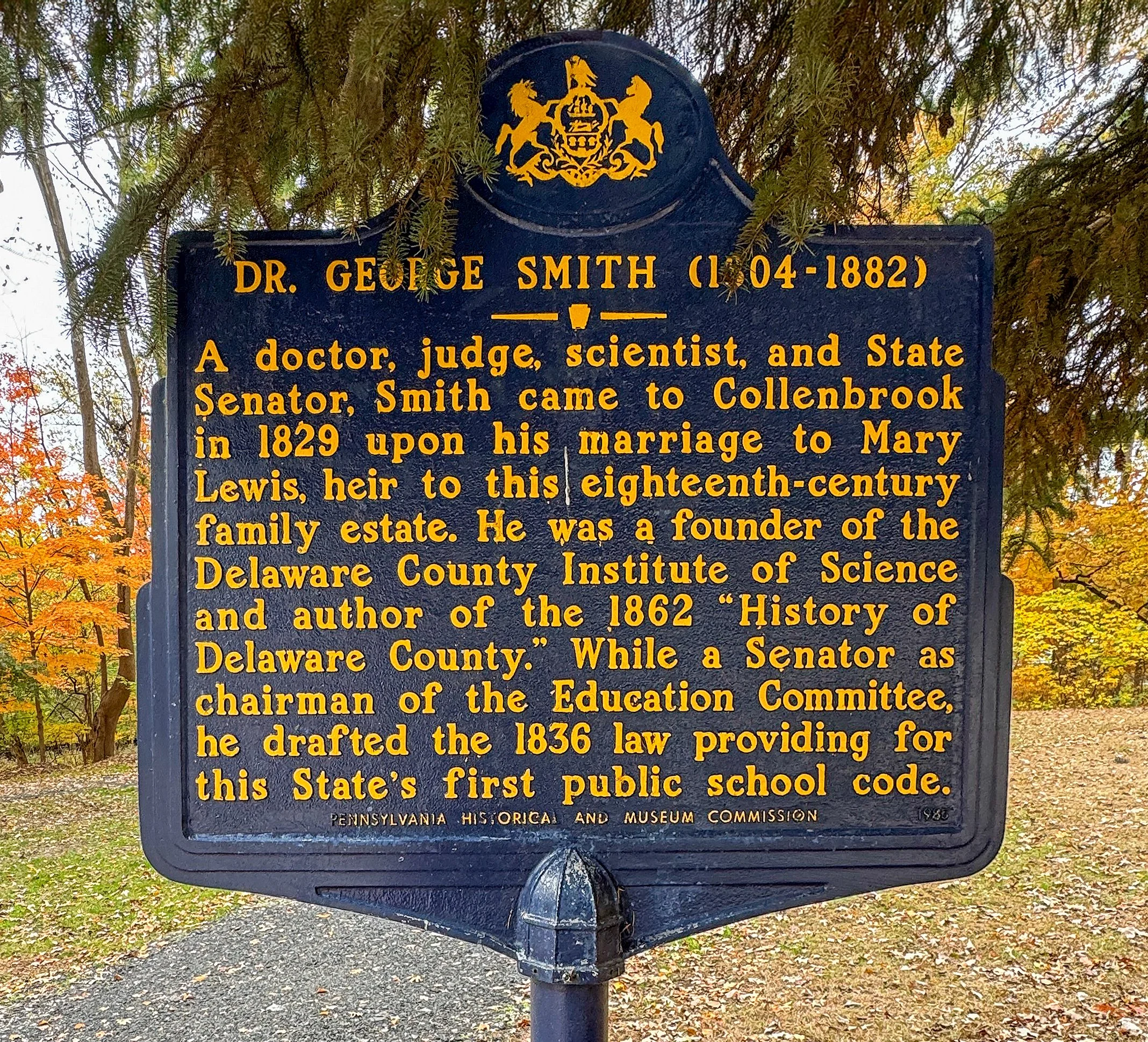
Historical Marker for
Dr. George Smith of Collen Brook Farm:
Dr. George Smith
A Quaker Father of Public Education in Pennsylvania:
The First History of Delaware County
By Dr. George Smith:
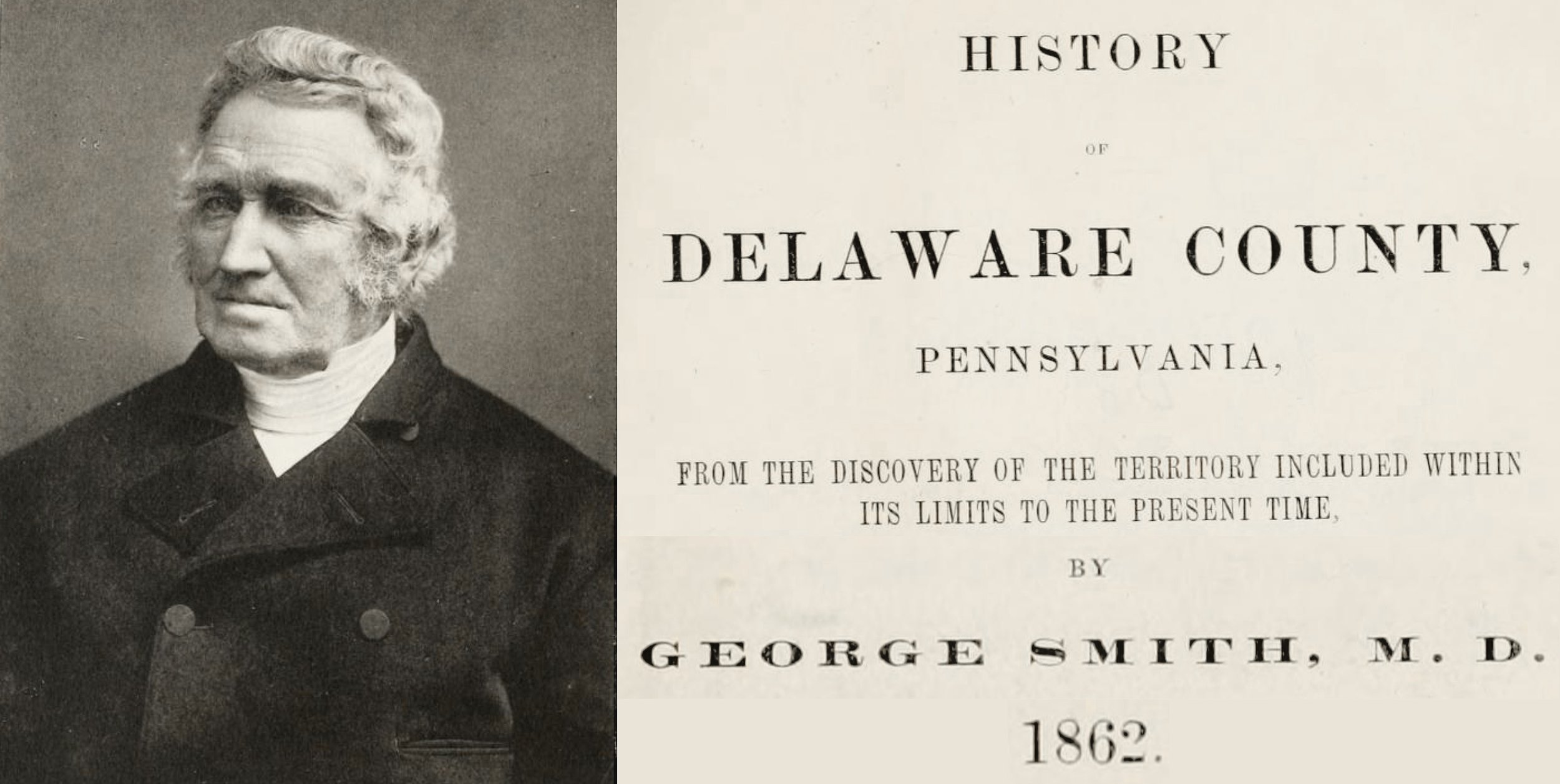
Above: Portrait of Dr. George Smith and the title page of the Delaware County history he authored. Image source: Internet Archive
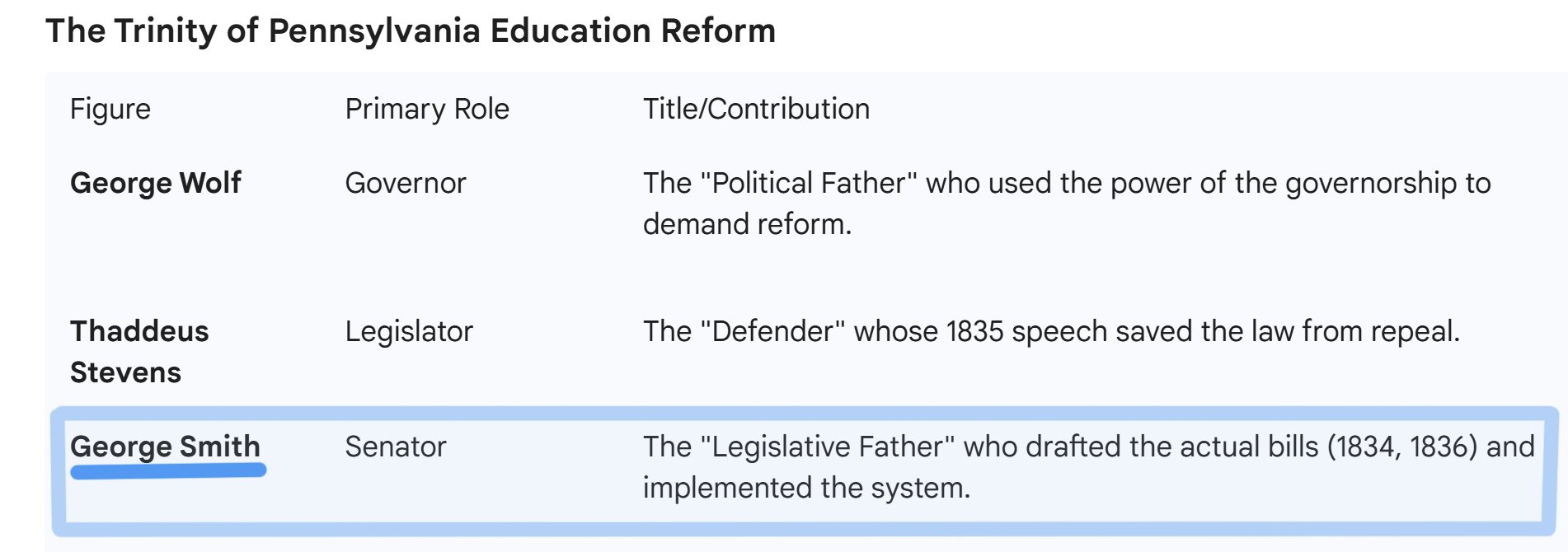
Dr. George Smith was a descendant of some of the earliest and most influential Welsh Quaker settlers in the region. He was the primary author of the legislation that established public schools in Pennsylvania. Smith’s Quaker ideals emphasized equality, literacy, and community welfare.
When Dr. Smith was a Pennsylvania senator, he served as chair of the Education Committee, where he personally drafted the Free School Act of 1834 and its subsequent 1836 amendment. For 25 years, he presided over the Upper Darby School Board, overseeing the local implementation of the laws he had authored.
In 1854, he was appointed the first Superintendent of Common Schools for Delaware County. His commitment to public enlightenment extended to the founding of the Delaware County Institute of Science and the publication of his landmark History of Delaware County.
Was one of the Largest Estates in Delaware County
1,100 Acres by 1892:
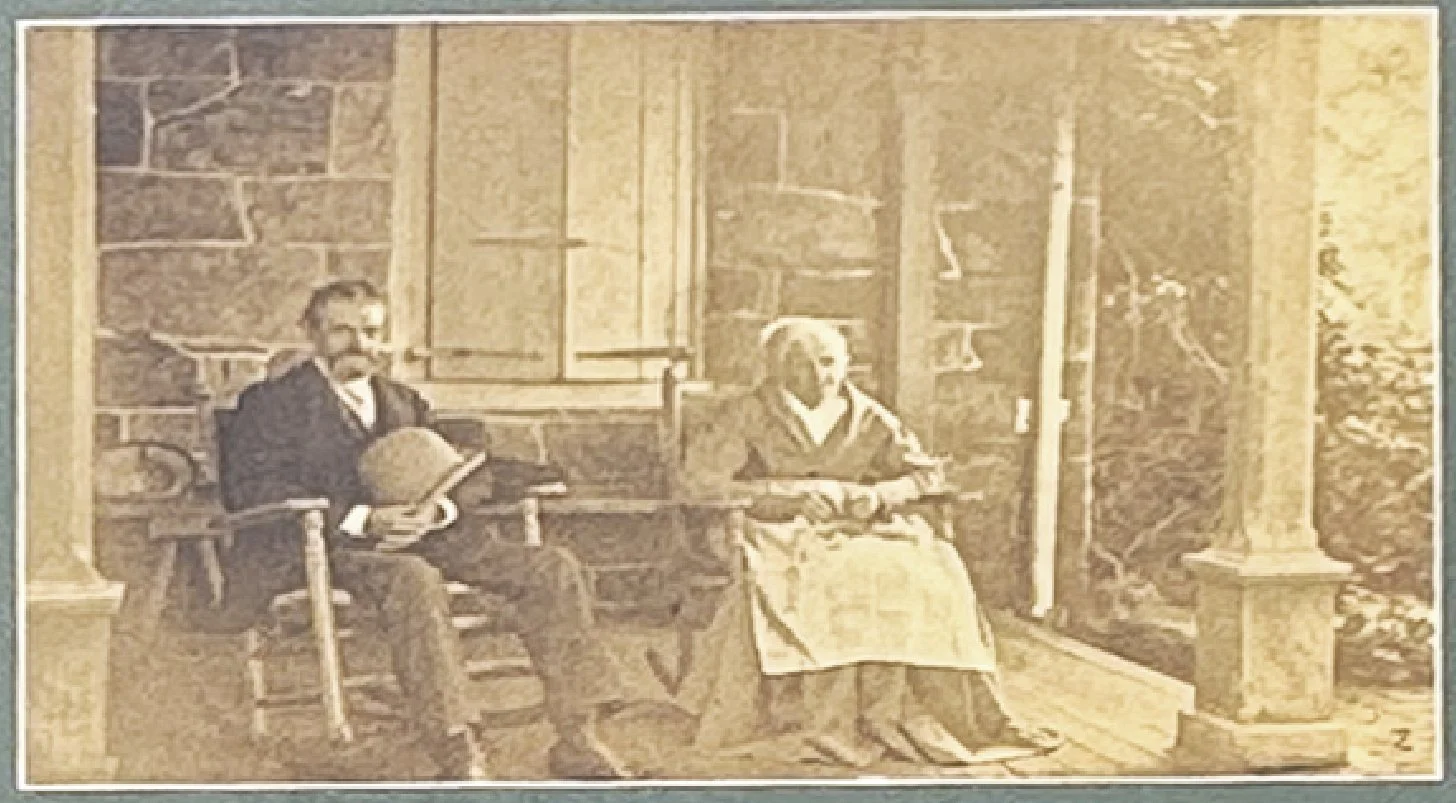
Above: A ca. 1890 photo of Quaker widow Mary Lewis Smith, the last Lewis descendant to live here at Collen Brook Farm. She was the wife of Dr. George Smith. By 1892 the Smiths owned approximately 1,100 acres of land in Delaware County. This property at one time had five tenant farmhouses on the land.
Mary Smith lived here her entire life, from 1808 to 1892. Her parents Abraham Lewis III and Rebecca (Lawrence) Lewis had built most of this farmhouse. She sits on the front porch with her oldest son, attorney Abraham Lewis Smith. The photographer was Mrs. Smith’s grandson, Henry Clement Smith.
The Smiths’ Estate
Vast Wealth in the 1860 Census
Estate Value in 1860: $186,000
More than $120 Million in 2026 Dollars
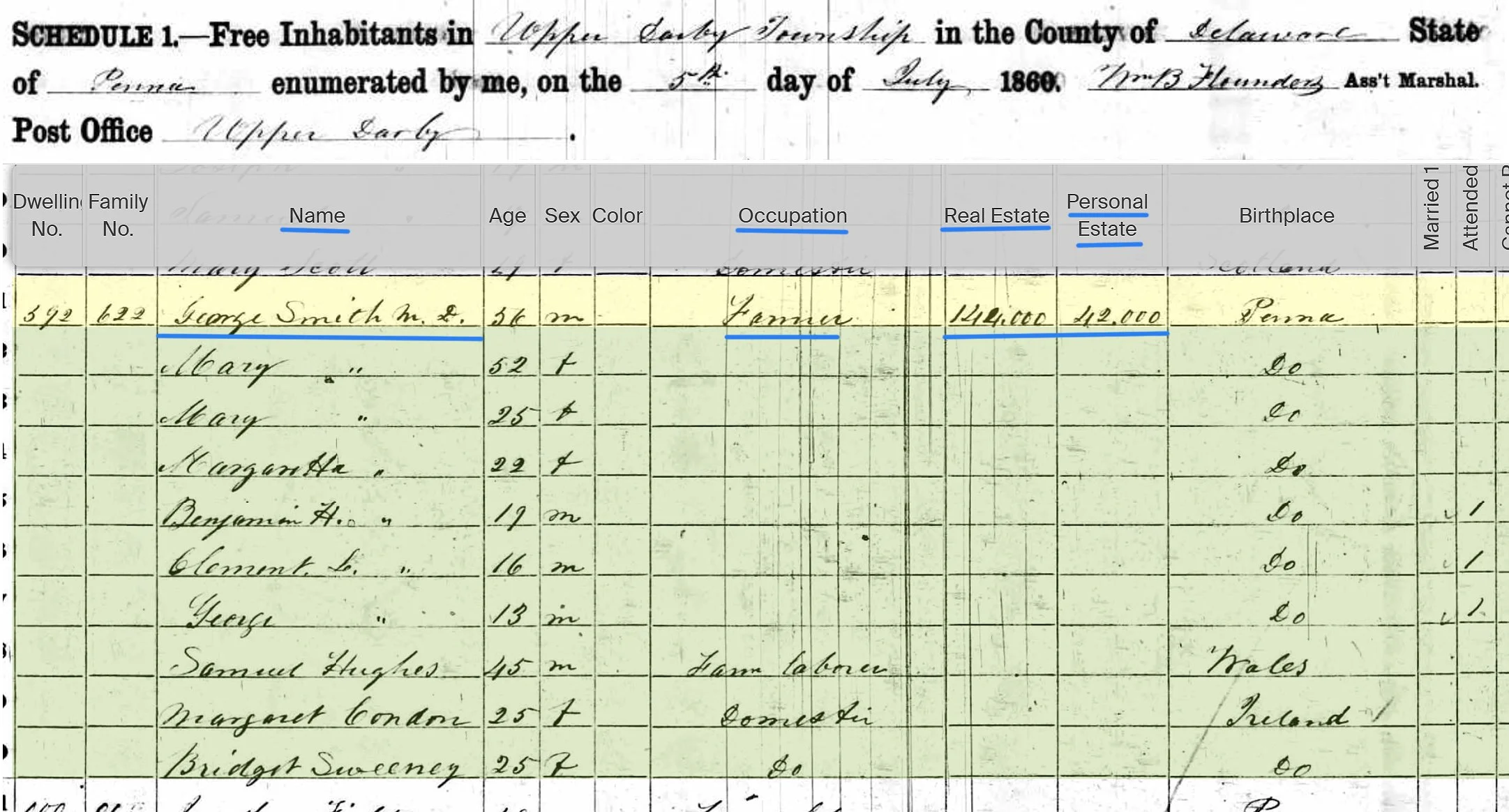
Above: Image source: Ancestry.com
The real estate and personal estate of Dr. George Smith and Mary Smith was listed at $186,000 in 1860. Using a relative wealth index based on per capita GDP, an estate of this size would correspond to roughly $120 to $160 million in 2026 dollars. A simple adjustment using the Consumer Price Index yields a much lower figure of about $7.3 million. The relative wealth measure, however, better reflects social standing and economic power.
In this 1860 census Dr. Smith is listed simply as a “farmer,” which is a uniquely understated description for a judge and former state senator who owned and managed one of Delaware County’s largest estates.
National Register of Historic Places:
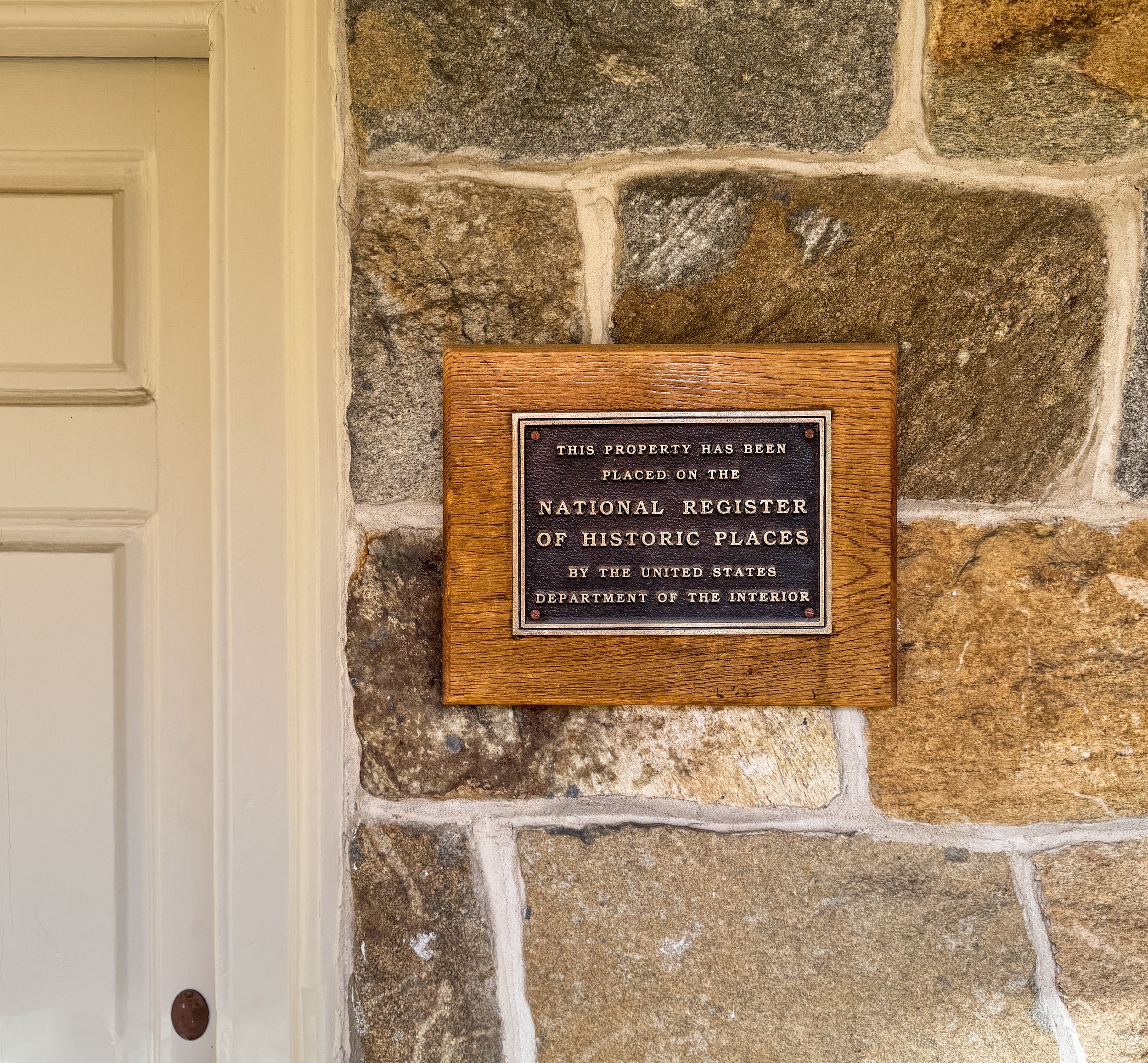
Above: A historical marker by the front door explains that the site is listed on the National Register of Historic Places. Collen Brook Farm was listed in the National Register in 1988. The property remained in the same family (Lewis/Smith) for nearly 300 years, from 1693 until 1989. Image source: Lee J. Stoltzfus.
Collen Brook Grounds:
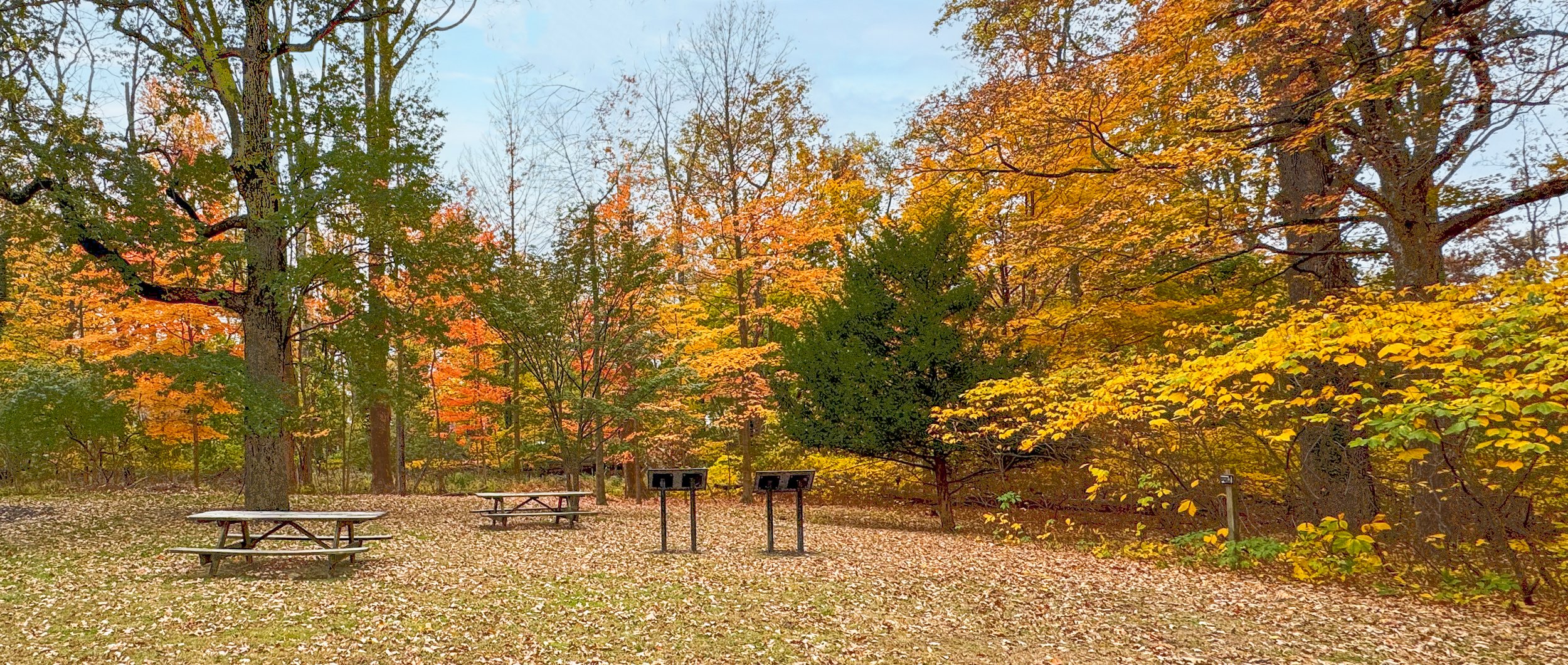
Above: Front lawn of the Collen Brook farmhouse today, with historical signs. Image source: Lee J. Stoltzfus.
Lewis and Smith descendants owned this property until 1989, when they sold the site to the township for half its appraised value. The family then returned a large portion of that money for maintenance of the house as a museum. Architect John Milner led the house restoration. The Upper Darby Historical Society manages the property today.
Links: